
Hello everyone, Mendog here! As usual, excited to talk about what I’ve been working on over the past month.

Recruitment System
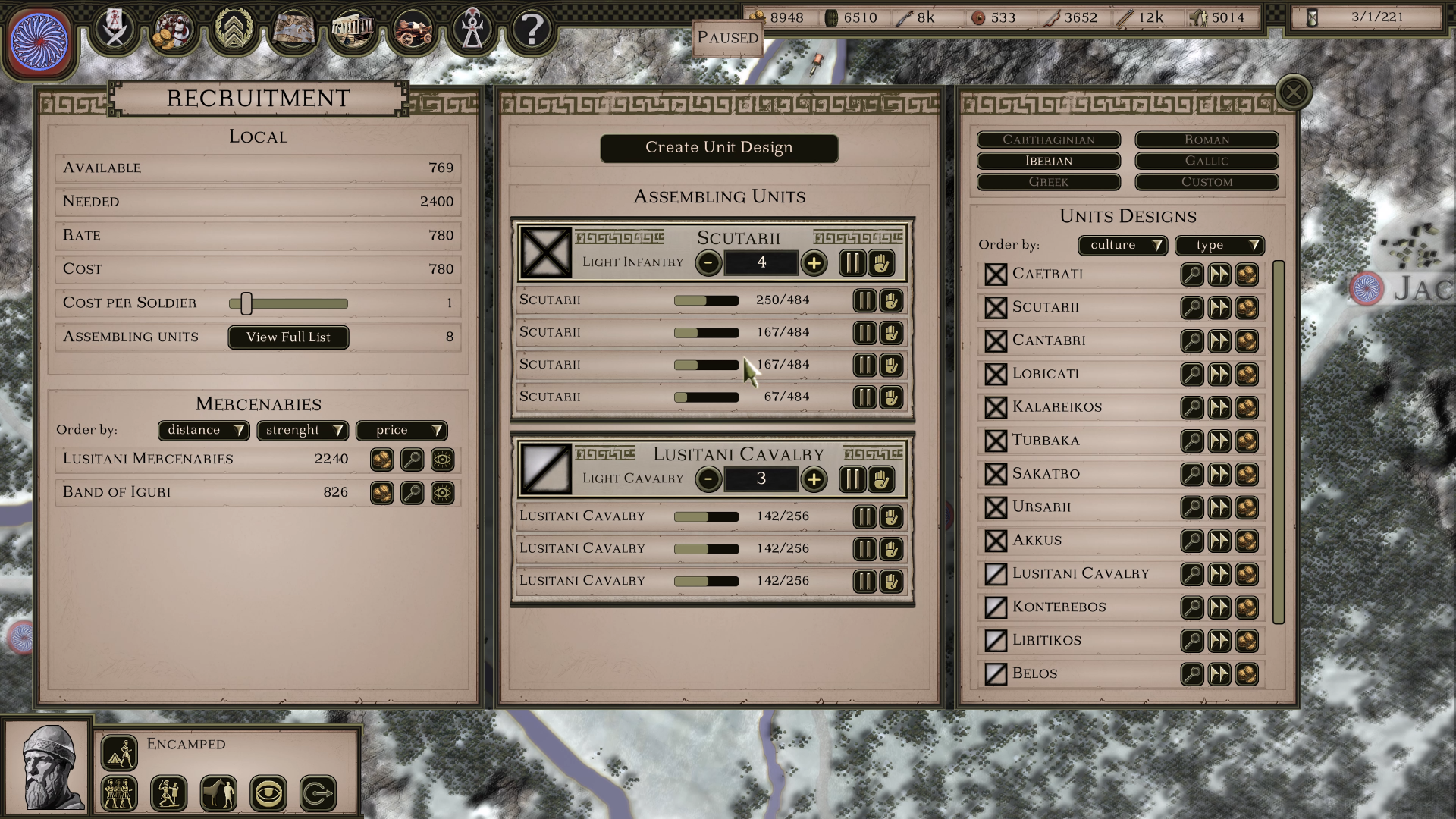
New soldiers and losses are automatically refilled with fresh recruits, taken as manpower from the closest settlements that support the army. Recruitment is directly tied to population, making it a logistical system rather than abstract numbers. Drawing too much manpower from the same region reduces settlement population, which in turn lowers economic production and long-term growth.
Each army has its own recruitment flow. Recruits arrive daily, not instantly. The number of new soldiers an army receives each day depends on the population of nearby settlements and how much gold the player is willing to spend as an incentive.
Players can choose to spend no gold, relying only on volunteers. This provides a very small number of recruits over time. By paying more gold, the army attracts more men, allowing units to recover losses or form new units within a few in-game days.
Equipment and Army Storage

Every army has its own storage that contains resources and equipment. When new recruits arrive, they are automatically equipped using the army’s stored gear.
If the army lacks certain equipment, it is delivered via caravans from settlements. Settlements with blacksmiths actively produce the required weapons and armor and send them to armies in need.
If a unit requires a specific item, like a certain sword type, but it is not available, the unit will use the closest equivalent found in storage. Once the correct equipment arrives, units automatically switch to it.
Unit Designs
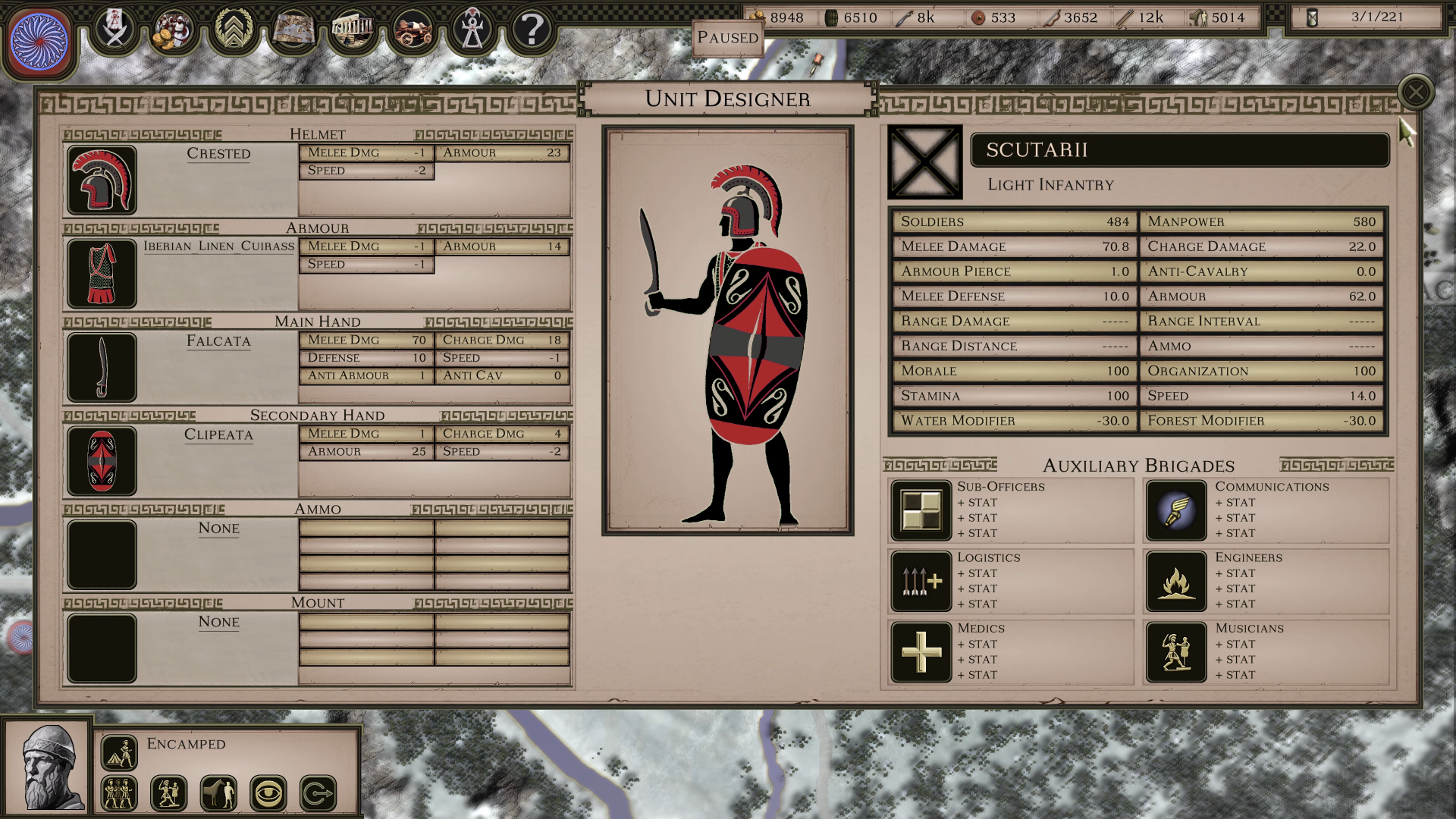
A Unit Design is a template that defines what equipment a unit will use. It specifies preferred weapons, armor, and mounts, and is used to automatically equip new recruits and manage unit loadouts.
Each cultural group comes with predefined unit designs that reflect its historical military traditions. For example, Romans have Hastati, Principes, and Triarii, while Carthaginians field units like the Libyan Phalanx or the Sacred Band.
Players are not limited to predefined designs. They can create custom unit designs or duplicate and modify existing ones to better fit their strategy and playstyle.
Proficiency System

Units gain experience levels by fighting battles, improving their overall effectiveness. In addition, units develop experience with specific equipment types, called proficiencies.
Proficiencies exist for swords, axes, maces, spears, sarissa, light armours, medium armours, heavy armours, bows, slings, javelins, and mounts such as horses, elephants, and chariots.
Proficiencies improve both in battle and during training, depending on the equipment the unit uses. When a unit uses a specific weapon or armor type, its proficiency with that equipment increases, while smaller bonuses are also applied to similar equipment types. This allows units to naturally specialize in specific equipment and combat styles over time.
Unit Type Flexibility
Unit roles are determined by their equipment, not by fixed classes. Infantry, cavalry, skirmishers, and other types emerge naturally from the equipment a unit is using.
By changing a unit’s design, players can convert infantry into cavalry or cavalry into mounted skirmishers at any time. However, if a unit has low proficiency with the new equipment, its battlefield performance will suffer until it adapts.
Unlocking New Equipment
At the start of a campaign, players only have access to a limited selection of equipment based on their faction’s culture.
New equipment can be unlocked in multiple ways. This includes looting gear from defeated enemies, conquering settlements with advanced blacksmiths, or acquiring equipment through trade with major trading centers.
This ties military progression directly to conquest, economy, and diplomacy.
You can also watch a full breakdown on YouTube: https://aquila.now/cartdevlog10yt
Thanks for checking out this Dev Log. Let me know in the comments if you have any questions on the Recruitment and Unit Design Systems!