
Welcome to Tinto Talks, the Happy Wednesdays, where we talk about what is happening with Europa Universalis V.
Here one more week, your friendly Content Design Lead, Pavía. We will be talking for the second week in a row about the content for the upcoming DLC, Across the Pillars, plus some of the new content that is available for free in the 1.4 ‘Río Salado’ update - and that is in Open Beta since last week!
Our main topic today will be the ‘mechanical content’ of the DLC; that one is more closely tied to the different gameplay mechanics, and that adds depth to them. Therefore, there will be 5 features we’ll be talking about: the Iberian Union (that is so back!); the unique Bureaucracies for Castile, Morocco, and Granada that will come in the DLC, plus the new Islamic bureaucracies that are available in the base game for 1.4; unique DLC Expeditions; the expanded Crusade and Jihad content for Iberian and Maghrebi countries; and, finally, the rework that we’re doing in the base game for 1.4 to the Itinerant Court mechanic.
The Iberian Union
The Iberian Union was, probably, the most memorable event of EU4, as it determined the early game of both Castile and Aragón, and streamlined the formation of Spain in the game. We ported it to EU5, but it always had a couple of caveats to work with. First, the situation at the start of the game in 1337 is quite different to 1444 - to start with, while in 1444 cousin branches of the same dynasty, the Trastámara, ruled on both Castile and Aragón; in 1337, the founder of the dynasty, Enrique, is just a bastard kid of King Alfonso XI of Castile, who belongs to the ‘Borgoña’ dynasty, while in Aragón, the House of Barcelona is still ruling, under King Pere IV. Second, Personal Unions are completely different beasts, much more mechanical, but also much more dependent on dynastic heritage - and therefore, much more difficult to streamline.
However, we decided early on that we needed to robust this feature, as there couldn’t be a DLC based on Late Medieval history that wouldn’t have it portrayed properly. We did it in a twofold way. First, in the base game, there was a weird situation where we’d have two different events about it; what we did was keep just one and robust it, making sure that the triggers would be wide and easy enough, and that it would trigger and create a Personal Union more regularly and consistently. It can trigger for any Iberian-culture Christian monarchy with its capital in Iberia, between 1400 and 1550, not already in a union; either the ruler or the ruler's child-heir must be eligible to marry and under 40; it offers the top two other Iberian crowns with an opposite-gender candidate, ordered by their opinion of you. Therefore, a marriage Union will be created, and if a common heir appears, it will become a proper Personal Union.
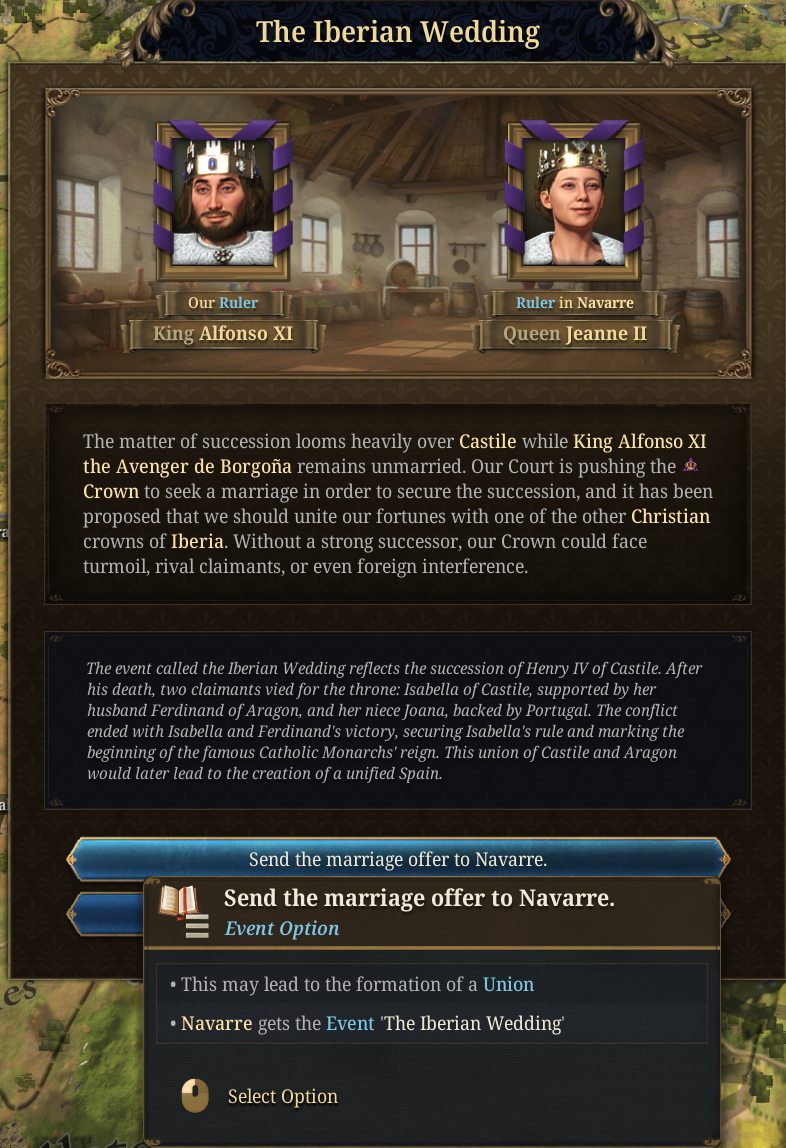
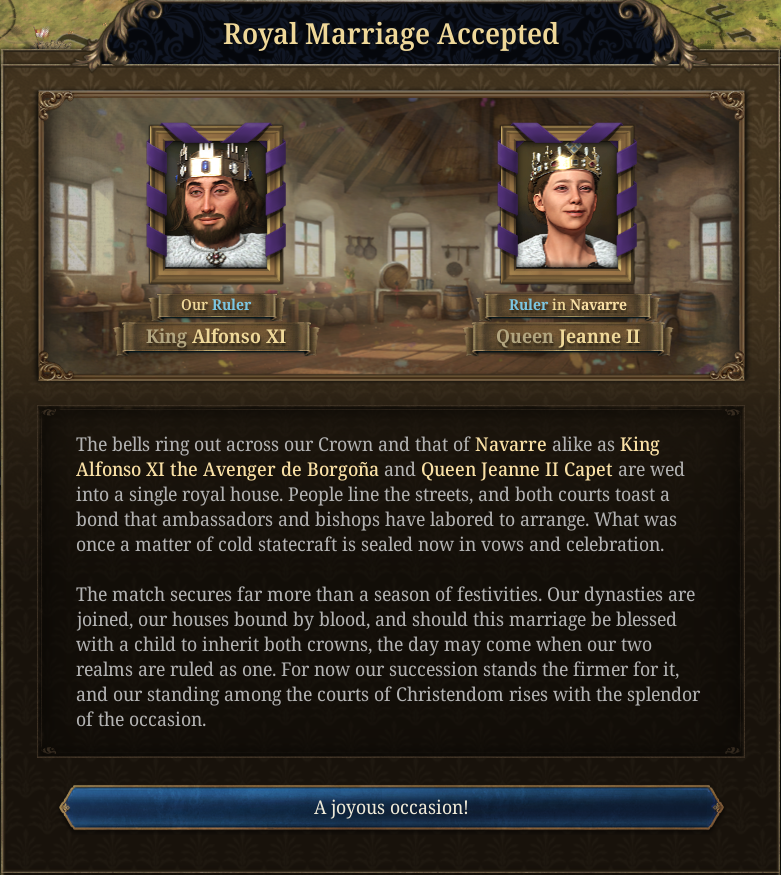
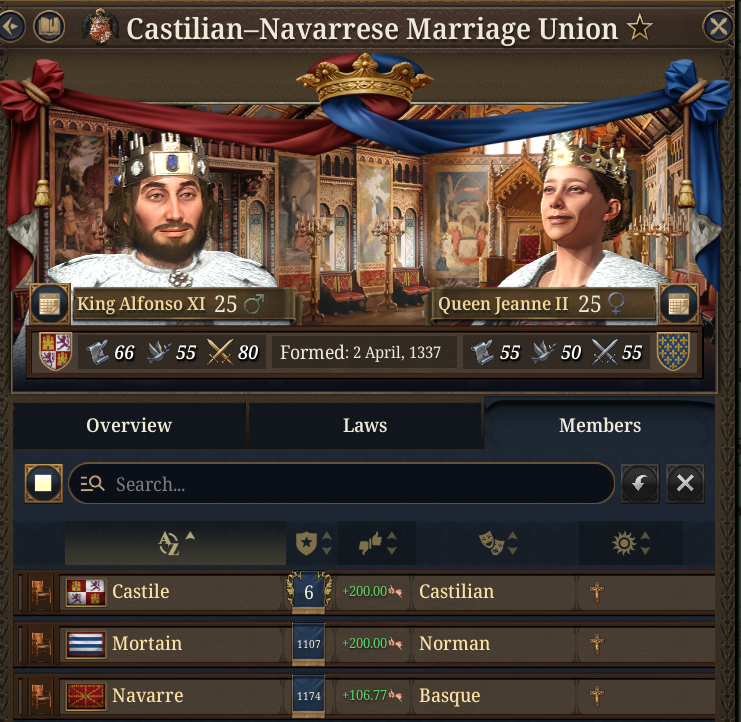
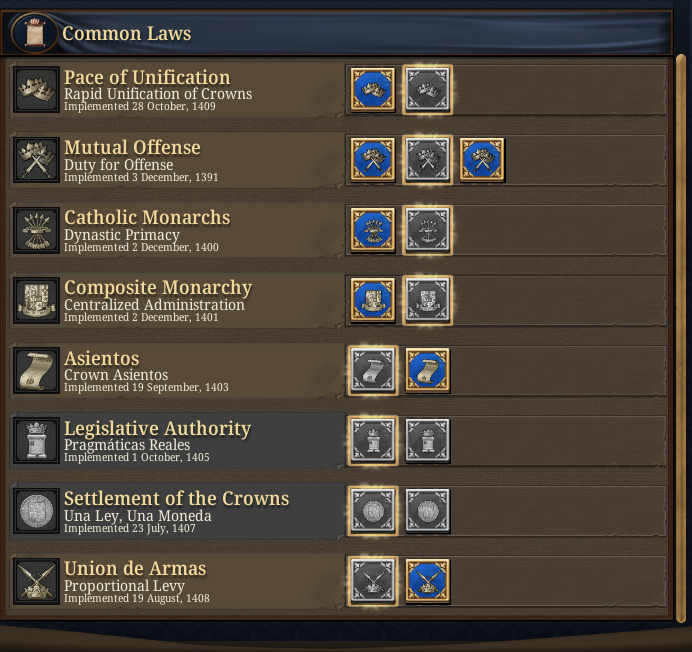
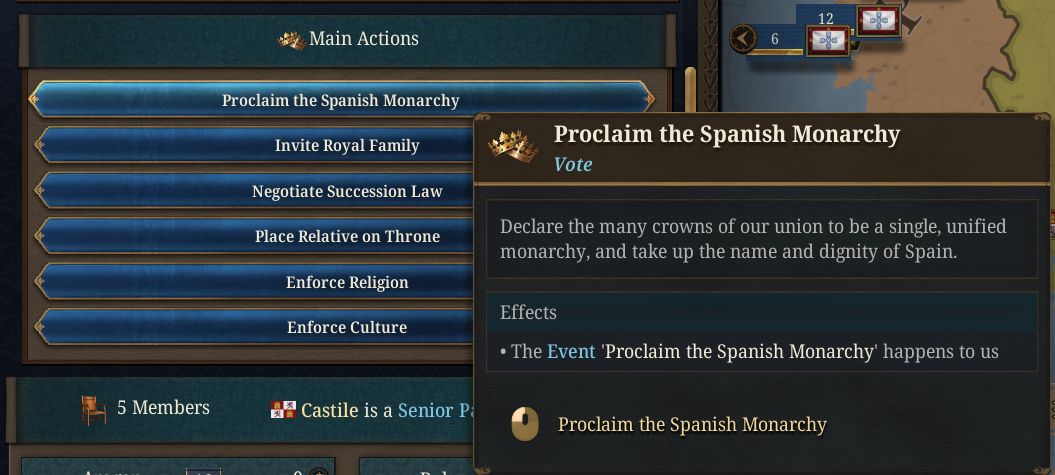
For Across the Pillars, we have created a new feature itself, called ‘The Iberian Union’. It’s a unique type of Personal Union, the first one we add to EU5. And, as such, it comes with a unique set of both graphical and gameplay features:
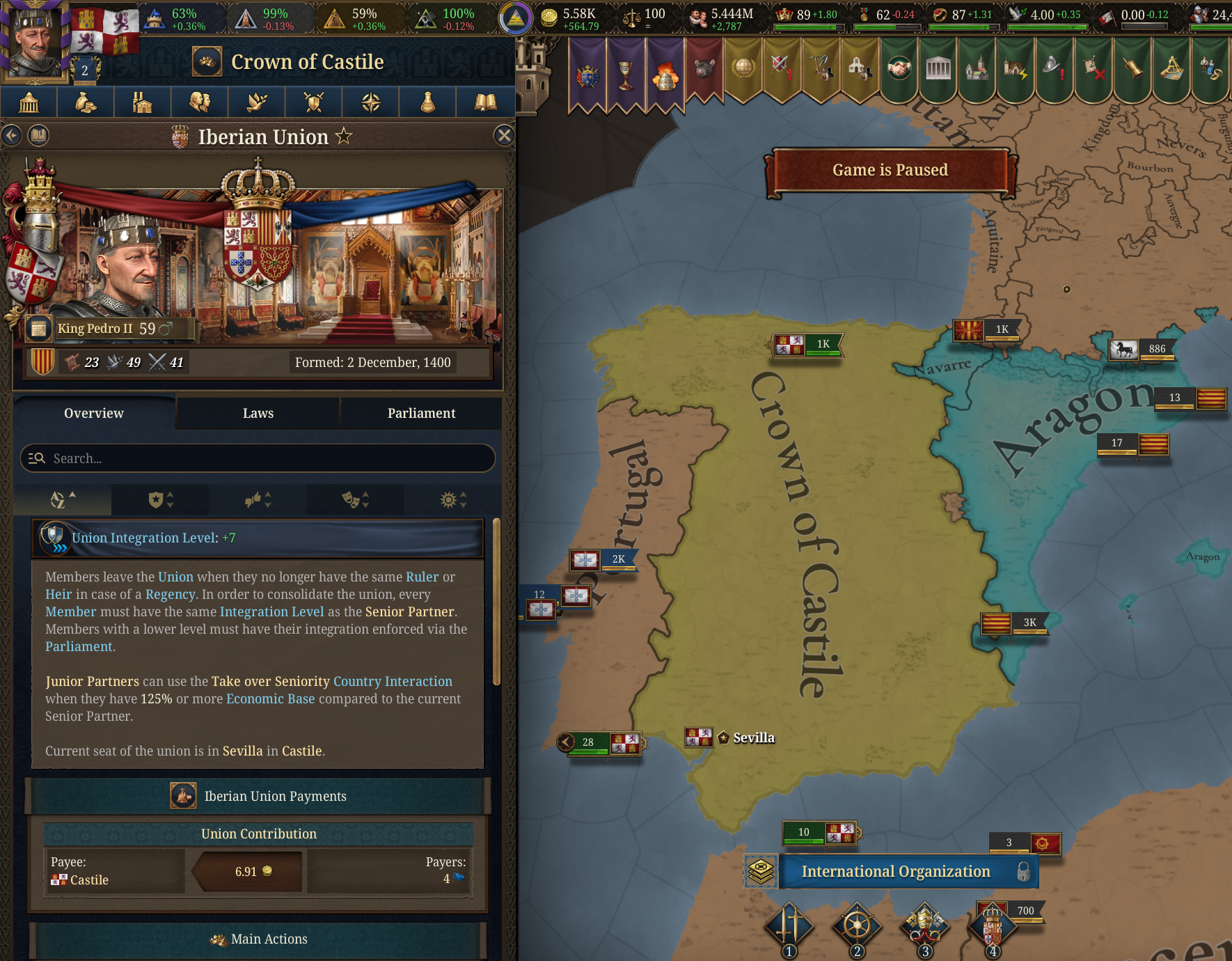
First things first, the Iberian Union will not be restricted to Castile and Aragon, but it will be able to trigger with different countries, with different options of becoming the Senior and Junior partner. This will fulfill player fantasies about creating the Union after start playing with Aragon, Portugal, or Navarre. And the art of the union will change accordingly.
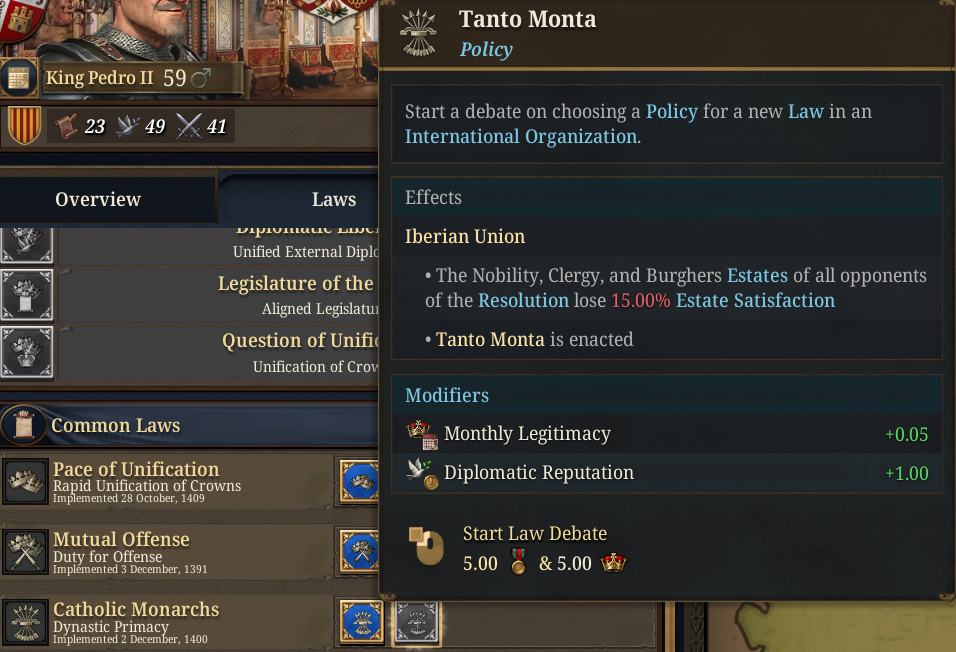
We have made it so that two different paths are enabled for the player. In the first one, it leans towards a rapid centralization and unification of the Iberian members of the union, leading to an early formation of Spain. In the second path, you’ll be digging more into a decentralized union, more akin to the ‘composite kingdoms’ that historically formed the Hispanic Monarchy, keeping their own laws and customs. The path to unification will therefore be slower, similar to the regular Personal Unions one, with unique policies giving different bonuses along the way.
Bureaucracies
Let’s now move to the new Bureaucracies. There are 4 different sets Castile/Spain, Morocco/Granada, Iberian minors (Portugal gets 2 unique ones, and Navarre gets 1), and generic Bureuacracies of Islamic countries.
The first one is for Castile/Spain. For it, it will start with a decision during Age of Reformation, that unlocks both the Royal Council of Castile government reform and unique bureaucracy:

The reform will therefore unlock what will likely be the first Bureaucracy Slot for Castile, when enacted:
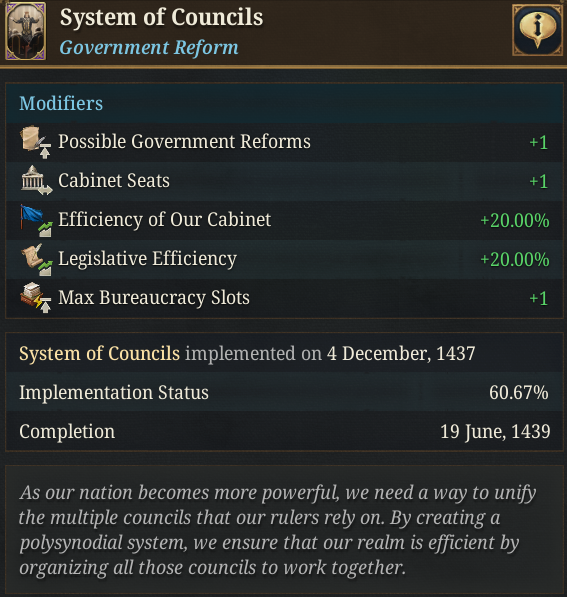
That also unlocks a set of unique bureaucracies, that have been modelled mostly upon the ‘Polysynodial System’, or, as we used to call it both in EU4 and EU5, the ‘System of Councils’. It is based on the ruling system of Castile around 1500, which was later greatly expanded during the Habsburg period, to cover the governance of the Spanish Empire. Therefore, these bureaucracies are based upon the ‘Consejos’ (‘Councils’), that were working on two different axes: matters (State, Finance, Inquisition, Orders, etc.), and geographical (Aragon, Italy, Portugal, Indies, Flanders, etc.):
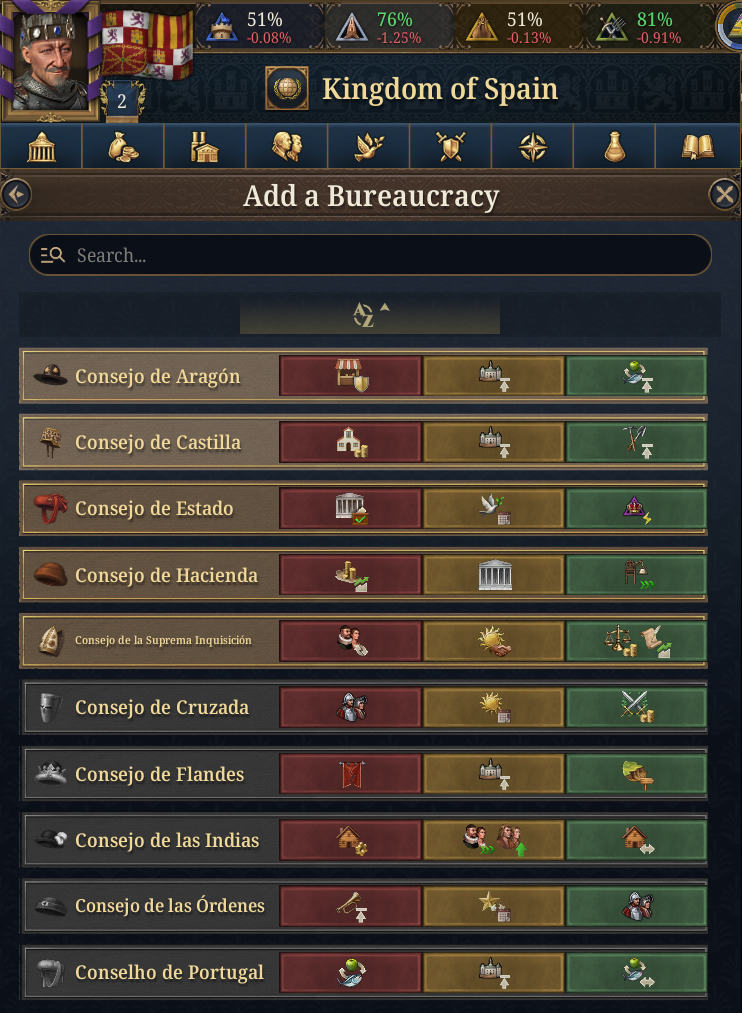
As you see, ‘Castilla’, ‘Estado’, ‘Hacienda’, and ‘Suprema Inquisición’ are always available, while ‘Cruzada’ and ‘Órdenes’ are conditional; and the regional ones (‘Aragón’, ‘Portugal’, ‘Italia’, ‘Indias’ and ‘Flandes’ depend on the having control over those regions.
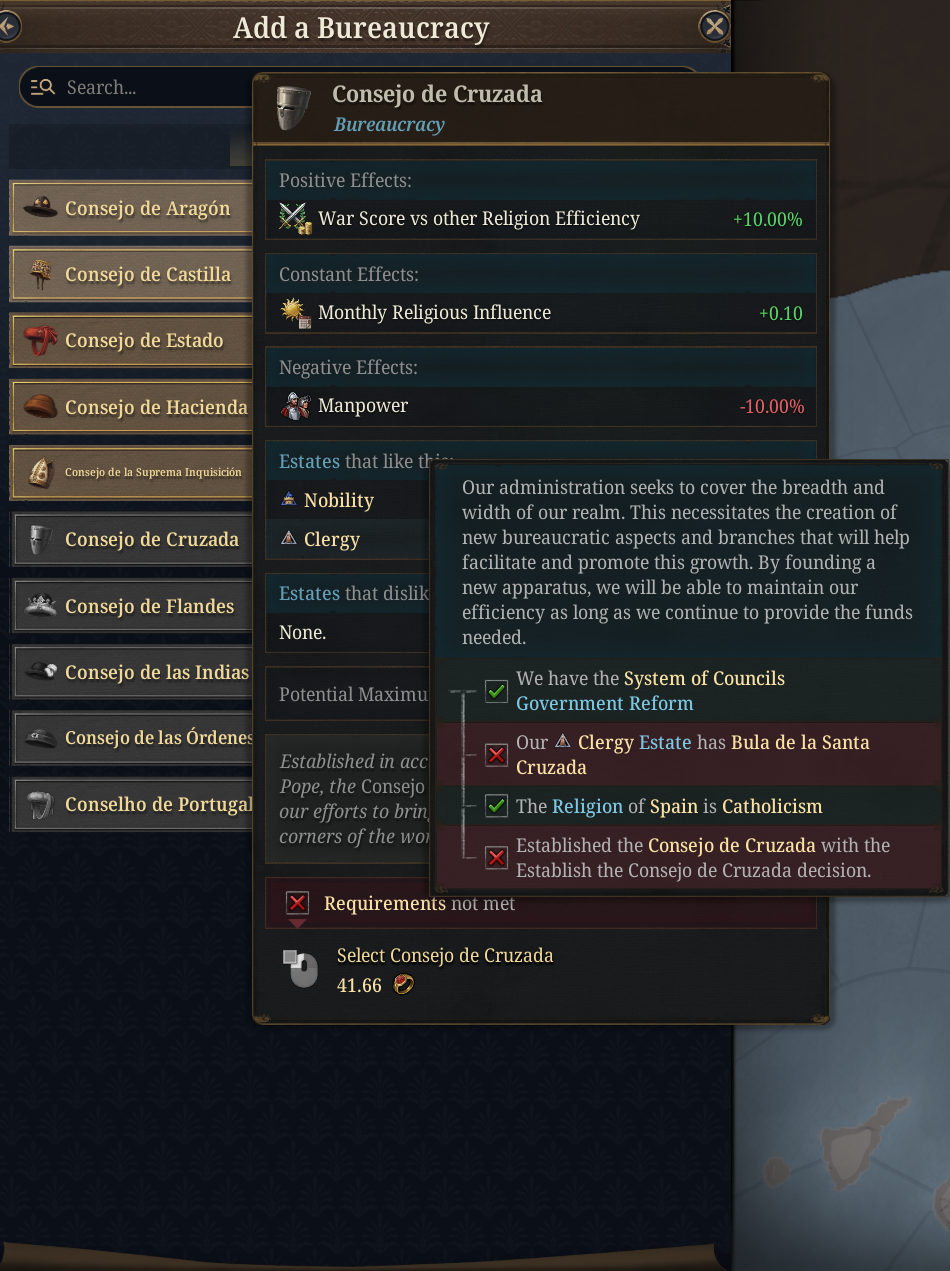
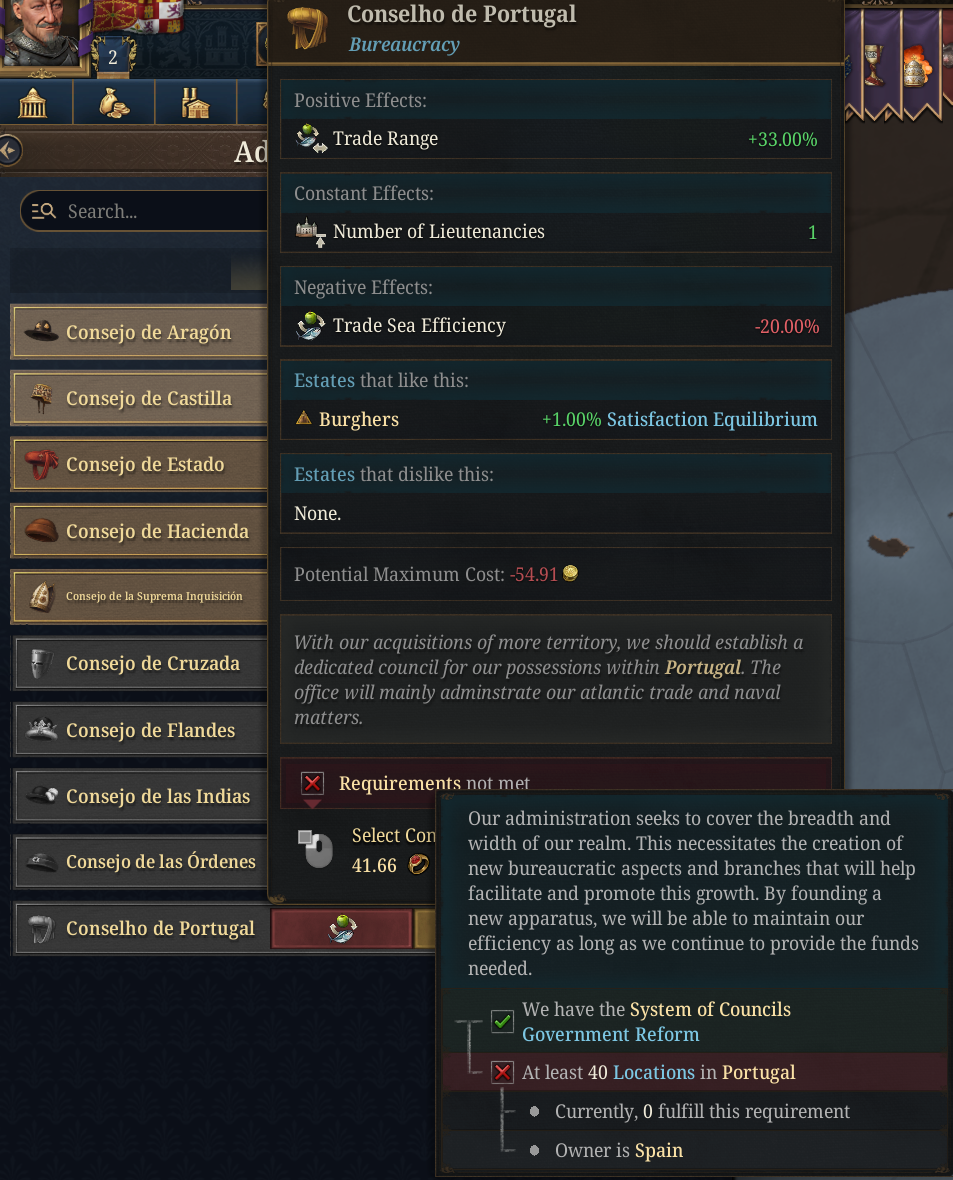
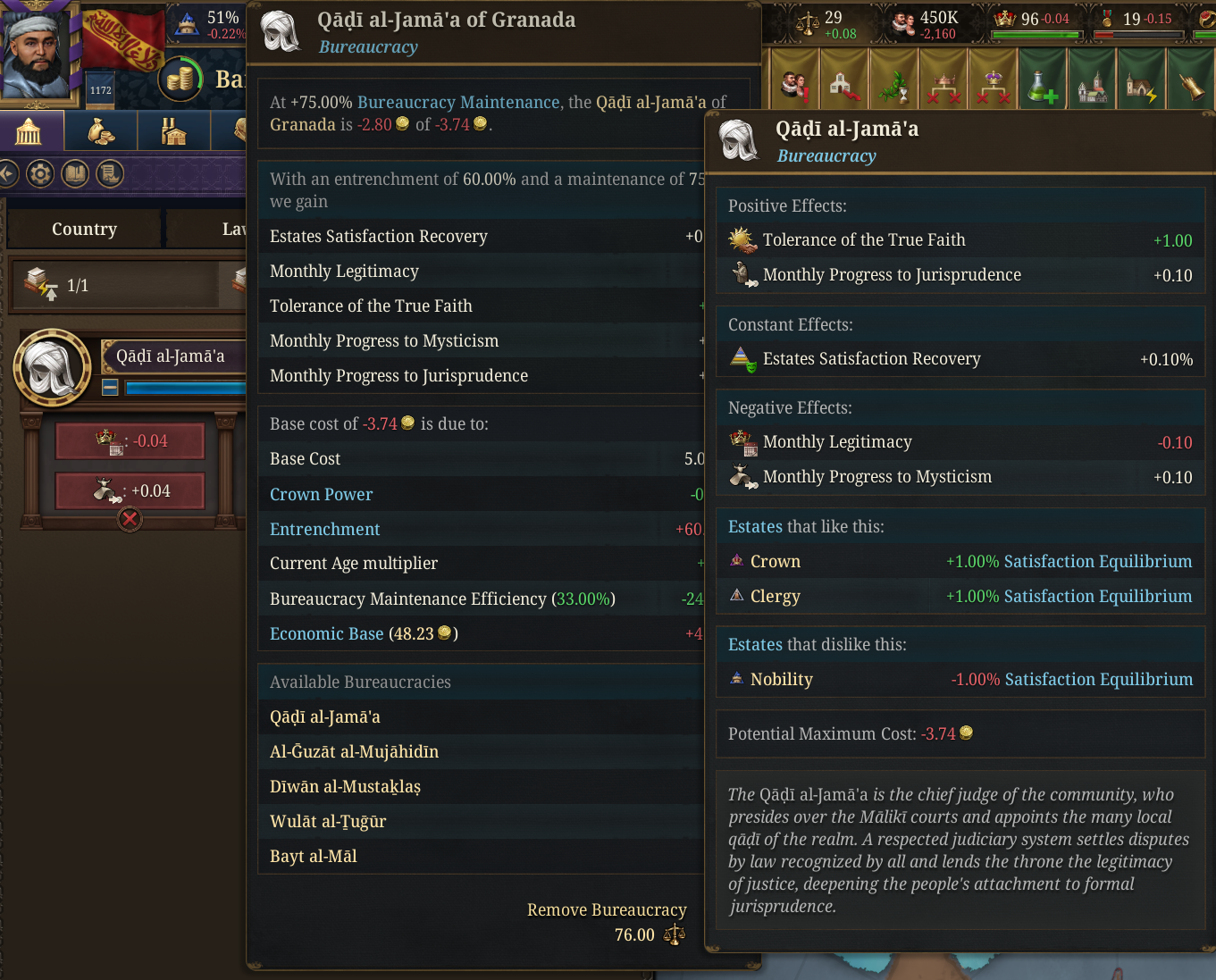
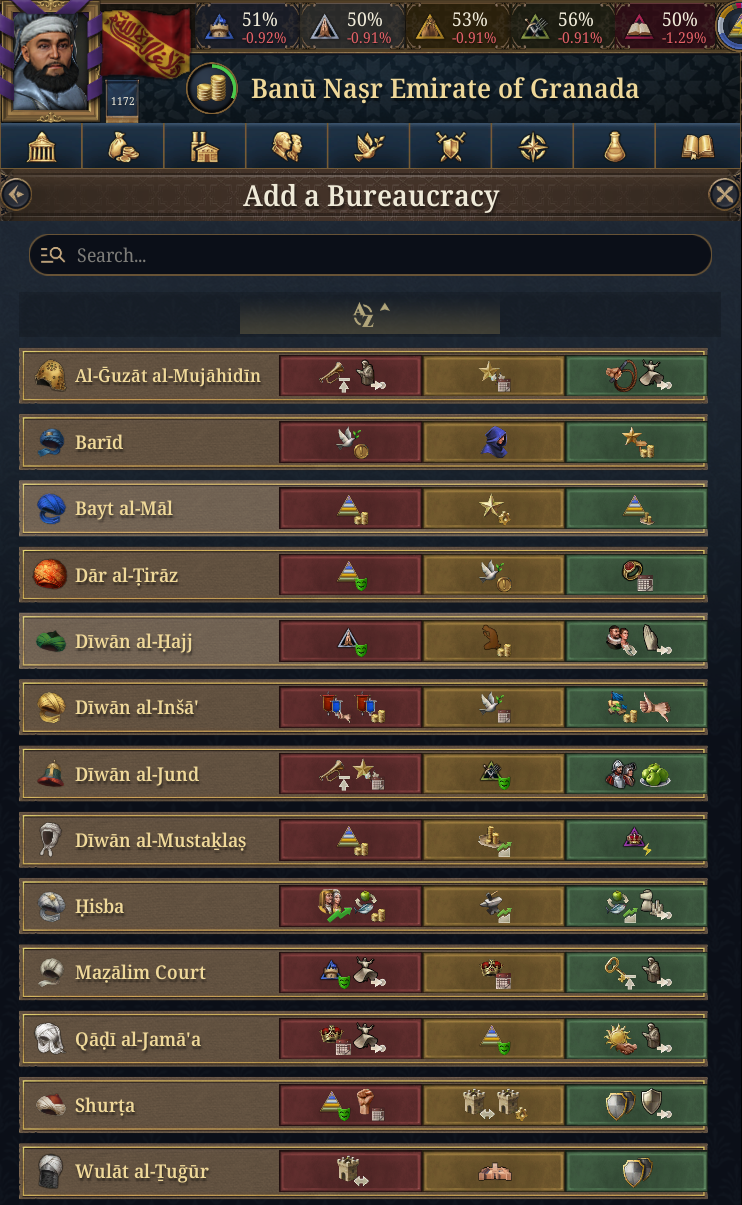
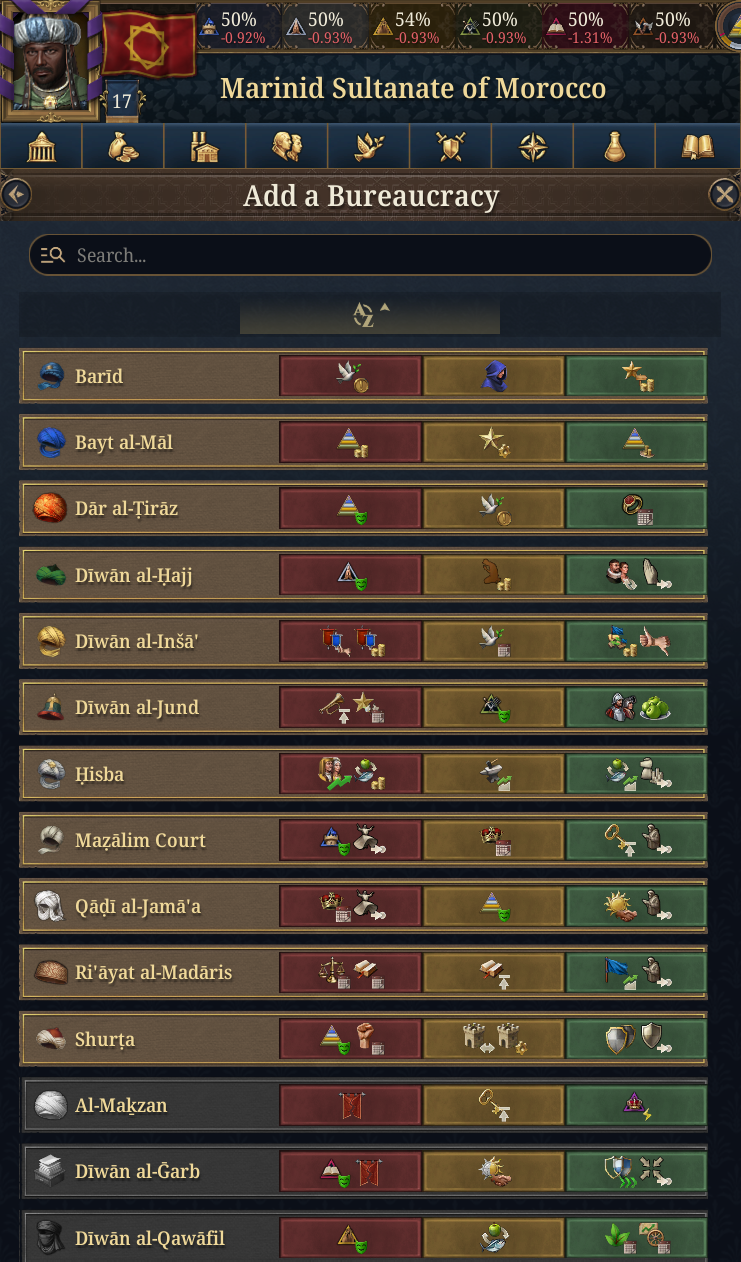
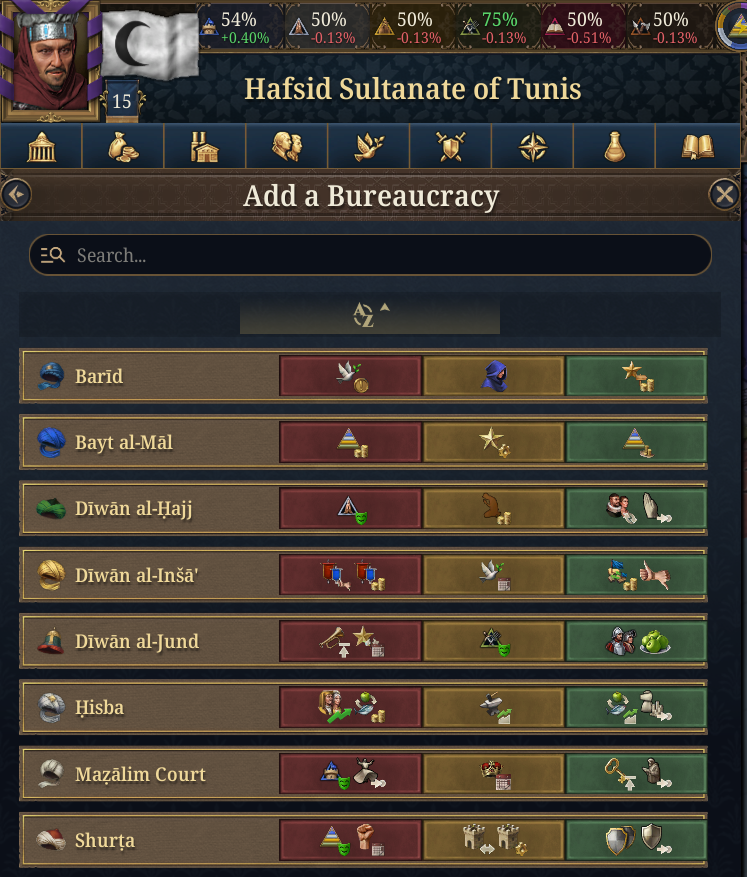
The second set are the unique Bureaucracies for Granada and Morocco. They both share some, and have some unique ones each. This set then is built upon the 8 generic ones that we’ve added for Islamic countries in the base game for the 1.4 update. And I think that is rather better to show them to you, rather than describing them:
Expeditions
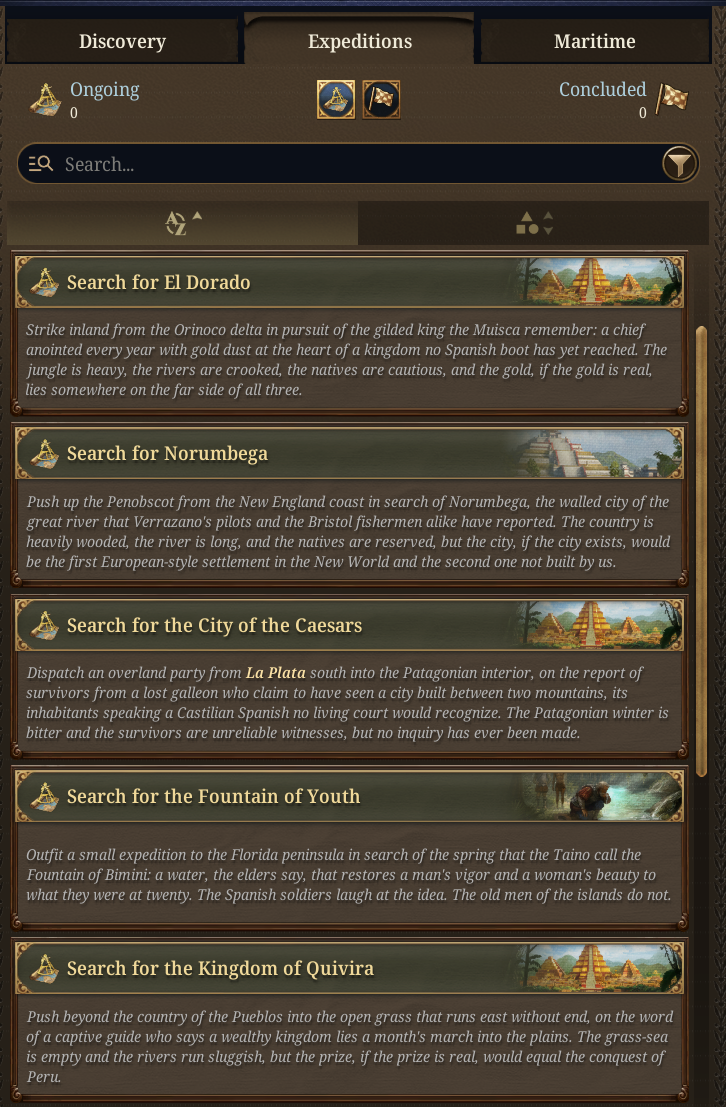
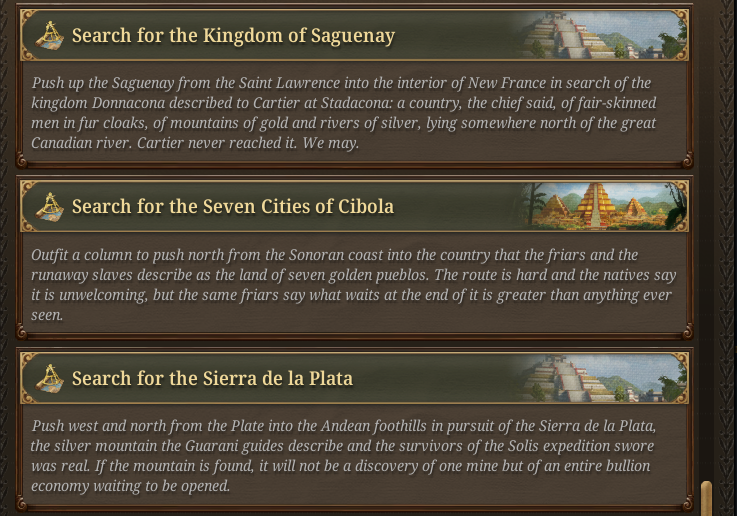
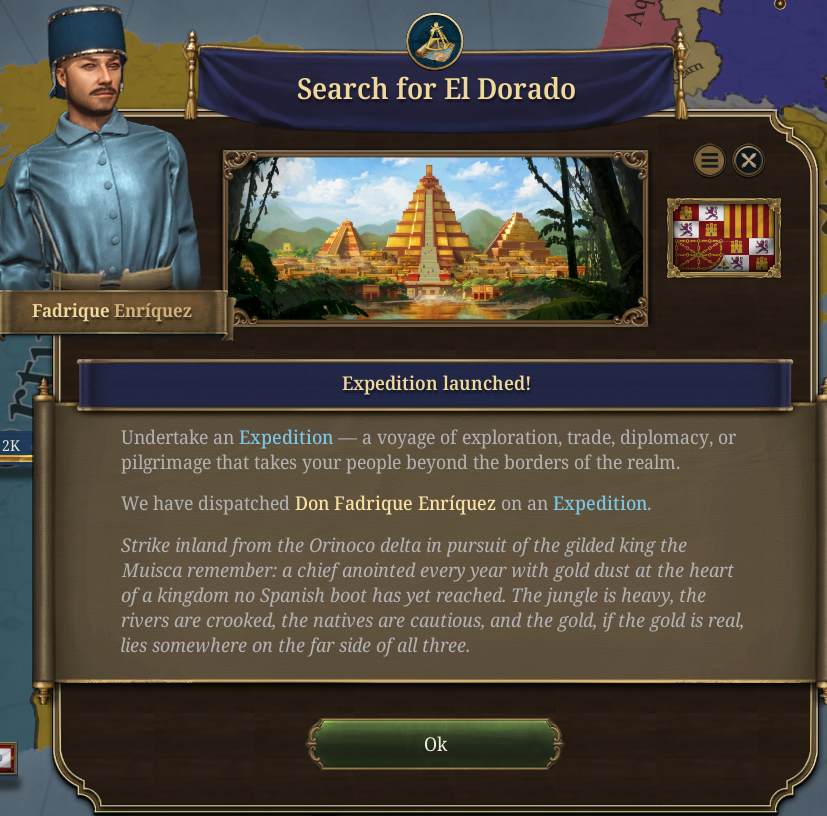
There are some unique Expeditions coming in Across the Pillars, as well, of two types. First, we have an old friend returning on a different way - a set of expeditions based on ‘The Search of the Golden Cities’. These are 8 expediitons that are unlocked once America has been discovered, and that will aim to find these mythical places, that the Spanish conquistadors searched recklessly - most of the times, leaving to dramating endings.
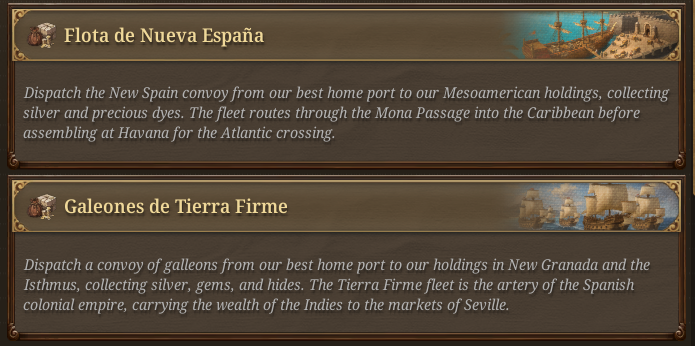
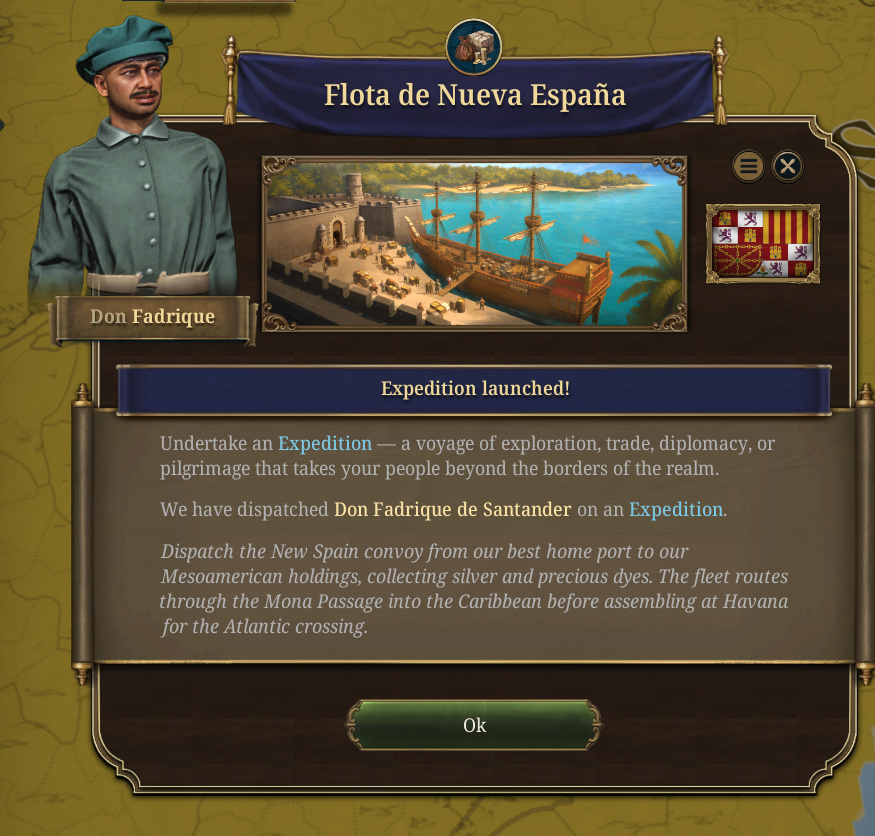
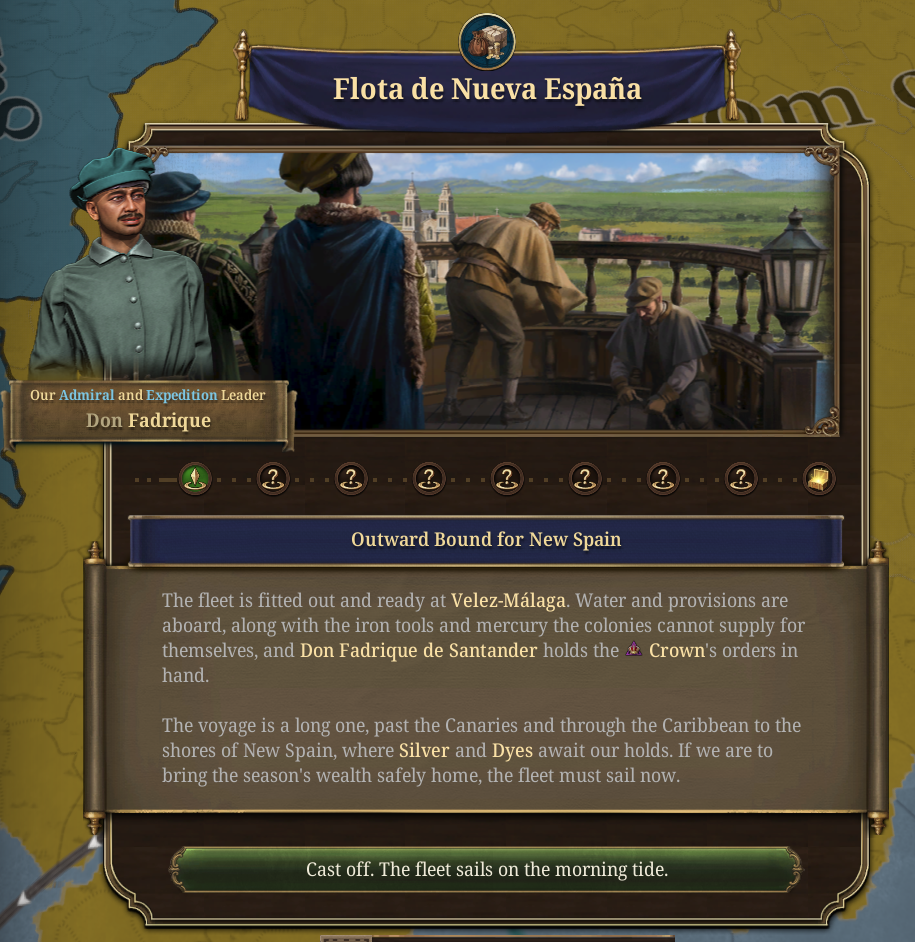
Then, we have unique Expeditions attached to unique content. For Castile, we have two, portraying the infamous Treasure Fleets - the ‘Flota de Nueva España’, targeting to the Mexican gold, and the ‘Galeones de Tierra Firme’, targeting to the Andean gold:
Crusade & Jihad
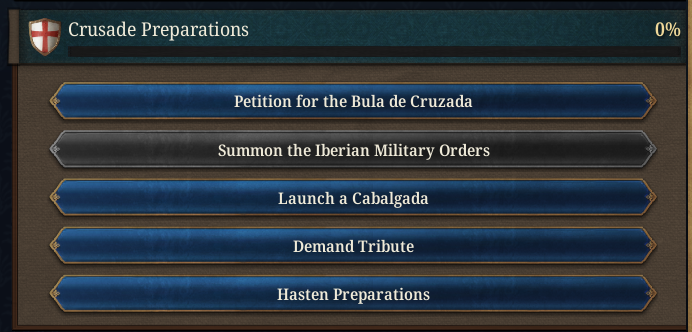
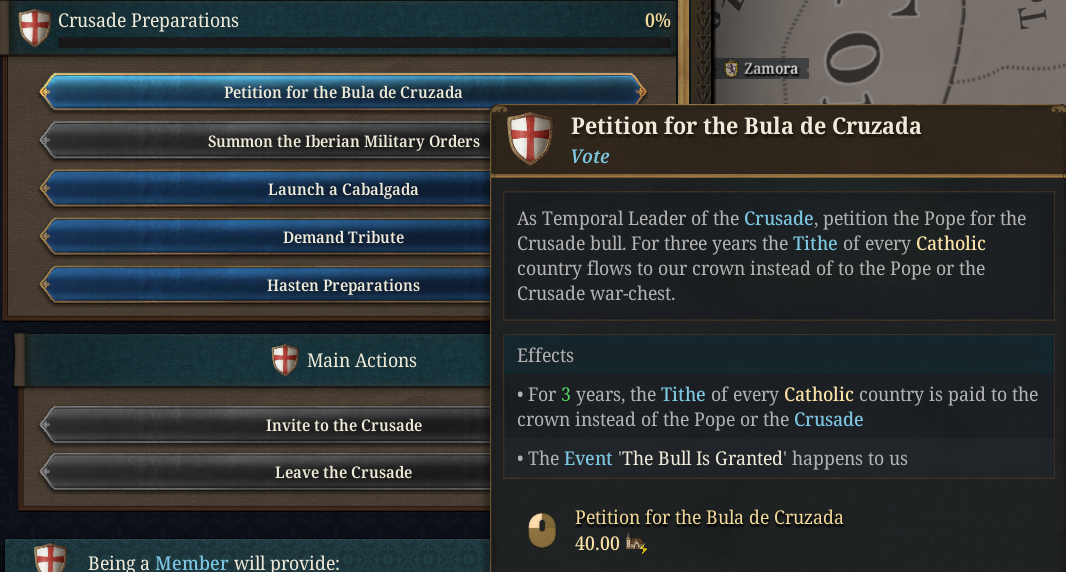
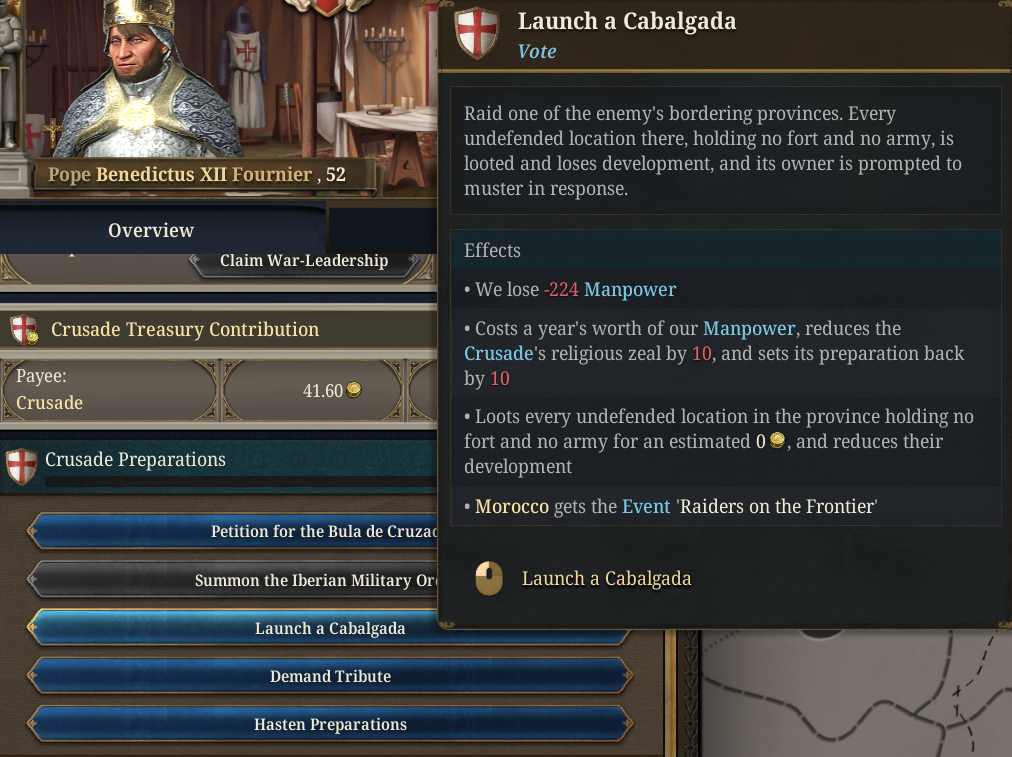
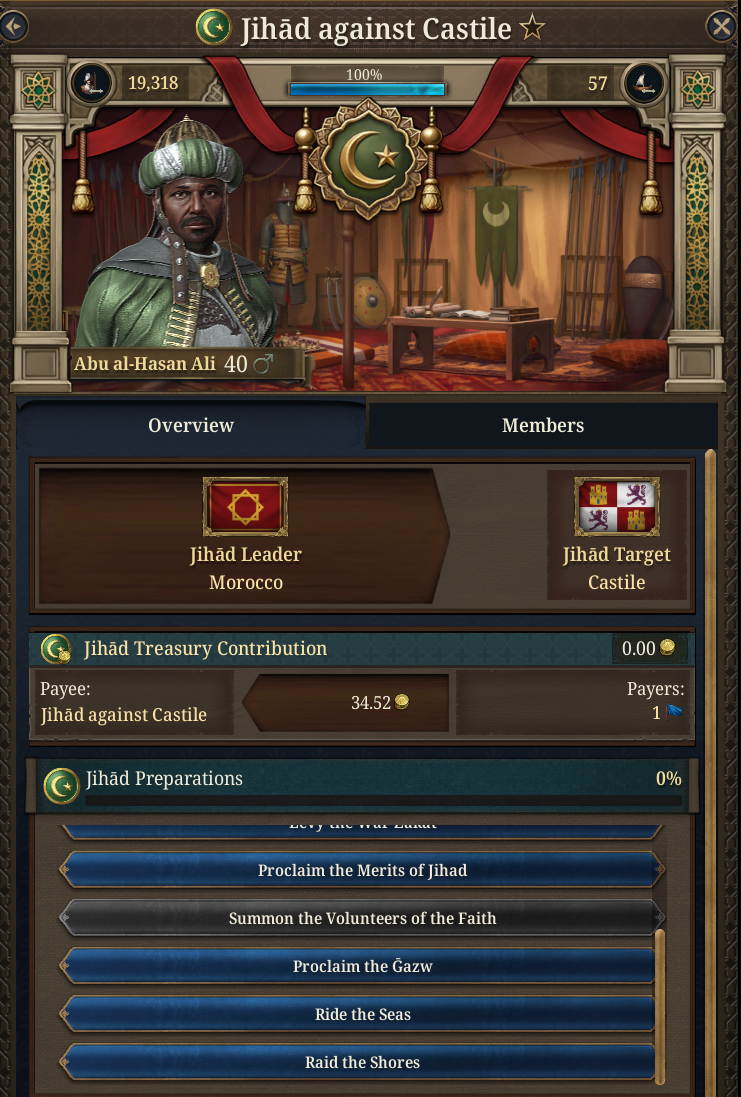
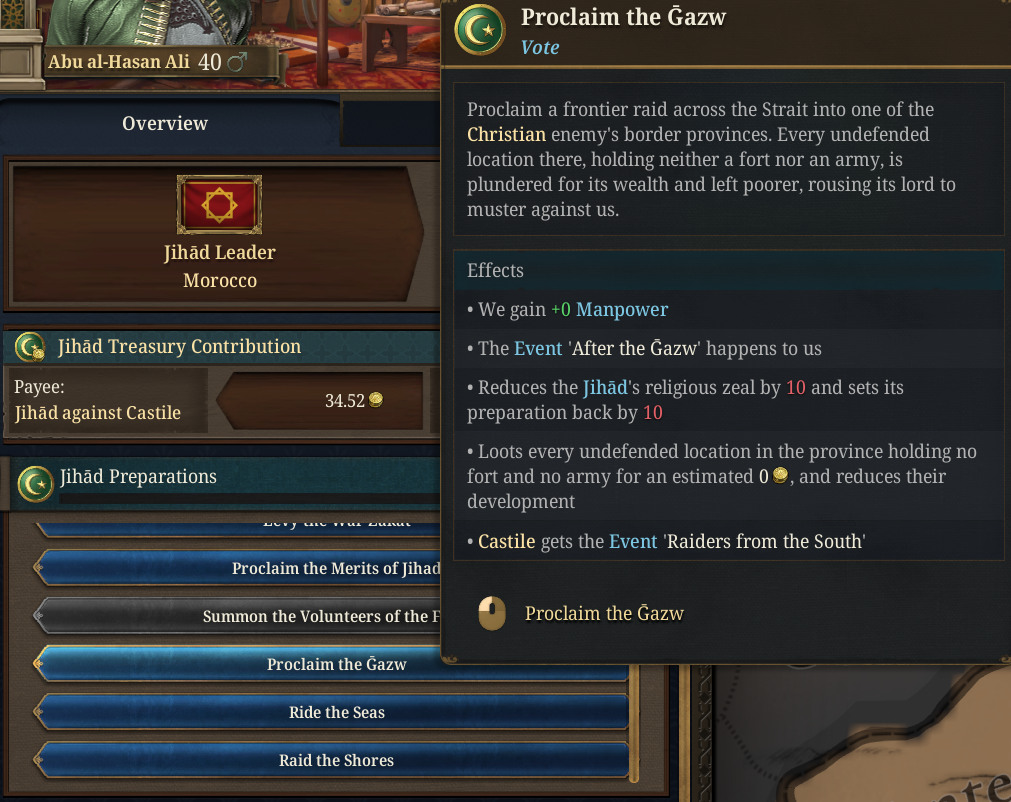
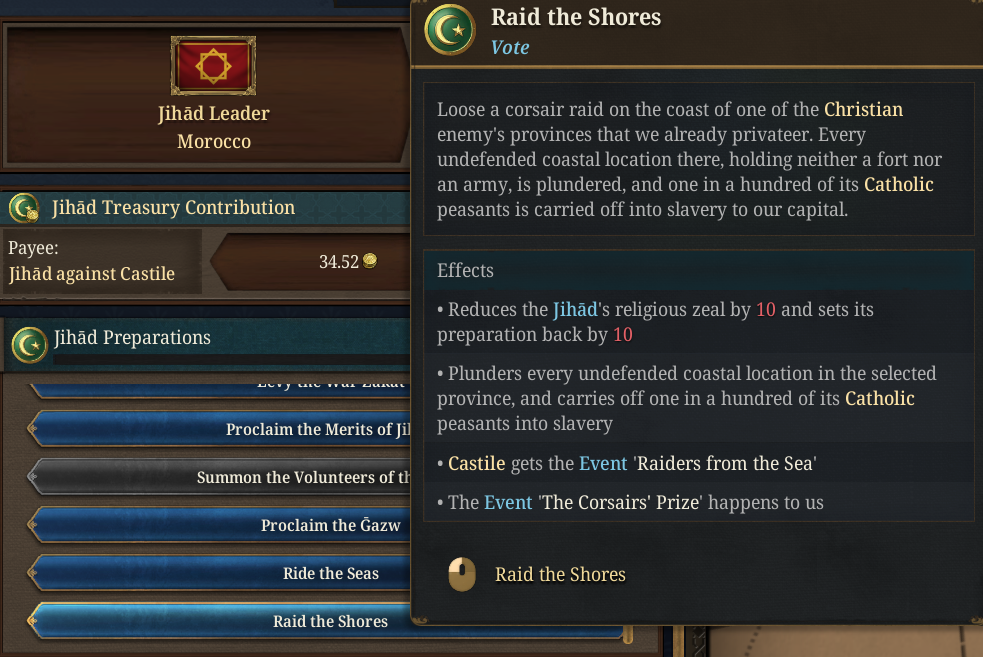
On top of what we showed 2 weeks ago, we also added some unique actions for Iberian and Maghrebi actions, that will be available at different stages:
Crusade: Petition for the Bula de Cruzada, Summon the Iberian Military Orders, Launch a Cabalgada, Demand Parias.
Jihad: Summon the Volunteers of the Faith, Cross the Strait, Proclaim the Ghazw, Raid the Shores.
Itinerant Court
The Itinerant Court has been completely reworked for 1.4 ‘Río Salado’. Up until now, it was just a policy that would make an event trigger at the start of each reign, allowing for the capital to be changed. We have reworked it to make it much more mechanical now:
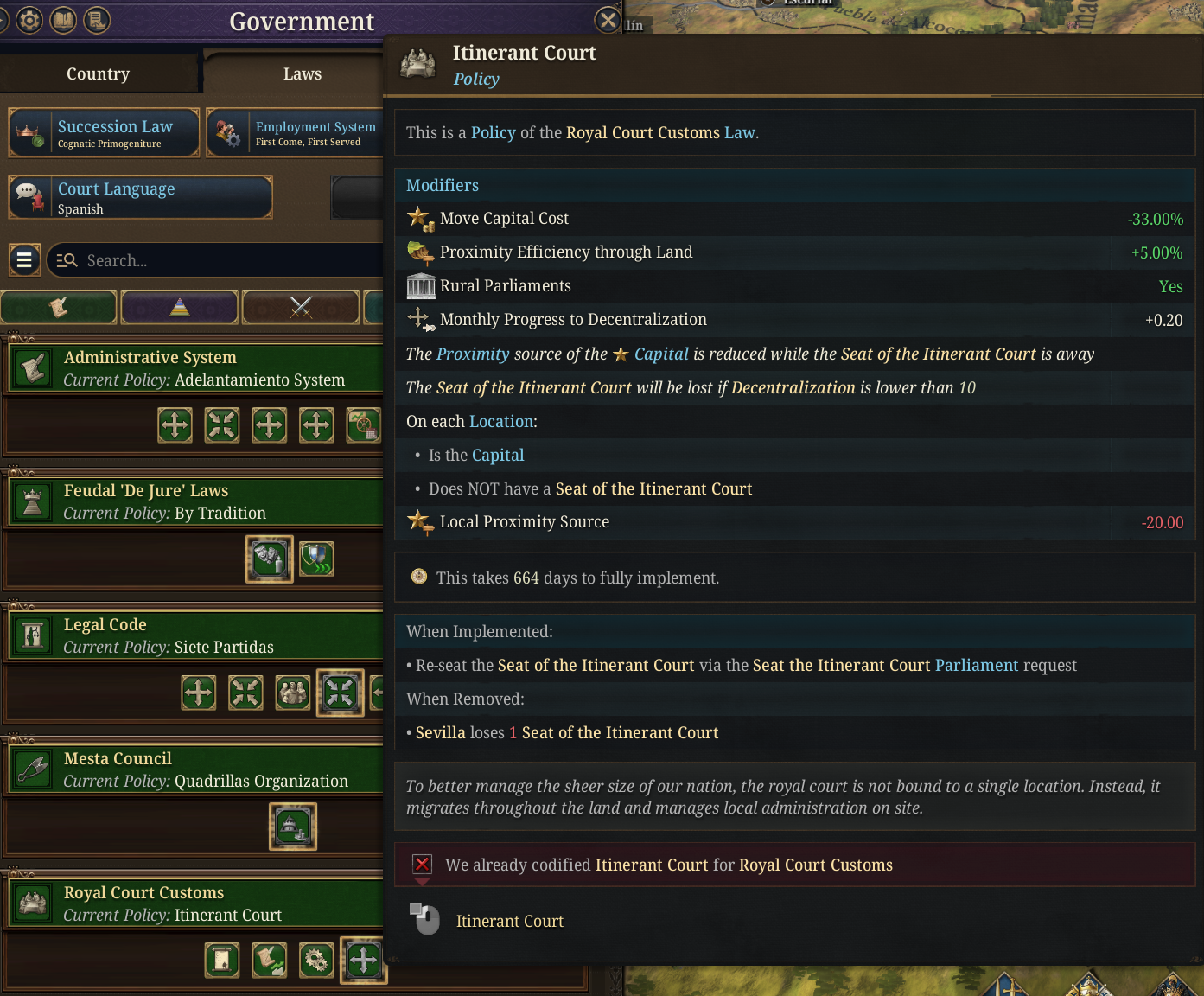
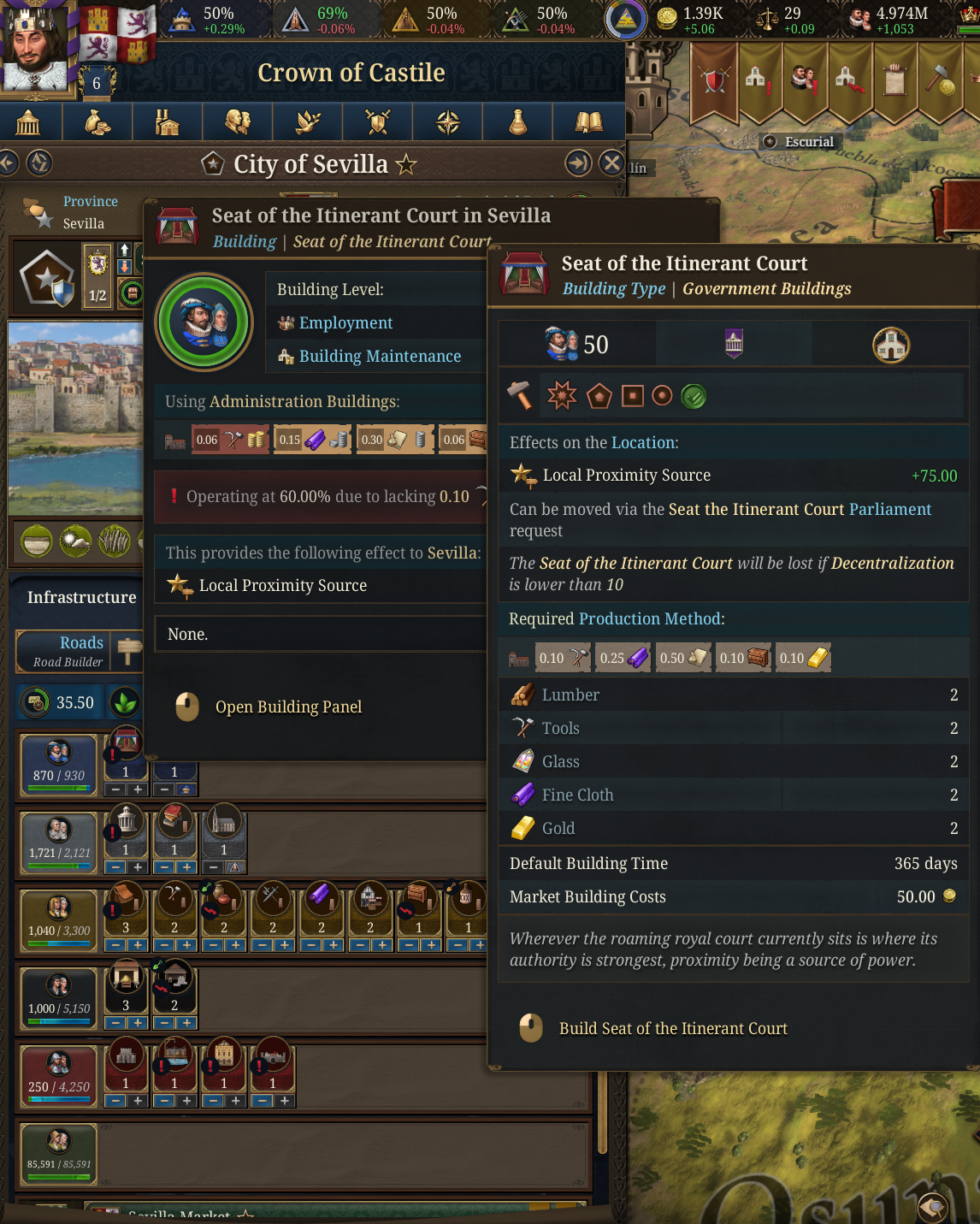
First, the Policy itself requires the country to be Decentralized enough (+10) to be enacted, and also to remain enacted. Besides its modifiers, what it enables is the new ‘Seat of the Itinerant Court’ building, which operates similarly to a Local Governor building, but with a key difference: it can easily be moved around. Also, while outside of the capital, it will reduce slightly (from 100 to 80) the proximity spread to neighboring locations:
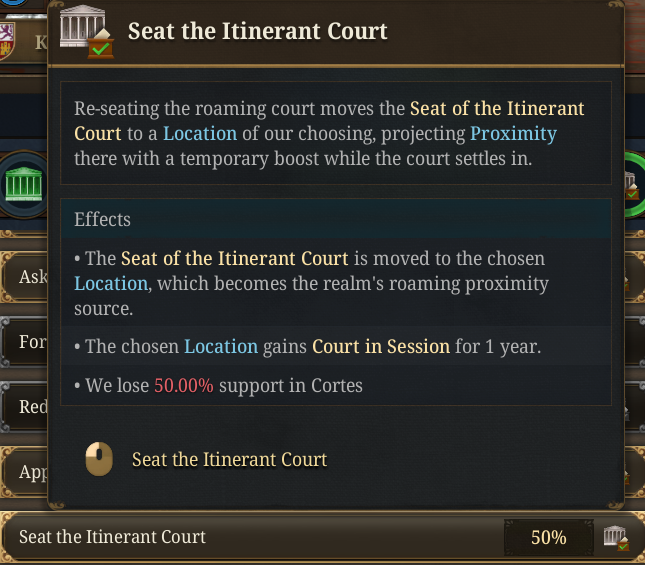
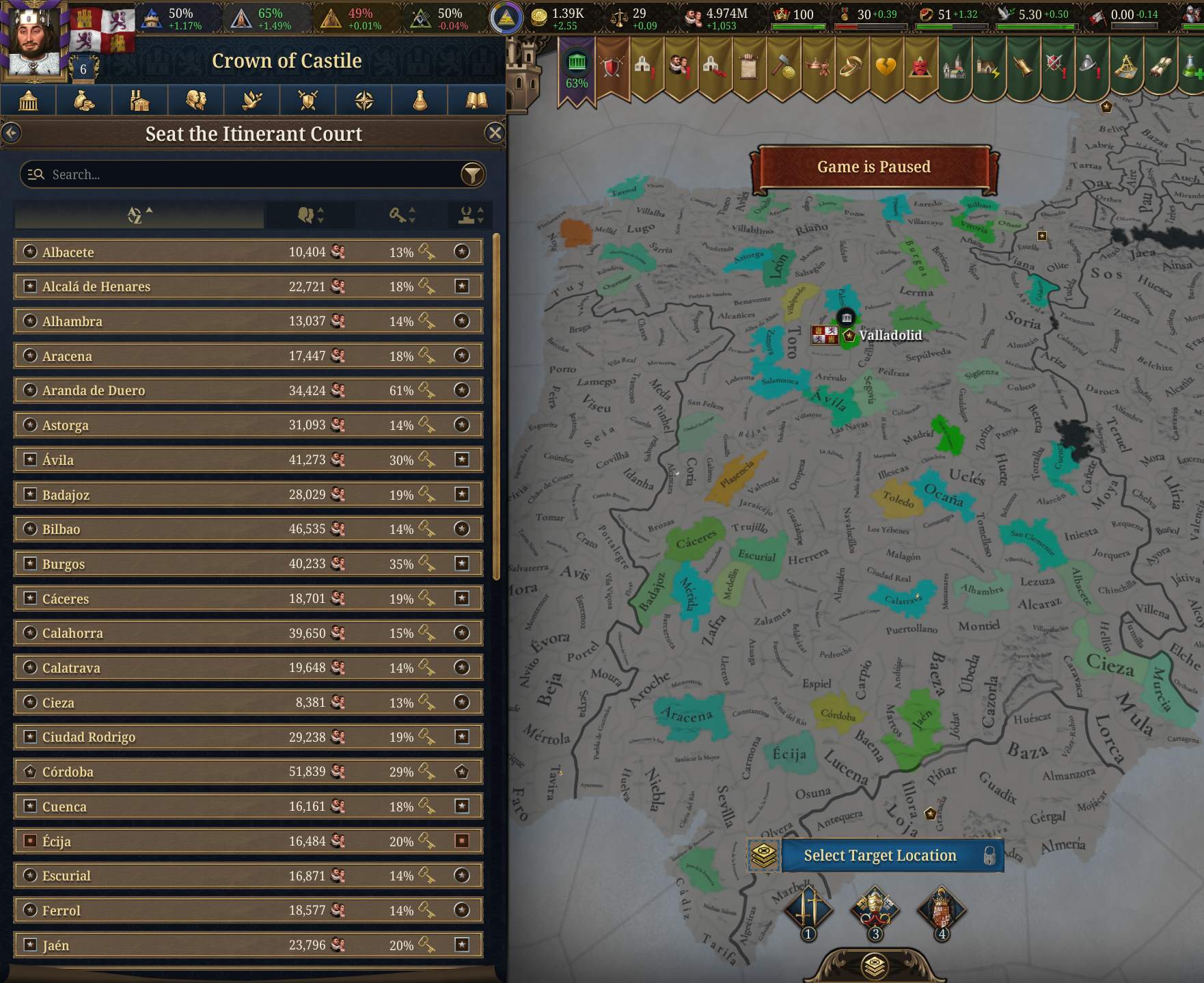
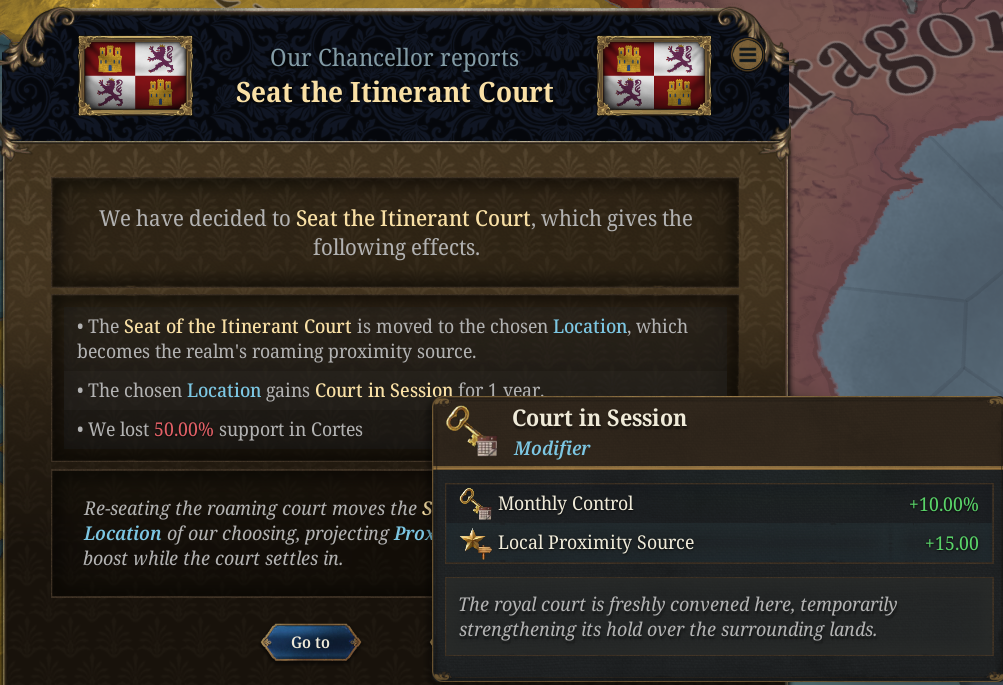
The way of moving it is via a Parliament Request, which means that can be done every 5 years. It can be moved not only to any urban location, but also to provincial capitals - which means that it will be handy for countries such as Ethiopia, that starts with it the policy enacted, but it’s a not-urbanized country at the start of the game:
And that’s all for today! Next week, we will be talking about the Flavour Content that we have created for both Iberia and Maghreb, which covers much more than Castile, Morocco, and Granada (even if they’re the main focuses of the DLC), as you will see. And a final word for those of you who are playing the 1.4 Open Beta - we hope that you’re enjoying it, and thanks for your feedback and reports in the Open Beta subforum, as that is the most helpful and important for us in improving the quality of the full and final 1.4 release! Cheers!