
Over the past few months, we’ve received an incredible amount of feedback following our recent playtests and the release of our first gameplay clips. As indie developers, analyzing and acting on player feedback is essential to us, because our community’s input is what truly helps us make the game better. We want to thank everyone who took the time to share their thoughts, critiques, and ideas. During development, it’s easy to get too close to the project, overlook certain flaws, and love your game just the way it is, rough edges and all. That is exactly why your fresh perspective is so crucial to us—it helps us see the game clearly and make it better.
Based on your feedback, the most frequently discussed points were:
Combat combo animations felt too choppy, lacking smooth transitions between strikes.
The ballet-inspired movements risked becoming repetitive.
The overall sense of impact from landed hits felt lacking.
We are actively working on improving these aspects every single day. Our small animation team is actively refining Tsarevna’s moveset, gradually expanding her combat options and smoothing out the transitions between strikes.
It’s a complex and delicate balancing act: we need to preserve the beauty and expressiveness of dance within the tight constraints of game timings, all without sacrificing the clarity and readability of combat.
Taking your feedback into account, we decided to implement a series of changes and take a closer look at how other titles tackle similar challenges. We wanted to break down exactly what shapes a player's perception of quality, responsiveness, and expressiveness when it comes to character movement.
In this devlog, we’ll take you through our current workflow, our initial results, and our plans moving forward.
Character Animation: The Intersection of Dance and Combat
Creating animations for games is a completely different beast compared to film or CGI animation. First and foremost, this is due to the strict timing constraints imposed by the game genre itself.
For hack-and-slash games, responsiveness—how fast a character reacts to player input—is absolutely vital. In our case, the task becomes both more challenging and more exciting: we need to blend that snappy responsiveness with the fluid, graceful language of dance, maintaining a balance between the elegance of her movements and a satisfying gameplay experience.
We are currently testing new approaches to this challenge. Recently, we’ve managed to make transitions between movements noticeably smoother, making combat feel natural and spectacular without compromising on tight, responsive controls.
We also continue to expand Tsarevna’s combat moveset to ensure encounters remain varied and her actions visually striking.
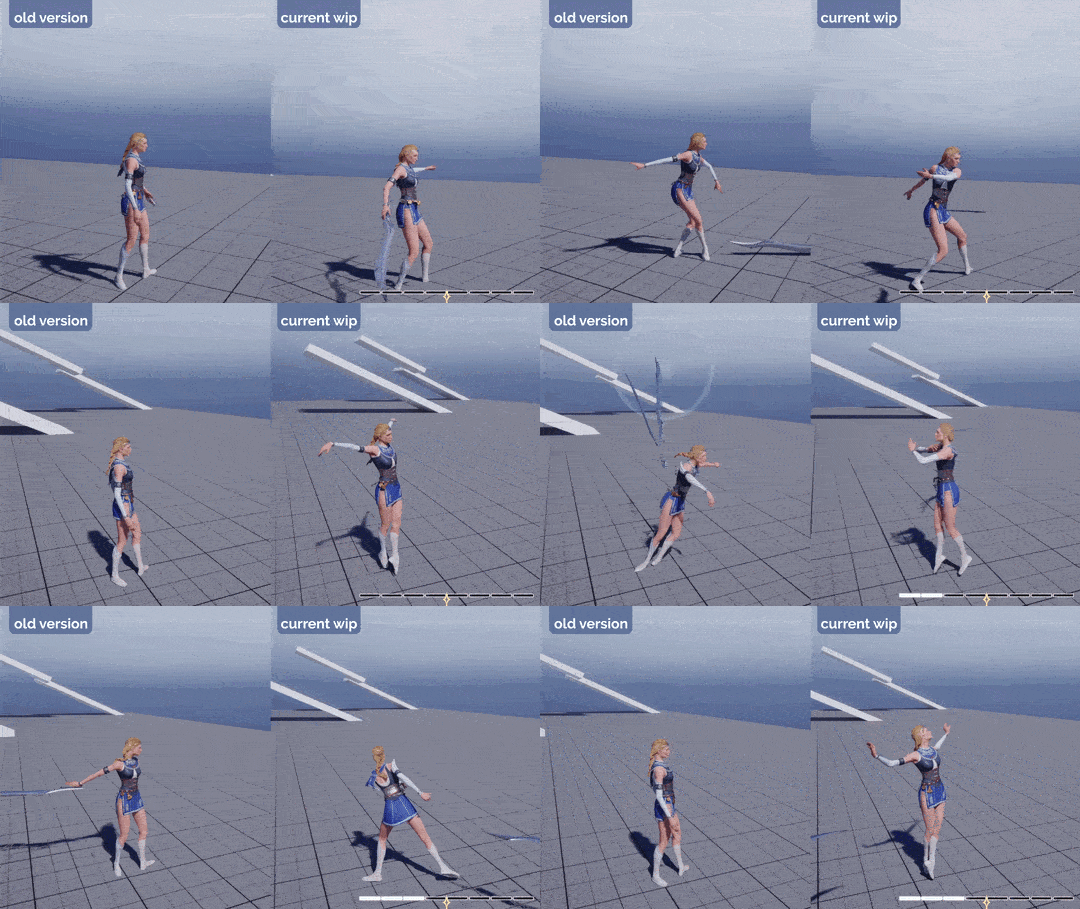
Left: Old combat combo version; Right: Updated combat combo version with smoother dance transitions (Work in Progress)
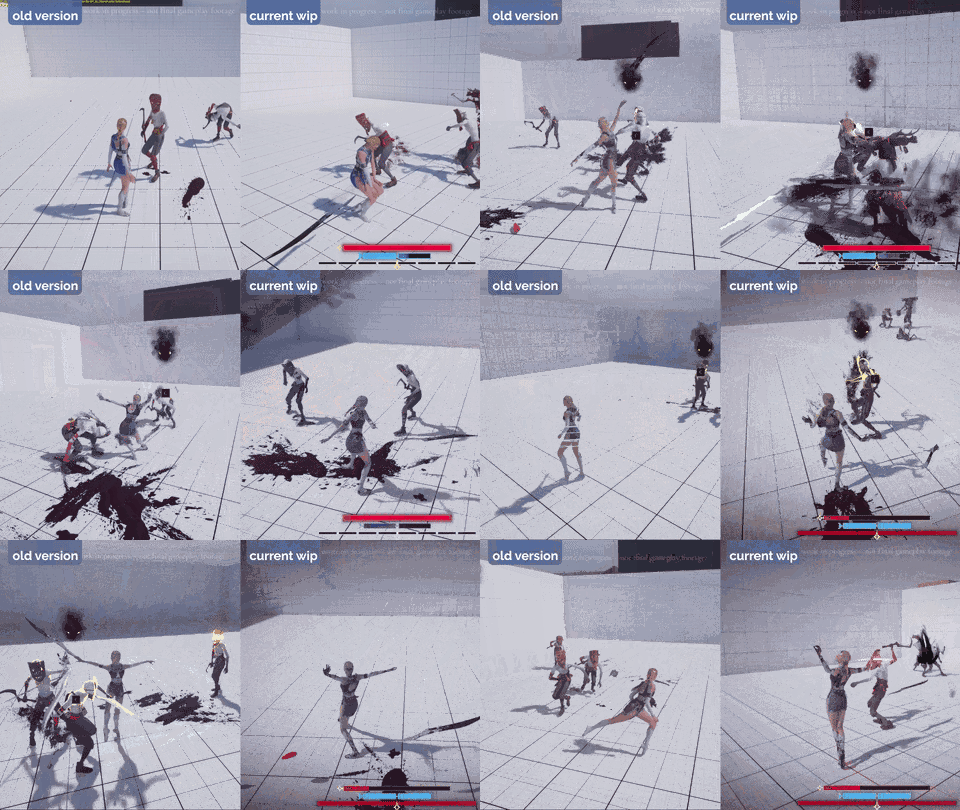
Left: Old version of in-combat combo; Right: Updated version of in-combat combo (Work in Progress)
In parallel with tweaking the combat system, we are reworking the character's general movement logic. While this process is still ongoing, we have already improved animation blending and added more variety to basic locomotion, such as movement starts, stops, landings, and other transitional states.
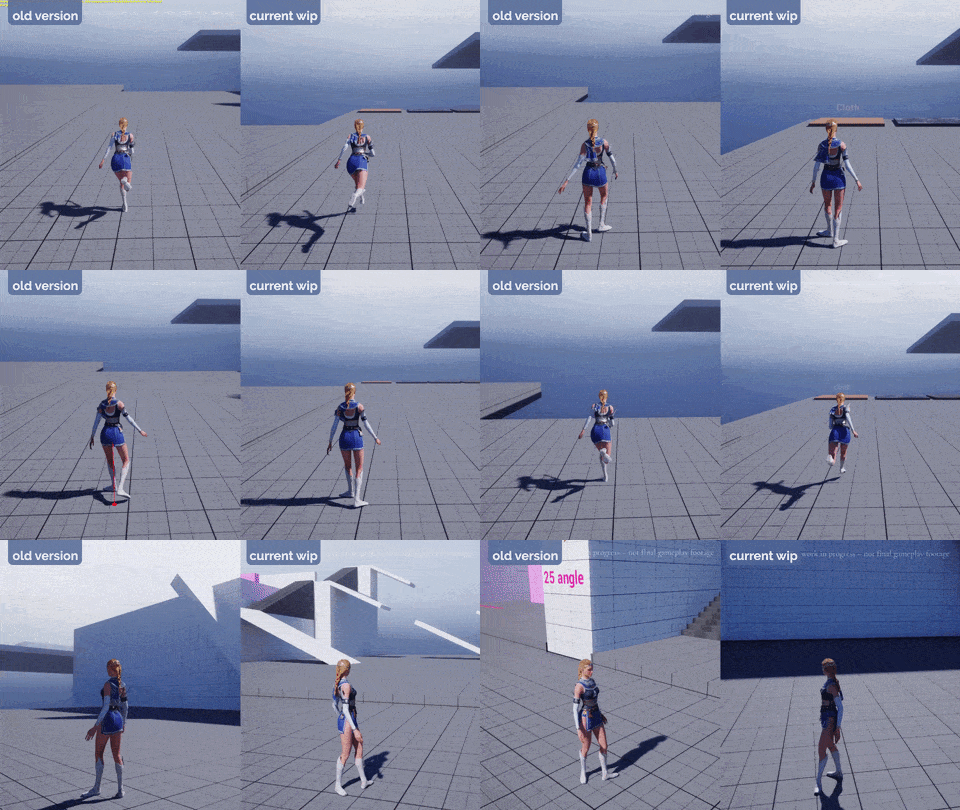
Left: Old character locomotion setup; Right: Updated character behavior setup with bug fixes, refined animations, and transitions (Work in Progress)
Analyzing References
To improve the feel of combat impact, we aren't just looking at character animations alone; we're studying all the elements that shape the perception of a fight. This includes sound design, visual effects, weapon trails, hit flashes, and camera work.
Below is a quick glimpse into our reference research.
Visual effects play a major role in how a battle feels. As we refine our combat, we are taking a close look at how sword movements can blend with the heroine's balletic posture, and how different approaches affect the readability of attacks.
Initially, we used a fairly literal system: the path of Tsarevna’s arm performing a balletic port de bras dictated the movement of her magical levitating sword, and the sword’s position, in turn, generated the VFX trail.
However, after a deeper dive into industry references, we realized that these three elements don't need to be rigidly chained together.
Take Bayonetta 3, for example. Cereza moves in a highly stylized, dance-like manner. Her animations feature wide arcs of her arms and legs, alongside plenty of secondary motions that could easily distract from the actual attack.
The developers solve this by using a vivid, high-contrast VFX trail that follows her sharp weapon slashes. Noticeably, the trail's path doesn't perfectly mirror the actual weapon geometry frame-by-frame. Instead, it forms a cleaner, more distinct arc, making attacks easy to read even in the middle of chaotic, high-speed combat.
We are continuing to iterate on Tsarevna’s combat system, seeking out solutions that preserve her balletic grace while making controls, attacks, and movements feel as responsive and expressive as possible.
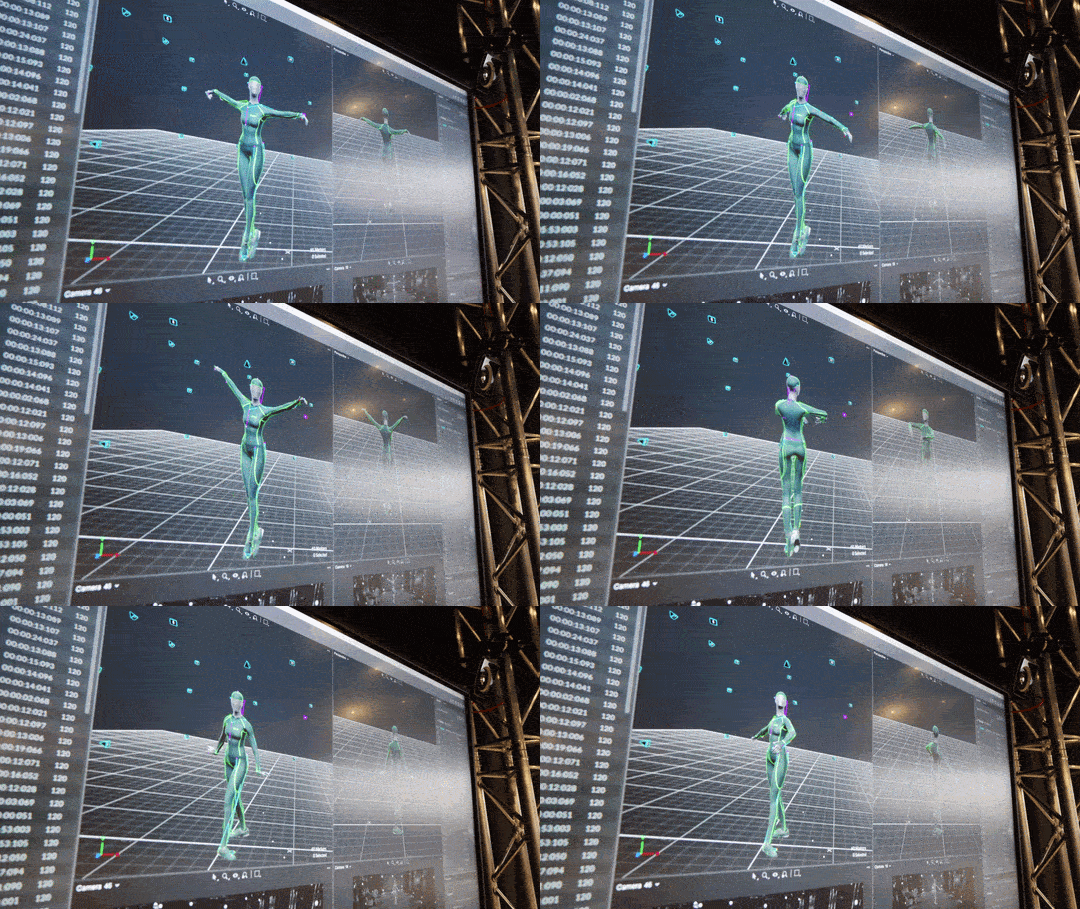
What do you think of these changes? Can you feel the progress compared to the older versions? We'd love to hear your thoughts!
Our community's excitement is what keeps us going! Please consider adding TSAREVNA. Age of Tales to your Steam Wishlist:
And keep sharing your thoughts and feedback with us on Discord: https://discord.gg/w6UzfZt9Xd