
I’m Valentin, an animation artist on the Tsarevna project at WATT Studio. Today I’ll talk about how we create the heroine’s movement by combining ballet grace with the resolve of a warrior.
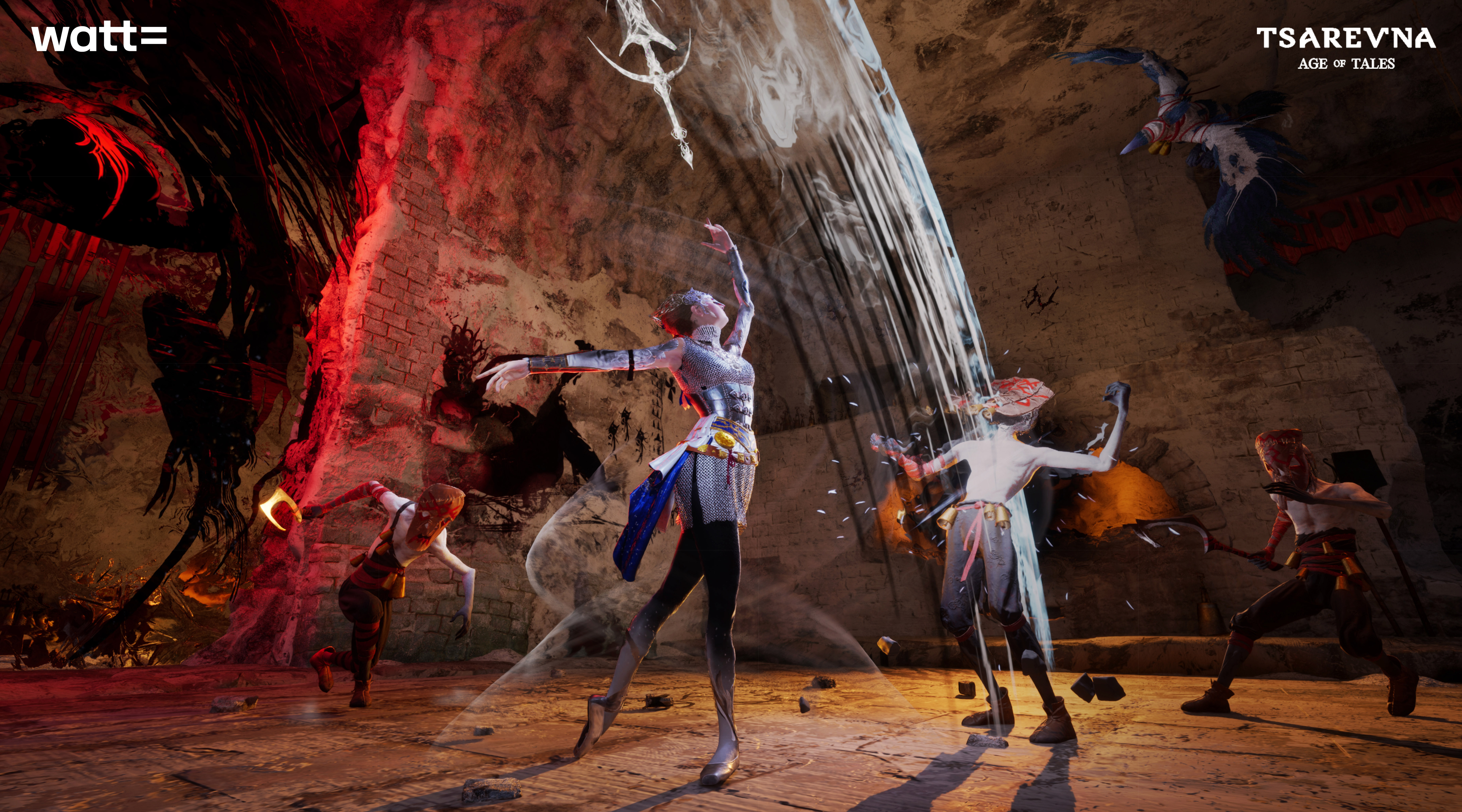
From the very beginning, we wanted Tsarevna’s combat system to feel like ballet. Not just fighting, but a performance where every attack becomes part of a dance.
Motion capture and working with experts
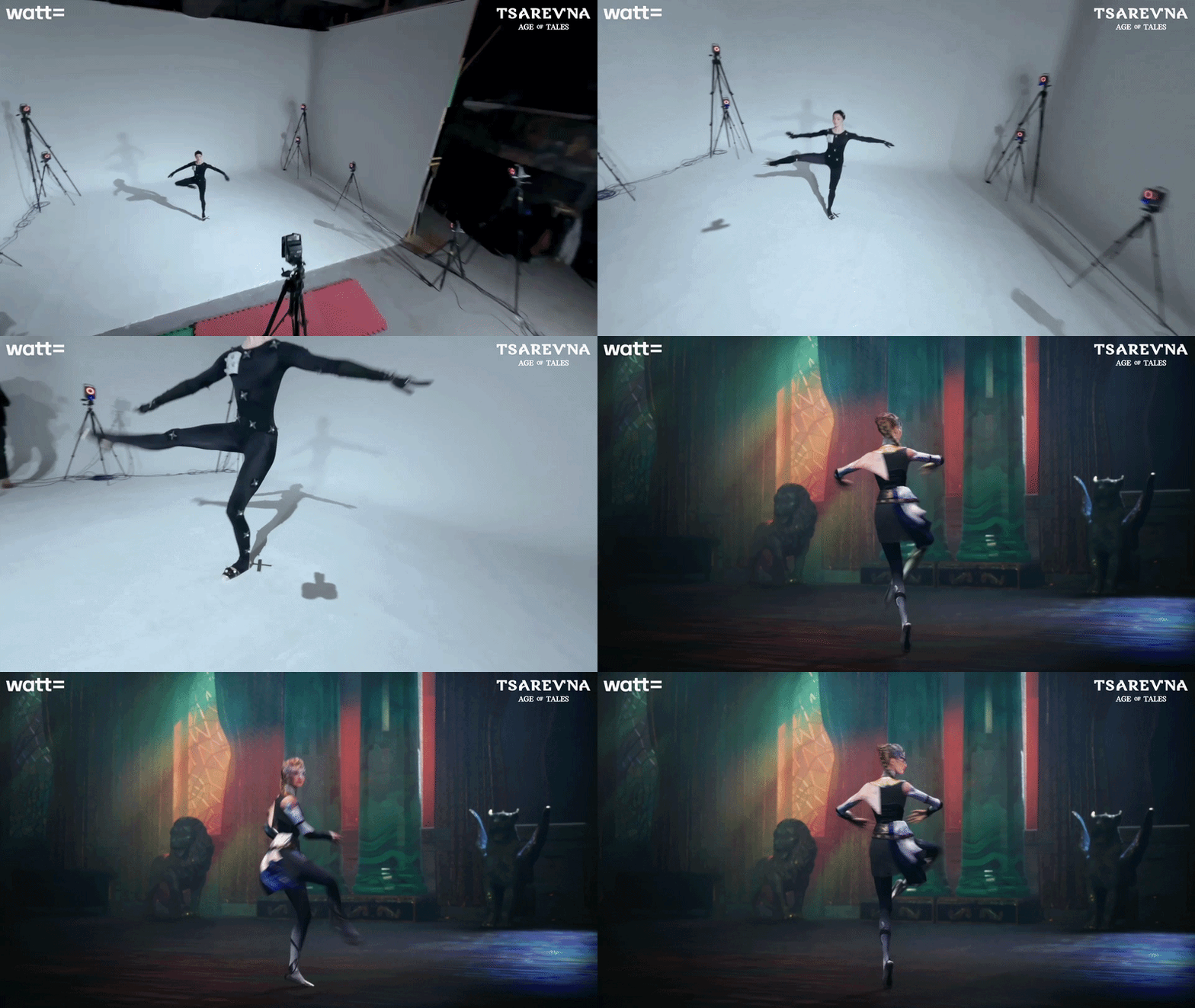
To achieve subtle and authentic movement as close to ballet as possible, we used motion capture with Alyona Kovalyova — Prima Ballerina of Bolshoi Theatre.
This allowed us to capture natural body movement, posture, and the flow of arms and legs — details that are difficult to recreate manually and are essential for making animation feel truly alive.
The challenge
One of our main goals was to find a balance between responsive controls and the fluidity of ballet movement.
A slasher demands fast and readable animations with precise timing, while ballet is built on extended lines and elegance.
It was important for us to preserve that recognizable plasticity without sacrificing combat dynamics. This is how Tsarevna’s character emerged — both swift and graceful.
Process: from game design to movement
Our animation workflow is built on close collaboration between game design, animation, and a ballet expert.
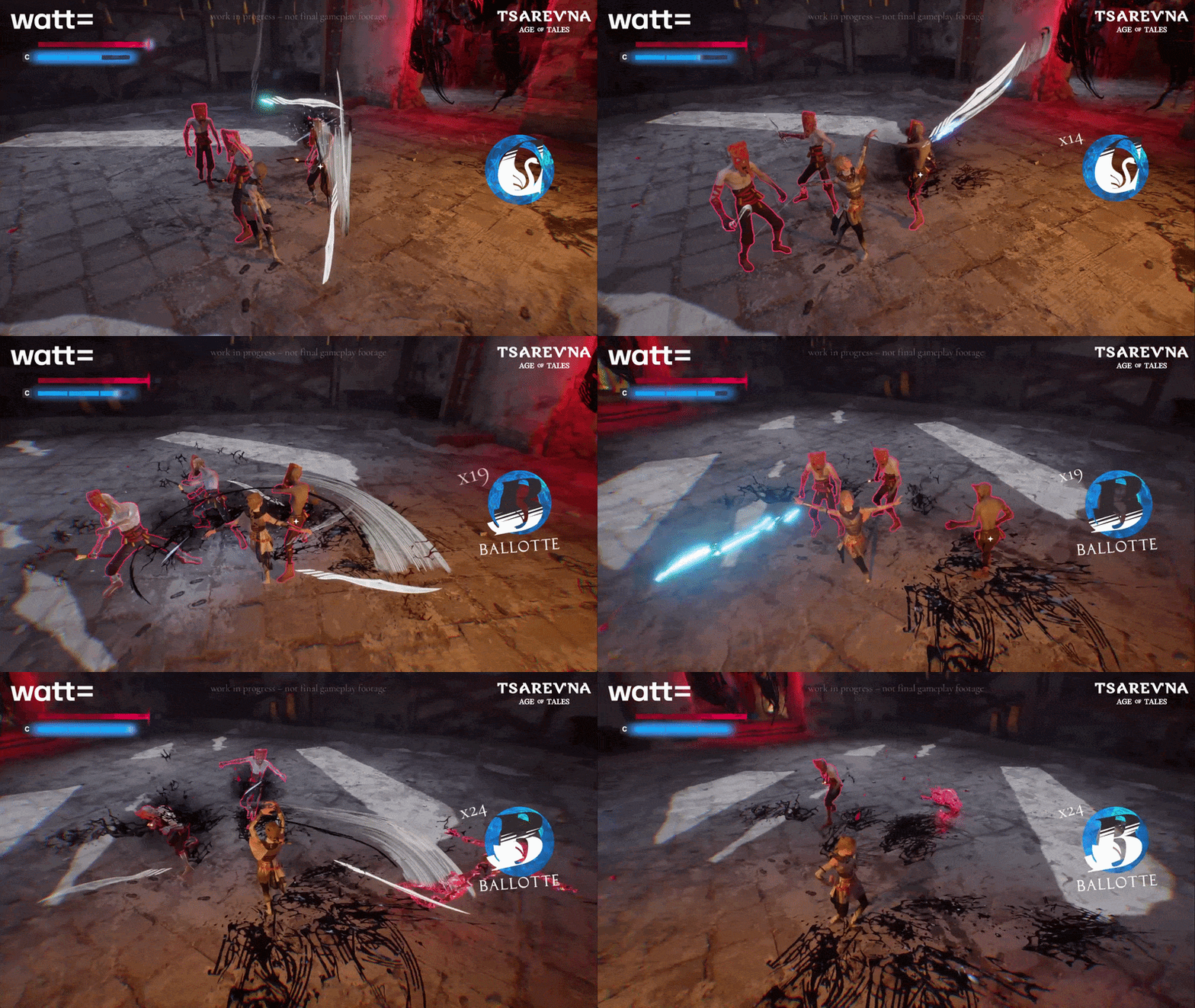
At the start, we receive a gameplay task — for example, to build a combo of three attacks: a diagonal strike, a 360-degree spin, and a vertical finishing hit.
From there, we begin searching for the right form. We gather ballet references, record live-action rehearsals, and then move to the capture stage, where we adapt movements together with Prima Ballerina to fit gameplay needs.
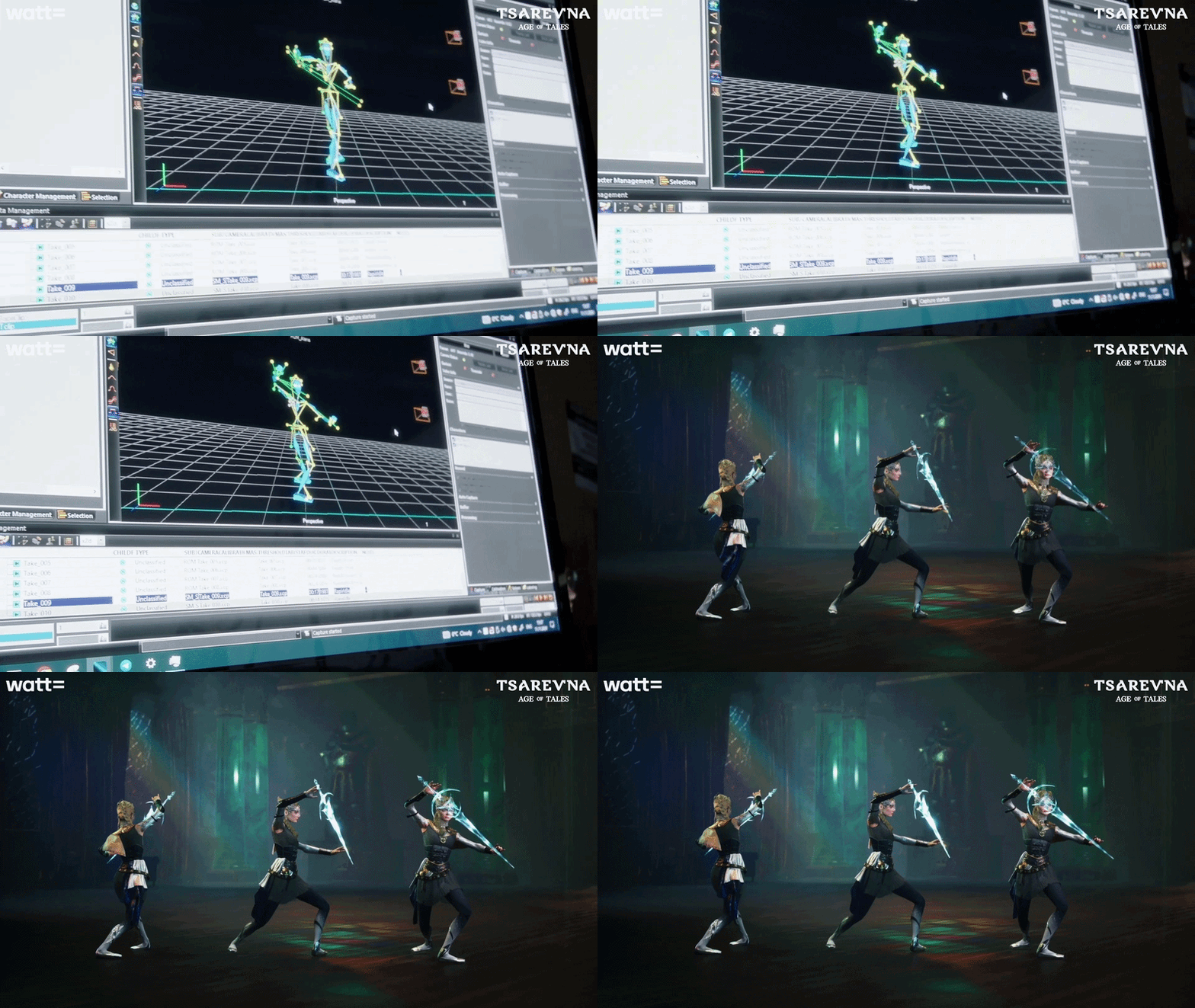
During this process, we realized something important: ballet naturally fits a combat system. It already includes wide, expressive movements, rotations, and a strong sense of balance and momentum — all of which translate well into attacks and enhance the feeling of motion.
Tsarevna’s abilities
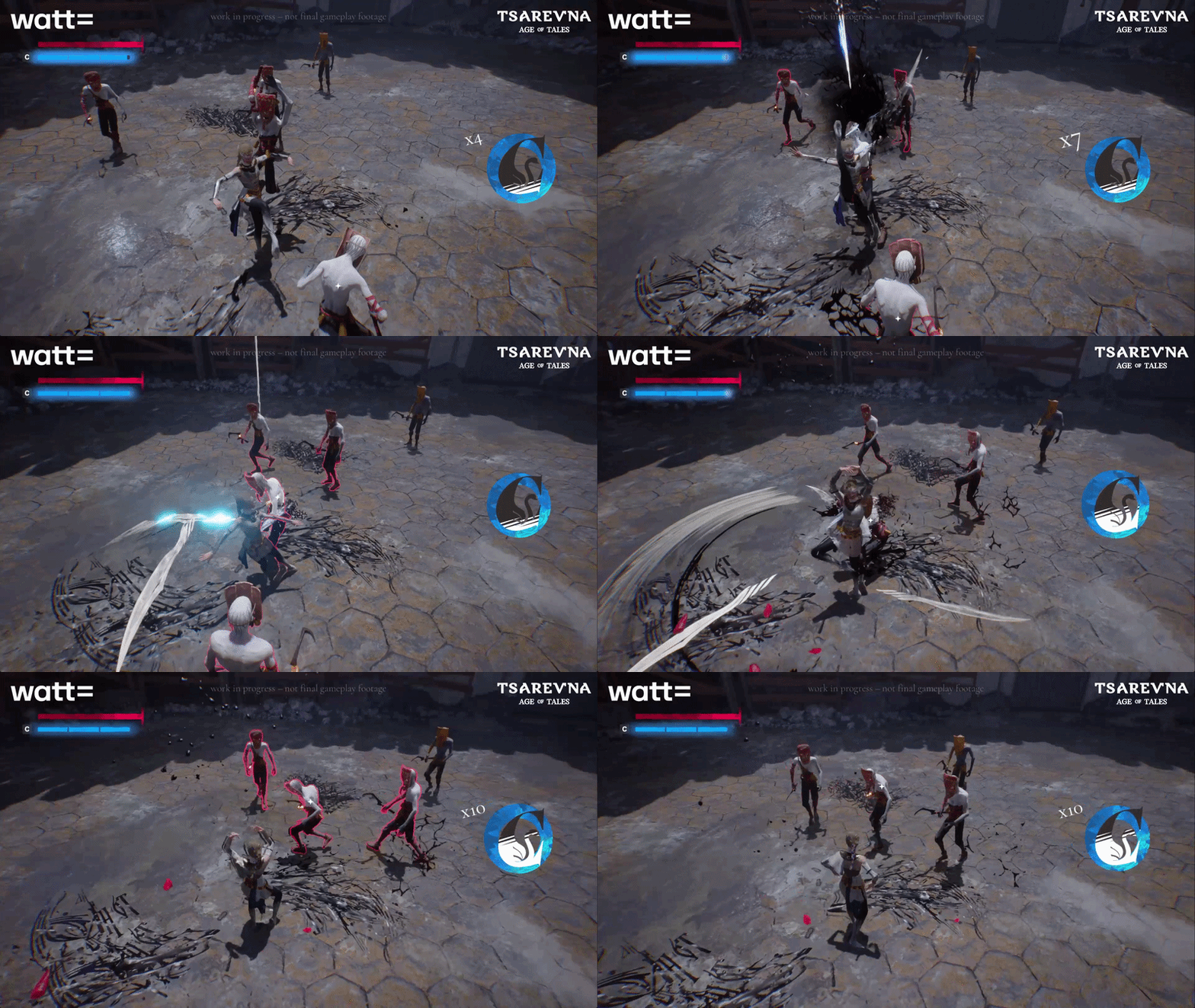
To turn combat into a dance, we selected and adapted a set of movements that form the foundation of her abilities.
Each combat action is built around the phases of a ballet movement — Preparation → Execution → Completion.
Core elements of classical ballet are integrated into combat, traversal, and movement:
Attitude Derrière — a spinning motion that pushes enemies away with a shockwave;
Attitude Devant — a sharp leg strike that launches enemies into the air;
Tour piqué — a fast repositioning move across the battlefield;
A quick fouetté allows the heroine to perform a double jump;
Grand Jeté forms the basis of a thrust attack that lets you push an enemy out of a crowd to engage them one-on-one.
Animation “bible”
To work with this balance consistently, we analyzed ballet and created an internal animation “bible.”
It helps the team maintain a unified style and stay aligned at every stage of production.
By this “bible,” we mean a structured set of rules that guides all our animations.
It includes key ballet principles such as turnout, arm and leg lines, balance, and what makes a pose stable and expressive.
We also built an extensive library of ballet elements, each broken down in detail — its structure, preparation and completion phases, and the positions that provide the best balance and clarity.
On top of that, we maintain a large reference library. When designing combinations, we often treat it like a puzzle — combining different elements, shaping choreography, refining it with our expert, and then implementing it into the game.
Tsarevna as a complete character
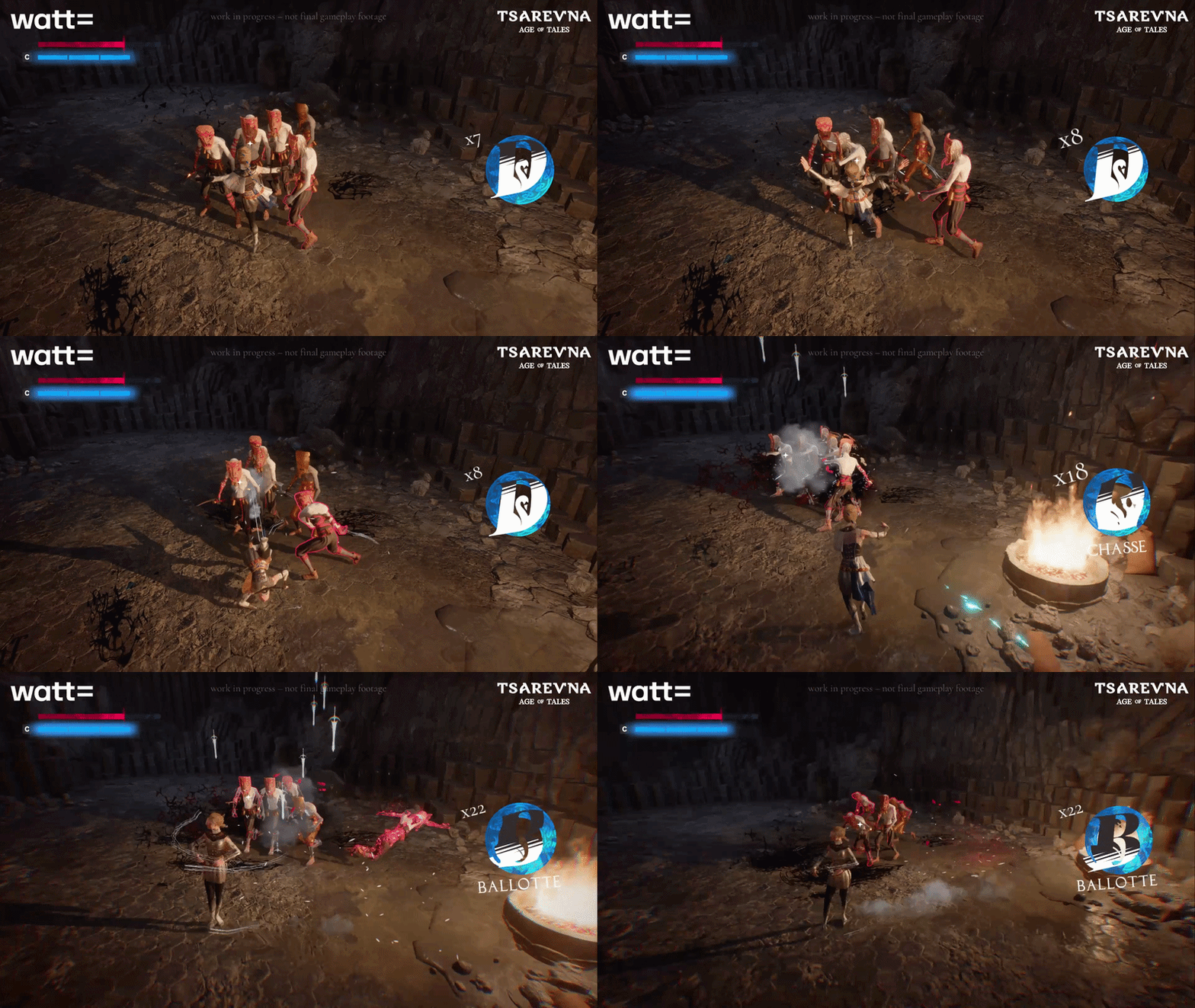
We used ballet as the foundation of the combat system and extended it into other animation layers — locomotion, traversal, and reactions.
This allowed us to create a cohesive and unique character, combining grace, precision, and inner strength.
Add Tsarevna to your Steam wishlist:
View game pageJoin our Discord community to follow development, ask questions, and talk to the team: