
Did you know my initial name for Streamway was Aqueduct? My very first tilemap implementation still has that name attached to the assets, it's funny looking back at how far we've come. Now that we're finally rounding the last bend of their art implementation, I wanted to share a bit of the journey from janky painted arrows to the now 192 bespoke intersections of art and everything in between.
This is as good an excuse as any to look at where they started, and prove that prototypes are just as rough as people say they are:
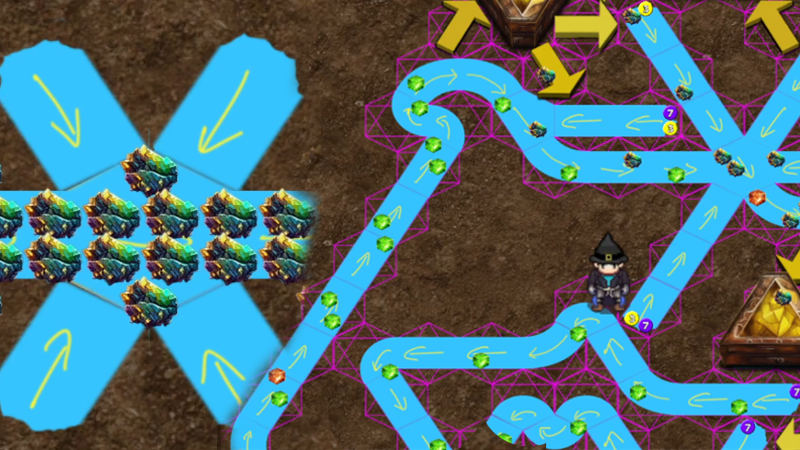
One shortcut I took very early on was making any complex intersection just use the entire hex, or at least a full 'wing' on the side it was coming in on. All of the hard edges came from that result.
Now that I'm getting the art into better shape, it's worth getting each combination into a natural and intuitive shape. Every intersection needs a proper bank, no harsh edges showing, and clean transitions everywhere possible.
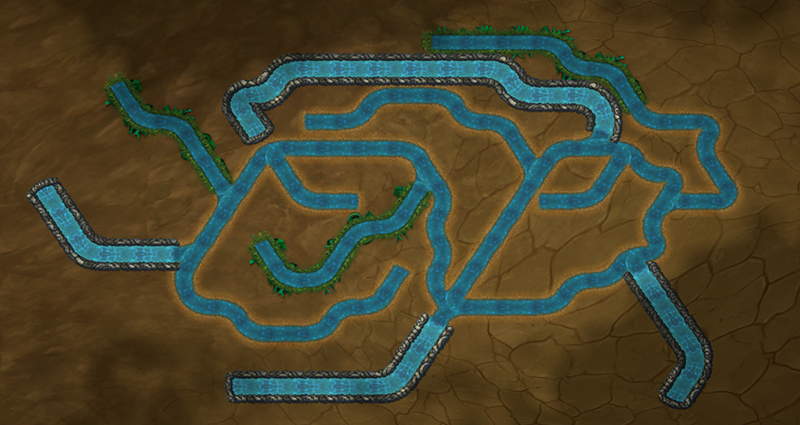
Much better. There is quite a bit hiding behind those shapes though.

A Matrix of Possibilities
I've talked before about the combinations that come from having six neighbors on a hex grid. Streamways add another wrinkle because we also care about which way everything is moving.
Each output direction has five possible inputs: two on either side and one behind. Each side can have a tight turn, a wide turn, both, or neither. That's four possibilities per side, with or without the rear connection, so 4 × 4 × 2 = 32 unique intersections per direction.
Across six directions, that's 192 configurations. Thankfully, arranging them in a matrix makes the whole thing much easier to work with. The three shapes across the top and down the side give us tight, wide, and combined inputs. Where they meet, we build the corresponding intersection. Repeat with the rear connection and we have the full set.
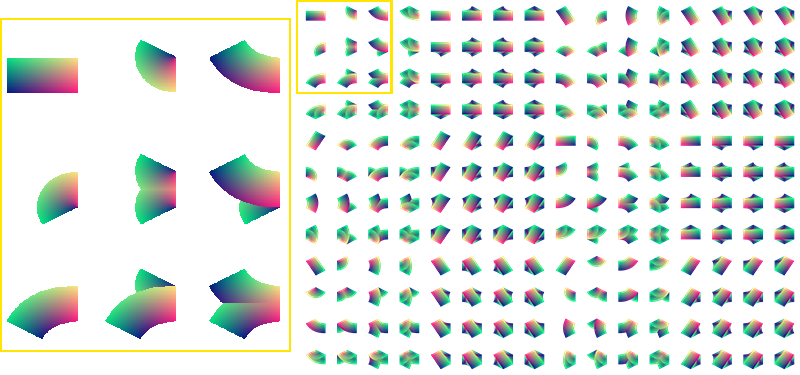
The water itself uses my tried and true custom UV map technique that tells a scrolling texture how to follow the shape of each channel.
The simple bends already flowed nicely, but combining them was not as straightforward. I tried smoothing the UVs together at intersections, but prettier gradients made for worse-looking water. Those colors encode coordinates, so blending them changes the motion too.
Instead, I kept the original curves and chose which takes precedence where they overlap. Wide curves carry through tight branches; symmetrical pairs split along the centerline. Harsh lane boundaries turned out to feel better than muddying the flow together.
There are a few things that don't need to live in that giant matrix. Baking end caps into every combination would multiply the artwork again, so exposed stream ends get a separate covering bank. Water transitions get their own treatment too - where regular or Verdant Streams meet Torrential Streams, the water's appearance blends across the connection instead of changing abruptly at the tile edge.

Intuitive Flow
With the banks and water looking better, something else became much harder to ignore: a few intersections didn't move their items the way the new channel art suggested they should.
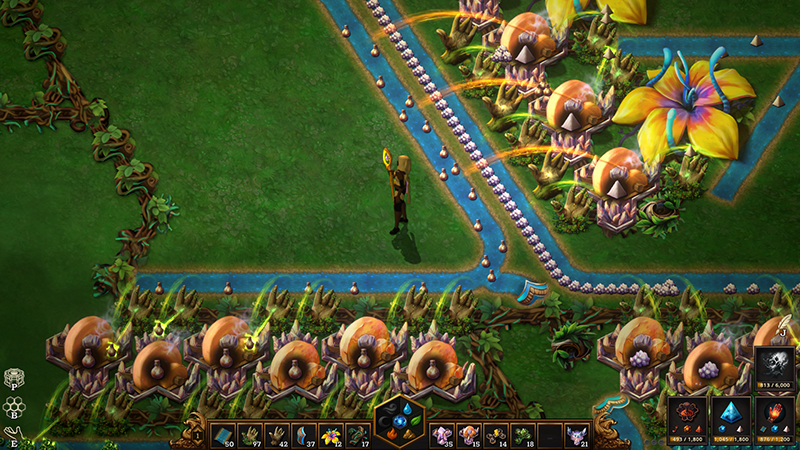
Items are ending up on the opposite side because the intersection still thinks it's just two full wings.
So the flow rules needed another pass. A straight input still takes precedence, but without one, a single wide input can become the main two-lane path. The tight branches join its near lane. Opposing wide inputs still need their own treatment, so this isn't simply telling every intersection to act like a bend.
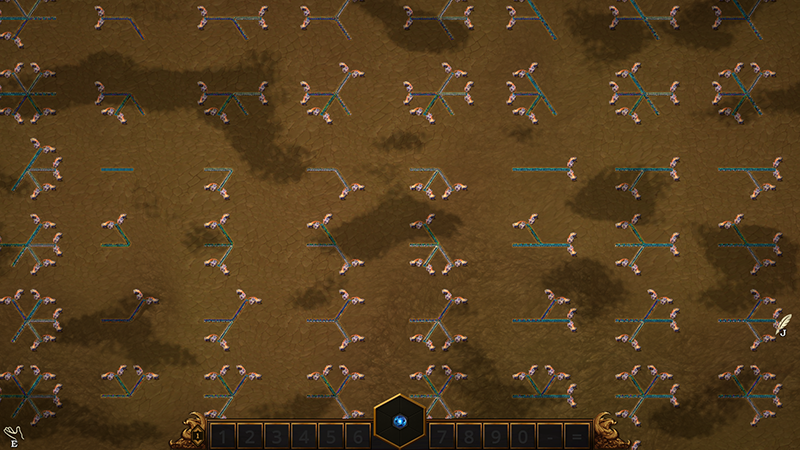
That led to a test map covering every input combination in every direction, with different cargo on the incoming lanes so I could follow what was happening. A rather excessive collection of tiny rivers, but very useful for spotting the one connection that doesn't behave like its neighbors.

More Water Next
With the Streamways in much better shape, the next stop is adding flowing-water effects to the Water production Structures themselves. There are quite a few places where a little movement should help show what those Structures are doing, and I'm looking forward to getting into them.
For now, I'm pretty happy to see MoteMancer's signature conveyor belts finally looking and behaving more like the enchanted waterways they are.
Back to the Lab!
~CyanAvatar 🌿