
Read part 1 for insights into the logic behind creating the locations.
Read part 2 to learn about the process of designing a level.
Level art: from blockouts to vivid visuals
A finished blockout then goes to the level art team. At this point, the location is already functional: routes are set, cover is placed — but it still lacks visual identity.
The transformation process includes:
References and concepts — artists gather hundreds of images, from historical archives to film stills. For example, when designing a World War I inspired map, they may study trenches, helmet shapes, and even rust patterns on metal. This stage also establishes visual techniques to improve navigation.
Draft assembly — the map is filled with placeholder objects from the Megascan library (a free library of 2D/3D assets and textures for Unreal Engine) and simple textures. This helps "test" the style and estimate the scope of content production.
2D concepts — key areas are drawn in detail, helping designers communicate their vision clearly to the entire art team.
When scope and references are set, the environment art team steps in. They create the 3D content that fills the location, often themselves or using the ready 2D concepts. This is a highly creative task that strongly influences the overall feel of the level. Based on the level designers’ blockouts, they recreate realistic objects. For instance, we designed a chalet in a trailer park where gameplay requirements blended seamlessly with real-world architecture.

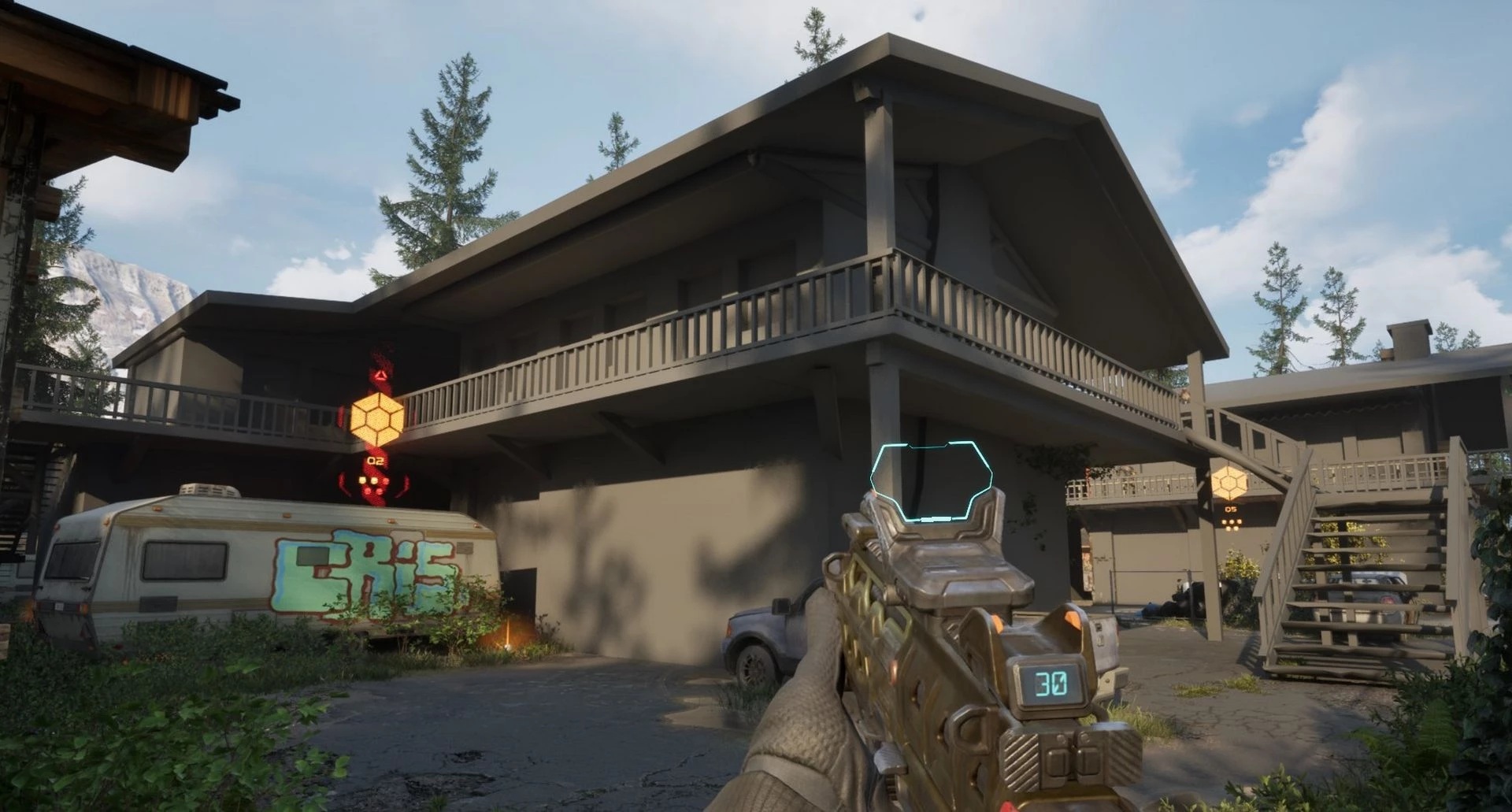

Other objects on our maps are created in the same way. Often photo references are enough, but in complex cases we turn to concept art. — NCORE developers
While environment art produces content, level art continues refining and detailing the location. Artists carefully select and fine-tune terrain textures, add details, and enhance them with technical tricks. All content is placed with gameplay in mind: "We constantly cross-check with level design to make sure everything works in the best possible way."
But textures alone aren’t enough. Developers then add visual effects, each serving a purpose. In NCORE, lighting is not just a visual element, but also a tool to set mood and guide gameplay. For example, the foggy atmosphere of the Trailer Park map feels completely different from the cold, dramatic lighting of the Battlefield map or the warm golden sunset of Kaiser’s Palace. This makes each location feel like a separate experience. Deep immersion is possible thanks to Unreal Engine’s powerful tools and the artists’ attention to detail.
Static maps get boring fast, so developers add dynamism through environmental animations:
On Airfield, planes fight overhead, leaving smoke trails.
On Kaiser’s Palace, bonfires burn and fountains flow.
On Streets, a ruined city smolders while wind scatters debris across the roads.
Level art is the stage where a location gains its visual identity and emotional depth. If level design builds the foundation through mechanics and navigation, level art gives it atmosphere, detail, and artistic cohesion. Artists work with textures, lighting, color palettes, and architecture, turning a schematic mockup into a living world. It’s level art that makes a map memorable — transforming functional space into a place players want to explore. Without it, players couldn’t experience true immersion, since it’s through visuals that mood, context, and spirit are conveyed.
In the final part, we’ll tie all the previous processes together with the narrative — looks are empty without the substance!