
Hello, everyone!
The free Pixel Frenzy Playtest is officially live!
It has taken us about a year and a half to turn a prototype where “everything can be smashed” into a playable build we can finally put in your hands. Now it’s your turn to jump into this pixel storm and tear the battlefield apart.
How to Join the Playtest
Head to the Pixel Frenzy Steam store page, find the Playtest section, and follow Steam’s instructions to join, download, and install the game.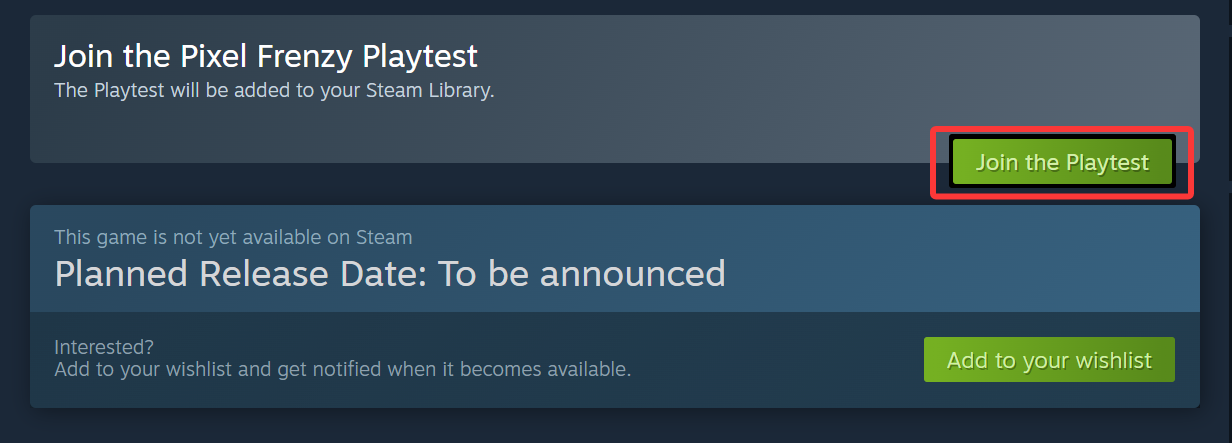
The Playtest is completely free. The game is still in development, and the content in this build does not represent the final quality. You may run into performance issues, balance problems, unfinished content, or other bugs while playing. If you do, please let us know.
From a Prototype with Nearly 3 Million Views to a Real Game
A year and a half ago, we released a gameplay demo that was just over a minute long. It went on to receive nearly three million views. Even then, Pixel Frenzy could already show buildings and enemies being destroyed piece by piece—but at its core, it was still just a prototype. The weapons, enemies, levels, and progression systems were far from complete, and performance couldn’t support more complex battles.
To turn that idea into a real game, we formed a four-person team and began working on it full-time. Over the past year and a half, we’ve added new gameplay and content, reworked the pacing of combat again and again, and spent a huge amount of time tackling the performance challenges that come with fully destructible environments. To everyone who has been following the game and waiting all this time: thank you for your patience.
Watch the original Pixel Frenzy gameplay demo
Now It’s More Than Just “Everything Can Be Destroyed”
Pixel Frenzy is no longer just an FPS prototype about smashing buildings and enemies. We’ve built a light roguelite structure around the original destruction mechanics: earn points by fighting and destroying things, spend them on skills and upgrades, and gradually build a playstyle around your weapon of choice.
Destruction isn’t just a visual effect anymore, either. You can target specific parts of an enemy—for example, shoot the barrel off a turret to disable its attacks entirely. We want you to take out an enemy’s offensive parts first, then move on to the rest. Many upgrades also change how a weapon behaves and how combat flows, instead of simply making the damage number go up.
We’ve also added special stages built around destruction, including “The Wall Is Coming” and “Fruit Ninja.” These stages have different goals and pacing from regular combat encounters. Together with the light roguelite structure, weapons, skills, and upgrades, they help make every run play out differently.
What We Want to Learn from This Playtest
As developers, it’s hard for us to judge on our own whether the content is fun enough or whether the pacing feels right. That’s why we’re opening the game up to players. We’d especially love your feedback on:
Whether the destruction, shooting, and build-crafting are fun;
How the different weapons, skills, and upgrades feel and how well they are balanced;
The pacing of regular stages, special stages, and boss fights;
Performance and stability across different PC setups;
Bugs, UI issues, and anything else you’d like us to improve.
Fully destructible environments involve a huge amount of real-time calculation. We’ve already added targeted optimizations, such as automatically clearing older debris first, and we’ll use this Playtest to keep testing performance across a wider range of hardware. Whether you run into a performance issue, have a gameplay suggestion, or simply feel that “this part isn’t satisfying enough,” please tell us through the Steam Community or our official QQ group.
Where Development Stands
The game’s core framework is now in place. For Early Access, we’re planning six weapons and four full main stages, with at least two unique skills for each weapon. Five weapons are currently playable in their basic form. We’re still expanding the skills and build options for the shotgun and light blade. All four main stages have also been built in their initial form, but many of their mechanics, content, and details still need more work and polish.
That’s exactly why we’re opening the Playtest now: we want Pixel Frenzy to be tested by more real players before its official release.
Thanks for Coming Back
Pixel Frenzy isn’t finished yet, but it’s no longer the prototype from that first video.
Thank you for remembering the game. And thank you to everyone who comes back to see what it has become, joins the Playtest, and takes the time to share feedback. We may not be able to act on every suggestion, but we’ll read and carefully consider all feedback about the game.
The Pixel Frenzy Playtest is live now. We’ll see you in the game—and this time, go ahead and tear everything apart.