
Hey Managers,
The tournament system has been through many iterations, and for good reason. It proved far more complex than we planned for. It is the backbone of every season, so let’s start there.
There are five tiers: Major, S, A, B and C. Each tournament is placed by prize money, prestige, region and whether it has a LAN stage. Majors and S tier events stay nearly identical to the real world, but the game has its own design rules, so some tournaments sit higher than they would in reality. A tier is the clearest case. It had far fewer events than any other tier, so we moved several tournaments and series up into it. If your team is around 30th place, you now have a fuller calendar to plan around. The bottom three tiers will usually offer plenty of series to enter. They run monthly, and our goal is that you always have something to compete in at your tier, apart from player breaks of course eheh.
Series keep the season steady, but a good manager also needs room to make a call. That is where one time tournaments come in. For now they are mostly region based, and we will expand the catalog after feedback from the upcoming testing Beta. Each one is either a quick injection of cash or a chance to earn RS points, and you will see more of them as the Major invite cutoff gets closer. Whether to take that opportunity is your decision.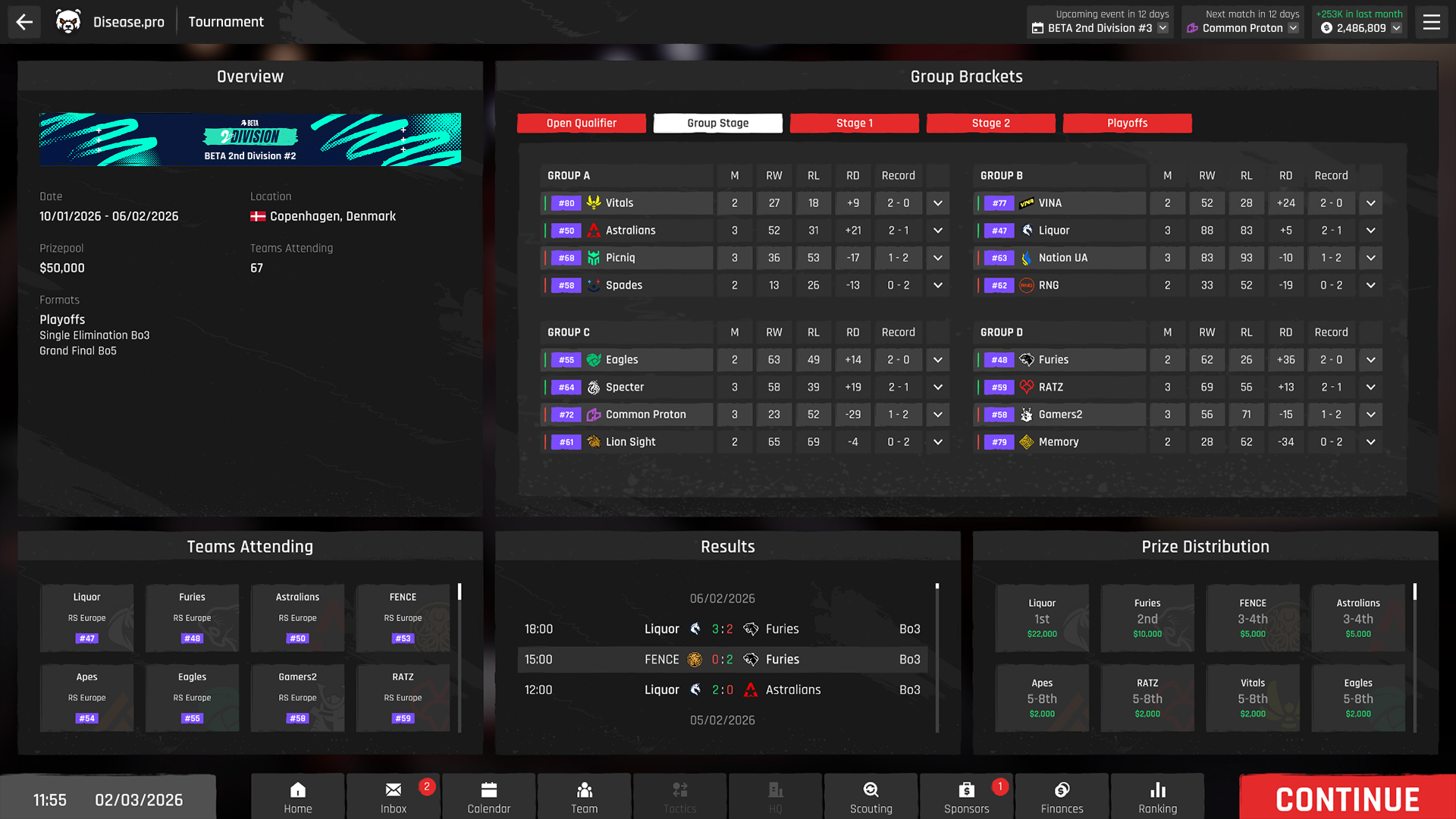
We also made sure no tournament sits in your backlog for months. Open Qualifications will run closer to the tournaments they lead into, together with their Closed and Invite based stages. Open Qualifications for higher tiers usually get a clear calendar and will not collide with anything, which keeps the competition as strong as possible. Not every tournament is built the same way. Open Qualifications are great, but some events are too prestigious to have them. Here and there you will find an Open Qualification on an S tier event, but expect it to be the exception.
Seeding follows the ranking. The higher you stand in RS when invitations go out, the later you enter a tournament. The top teams go straight into the final stages, the next group starts one phase earlier, and everyone else works through the qualifiers. Some events also hold seats for specific regions before the ranking is applied, so a strong team from a smaller scene still gets its shot.
Tournaments use single elimination, double elimination, Swiss, or group stages played on Swiss rules, and many chain several of them together. One run can take you from an Open Qualification through a Swiss stage into a double elimination playoff. Some events also keep a match for third place.
Best of one is mostly used in Open Qualifications, where the field is too large to play best of threes over a few days. That makes them the place where upsets happen, so even a strong team should not take them lightly. Elsewhere, matches that decide advancement are best of three and grand finals are best of five.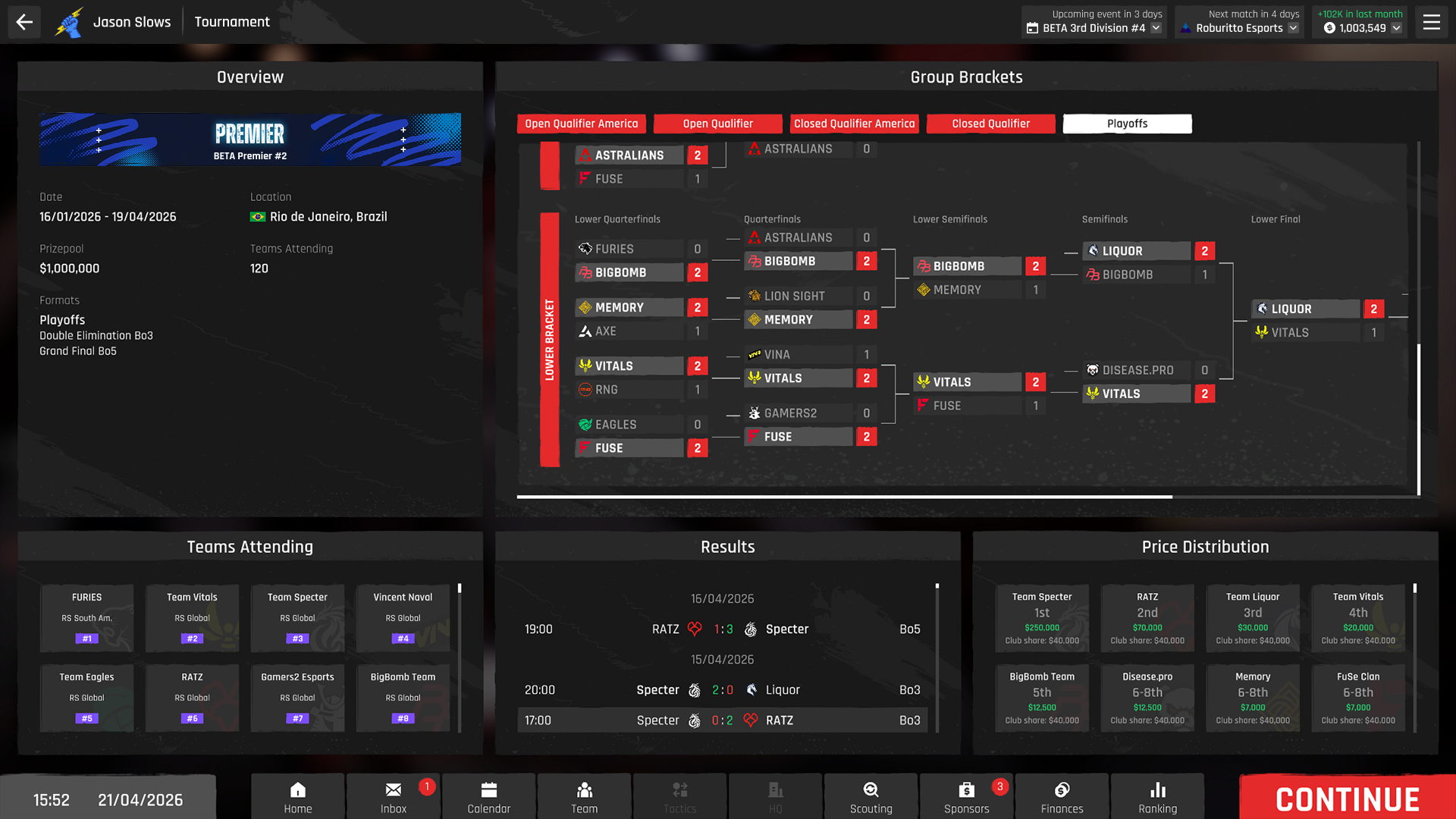
Schedules follow the real circuit as closely as we could make them, so there is no fixed pattern for a match day. Start times and the number of matches change from event to event, and longer series get more room in the day. Two stages of the same tournament can run on the same day, each starting at its own time, the same way regions play at different hours. Stages are usually separated by rest days, and playoffs are played from Friday to Sunday where possible.
Most qualifiers are online, the bigger stages are played on LAN, and a few qualifiers are held on site as well. LAN events add travel days, so two LANs far from each other may not both fit into your calendar. All of this ties into your players’ energy and fatigue, which depend on both training and tournaments. Every event you accept has to be planned around that.
Thank you for reading this Diary, the next one might or might not cover scouting and transfers, well who knows eheh.....I do!