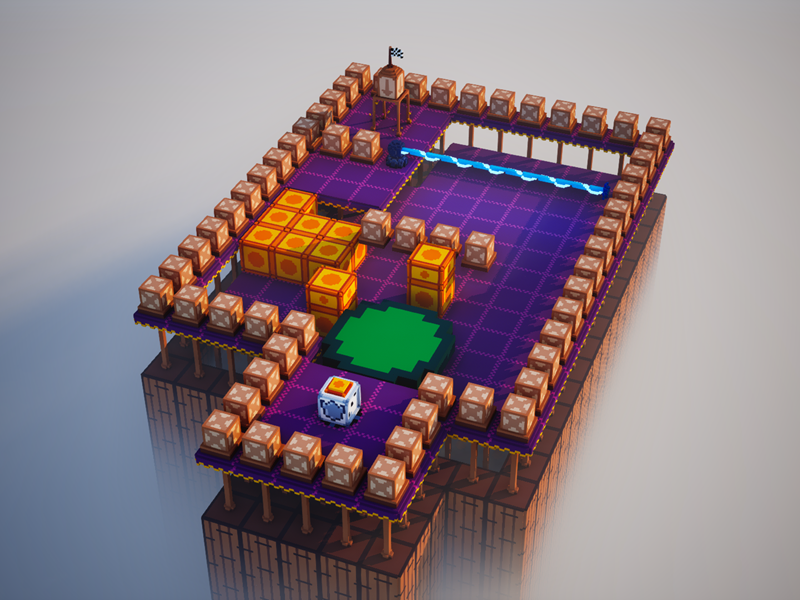
We’re finally back with the devlogs, after three months!! We got a bit overwhelmed with development through Gamescom, PAX Aus, and upcoming milestones, but we’ve caught a breather now and excited to share the huge amount of stuff we’ve been doing!
What have we been up to?
Onboarding
Spellsided is a difficult game to grasp for many new players, due to its unique mechanics. We spent a lot of time over the last three months going over playthroughs from Gamescom, PAX, streamers, friends, and family, and we often saw players getting lost, not understanding the goal of the game, not grasping the mechanics fully, and getting stuck in ways that we didn’t expect. We’ve been taking these observations along with direct feedback, iterating on the onboarding experience accordingly, then taking it back to the next playtest to see how player behaviour changes. Our goal is to have a streamlined experience of learning Spellsided that keeps players hooked, without frustrating them or making them feel lost. One of the most common things we hear from people who see the game is “I’m too stupid for this game”, and we’d like to prove you wrong!
We’ve now finally arrived at what we feel is a pretty good opening to the game, with clear pathing, smooth and consistent difficulty ramping that matches the skills the player is learning, and much better pathing that prevents players from ever feeling confused about the objective.
Entering beta
Internally, we are fast approaching our beta milestone! This means we will have all the areas, levels, puzzles, and bosses of the game playable and linked together into a full campaign. Once we pass this milestone, our focus will move to fleshing out the visuals, less important spells and enemies, sound and music, UI polish, dialogue, and other finishing tasks. This is a very exciting and intense time, and things are going to be happening faster and faster the closer we get to release!
That secret spell thing
A number of devlogs ago, we teased some Very Interesting Spell Stuff we were working on to improve the progression of the game. We’re excited to report that it is now complete and we think it’s made a big positive difference. We will hold off on revealing too much about this for now, but so far in playtesting it’s been a fantastic addition that has added a lot of depth to even just the Domino Ruins!
Controller support
We’ve completed the majority of the work needed to make the spell switcher controller supported. Unfortunately we will not be able to ship this with upcoming challenges, as it is implemented on a different branch that isn’t ready for release yet.
Performance optimisation
Unreal is notoriously performance heavy at its default engine settings. However, Spellsided, as a voxel art based game, should in theory be able to be played with very basic lighting while still being readable and beautiful. To that end, we created Ultra performance mode - a graphics setting that turns off Unreal’s entire lighting engine, rendering the game with flat colour. We then added the 3D depth back by using material shaders to darken voxel faces based on the direction they are facing. With the ultra performance mode, we’re able to hit 100+ fps easily on the Steam Deck. Hopefully this makes Spellsided more accessible to players, especially those using machines with integrated graphics!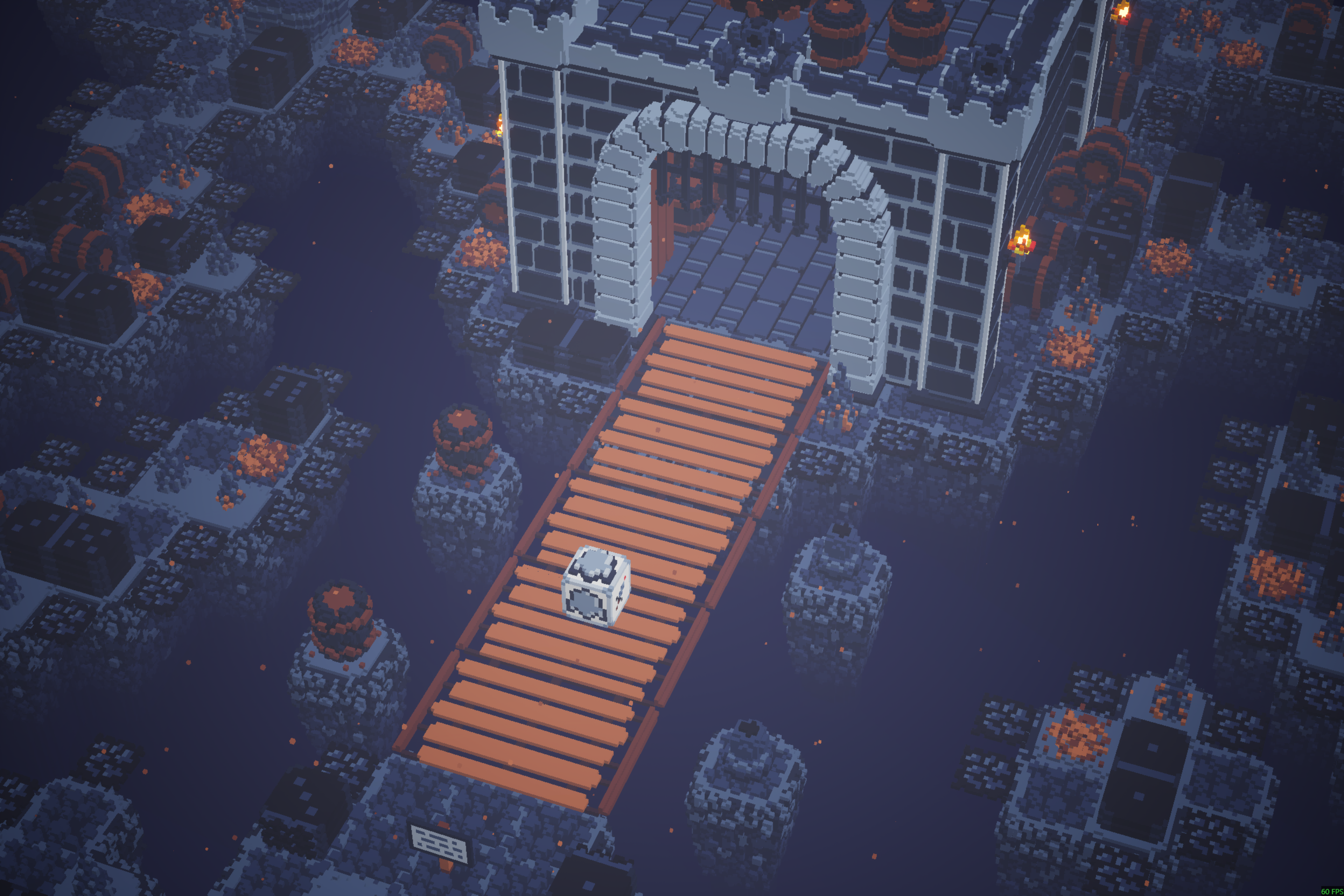 Spellsided running in Ultra performance mode
Additionally, we’ve also significantly improved loading times by changing the way the voxel models are displayed. For the technically inclined: previously, we used Unreal’s dynamic mesh component, combined with RAM-cached models that are generated at runtime. Interestingly, the time needed for the actual generation of the models is not significant when compared to the task of loading these models into the dynamic mesh component when loading a level. To solve this, we created a hybrid system where models that are present in levels at packaging time are baked into static meshes. This way, only voxel models that are changed or introduced after the initial level load need to use dynamic meshes. The voxel tooling we’ve created has been one of the most challenging things to develop, but it’s really paid off in the workflow speed and fun extra features it’s unlocked, as opposed to using exported meshes from Magicavoxel.
These improvements are also on the unreleased branch, and will be released in the future.
What’s next?
With release coming up we’re hoping to get back into the swing of doing devlogs as there’s going to be a much more consistent stream of things to say, and leak 🙈
Stay tuned!
A new challenge awaits
We’ve continued to release challenges fortnightly despite taking a break from devlogs, so if you normally find out about challenges from here don’t forget to check up on what you’ve missed! The Discord has more information on past Challenges.
As for this fortnight’s challenge: what if the counterfeit coin was big enough to ride? This level is a bit of a proof of concept for a type of puzzle we're considering for the full game, expanding on the Magnetise spell to move platforms in the environment. It's a kind of claustrophobic style of platforming which I think would be even more difficult without Loaded Roll. So I'm curious what the disparity in Loaded Roll vs no Loaded Roll solutions would be...