
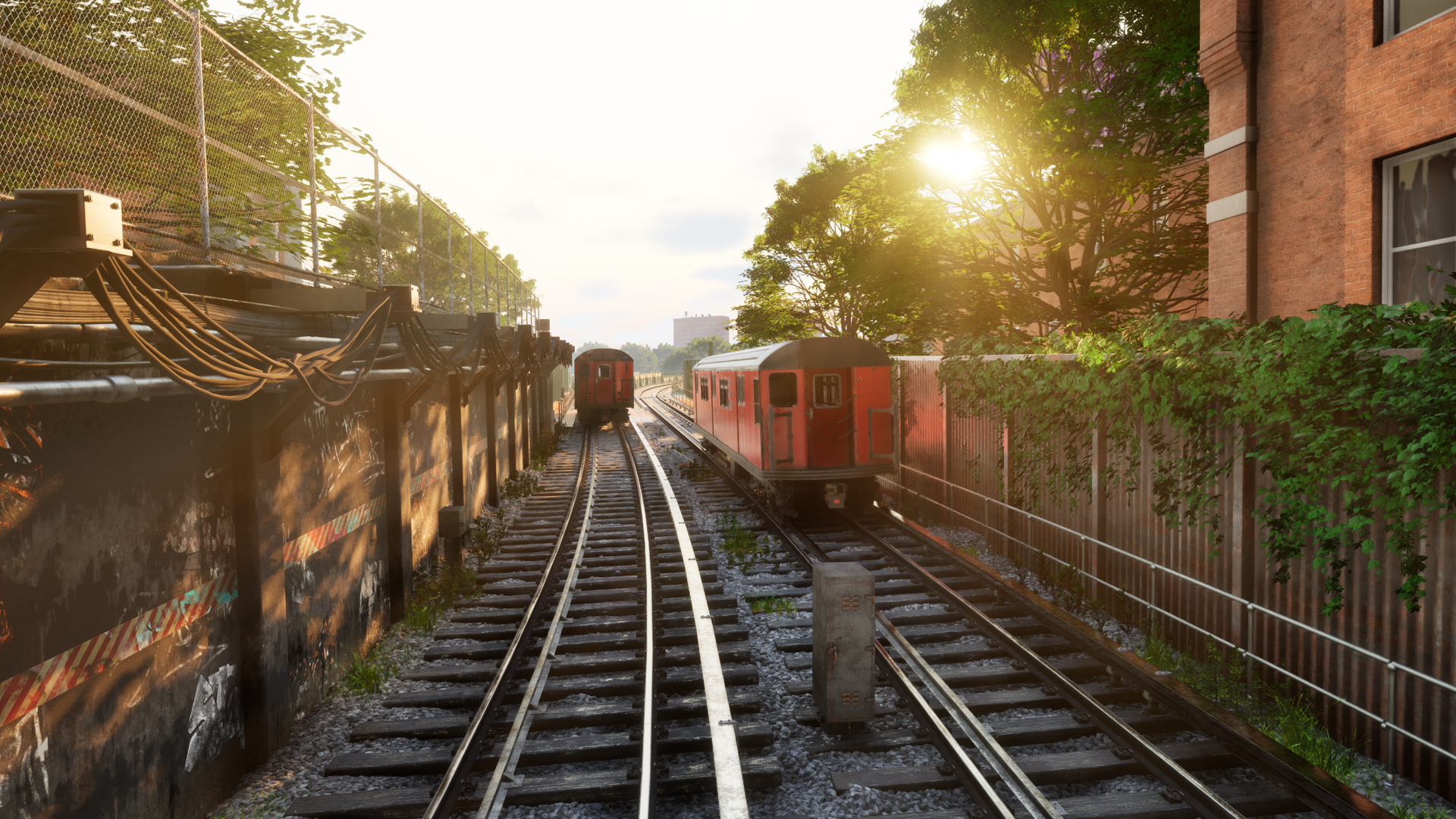
Hello, fellow Rivals, and welcome to our first Metro Rivals Dev Blog!
We're thrilled to announce that we're back and bursting with excitement to share what we've been up to since October, with a first look at gameplay from our latest builds!
Join us as we share our thoughts and insights leading up to the launch later this year - it's going to be quite a ride!
Coming in hot: Boosting through the Metro tunnels
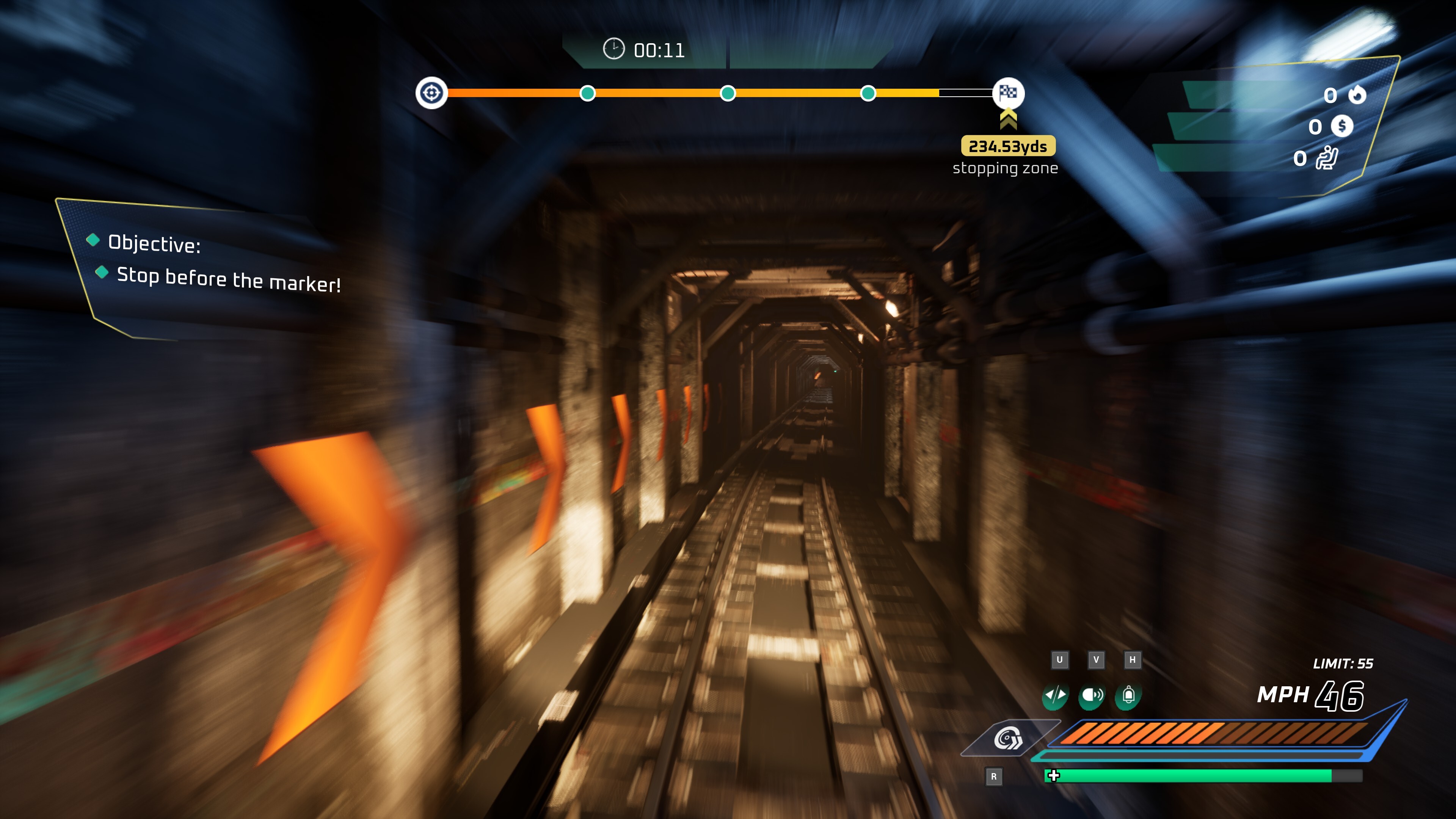
Let’s talk about Boosts – these will be an essential tool if you want to dominate the leaderboards, and we’ve checked in with our Senior Producer Jordan for his thoughts:
Jordan: “We've got two types of ways you can use the boost: the first, Boost Accelerate, will come in helpful when you’re looking for a quick jump off the line, maybe to draw some needed time back, but the second, my favourite, is Boost Brake, incredibly useful when looking for a prompt halt to hit that perfect stop and maximise your score!
No one likes to finish second, so pushing your train harder than you have before, reaching speeds higher than you knew you could just to re-gain the advantage, increases the chance you will overshoot a stop, or ploughing into a corner too fast, resulting in a derailment. There is plenty of opportunity to use speed to your advantage on the straights, though!"
As you can see here, your main goal when transporting passengers is not just to arrive on time, but to do so in style. You will have to push your train to the limit by boosting, so you can reach higher speeds faster. Refill your boost meter by completing Quicktime Events - the better you do, the more boost you get.
Jordan: “These QTEs are grounded railways events with an arcade spin that keep you on your toes and allow you to earn bonus score and boost! The quicker and more accurate you are, the better the reward!
Boost for me is one of the most important, fun mechanics in Metro Rivals! I personally save my boost and use it for braking, meaning I can thunder into stations, Boost Brake , and still hit a perfect stop! I find I use it a lot to slow down later for steep corners."
Once you’ve got the attention of a Track Titan, they will challenge you to a nail-biting end-to-end race. You won’t need the accuracy required to stop at stations in these races but will still need to balance speed and… well, balance.
You might have just overtaken your opponent by boosting past them, but watch out, heading into a curve with too much speed will certainly make you fly off the rails. So make sure to watch the speed indicators, they will let you know if you are getting close to derailing.
Just make sure to not slow down too much, or your rival will overtake you faster than you can say “Newton’s Second Law of Motion”.
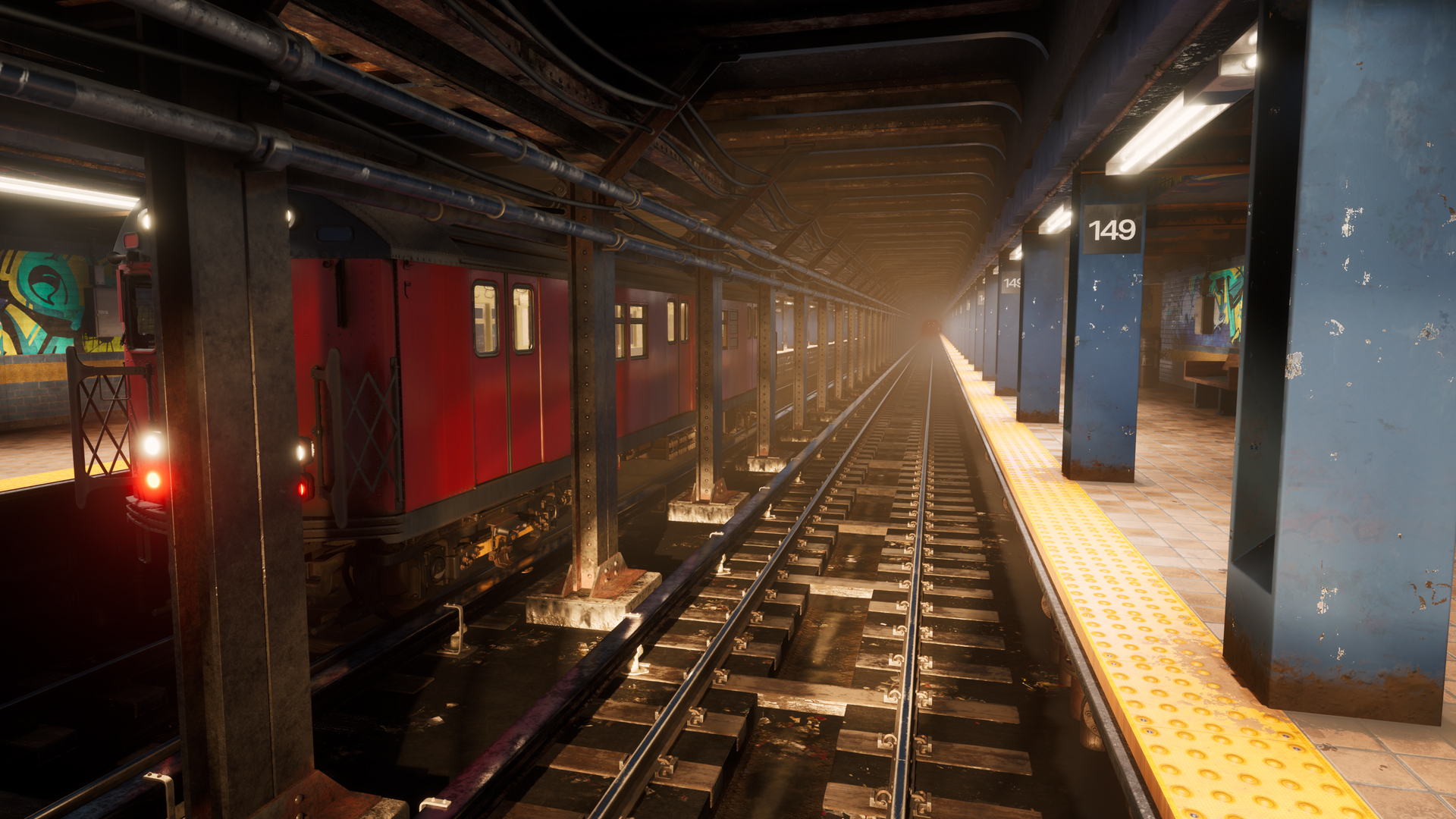
Jordan: “Each Titan has a very different personality and art style. This means even if you play the same challenge against different titans, the experience will feel fresh and new each time. You’ll need to keep on top of your train health, apply upgrades to better your performance, and really master the Metro to always keep an advantage - Oh, and don’t forget to use your boost wisely!
Every Titan Challenge comes with something great to unlock. New zones (meaning more New York), upgrades for your trains, and even cosmetics!
Beating the Titans, taking their zone, and finding new things to do is key to progression. The more titans you beat, the more you get to do!”
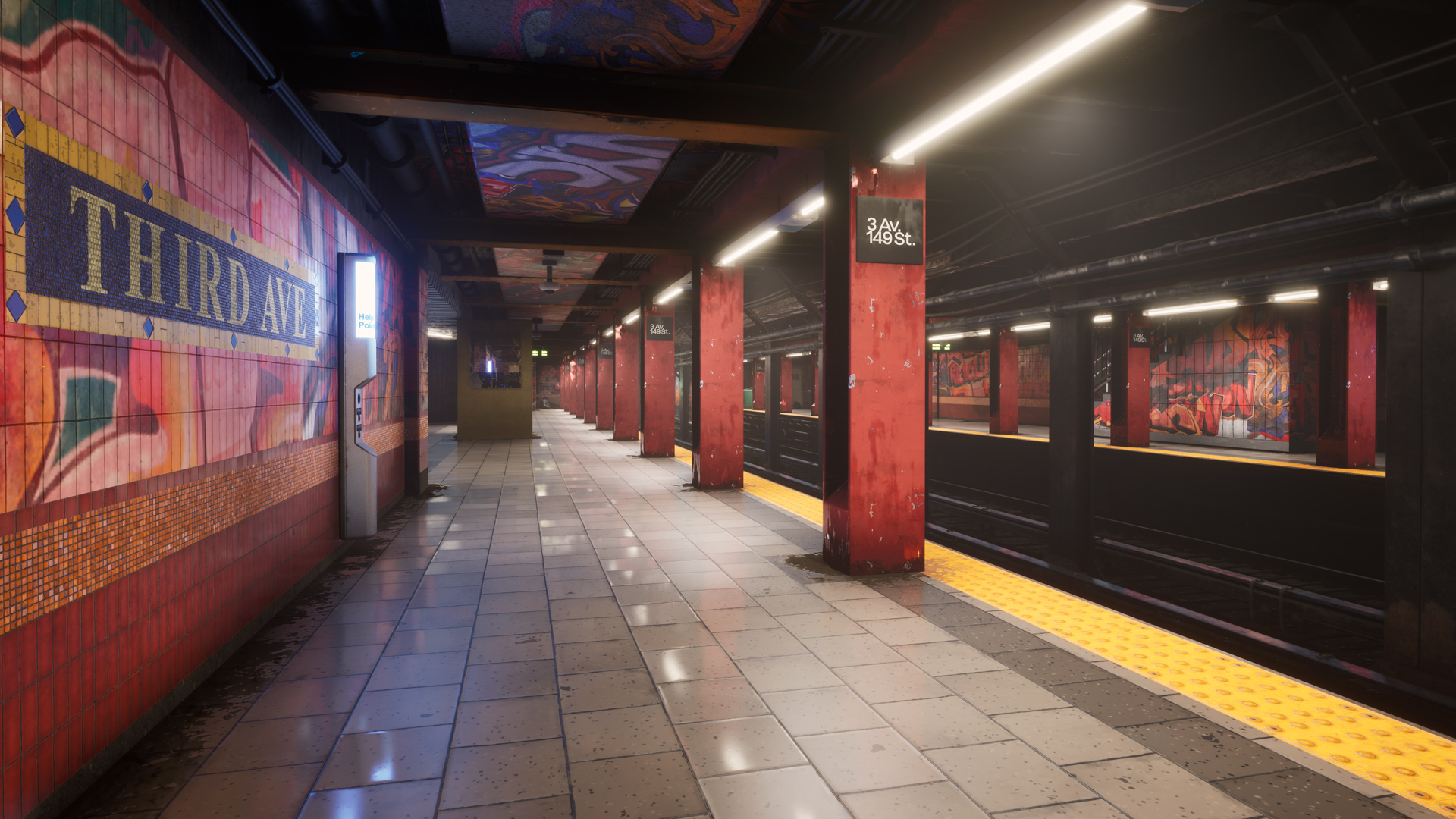
Building New York with Procedural Generation
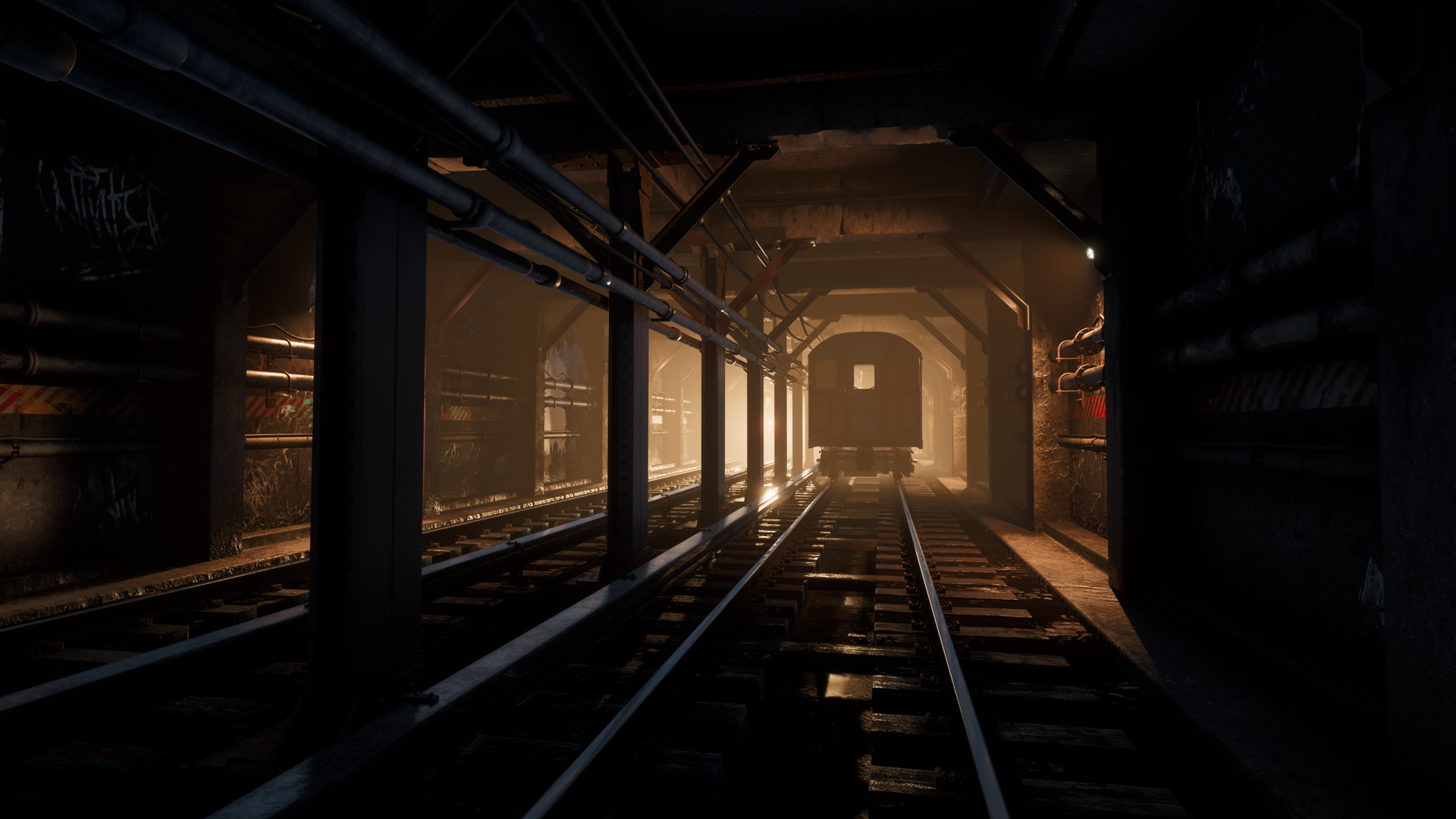
They say Rome wasn’t built in a day, and the same is true for our version of New York City. However, Procedural Generation helps speed up the process by a lot. This Unreal Engine 5 tool allows us to move from an empty level to a readable, believable city layout very quickly.
Jordan: “. By defining street splines, zoning rules, and scatter logic, we can rapidly establish a correct sense of scale and density, building placement and height data, initial street dressing, and environmental composition.
However, most of the development time is not spent placing assets but refining the rules that control placement.
Eliminating edge cases and placement errors
Tuning distributions so environments feel natural rather than random
Creating rule sets that consistently produce results aligned with the visual language of New York
Ensuring regeneration of the level still appears intentionally authored
In practice, procedural generation is fast for visualisation but requires careful iteration to reach a level where outputs are consistently production-ready.
That means that Procedural Generation can lay the groundwork for a believable New York City, but our teams still need to put in a lot of effort and love to detail to create an environment that feels alive.
Jordan: “A successful procedural system depends heavily on asset preparation and metadata, which is largely invisible in the final product.
This foundational work enables the procedural system to produce results that feel deliberate, rather than automated.”
While our version of New York City might be semi-fictional, we still want it to feel authentic. The environment is built in layers: hero and landmark spaces get bespoke art, high detail, and unique silhouettes where players spend the most time.
Primary streets are mostly procedural but carefully varied to feel handcrafted, and background areas are simplified and optimised to read well from a distance without affecting performance.
Overall, the goal is to instantly convey New York’s dense, vertical, cluttered feel at street level, while key locations hold up under close inspection.
We're planning to show you a closer look at what we've been able to achieve with the Procedural Generation technology in one of our upcoming Dev Blogs, so stay tuned!
Raring to go? Here’s what’s next!
Get ready for exciting updates in the coming months! Join our Dev Blog livestream on February 11th at 7 pm UTC on the Metro Rivals YouTube channel for more details. On February 18th at 7 pm UTC, we'll host a Q&A stream to answer community questions. Stay tuned for more Dev Blogs highlighting key features of Metro Rivals: New York, including our innovative use of Reactional music to enhance gameplay.
Join the Metro Rivals Community on Discord!
Join our official Dovetail Discord server with nearly 8,000 members! Participate in our Discord-exclusive Q&A streams with Community Managers or just hang out and chat. We can't wait to see you there!
That's all we have for you today, thank you for joining us for the first Metro Rivals Dev Blog! To learn more, make sure to jump onto the official Dovetail Games Discord Server, sign up for the newsletter and follow us on YouTube, Twitter/X, Bluesky, TikTok, Instagram and Facebook.