
Over the past weeks, we have been working intensively on one of the most detailed vehicle systems currently in Dangerous Connections: a rugged Soviet 4x4.
At first glance, it may look like a relatively small addition. A vehicle that can be entered, started and driven through the environment.
In practice, however, we quickly realised that simply making the vehicle move would not be enough.
We wanted it to feel heavy, old, mechanical and slightly unpredictable. We wanted the player to hear and feel the difference between sitting inside the cabin and standing next to the vehicle. We wanted every switch, vibration and movement to contribute to the atmosphere.
The result is a complete vehicle overhaul covering the cockpit, driving physics, sound design, lighting, snow interaction and camera behaviour.
More than just a driveable vehicle
The Soviet 4x4 is not intended to feel like a modern, perfectly insulated car.
It is an old military-style off-road vehicle with a rigid body, simple mechanical systems and very little protection from the world outside.
That character influenced nearly every decision we made.
The suspension reacts visibly to uneven terrain. The body rolls and moves under load. The cabin rattles while driving. The steering wheel and dashboard instruments respond to the vehicle. Snow can be heard under the tyres and against the underbody.
The goal was not to create a clean or comfortable driving experience.
The goal was to create something that feels physical.
Starting the machine
The vehicle now uses a complete ignition and engine-start sequence.
The player enters the cockpit, activates the ignition and hears the starter working before the engine eventually comes to life. The dashboard, vehicle vibration and soundscape react to the current engine state.
Small details such as the starter impulse, engine catch and the transition into a rough idle help make the vehicle feel less like a static game object and more like an actual machine.
The cockpit also includes functional controls for:
headlights
high beams
indicators
windshield wipers
engine ignition
Each control has its own mechanical sound and behaviour.
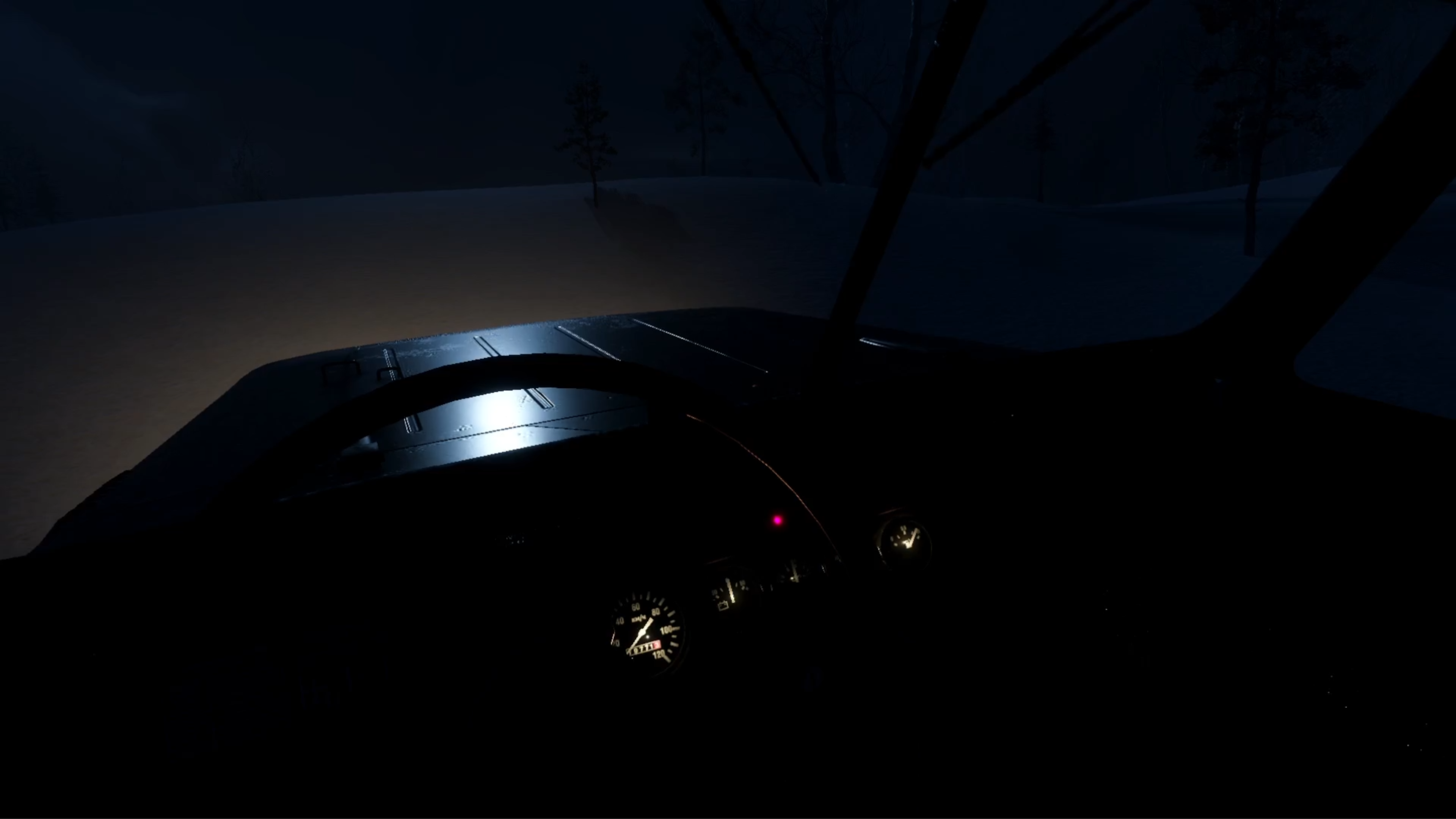
A living cockpit
A large part of the overhaul focused on the first-person driving experience.
The cockpit camera reacts to the movement of the vehicle, the road surface and the engine. It includes subtle vibration, body movement and suspension feedback without turning the view into an exaggerated handheld camera.
The dashboard also contains animated elements such as the steering wheel and speedometer needle.
The windshield wipers were rebuilt as an independent system with two separate wiper arms, different speed settings and worn mechanical movement. Their sound includes the electric motor, linkage movement and the rubber blades dragging across the glass.
These systems are intentionally imperfect.
The Soviet 4x4 is not supposed to behave like a modern vehicle with smooth electronics and silent controls. It should feel rough, utilitarian and slightly worn.
Sound from every perspective
One of the most important parts of the overhaul was the audio system.
The vehicle now uses perspective-dependent sound behaviour.
Inside the cockpit, the player hears:
cabin rattling
mechanical vibrations
drivetrain movement
gearbox and differential sounds
suspension and chassis impacts
switches and indicator relays
windshield wipers
snow beneath and around the vehicle
External sounds such as the engine and tyres are filtered by the cabin and become more muffled.
Outside the vehicle, the behaviour is reversed.
The engine, wheels and snow interaction sound more open, while small interior details such as dashboard switches and cabin mechanisms become much quieter or disappear almost completely.
The system changes dynamically depending on the position of the player or active camera.
This means that standing next to the Soviet 4x4, driving it from the cockpit and watching it from a cinematic camera all produce different soundscapes.
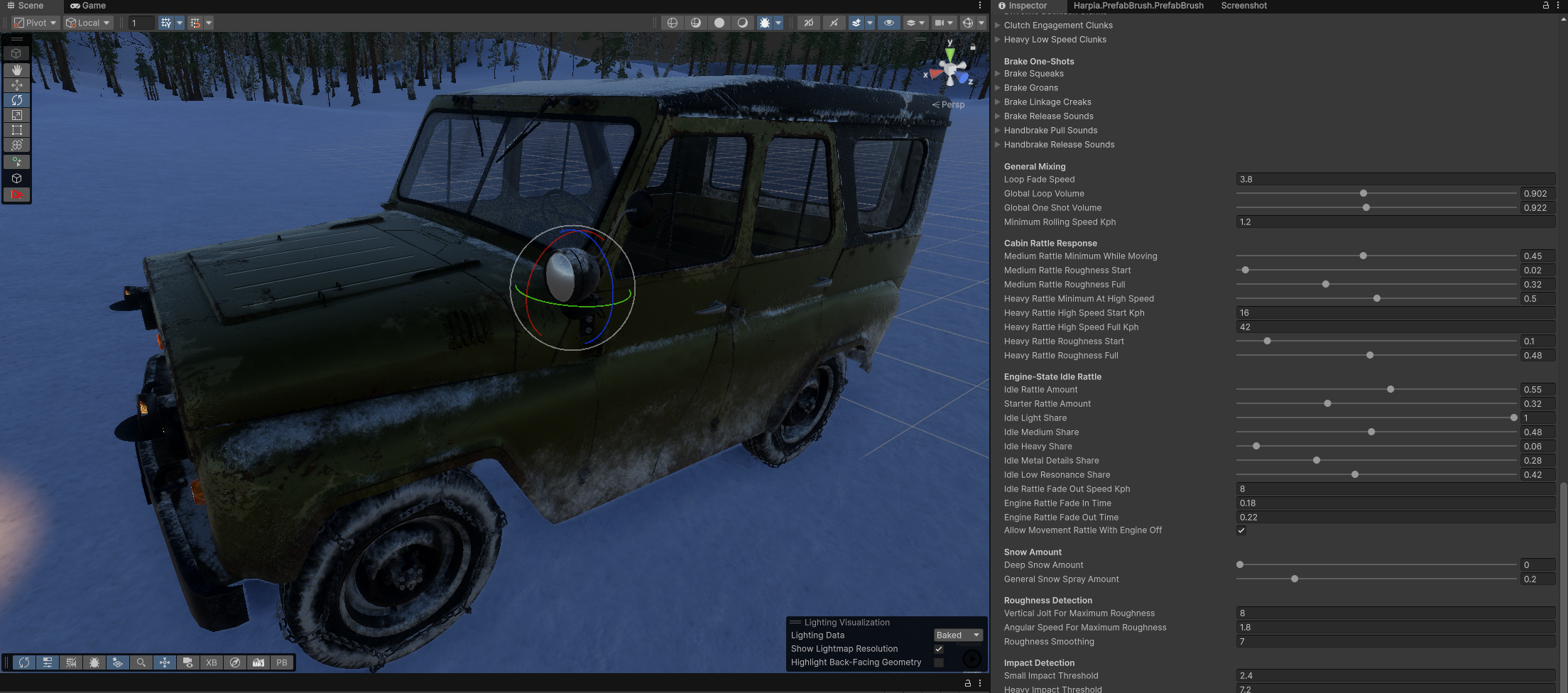
Driving through snow
Because much of Dangerous Connections takes place in cold and snowy environments, the relationship between the vehicle and the ground was especially important.
The Soviet 4x4 now reacts to different types of movement across snow:
normal tyre rolling
wheel slip
deeper snow
snow striking the underbody
suspension and chassis impacts
braking and drivetrain stress
The wheels generate snow particles and leave appropriate marks on the terrain.
We also spent time adjusting the weight, steering, braking and body movement so that the vehicle does not feel like a lightweight arcade car.
It should feel old, heavy and difficult to control at higher speeds, especially on snow.
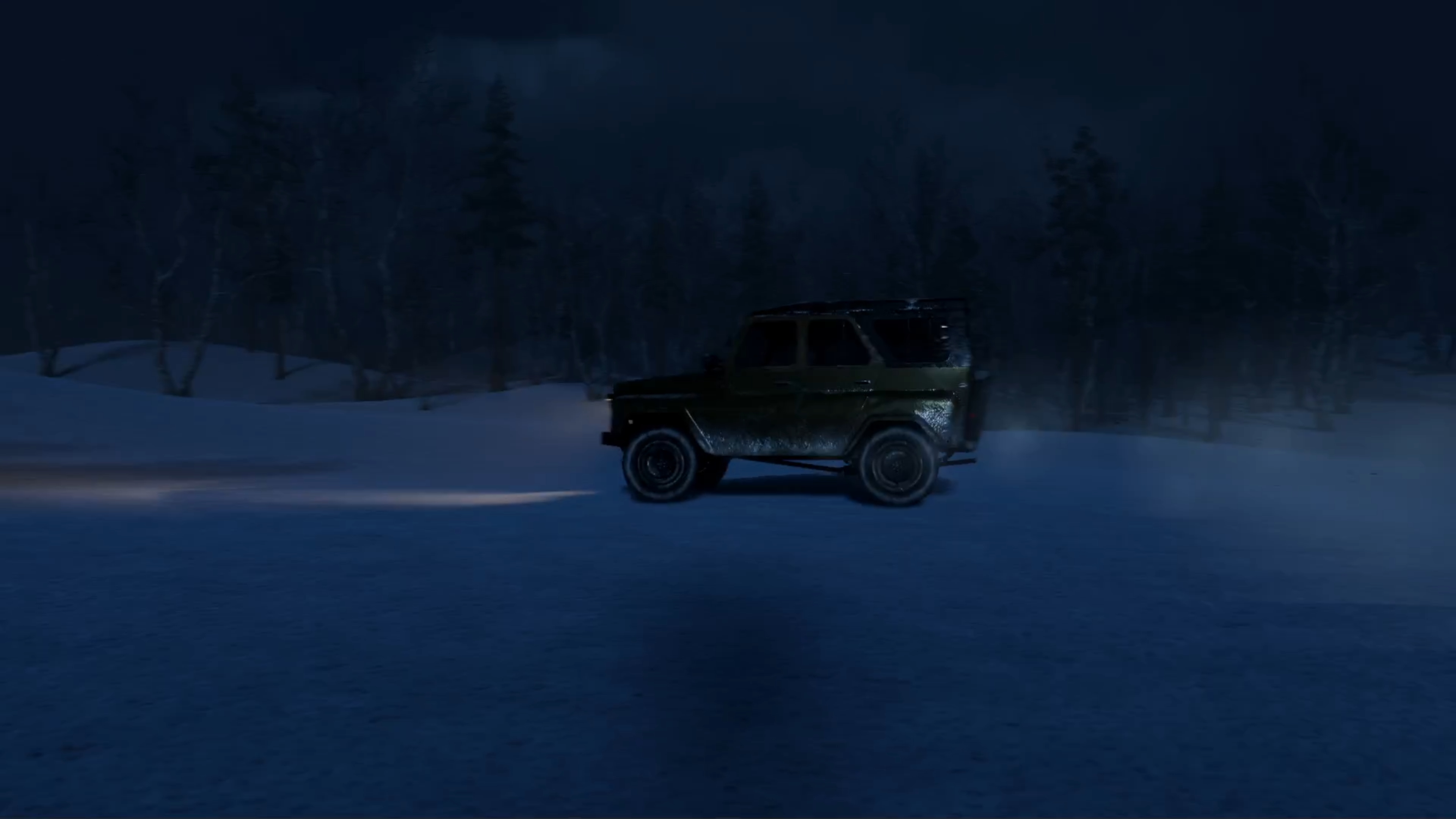
Why spend so much time on one vehicle?
Dangerous Connections is not intended to be a game where every object exists only to move the player from one combat encounter to the next.
Vehicles, interiors, sounds and small mechanical interactions are part of the world.
They help establish time, place and atmosphere.
A rugged Soviet 4x4 belongs naturally in this setting, but its appearance alone would not be enough. It needed to behave and sound like a real part of the world.
This type of work is rarely visible in a single screenshot. It becomes noticeable when several systems begin working together:
The engine starts.
The cabin begins to shake.
The lights illuminate the snow.
The wipers scrape across the windscreen.
The suspension reacts to the terrain.
The vehicle rattles, slips and struggles forward.
That combined experience is what we wanted to capture in this development showcase.
Work in progress
The footage shown here was captured directly in Unity 6 HDRP.
The game and all systems shown remain in development. Visuals, sounds, balancing and vehicle behaviour may continue to change as development progresses.
The Soviet 4x4 is now largely complete, but the systems developed for it will also form the basis for additional vehicles planned for the game.
Thank you for following the development of Dangerous Connections.
Your comments, feedback and support continue to help us enormously.
Add Dangerous Connections to your Steam wishlist and follow the Community Hub for further development updates, gameplay footage and behind-the-scenes material.