
Sophia’s mind has rules and your role decides which ones you break.
Sophia’s mind is not one world. Her mind is layered, fractured, and governed by logic that shifts the deeper you go.
Veil of Madness features four starting characters. Each one approaches the horror of Sophia’s consciousness differently. Each one has different approaches to deck building and none of them play alike. At its core, Veil of Madness is a deck-builder but the deck is not just a set of tools. It is a reflection of your character’s relationship with madness, knowledge, faith, and force.
Your choice of 4 roles with some of our avatar artwork to help you visualize:
The Cultist

The Cultist does not control the outcome, the Cultist surrenders to it. Cards resolve through karma and exploding dice systems, placing the result in the hands of something older than strateg
The tradeoff is profound: sacrifice HP to gain favor, manipulate the Madness Bar to unlock buffs that no other character can access and find power precisely where others would find death.
Playstyle: High risk, high variance. Thrives at low HP. The Madness Bar is a resource, not a warning.
The Detective

While the Detective does not have extra abilities, the detective has a unique card pool and a specific skill to line them up. Deck manipulation, sleight of hand and combo architecture give the Detective a surgical edge.
Where other characters improvise, the Detective already knows what the next three cards are going to be.
Playstyle: Consistent, precise, combo driven. No chaos mechanics, just a deeper pool and the tools to exploit it.
The Scholar

The Scholar learns by experimenting on the eldritch beings encountered inside Sophia’s mind. That knowledge becomes cards, which for the scholar’s role, draws more than any other character. This means that cards add to the deck mid-encounter and build toward combinations that can result in an entire encounter ending in a single sequence.
The deeper the Scholar goes, the stronger the deck becomes.
Playstyle: Scaling, knowledge-driven, high draw rate. Sanity rolls become tools, not threats.
The Shaman

The Shaman operates in phases with elemental attacks and effects that echo and overlap through character cards. Known for building combinations that individual cards cannot achieve alone with Self-elemental damage that is not a drawback, it's the main mechanism.
Line up the phases, absorb what needs to be absorbed, and release combinations that scale with precision rather than brute force.
Playstyle: Phase-based, elemental, combo-through-overlap. Self-damage feeds the engine.
Battle System
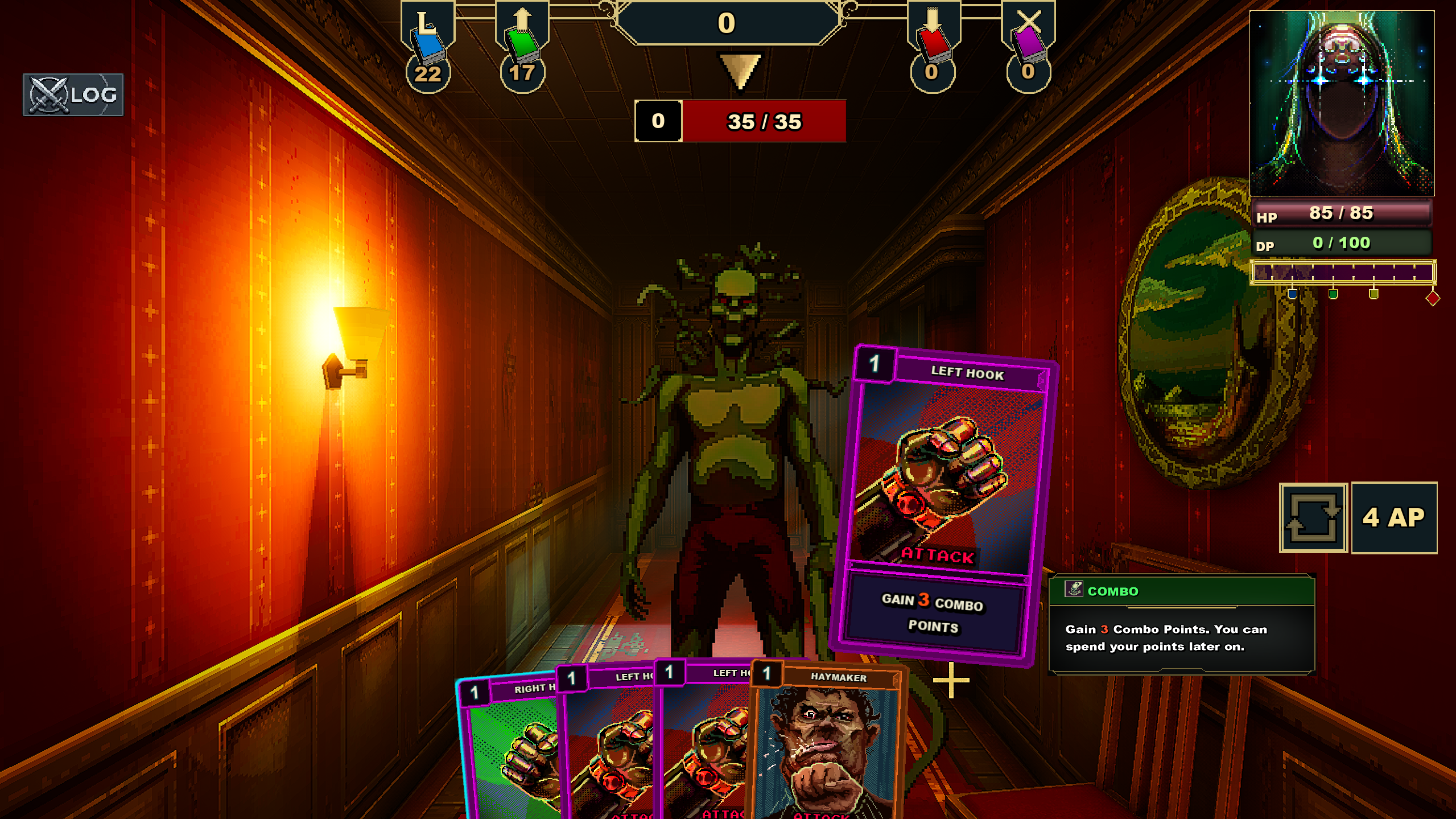
What makes the card system in Veil of Madness different is not the number of cards — it is what the cards mean within each character’s framework.
A damage card in the Cultist’s hands is a gamble shaped by faith. The same card in the Detective’s hands is the third piece of a combination set up two turns ago. In the Scholar’s deck it might be something learned from the creature it was used against. In the Shaman’s hands it is a phase, one beat in a sequence that hasn’t finished yet.
The cards do not change. The character determines what they become.
Enemies and Enchantments
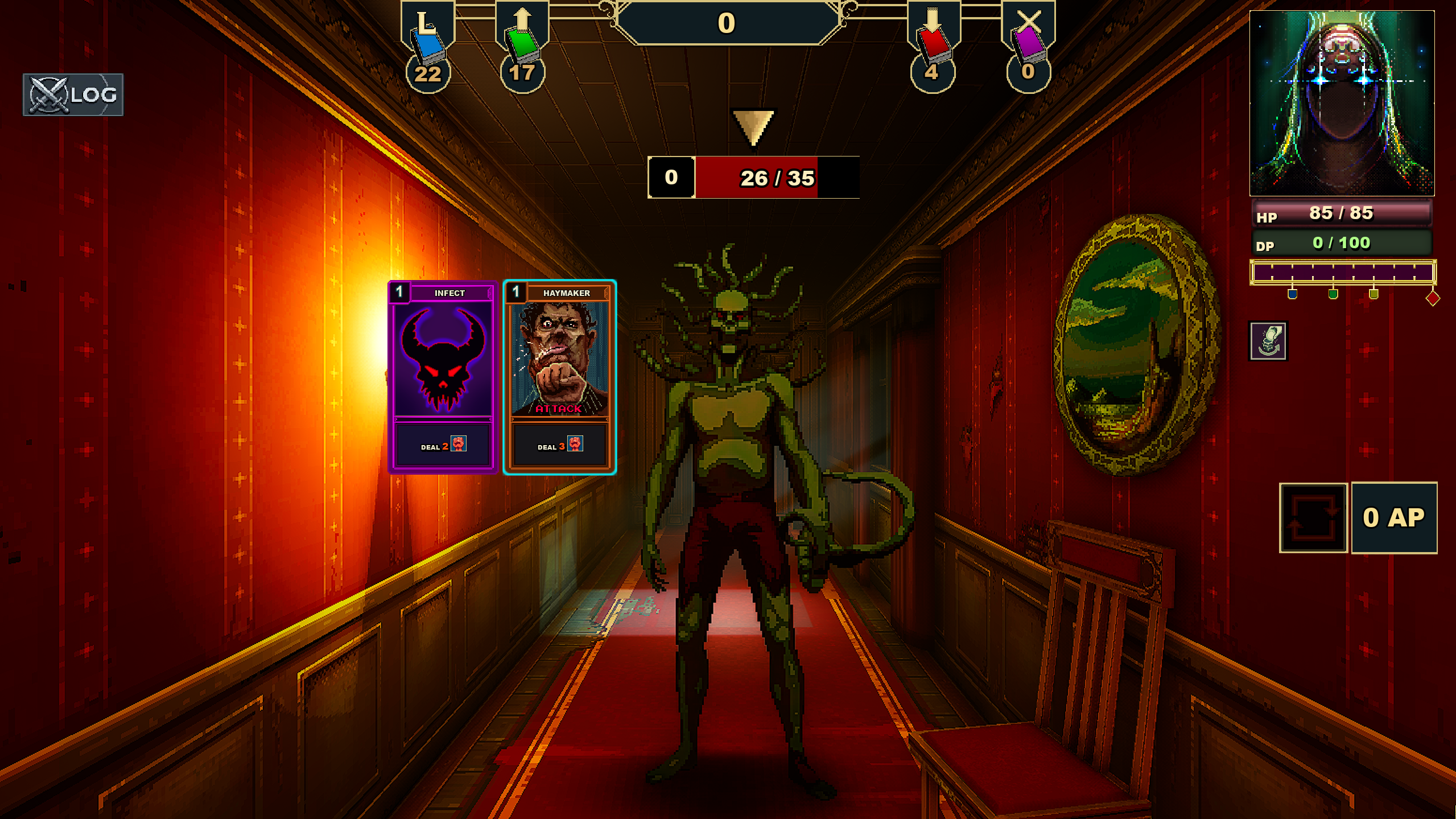
Enemies in Sophia’s mind have their own draw pile, hand and discard pile, drawing from their own deck and playing cards using infinite AP (Action points). Enemies actively play their own attack, defense and ability cards in addition to applying enchantments to the cards passed on by the player.
Damage over time
Offensive
Defensive
Buff
Debuff
Sophia’s mind responds to how you move through it. The role you choose shapes not just how you fight but also the world around you, shifting in response to your presence.
There is more to share on that, which we’ll get to soon.
Wishlist Veil of Madness and follow along!
Stormling Studios