
Introducing Moves
As I get ready to roll out Chapter 3 of Moves of the Diamond Hand, I want to show you a feature that's new to this part of the game. I've been working on it since the Early Access release, and I'm stoked to finally talk about it. It builds on the dice system at the heart of the game, and in many ways it turns that system on its head while reinforcing what makes it distinctive. It's called the Moves system.
Where it came from
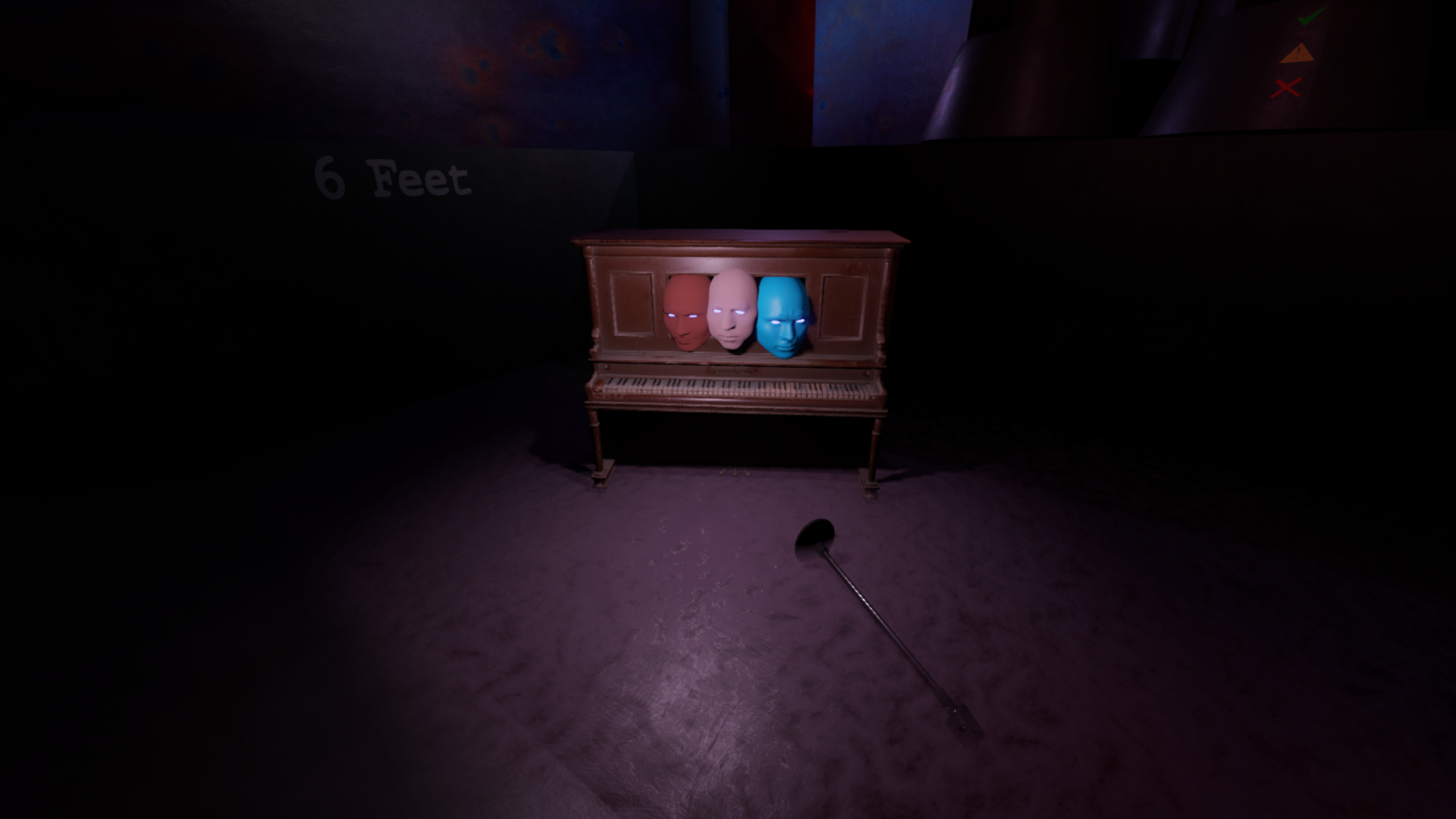
The inspiration is a lifetime of turn-based RPGs: modern JRPGs like Atlus's Metaphor: ReFantazio, and Western classics both new and old. I'm especially fascinated by how the Wizardry school of design shaped games like Etrian Odyssey, and by deeper cuts like Undernauts: Labyrinth of Yomi.
I wanted to weave some of that into my game without grafting on a whole separate hit point system. What I loved about those games was the multi-round combat and its push and pull. The challenge was blending that with what Moves already is. What I ended up with is quite different from its inspirations, and it pushes the game into new strategic territory.
How a duel works
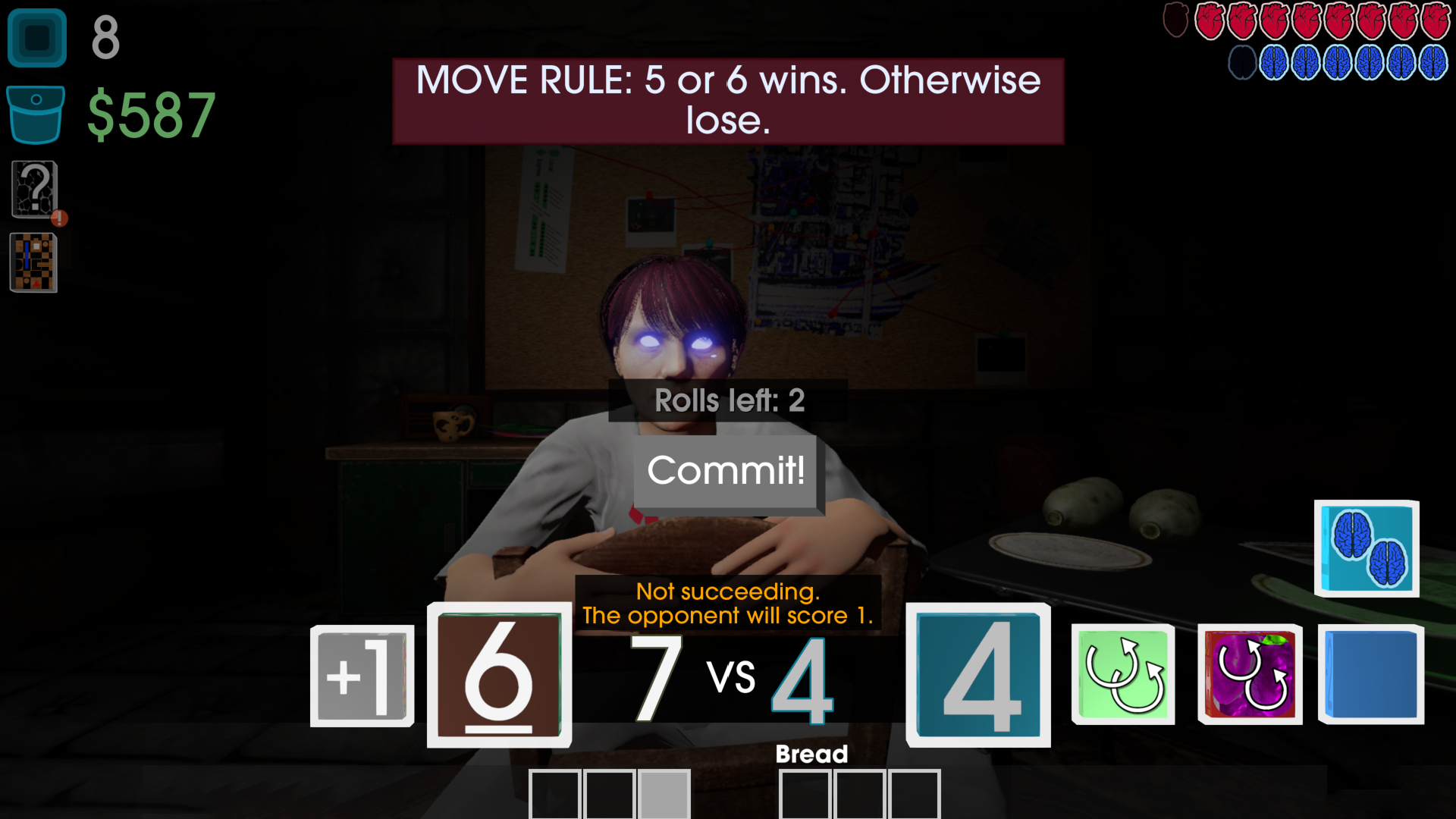
In a duel, you're no longer trying to roll one winning number. You play multiple rounds of dice. Win a round and you score a point. Lose one and your opponent does. Depending on the strength of the opponent, the duel plays first to 2, 3 or 4 points. Then the game responds narratively.
Twist! Every round breaks the rules
Each round comes with a rule-breaking twist, and those twists are the "moves." Some moves change the win condition.
Instead of simply rolling the highest number, you might need to:
land your roll between one and four,
land your roll on a five or six, or
Beat your opponent by at least two.
Ties no longer automatically go your way. They result in a draw, which keeps the duel going another round.
Other moves go after your opponent's dice directly, like turning their highest and lowest faces into zeros.
You start with six distinct moves, but you can only bring four into any duel, so you have to choose carefully. And once you play a move, you can't use it again until you've exhausted all four. No spamming.
Conditions stack
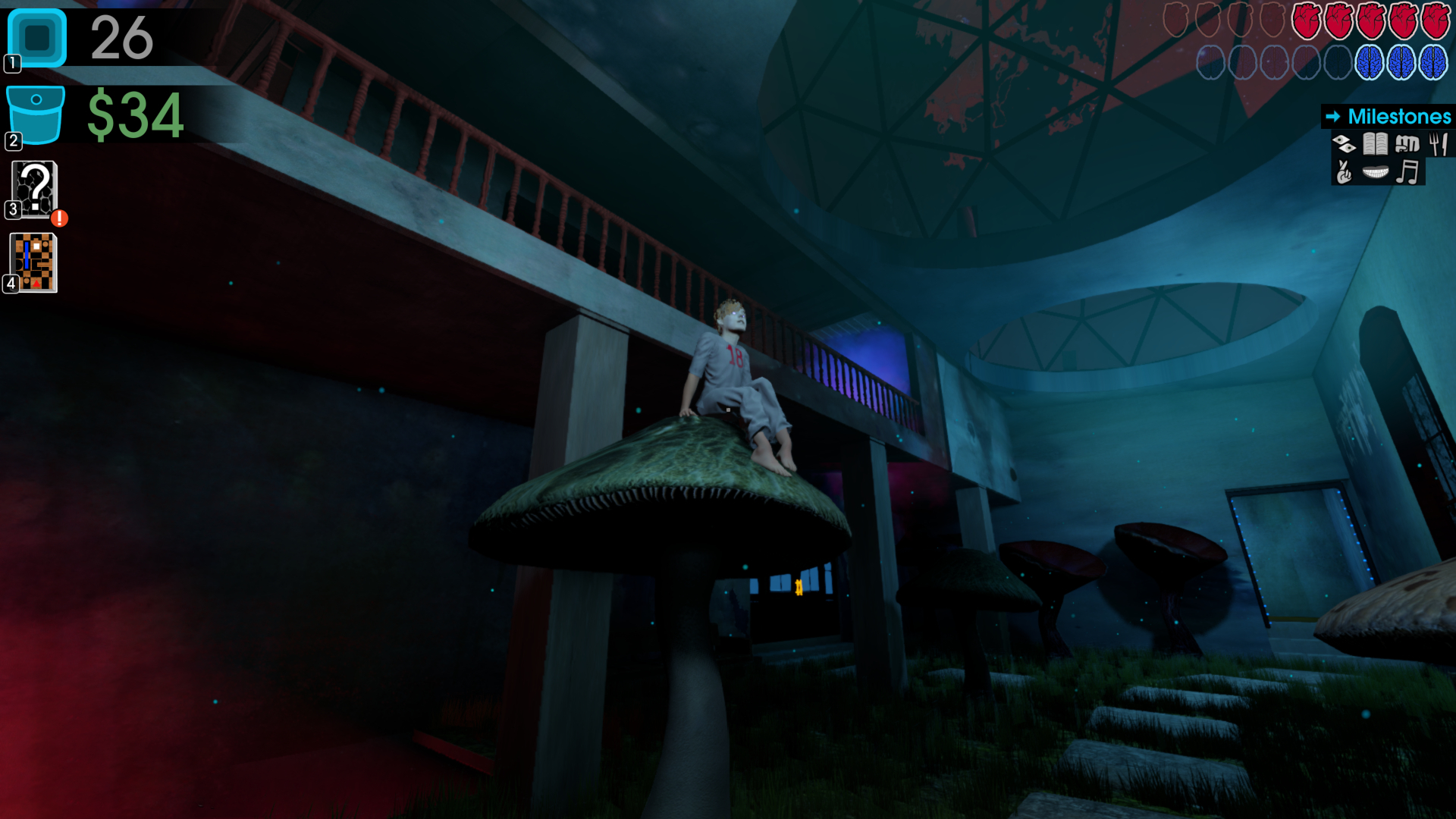
Whether you win or lose a round, the conditions for your opponent keep stacking, while your conditions come and go as they always have. Each round layers on top of the last, so a duel builds in dice intensity as it goes. The timing and order of your moves become part of the strategy, too, not just which ones you pick.
At its core, every round is still the same Yahtzee-style dice drama. The moves just frame it with a heightened sense of flow, pace, and tension.
Moves cost health and nerve
All that health and nerve you've built up to this point? Moves spend it. The more powerful the move, the more it costs. That limits how often you can lean on each move, and it forces you to think about manipulating your dice and managing your recovery in ways you never had to before.
Why I'm excited
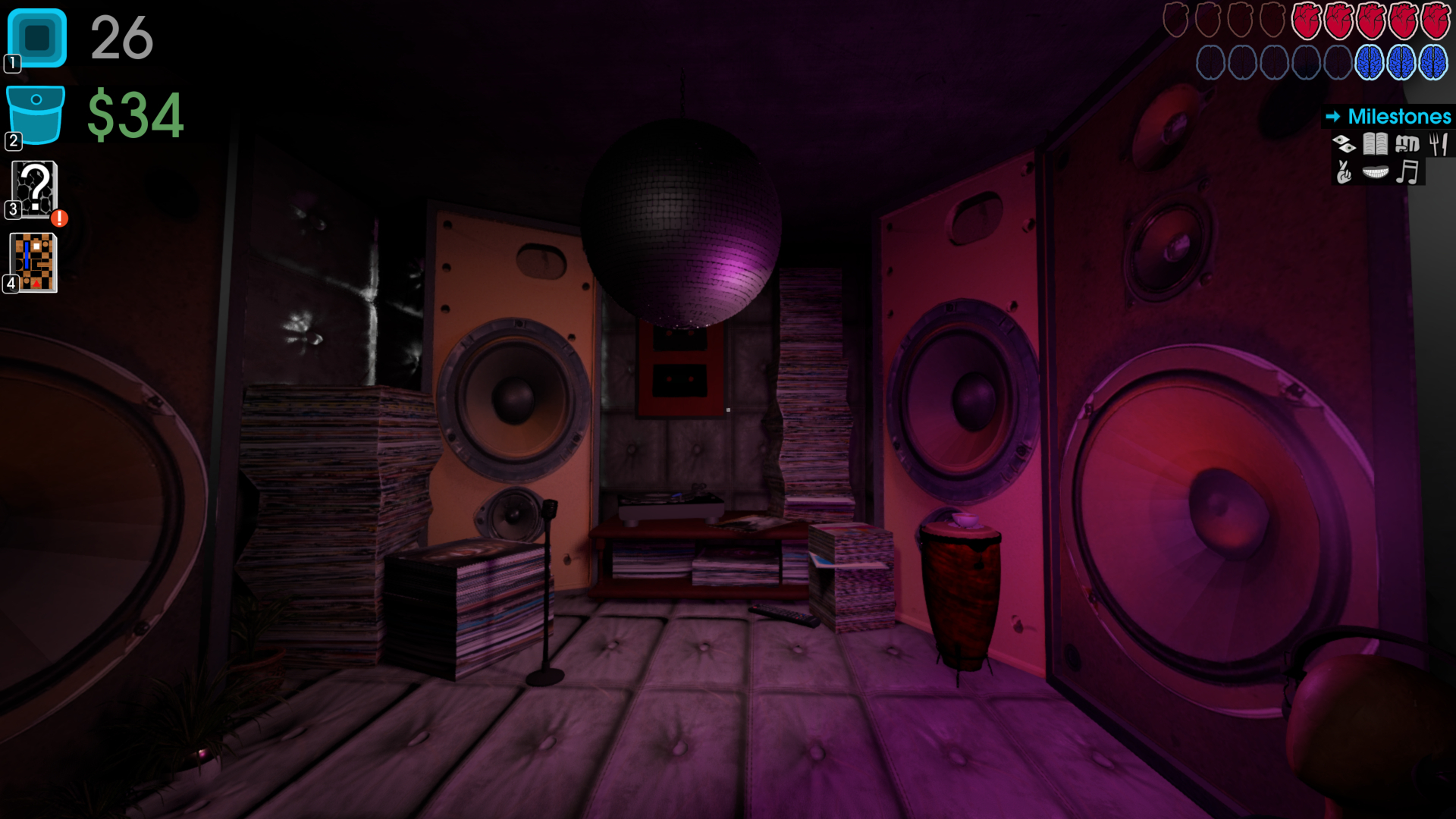
This system brings a turn-based flow into a game that already offered dice, luck mitigation, and role-playing expression, and it has its own distinct identity. Only a small set of moves is available right now, but even within those limits, plenty of strategies have already emerged. I'm only just getting started. Through Chapters 4 and 5, the system will keep being refined and expanded.
The bookstore and Building 18
Narratively, the bookstore that sat closed through the first two chapters is now open for business. It sells a variety of new moves for you to unlock and try out.
And there's a perfect place to use them: Building 18, where Chapter 3 is mainly set. It's a dilapidated, liminal dormitory and apartment building for forgotten and abandoned clones. There are plenty of duels to be had in this dark place, and the mood is just right for them.
Stoked for you to play this!