
The road to refining the art style and theme of Vanguard Exiles has been one of learning, iteration and excitement. As time progressed, it became evident that teams’ art skills were as crucial as their ability to adapt. Below we hear from the team, gaining insight into their thought processes, challenges, and how it led them during their design.
Units
Amongst many considerations we had, one was the toss-up between 2D or 3D. We ended up choosing 2D, and by doing so, catered to a faster iteration/turn around time. There was the whole process of figuring out aspects of the visual style along the way, but we sought a lot of reference points to guide us, one of which was Darkest Dungeon.
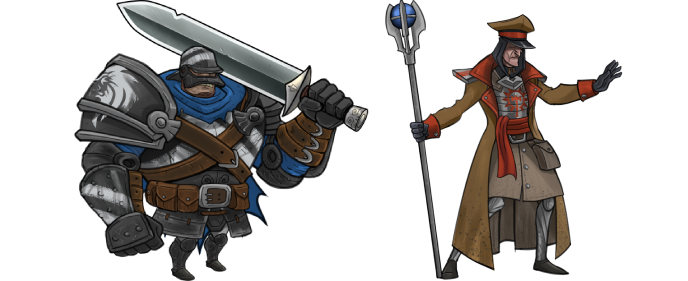
We simplified our initial approach to Vanguard Exiles as having 2 sides: Red vs Blue. So we used similar design elements for our Units that complimented this angle using our various reference points and applied the relevant principles to our Units. One thing which made our Units stand out from other games though was that they were made with variant pieces, making them much more unique.
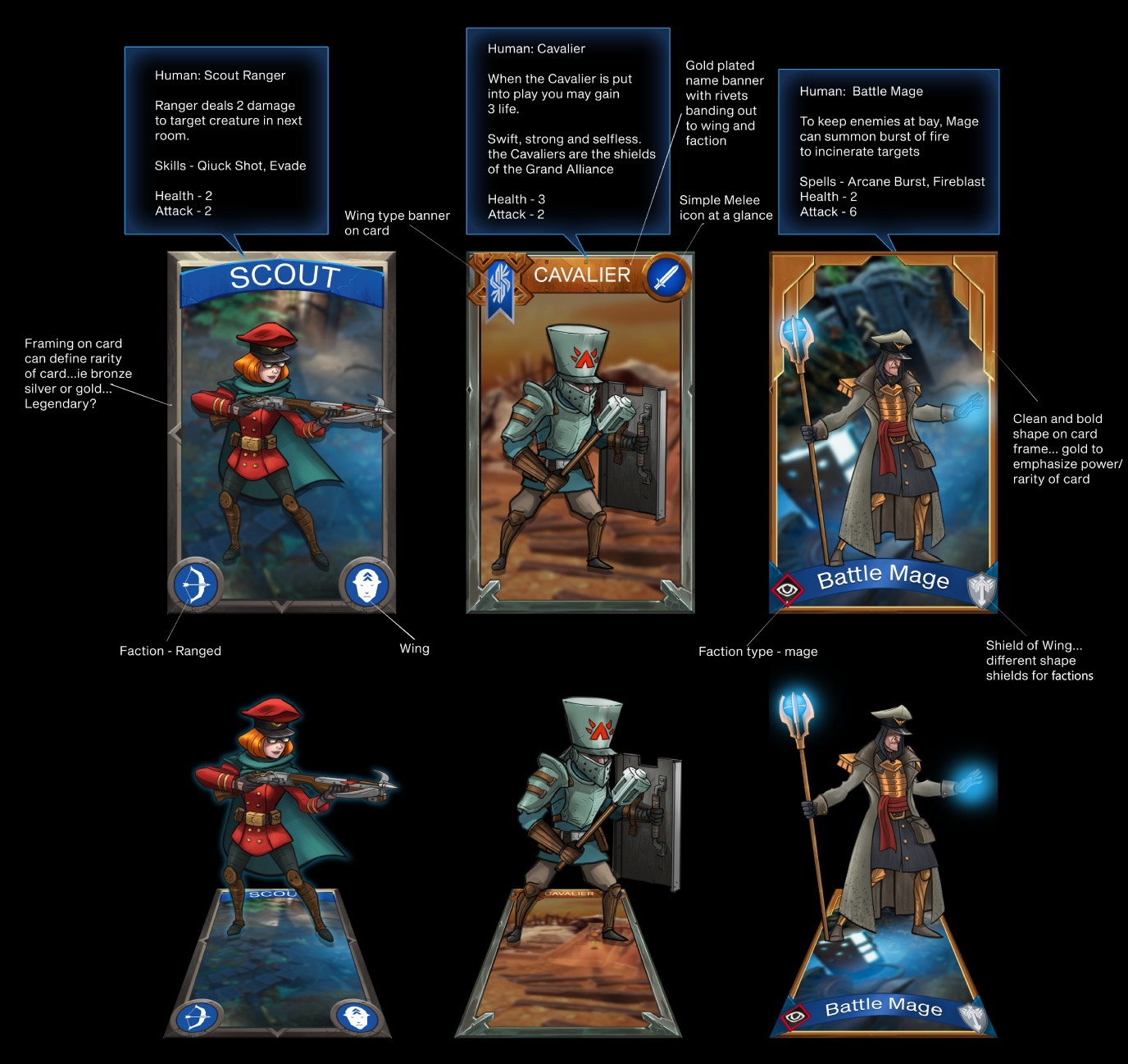
We wanted to move away from cards as a concept, but still allow players the flexibility to refer to each Unit as a “card”, or their Squad as their “deck”. However before this came into play, we experimented on creating unique borders for the various units (see above). E.g. Units that employed magic would have a specific “Mage” themed icon, Units that could attack at a distance would have an associated “Ranged” icon, etc.
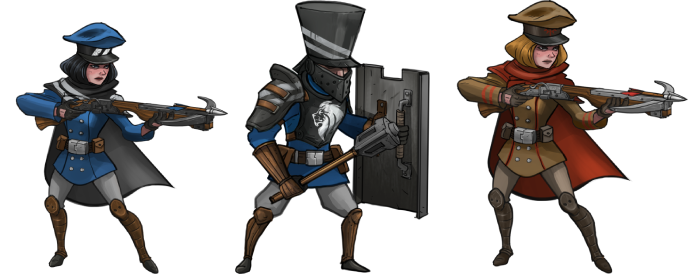
Above are examples of earlier designs for the Scout and Cavalier Units. There were a whole bunch of variant pieces for these templates, designed in a way that allowed flexibility in each units’ parts, giving us the option to swap out parts for each of these units as needed/intended. The Units have a very strong comic book style emphasis, with strong angular features that accent their movement and graphics in game.
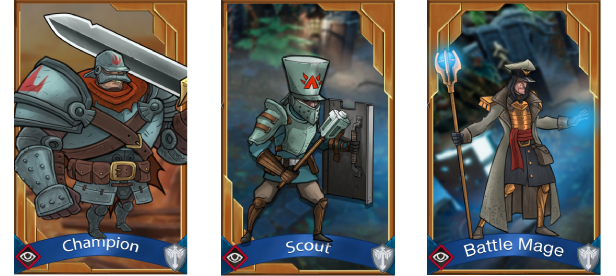
An enjoyable part of the process was experimenting with proportions and body shapes (indicated via some of the early concepts above). The Tank (champion) was intentionally massive comparatively to the Scout, who was designed to be a smaller, more agile unit. The Cavalier was somewhere in the middle of those, having a medium build, but still wielding a shield and mace. With the Mage, we envisioned a Unit who had formidable skills, with a less formidable frame, opting to make him slim and tall. Not all these concepts (and some of the following iterations) were utilized in the end, but they acted as a solid foundation for any redesigning as feedback was received from the designer, Richard Garfield.
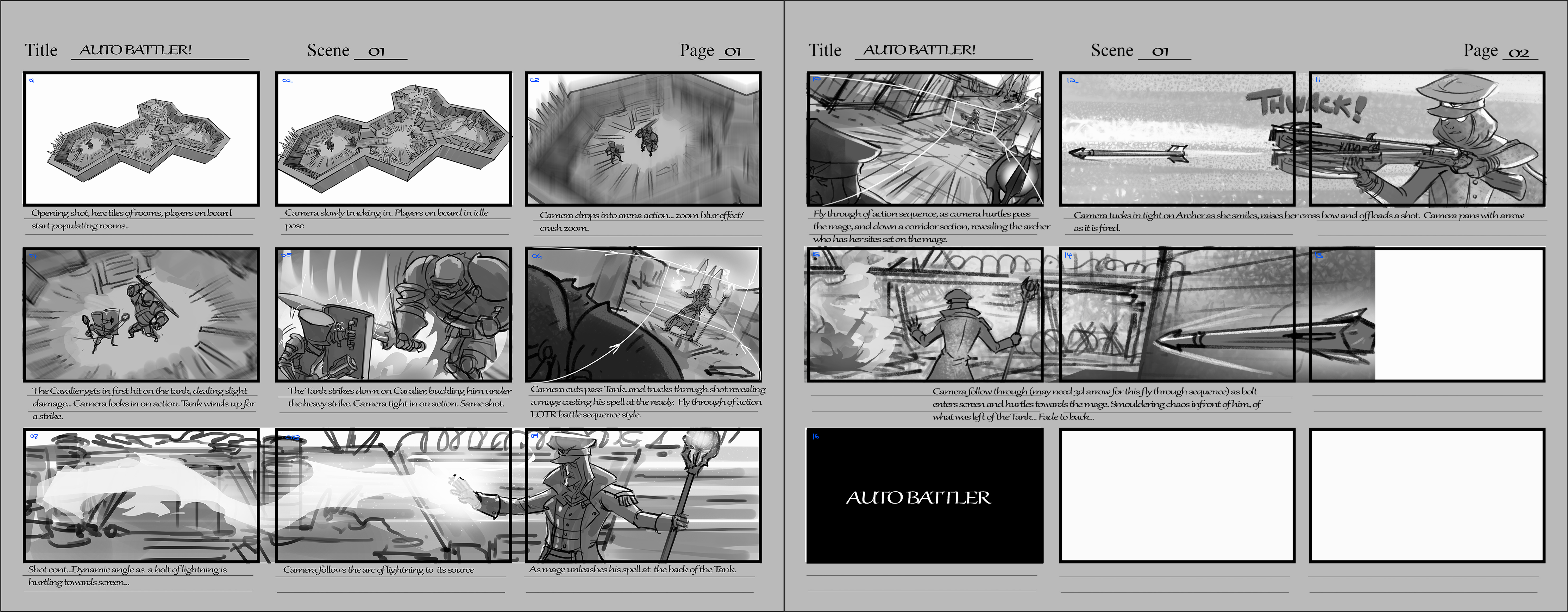
The theme for the world was one that resonated perfectly, both in design and execution. Revolving around a steampunk/fantasy world amidst a landscape heavily influenced by WWI, the team worked towards a cinematic trailer to really capture the essence of the theme, and bring cohesion to the various aspects. The result of which can be seen on the Vanguard Exiles Steam page or YouTube channel.
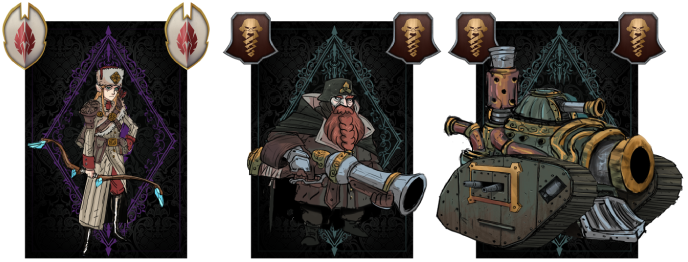
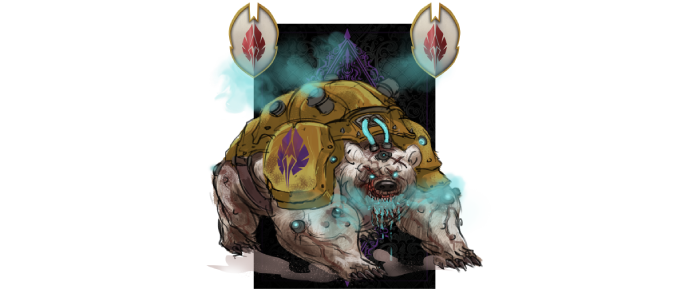
The above Elf and Dwarf designs were quite early concepts that ended up being utilized with some minor tweaking. The exploration in designs which were initially focused around a card base feel, deviated from this when the card was utilized in game, transitioning from a “card in hand” to “Unit in play.” Despite moving away from the card theme, the initial explorations influenced by the perspective of the Units being cards did well for stylization, and really enabled the team to narrow down the aesthetic for the various creatures/Factions, to later then integrate the WWII flavor into the design. Even in the earlier design stages, the Dwarves felt on point, especially when we added the flavor of having access to things like Turrets or a Steam Tank to deploy. The Berserker Bear was a favored design too, heavily influenced from the popular Netflix series “Love, Sex and Robots.”
VFX
Our goal for VFX was to ensure that they were easily notifiable in the zones, regardless of the angle they were viewed from. Some did well to match the specific zone they were allocated to, naming the "Boggin Temple" as an example, while others needed to be more flexible so as to suit any zone they may be placed within.
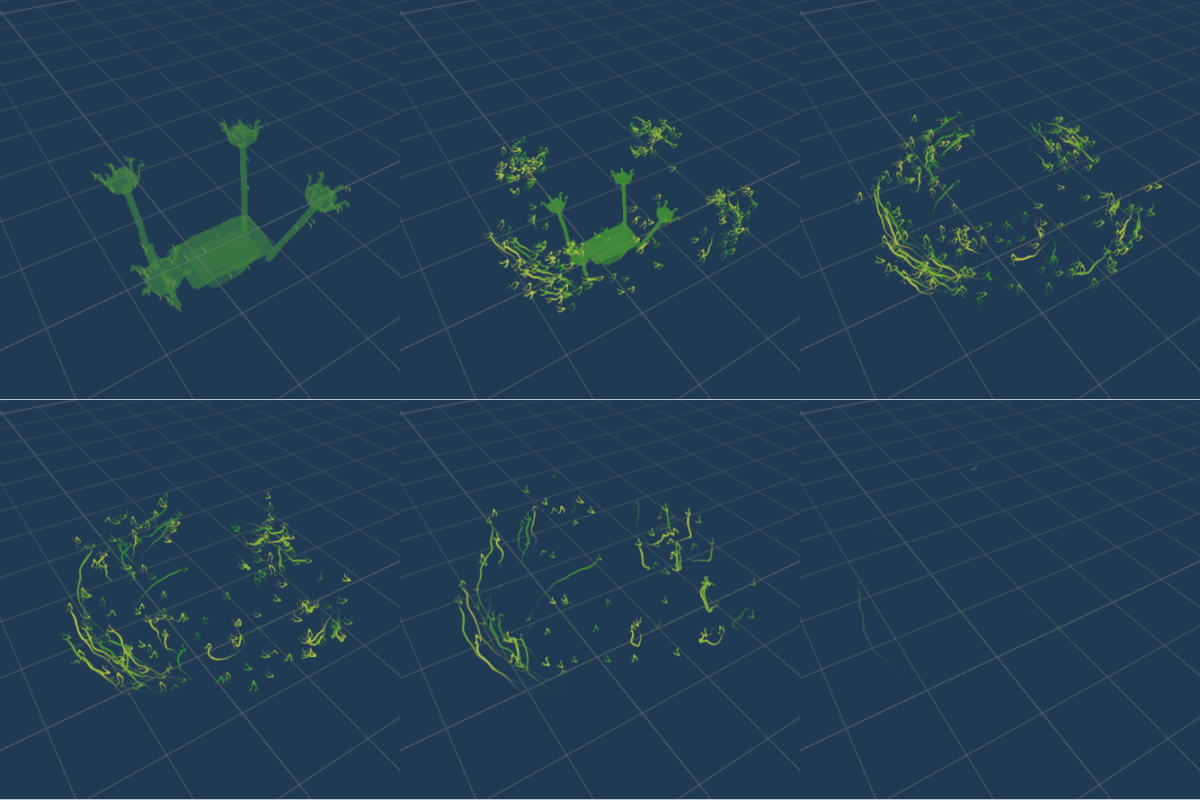
A consistent focus throughout the process was to ensure the VFX was readable, engaging, and optimized for performance. The key element in this process was the players’ perspective, honing down on the principle where players should easily understand the effects both in battle mode and from a higher map view. There were certainly challenges with this, especially with effects that had variations. Poison spells were a good example of this, as they need to be distinct from other effects, yet similar enough across its various applications and origin, regardless of whether the effect came from a nearby unit or from a distance.
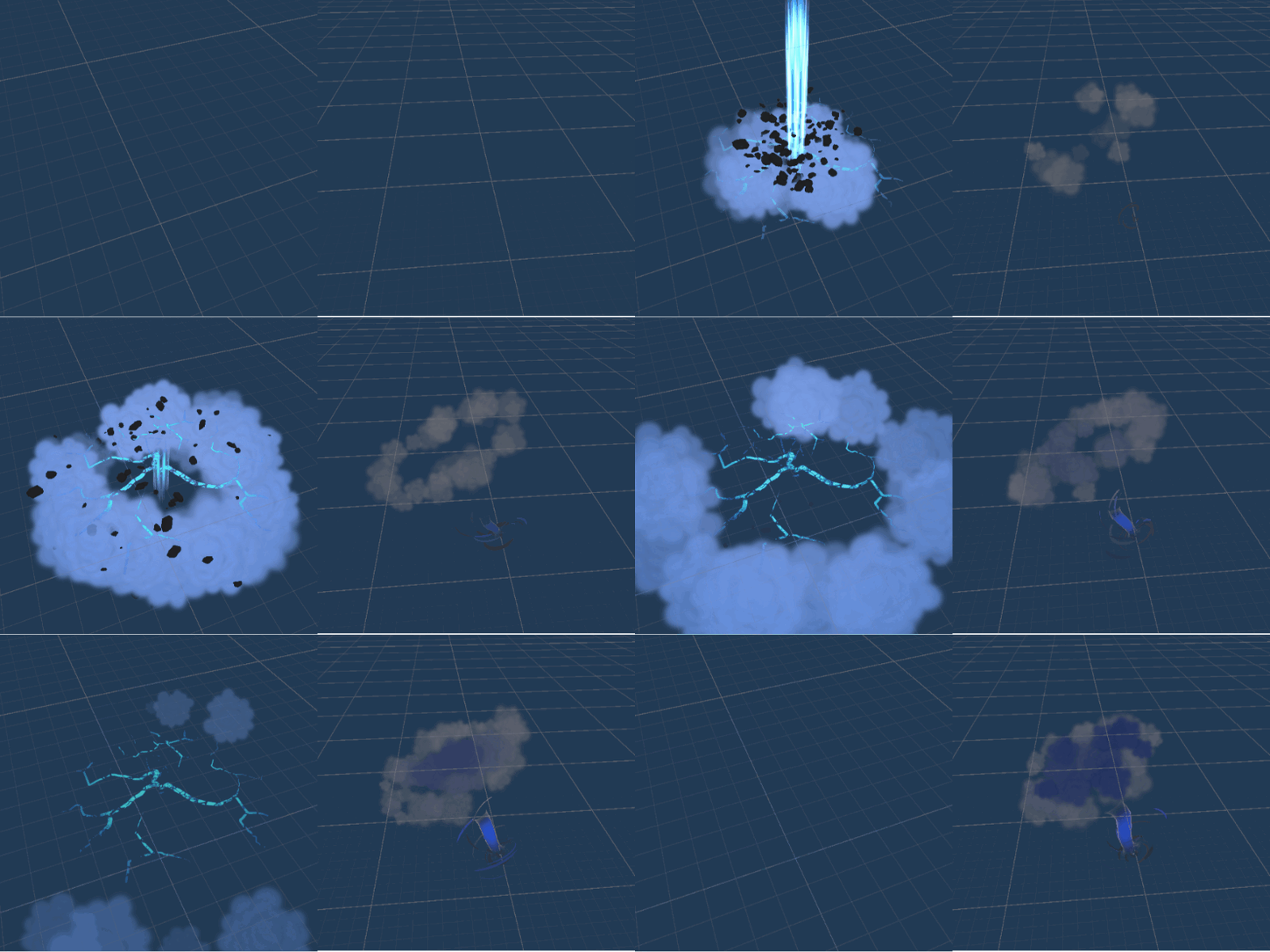
Another consideration was the dynamic camera movements created by the game’s Director system. With the camera in play, the VFX could be seen in various screen positions, but the goal was to ensure that players could still recognize the effects in play., whilst considering that VFX could trigger from various sources such as spells, abilities, zone effects, and nearby units.
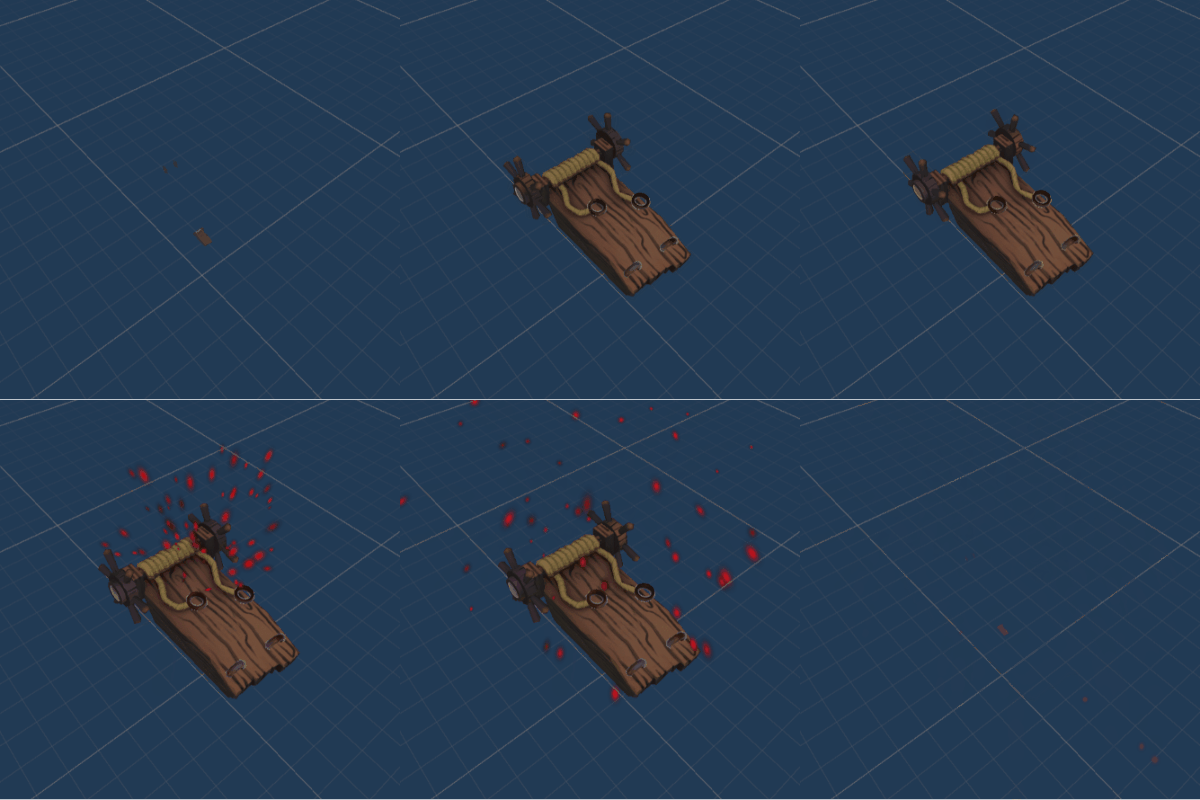
Throughout the development of Vanguard Exiles, a number of aspects have undergone changes to ensure VFX alignment with these aspects appeared natural and/or appropriate. These aspects included things such as camera angles, Unit movement, Unit positioning during combat, and the tweaking of timing across these various aspects. Another consideration we had was ensuring the players weren’t overwhelmed by multiple visual effects that could occur simultaneously, so observing VFX during different playthroughs at various angles and distances became paramount for the team to make the necessary adjustments. Despite the VFX still being in earlier iterations, they have laid a solid foundation for any future iterations to be made, bringing added emphasis to the combat and immersion in each game.
Zones
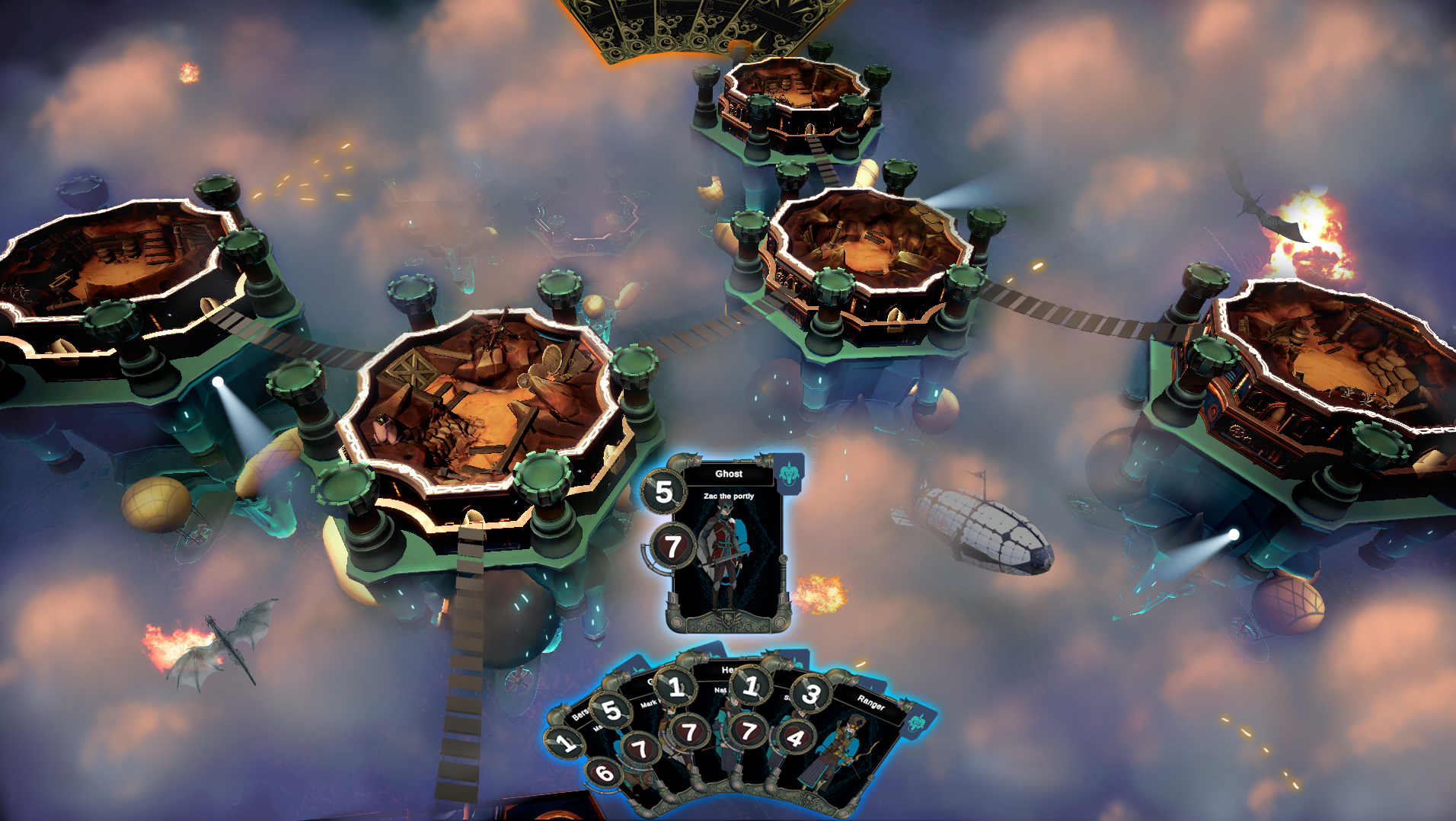
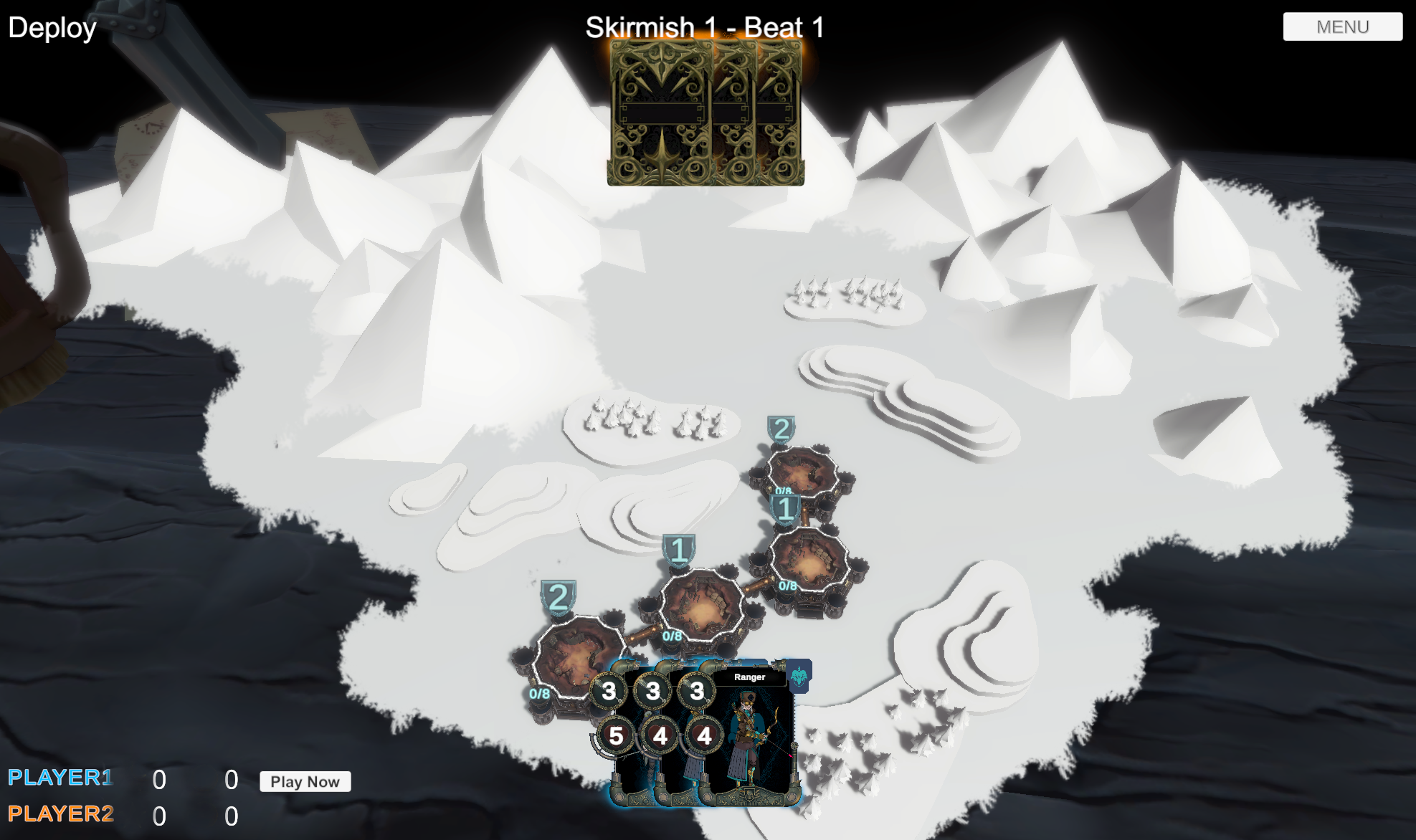
The zones went through a number of concepts and styles before we settled on the final design, ranging from classic fantasy dungeons, sky-punk castles, to a map opening sequence influenced by the opening sequence in Game of Thrones. Ultimately we liked the idea of it being a battlefield that's gradually explored and expanded, but one that can also degrade as the war wages on. In doing this, the games’ battlefield is open to the likely potential to appear very different from how it did at the start, giving the player a greater sense of immersion in an evolving (or devolving) landscape.
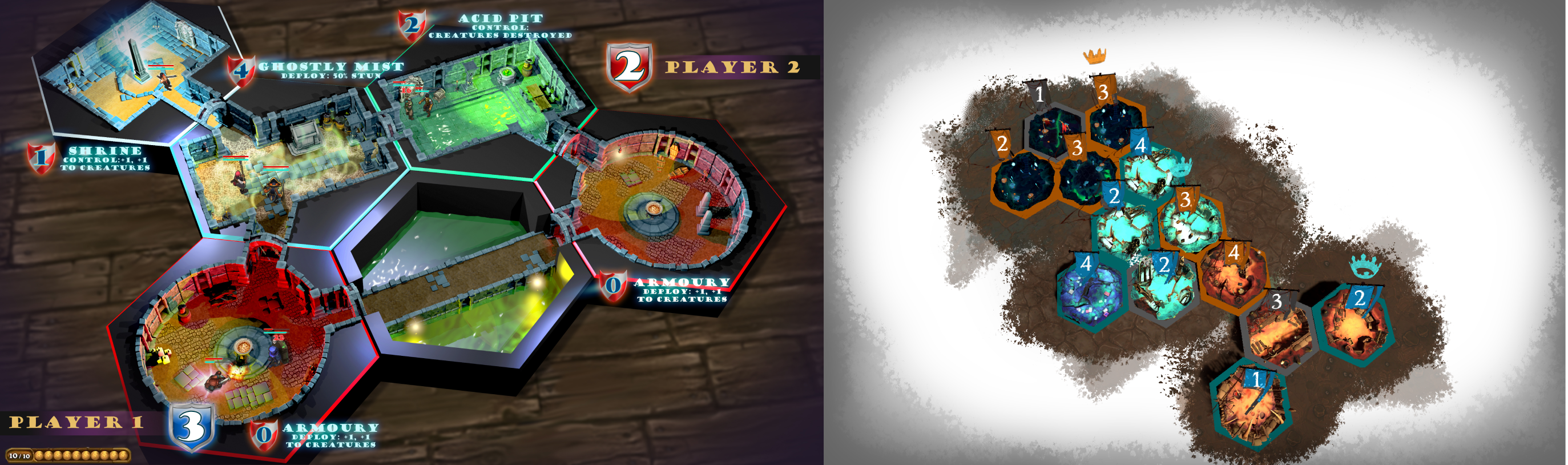
Initially we looked at hexagon-shaped tiles, which work well for exploration and strategy games, but we wanted to change and expand from this, and in doing so came the inclusion of corridors. Strategically, corridors easily facilitated newer strategies, like creating choke-points, and changed the dynamic of the map, going from a big open field where Units can go in any direction, to an evolving map with areas that changed the landscape of the battlefield as each round progressed.
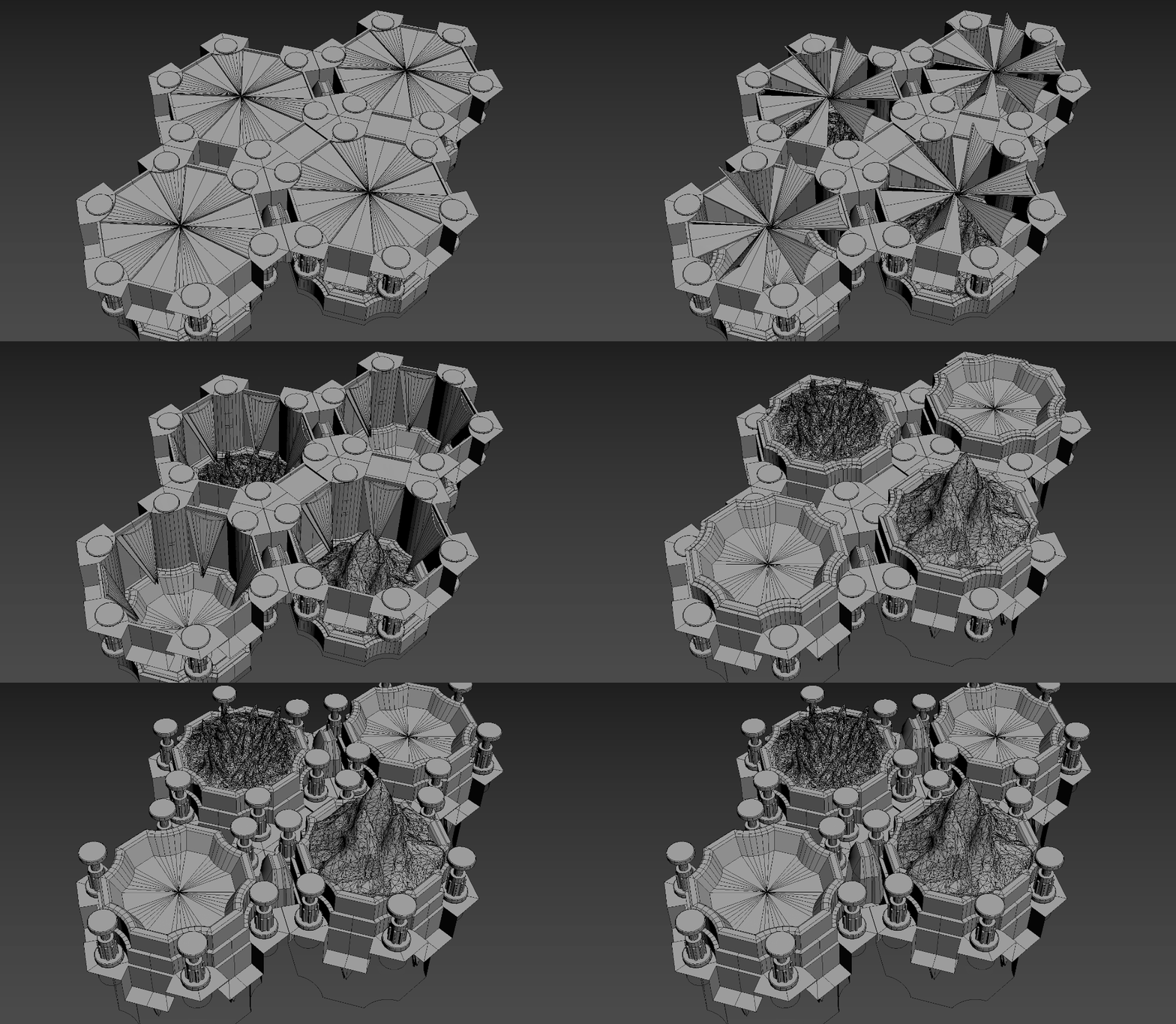
The zones have a capture ring around them - an important feature that shows the progression as the zones are being captured. One of the design decisions was to steer away from making the zones perfect hexagons, and create a curved indent at the corners. This made it much easier for the player to see how the zones connect and how units would traverse them, passing through where they directly connected, rather than where three hexagon corners would connect. Once in place, this in turn affected the design of the capture ring, leading to a mechanic that felt well suited to how the game plays.
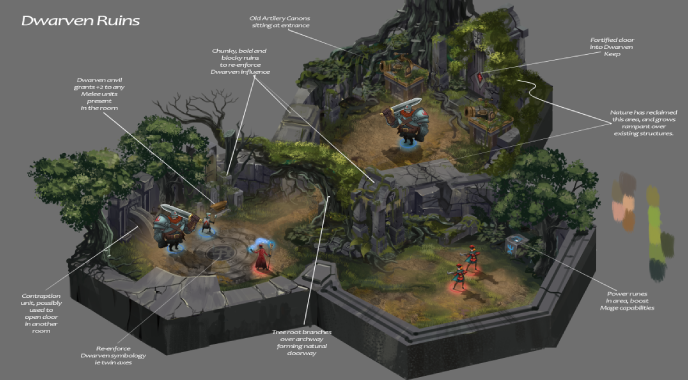
Currently there are three biomes for the zones:
- Trench - bunkers and holes carved into the ground for Units to hide and hope for the best
- Ruins - a once beautiful city devoted to the study of sorcery, now lying in rubble and ruin
- Deep Ruins - due to the cataclysmic upheaval of war, these ruins became exposed to the open sky after centuries underground, where to this day, the creation of these ancient tunnels is still a mystery at to who dug them and why
With every design challenge presented, the excitement of iteration and solution has driven the team to not only overcome the obstacles before them, but exceed expectations with their learnings, moving forward with a fresher perspective and ever-ready for the next challenge. The evolution of Vanguard Exiles from the (now) available demo on Steam to the coming build planned for Early Access will highlight the significant leap the team has made, who are nothing short of eager to showcase it to Generals everywhere.