
Fire crackles, sparks climb into the dark, and around it the bodies move. Sparks dance, shadows dance, humans dance. The movement isn't just motion following the drums and the sound of the flames. The movement is a bond, it is identity and connection with forces beyond our understanding.
My name is Blaž, and for the longest time I had a dream of designing a game that was different. Not a fresh blend of familiar mechanics with a new twist, but something truly its own. Ever since I took a few anthropology classes in college, I've been fascinated by early human societies. Long before writing, before cities, before all the rest. When humans used their wit to make sense of the world around them. When lightning was a message from an angry god and not charged particles moving through the air. Reading everything from classical anthropology to esoteric speculative literature on shamanism, I started building a picture in my head: a game set in prehistory, when people were not conquerors but humble storytellers.
The vision was clear. A strategy game where you don't conquer, own territory, fight your peers or research ever more advanced ways of killing each other. Central to it was a feeling that the tribe is small and insignificant against the world. Even at its largest, the whole tribe could perish before a single herd of hungry sabre-tooth tigers. These people don't develop technology so much as culture, and even the technological advances they do make are more conceptual than practical. That's the part that matters most to me: their most valuable breakthroughs are, more often than not, new ways of seeing.
Early humans lived in small groups. Private property didn't exist even as a concept. They had no kings, no warlords, no established priesthood. The only ones set apart were the storytellers, the shamans. Those with a stronger connection to the spirit realm beyond the thin veil. People listened to them more intensely, trusted them and followed their advice. Shamans saw the world with different eyes, felt the presence of otherworldly forces and entered trance through rhythm to focus their visions.
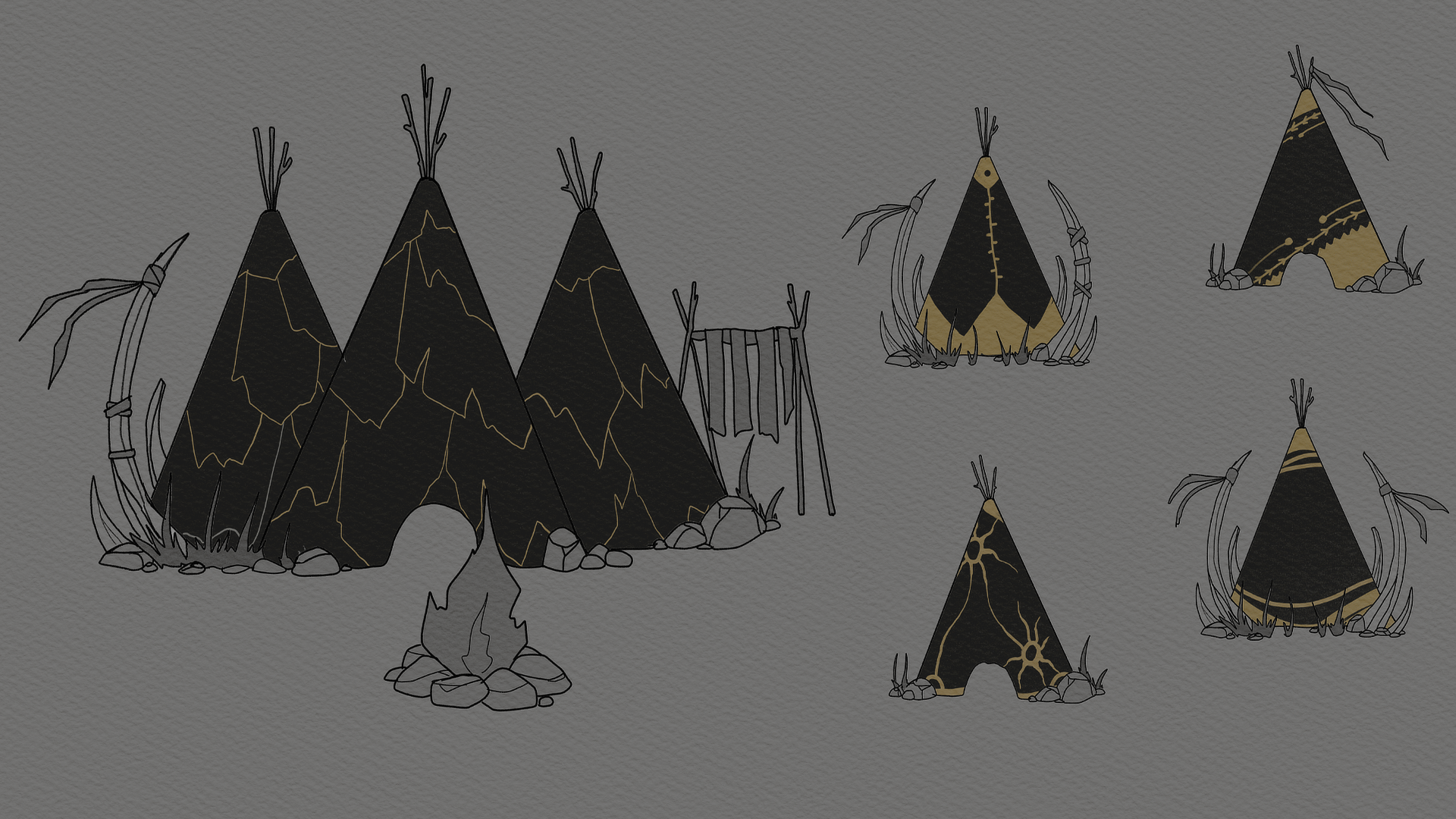
And prehistory means nomadism. Early humans rarely stayed put for long. For them, home was not a place but people, fire and a moving tent. In It Takes a Tribe we wanted to capture that feeling and not merely include it, but make it the central pillar of the whole design. Every system, mechanic and loop we've built (much more on all of that later) turns on this one point.
But nomadism isn't restlessness, and it isn't moving just for the sake of moving. It's settling when a place is good and packing up when it stops being good. It's the seasonal stay that stretches on while the weather holds, the return to a spot that came to mean something: a place you once marked with a monument or a story, and drift back to seasons later. You put down shallow roots, knowing that sooner or later the world will ask you to pull them up. Stand still too long and the resources thin, the seasons turn, the predators find you. To move is to seek and to find. To refuse to move is to wither.

What is movement anyway? The changing of physical location is trivial, the change in spirit is supreme. The tribe moves when it must. But the individual moves for other reasons: because they feel the need to. To express, to dazzle, to scare off. And as they move, dancing around the fire, the spirits watch them from beyond the veil.
Thank you for reading. It is good to write this since I already bored the rest of the team to death talking about these things. But they matter dearly to me, and this thing we are building matters dearly to me. Not just because of the years we spent making it, but because it is a dream of mine. A dream dreamt up watching fire dance on a cold night a long, long time ago.