
Greetings, scholars!
A few weeks have passed since the last geography entry, and we are still working hard on development. The last piece finished Chu and Qi; this one goes north, to Zhao and Yan.
In these thirty years both houses fought one war to the north, and both set up commanderies on the ground they took. Zhao holds eight commanderies and fifty-two places, Yan five commanderies and thirty-one places—together eighty-three of the map's three hundred and fifty places.
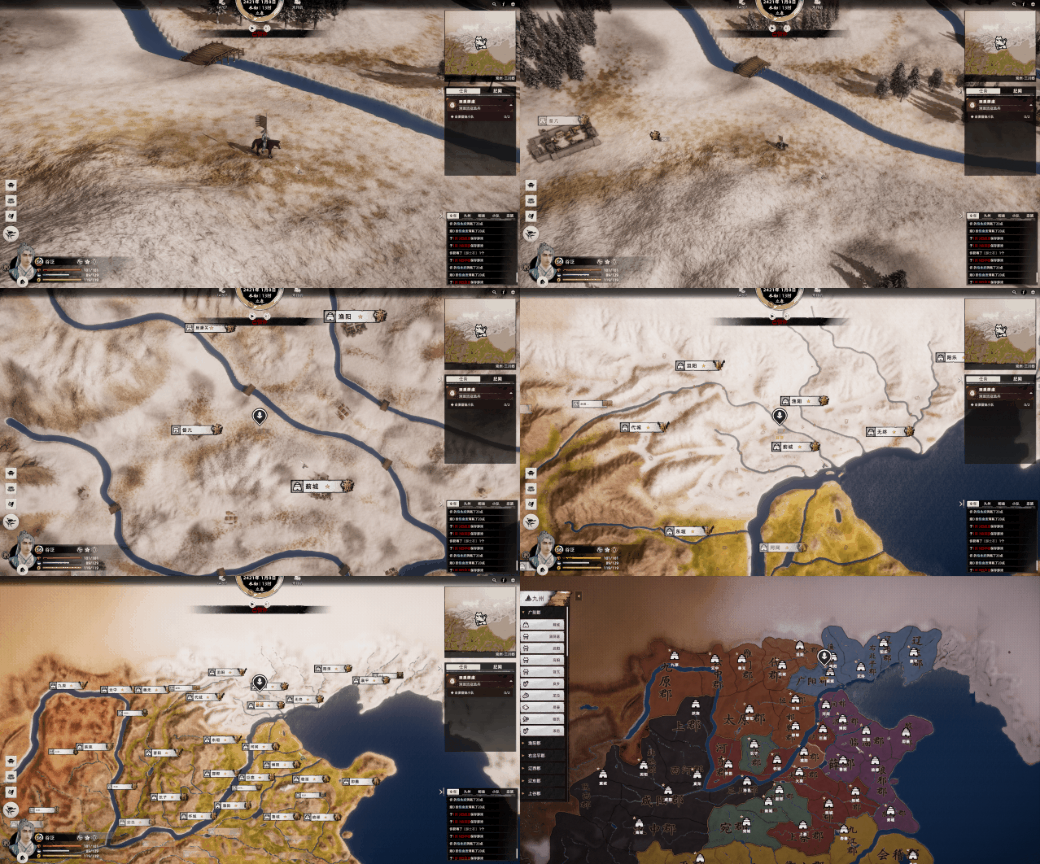
[I. The War to the North]
Zhao's war began with a change of clothes. King Wuling of Zhao put off the wide-sleeved deep robe and dressed his men in nomad garb, set the soldiers to drilling at riding and shooting, and then broke the Linhu and the Loufan to the north. The chariot formations of the Central Plains could not deploy in the Taihang passes or on the Yinshan slopes; mounted archery pushed its way up. What he wanted besides was Zhongshan, in the Hengshan stretch, and in the year he changed the dress he said one thing.
Though the whole age laugh at me, the nomad lands and Zhongshan I will have.
Records of the Grand Historian · Hereditary House of Zhao
Dai came into Zhao's hands earlier than this war, under Zhao Xiangzi. His elder sister was the wife of the King of Dai; Zhao Xiangzi invited the King of Dai to a feast and had the cook pour the wine with a bronze ladle, and halfway through the pouring the cook brained the King of Dai and his attendants with that ladle, whereupon the troops were raised and Dai was leveled. When his sister heard of it she sharpened a hairpin and killed herself, and the people of Dai called that mountain Mojia, the sharpened hairpin. Dai's horses and Dai's men afterwards all went to the four northern commanderies.
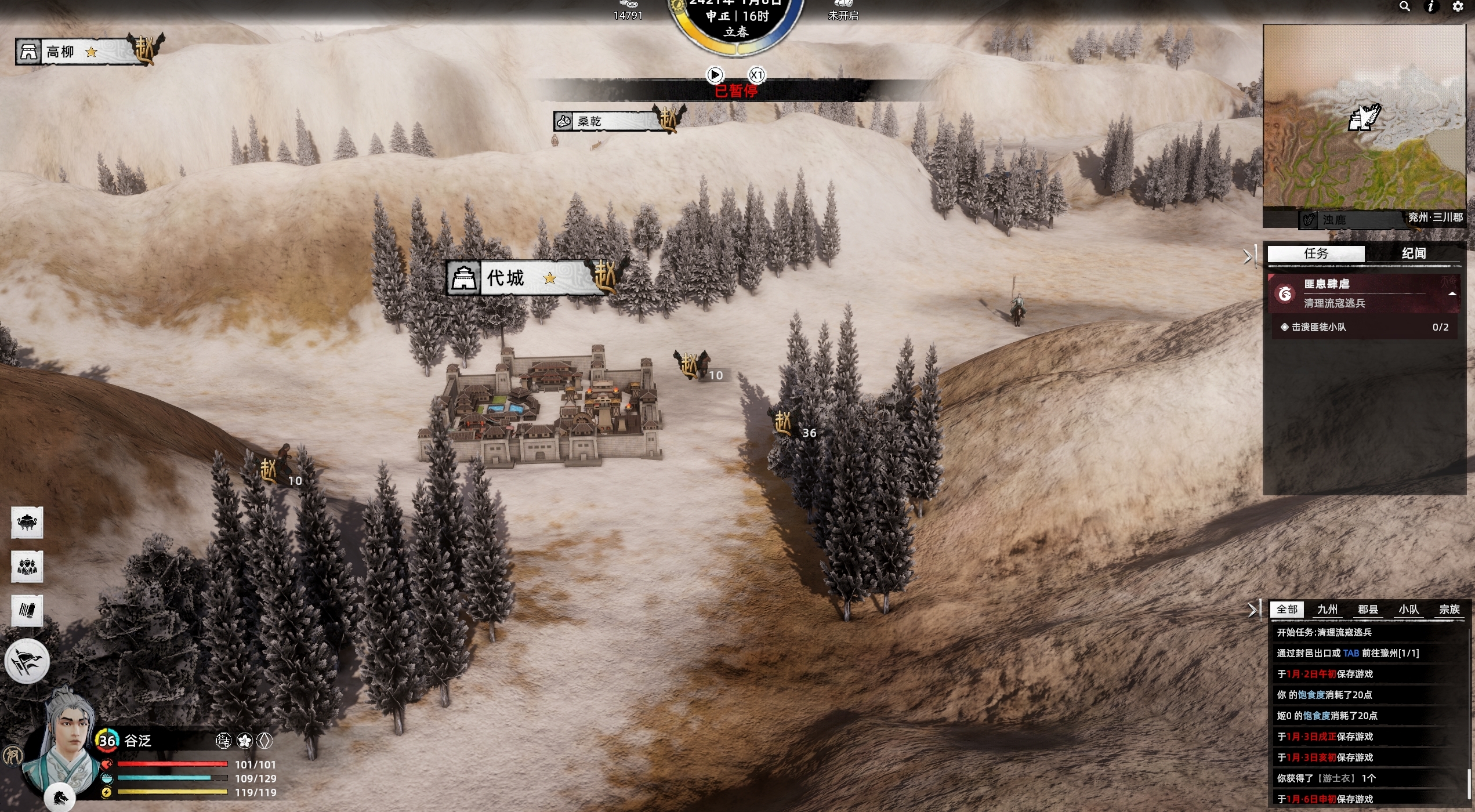
Yan's war began with one man. Qin Kai had been a hostage among the nomads, and they trusted him well. He came back to Yan, led troops, and struck down the Donghu, who fell back more than a thousand li to the north. How the roads of the nomad country ran, on which pasture each tribe gathered and scattered—he had watched those things for some years over there. After the Donghu withdrew, the Liaoxi and Liaodong stretch lay empty, and Yan took it in hand and set up commanderies.
Yan's origins are not like the other six. After King Wu of Zhou destroyed Zhou Xin he enfeoffed the Duke of Shao in northern Yan; the Duke of Shao was of Zhou's own surname, and Yan bore the surname Ji from its founding, seven hundred years unchanged down to our base year. Zhao, Wei, and Han split off from Jin; Qi's Jiang were replaced by the Tian; the houses of the Central Plains all changed hands once.
When King Wu of Zhou destroyed Zhou Xin, he enfeoffed the Duke of Shao in northern Yan.
Records of the Grand Historian · Hereditary House of Duke Shao of Yan
[II. The Passes and Forts of the North]
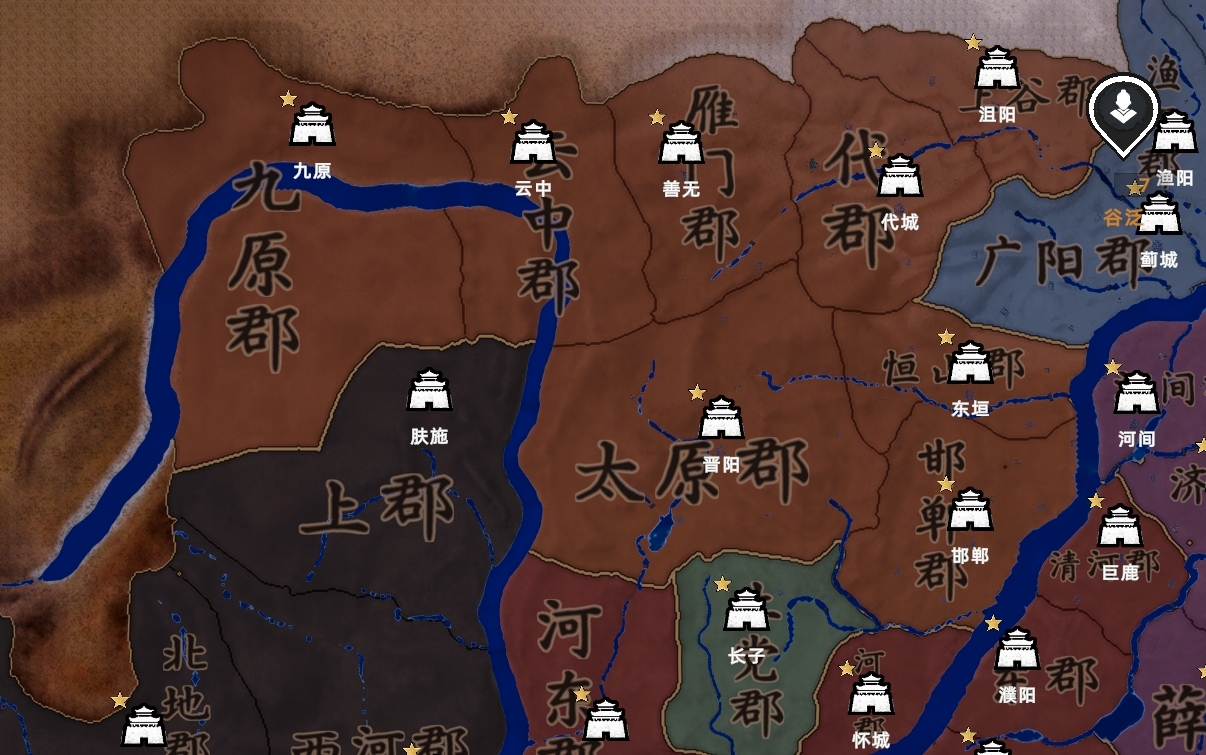
Zhao's four northern commanderies line up along the southern foot of the Yinshan, from Dai westward, and stop at Gaoque Fort.
And King Wuling of Zhao likewise changed the customs and wore nomad dress, practiced riding and archery, and broke the Linhu and Loufan to the north. … And he set up Yunzhong, Yanmen, and Dai Commanderies.
Records of the Grand Historian · Account of the Xiongnu
Jiuyuan sits at the western end of that line, the four commanderies drawn as one horizontal stroke. Yanmen Pass is the only pass on Zhao's northern side; the three forts of Xianyu, Hongshang, and Gaoque stand in order from east to west. Jiuyuan backs onto the great bend of the Yellow River, and south of it lies a stretch of Hetao, and one more Yellow River beyond that is Guanzhong; west of Gaoque no commandery was ever set up. The Linhu and Loufan were broken up, and Yunzhong Commandery keeps one Loufan fort, its horses and men still at the foot of the Yinshan.
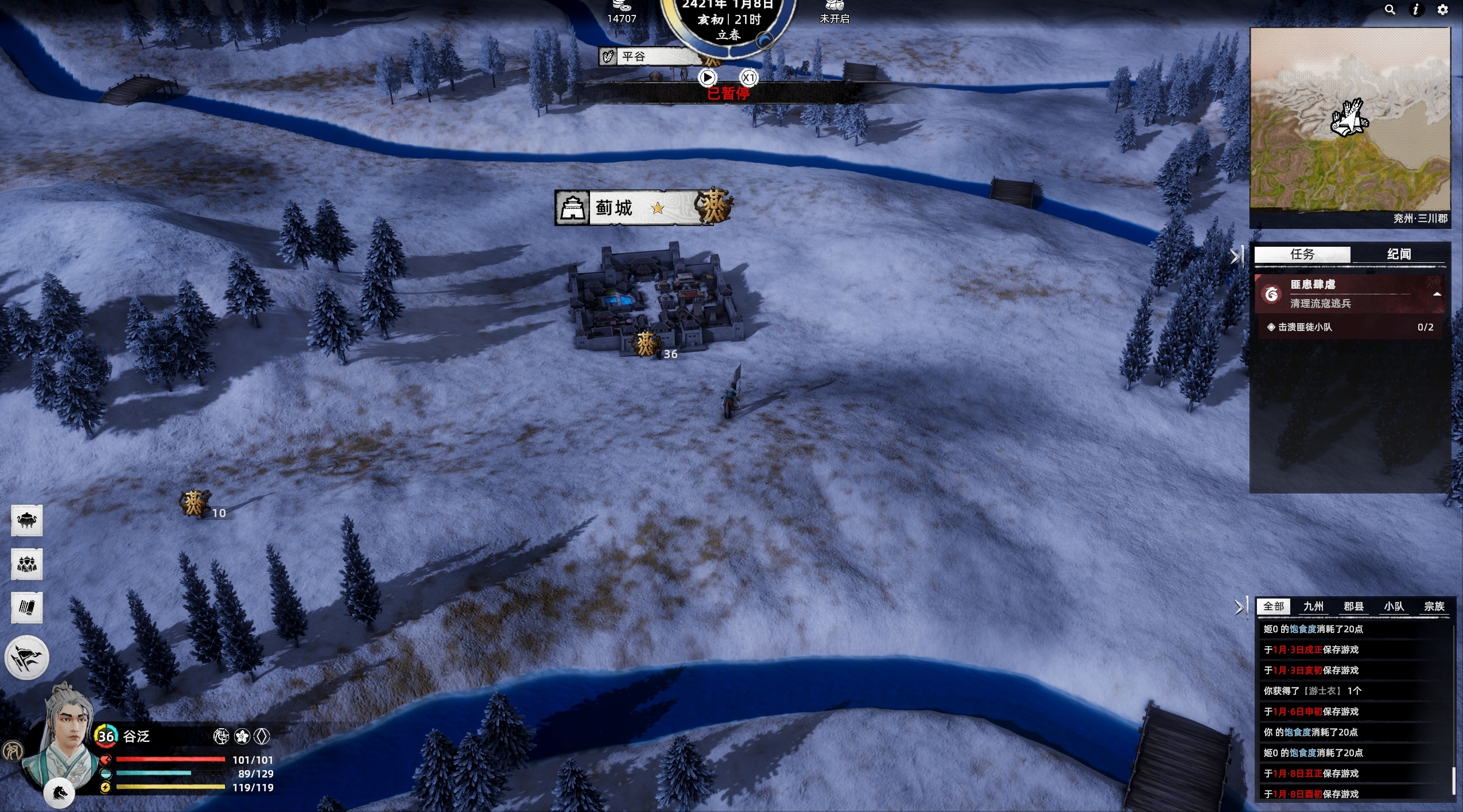
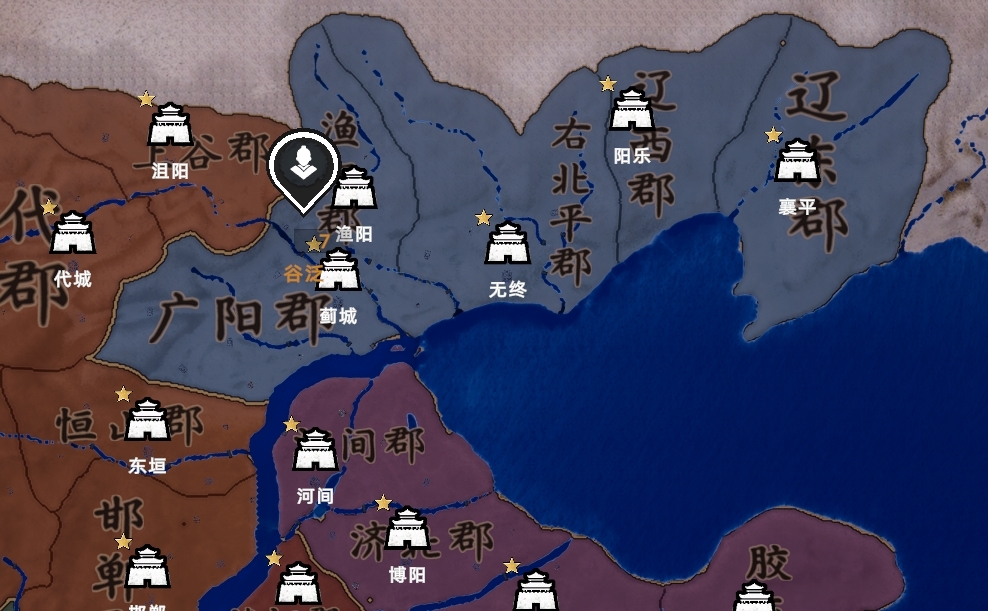
Yan's five commanderies run east from Zaoyang all the way to Xiangping.
Afterwards Yan had a worthy general, Qin Kai, who was a hostage among the nomads, and the nomads trusted him greatly. On his return he made a surprise attack and routed the Donghu, and the Donghu withdrew more than a thousand li. … He set up Shanggu, Yuyang, Youbeiping, Liaoxi, and Liaodong Commanderies to hold off the nomads.
Records of the Grand Historian · Account of the Xiongnu
The five commanderies of Shanggu, Yuyang, Youbeiping, Liaoxi, and Liaodong stand in one line from west to east. Youzhou has six commanderies on the map; Shanggu goes to Zhao, and Yan takes the five to the east. The histories count Shanggu among Yan's five northern commanderies, and Zaoyang too is noted as lying in Shanggu. Along this line are Juyong Pass, Puyin Fort, and Lingci Fort; the eastern end stops at Xiangping, and past it is the sea. East of Liaodong Commandery there is one Xianbei fort, lying outside the five.
[III. The Men Who Hold the Frontier]
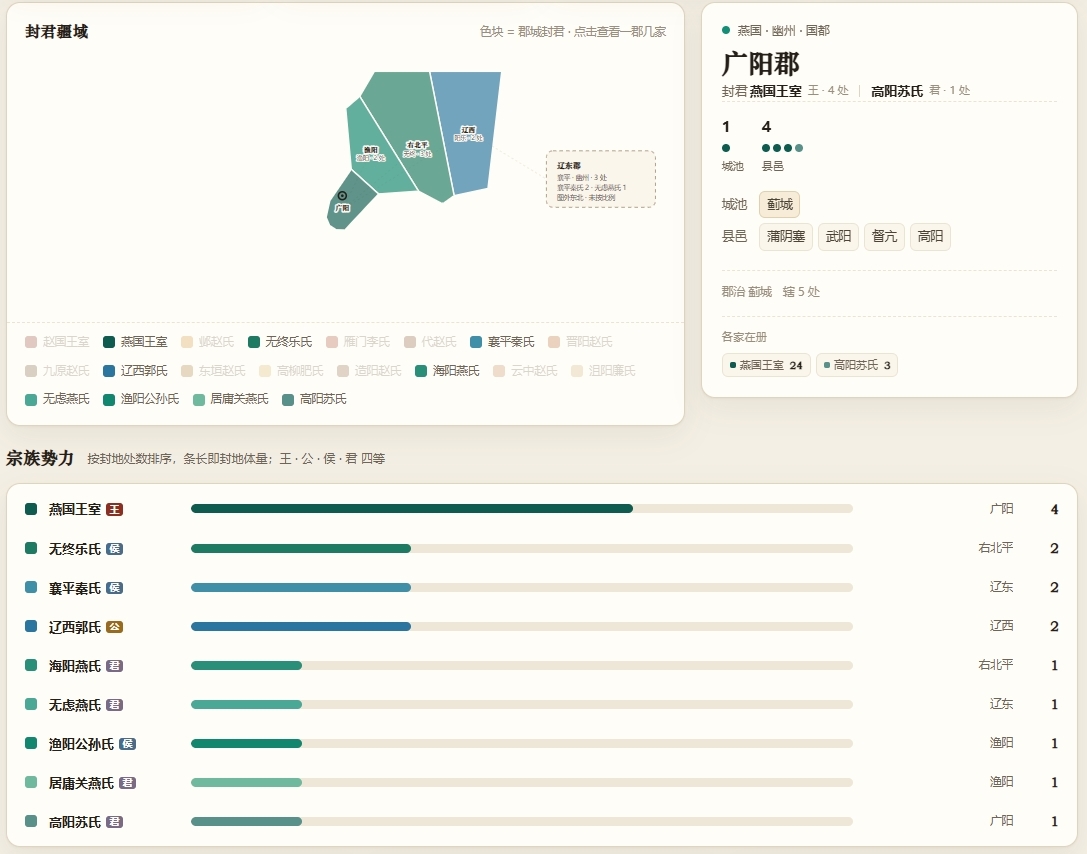
Zhao has eight commanderies. The royal house holds Handan and Taiyuan directly; Hengshan goes to the Dongyuan Zhao clan of the same surname; the five northern commanderies are split among the Dai Fei, the Shanwu Li, the Yunzhong, the Jiuyuan, and the Juyang Lian. In the four northern commanderies four enfeoffed lords each hold a stretch, and the capital is not on that line. For Handan to move troops north, it must first cross the Taihang.
The Zhao's old root is Jinyang. In the year Zhao Yang fell out with the Fan and Zhonghang houses he withdrew and held this place; later Zhi Bo brought Han and Wei to besiege the city, led the Fen River into it, and flooded it for more than a year, until the water stood three boards below the wall and the people inside hung their cauldrons up to cook. Han and Wei then turned and joined the Zhao, destroyed Zhi Bo, and the three houses divided Jin.
The three states attacked Jinyang; after more than a year they led the Fen River against its wall, and the city was not submerged by three boards.
Records of the Grand Historian · Hereditary House of Zhao, the siege of Jinyang

Yan has five commanderies, and the royal house holds only Guangyang, where the city of Ji stands. The four to the east go to the Yuyang Gongsun, the Wuzhong Yue, the Yangle Guo, and the Xiangping Qin, family after family from west to east, and not one of the four bears the surname Ji. The easternmost, Xiangping, is held by the Xiangping Qin, and east of that commandery is the sea. Liaoxi is the thinnest stretch, its seat at Yangle, wedged between Youbeiping and Liaodong.
Yan was squeezed among the strong states for a long time, with the Man and Mo outside and Qi and Jin within, and several times it nearly perished. Along the line east of Ji, troops and grain are spread over five commanderies, and not one of them can hold on its own.
Yan was pressed outside by the Man and Mo and hemmed in within by Qi and Jin, rough going among the strong states, the weakest of them, and several times all but extinguished.
Records of the Grand Historian · Hereditary House of Duke Shao of Yan, the Grand Historian's commentary
[IV. What the Ground Gives]
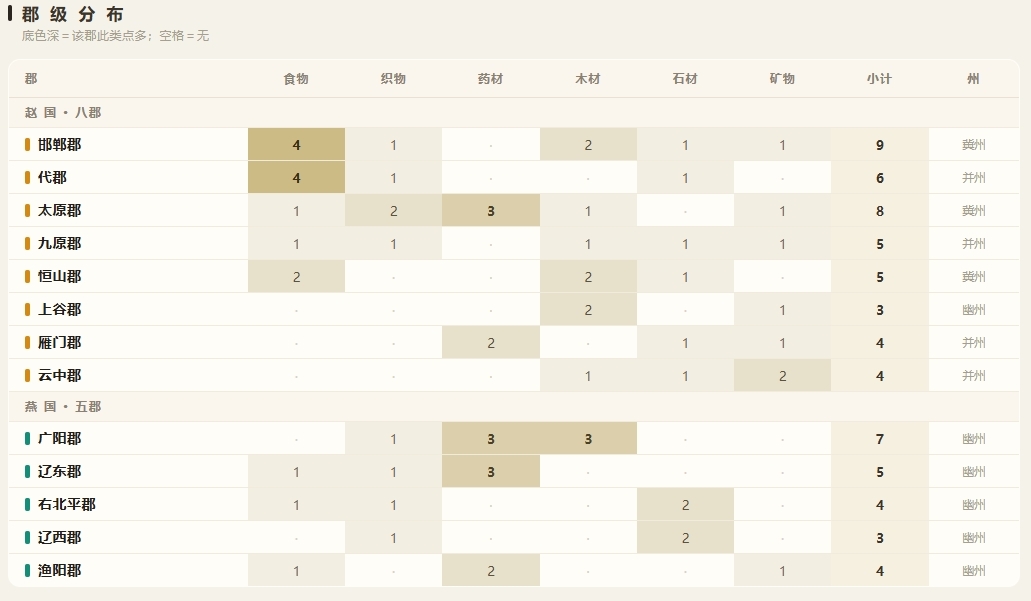
Zhao spans Jizhou and Bingzhou. Jizhou's six: food 2, textiles 2, medicine 2, timber 2, stone 1, minerals 1; Bingzhou's six: food 1, textiles 1, medicine 2, timber 1, stone 3, minerals 2. In the south Handan, Taiyuan, and Hengshan give grain and cloth; in the north Dai, Yanmen, Yunzhong, and Jiuyuan give iron and stone, with the Taihang lying between them. Bingzhou is full on stone and one short on minerals; Jizhou is full on nothing, all four of its middle goods sitting in the middle. Iron and stone come out of Bingzhou and are worked into weapons on the spot, with no hauling up from the south; grain comes out of Jizhou and goes north over the Taihang. Shanggu is in Youzhou besides, and of its six only medicine is full.
Yan's five commanderies are all in Youzhou. Its six: food 1, textiles 1, medicine 3, timber 2, stone 2, minerals 1—three at the bottom, only medicine full. Grain, cloth, and iron all have to come in from outside. Between the Bohai and Jieshi, Qi and Zhao lie to the south and the nomads to the northeast; from Shanggu to Liaodong the land is far off and the people few, and it is raided often, though fish, salt, jujubes, and chestnuts are never lacking.
Yan too is a great market town between the Bo and the Jie. To the south it reaches Qi and Zhao, to the northeast it borders the nomads. From Shanggu to Liaodong the land is far off and the people few, and it is raided again and again; its customs are much like those of Zhao and Dai, and its people are fierce and quick with little forethought, with an abundance of fish, salt, jujubes, and chestnuts.
Records of the Grand Historian · Biographies of the Money-makers
[V. From the Capital to the North]
Handan lies between the Zhang River and the Yellow River, reaching north to Yan and Zhuo and south to Zheng and Wei.
Handan too is a great market town between the Zhang and the He. North it reaches Yan and Zhuo, south it has Zheng and Wei.
Records of the Grand Historian · Biographies of the Money-makers
From Handan to Jiuyuan the road crosses the Taihang first and then the Lüliang, and a grain cart is a long while on the way. Iron and stone are worked into weapons where they come out, and grain is carted north from the south, cart after cart. The eight commanderies sit in three provinces; the two the royal house holds directly are both at the southern end, and the four northern ones were handed to other surnames. Zhao must hold off nomad cavalry in the north and still watch the Central Plains in the south, its troops split between the two ends.
North from Handan the road runs to Yan and Zhuo, south to Zheng and Wei, four roads passing under the walls. When there is alarm in the north, troops must go from Handan over the Taihang; when Qi and Wei press in from the south, the horsemen of the frontier commanderies must be drawn back again. Four families each hold their own ground, and all the capital can call on is the men of Handan and Taiyuan.

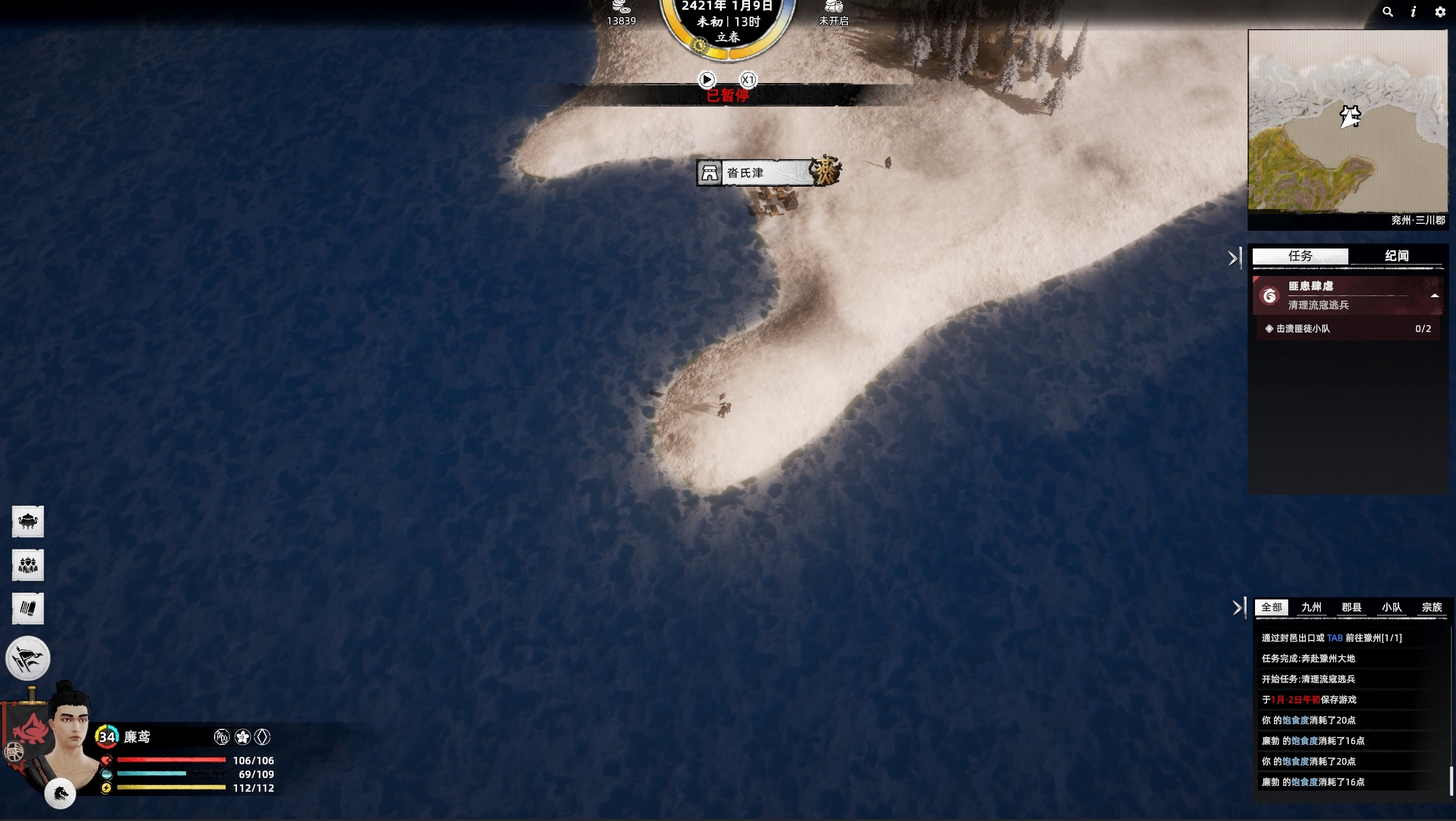
Ji stands in Guangyang, and from it the five commanderies run east in one line to Xiangping. Xiangping is at the far east end, and past it is the sea. South of Liaodong Commandery there is a crossing called Tashijin, on the edge of the Bohai Strait, where the land road ends and men and goods take to boats. From Ji east to Xiangping there is no second royal city in between.
Yan is wedged between Qi and Jin and the nomads to the north. Qi is due south, Zhao southwest, the nomads north of Liaoxi and Liaodong; along the one line from Ji to Xiangping the troops of five commanderies are spread out, and wherever it is broken through, there is plain to the south. Qi and Zhao can follow that plain all the way to the walls of Ji, and eastward there is only the Bohai. The passes and forts Yan has marked all lie in the north; south of Ji the plain has no defended gap. Jujubes, chestnuts, and medicine from the hills go south by boat, traded back for grain and cloth.
[VI. What Comes Next]
Zhao and Yan are walked through, and the north is settled. Thank you, scholars, for reading!
Next leg we go south, back to the Central Plains, to talk about Wei and Han.