
As an independent game developer, envisioning a sci-fi RPG focused on space and spaceship combat was an exhilarating idea for us. With nearly 40 years of professional experience in the video game world, embarking on developing a game in a genre that has rarely been explored by other developers was, of course, as challenging as discovering unknown new worlds, but equally exciting.
However, one of the biggest challenges in bringing this vision to life is creating mission variety. Since you're venturing into an uncharted area with unmeasured player reactions, you can imagine having to discover every detail from scratch. For instance, in a fantasy/medieval-themed RPG centered around swords, arrows, and magic, where tens of thousands of games have been made before, "stories" that excite, motivate, and gain player appreciation have already statistically emerged. But when you try to develop an RPG with a sci-fi story like Pirate Patrol, which focuses on spaceships and space combat, there are no guiding statistics.
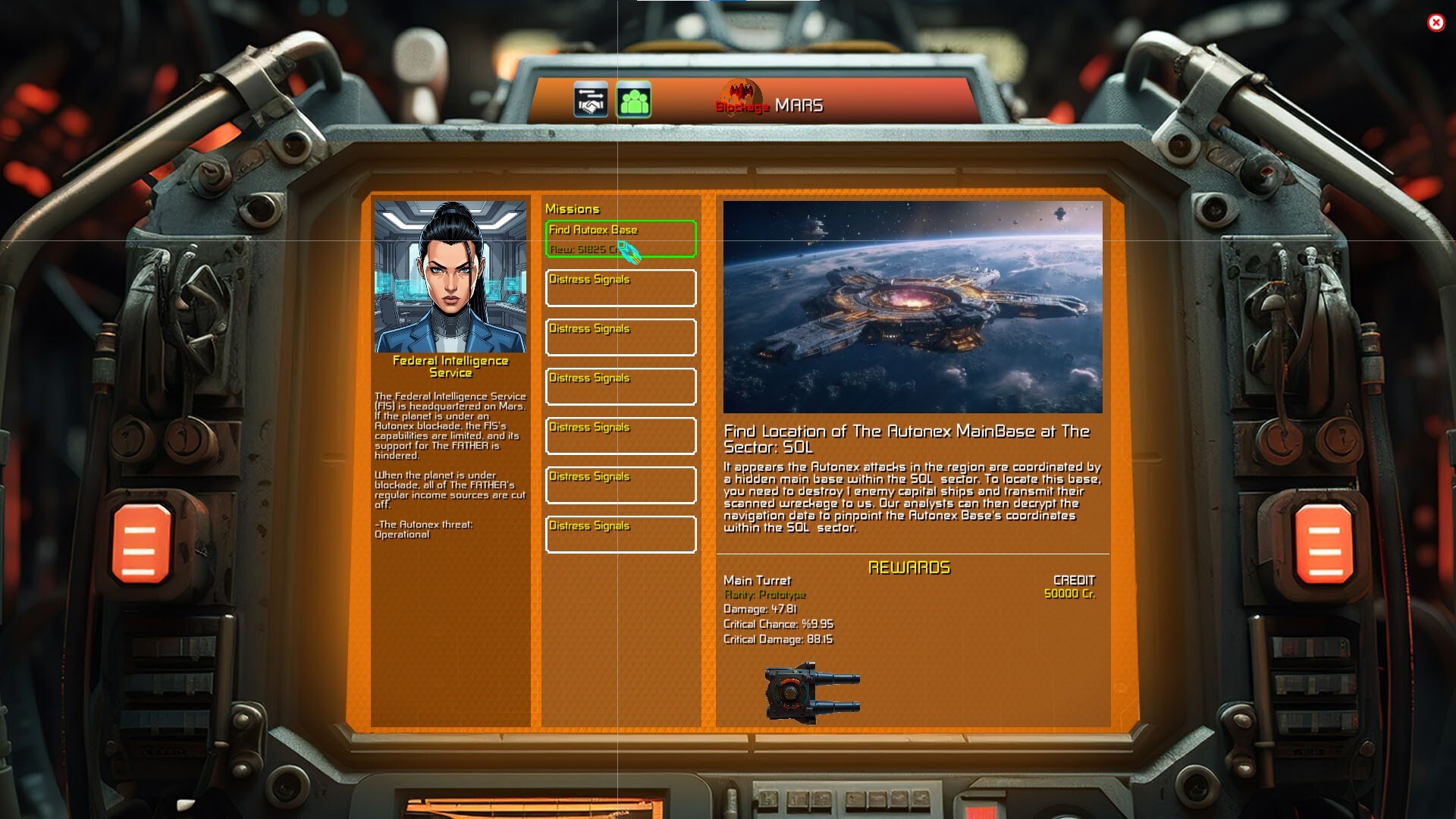
If you were to count similar games made before, they would barely exceed the fingers on two hands: series like Star Wolves, Starsector, Star Control, EVE Online, Star Trek Online, Space Rangers, Nexus, and Stellar Tactics (which has been in development for about 10 years) come to mind. Yet, in a market with hundreds of thousands of video games, you can imagine that games in this genre occupy but a grain of sand in the ocean.
Of course, designing rich and non-repetitive missions that will keep the player engaged for hours and provide a good time becomes a tough battle when you don't have the resources of a massive studio. At this point, since we don't have access to tens of thousands of dollars for market research or data sets like AAA studios, we actually have a much more valuable opportunity: listening to the advice and guidance of our players who want to support the indie game sector.
At this stage, as we code Pirate Patrol's mission system, we want to re-emphasize that, as always, we will carefully review all feedback and advice from our players. Two heads are better than one. We would be delighted if you could share details that we might have overlooked or not noticed, elements you'd like to see in the game, or specifics within the mission system that would give you joy.
By the way, coding a mission system is not a simple task at all.
Firstly, we need to overcome spatial limitations. While offering the freedom to navigate a vast space, creating hand-crafted, unique missions for every planet or space station is daunting for a small team, both in terms of time and cost. Designing environments that are both visually distinct and gameplay-satisfying simultaneously requires immense effort. Offering a wide range, from simple cargo transportation missions to engaging in combat with enemies in space, from diplomatic negotiations to discovering lost civilizations, demands constantly fresh mechanics and stories. And, of course, if you want to design a game that will be remembered and played for many years, you need to constantly enrich this variety and add content to the game with new expansions even after its release.
Secondly, connecting the story and the gameplay loop is crucial. Randomly generated missions can become boring after a while. Every mission needs to contribute in some way to the player character's development, the game's lore, or the main story. This means writing a mini-story for each mission, designing side characters, and skillfully integrating them into the main plot. When a mission is completed, we want players to feel like they've become "part of the universe" rather than just "done another thing." Providing this depth requires a constant balance between scriptwriting and system design.
Finally, technical challenges cannot be ignored. Missions need to adapt to dynamically changing conditions (for example, a planet's resources depleting or a faction's power balance shifting), AI needs to react intelligently to different scenarios, and systems must function flawlessly. Coding and testing such complex systems represent a significant investment and risk for an independent developer. However, when we overcome these challenges, we can offer players not just a game, but a truly living and breathing space adventure. This is the most rewarding part of creating the game of our dreams as an independent developer.
Please share your ideas and recommendations with us.
Have fun! :)