
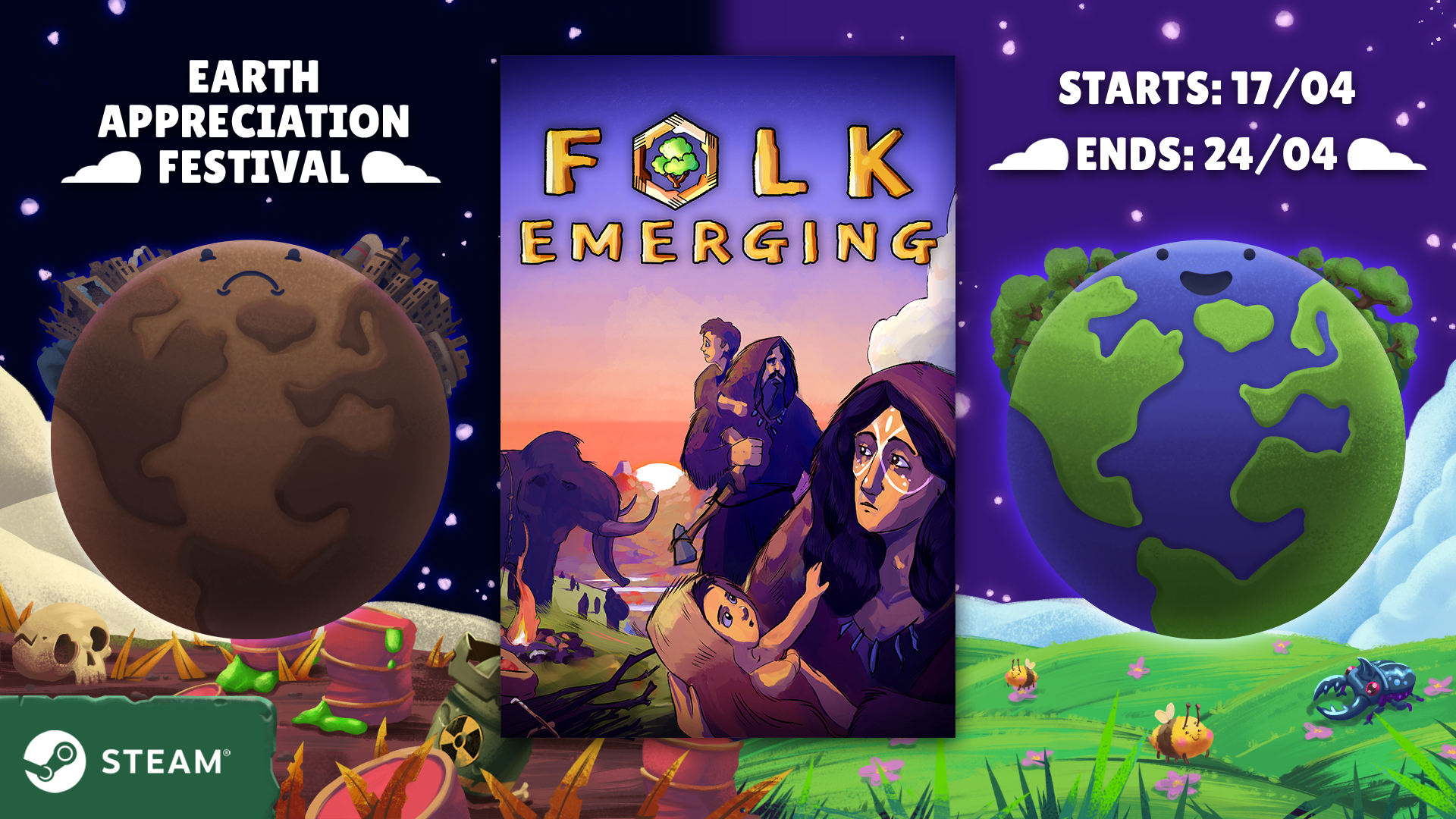
Folk Emerging has been included in Steam’s Earth Appreciation Festival!
To celebrate the event, I’d like to highlight the game’s love for ecology, geography, and the wonders of our planet 🌍
Folk Emerging has several guiding principles based in biology:
- Our physical environment has shaped our technologies and cultures.
- Resources are finite and have to come from somewhere.
- Collective behaviour emerges from individual actions.
In this post, I detail each of these principles.
Nature shapes Society
Our environment has been always instrumental in guiding humanity’s development.
It has influenced where we settle, which technologies we develop, and how our social norms evolve. This is why having realistic climates & maps is important to the game — the more detailed the climate simulation, the deeper it can explore the relationship between nature and society. I can recommend Lewis Dartnell’s book Origins to those who want a deeper dive.
In fact, the whole project began as a hobby procedural map generator back in November 2021. I was nerding out over climate simulations and implemented my own version of the principles outlined in Artifexian’s videos on realistic worldbuilding. It’s truly fascinating how our planet became the Earth we know, and I’ve loved learning about it.
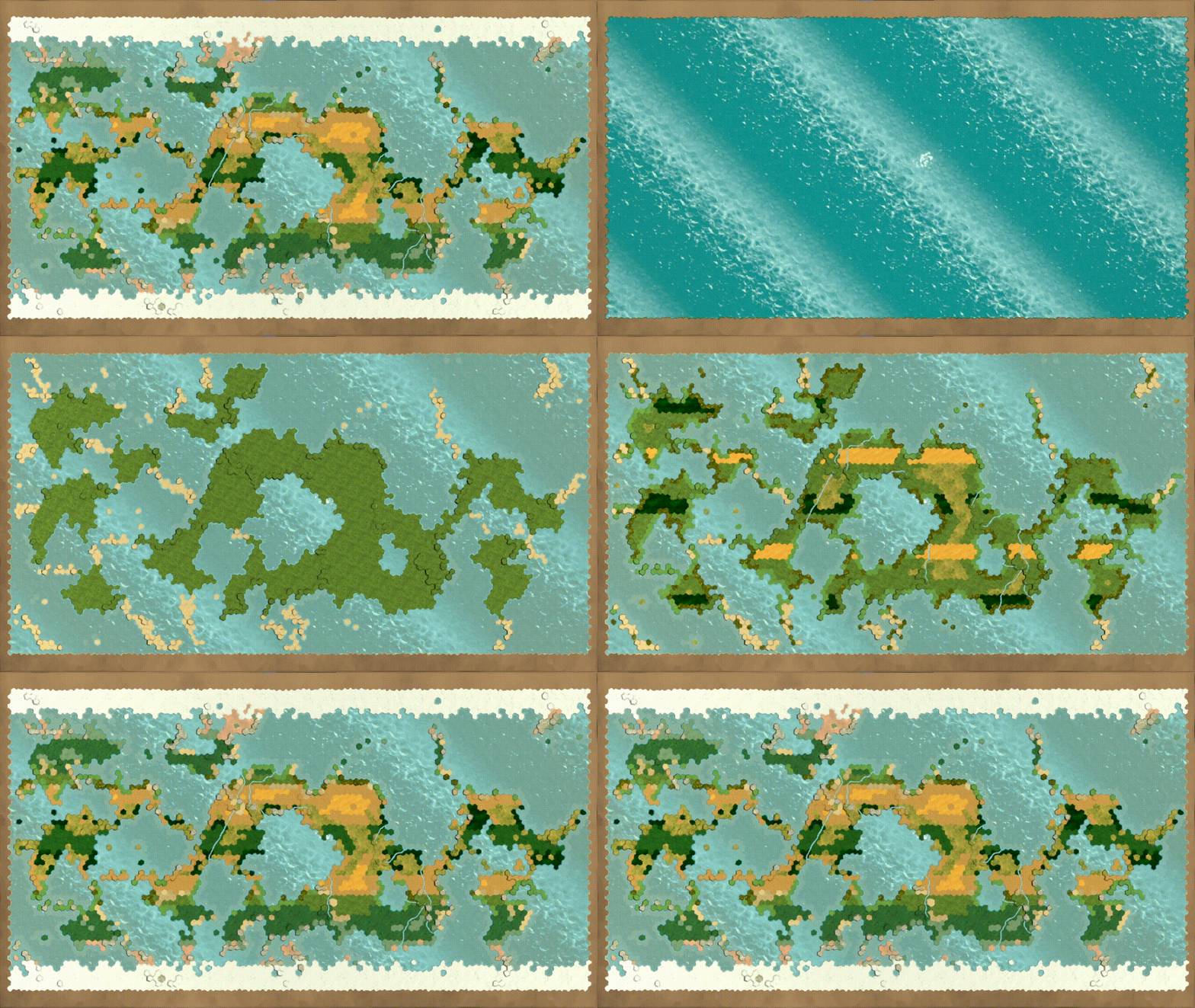
^ Procedurally-generated earth-like map
A quick summary of how the procedural map generator works in the game: create elevation (e.g. mountains, flatland, oceans), simulate temperature & precipitation (e.g. based on winds, air pressure, oceanic currents), and combine all these ingredients to determine each tile’s final climate (1 of 12, based on a version of the Köppen climate classification). I plan to write another post going into more detail.
Resources: Finite & Costly
Resources are finite and have to come from somewhere.
In the game there are dynamic foodwebs from which food and other resources are extracted (at a cost). Humanity has a long history of disrupting ecosystems, but we also have a capacity for understanding and maintaining their balance. This is a core theme and mechanic in Folk Emerging.
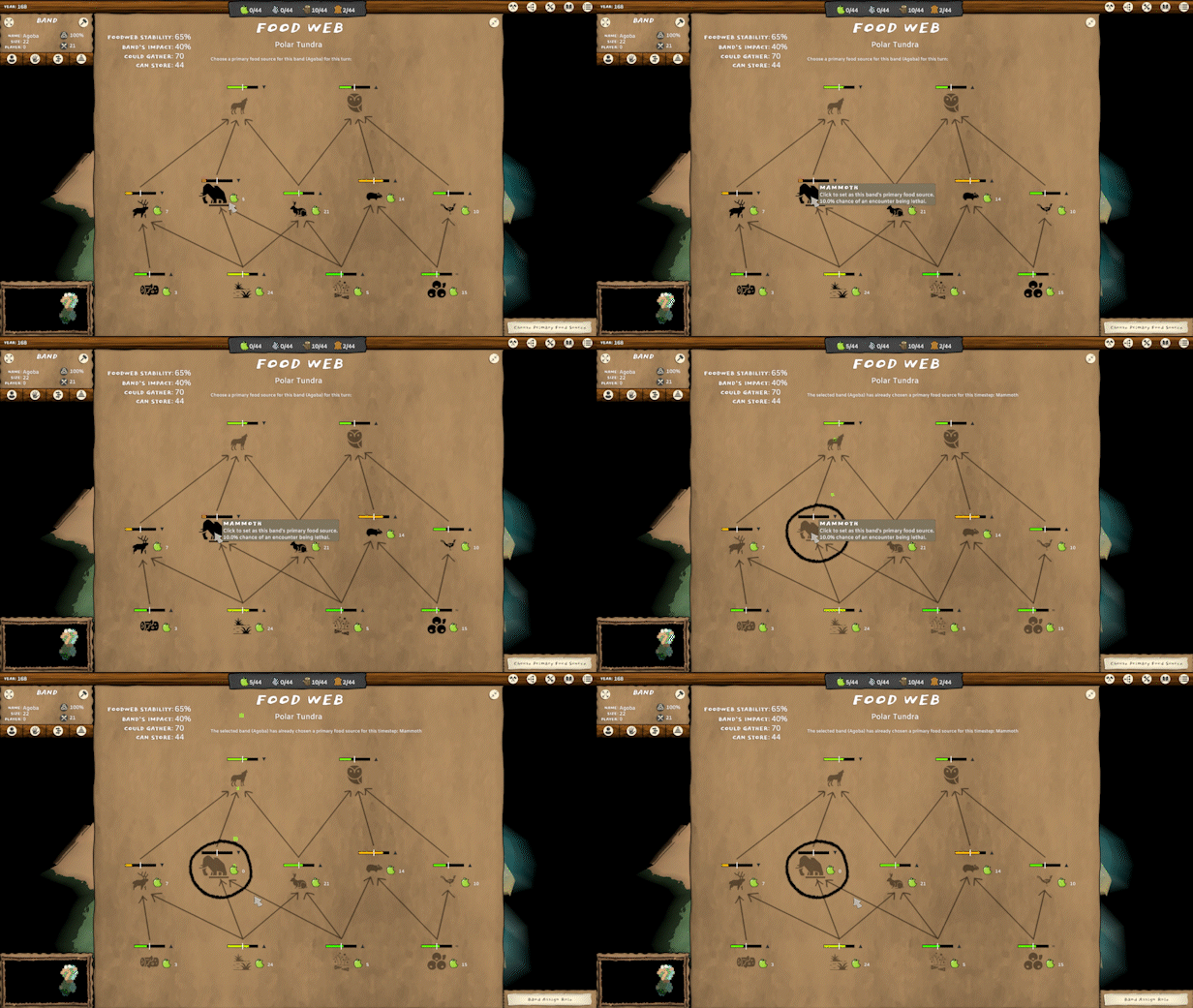
^ Over-hunting a species (e.g. the Mammoth) can bring it to the brink of extinction
Each climate has a unique foodweb. As your group of hunter-gatherers migrates from region to region, you will choose their food sources, which will impact species’ populations. I’ve tried to capture the complexity of foodwebs by implementing a cascading effect: e.g. if you over-hunt the mammoths, the wolves have less to eat and their population dwindles too, so the rabbits are free to overpopulate, and they eat all the berries, and on and on… such cascades are a crucial part of our ecological reality and central to the game.
Emergent Collective Behaviour
Collective behaviour emerges from individual actions.
What do ant colonies, bird migrations, and human societies have in common? They’re all examples of nature’s emergent complexity. Folk Emerging explores that emergence in early hunter-gatherers by rooting every mechanic in individuals. Everyone and their grandmother is deeply simulated.
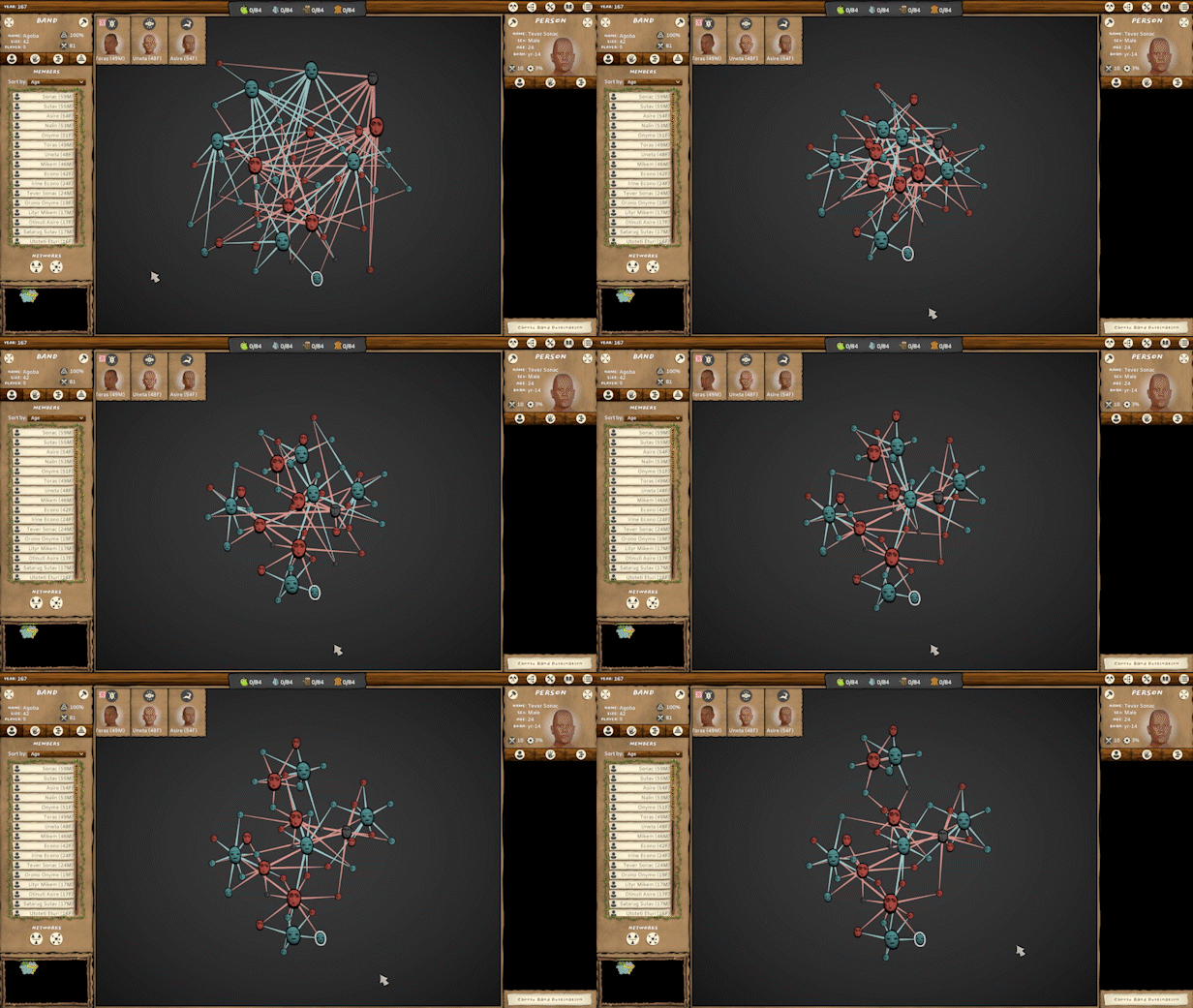
^ A social network visualization showing the familial relationships between tribe members
A tribe’s “technological progress” resides in the brains of its members; it’s a sum of their individual skills. Which resources are accessible, at what rates they can be gathered, and how much can be stored — all this depends on the abilities of the people in that group. In tactical combat, each unit represents deeply simulated characters. When one falls in combat, the tribe loses not only a fighter but also a skilled hunter, family member, and carrier of hard-won wisdom passed down through the ages.
What's Next?
Be sure to check out the Earth Appreciation Festival, and all the other games showing a world worth preserving. One of my favorites is World Turtles, which comes out on May 1st!
https://store.steampowered.com/app/1512050/World_Turtles
In the meantime, I’m still hard at work on the demo for Folk Emerging, which is on track to be ready in a few months. At the moment I'm setting up key features, such as the save & load system, and making sure I can efficiently add new content. Can't wait to share the demo!
Cheers,
Curious Dynamics