
Hello comrades,
With less than a week to go before Gamescom 2025, we’d like to open up a bit about the contents of the playable demo we’ll be presenting at the Cologne fair.
We’d like to remind you that this demo will then be released on Steam as an Open Pre-Alpha Demo, preceded by a short playtesting session that will take place exclusively on our Discord.
POLITICAL COMPASS
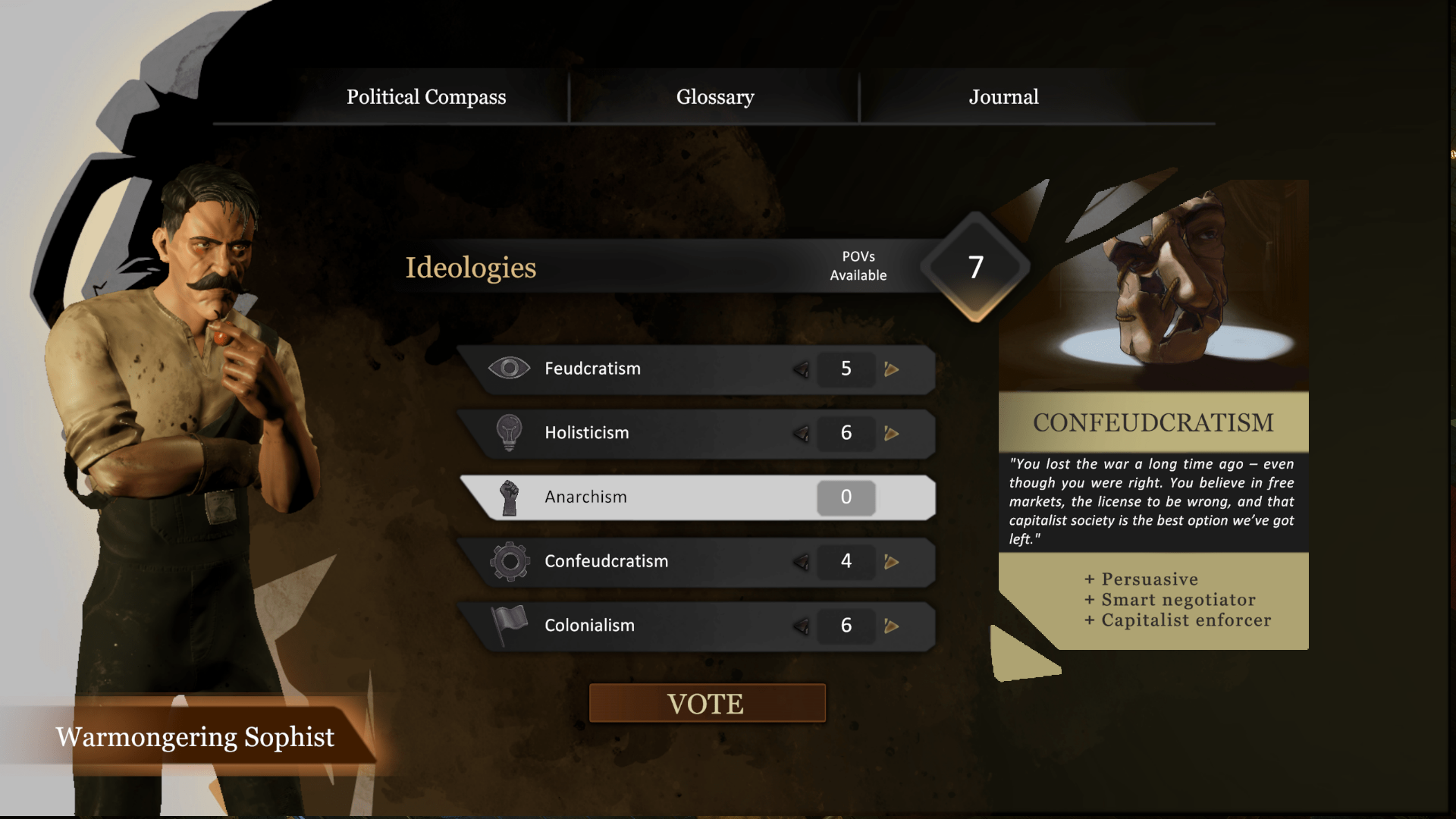
Forget dexterity, strength, and agility — in GLASSHOUSE, the character progression system is made up of five ideologies that define language, attitude, and physical inclination.
Feudcratism: reasonableness and mediation
Holisticism: sensitivity and progressivism
Anarchism: subversion and citizen rights culture
Confeudcratism: negotiation and liberal spirit
Colonialism: aggressiveness and conservative force
In the Open Alpha Demo, you’ll be able to assign 7 PoVs (Points of View) to one or more of these ideologies and create your own Political Class, which will always be defined and recognized by the system in the tag at the bottom left of the menu.
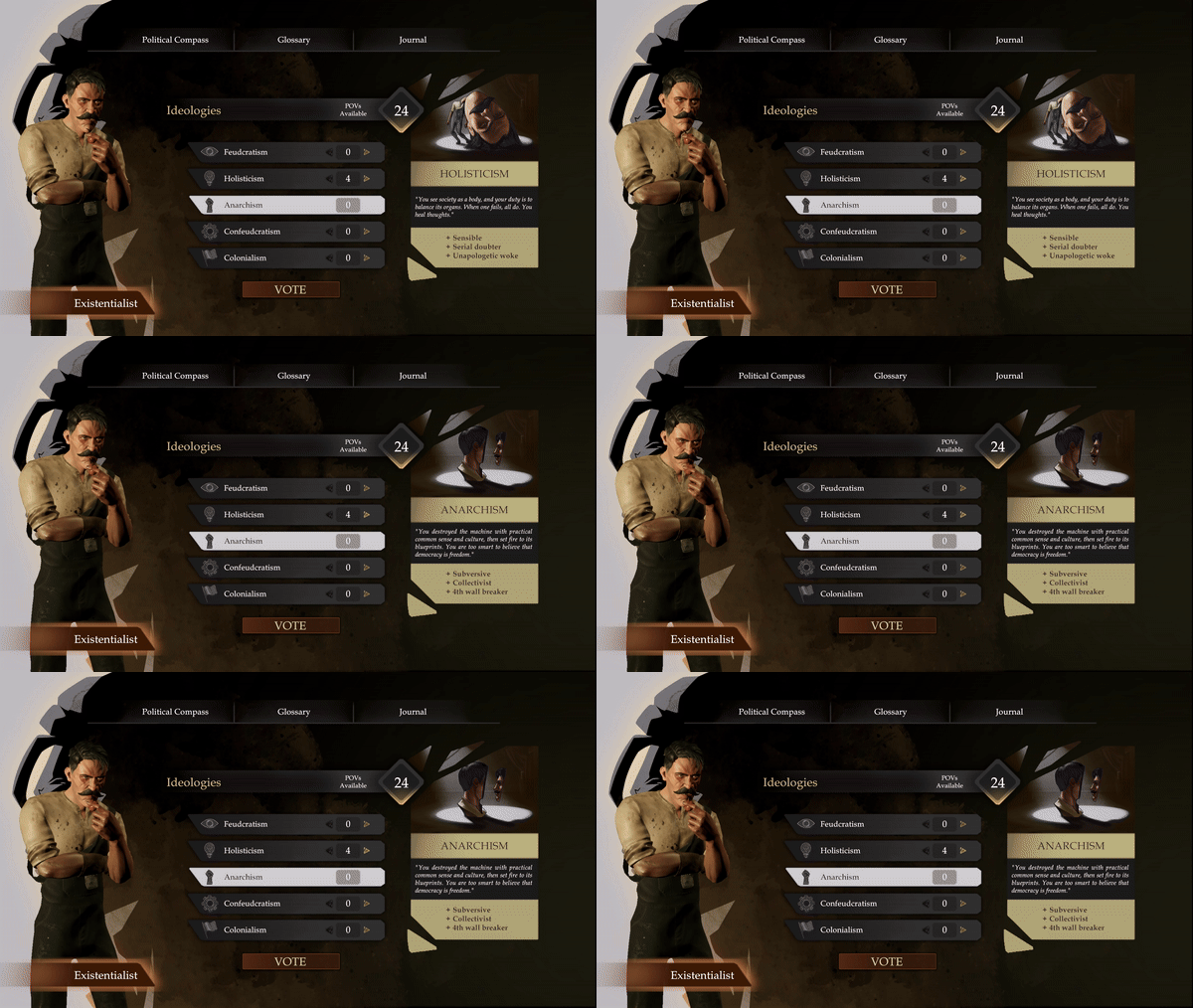
The Political Class is the natural extension of the player’s way of thinking and acting; Political Checks are dialogue/interaction lines accessible only to minds aligned with your class — there are no dice rolls, and they're not guaranteed actions. Every NPC has their own Political Compass, and it’s up to the player to decide whether or not to use their ideological tools to resolve a situation.
The Political Compass is flexible enough to allow for total ideological inconsistency — there are no boundaries or limits to “changing sides,” just like in real life.
By completing quests or optional dialogues, you can earn new PoVs. There is no predetermined structure — game progression is entirely tied to the player’s playstyle, where every small interaction might conceal a fresh perspective that helps you better understand the complex world around you.
TURN-BASED COMBAT
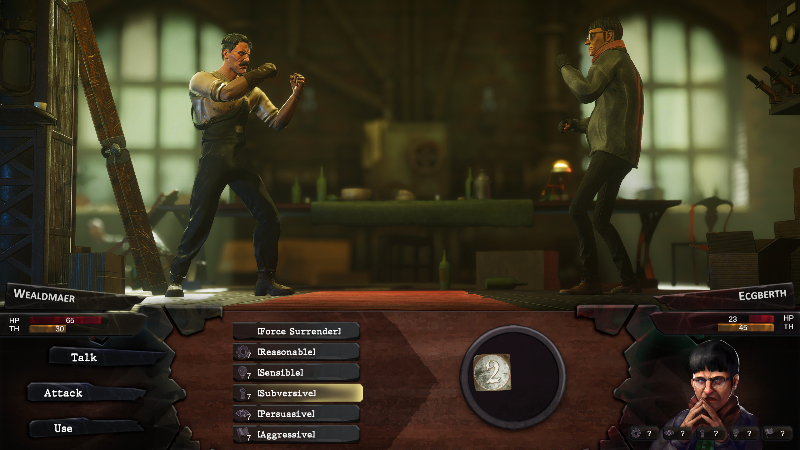
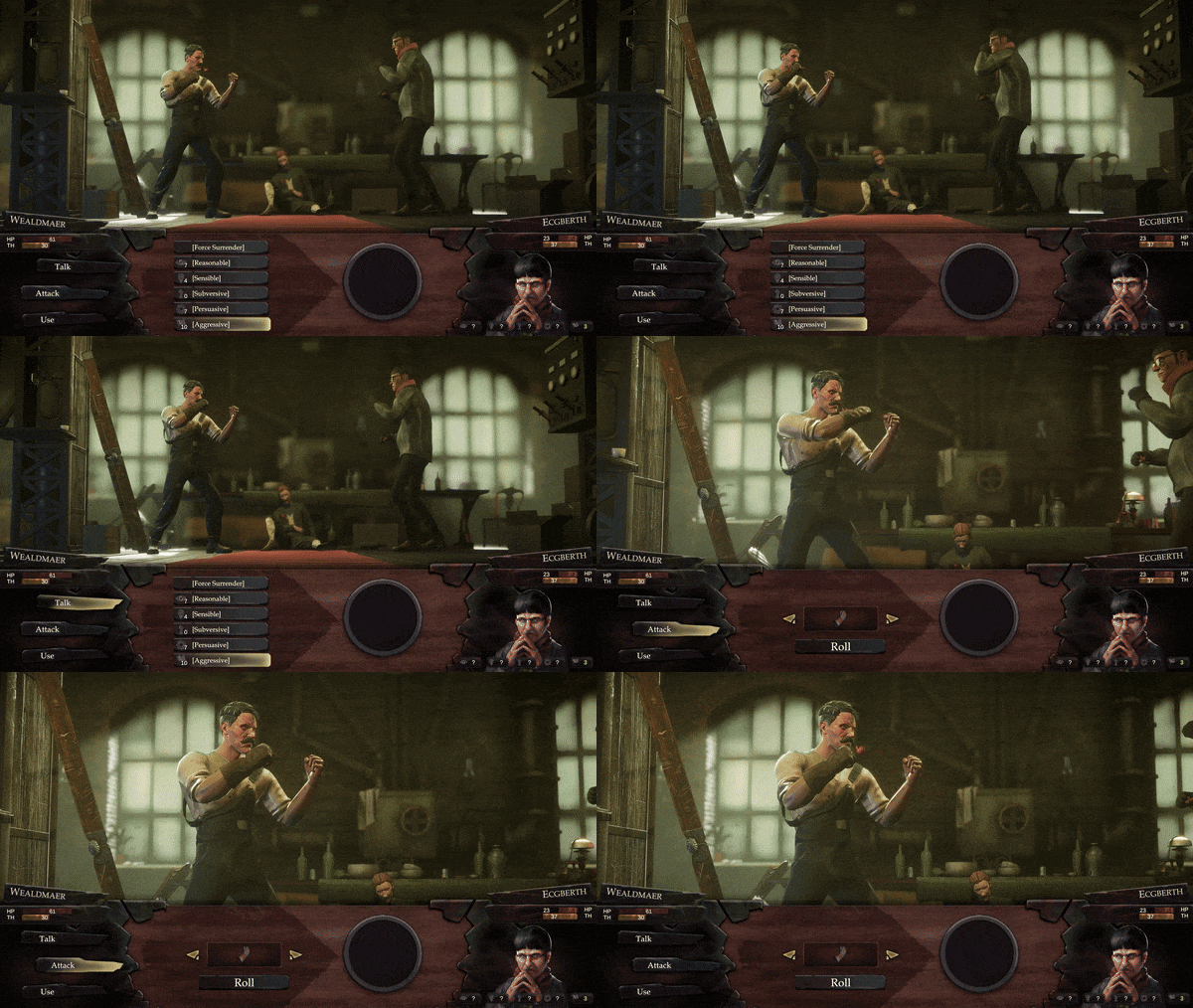
Combat in GLASSHOUSE isn’t repetitive — it’s a situation that only occurs when your choices fail (or if you simply prefer a more aggressive style). The enemies you encounter aren’t cannon fodder; they’re your co-workers, neighbors, or long-time rivals.
The range of choices also extends to combat itself: every encounter can be resolved physically or through speech.
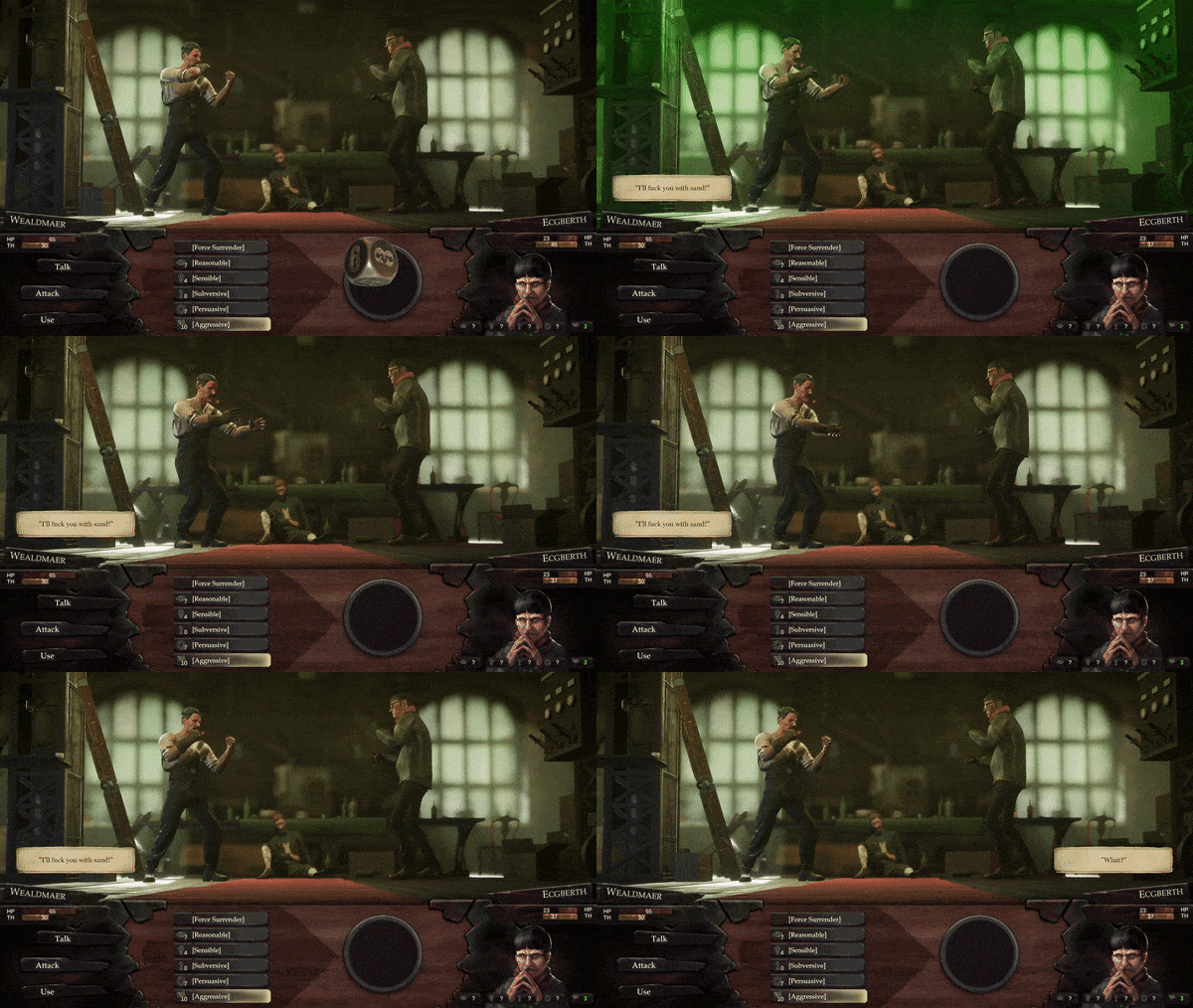
[TALK - Action]
Each enemy has a Strong, Weak, and Neutral Point, defined by their Political Compass. The player can choose from 5 dialogue approaches (reasonable, sensitive, subversive, persuasive, and aggressive), each of which scales based on their political build.
Once the player has chosen their dialogue approach, a d6 is rolled. If it hits a Weak Point, the result is added to the difference between the player’s ideology and the enemy’s [1d6 + (PlayerColonialism - EnemyColonialism)]. If striking a weak point reduces the enemy’s Threat Bar (TH), their strong point sends a d6 back at the player, while the neutral point has no effect on either side. When the enemy’s TH is lower than the player’s TH, the “force surrender” option becomes available, allowing the player to roll another d6 to make the opponent lay down their arms.
As a result, it is possible to complete GLASSHOUSE without killing anyone.
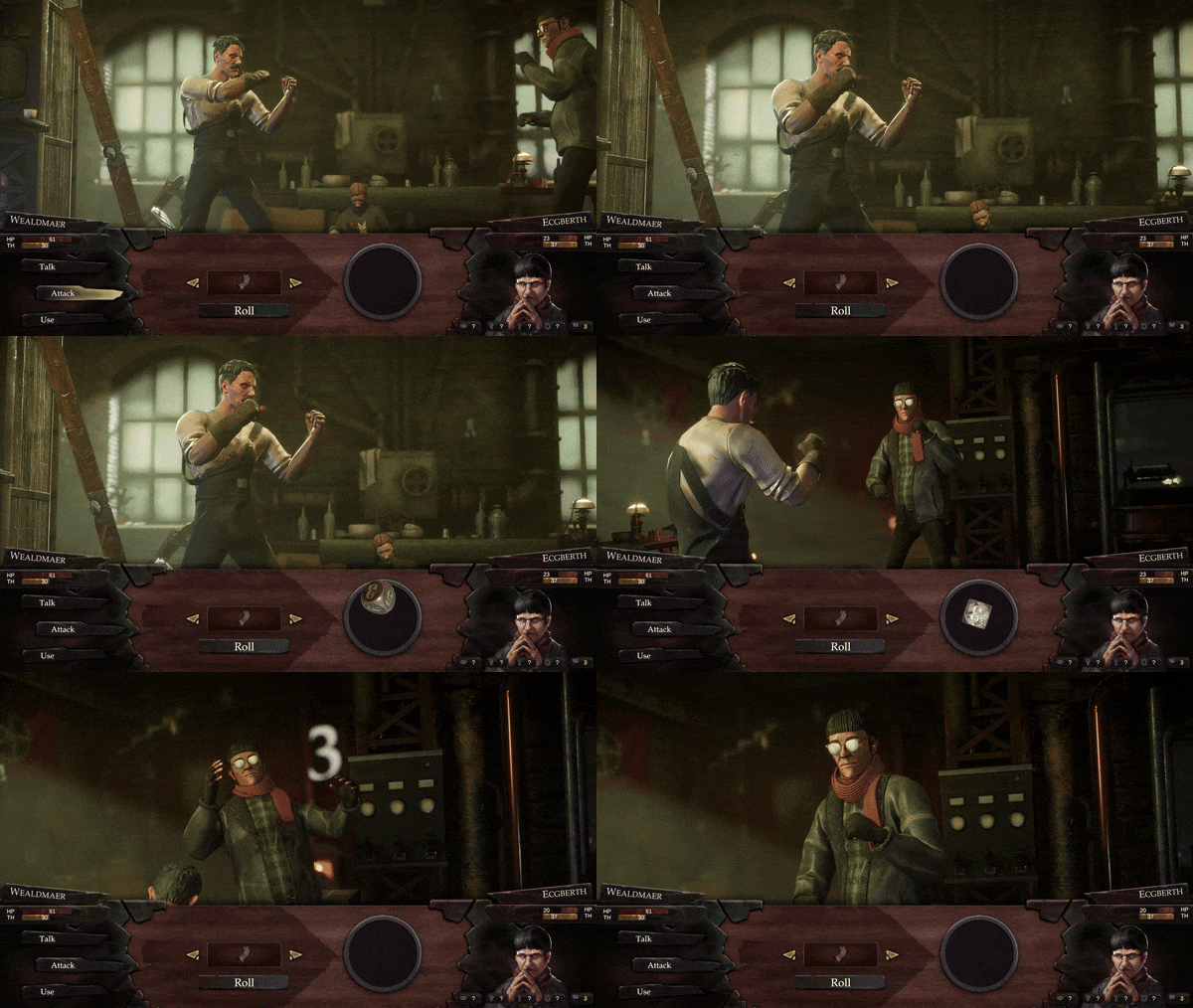
[ATTACK - Action]
Every weapon has its own dice and can be used to reduce an opponent’s HP to zero; dice rolls can randomly be dodged by either side. If an attack doesn’t scale with your stats, switching weapons during combat can be useful to exploit an enemy’s weaknesses (did someone say armor?), though it comes at the cost of sacrificing a turn.
The equipped weapon also affects the player’s TH: a more powerful weapon, such as an axe or a shotgun, can start the fight with higher TH, intimidating the enemy and reducing the number of rhetorical attacks needed to unlock the “Force Surrender” option.
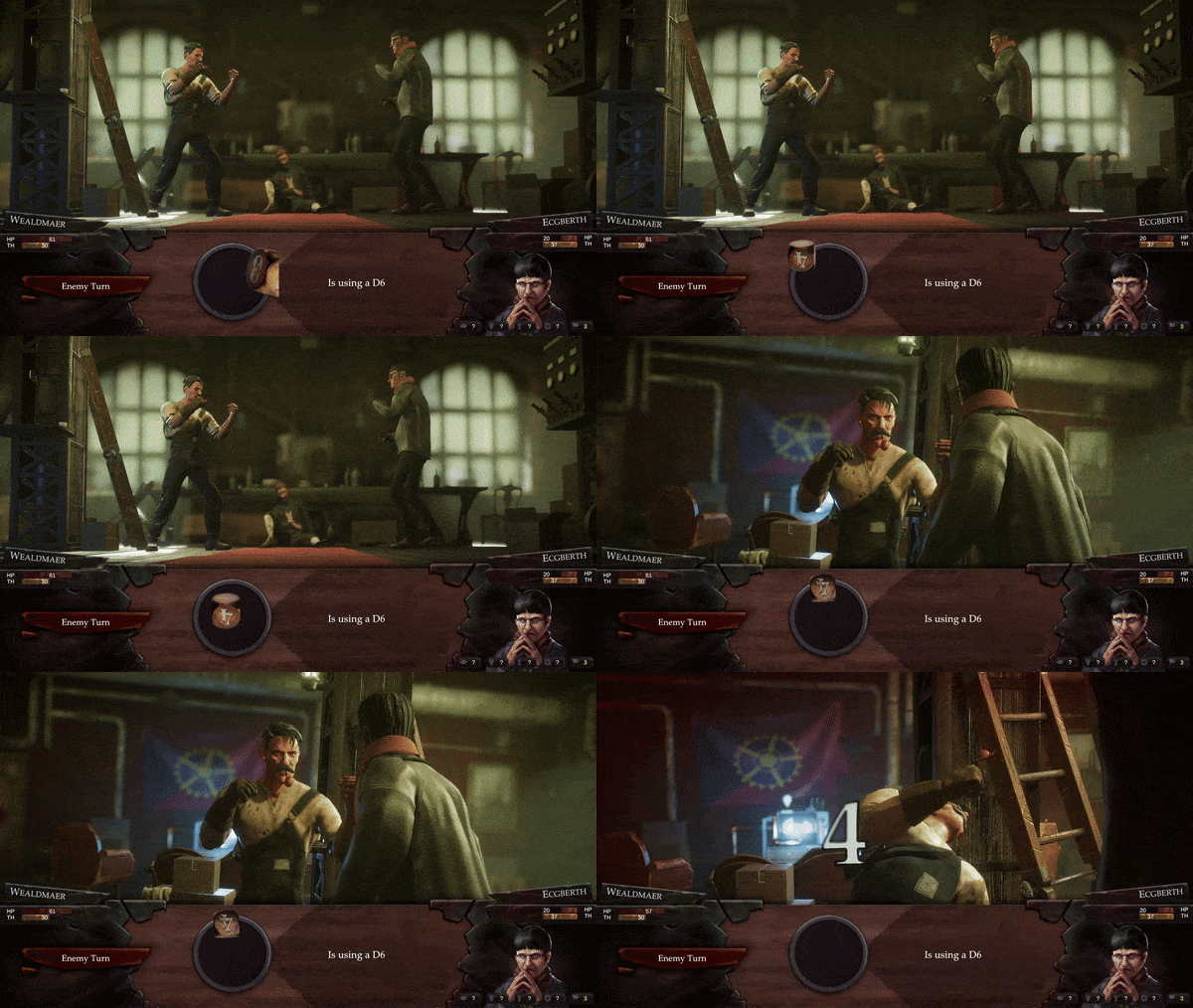
[USE - Action]
From healing items to artifacts of questionable effect, this option is the wild card of the combat system.
For a quick example, during exploration you might find items capable of embarrassing or unsettling potential enemies; if the player decides to keep a handy blackmail letter in their inventory, they could use it in combat to instantly halve the enemy’s TH.
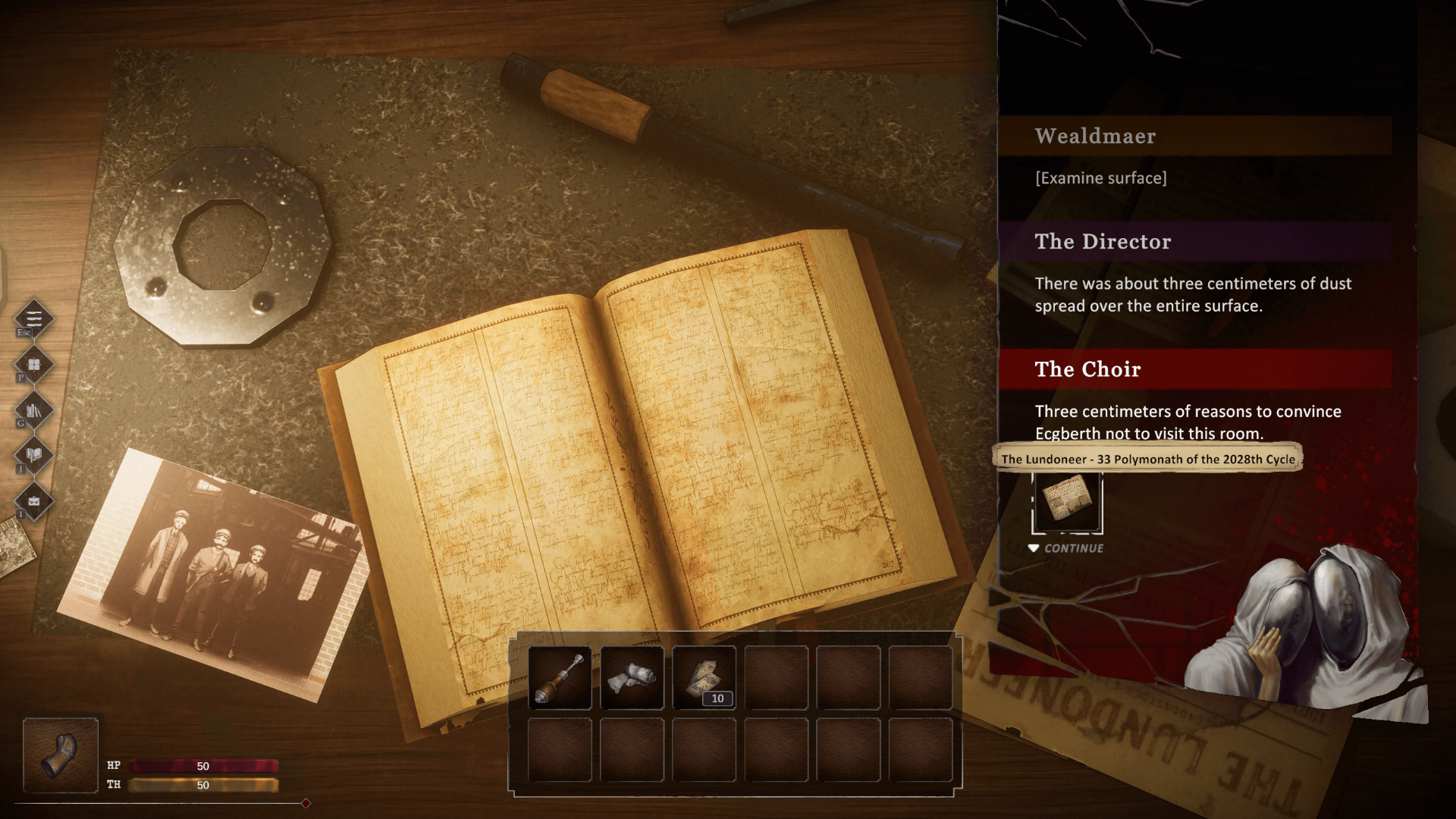
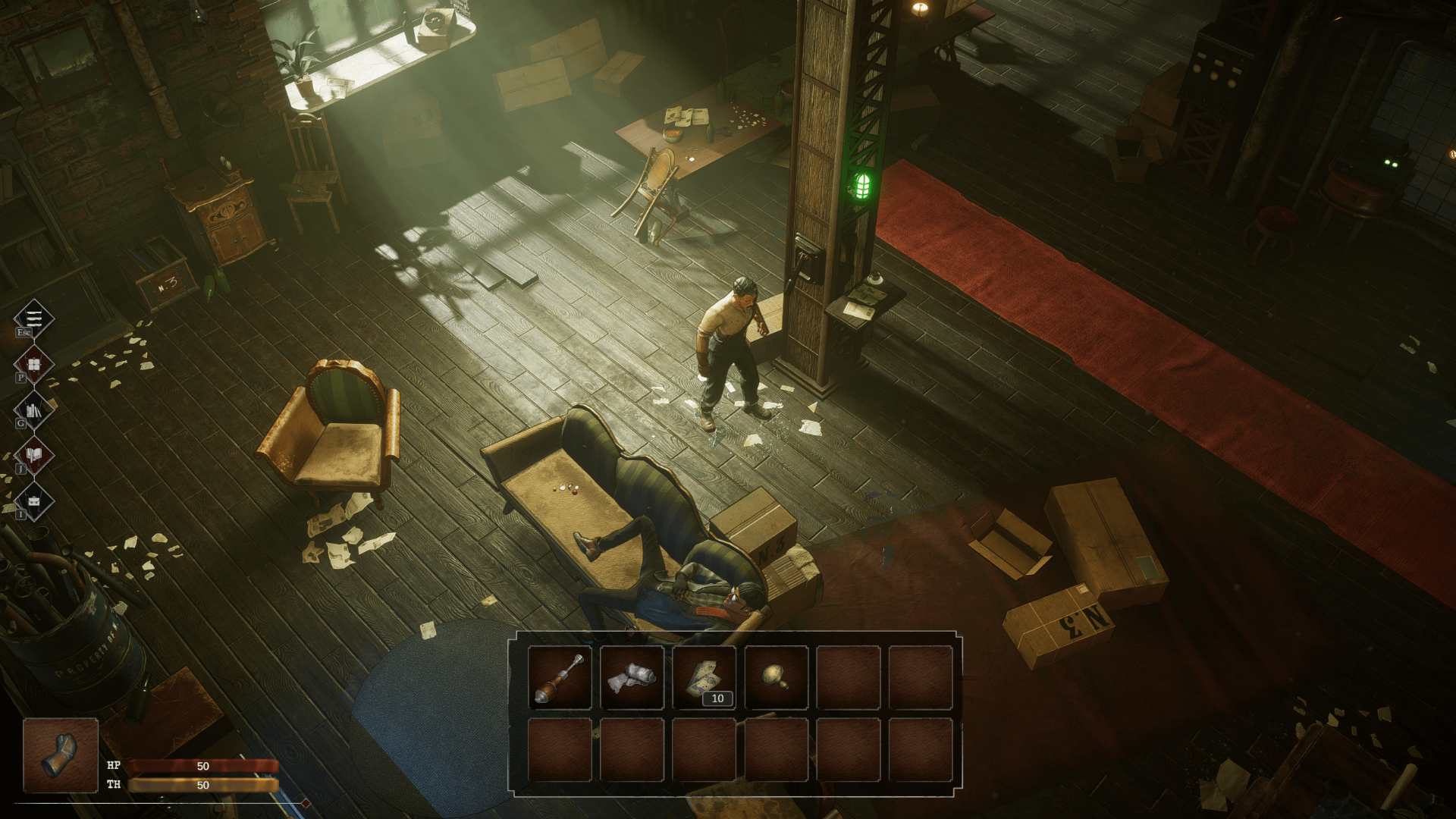
There’s still much more to say about Combat and the Skill System — from secret combinations to unexpected evolutions — but that’s all for this first iteration. We’re not trying to reinvent the wheel of the classic RPG, but we want to experiment and bring together mechanics that are traditionally kept separate.
We want to take the risk of making mistakes, with a heart independent from distant and muddled market logic. We hope you can appreciate our attempt.
Thank you all, see you soon!
Giacomo Montagnoli, Creative Director FLAT28 Collective