
Alpha 7 is here · A major new chapter for Territory
Hello survivors,
Territory Alpha 7 · Client 43 is now available on the stable branch.
If you have been away for a while, this is a good time to take another look. Territory has moved to Unreal Engine 5.8, with extensive work across the systems that make up everyday survival: enemy behaviour, combat, crafting, building, farming, progression, vehicles, saving and multiplayer.
There is also a substantial playable storyline to follow, trader jobs to take on, and official persistent dedicated servers that you can start from inside the game.
This update brings together a long stretch of development and playtesting. Some of you have helped test these changes along the way; for players returning from the previous stable version, there is a lot to discover.
Alpha 7 is still Early Access. Moving this update to the stable branch does not mean Territory is finished or that this is the 1.0 release. It means this is the version I am bringing to the main player base, with more development ahead.
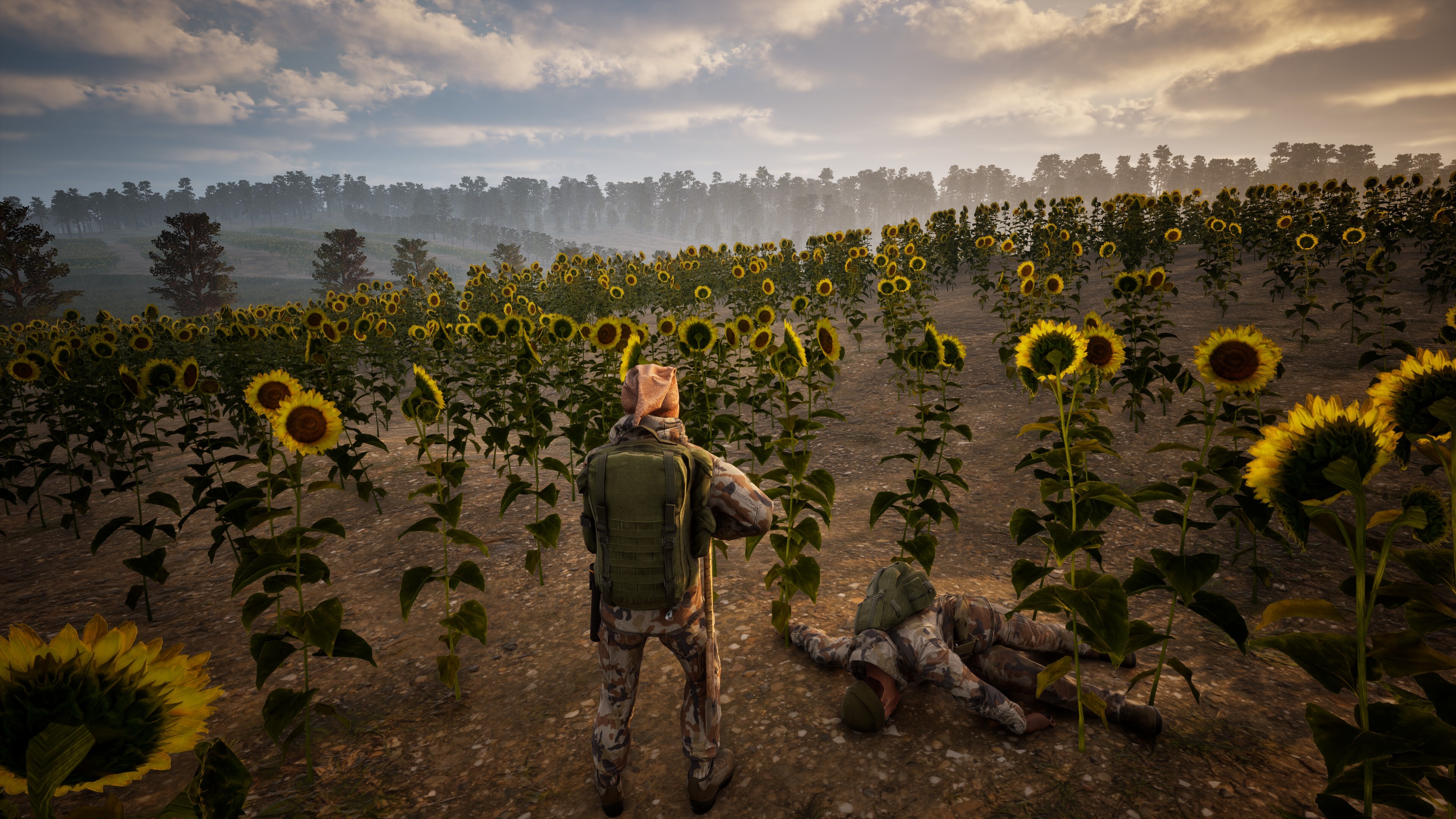
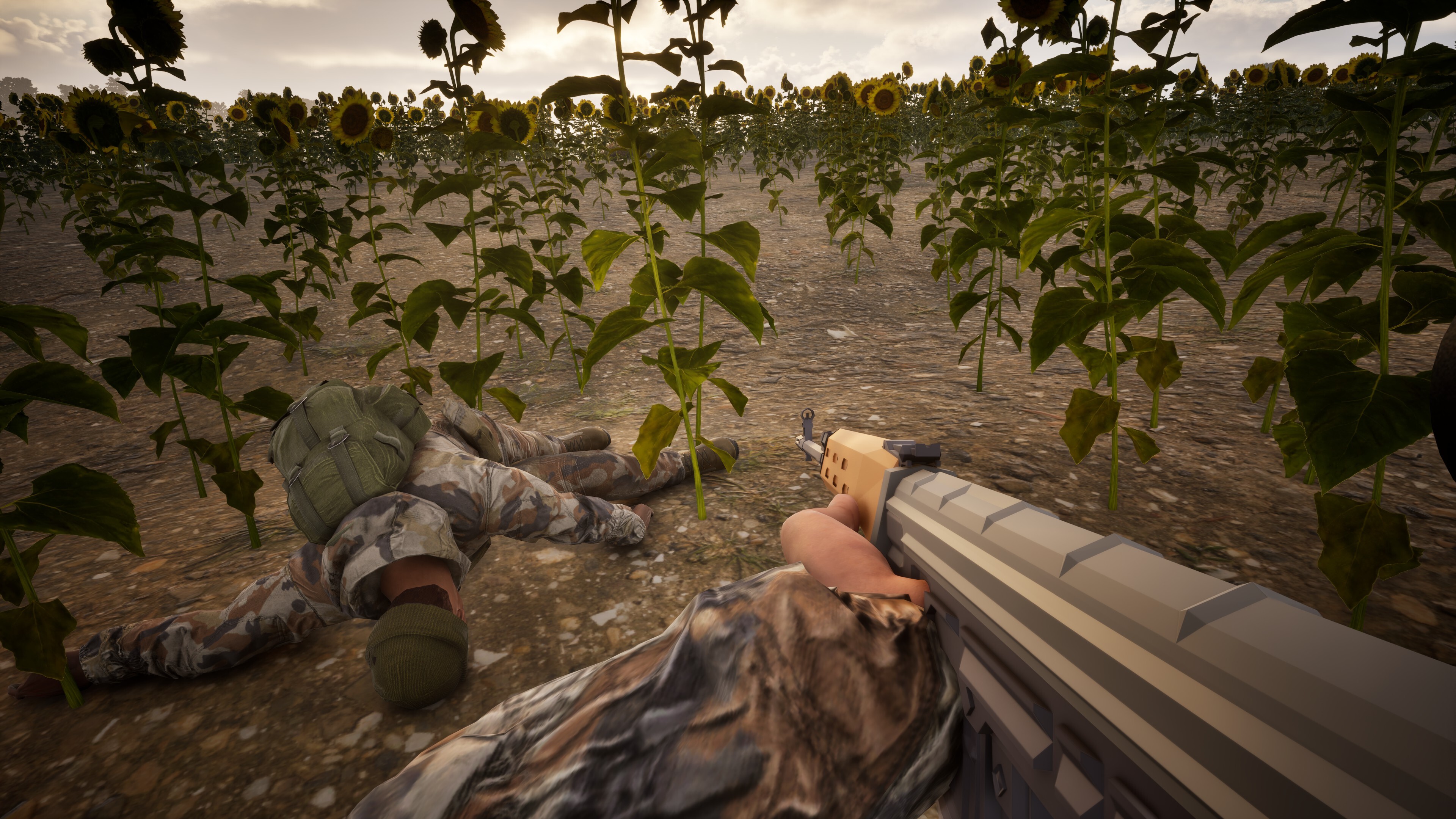
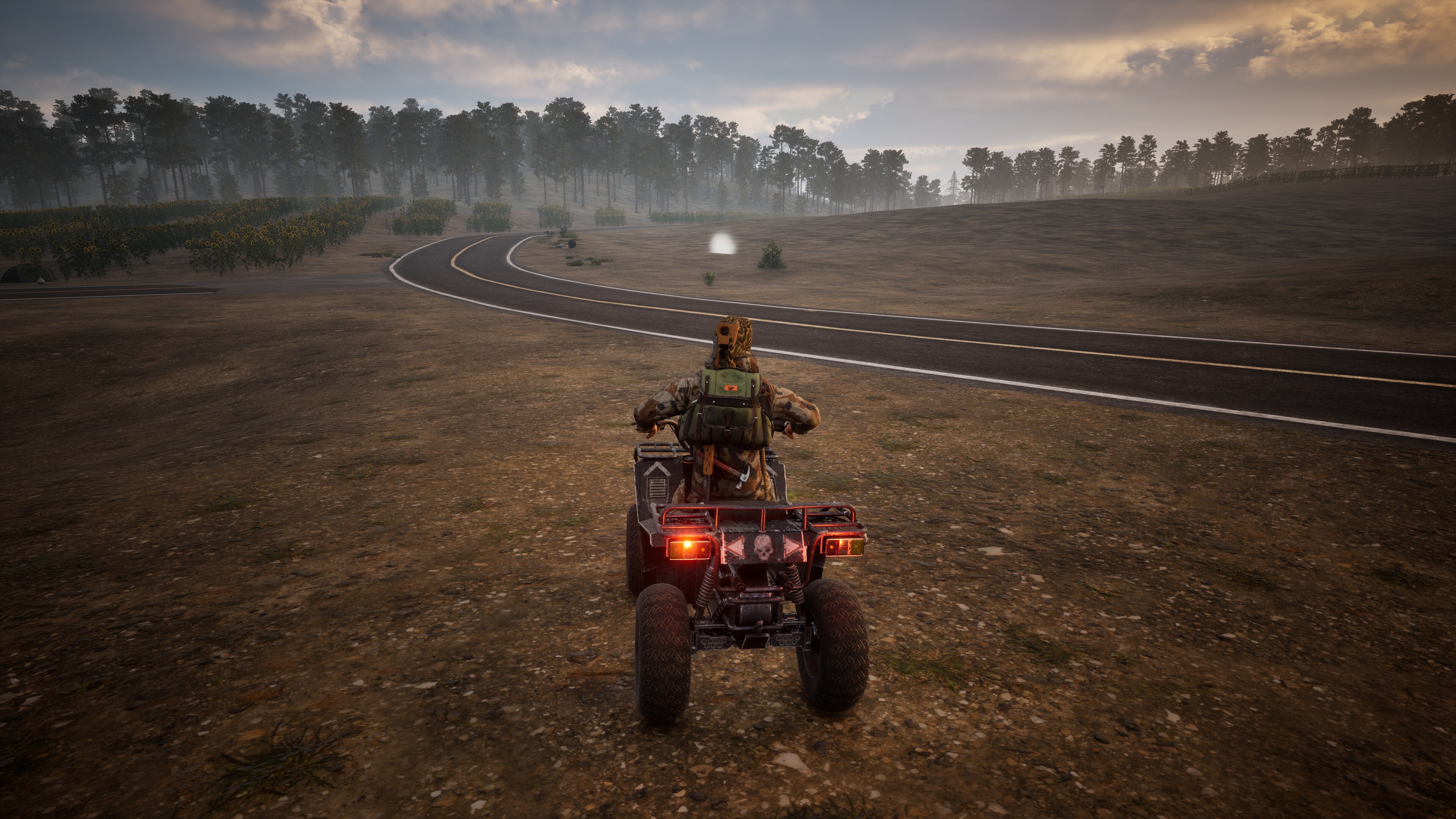
A new foundation: Unreal Engine 5.8
Territory now runs on Unreal Engine 5.8. Alongside that move, I have extensively reworked the game's underlying code and how its systems fit together.
The aim is a game that is easier to develop, diagnose and improve as it grows. A great deal of the work is behind the scenes, but it supports things you interact with constantly: picking up an item, entering a building, firing a weapon, driving across the island or returning to a saved world.
- Windows and Linux support. Alpha 7 is available for Windows and Linux, including a native Linux client.
- Reworked core gameplay systems with more consistent handling across single-player, player-hosted sessions and dedicated servers.
- World streaming and performance work focused on reducing avoidable stalls as you travel, encounter enemies and interact with the world.
- Saving and recovery improvements across survivors, inventories, placed objects and world state, with clearer feedback when something prevents a save.
- Graphics options including DLSS and FSR upscaling, plus DLSS frame generation on supported hardware.
An engine upgrade is not a promise of a particular frame rate on every PC. Optimisation, hardware testing and bug fixing remain ongoing work.
Enemy behaviour: a much more responsive island
Enemy behaviour has been one of the biggest areas of development. I want encounters to reward observation, positioning and preparation, with enemies reacting to what happens around them in ways you can understand.
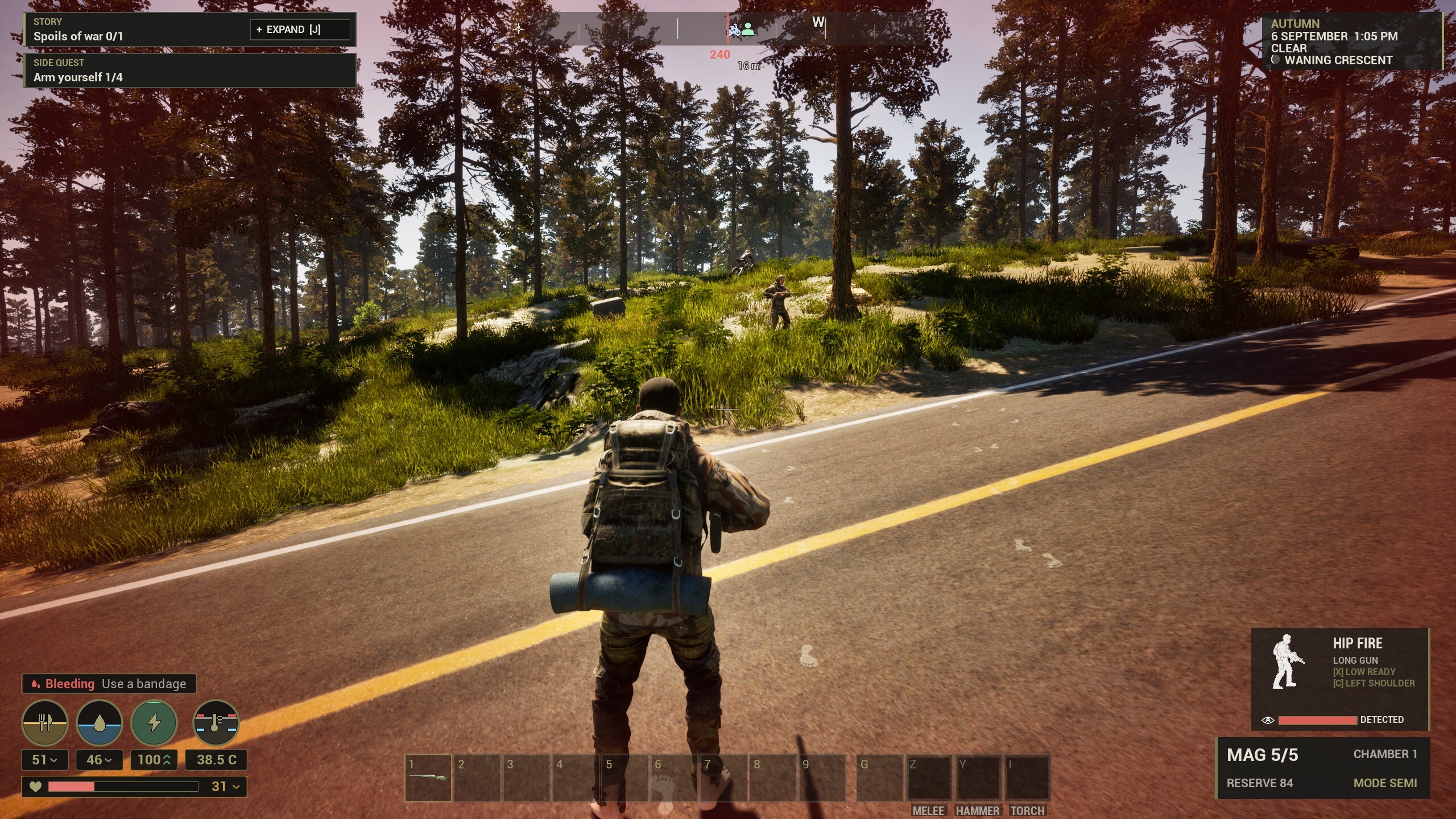
- Detection builds over time. Distance, movement, posture and an enemy's alertness affect how quickly you are noticed. Crouching and taking your time can make a difference; sprinting into view makes you easier to spot.
- Vegetation provides concealment. Bushes, ferns and tall grass can help hide you. That is concealment, not armour: it does not stop bullets or make you invisible at close range.
- Enemies investigate sounds. Footsteps and work noise can make an enemy suspicious without immediately revealing who made the sound. Gunfire is a much less subtle announcement.
- Breaking contact matters. When an enemy loses sight of you, it searches around your last known position. Moving after breaking line of sight is often wiser than staying where you were last seen.
- Different responses to danger. Depending on the enemy and situation, enemies can hold a position, reposition, seek cover, withdraw or fight back when cornered. Not every encounter follows the same chase-and-shoot pattern.
- More capable movement around buildings. Humanoid enemies can enter buildings, use unlocked doors and navigate player-built structures. A doorway is no longer something to assume makes you safe.
- More readable guarded areas. Some defenders warn a peaceful player approaching their territory before committing to a fight. Bandits are less accommodating.
- Fairer combat tuning. Work on first-shot timing, burst spacing, moving targets and enemy accuracy gives encounters a more deliberate rhythm.
- Better control of reinforcements. Defended places do not continuously refill while you are occupying or fighting around them. Clearing a location gives you a window to search before it eventually repopulates.
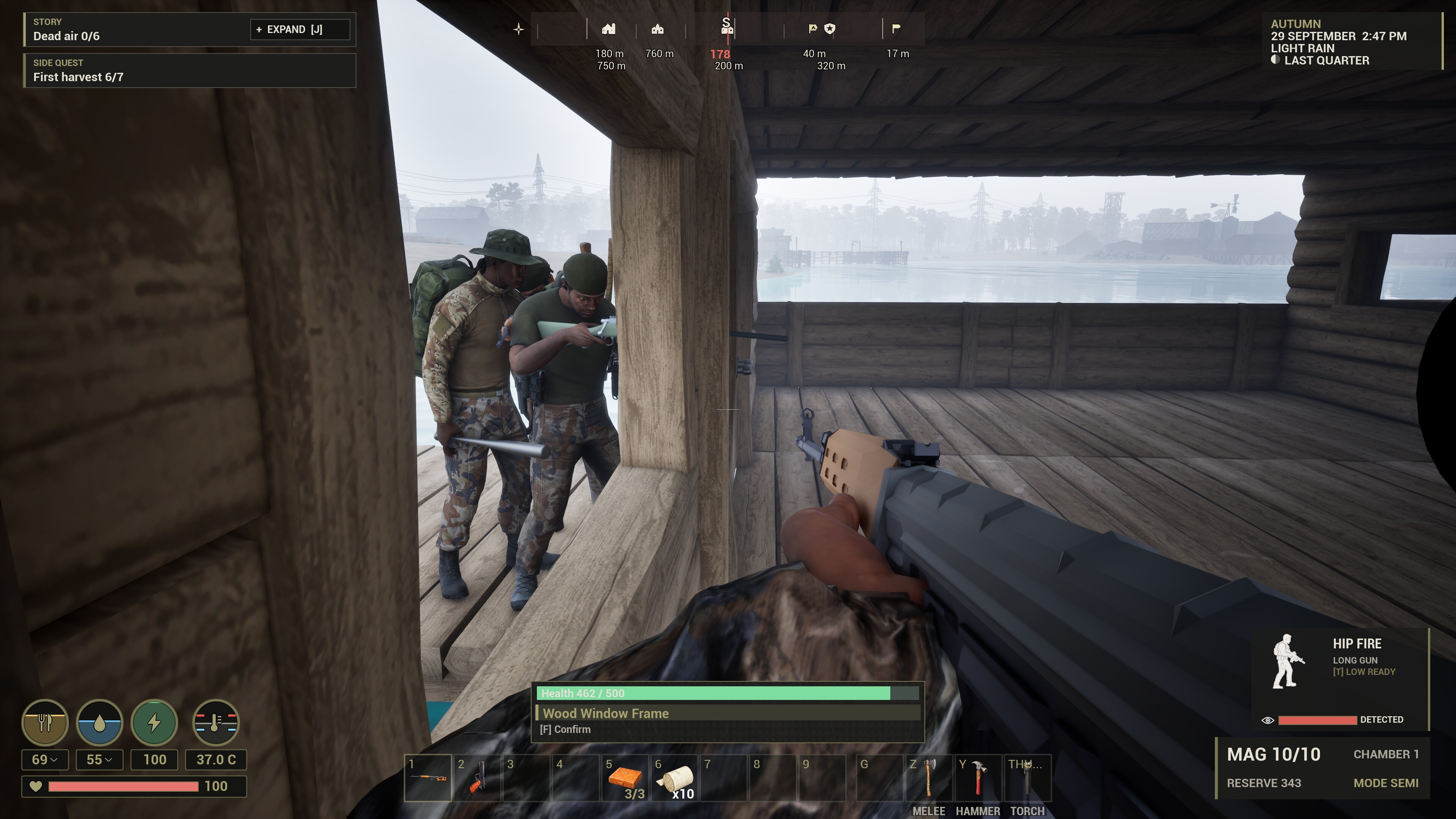
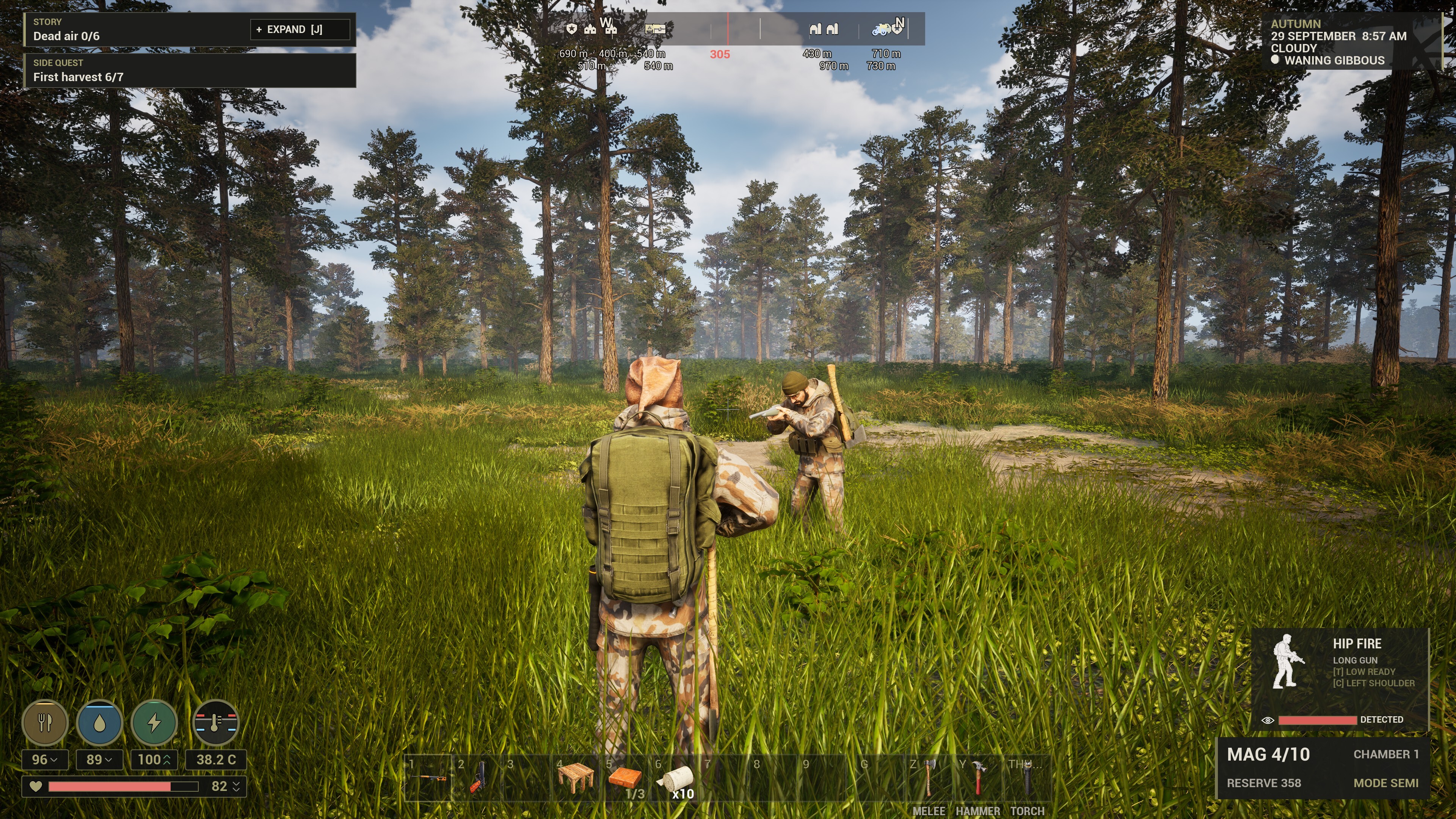
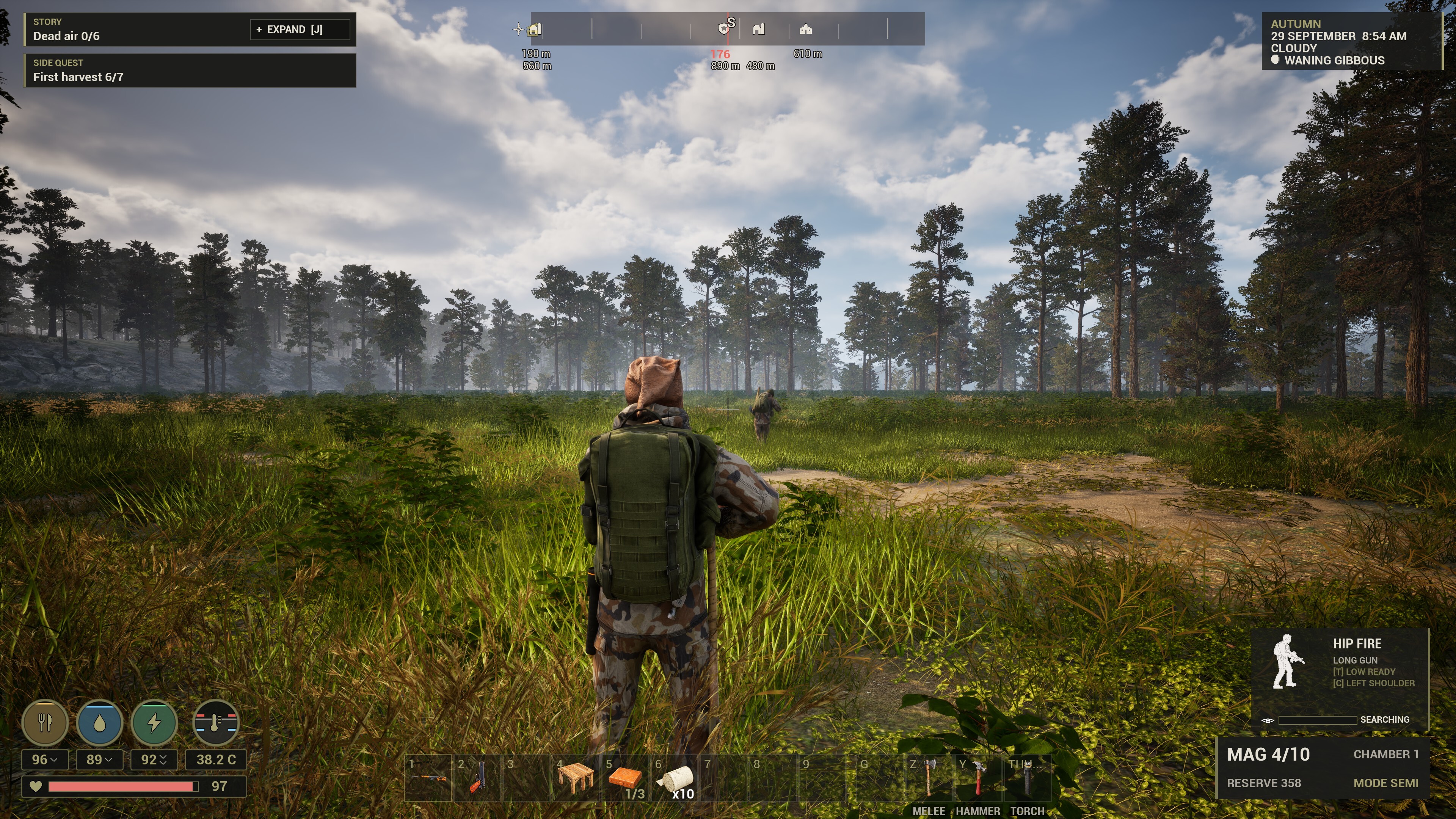
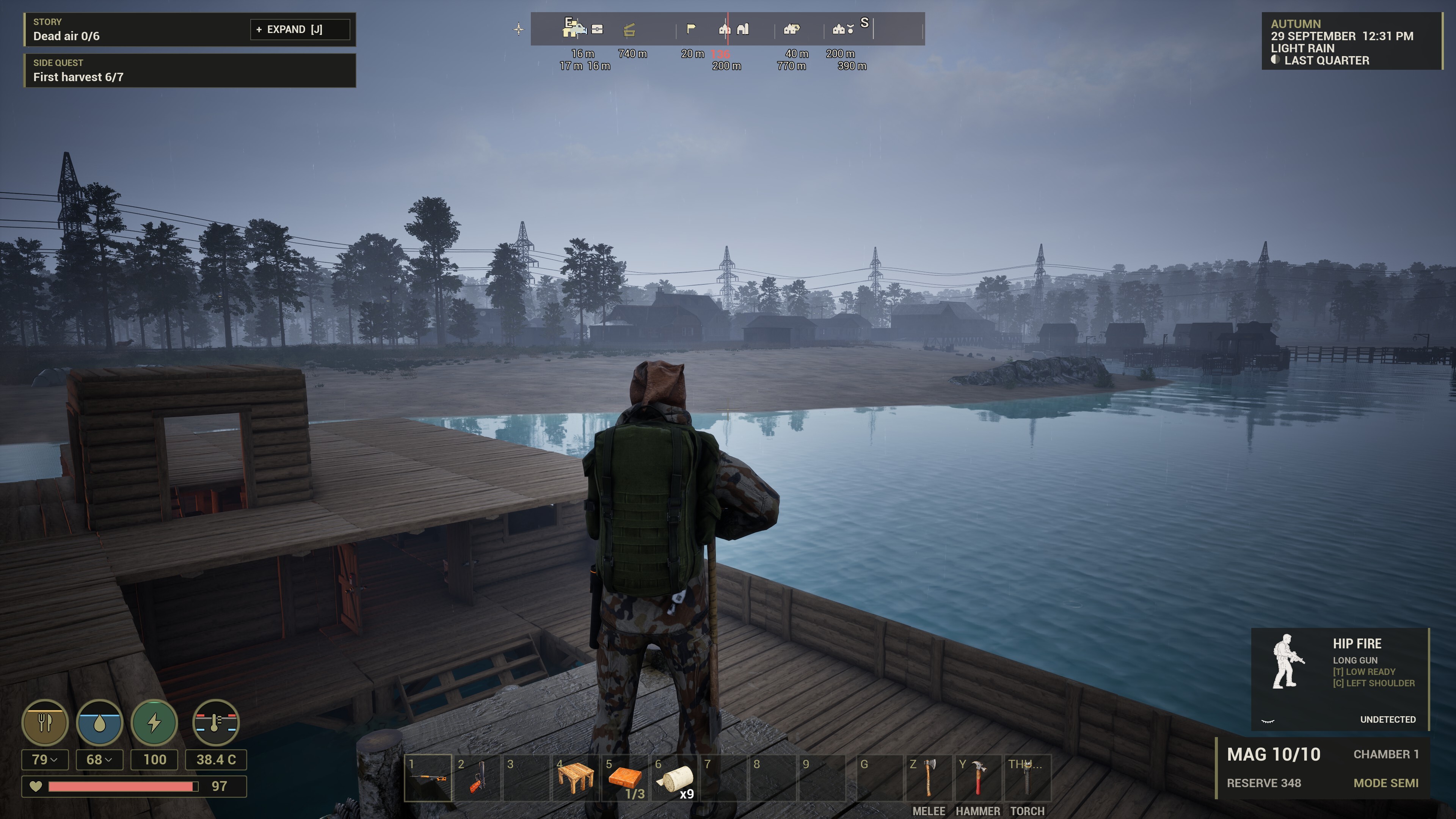
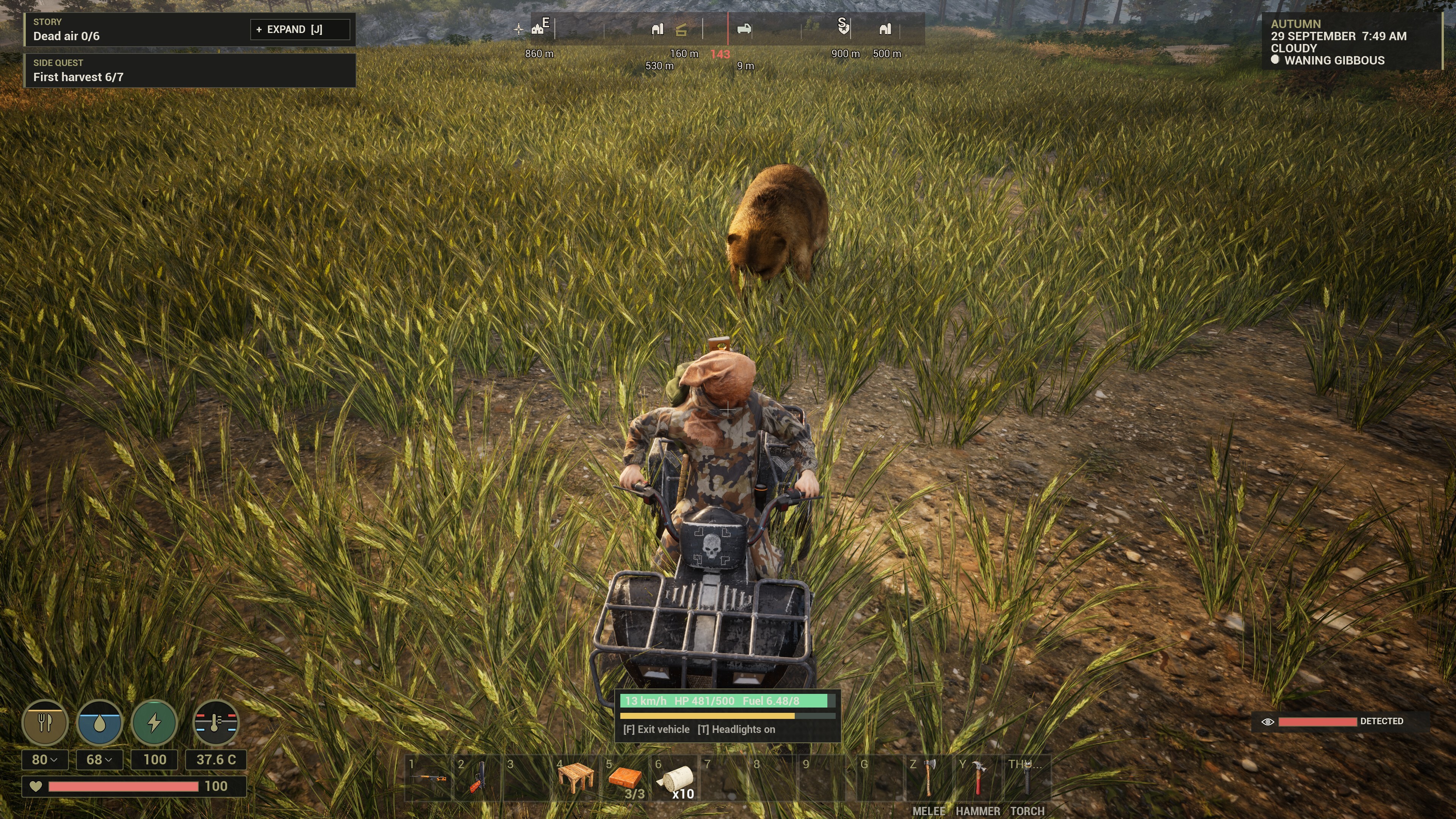
- Clearer feedback. The awareness indicator distinguishes being undetected, searched for and detected, with a bar showing detection building.
Wildlife remains part of that danger too. Pay attention to what is around you, not just what is in your sights.
Combat, weapons and character control
- First- and third-person combat have received extensive work on aiming, weapon holds, movement and presentation.
- Third-person shoulder switching lets you adjust your view when fighting around cover. Switching perspective while aiming keeps you aimed.
- Weapon recoil and firing feel have been revised, alongside muzzle effects, impacts, tracers and weapon-specific sounds.
- Melee and harvesting actions have more consistent swing timing and contact feedback.
- Weapon modification brings compatible attachments, magazines and ammunition together in one panel. You can attach, swap and remove parts, and see weapon repair requirements there too.
- Condition and repairs make maintaining equipment part of survival. Worn weapons need materials and, where required, the appropriate nearby bench.
- Character and equipment presentation has expanded with more faces, matching first-person arms, revised weapon poses and clearer inventory previews.
- Control options include hold/toggle choices for aiming and crouching, and an option to disable weapon camera kick.
Survival, crafting and a base worth returning to
The familiar loop is still at the heart of Territory: scavenge, gather, craft, build and make yourself better prepared for the next trip. Alpha 7 brings substantial work to the systems supporting that loop.
- Survival conditions bring together hunger, thirst, stamina, body temperature, wetness, bleeding and sickness. The updated HUD gives clearer warnings and guidance about what needs attention.
- Food, water and medicine have clearer purposes. Cook food, manage your water supply and use suitable treatment when you are hurt or sick.
- Crafting and storage have improved recipe presentation, material requirements and inventory tools, including bulk transfers and organisation.
- Cooking and processing stations separate recipes you choose from materials that convert automatically. Supported stations continue their work while you are away from the base.
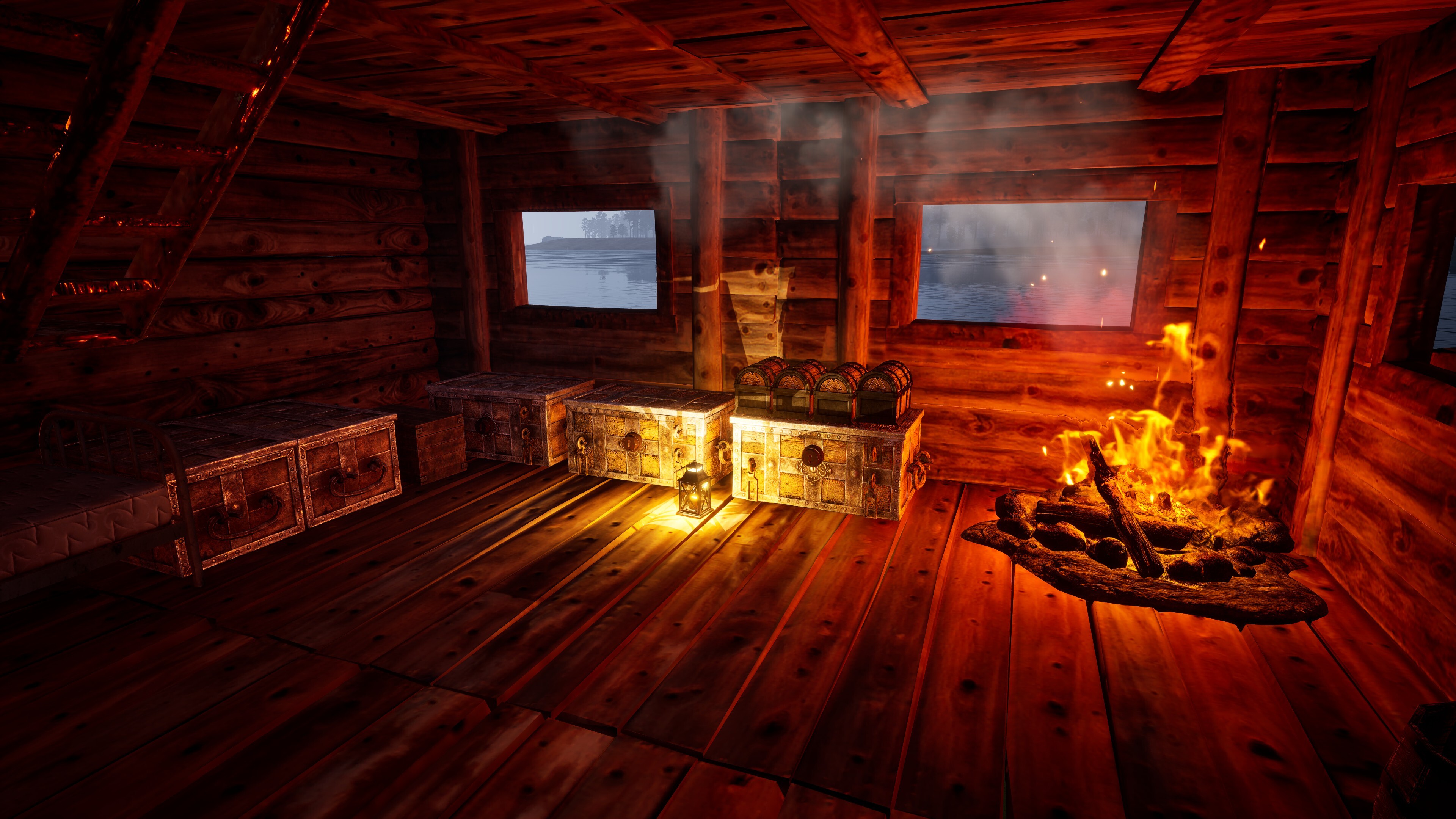
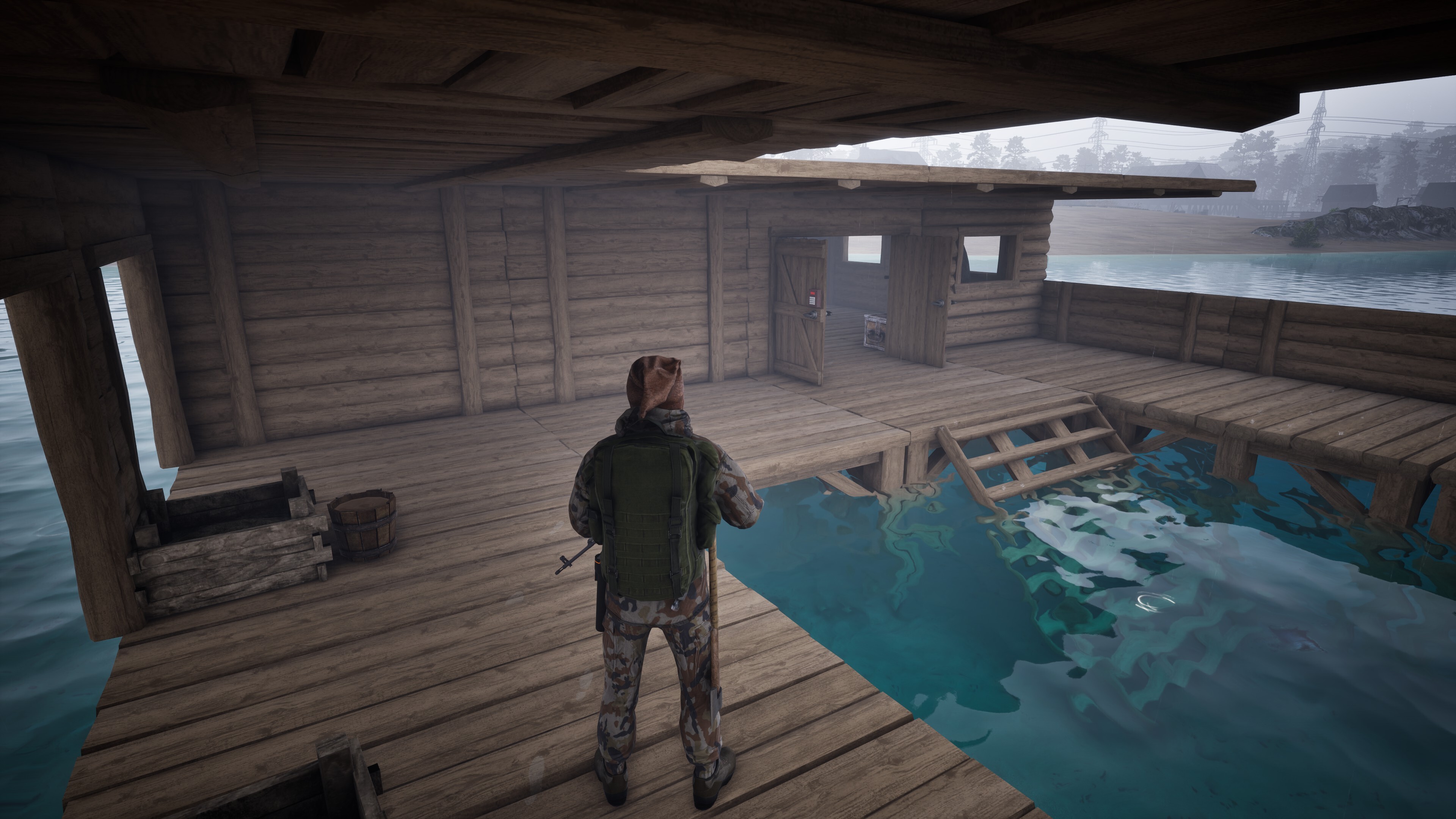
- Building includes modular wood, stone and metal construction, support checks, doors, locks, storage and useful placeables. Wood and stone parts have refreshed materials.
- Base defence matters: hostile raids can threaten a base while you are there defending it. Walls, entrances and where you choose to build are practical decisions.
- Farming lets you plant, water, fertilise, tend and harvest crops. Growth, plant health and yield respond to their conditions, and the plant information card helps you see what they need.
- Lighting and fuel have been revisited across campfires, torches, candles and lamps, with clearer fuel information and more useful illumination.
Behind Enemy Lines · A story to uncover
You are a soldier left behind by your squad on a hostile island. Staying alive is the immediate problem. Finding help, finding a way out, and understanding what is happening around you give that survival a larger purpose.
There is already a substantial chain of playable storyline quests in Alpha 7. The current story takes you beyond the opening survival steps, with exploration, discoveries and objectives that connect your journey across the island.
I want you to uncover it by playing, so I am keeping the details out of these notes.
- A continuing main quest line woven into exploration and survival.
- Clues and evidence to find, read and revisit in your journal.
- Personal story discoveries that are not simply lost because another player searched a container first.
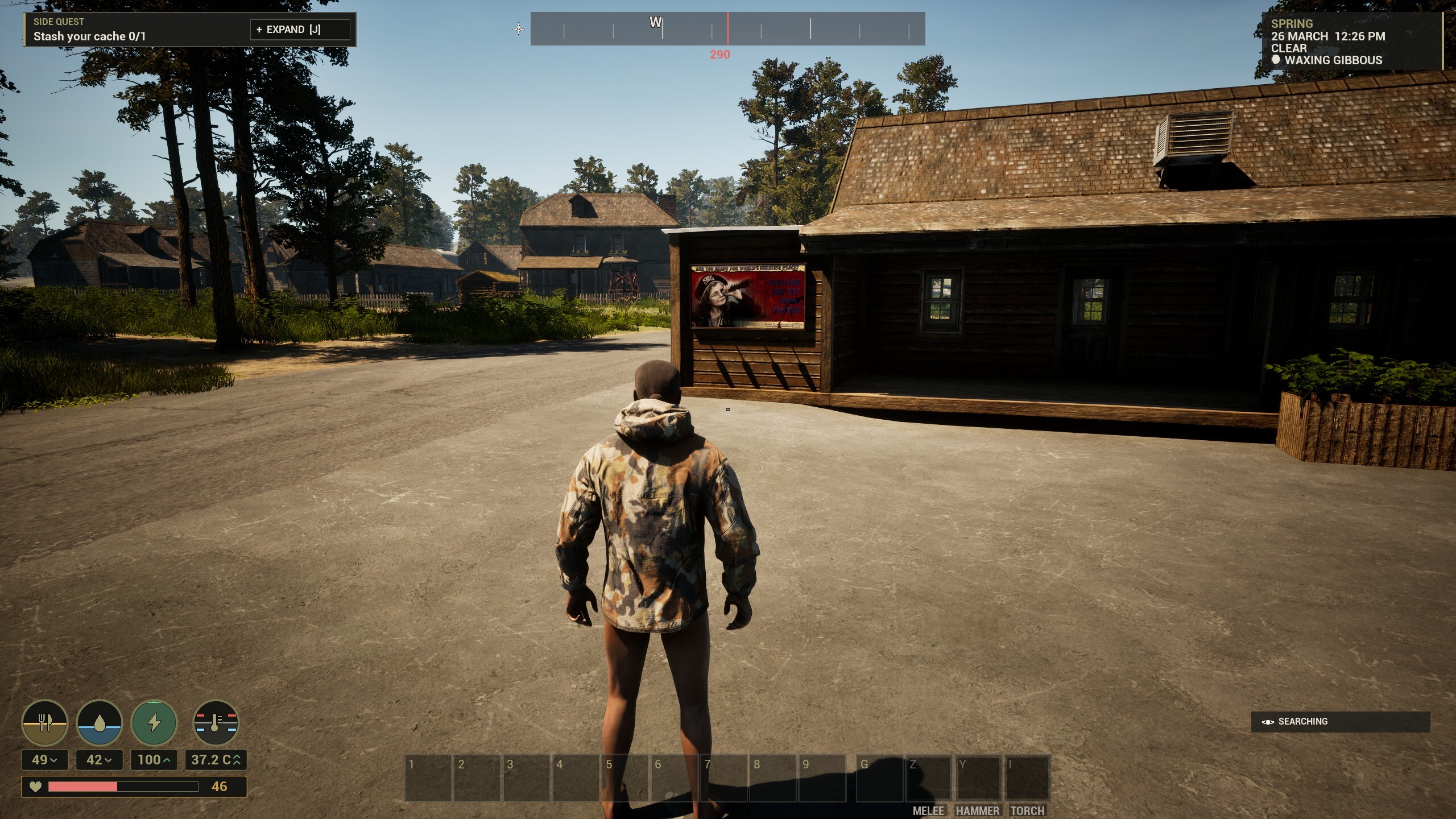
- Quest rewards and stashes to claim as you progress.
- A clearer journal and tracker for following your story alongside a side quest or trader job.
The storyline is not complete. More quests, discoveries and later chapters are still to come. The current content is a playable part of that larger story, not a promise that the whole campaign and its conclusion are available now.
You can also take your time. There is room to work on your home, explore, trade and build up supplies between story objectives.
Traders, jobs and progression
Traders now offer more than somewhere to sell your haul. Fixed traders and travelling traders give you reasons to explore, and their JOBS page offers additional objectives alongside the main story.
- Kill jobs: hunt the specified wildlife or hostile targets.
- Collect jobs: gather the requested goods and hand them over to a suitable trader.
- Introduction jobs: meet another trader, with a destination marker to help you find them.
- Visible rewards: see the offered coins, experience, reputation and item choices before accepting a job.
- Changing opportunities: boards refresh, and harder work becomes available as your level increases.
- Activity-based skills: develop skills by doing things in the world. Implemented benefits support areas such as crafting, harvesting, farming, repairs, survival and trading; skills whose effects are not ready are marked as coming.
More job types and progression work are planned. The current release includes the three job types above; the wider job system is still being developed.
Exploration, vehicles and the wider world
- An island to explore. Travel across a roughly 4 × 4 km map, through forests, farmland, settlements and hostile territory, on foot or by vehicle.
- More than 50 named locations to discover, including 22 towns, 22 farms and 11 military sites. Scout your approach, search for supplies and pay attention to each location's danger rating.
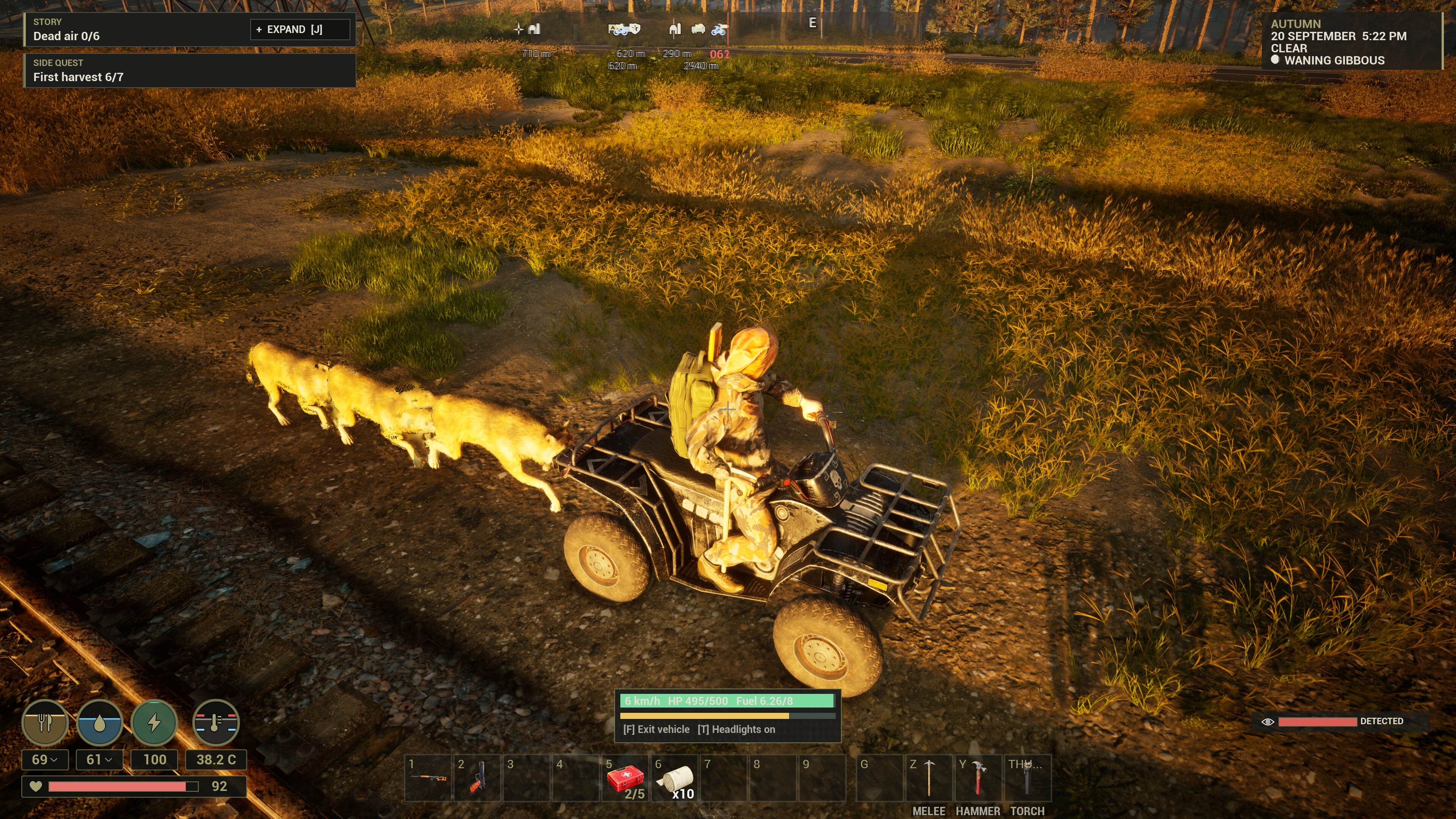
- Explore on foot or by vehicle with the bicycle, mini bike, quad and pickup providing different ways to travel and carry supplies.
- Vehicle handling and multiplayer movement have received substantial work, alongside refuelling, repairs, storage and recovery behaviour.
- Discover places and traders on the world map, with improved markers, a clearer compass and danger ratings for discovered locations.
- Search and loot containers and defended locations, with more appropriate loot for different settings and short searches when opening containers.
- Supply drops create opportunities away from your usual route. Different crate types carry different supplies, and valuable loot can bring trouble.
- Changing weather and time of day affect visibility, atmosphere and the practical business of staying warm, dry and prepared.
- Refreshed world materials and audio improve the consistency of buildings, props and the sounds of survival. Enemy voices and better positional feedback help communicate what is happening nearby.
- Steam achievements recognise first steps and milestones across survival, crafting, building, exploration and jobs.
- Wildlife Plenty of passive and hostile wildlife to keep you on your toes.
Official dedicated servers · Persistent worlds, on demand
You no longer need another player to leave their PC running to host an official world.
Territory supports single-player local worlds, player-hosted multiplayer and official persistent dedicated servers. For official multiplayer, choose a server in the in-game Official Servers browser.
The official fleet covers four regions:
- Asia Pacific: Sydney, Australia.
- North America: Ohio, United States.
- Europe: Frankfurt, Germany.
- South America: São Paulo, Brazil.
How the on-demand system works
- Choose your server. Each server has its own saved world and character progress. Return to the same server to continue there; this is not a cross-server character-transfer system.
- Wake it from the game. If it is sleeping, choose Start & Join. If it is already warming up, choose Join When Ready. Keep your wait active and the game connects you when your turn is ready.
- Allow time for startup. The browser shows status and an estimate. A sleeping server is not instantly ready, and startup time can vary.
- It stays awake while people play. Automatic sleep does not shut down an occupied server.
- An empty server can sleep. After at least 60 continuously empty minutes, with nobody waiting to join and the save and backup checks complete, it can shut down until needed again.
- Sleep is not a wipe. Saved progress is retained for the next session; the world is not running a live simulation while the server is asleep.
This lets me provide persistent regional worlds without keeping every empty server running around the clock. Check the in-game browser for current availability and the client version required to join.
Squads · Survive and fight together
Playing alongside other survivors is more useful when you can organise as a group. The in-game squad system helps you stay together, find one another and work from a shared base.
- Form a squad of up to eight players. Create a named squad and invite other survivors on your server, or accept an invitation to join theirs.
- Manage your group. The Commander can invite or remove members, transfer leadership to another member, or disband the squad. Members can leave when they choose.
- Find your squadmates. Online members appear on your map's Squad layer and on the compass. Their primary bases appear on the Bases layer, labelled with the owner's name.
- Coordinate at home. Squad membership provides shared access where supported by building, lock and storage systems. Personal stashes and respawn points remain personal; joining a squad does not turn everything you own into shared property.
- Stay informed. Gameplay notices let you know about invitations and members joining or leaving, without needing to keep the squad screen open.
- Return to your group. Squad membership is saved with that persistent world, so you do not need to recreate the group every session.
Squads belong to the server/world where you create them. This is not a global or cross-server clan system, and squad-based trader jobs are still future work.
A personal note on development and coding assistants
I am still a solo developer making a large game. Territory combines a lot of interdependent systems, and bringing the previous version forward has involved much more than changing the engine version.
I have used AI coding assistants to help with code analysis, refactoring, implementation, debugging and tests. They have made it more practical to work through a project of this size and tackle areas that would otherwise take much longer on my own.
That does not mean I hand over the direction of the game. The game design, storyline and creative direction are mine, and a great deal of the development work is still my own hands-on work. I decide what belongs in Territory, how systems should behave, what needs changing and what is ready for players.
These tools can also get things wrong. Their output still needs review, integration and testing, and I remain responsible for the result. They are coding assistance, not a substitute for design judgment or for playing the game and seeing whether it actually feels right.
I want to be open about that process. I am using the tools available to help bring this game closer to the vision I have been working towards, while continuing to learn from your playtests and feedback.
Still to come
Alpha 7 is a major step, but there are important systems and content still to finish. Some features from the previous version are deliberately withheld while their reworked versions are completed and tested.
- Electricity: completing the reworked power system, placeable electrical devices, wiring and powered equipment.
- Turrets: bringing the reworked turret and defensive systems into playable form.
- Rail carts and railway building: completing the track and cart system for transport and hauling.
- Powered farming: grow lamps, heat lamps and sprinklers, tied into the electricity system rather than presented as working features today.
- More story content: further quests, discoveries and the later parts of the storyline.
- More trader work: additional job types such as fetching, deliveries, clearing locations and buried caches, with further progression work.
- Continued world and gameplay polish: more work on locations, building presentation, enemy behaviour, balance, audio and performance.
These are development plans, not features included in this release or a fixed delivery schedule. Priorities can change as testing and player feedback show what needs attention most.
Before you jump in
- New save required: Alpha 7 is not incompatible with saves from the previous versions of Territory. You’ll need to start fresh; previous worlds and character progress cannot be carried over.
- Update Territory in Steam and check that the main menu shows CLIENT 43.
- If you previously opted into a test branch, select the normal/default branch to play the stable release. Make sure your client matches the server you want to join.
- Review your graphics and control settings. Upscaling and frame-generation options depend on your hardware.
This is a large update to an Early Access game, and there will still be rough edges. Useful bug reports make a real difference: tell me what happened, where it happened, whether you were playing locally or on a server, and how to reproduce it if you can.
Settings → General → Create Support File can prepare recent logs and save diagnostics on your Desktop for a report. Please send that through a suitable support channel rather than posting personal diagnostics publicly.
Thank you
Thank you to everyone who has played, tested, reported bugs, shared ideas and stuck with Territory through its development. If you are returning after a break, I hope Alpha 7 gives you plenty of reasons to explore again. If you are new, welcome to the island.
There is more to build, and I am looking forward to seeing what you do with this version.
Alex · Threat Vector