
The merits and drawbacks of patriarchal and matriarchal societies, and how human history has evolved—
questions of fairness and reason have long been studied and discussed in these books. The references I’ve already listed in the announcement.
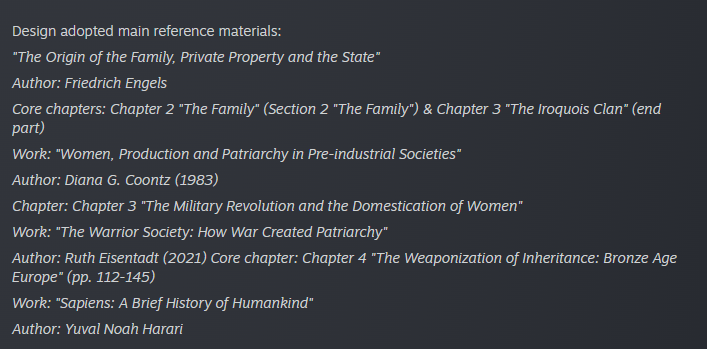
The game only references these works, and primarily sets mechanics and values based on playability and balance.
Given our small team and limited resources, we can't cover every detail—many aspects are simplified to focus on core gameplay.
We kindly ask players not to insist too strictly on realism or fairness in specific details. Ultimately, the goal is fun.
A small game like this cannot deliver definitive conclusions on such a grand theme.
We have already reduced female attack power
Without this reduction, women would be overly "strong"—able to bear children while having combat power equal to men.
Reducing their strength is actually a simple form of balance.
Due to differences in muscle mass and the biological cost of reproduction, women's capacity for violence is relatively lower.
This helps explain why, in high-pressure war environments, women would rely on men.
Therefore, this is an important prerequisite for the emergence of "patriarchal society."
Organization (Testing adjustments, not yet uploaded)
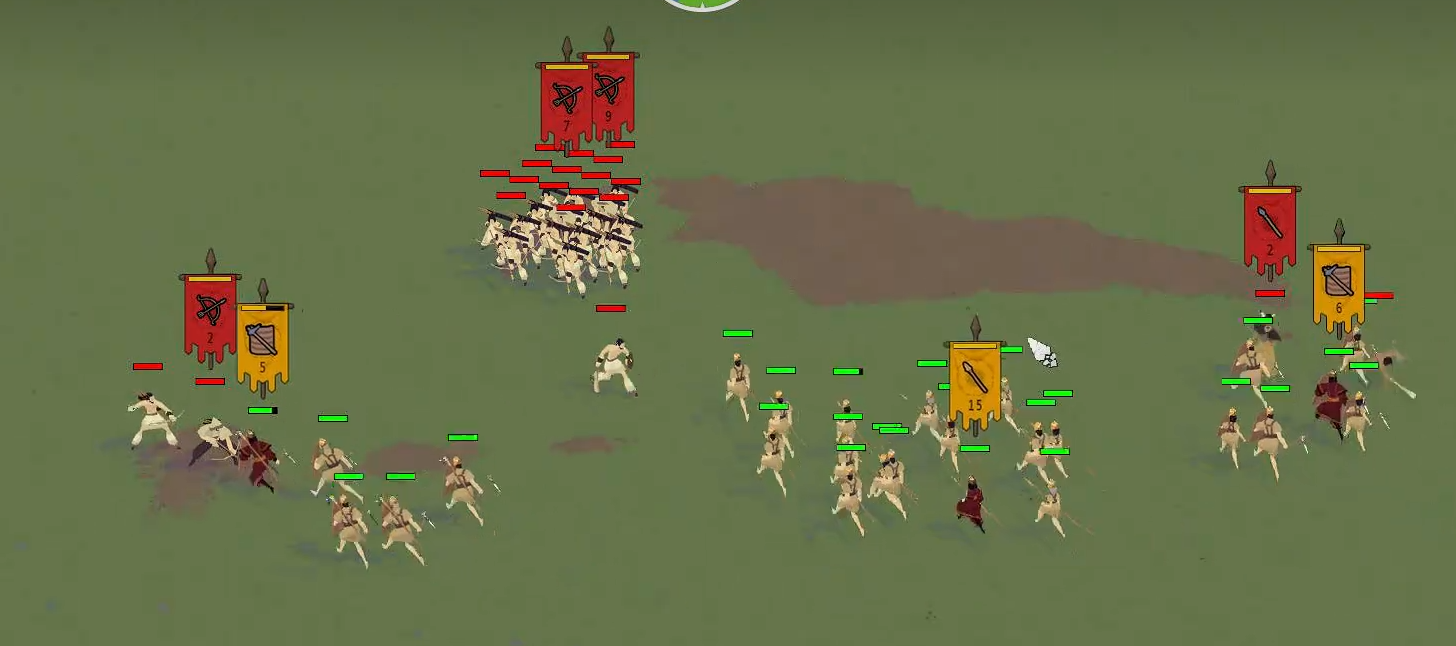
- Acts as a second health bar—similar to mechanics in games like *Total War*.
- When a group's morale reaches 0, it breaks and collapses.
- Each unit has an individual "organization damage" value.
- Every time a member takes damage, the group's total organization decreases.
- A group’s organization is the sum of all members' individual organization.
- Both organization damage resistance and base organization can be improved through training.
**Leader Combat & Experience**
- Leaders gain experience from fighting; when full, they level up.
- Leveling up increases command capacity—the maximum number of troops a leader can control.
- Units beyond this limit suffer organization penalties.
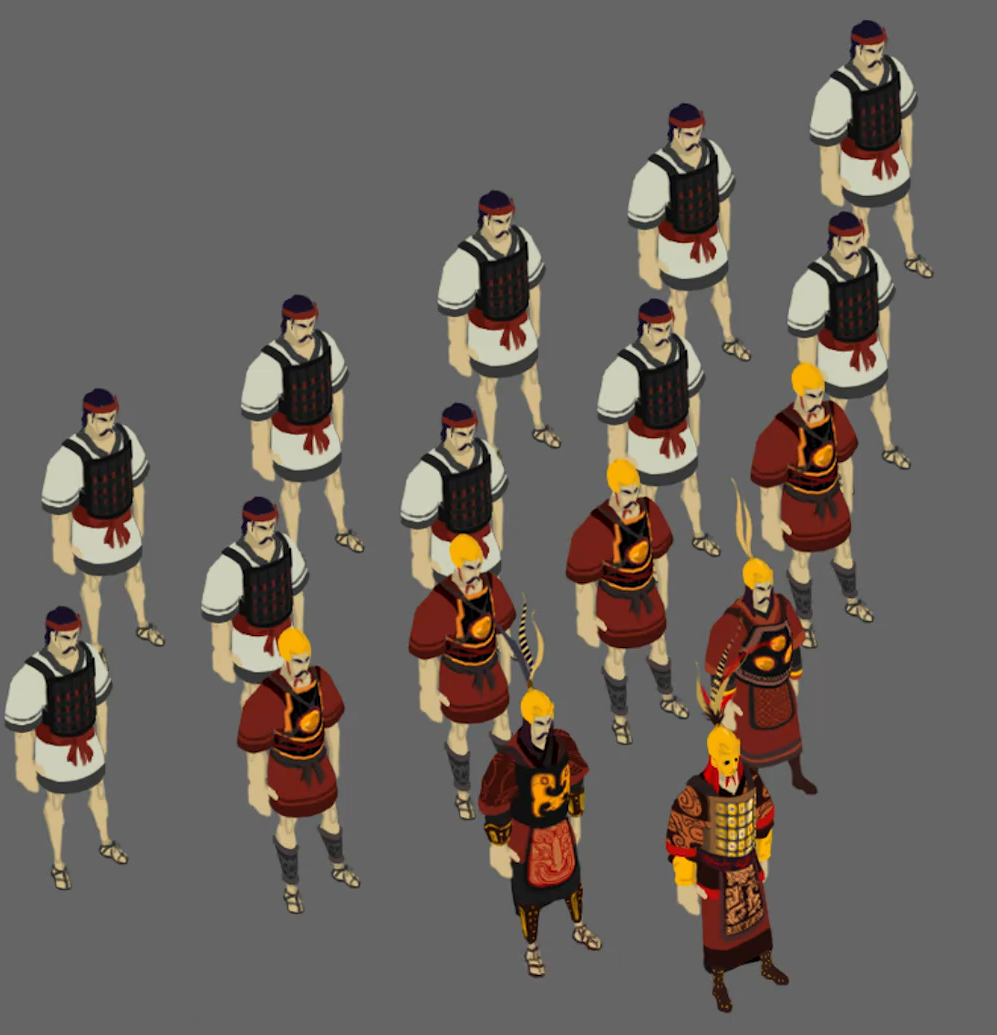
Every 3 levels correspond to a noble title. Noble titles unlock troop types and higher-tier armor and weapons.
This system divides people into commoners, leaders, and slaves—thus forming social "ranks."
Later, we will have women enter the household, becoming affiliated, contributing to education, housework, and serving men.
Patriarchy will then emerge naturally.
Let me explain the logic chain from the beginning:
Under external pressure of war, men—having greater physical strength—engage more in combat, suffer casualties, and earn merit, while women have relatively weaker combat capabilities.
This leads to submission—a relinquishing of power—and thus dependence on men.
Additionally, high-class men rule over low-class men,
and high-class families dominate low-class families.
This forms the patriarchal class-based society.
In our game, while this path reflects what has historically been the mainstream development, we will also include alternative branches as playable options.
Players can choose a matriarchal society: women become leaders, control households, and men become the dependent ones.
However, matriarchal societies are not simply defined by lower violence—they may also have weaker organizational capacity. Therefore, we’ll need gameplay or numerical compensation in other areas,
such as giving women stronger diplomacy and cultural influence, to achieve relative balance between branches. Otherwise, if one path is too weak, there would be no meaningful choice.
Room System (Testing adjustments, not yet uploaded)
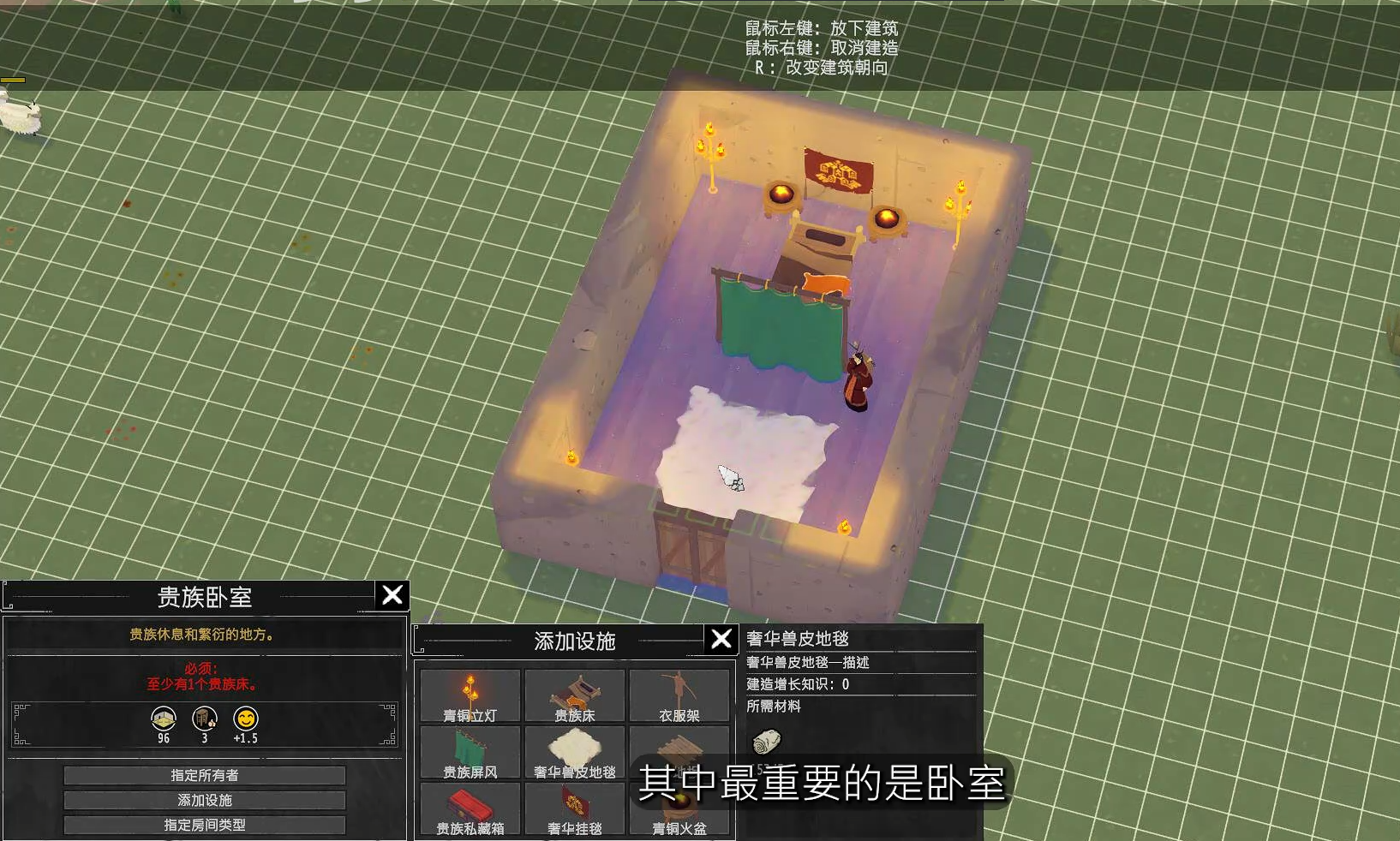
Previously, room types were determined by facilities, and no extra facilities were allowed—this received strong negative feedback.
Now, players can directly assign room types manually.
We’ve also introduced the concept of Facility Completion Rate: the higher this value, the greater the bonus a room provides.
The most important room is the Bedroom, which will be the main way to improve clan members’ mood.
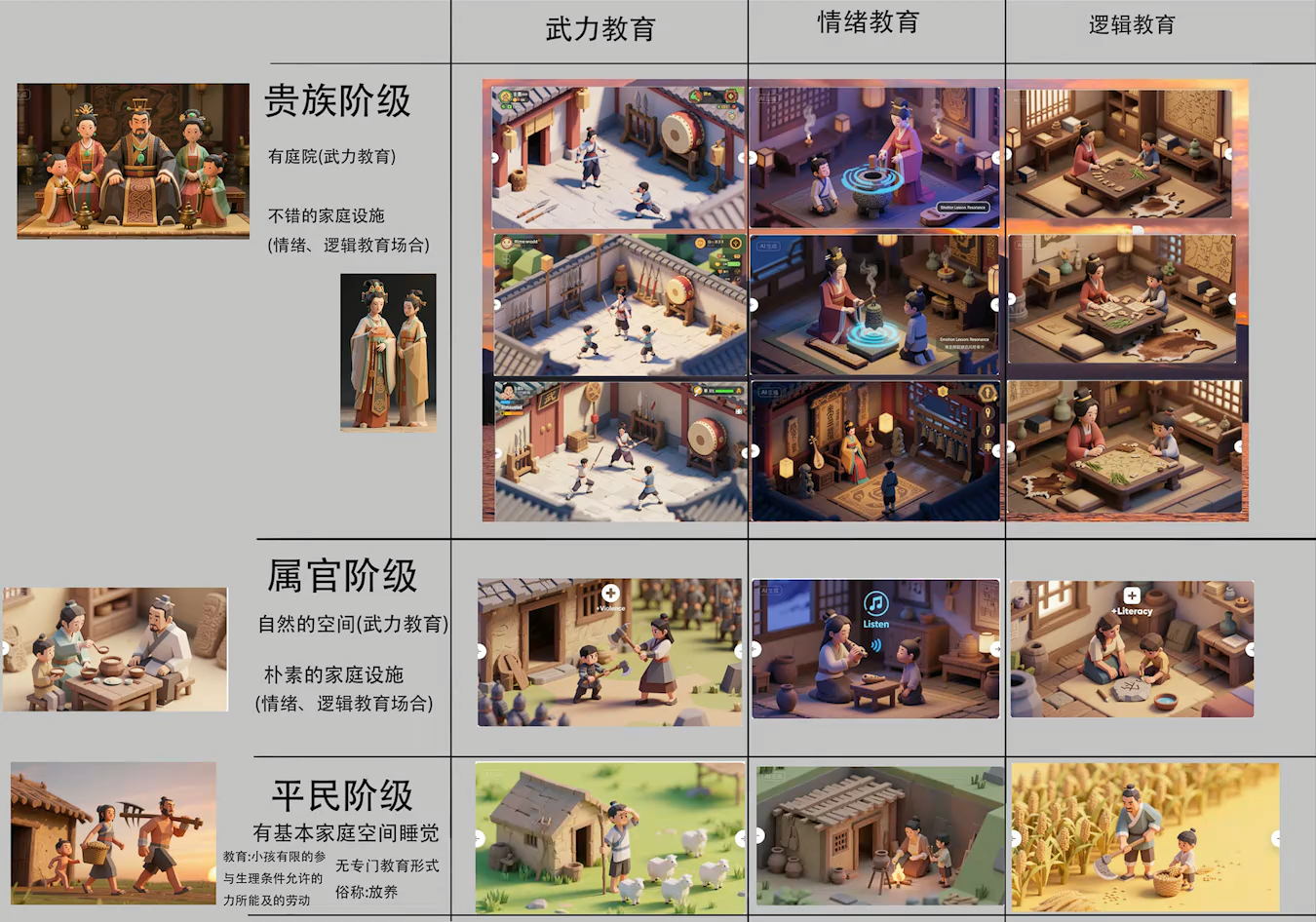
Depending on a character’s social class, bedroom furnishings will differ. High-ranking nobles have more luxurious bedrooms with greater mood bonuses.
When women enter the household, high-class nobles will possess more women—not only a wife, but also 1–3 concubines (secondary wives).
As a result, such nobles will need not just one bedroom, but an entire residence with multiple bedrooms—and possibly even a private kitchen, bath, and study.
This creates visible gaps between classes in terms of spouse count and housing, and these disparities may eventually lead to tension or even rebellion.
More specific details are still in design. While we have the above framework clear, many nuances remain to be refined. We’ll gradually share more as development progresses.
The organization system and the room system are currently under testing and will soon be deployed to the beta branch.
All of these are crucial groundwork for the upcoming Family System—where women enter the household.
The Family System has not yet begun development and is still in the design phase. According to our roadmap, it will become playable in the first half of next year.
So we ask for your patience a little longer.
Lastly, as always, please keep giving us feedback. We will continue making appropriate adjustments based on your input.