What's happening / TLDR: Developer diaries introduce details of Espiocracy - Cold War strategy game in which you play as an intelligence agency. You can catch up with the most important dev diary (The Vision) and find out more on Steam page.

SIGINT - signals intelligence (intercepting radio waves etc, in the game also includes MASINT, ELINT, COMINT, and other variants) - is as wide as an ocean and as deep as an ocean. Espiocracy, a game focused primarily on HUMINT (human intelligence), naturally has to pick its battles and begin with a limited implementation of the technological side of espionage. That doesn't mean, however, abstraction or oversimplification. Similarly to other mechanics in the game, we bet on attention to detail. Today, screenshots will mostly speak for themselves.
SIGINT Sites
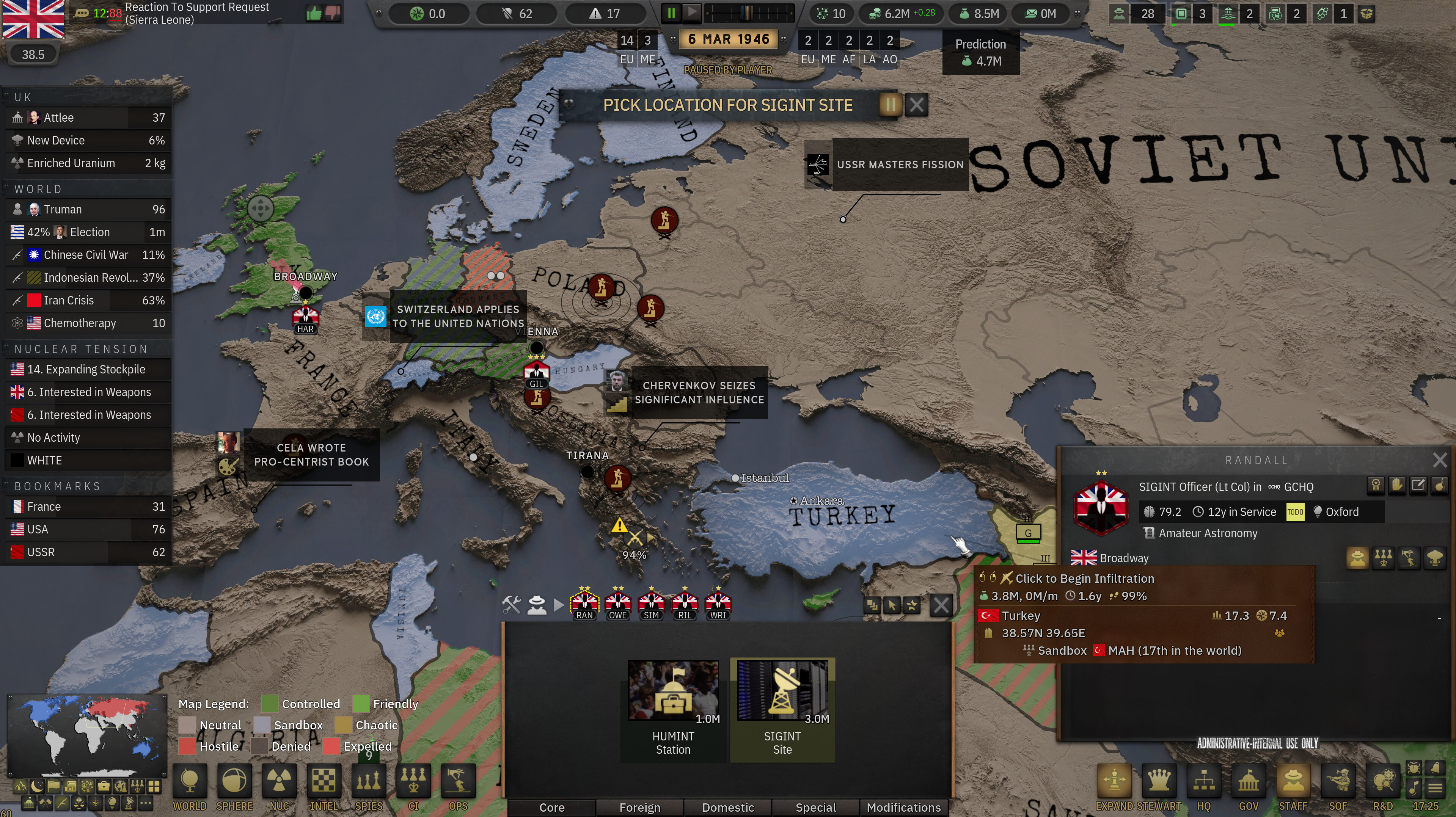
Two core structures that you can establish on the map in the game are HUMINT stations and SIGINT sites. While stations are generally located in embassies or at least in large cities, sites can be built anywhere in a friendly or a controlled nation. The game simulates batches of signals traveling through the world, including influence of geography on them, which means for instance that places such as Turkish mountains are at a premium to nations who want to spy on the USSR.
World of Signals

"Signals" are generated by (remote) communication with agents, diplomatic and military traffic (wars are especially noisy), radars and similar devices, signature capabilities (such as ICBM test launches sending telemetry), and by other sites (including jamming). These, then, can be intercepted by SIGINT sites with ranges and modes defined mainly by location and composition of the site.
Interception
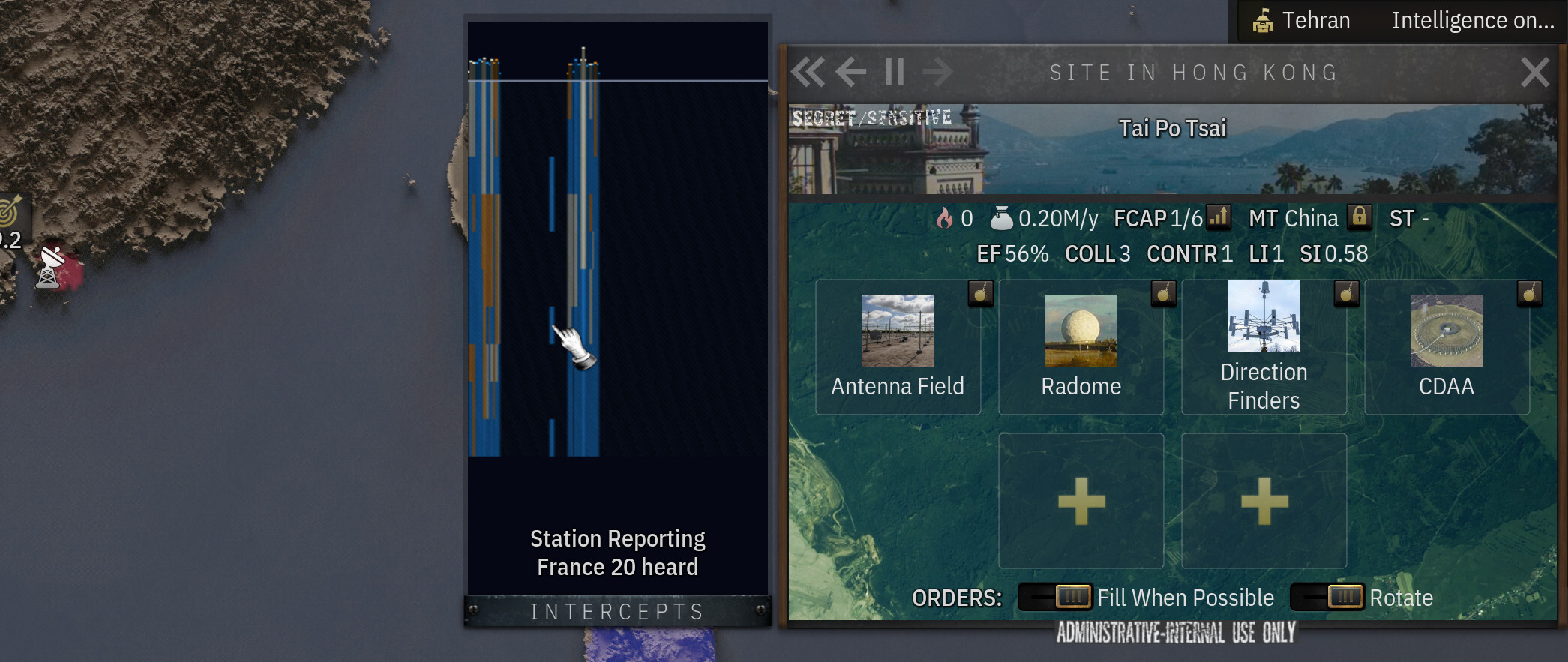
A site has a size defined by local terrain, host country, and owner's budget. This size is visualized by a number of tiles on which you can build SIGINT infrastructure. When you select an active site, you will see pseudo-waterfall plot that allows you to inspect recent intercepts.
Receiver Networks
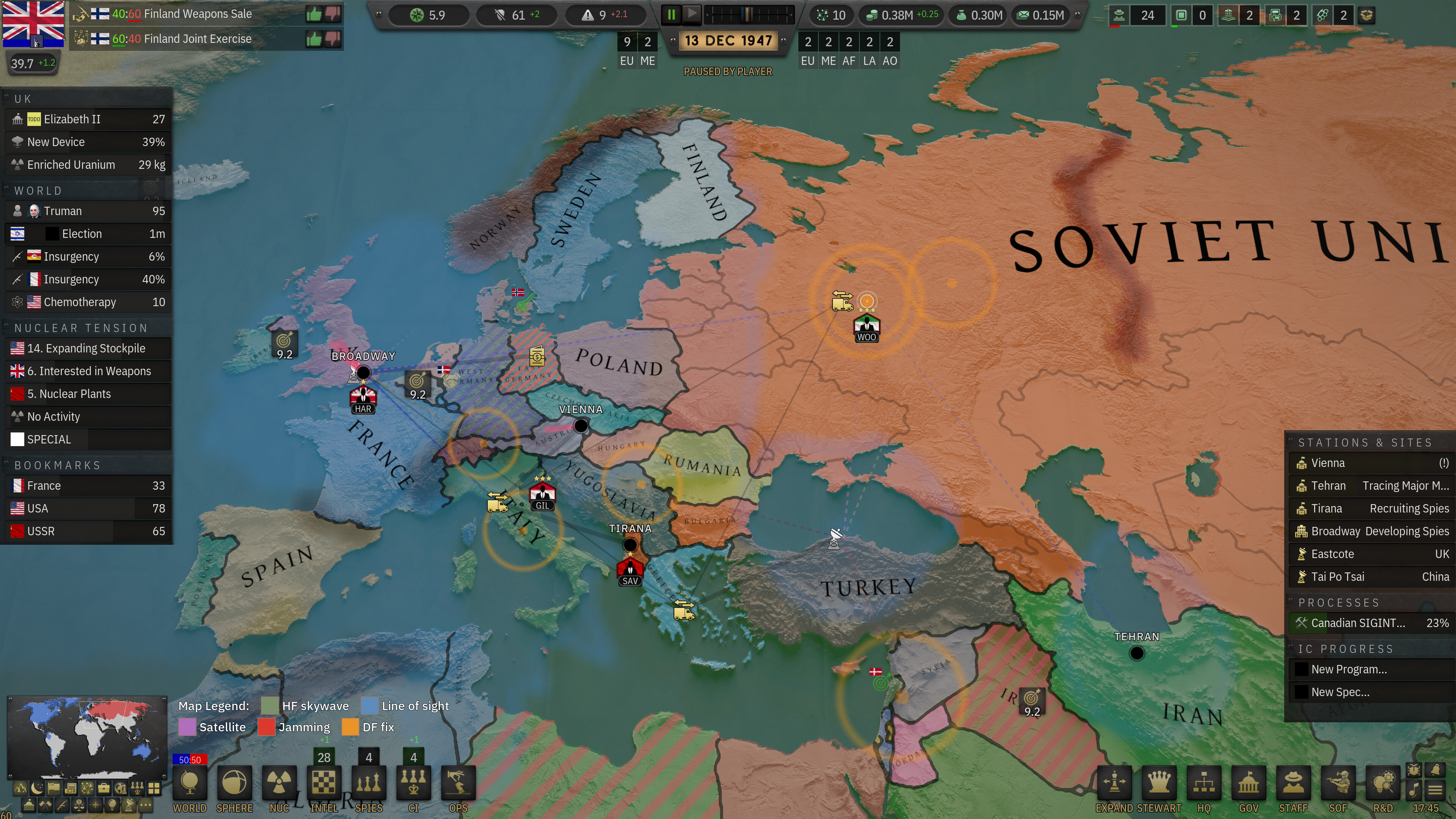
On a wider scale, networks of receivers (which include not only SIGINT sites but also headquarters, listening posts inside stations, SIGINT ships, AWACS airplanes, early warning networks, and more) build together a coverage layer that defines what and where can be "heard". This turns into a little electronic war where the opposite side (usually The Reds) builds jammers that disrupt the coverage, as can be seen above - strong jammers are, for now, protecting Moscow from British SIGINT network.
Collecting SIGINT
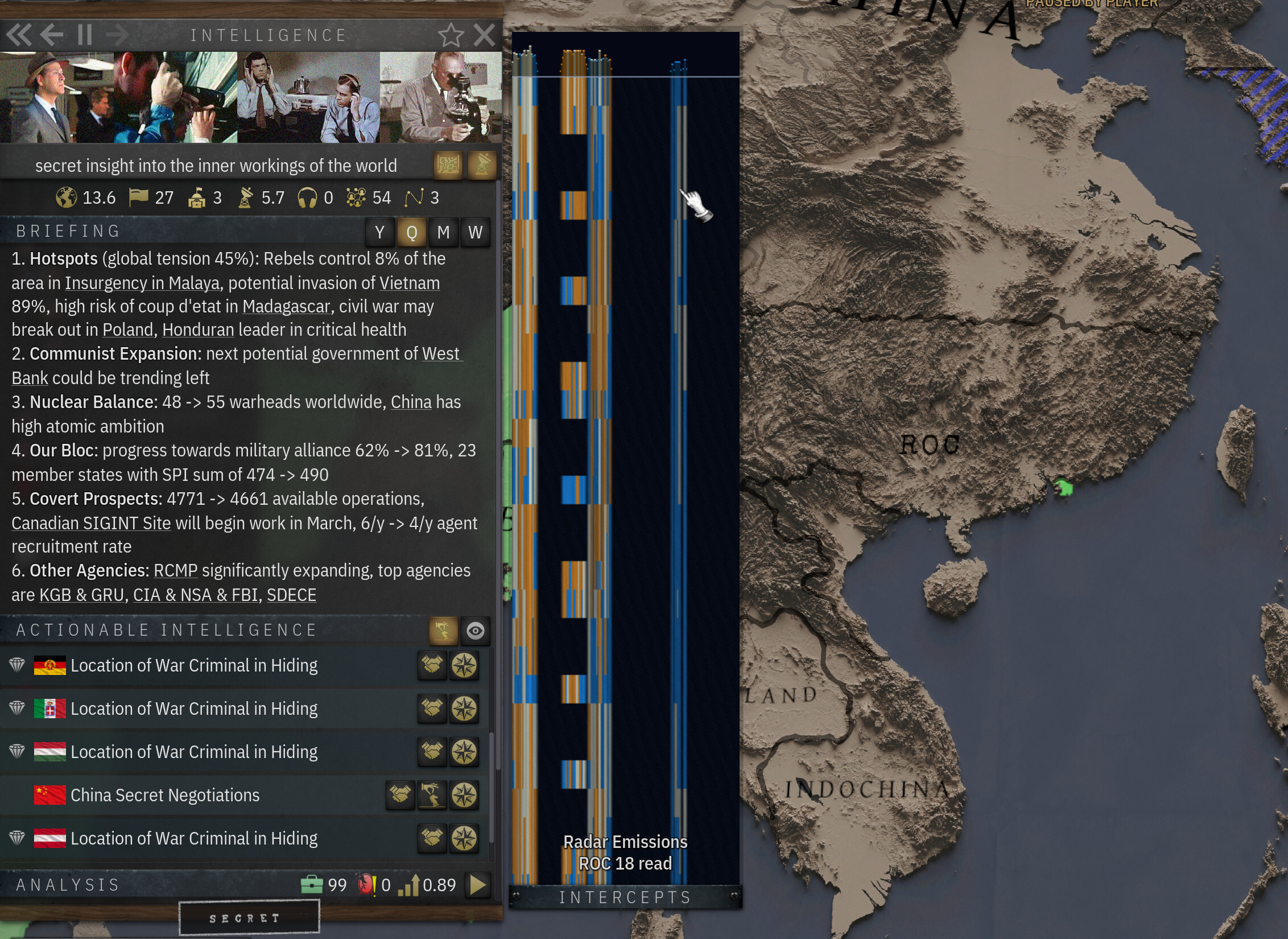
All intercepts primarily feed the intelligence engine described in previous diaries (eg. DD#54). Together with other intelligence materials, your analysts may derive from them actionable intelligence, strategic intelligence, local intelligence, and other kinds of intelligence products used in the game.
HUMINT and SIGINT
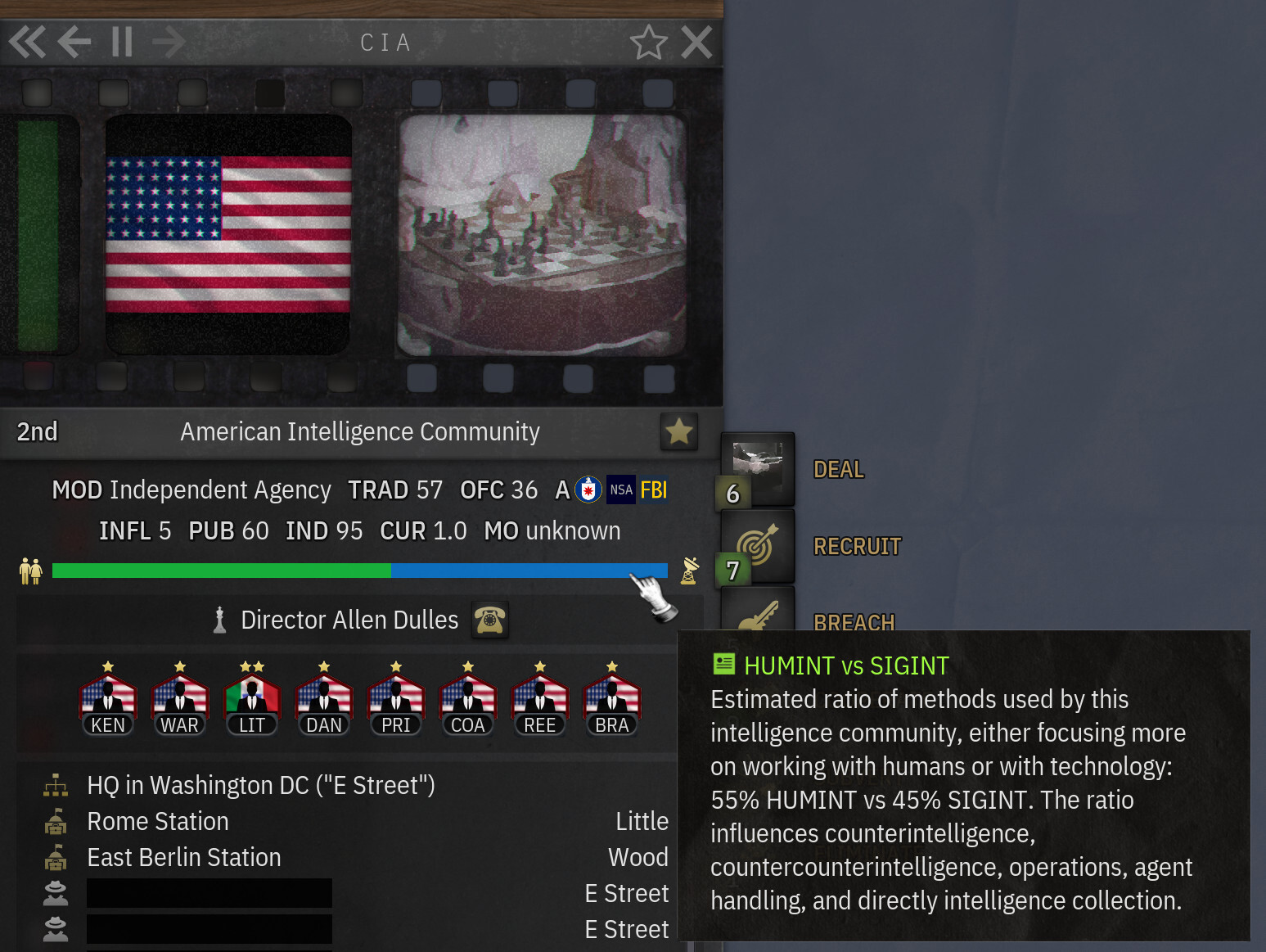
Ultimately, SIGINT is a part of the wider espionage, pursued by most intelligence communities (except for very small/poor agencies) side by side with HUMINT. As of now, the game features basic foundation for SIGINT and much like in gameplay, it will be expanded side by side with the main human-focused set of mechanics.
Final Remarks
Next dev diary will be published on October 2nd.
If you're not already wishlisting Espiocracy, consider doing it
https://store.steampowered.com/app/1670650/Espiocracy/
There is also a small community around Espiocracy:

---
"As President and Commander in Chief, I can assure you, signals intelligence is a prime factor in the decisionmaking process by which we chart the course of this nation's foreign affairs" - George H. W. Bush