
Let's dive to the shoreline of the Indo-Pacific cost and meet some alive things which are sticking from the bottom - Spotted garden eel.
Spotted garden eel
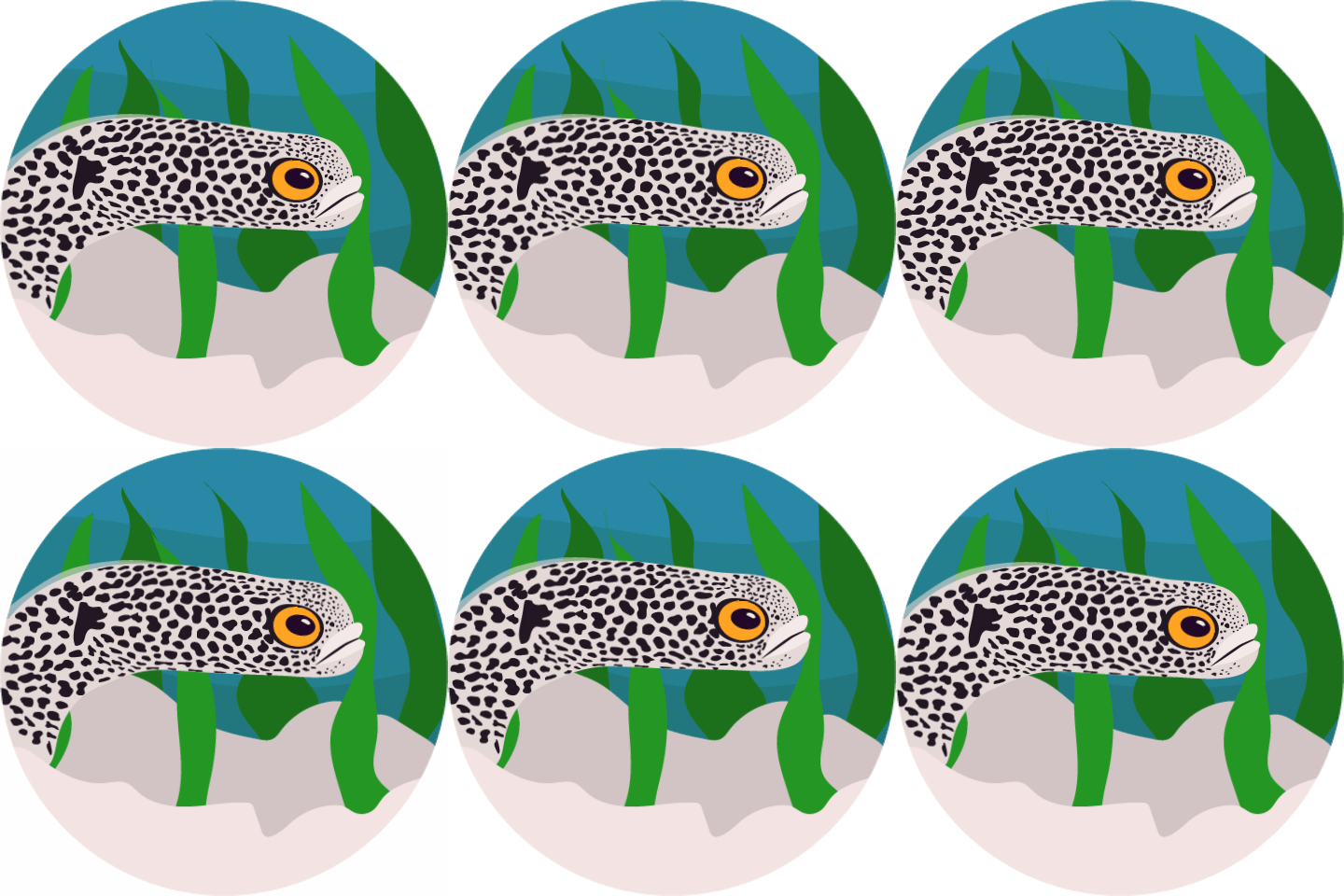
The spotted garden eel is a small fish that can reach a maximum length of 40 centimetres. Its body is anguiform (eel-like): long, thin, with a circular cross-section and a head of the same diameter as the body. The head appears shortened because the large mouth is close to the also large eyes. Nostrils are small and positioned in the center of the upper lip.
The body is white and covered with many small black spots. The spotted garden eel has three larger distinctive black spots; the first identifies the gills opening and the position of the tiny pectoral fins, the second is located in the central part of the body and the third one surrounds the anus. Juveniles have a very thin black body
Garden eels may be small compared to other eel species, but what they lack in size, they make up for in muscle. It uses its stiff, muscular tail to dig into the sandy seafloor, then secretes a slimy mucus that acts like cement to keep its burrow from caving in. When alarmed, garden eels withdraw tail-first into the holes they’ve created in order to avoid predators. Shy and cautious, they will slowly extend their heads out of the burrow once the danger has passed.
Distribution
The spotted garden eel is widespread throughout the tropical and subtropical waters of the Indo-Pacific from the eastern coasts of Africa including the Red Sea to Polynesia, and south from Japan to New Caledonia.
It lives exclusively in variously sized colonies on sandy bottoms that are exposed to currents, at depths from 15 to 45 meters. It digs a burrow from which emerges about a third of its body pointing their mouths towards the underwater current to catch drifting food.
Despite the relatively widespread distribution of the spotted garden eel, it is not so easy to find it in its natural habitat. Fishes are very shy and feel any vibration of the water, therefore they notice the approach of the diver even before the diver sees the animals. Therefore, among underwater photographers, high-quality images of eel "gardens" are so highly valued. It is quite easy to determine where spotted eels nest. It is simply impossible not to notice a large number of holes in the sandy bottom.
Conservation
In IUCN Red List they have a 'Least Concern' status - the highest available status. Mostly that means that their population is not at danger at all. They can leave happily in their 'gardens'.
That's it for today. See you all next time.
Join our Discord channel
Follow us in Twitter
Follow us in VK