
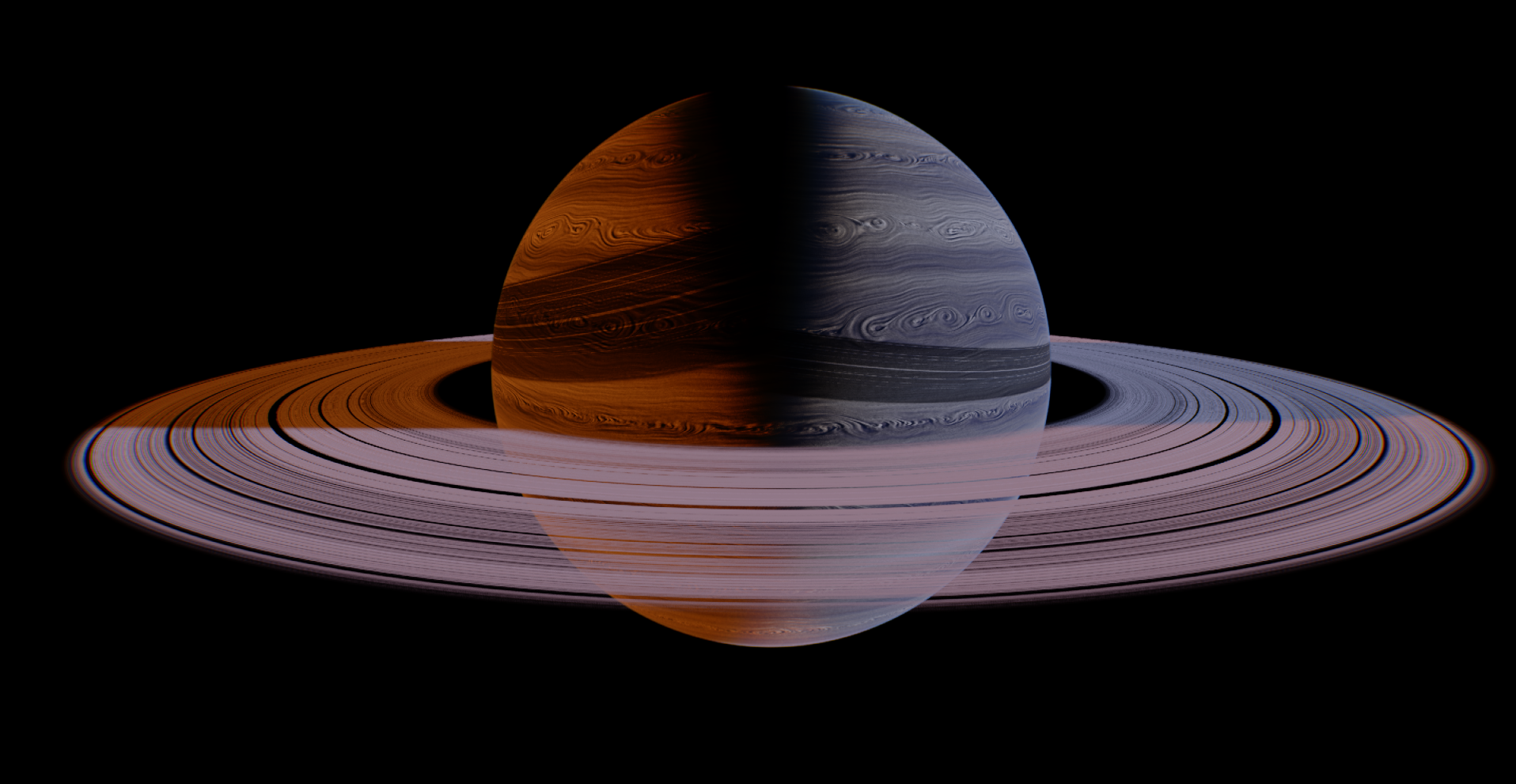
 Gas Giant Illuminated by two stars, with independent lighting and shadows from each star.
Heyo!
It's a bit of a small update this month, which doesn't mean that very little has happened. It's purely that over half of Septembers content (orbits!) is still being finished, so I have little in the way of images or videos to show. ( Dan spoke about this in the stream below, and there will also be a stream about it this Sunday 4th Oct).
Dan has done an amazing amount of work over the past few months, and I am incredibly proud of him! Especially because he has managed to get physics into the game that he never even thought would be possible <3
09/09/26 Internal Update
Over the past two weeks I've been focusing heavily on volumetric gas giants, improving atmospheres, and adding volumetric planetary rings.
All I've got left to do now on the gas giants is pick the min/max values for the detail structures and colour variations, and that should render them largely feature complete.
 Starlight now shines through the gas giant cloud layers.
Similar story for the rings, although I want to do another performance pass on those. We're seeing quite a performance hit if you are looking through the width of the ring at the planet, because it's ray-marching the whole thing.
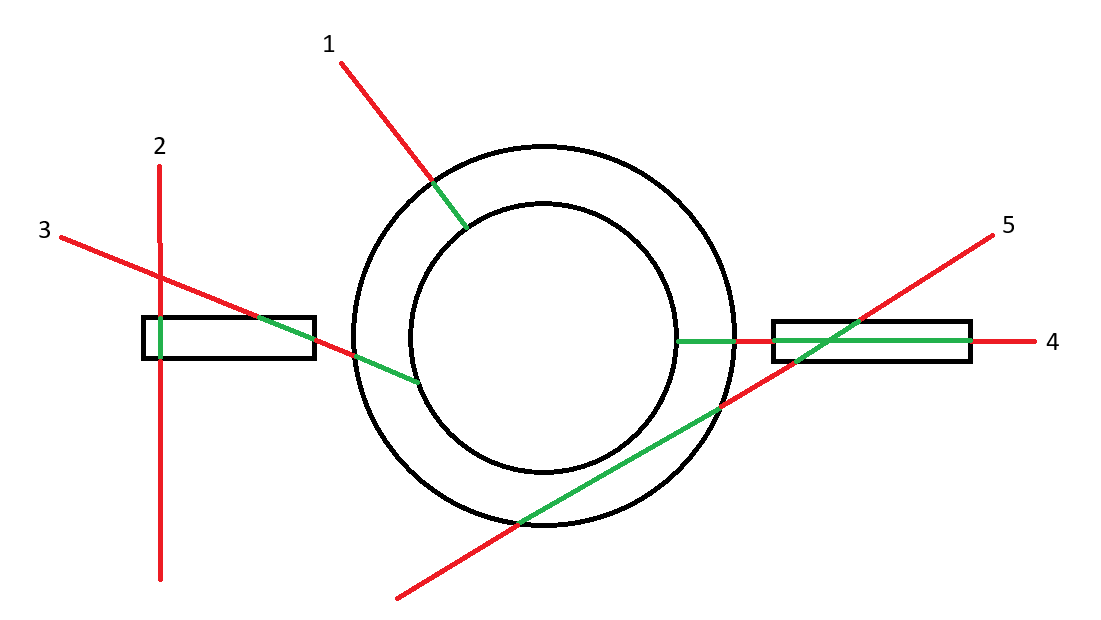
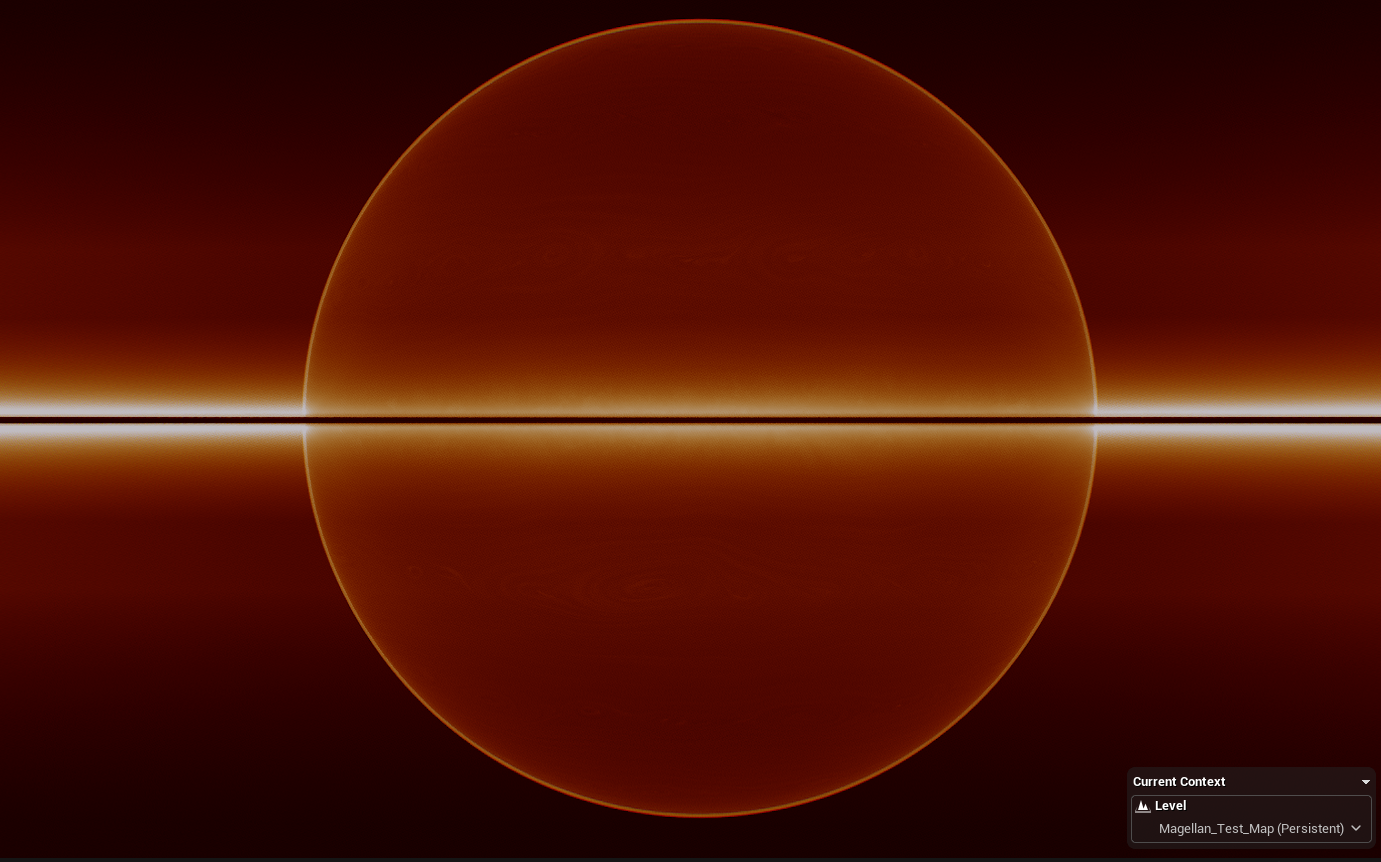
Speaking of the ray marcher, I've done a lot of work refining and optimising how that works. Rather than arbitrarily sampling per-pixel rays along their length, I am instead first defining regions where ray marching is needed. Marching through empty volume is a waste of GPU time, so if we know where the clouds are, how deep they are, and what the extent of the visible ring is, then we can heavily restrict our samples to only those regions.
That means if we're splitting our ray into 300 sample points, we can now divide those 300 samples along the length of the ray that actually needs it (the green bits in my awesome MS Paint diagram), and then to further optimise performance, we can enforce a min-step value so that we don't try to cram 300 samples into a super thin planetary ring.
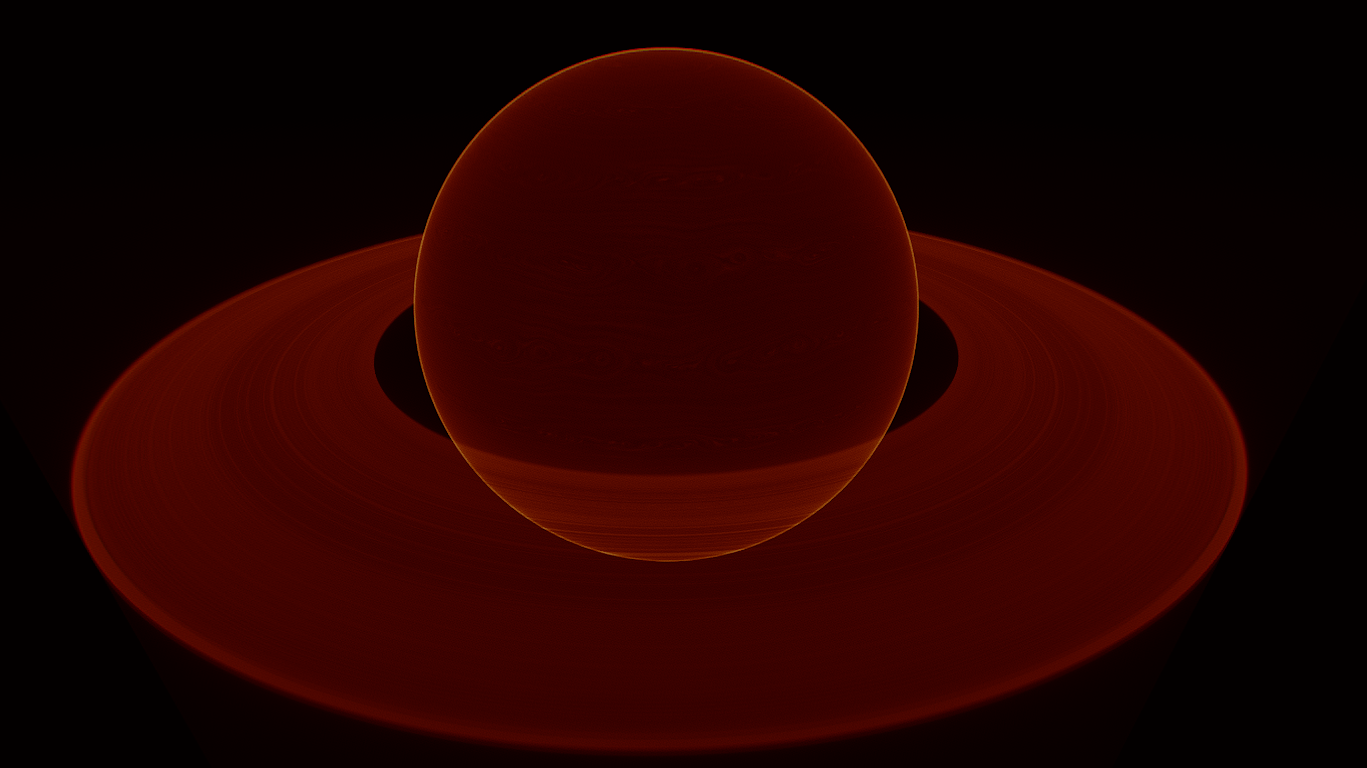
The red planet images show where the cost is. If we look at the planet through the ring you can see how much the cost rises, because now we're using our entire step budget to accumulate density and lighting. It's this attention to detail which makes 1:1 scale fully volumetric gas giants possible, and I'll continue to refine it over time.
I mentioned rings briefly, but I "did a Dan" on those too, as Claire would say. I really wanted to add Daphnis style ring perturbation for Shepherd Moons, along with Saturn's B Ring style vertical structures.
So we can now add up to 4 Shepherd Moons per ring system (RGBA channel limit), and they will properly perturb the ring around them, both creating gravitational waves and pinching the gap they carved toward their equators. I haven't made a Daphnis-style procedural mesh for them yet, that will come later.
Thicker portions of rings will also now create vertical "mountains" like you get on Saturn's B Ring. It's density map driven, so we can tune (and dice roll) how dense a section of ring needs to be in order to create vertical structures. That means not all rings will have them, and some really thick rings will have loads.
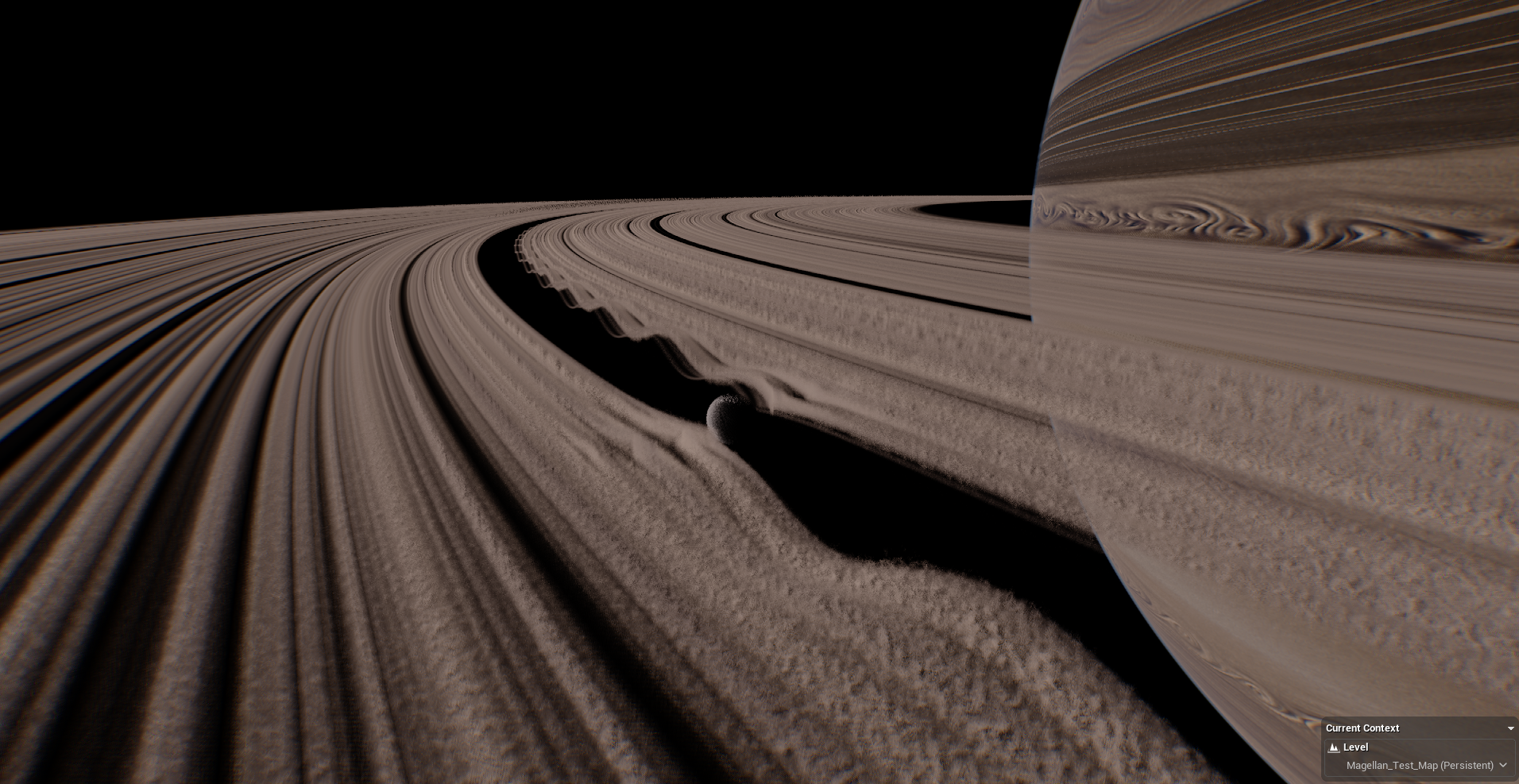 Pinching and perturbation from shepherd moons.
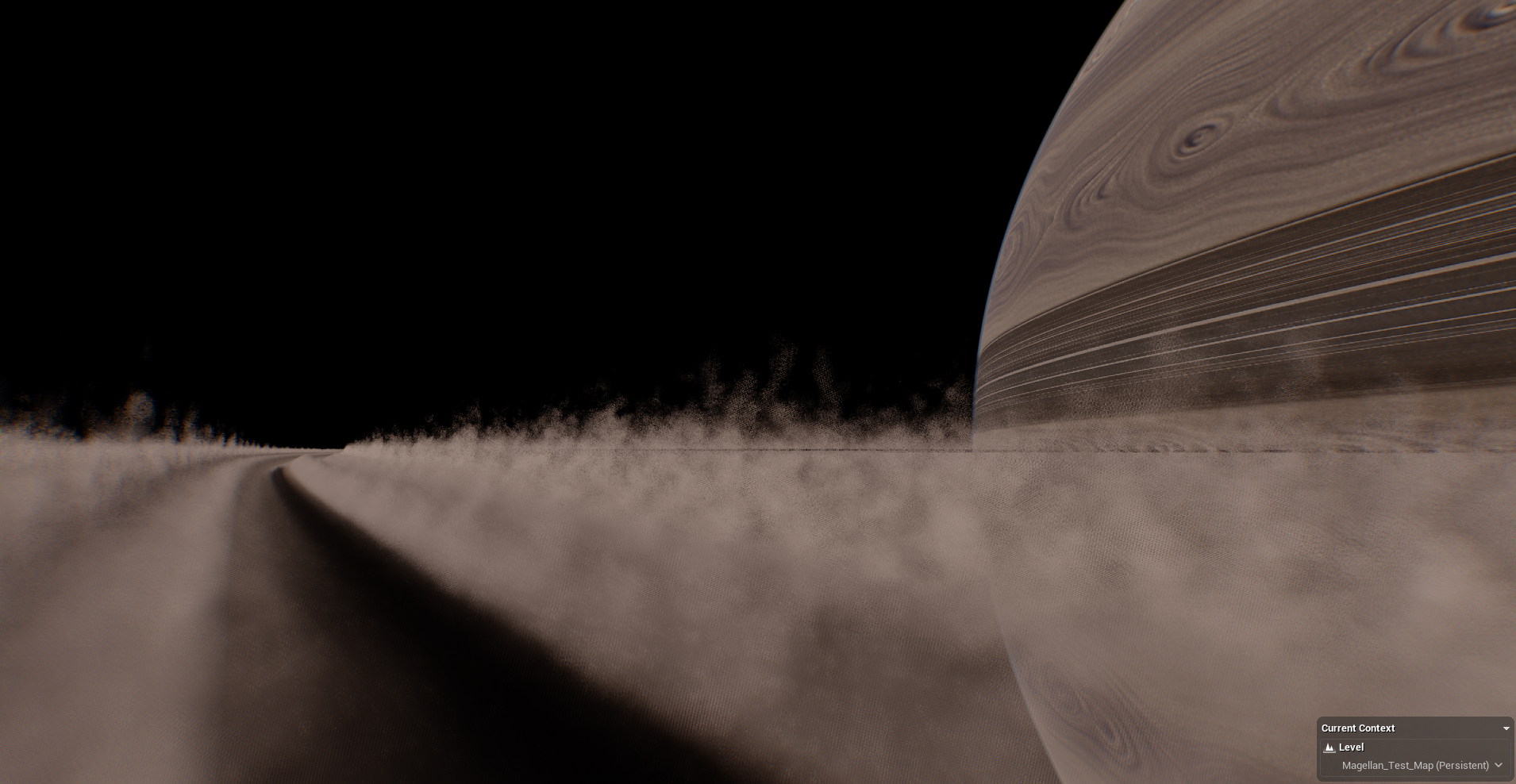 Volumetric Rings.
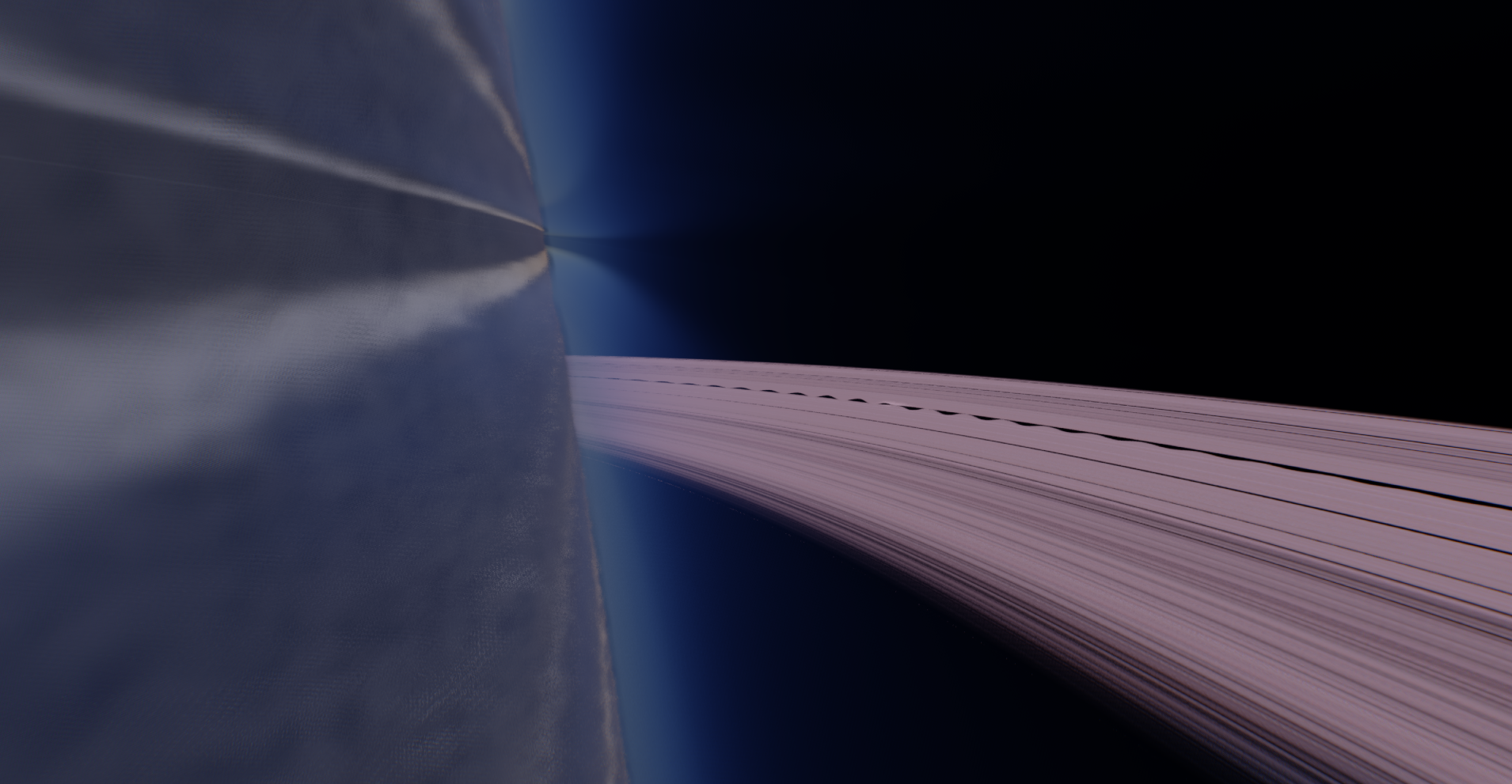 Ring shadows on the atmosphere and clouds.
And finally I've been working on hooking the Magellan's helm up to Genesis so that it can drive the new galaxy system properly. Not only that, but this is also using the new vessel physics system, so by extension the Magellan now has her sublight flight model implemented.
I still need to hook up the autopilot code, and connect Genesis to the Sensors before it's practically flyable, but we're now working towards that. The important thing is that the Helm now fires actual RCS thrusters, and Genesis responds to the ship's movements.
A nice proof of stability is that the Magellan's proxy actor is nailed to the ship interior at stellar distances, with zero jitter/wobble. That means the system is working properly, and other ships out of the window will always be exactly where they should be.
September Youtube Streams:
Fingers are crossed for no issues with any of these new additions, and we can get back to normal streams, and builds very soon :)
Byeeeeeeeeeeeeeeeee