
Welcome to the MEGA Devlog for Eldervale, thanks for checking it out!
Right after publishing the Deep Reserves DLC in late 2020, I started working on Eldervale 2. The remake has been dependant on the iteration of the sequel it is branched from because I want it to be future-proof and expandable for years, not a dead-end one time release. I imagine the remake and sequel forming a matching quality duology, telling the entire story properly.
For more information on the Remake, please check out the update post!
You can find more info about this and my other games or AMA on the Eldervale Discord, YouTube, X, Bluesky linked in the ways to connect.
TLDR: This article is about the process of making the games. If you just want an update on the current state, check out the screenshots near the bottom, and the following feature list.
Eldervale 2 Features:
Everything from the first game, plus...
Climbing walls, vaulting, sliding, crawling in tight spaces - level navigation is more varied.
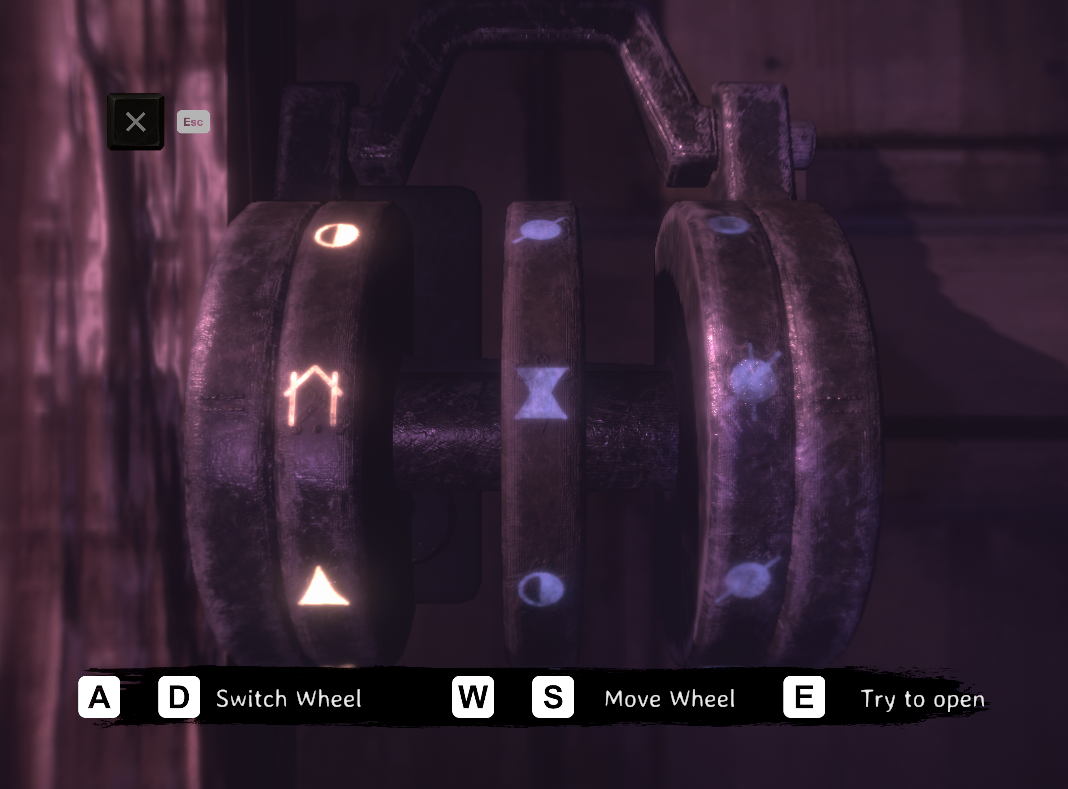
"Rune hacking" - a small code breaking puzzle system for optional secrets.
New unlockable types: Costumes change character looks as before, while Accessories add fun objects like glasses and hats (good for promotional/seasonal events), but the elusive Relics are the most important, giving you in-game benefits (and sometimes penalties), changing or enabling different playstyles. All of these are unlocked from secrets or challenges in-game.
Ranking system at the end of each chapter, with a uniquely calculated score: you can get a high rank by either taking your time exploring thoroughly for collectibles, killing a lot of enemies while not dying too many times yourself, or doing all you can in the shortest amount of time. I balanced this system to accomodate how people actually played the first game. Each playstyle remains valid to unlock the above mentioned items, and Steam Leaderboards have been implemented to optionally upload your score - completely up to you.
Entirely missable secret levels providing extra challenge in combat or puzzles with a reward.
Weapon upgrade system with special components to hunt for.
Melee weapons with different speeds and reach, posture break system for enemies.
Enemy weak spots, hit reactions based on hit direction, strength and area.
Ragdoll states, status effects, multi-level enemy AI behaviours.
Alchemy crafting system: harvest materials, make healing items, combat buffs and utility potions.
Flexible inventory size, ability to set weapons from a list to specific quick slots.
Branching dialogue choices, forging alliances or making enemies and deciding life or death.
Optional side quests and alternative solutions to story progression.
NPC follower system, sometimes providing combat assistance, sometimes mechanics for puzzles.
Scenes controlling different characters.
Meaningful multiple endings with unique playable content and a thought-provoking finale.
Now let's get into bridging the gap between the release of the first game and now.
Eldervale 2 (2020) Version #1
The first concept for the sequel was to take everything made so far and rebuild it in a clean new project. This made development progress fast, but it was limiting in terms of how many of the original game's problems I could fix.
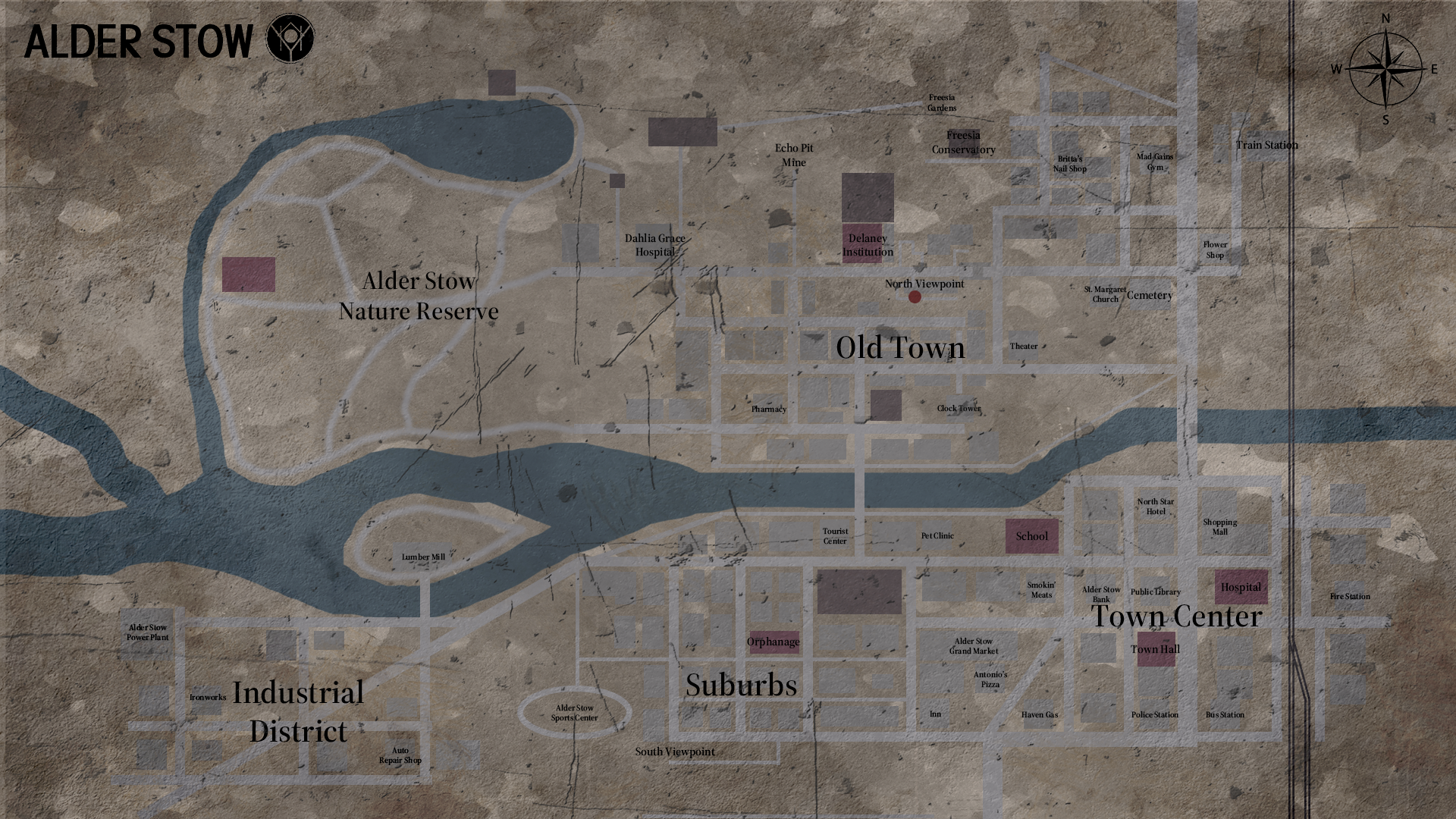
To raise the stakes like a good sequel should, thought it would be a nice change of pace to have the game set around the entire town of Alder Stow instead of just a single location.
Also created a second protagonist named Jonathan, who would have his own campaign and progression through the storyline, intersecting with Ophelia's path at certain points.
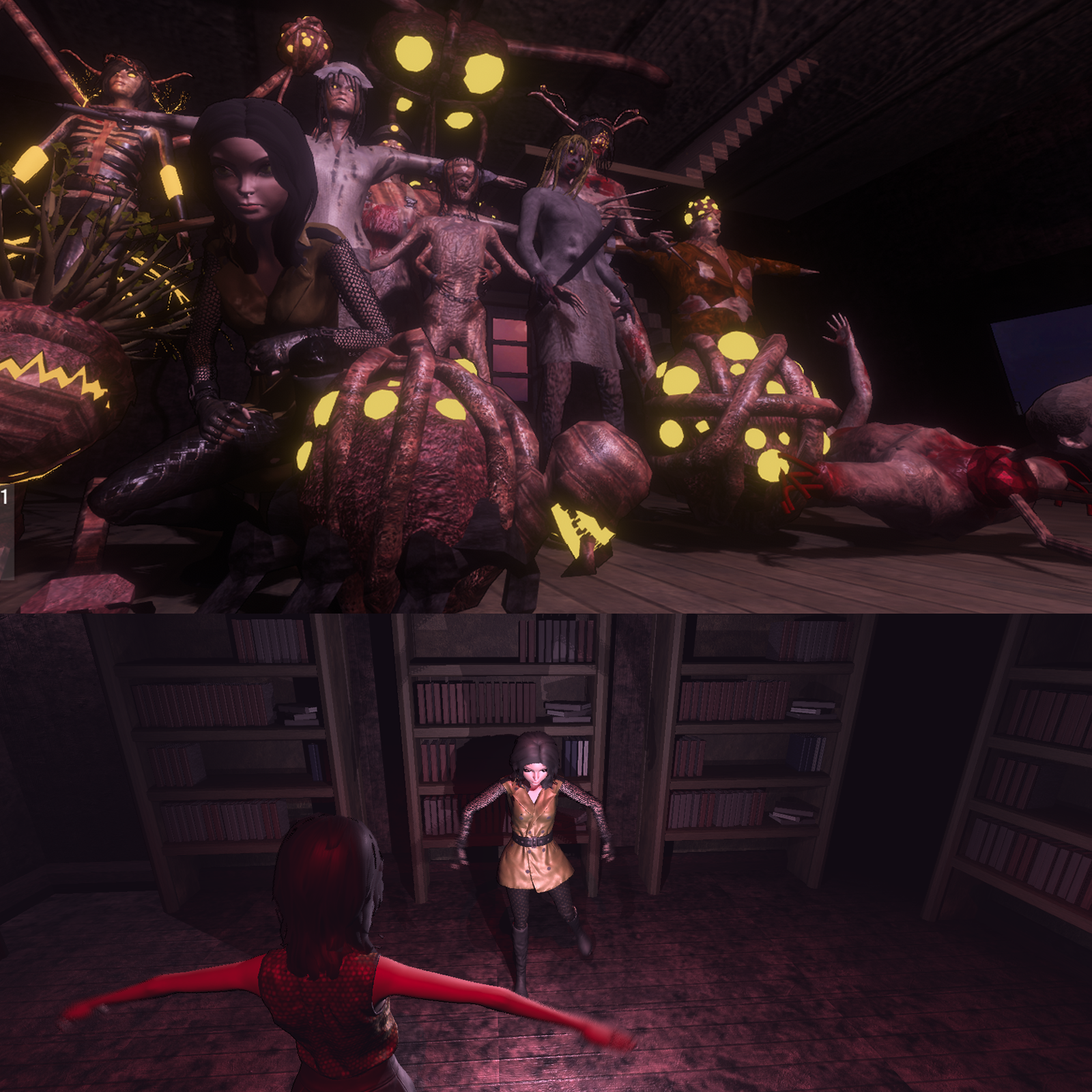


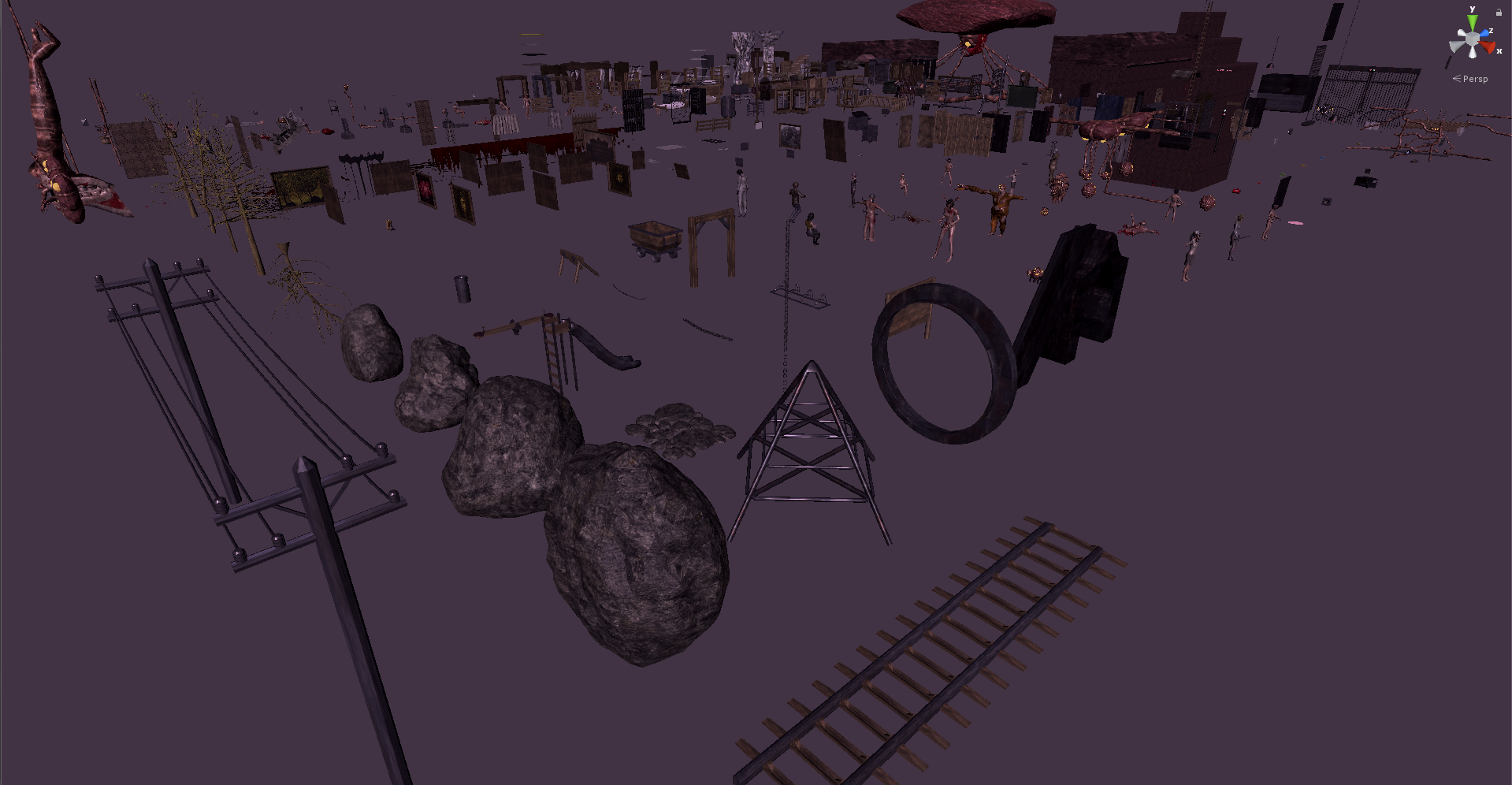
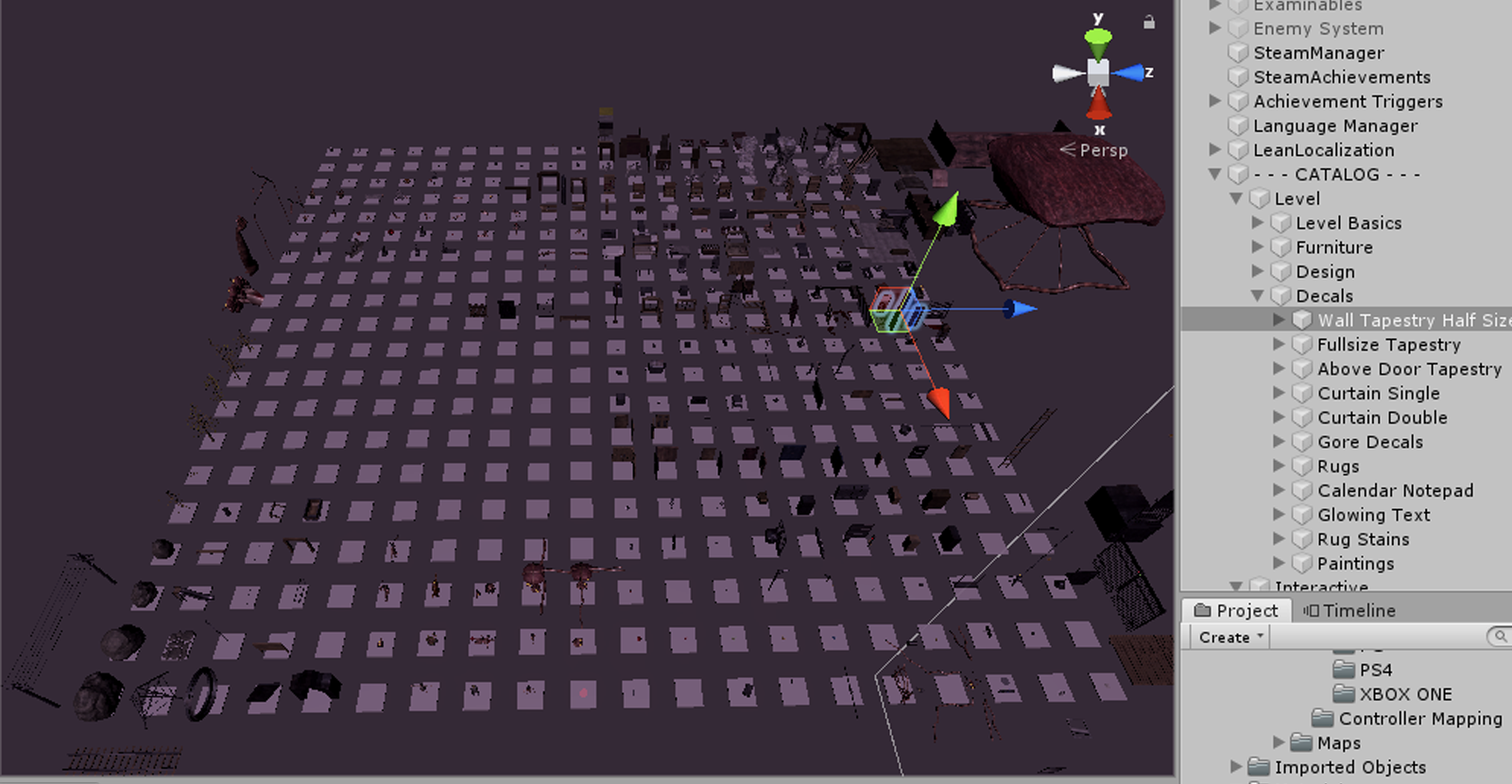
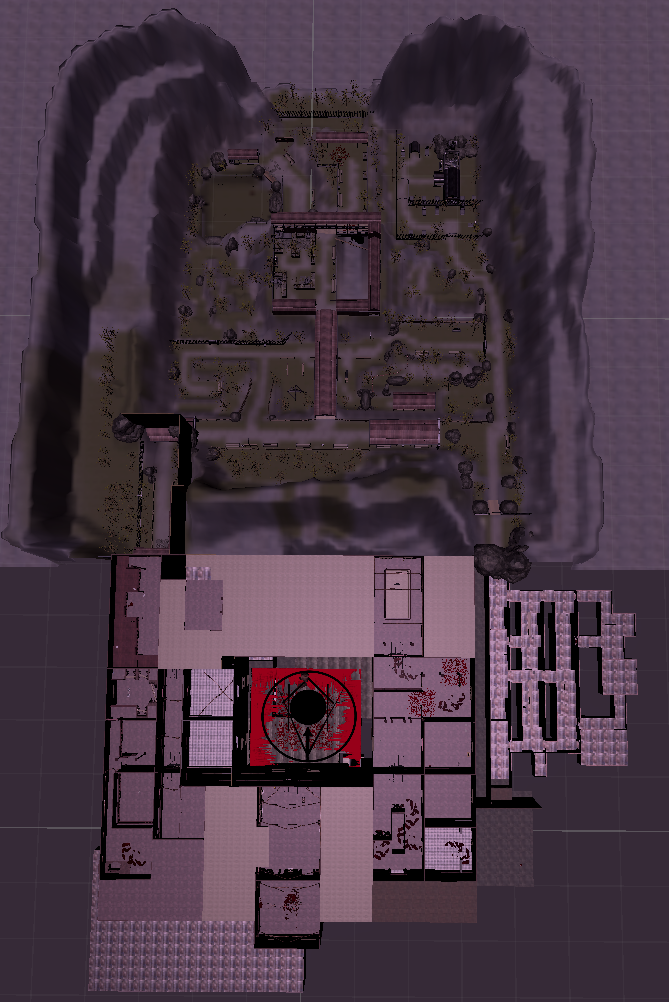
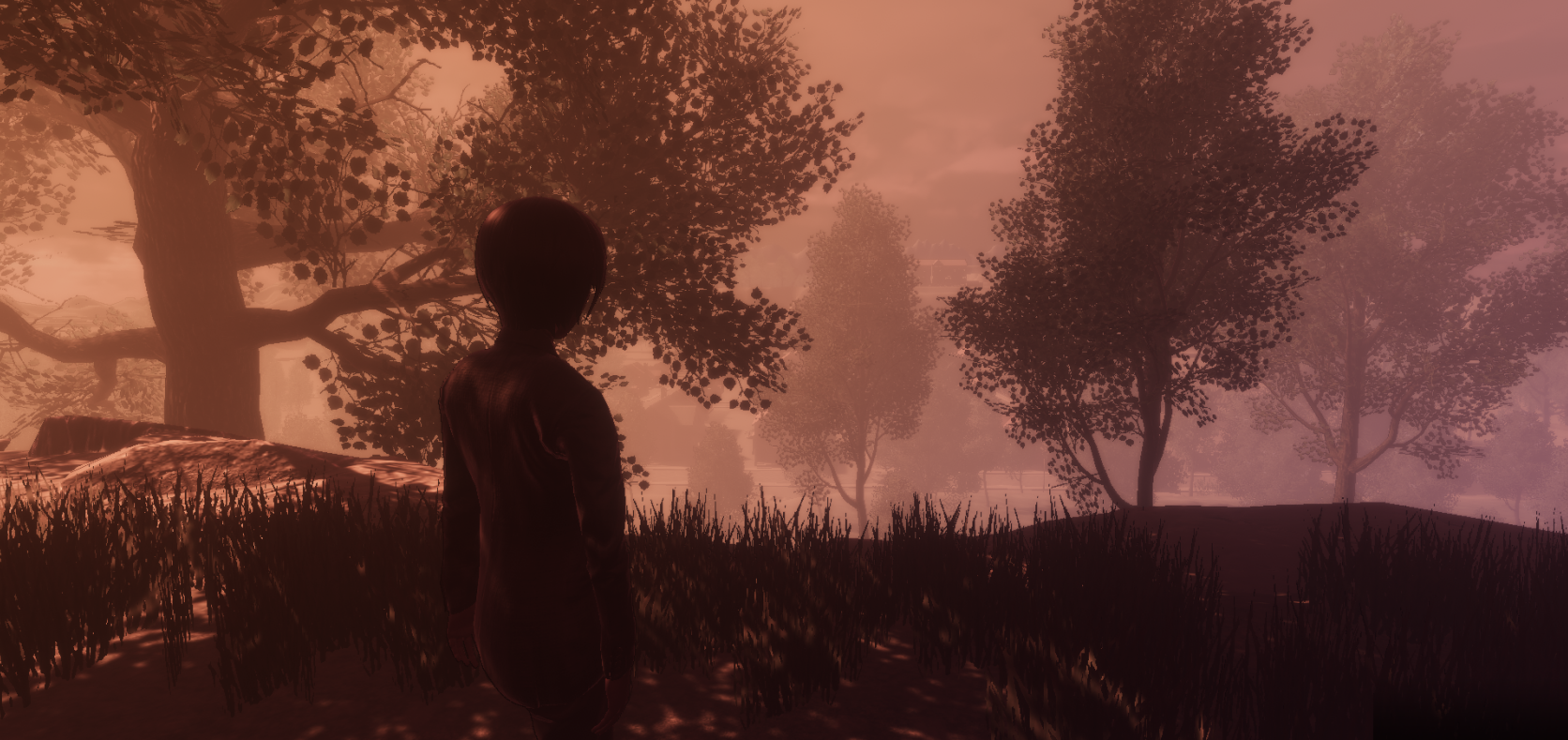
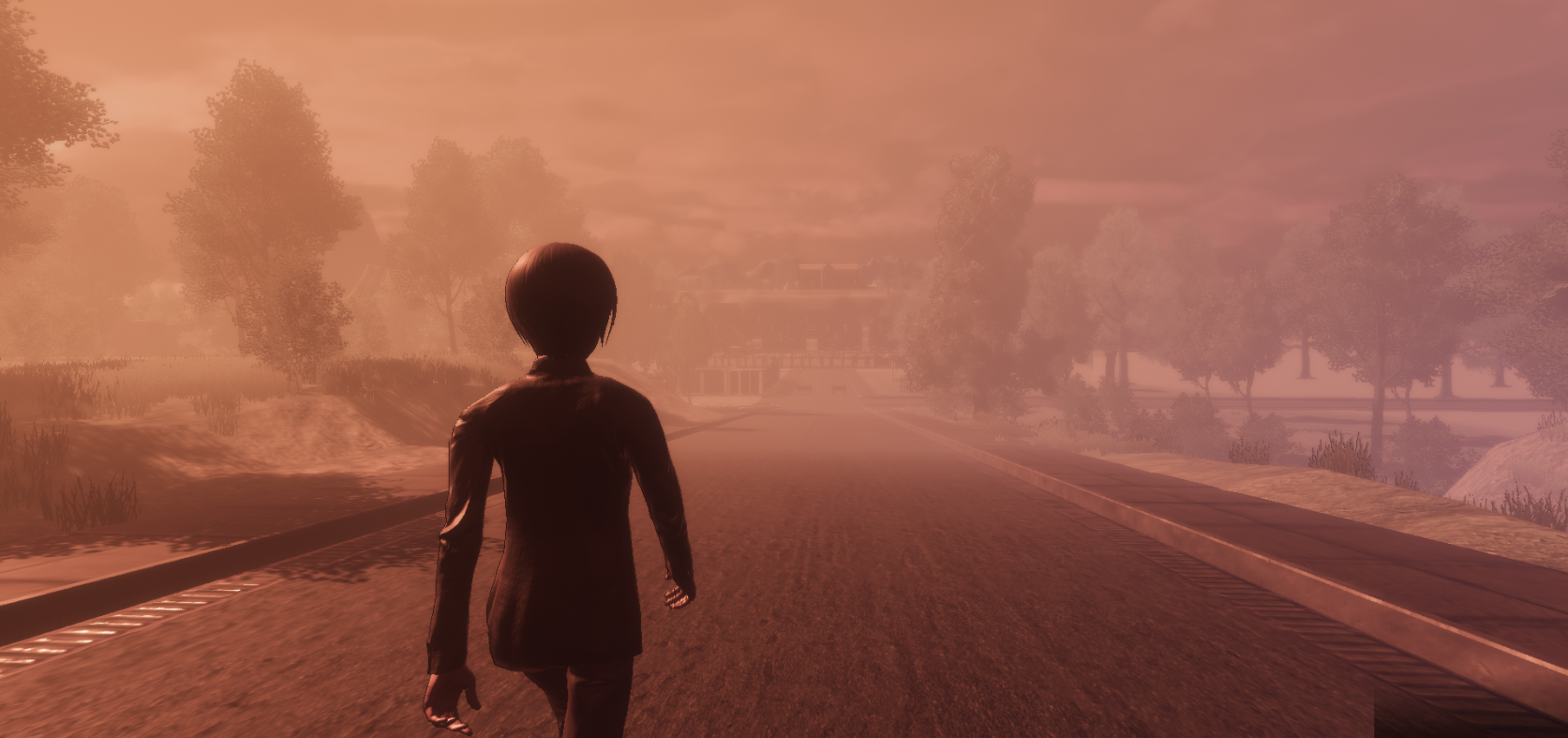
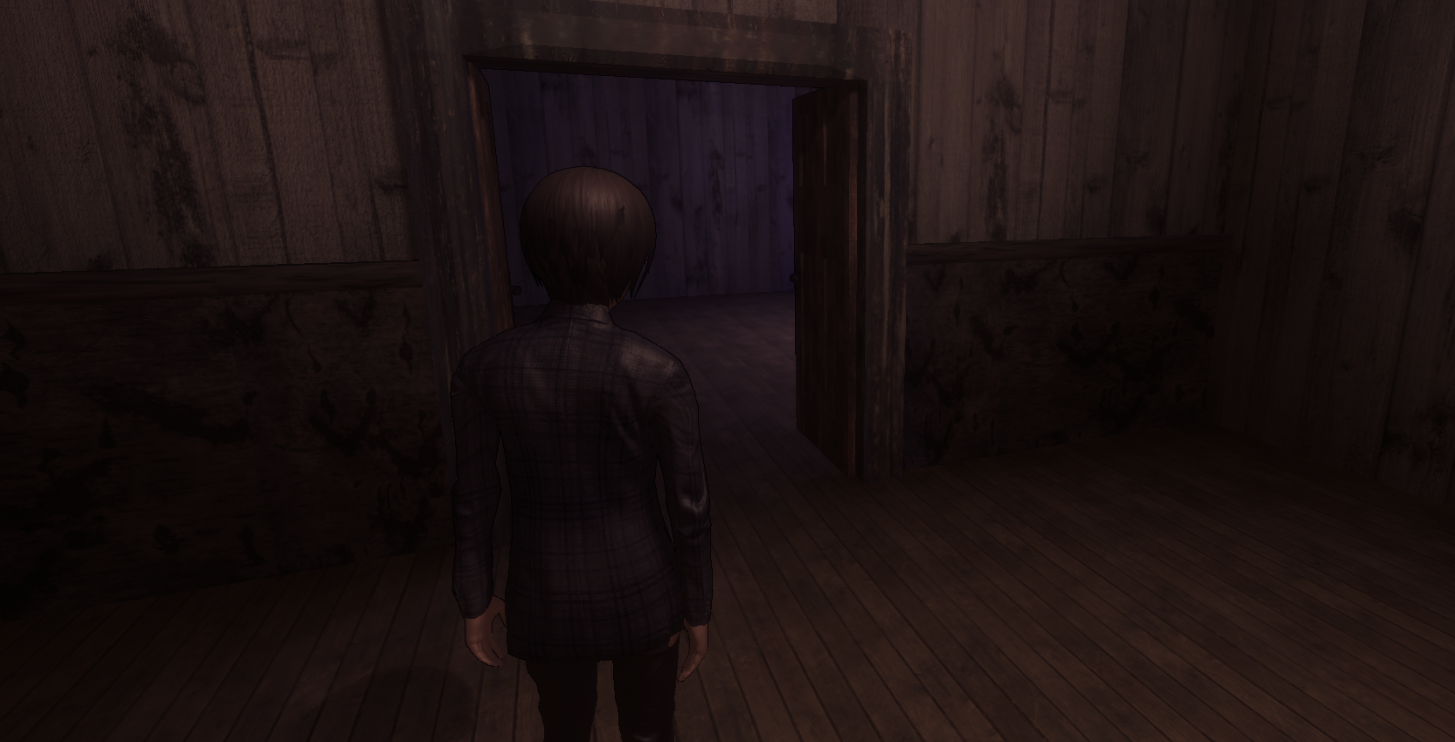
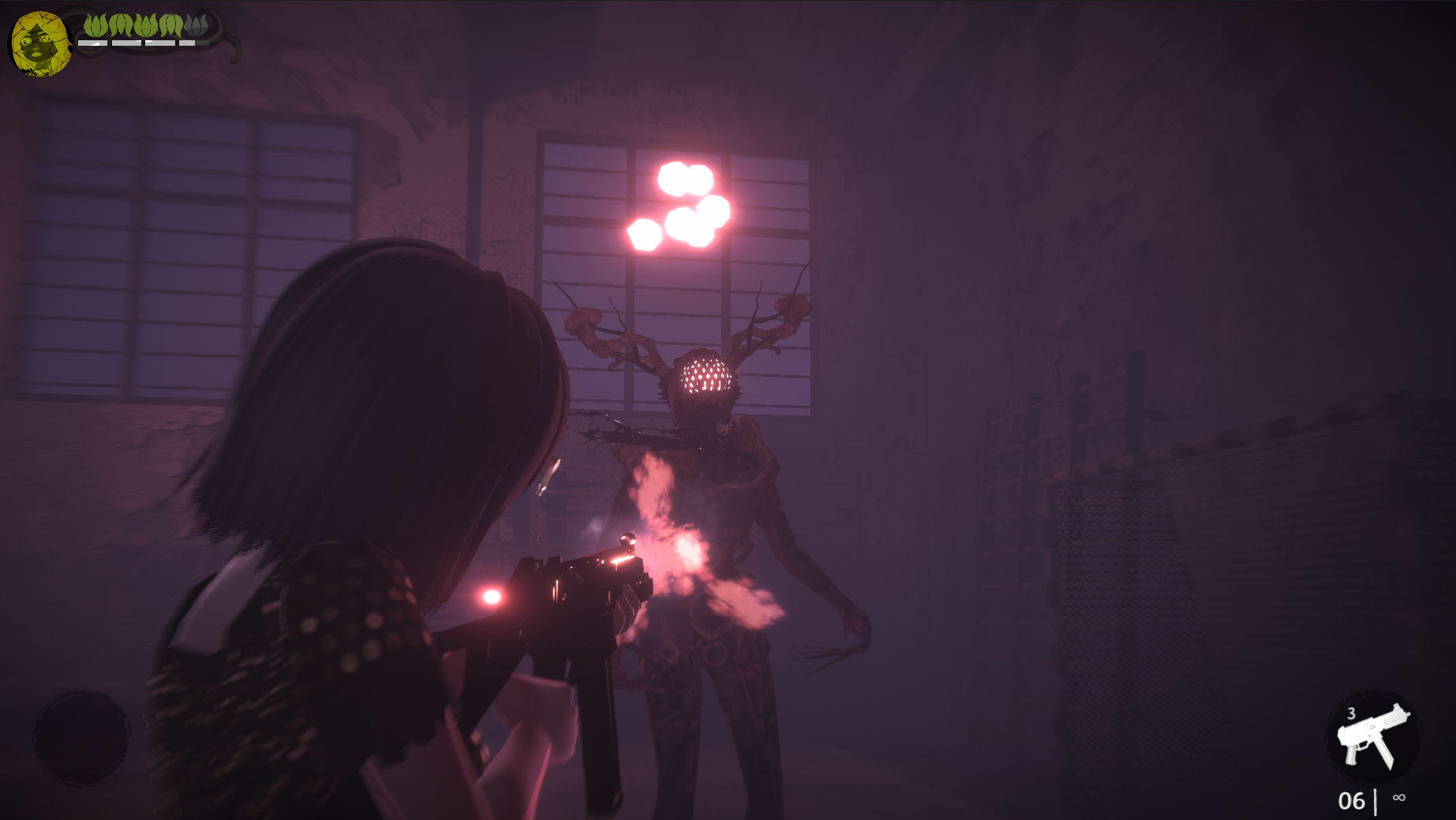
Gameplay mechanics like combat, controls, camera etc. were more polished in this version than the original game, but not by a leap. One of the things I tried to make different from the first game was doing a more "appropriately cartoony" artstyle, but I lacked experience in shaders, textures and everything else required for such a change at this point.
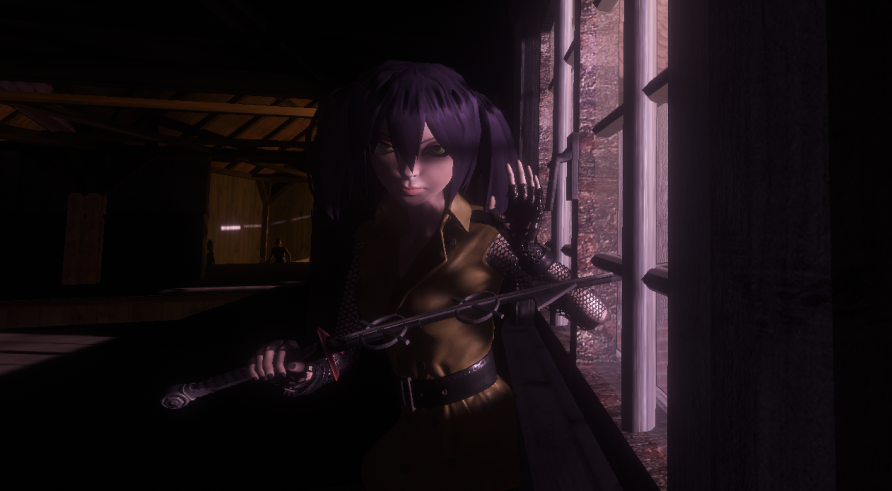
At a point where I already spent months redesigning characters, building levels and mechanics for this version, the program used for them was discontinued in a way that made it even less appealing to work with. It was just the time to look for something else, and then found Vroid Studio (in beta at the time). Having more cartoony character designs then opened the door to make the game look how I always imagined it should have.
Eldervale 2 (2021) Version #2
The beginning of the second iteration was a stressful time because it was unsure if making the jump to a more cartoony style, custom shaders, and completely reworked character designs would even work together, let alone make up a game that is supposed to appeal to fans of the original. Unlike the first version, this was now a total rework starting from scratch. Nothing from the first game or previous versions carried over from here on out. For every following version, remade character designs, combat, interactable objects, environment models and UI almost every time.
Learning how to wrap textures properly, spent months on skinning and re-skinning environment models to try to make it a cohesive style with the characters and what I envisioned for the game.
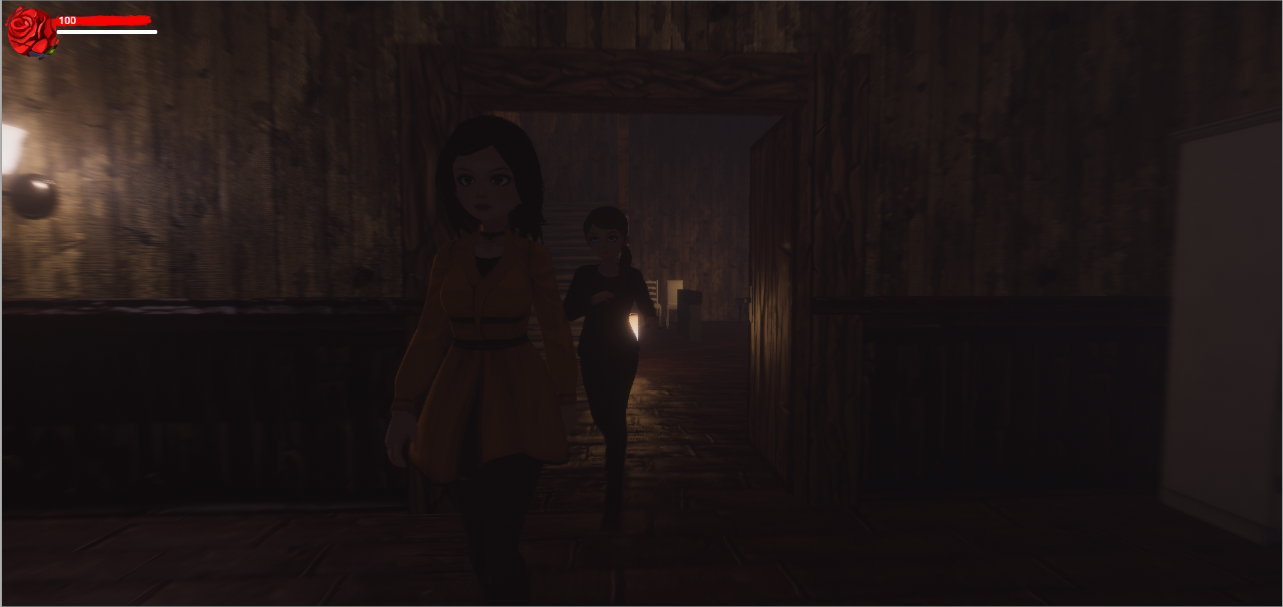
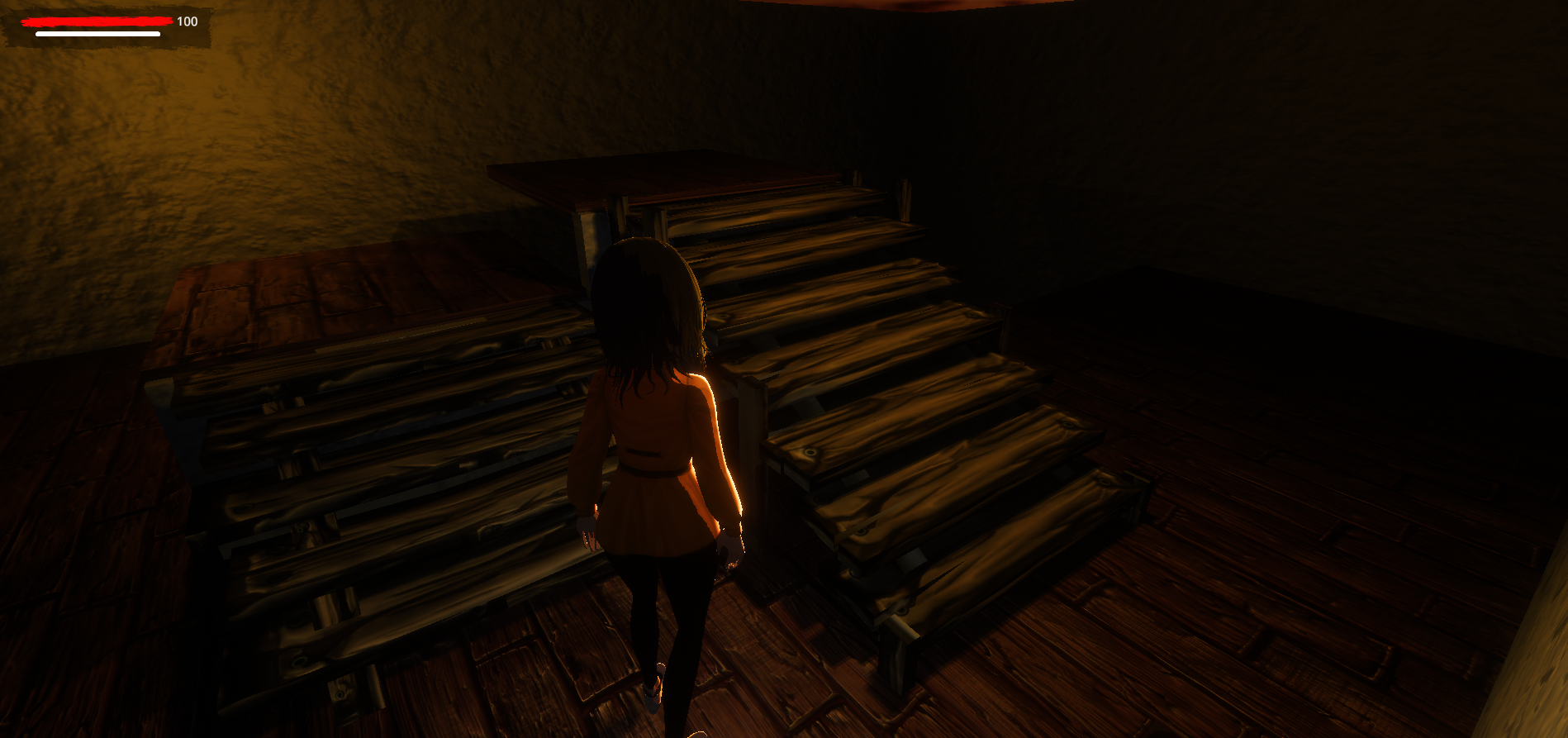
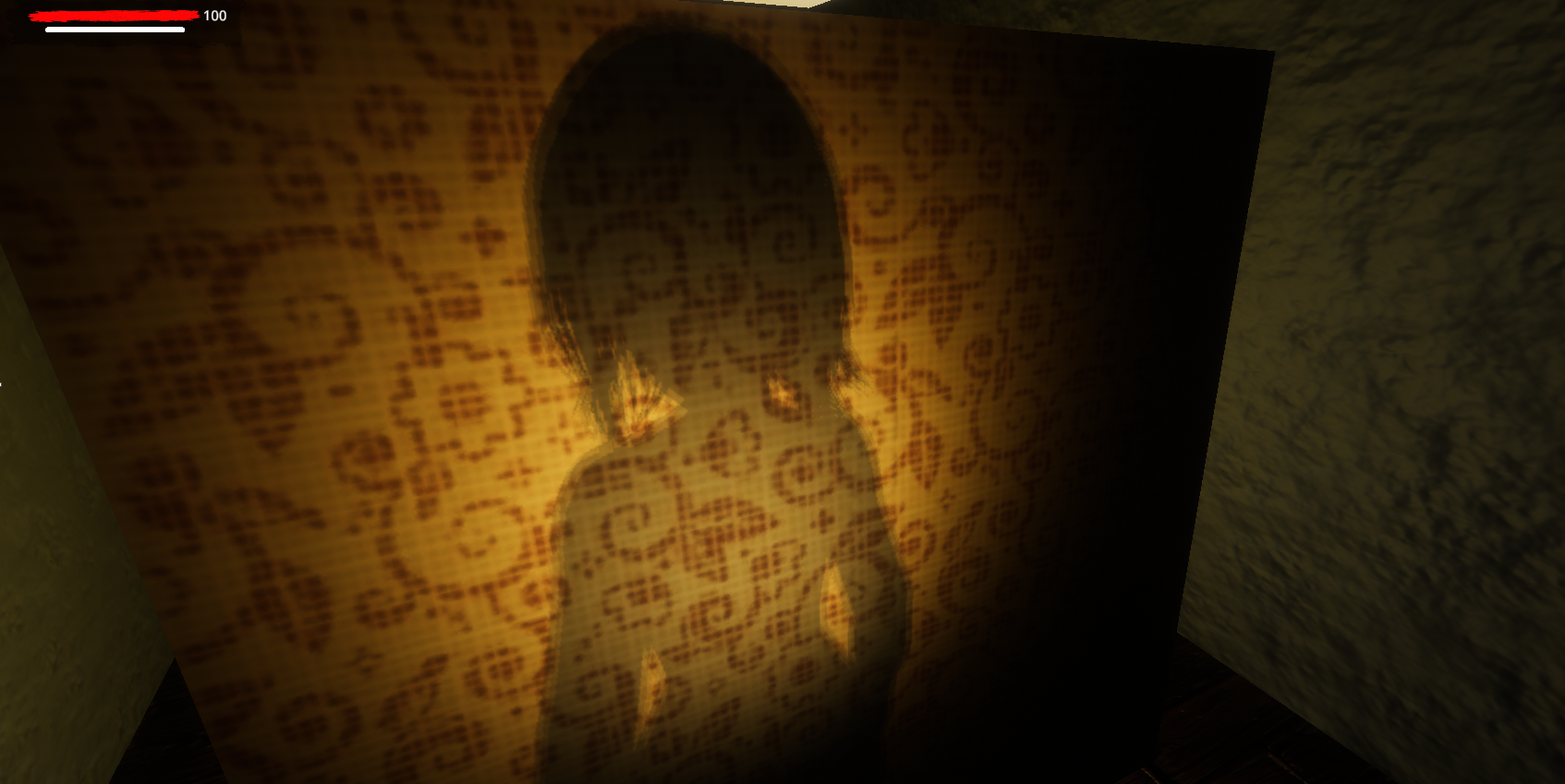
During this time, I also started investing in useful third-party tools to help out with development. Some of these proved essential going forward, others were more trouble than worth. Nevertheless, I spent a big chunk of my time learning how to use different approaches so I could maximize the quality I can achieve with them. These extend or replace base Unity engine functionality so it is easier or more efficient to work with.
Ophelia's design alone took years of redesigns to (hopefully) get right, but there were many branching versions along the way. With the shaders now changed, it was necessary to make the environment fit a similar aesthetic and re-think lighting completely (since cartoony/ anime shaders are not physically rendered, you need to light them with specific intent to make it look good).
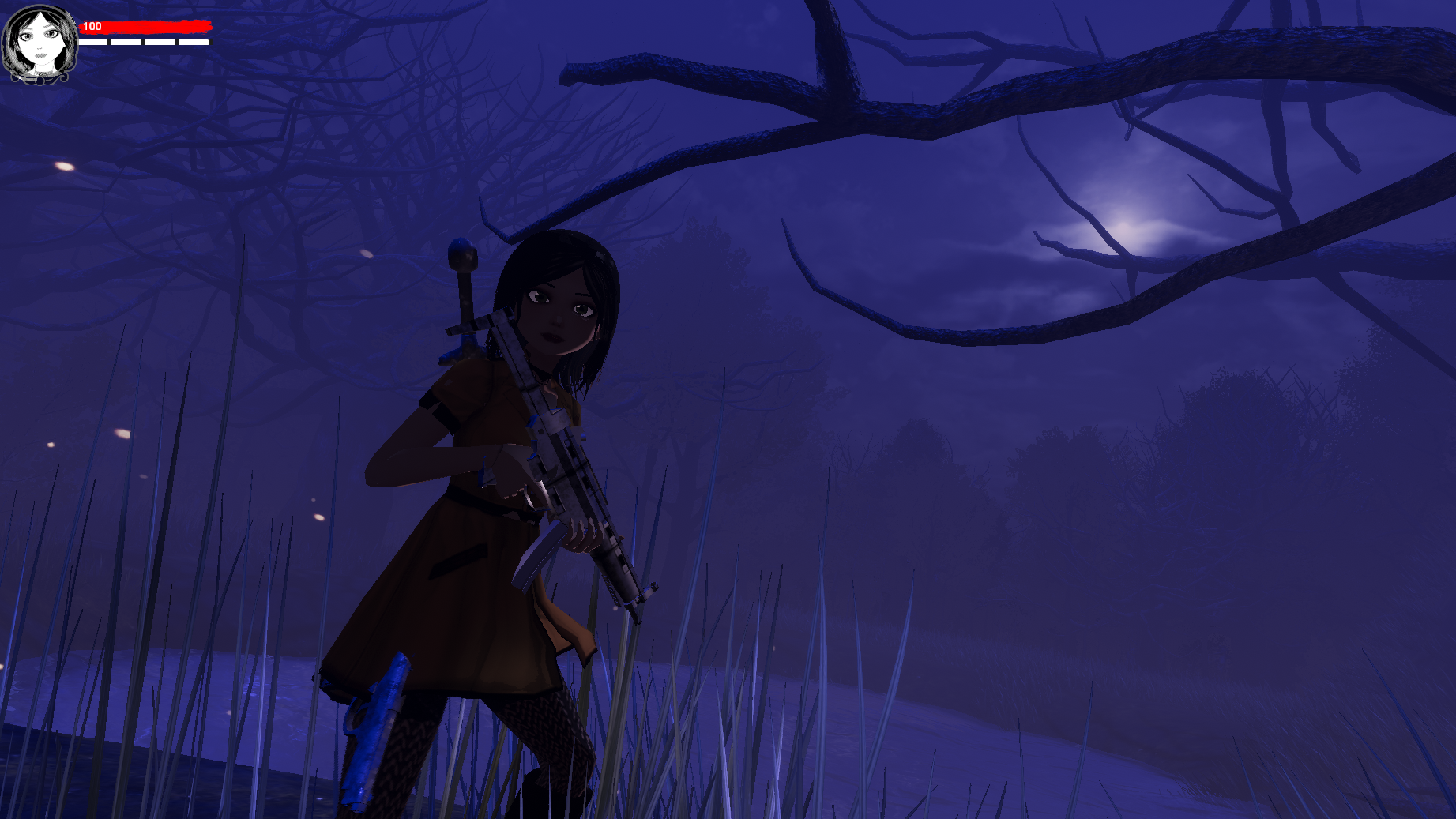
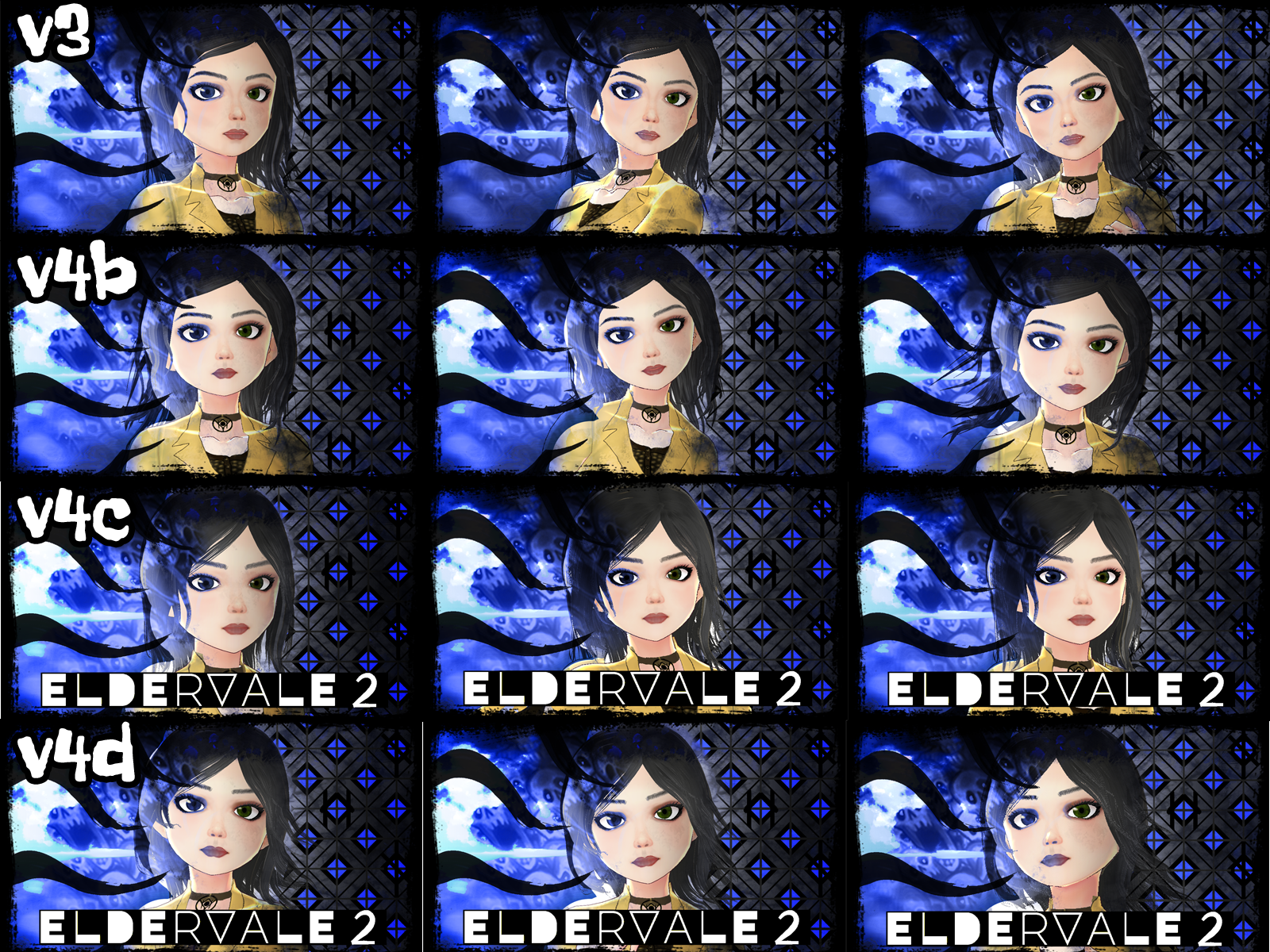
While the quality of the gameplay (animations, controls, combat) was already much better than the first game, iterating on the visual design took an insane amount of time to be what I felt was cohesive and fitting the game's world. I thought the game is close to release, because it was always playable, just some annoyances broke the atmosphere in a way I felt ruined all the hard work put into it.
Overall, I thought this second iteration had potential, but it felt more like a broader horror-themed action-adventure game, rather than survival horror or Eldervale. Being different isn't an issue in itself, but since I already wanted to change much about the game, it was a completely uncharted area.
I was working on level design for the forest introduction area, when constant performance issues and engine mishaps caused me to burn out and try other projects after 2 years of working on EV2 and 5 year on Eldervale as whole at this point.
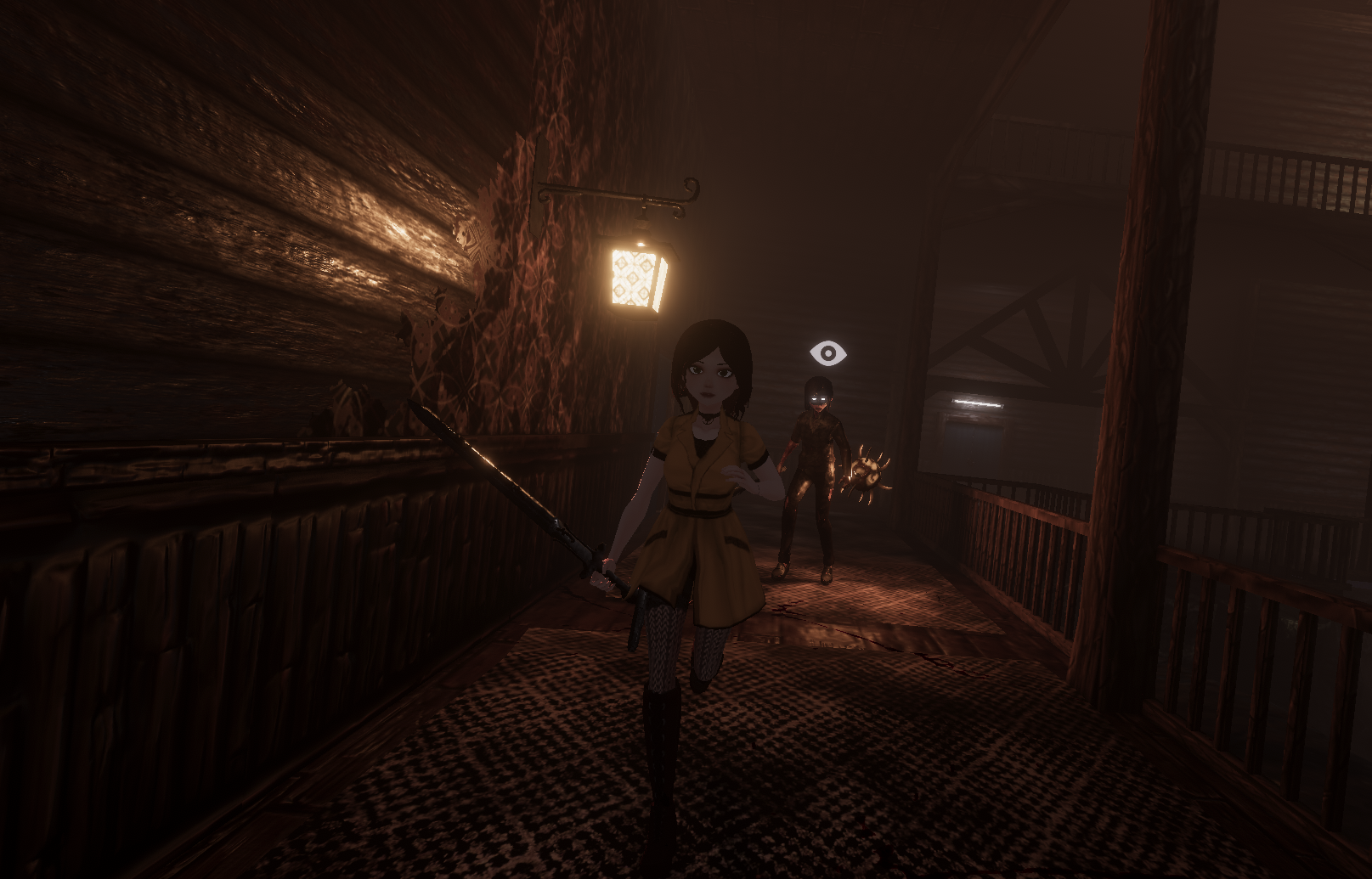

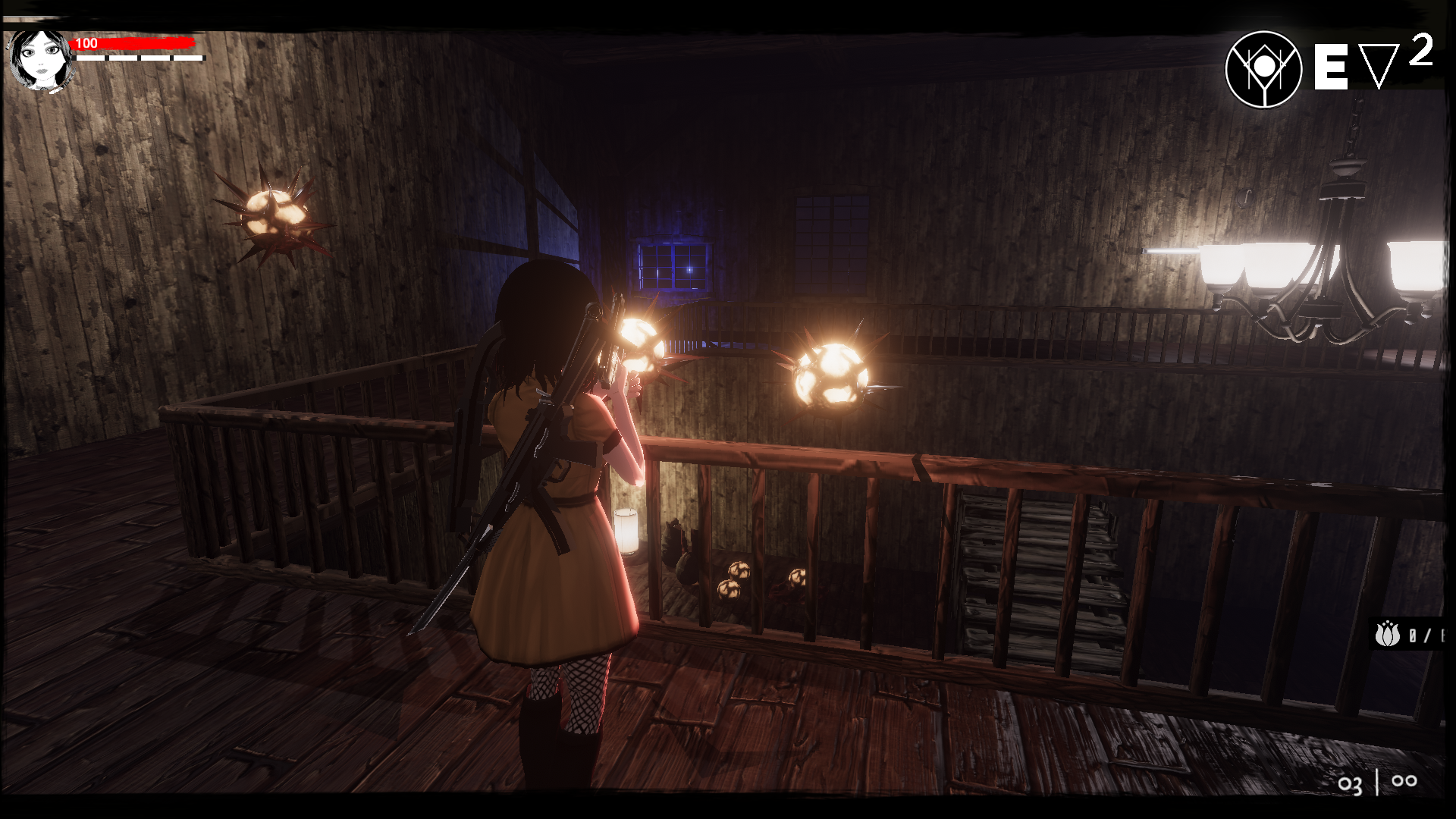

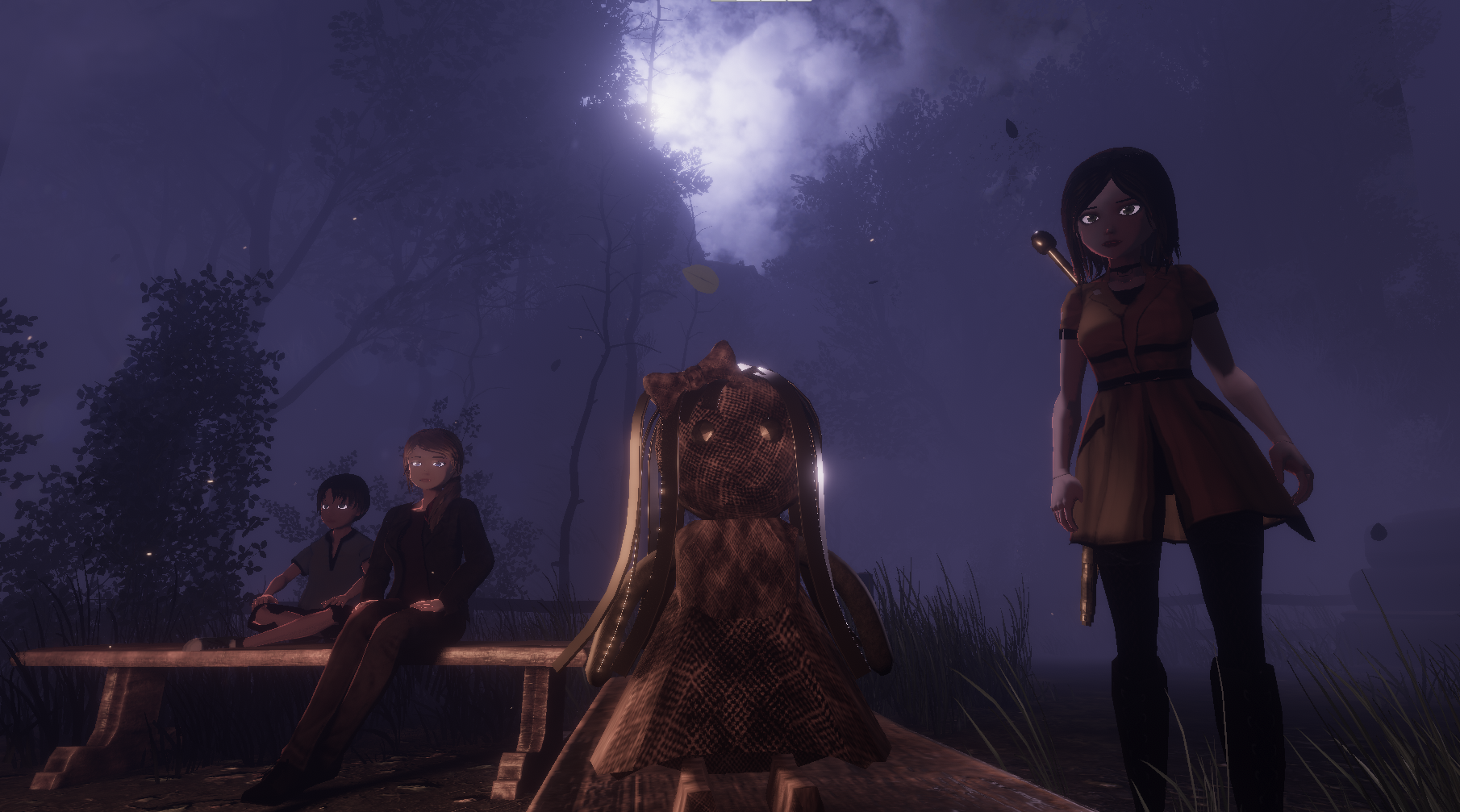
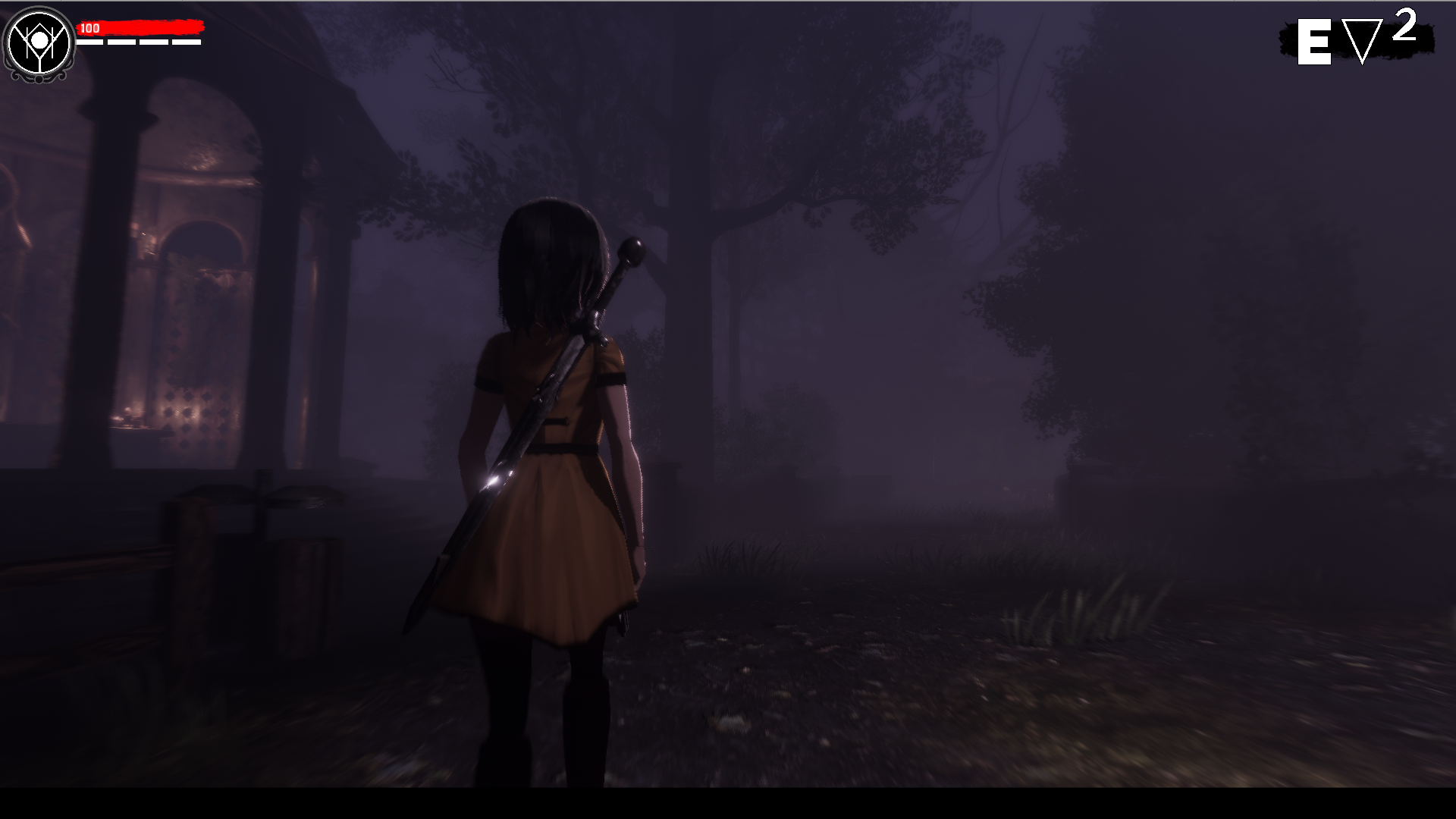
Eldervale 2 (2023) Version #3
Returning to EV2 felt satisfying, not just because the passing of time cleared my head of past frustrations, but because I came back with tons more experience and better solutions to the problems that held the game back. The last version looked good by the end, the gameplay was almost there too, but the project on the whole was way over complicated and heavy performance-wise. So I did what I always do (apparently) and reworked most of the game again, this time focusing on keeping it lightweight, stylish, and more workable development-wise so I could finally actually finish the damn thing.
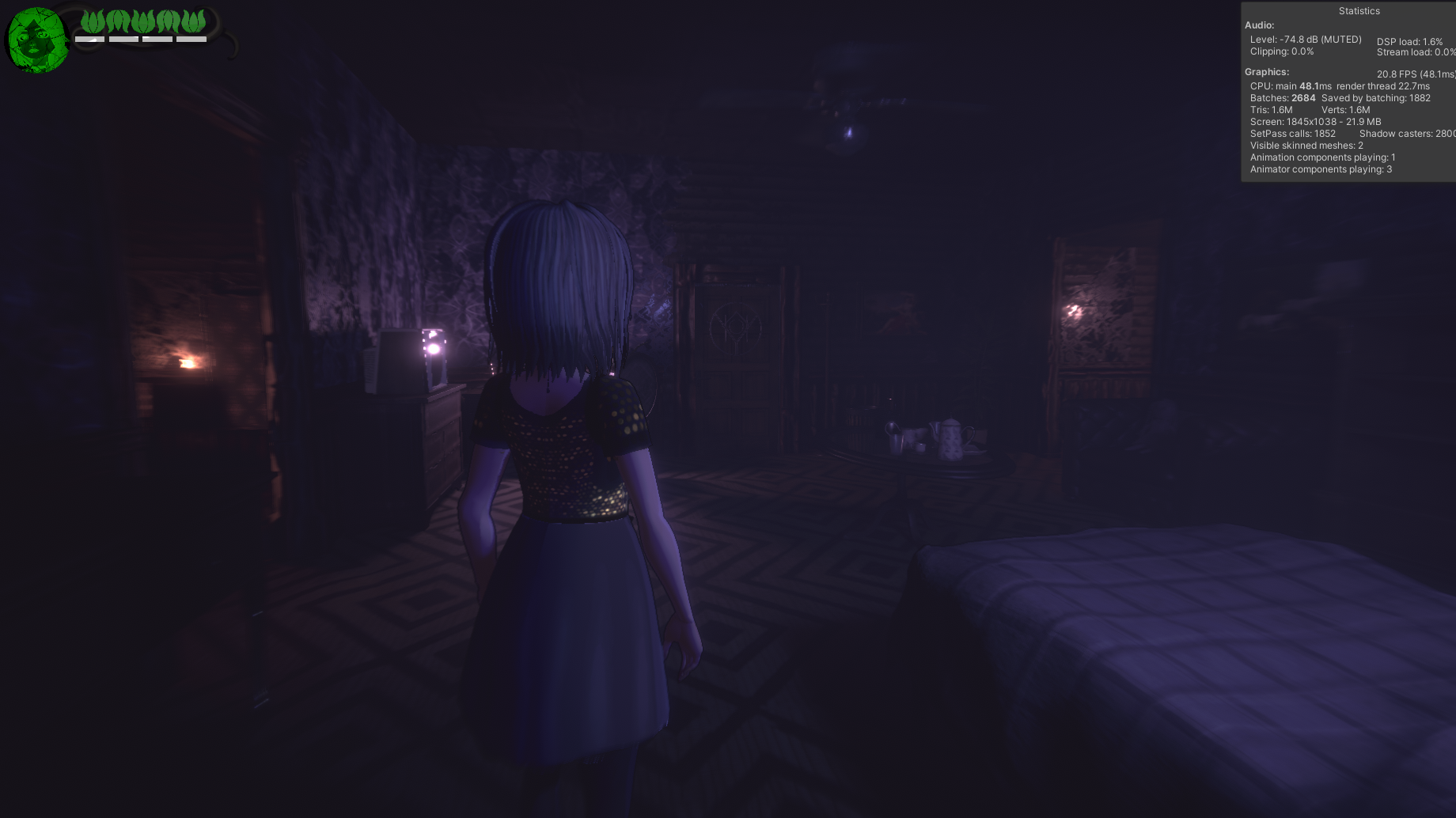
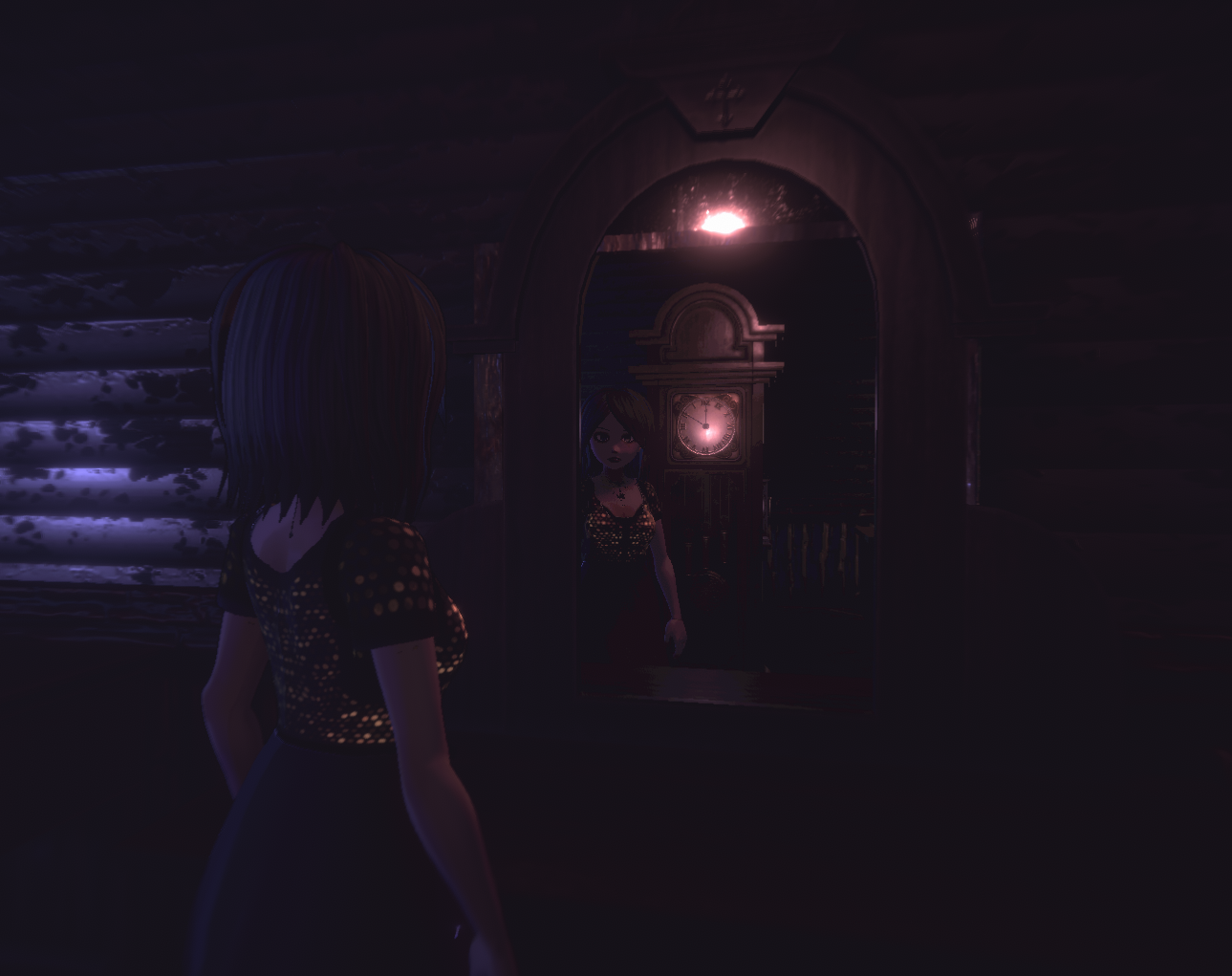
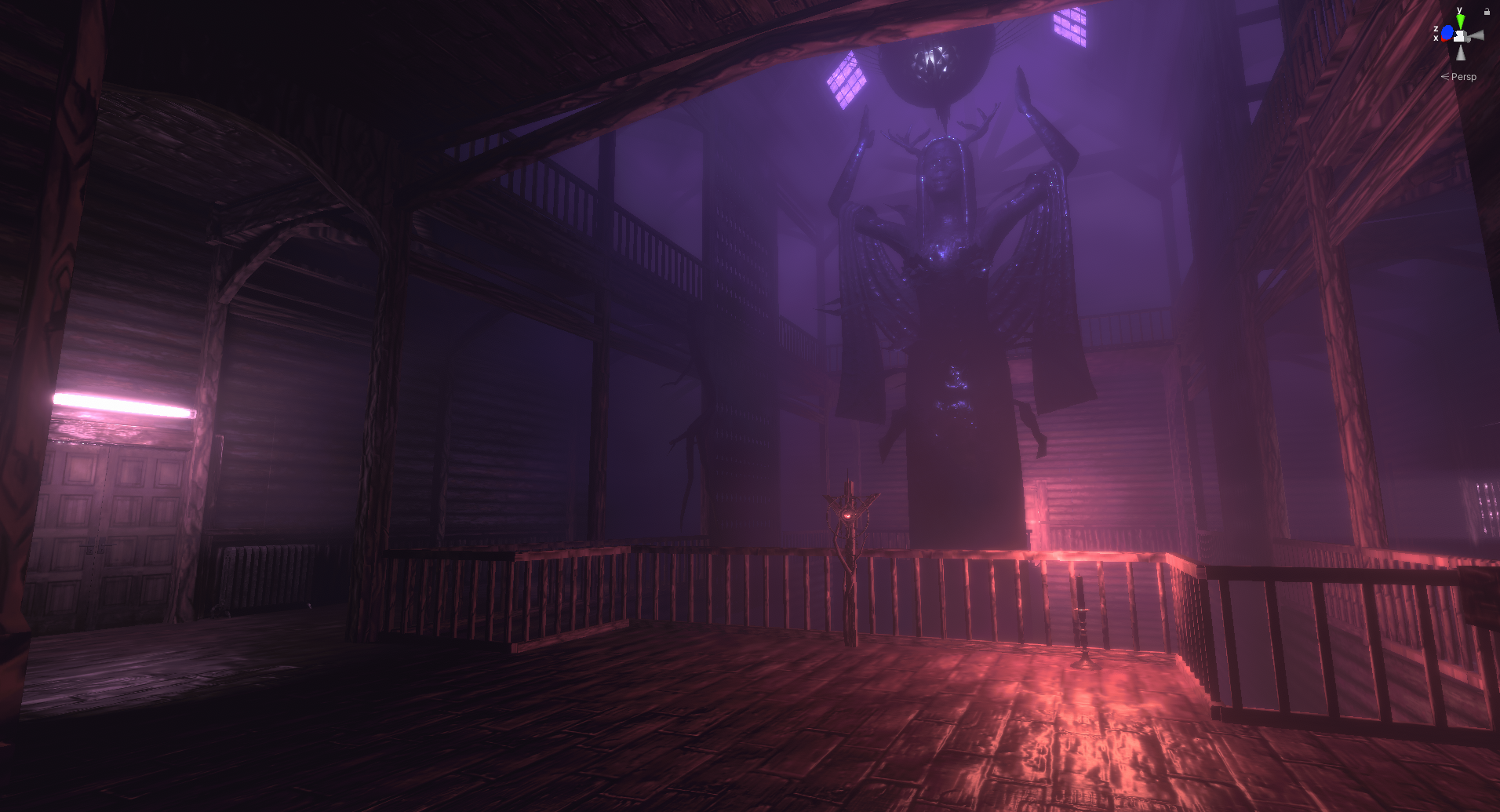
The main goal of this iteration was to bring the project closer to it's roots, both visually and gameplay-wise. Ophelia got another re-design, now more in line with her original look. I added new mechanics that made puzzles more of a focus, optional objectives and branching dialogue choices. The game overall became more fairytale- like, which I felt was a better representation of how the first game would have looked like "if you had glasses on".

Eldervale 2 (2024) Version #4
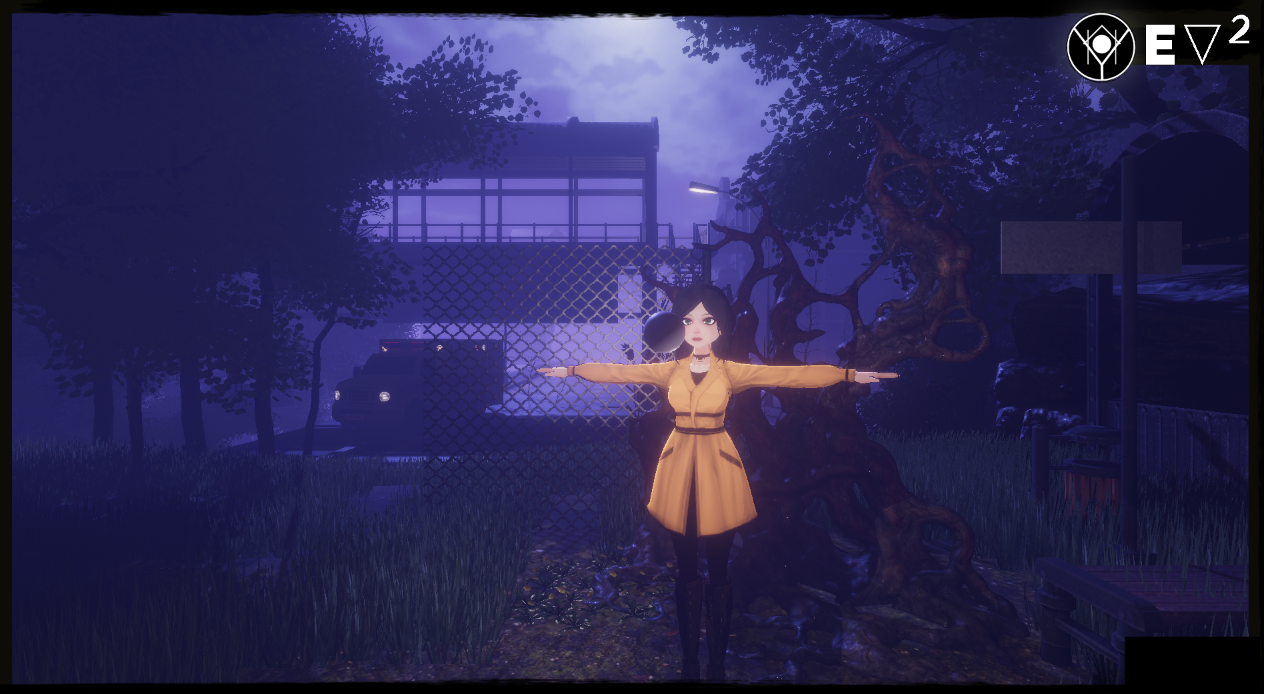
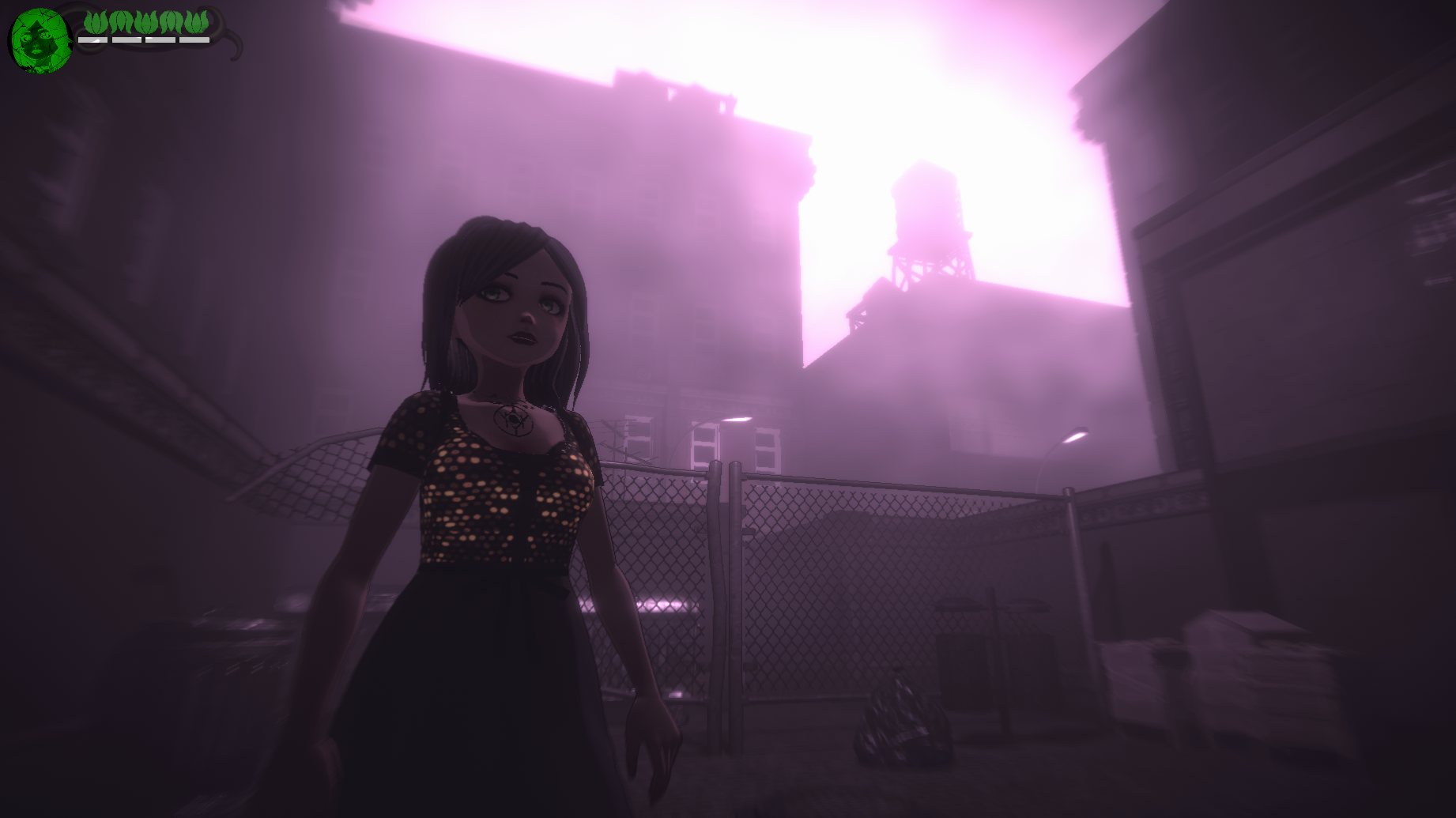
After a whole year of crunching on version 3, it became version 4. Looks like, plays like, feels like how I think a sequel to Eldervale should. That is: exploring atmospheric and interactive environments, surprising you at every turn with something new, disturbing and intriguing with monsters and characters alike, presenting a story like a good puzzle, and puzzles as good stories.
The reason it was still not done is purely the level building process. I reorganized, downscaled the game multiple times and moved the starting point backwards in a sense. Worked on many levels before, but most of them were scrapped or reworked into something better. The basic concept for the level progression is unchanged from the very first version, I just added more. This is the first chapter of the game (out of 6).
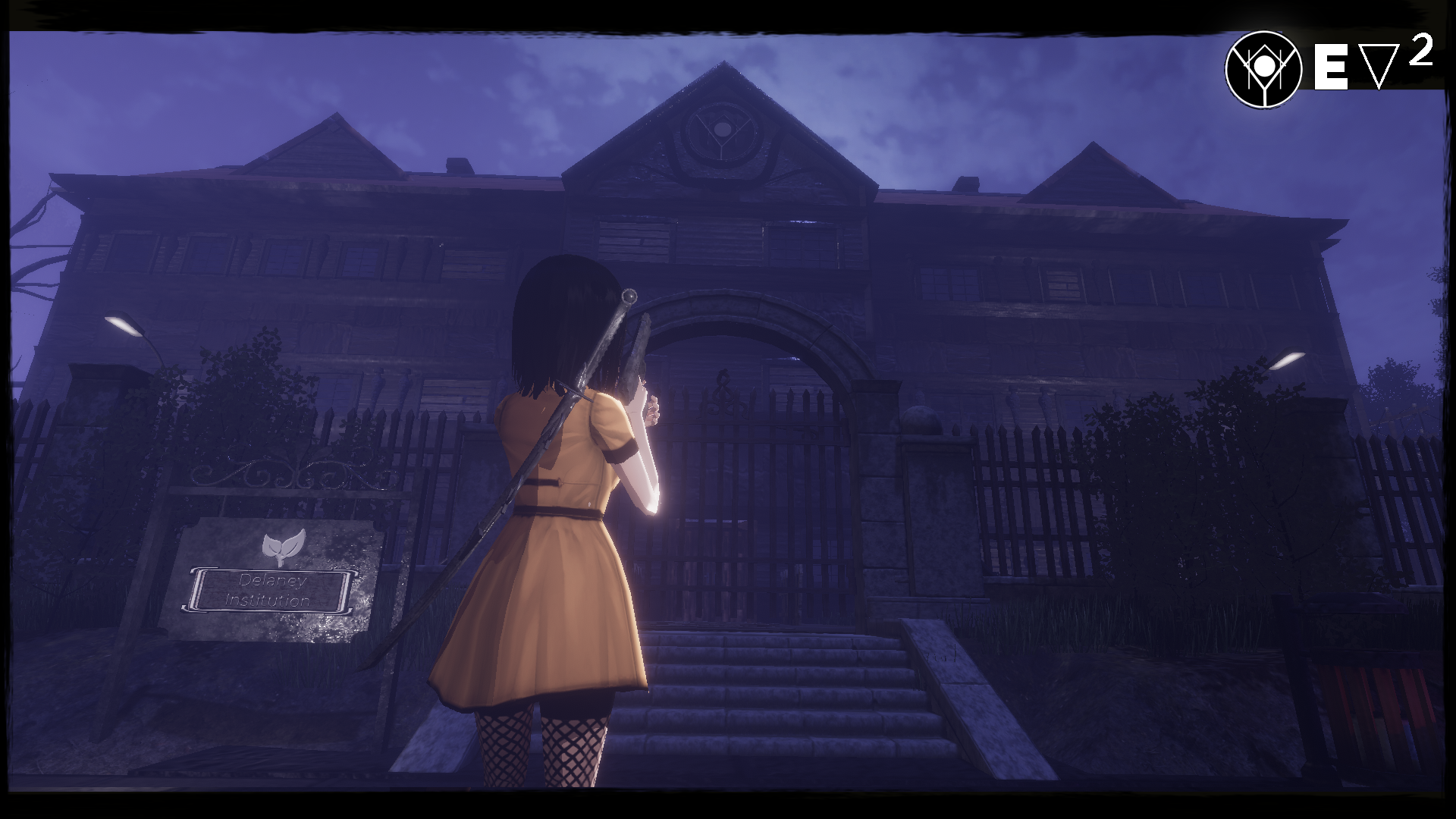
Level 1: North Alder Stow, Viewpoint (Outside the Delaney Institution)
Level 2: Valley Bridge (Added in this version, designed to introduce gun play sooner)
Level 3: The Freesia Conservatory (used to be the starting level in version 3)
Level 4: Conservatory Gardens (used to be the starting level in version 2)
While this previous version hit all points I wanted it to, what ultimately made me decide to change course once again is the sheer amount of time it took to progress. Just the opening 15 minutes of gameplay took me 4 months to get to a somewhat playable shape because it required to realize so much of the game world, building detailed level structures of every kind (modular interiors, outdoors with nature, town streets).
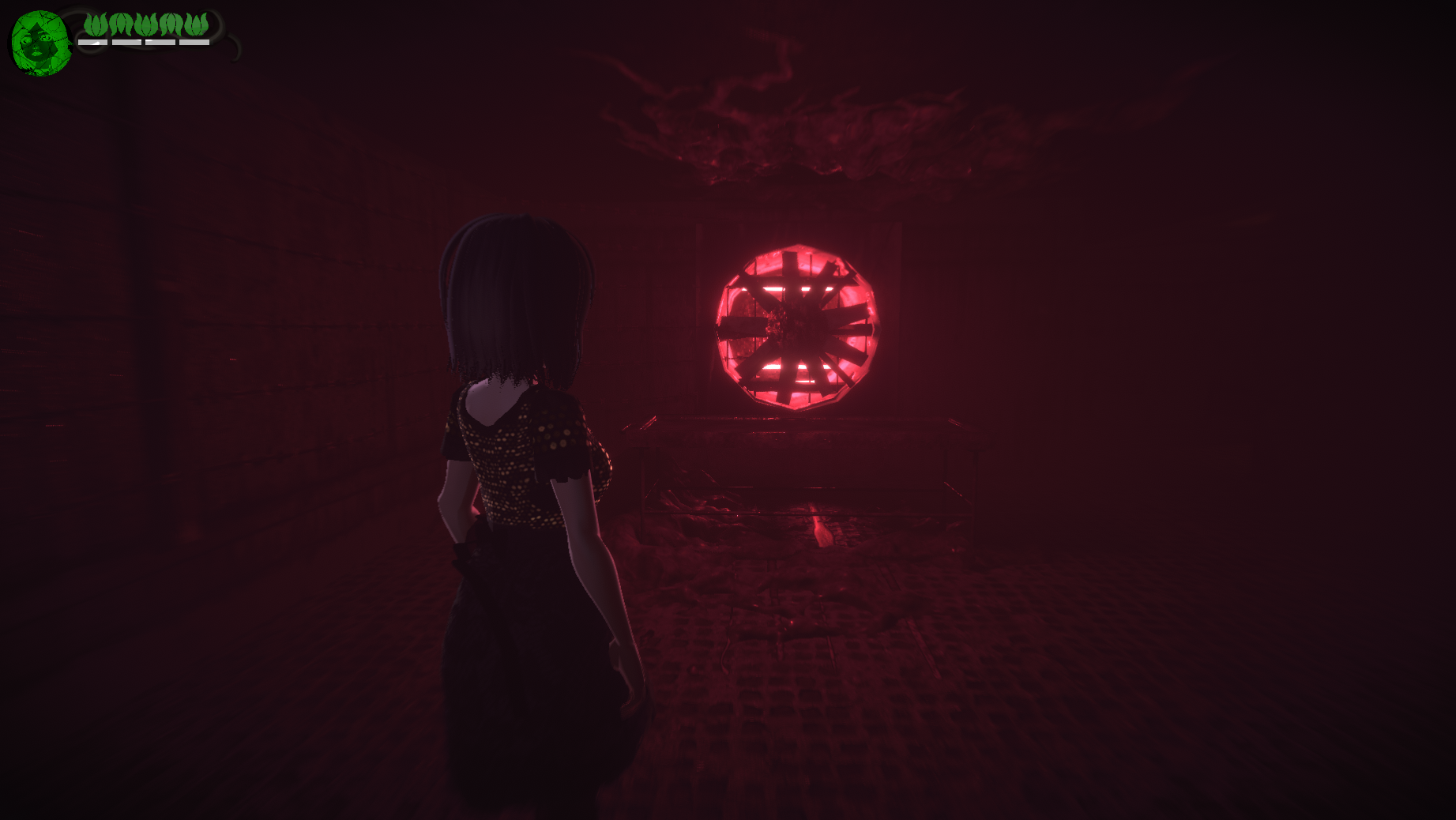
Eldervale 2 (2025) Version #5 & Eldervale Remake
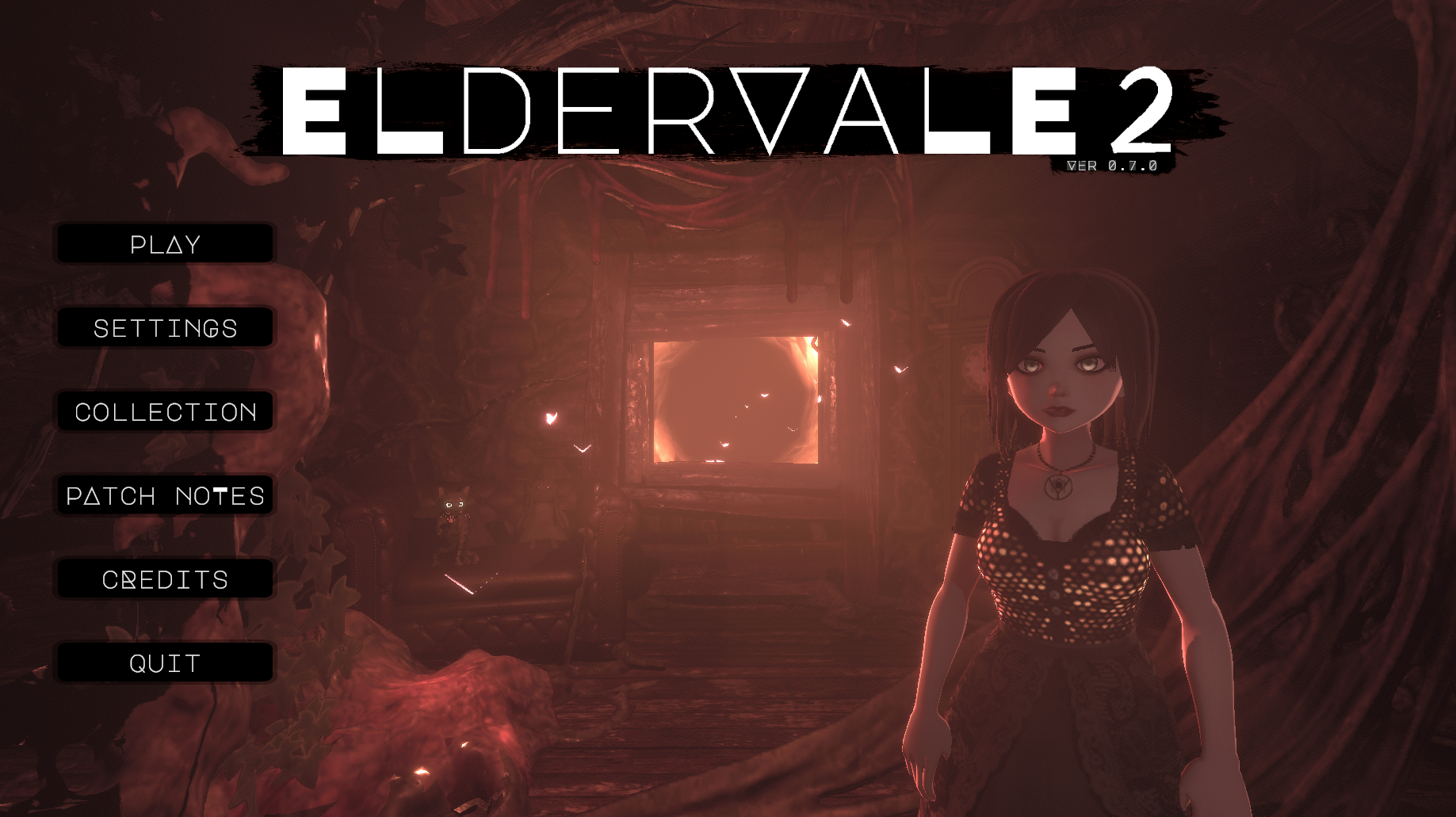
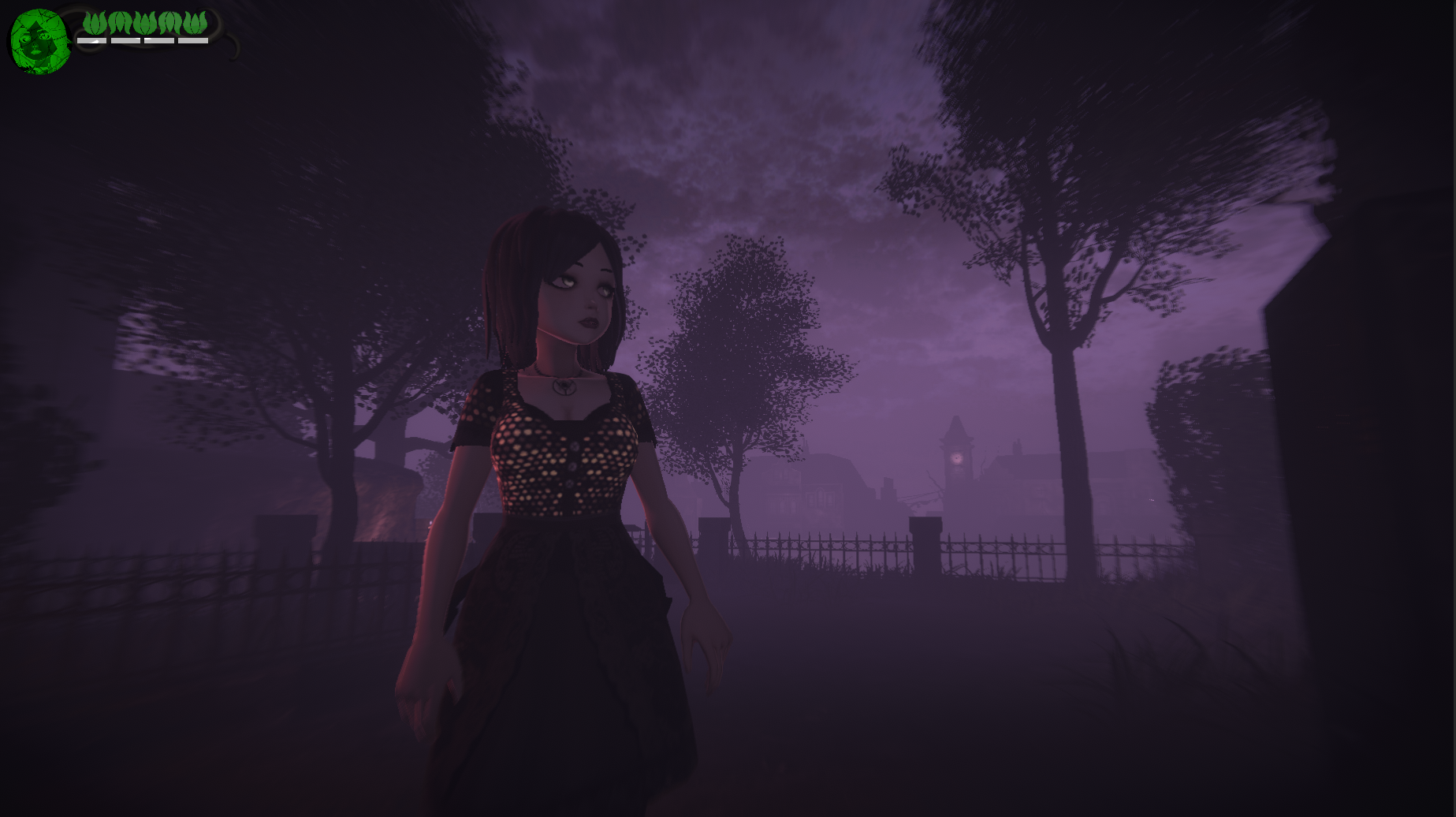
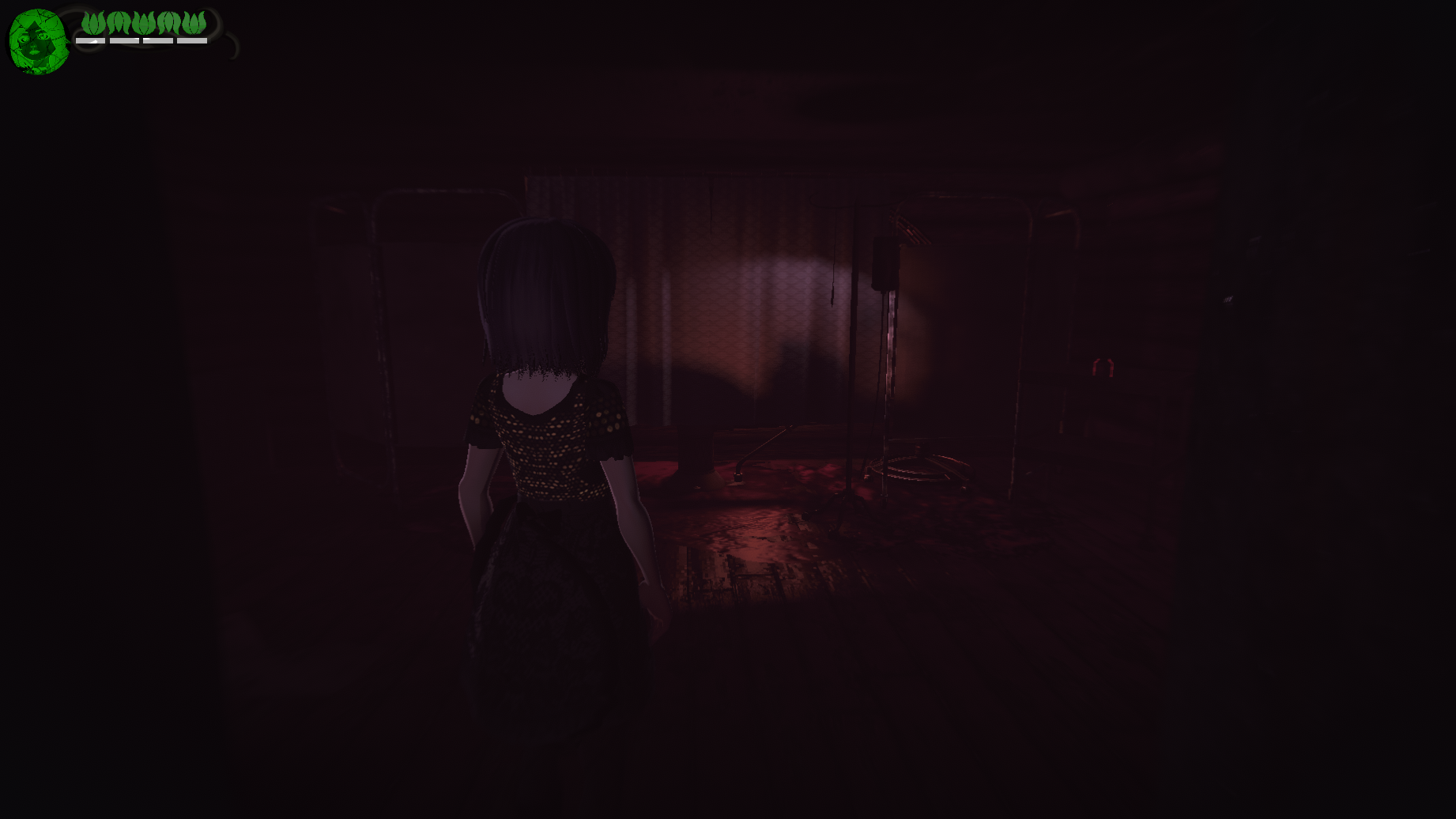
Eldervale 2 is a large project, more than two times the length of the original - that is after scaling it down from multiple campaigns which would have made it around 16 hours of playtime. In terms of level sizes, the entire first game is just a dot on the map (literally) compared to the sequel, which takes you around the entire perimeter of the first game with everything to scale, into a Conservatory almost the size of the Institution, forests and mountain paths, a forgotten ruined village and a cursed elder witch's hut - in just the first quarter of the game before it "really began".
It is completely reasonable to wonder, why not just scale it down even more and start releasing the beginning chapters? The length of the game is based on the story I have to tell, as well as the number of mechanics introduced at comfortable intervals during gameplay. There is a lot to do and a lot of build up. The sequel explains the origin story, recontextualizes the original game, builds up the universe and then concludes it, all in one. To have it breathe appropriately, this is the scale I can see working.
Just like the original, Eldervale 2 is built modularly. Theme sets are created to build each type of environment, batched together for optimization, and the gameplay layer (developed in its own test environments) applied last. Once you can build a full floor of a building, you can make another one easily. If you can make a forest level, you can make another forest scene fast. But getting to that point with a theme set takes a massive amount of time. Based on my experience and especially the first game, I aim to build content that is quick to produce, versatile, easy to fix, iterate and improve on. I can't afford to work months on 10-15 minutes of gameplay each time, tweaking hundreds of mechanics that make up a game like this. It has to all work as streamlined as possible and be fun to both produce and play.
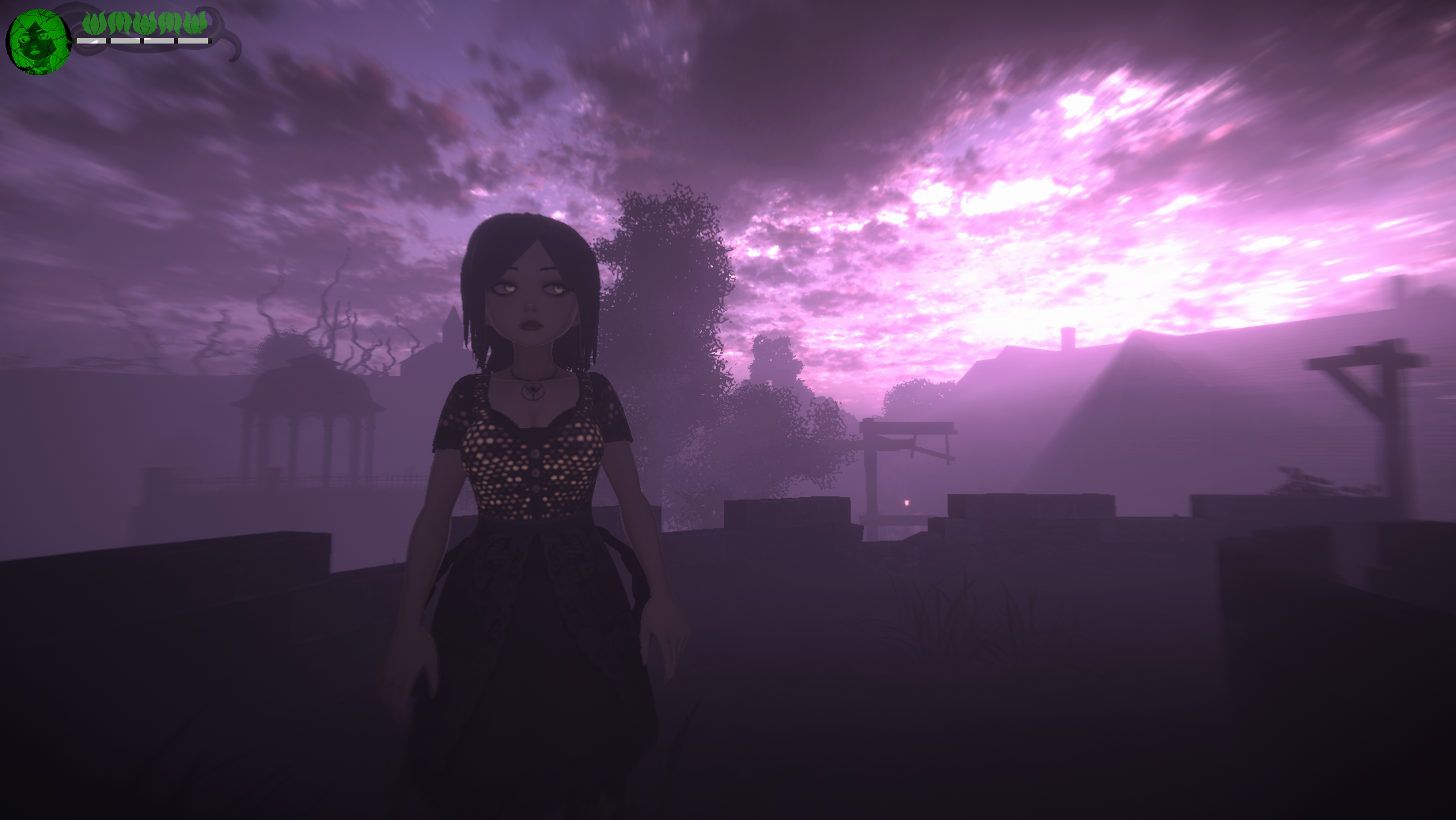
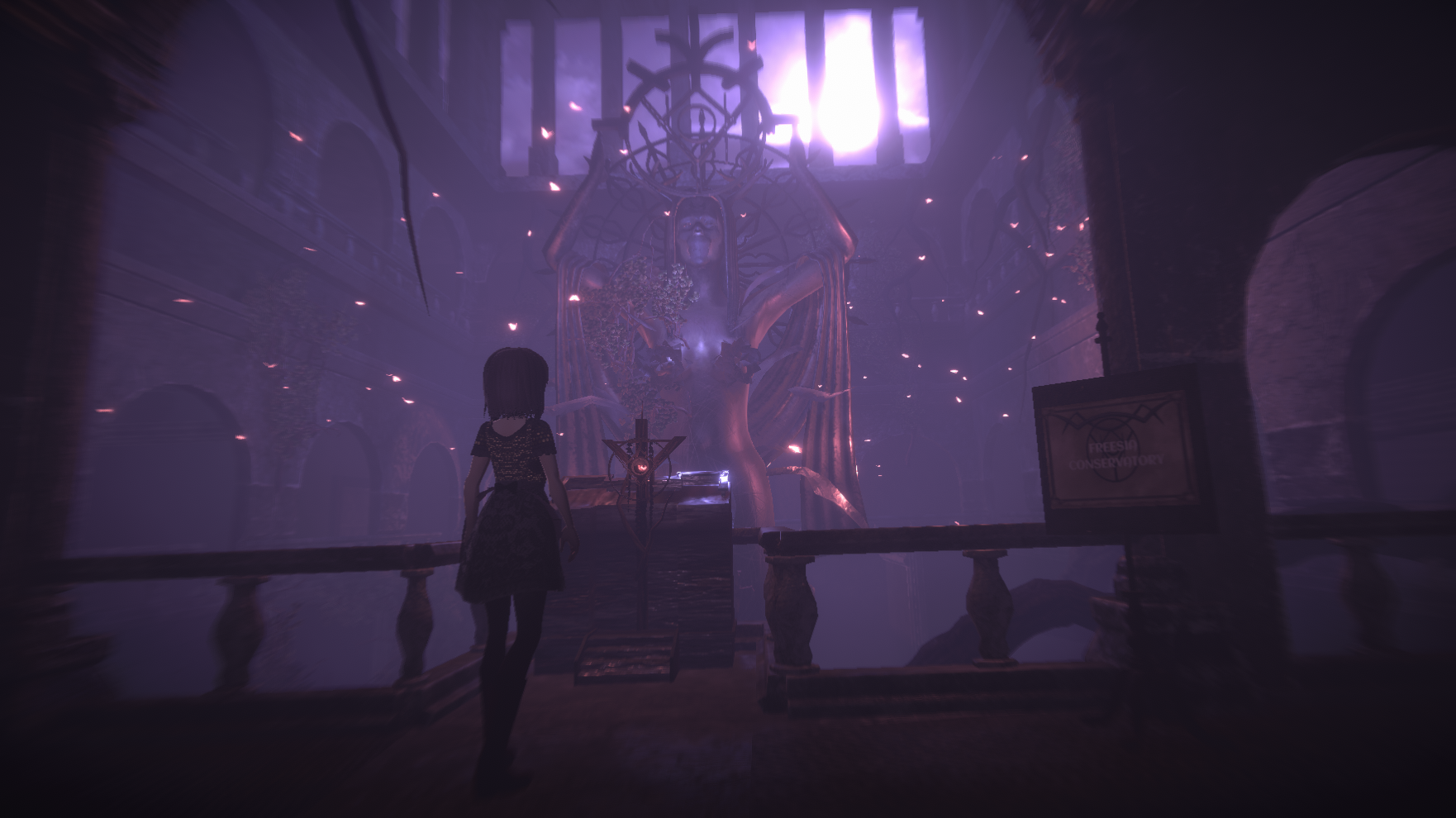
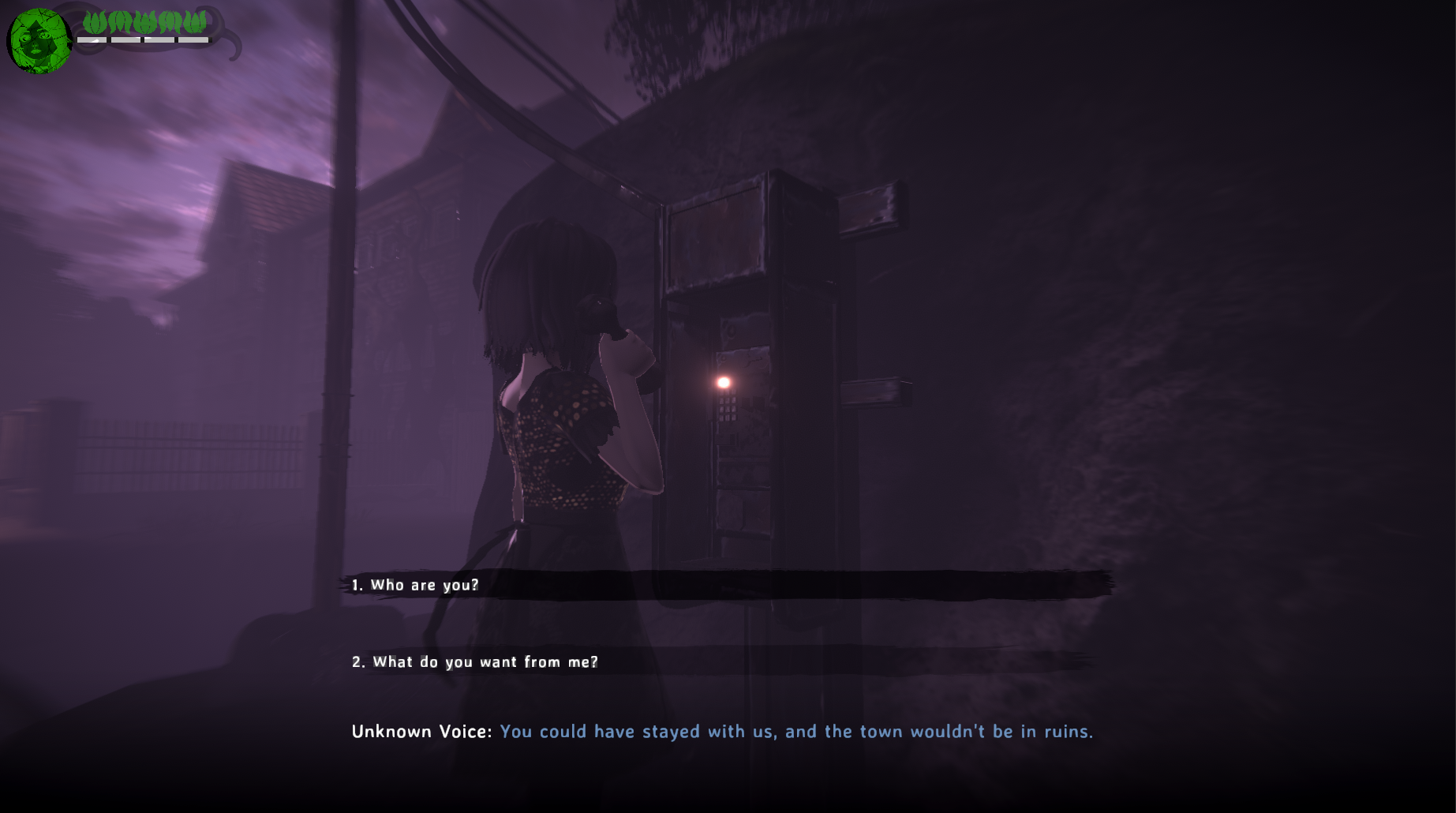
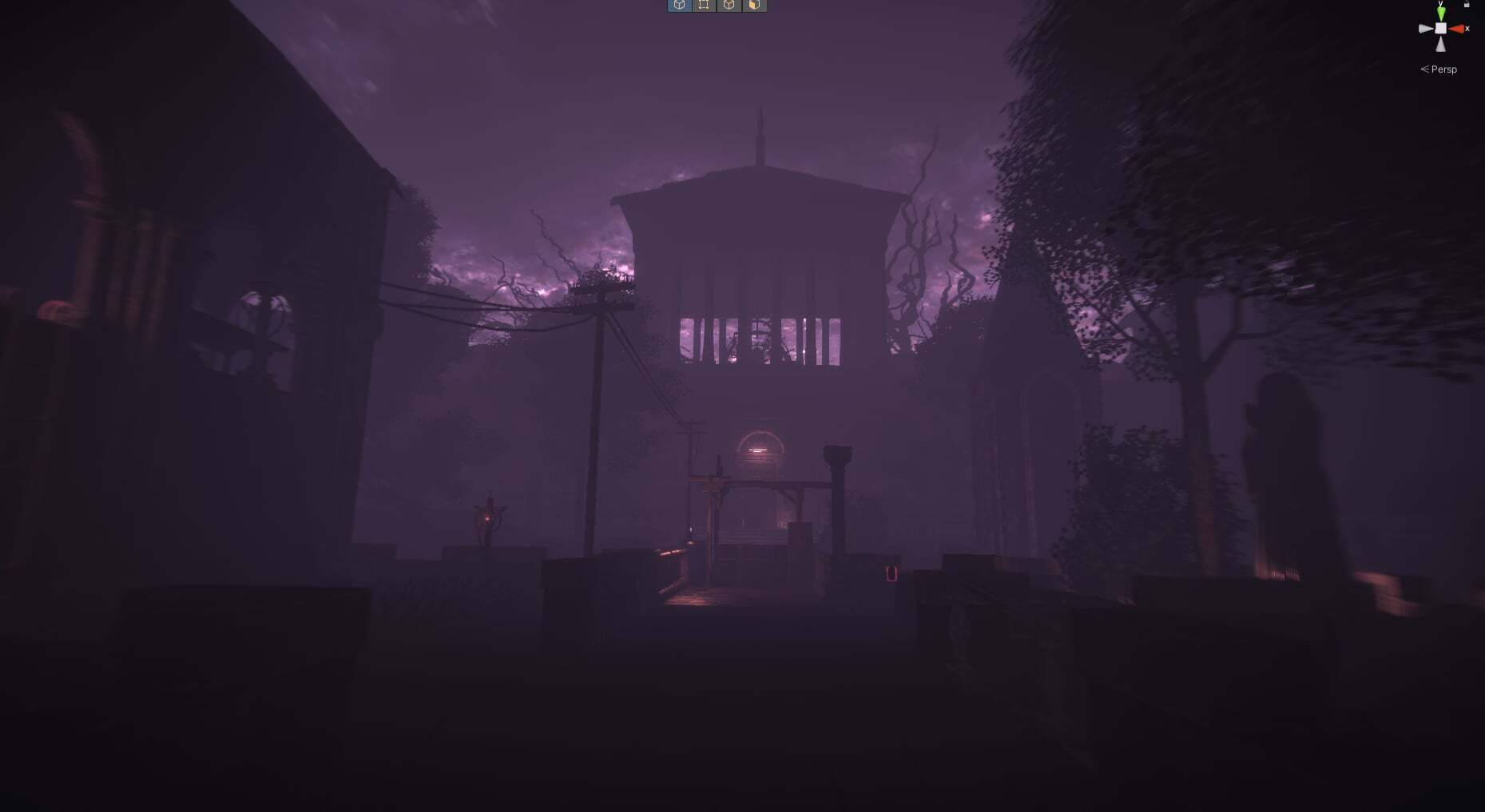
I wanted to estabilish the setting of the town of Alder Stow in relation to the Institution from the first game immediately at the beginning of the sequel. You start with a vantage point, accurately displaying the world around you and seeing hints of locations to come in the distance (hours upon hours later). Then it is a line of industrial areas, caves, statue parks and antique buildings - you can see the problem.
It just wasn't sustainable, so in 2025 made a plan for an even more streamlined version that I could actually produce in a reasonable timeframe. This version features metroidvania and/or soulslike back and forth progression between locations, making better use of the detailed environments.
The remake uses the same project and most of the mechanics that have been built for the sequel. The sequel had issues with level design, which the original had working for the most part. It made sense then, in order to figure out the missing pieces that stop me from progressing with Eldervale 2, I should look at how these new mechanics and implementations play out in the more tested waters of the first game.
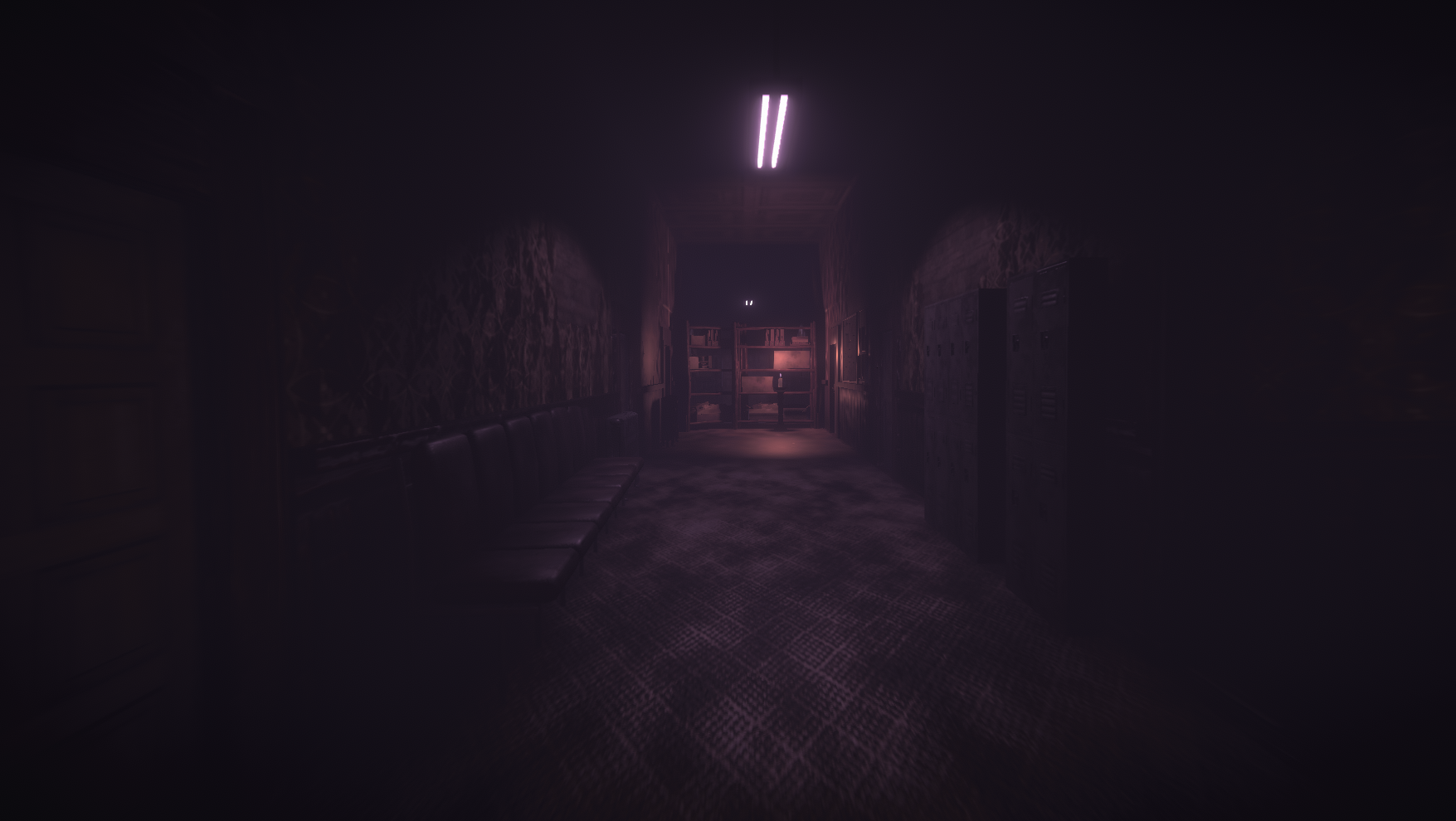
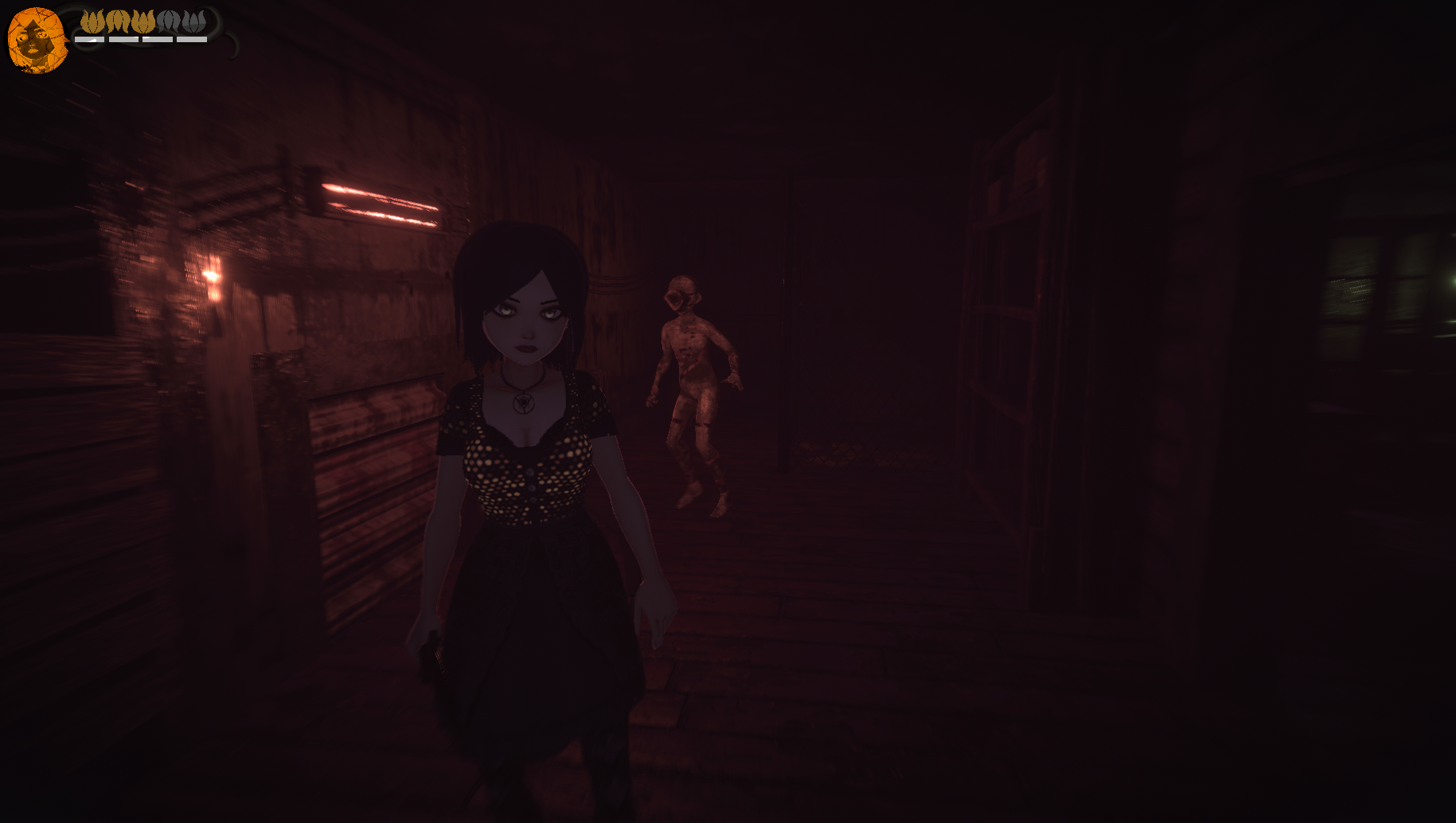
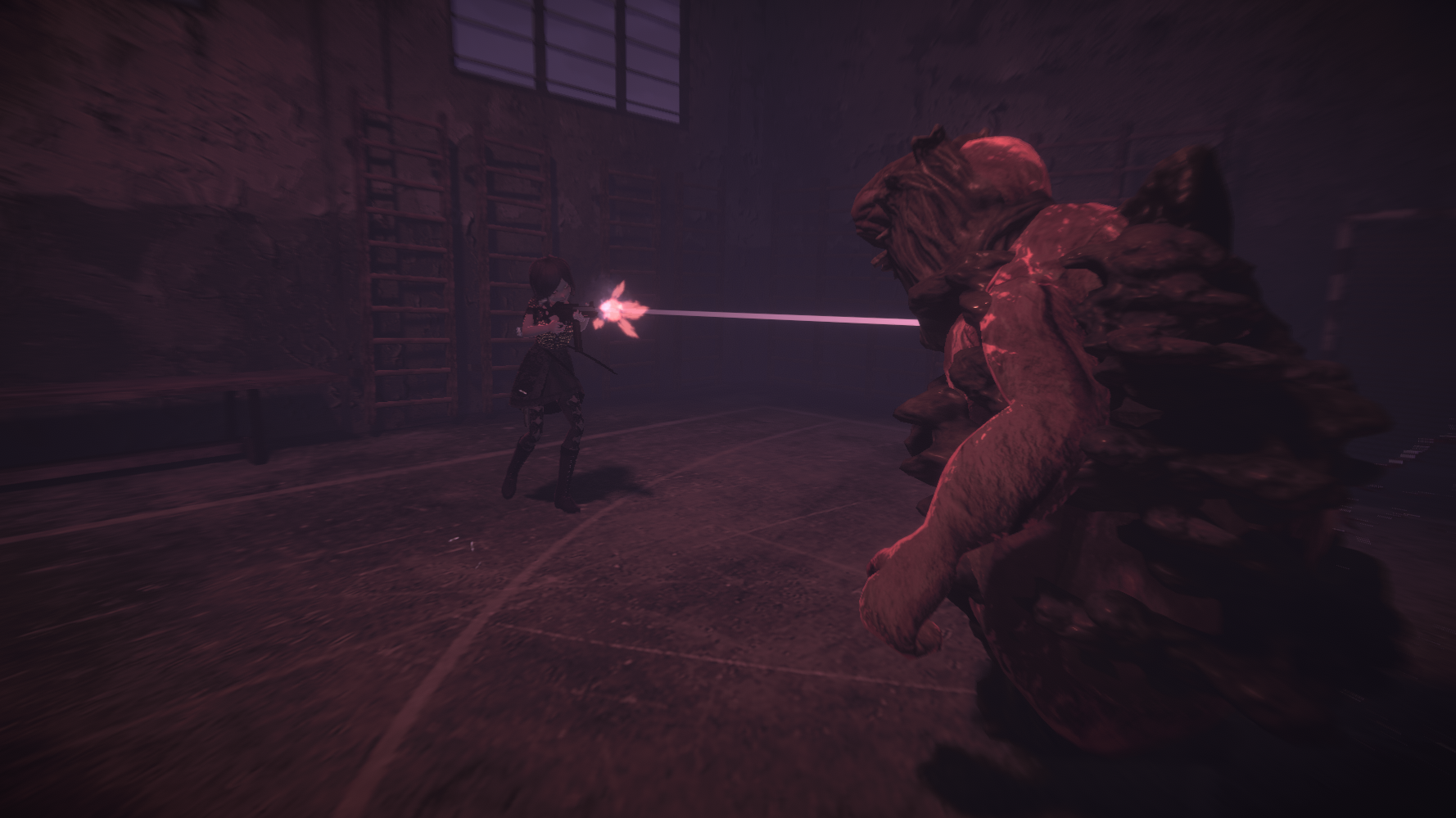
When starting the remake, the first thing I wanted to do is to make the environment as simple and optimized as possible, so it is easy to work with, doesn't result in project bloat and easily expandable for years to come (eg. with the sequel). The result is a lightweight style that is still indie, but with less jank and obstructions to your enjoyment.
About evolving the story of Eldervale
Along with the gameplay and visual style, Eldervale's story and universe has been developing all these years as well. The first game was subtle in it's storytelling on purpose. Admittedly, my skills in how to tell a story (and English) were lacking, which I feel prevented a lot of players from wanting to look more closely into the story. It's symbolism, themes and references form those missing links to get the full picture. It has more layers than meets the eye and I believe what's there can reward your curiosity with entertainment. I won't argue with anyone saying they don't like or are not interested even in this full story, but just know it is there and many have missed it - which was a problem with the game, not you.
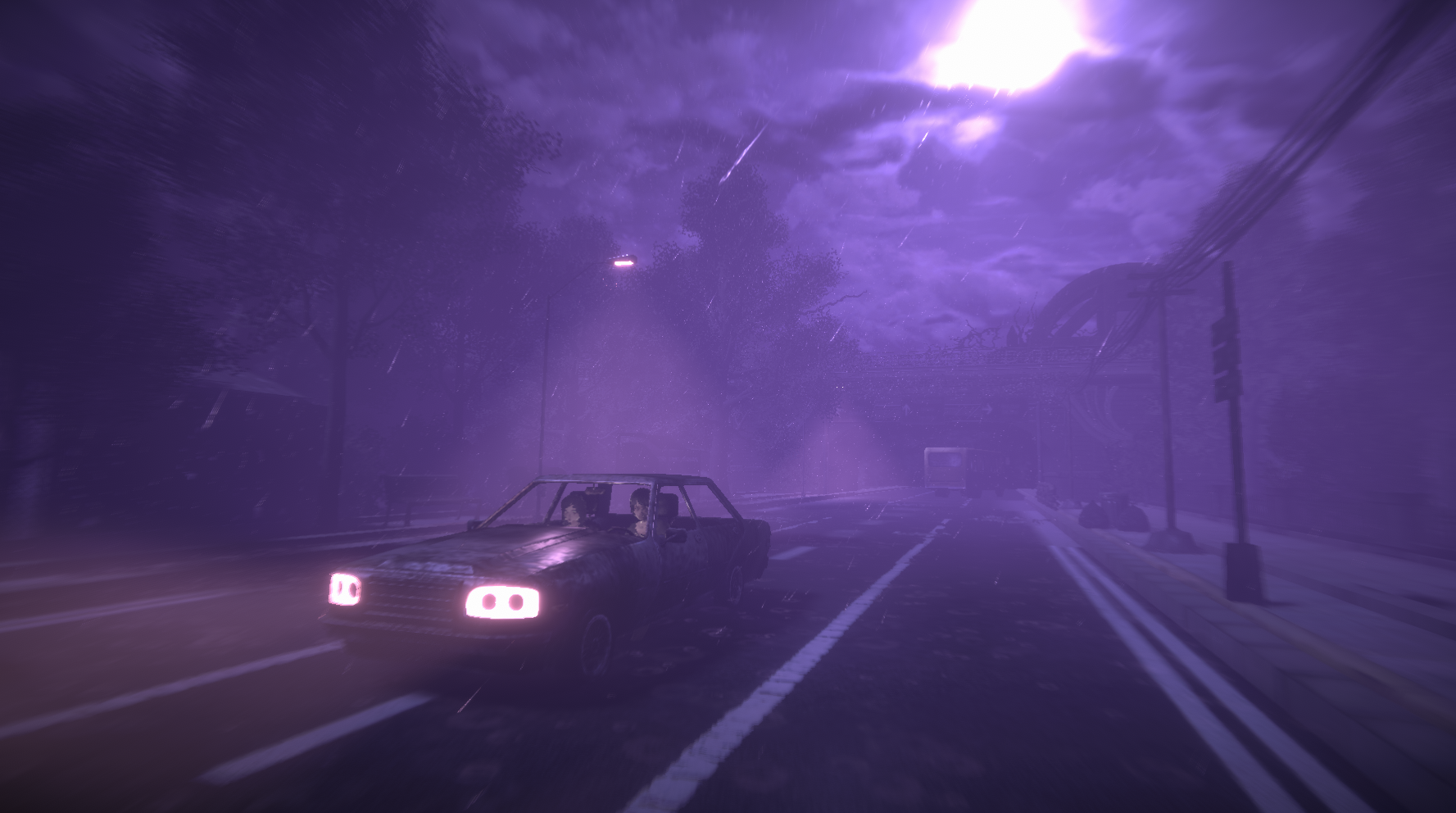
Over many years with the sequel, I expanded the story greatly while staying true to the first game. It has a definite origin point/mythos where it all began, all events leading up to the first game and what happens in the sequel, which is also where this story would have a satisfying endpoint and closure.
The sequel itself is massive in its plot developments. All of its planned chapters in total would be around twice as long as the first game, and that is leaving out other character storylines which are still possible to be added later.
In the first game, we uncovered remnants of an event that has already happened. In the sequel, things are happening around us, on a wide scale. There is urgency, an existential threat (to more than just our protagonist), a cast of characters aligning with different factions based on morality and belief, and personal development for everyone involved - until the very last scene.
With all that going on, that is still only half of the story. We also learn a lot about what lead up to the plot of the first game, how the pieces fell in place and re-contextualize everything we thought we knew to make it even more interesting (without retconning or changing what was already there).
It's difficult to talk story without giving away too much so here is an opt-in plot synopsis of the first Act if you choose.
Eldervale 2 begins seemingly right after the first game and following up the ending in which Ophelia chooses to leave the Institution, save Samantha and spare Howard (the other possible endings are not ignored and will be relevant, but this is the main timeline we follow).
Outside the Institution at last, Ophelia's main objective is now to leave the town and get back to normal life, leaving her traumatic past behind. This proves to be a difficult task however, because whatever happened at the Institution before, is now happening all across the town of Alder Stow. Escape is made seemingly impossible with all exits blocked. Is this connected to us refusing and severing the Elder's connection to the Institution releasing it wildly to its surroundings?
She finds notes about Howard organizing a group of survivors promising them a way to escape this warped world by working together. For their plan, one of their main objective seems to be finding Ophelia. Dead or alive. There are other groups who started to act like savage monsters, aiming to kill anyone who crosses their path, torturing them until their last breath. She gets the first glimmer of hope when she finds a note from Samantha, telling her to meet up ahead. Following this path she arrives at an antique statue park that seems to be lost in time.
We also start learning about the Freesia Conservatory, which seem to have been the predecessor to the Delaney Institution in the 19th century. The research that was done in the Institution came from here. An old statue displays a plaque which shows three main places of worship, the Institution being only the newest one. With nowhere else to go, Ophelia arrives to this conservatory and explores its depths.
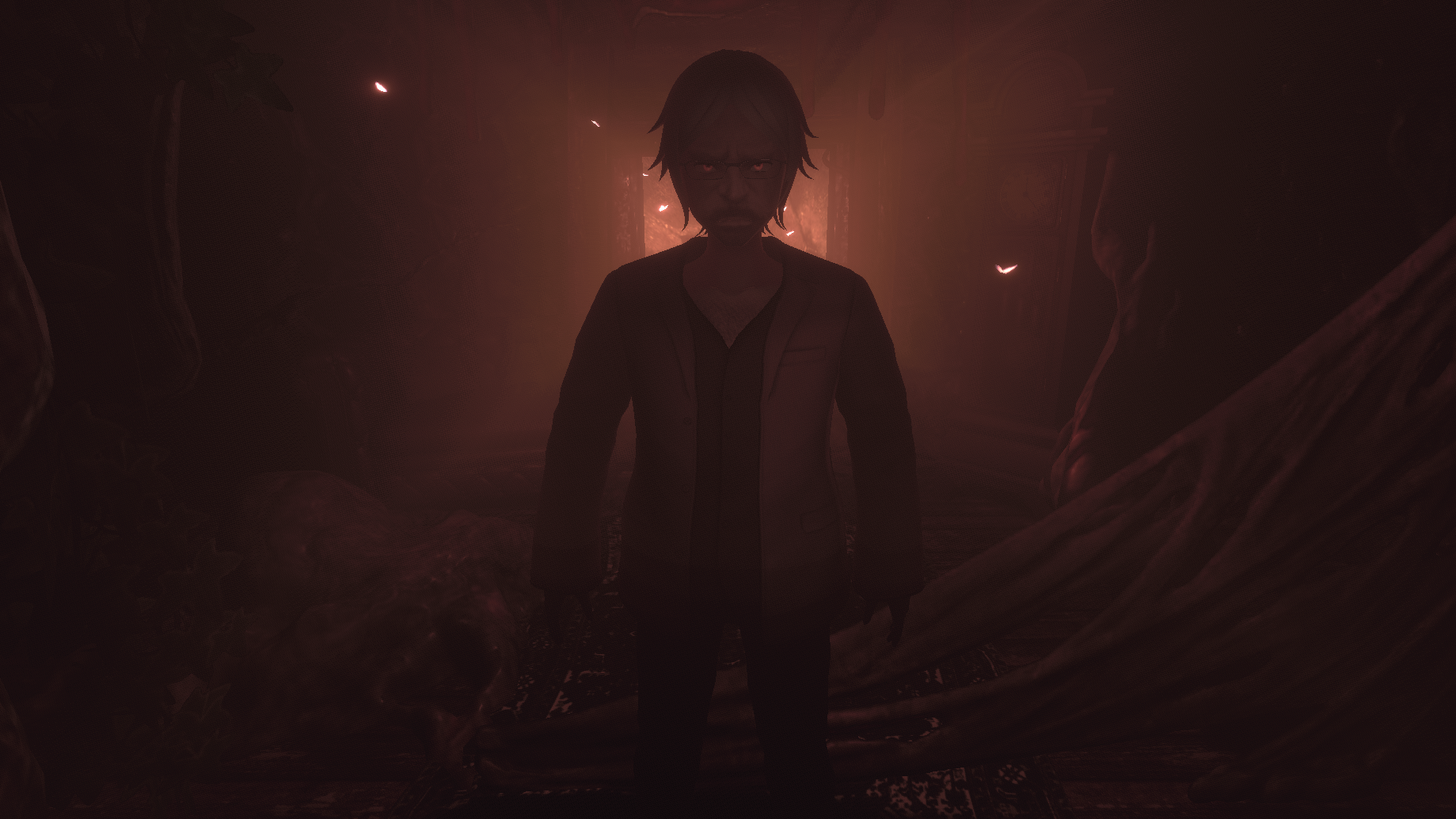
In the conservatory, we meet a man who looks more like a monster but he introduces himself as Gilbert - Howard's older brother who was left behind in his plans and now willing to help us. He tells us to seek out a special someone in the forest near the gardens of the conservatory who will be our guide. After fully exploring the building, Ophelia enters the gardens, finally reuniting with Samantha.
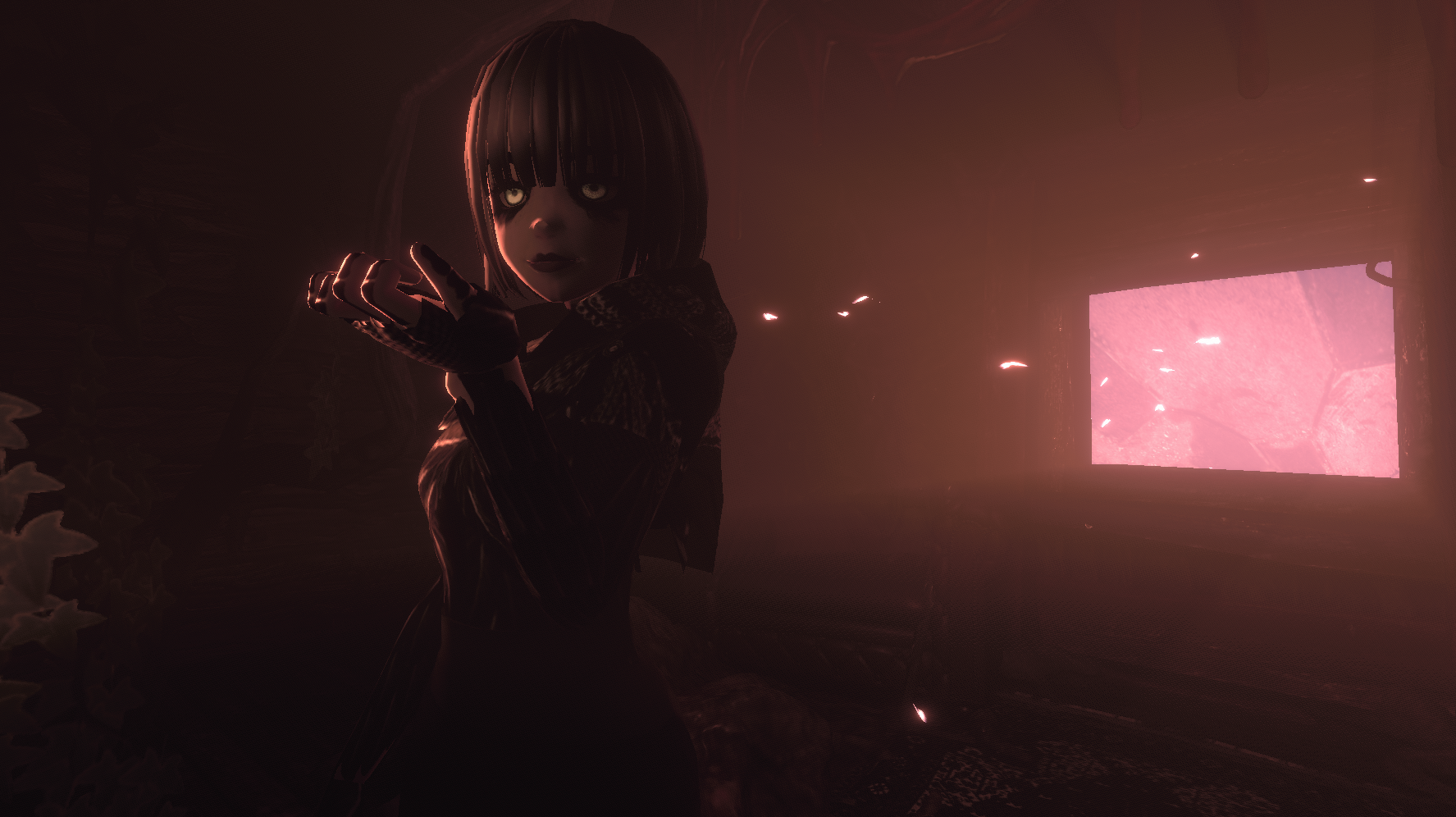
The two make their way around the gardens, entering the forest surrounding Alder Stow from the north. This area is near to the Institution's own park area, which is also visible from the higher mountain paths. Strange howls of a dog-like creature can also be heard. At one point, the girls become seperated, and after a tense situation, Ophelia comes face to face with someone - or something - that looks almost exactly like her, save for glowing yellow eyes. They have a fight, the doppelganger seemingly just playing with her, then letting her live. But there is a feeling this is not the end of it.
Surviving this ordeal, we meet Samantha once again and continue on our way deeper into the mountain forest. With more and more limited ways to proceed in the deep woods and an increasing feeling of dread, they have no other choice than to cut through the ruins of a forgotten village that is between them and the location marked on our map by Gilbert. Sam begins to show signs of a sickness that is worsening rapidly. What's even worse is the village is not abandoned after all, it is teeming with things human, monster and everything in between.
Leaving Samantha in a safe spot and carefully exploring nearby buildings, Ophelia finds an old and frail looking woman locked in a cage in the middle of the village square. With too many monsters nearby, she leaves to look for other options and soon enough meets two(+1) familiar faces among the many threats: the two deviant mutants she met and gave names to back in the Institution. They are here to help, devising a plan to use the Elder-born aberrations as a weapon against the enemy.
After clearing the area and rescuing the old woman, you realize she can barely walk, blind, deaf and unable to speak. Luckily, the deviants have another idea: to collect nearby elder-infused herbs and make a medicine. Consuming it, the witch gains the ability to speak and introduces herself as Victoria, the last living disciple of Ophelia's grandmother and the cult she lead. She leads our characters to her hut - which will act as the main safe hub in the game. After examining Samantha's worsening condition, she reveals it is caused by the serum Howard injected her with during the events of the first game and he is the only one who can produce an antidote. Our main priority now is to meet Howard face-to-face and retrieve a cure. He is holed up surrounded by his followers in a large mansion in Old Town.
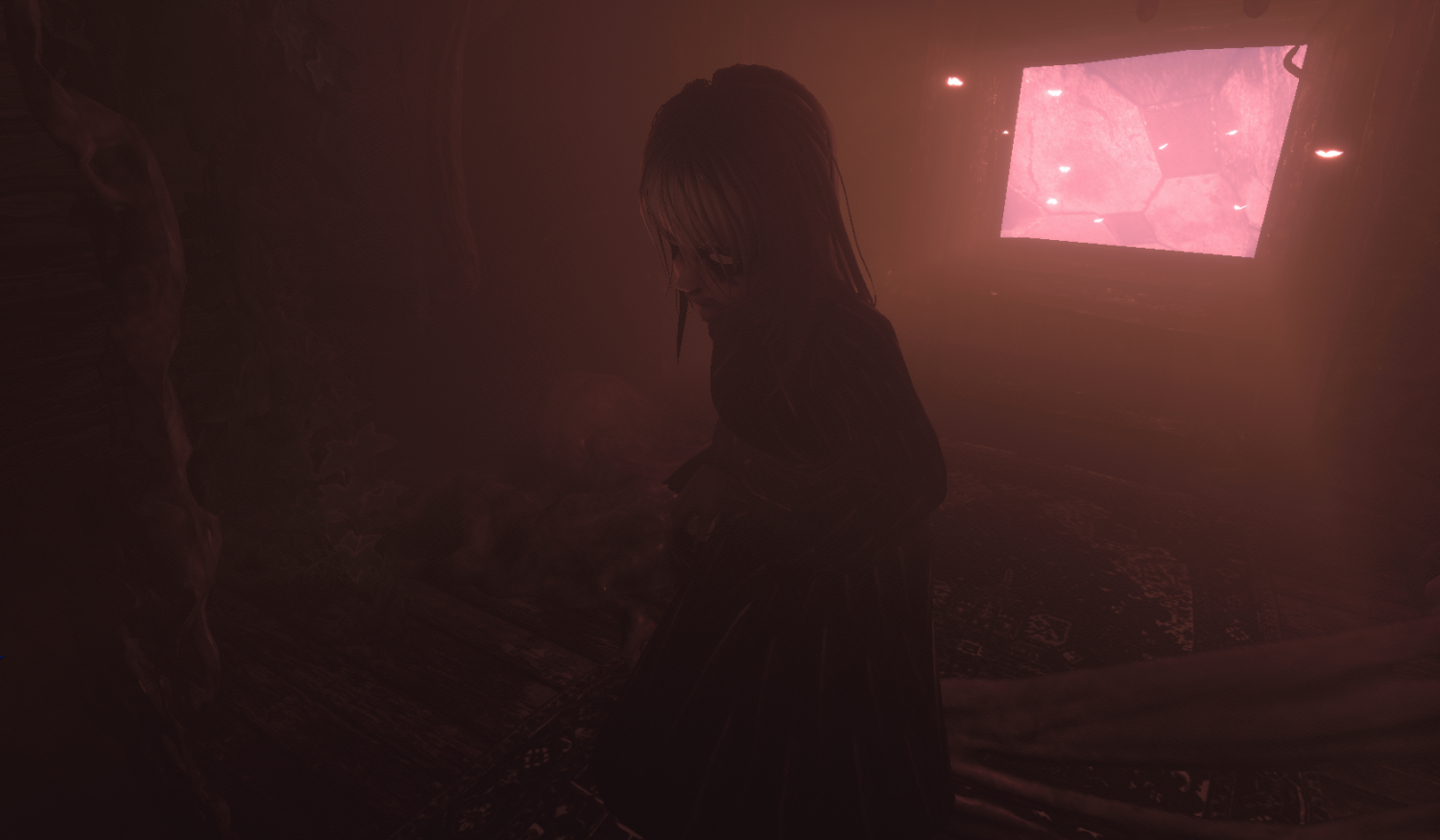
This is the first act of the game in a nutshell, leaving out much of the greater worldbuilding that will be relevant to later parts. I can detail the later chapters if anyone is interested, have a lore bible, dialogue for the very last scene and ending. Obviously, it is better to experience in-game but until then.
Thank you for reading, and more to come (hopefully)! I will fix/update this post if need be.
Have a great day, stay awesome! Let me know if you want to hear more about a topic in the comments!