
Last week we spoke about some of the things that make Summerford a “survival horror” game, but even when making a game inspired by the “classics”, it’s hard to deny game design has moved on since Alone in the Dark released in 1992 (!)
So what common pitfalls of the genre are we trying to avoid?
Puzzle Logic
Puzzles are a big part of a survival horror title. They need to be hard enough that solving them feels like an achievement, but not so difficult that they ruin the pacing and tension you’ve created.
We have our own mostly-unwritten rules for all of our puzzles.
Firstly, we don’t ever want to repeat the same puzzle twice.
Secondly, all our puzzles must be solvable with information provided within the game (So no puzzles that require a knowledge of Chess, to use a very common genre example).
Thirdly, our puzzles need to be integrated well into the game world. We all know that survival horror tends to stretch the boundaries of suspended disbelief and we think that's absolutely a part of their charm, but while we aren't constrained to the logic of the real world, we want every puzzle to make sense in the world of Summerford.
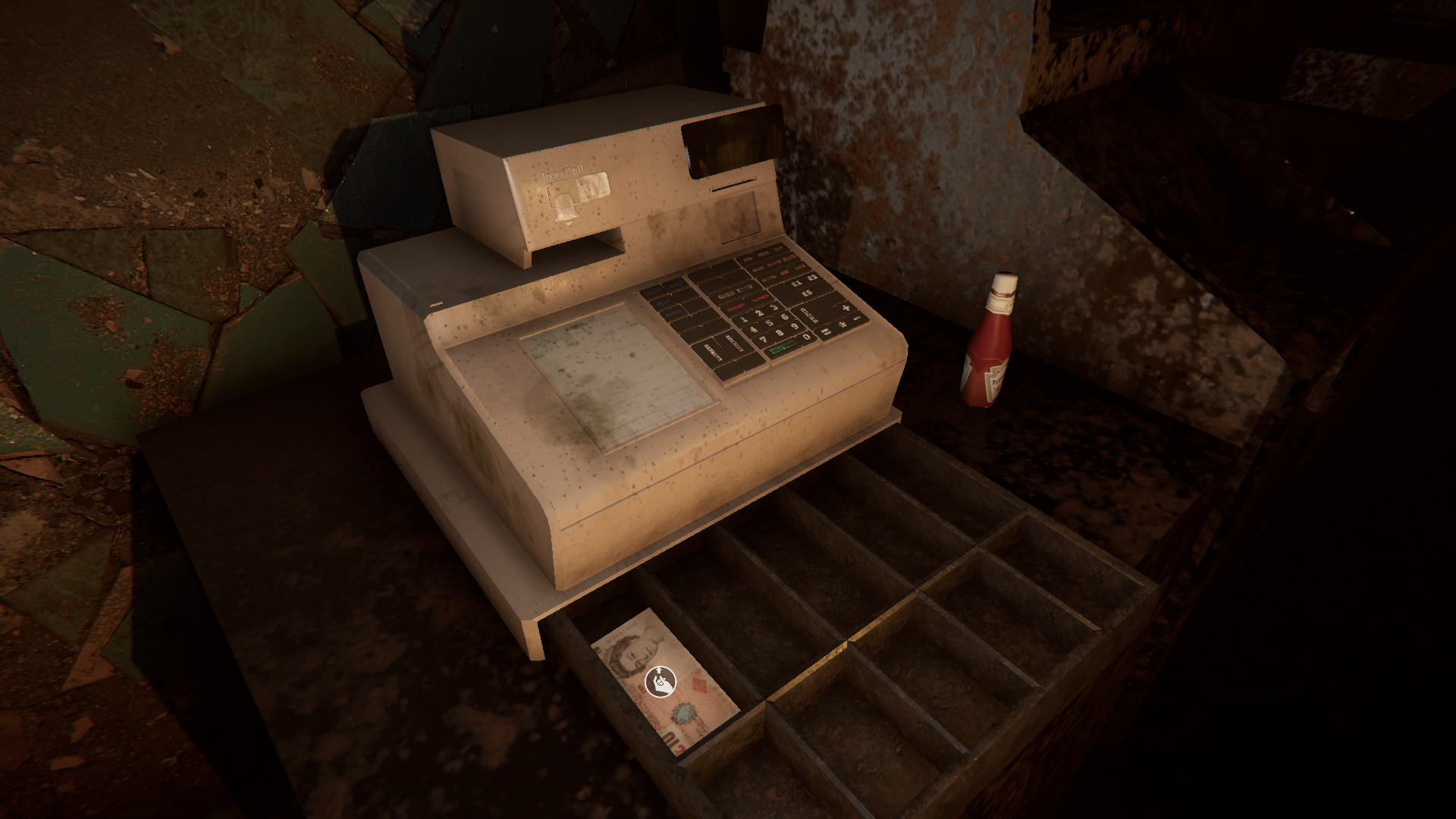
It's logical to find money in tills, though somewhat less logical nobody would have nicked it yet.
The “Master of Unlocking” Problem
One common trap older survival horrors fall into is relying too heavily on a mechanic of opening locked doors.
It’s a great crutch for design as it lets you gate off areas easily, control progression and give the player a quick and understandable reward. The problem is, while this works in the moment, this often isn’t a very rewarding long-term player experience as it offers zero player input or choice.
Now, we don’t think the system is inherently bad, and Summerford isn’t immune to locked doors. We just think it can get tiring if it becomes the main focus of the game. Running between 10 unlocked doors in a corridor and hoping a key might work on one of them may have been an acceptable experience twenty years ago; now it’s just tedious.
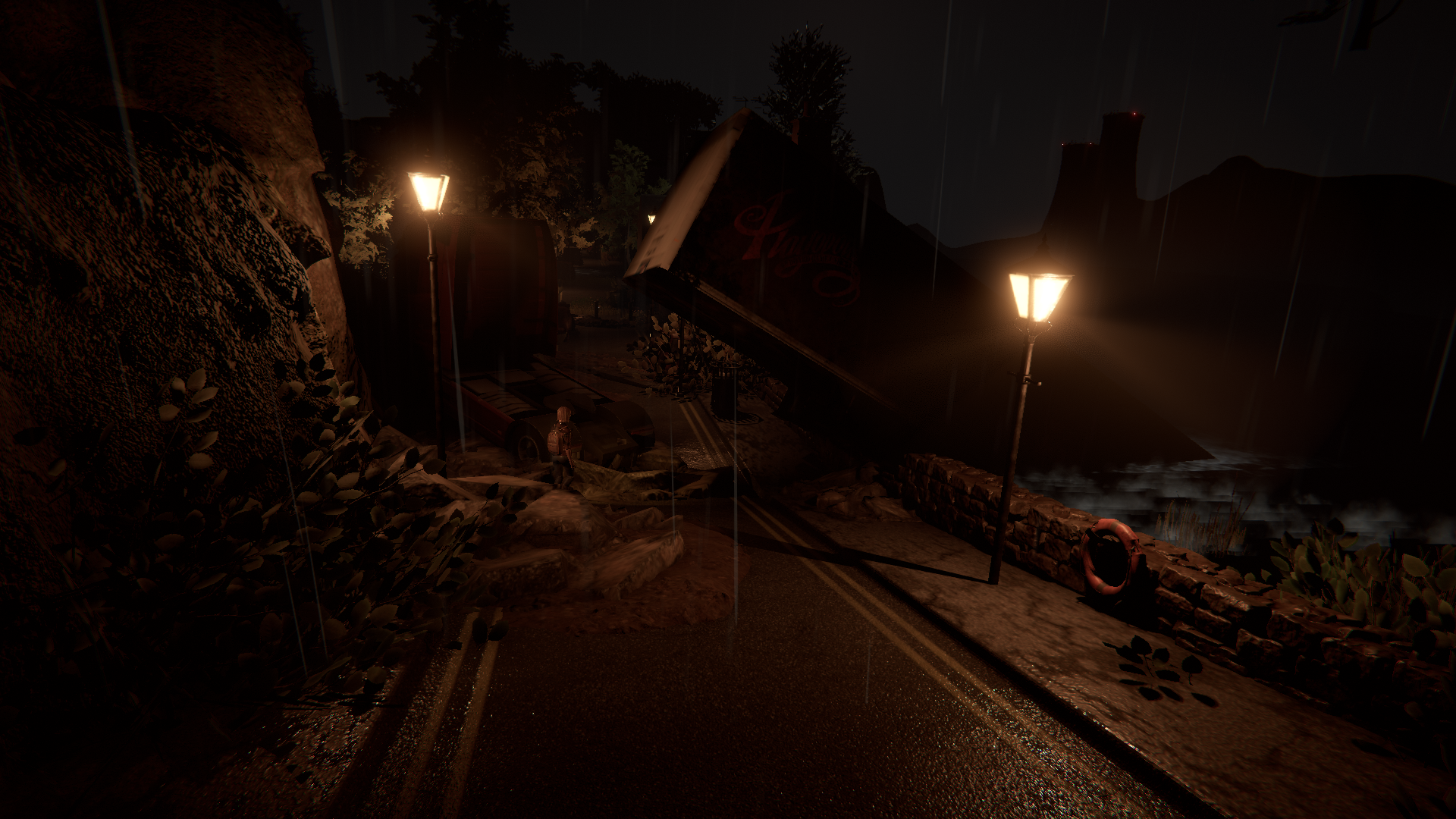
Here we use un-coupling a lorry trailer as a way to thematically enhance a simple "unlocking" puzzle
One method of tackling this problem is simply to make less locked doors. Summerford is set in multiple locations including several large outdoor sections rather than a single indoor environment, so we have a lack of doors overall compared to games set entirely inside.
You’ll also never have to manually “use” keys you own. And all our keys are well labelled. Find a key for a room in the school? It’ll be obvious it’s for the school, and you won’t need to run around the map hoping it’ll work.
Respecting Player Time
Tying all of this up neatly is our final philosophy for creating a modern survival horror - respecting the players time. This is more important in horror than any other genre, because maintaining fear, tension and atmosphere is impossible if you get your pacing wrong.
The loop of exploring, solving puzzles, combat and managing resources has to be consistent, and it has to be constant. Within that loop, there needs to be variation and there needs to be a constant subversion of expectations.
The biggest balancing act of all is “backtracking”, and where and how you implement it into your design. The metroidvania style of opening new areas of the Spencer mansion is one of the things that makes the original Resident Evil such a tightly designed and appealing game.

An evolution of our church bridge shot, a place you can potentially return too a few times in your journey.
It's also a really convenient way for games to entirely miss the point and use backtracking as a way to make a game longer. Avoiding this is something constantly on our mind with our design.
Throughout Summerford, you can unlock shortcuts that will allow the player to navigate around the central area faster. Hopefully this will retain the sense of exploration and discovery from Resident Evil, while avoiding stretches of the game where you’re just waiting to arrive at the next objective.
We’re also working on an old coal mine that runs underneath the village which will allow the player to get to already visited areas much faster, though with a larger amount of risk of injury or loss of resources. After all, nothing convenient should be completely without risk in a horror game.
Thanks for reading!