
What is a survival horror? According to Steam, pretty much any horror game!
It’s no secret we take inspiration from the classic era of survival horror, developed mostly in the PS1 and PS2 days. Even then, that’s still a very broad range of games.
Both Resident Evil and Silent Hill are survival horror games after all, while being very different experiences. That’s not to mention games like Obscure, Fatal Frame, Rule of Rose, Haunting Ground and many others which all added their own spin on the genre during those formative years.
So, perhaps a better question is: What does survival horror mean to Summerford?
Fixed Perspective Cameras (With some updates)
While the triple-A world has moved on, this classic visual identity of older survival horror is a large part of Summerford. Using fixed perspective cameras affects the design of Summerford at every level, from combat to controls, but even this linchpin of classic survival horror isn’t quite as simple as using one single method.
Here's an example of some of the shots we use in the earliest area of the game. Not all of these are static!
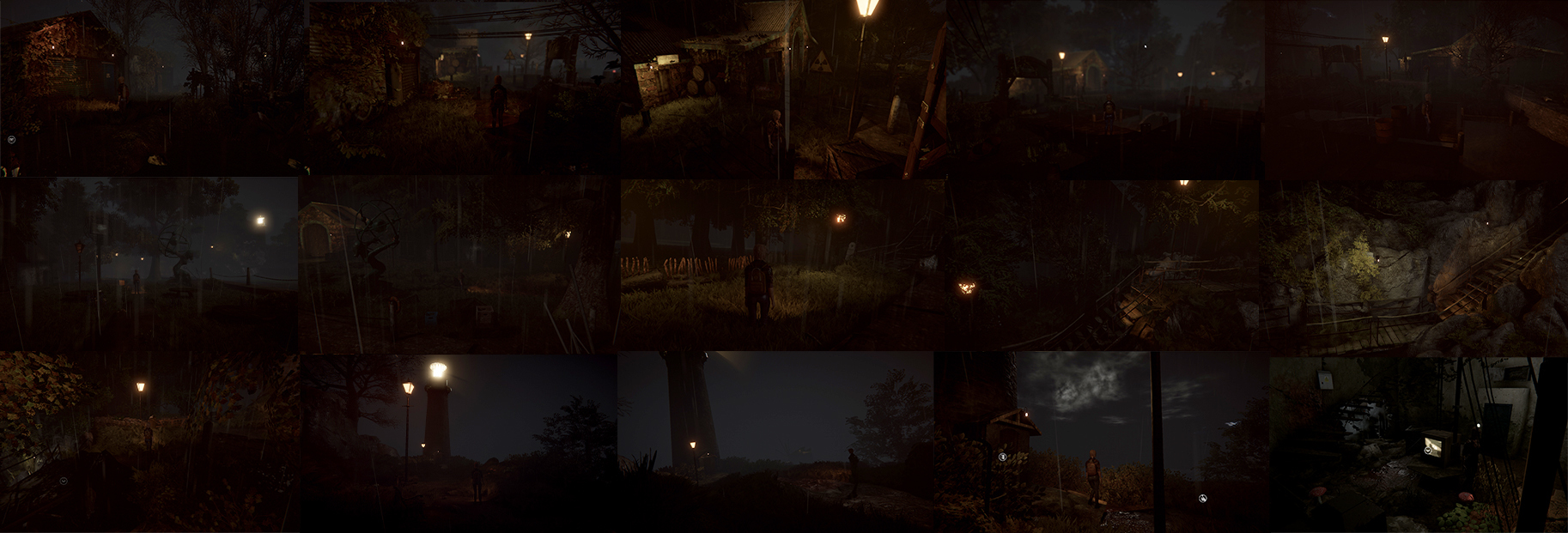
The classic Resident Evil games used fixed perspective cameras throughout, but even the earliest Silent Hill games used a mixture of different cameras, tracking shots and a variety of other effects to both aid and disorientate the player.
Summerford definitely leans closer to Silent Hill in this regard - it’s one of the advantages of making a game in full 3D, rather than using pre-rendered backgrounds. Not only does it add some life to the world, it means that larger outdoors areas and long, tighter indoor spaces can flow more naturally without needing to change cameras (and often, player direction) too quickly.
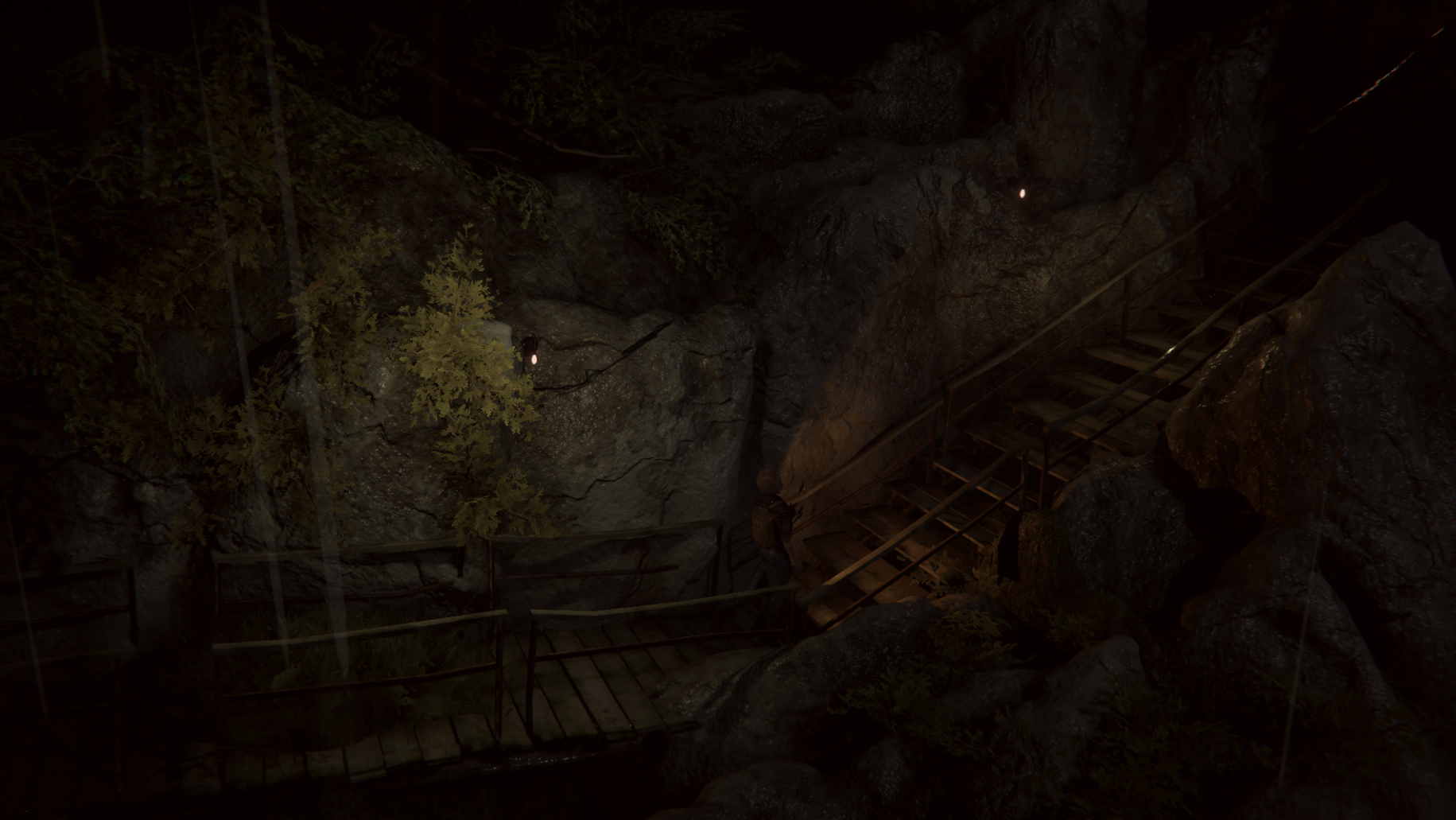
It gives you a great deal of flexibility in using cameras for tension too. A good example of this is how Silent Hill moves from an almost over the shoulder, wider perspective in the town itself, where the player needs to move and navigate faster, to closer and often static shots while indoors.
We’re constantly looking at ways to use our cameras like this; not just as ‘rooms’ to point players to an objective, but also as instruments of adding or relieving tension, and providing a different perspective on already visited environments.
We can approach our areas not just in terms of graphics and mechanics, but cinematography, too. It may have started as a technical limitation in the original Resi games, but it can produce a filmic look that’s really quite unique to this particular method.
A Combat Philosophy
Combat is possibly the biggest balancing act for Summerford. Put too much emphasis on combat, and continually escalate that combat throughout the game, and you can make the player feel invincible, removing threat and tension.
Put in too little or avoid combat entirely, and you either risk removing threat and tension completely. Of course, you can supplement with other mechanics, such as the stealth and sanity of games like Soma and Amnesia, but Summerford was never going to be a stealth game, so we’re looking for a middle ground.
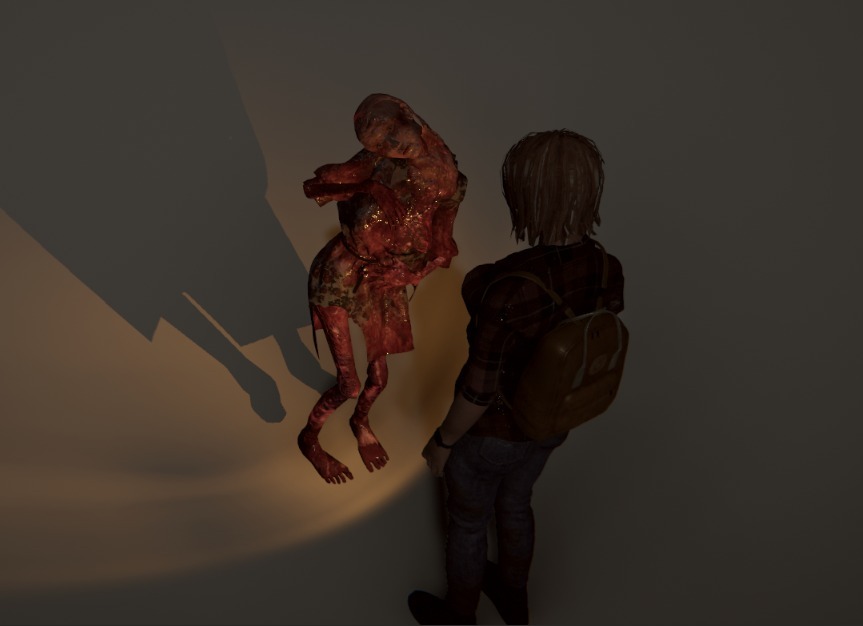
Not much to show off here yet, though we have been working on a more grown-up and darker version of the original basic enemy:
We want to treat combat like an elaborate, game-long puzzle. For us, combat in a survival horror game needs to always present difficult decisions and always focus on risk and reward.
Another way of looking at is to say it’s about ‘surviving’ odds rather than ‘overcoming’ them. To do this, we want to place more emphasis on preparation than action.
In that sense, our combat is more likely to ask questions like “Is taking this shortcut going to be worth the risk to my health?” or “When is it going to be worth using this item, and do I know where to find more?”
Moving the emphasis to preparation and resource management and away from the actual moment-to-moment fights of any given encounter gives the player more agency, without making the player seem overpowered or too capable of facing the horror in the game.
Thanks for reading!
Next time we’ll talk a bit more about some of the things we’re not going to be borrowing from the classics, and why we think some classic design mechanics are best left in the past.