
Hello commander!
Strap yourself in tight because we are back again with some hot, juicy new details. Today is the day we’ll kick off our series of Versus posts, focused on the recently revealed Tribute to the Liberation of Italy DLC.
Keep reading to find out more!
What can you expect?
The Tribute to the Liberation of Italy DLC is a new expansion, which follows in the footsteps of our popular Tribute to D-Day DLC.
In this new DLC, we’ll put the spotlight on the Italian campaign, an often overlooked World War II front. We feature eight new divisions that fought in the Italian theater of war during the summer of 1944. The Tribute to the Liberation of Italy DLC will feature troops from nine different nationalities, including four new ones, plus plenty of new units.
We will reveal each new pair of divisions in a themed Versus blog post. Our very first Versus will highlight the two Armored battlegroups.
Let’s welcome to the stage the 26. Panzerdivision with its special AA forces going toe to toe against the supersized 6th South African Armoured Division!
26. Panzerdivision
The 26. Panzerdivision’s was the last German armored division remaining on the Italian battlefield in the summer of 1944, after the elite Fallschirm-Panzer-Division 1. Hermann Göring was moved to Poland. The 26. Panzer can be considered THE Italian theater’s Panzerdivision.
Created in 1942, it was formed out of the 23. Infanterie-Division, which took part in the invasion of Poland. Trained in France and re-equipped as an armored division, the formation was ordered to Italy in July 1943. The 304. Heeres-Flakartillerieabteilung joined the 26. Panzerdivision, providing its AA forces. This latter detachment had its origins as the special anti-air umbrella of Hitler’s close protection screen while the Third Reich’s leader traveled by train. Hitler stopped using this method of transportation, which saw the detachment fighting the rest of the war on the Italian front.
The first real engagement of the 26. Panzerdivision was against the American bridgehead at Salerno during Operation Avalanche. Afterward, the division fought several defensive battles anchored on a succession of rivers. Pulled back into reserve, the division was then sent against the new Allied bridgehead at Anzio, containing this amphibious invasion until after Operation Diadem. Retreating through Rome and Florence, it switched coasts, from the Mediterranean to the Adriatic, where it played a crucial role in Operation Olive. You might recognize this campaign as to be the centerpiece of the Nemesis: Battle of Rimini.
Being pushed back ever steadily, the 26. Panzerdivision’s was never redeployed from Italy, fighting defensive battle after defensive battle until the war’s end. Ultimately, the formation surrendered to the British near Bologna.
26. Panzerdivision’s main features
What can you expect from the 26. Panzerdivision in Steel Division 2?
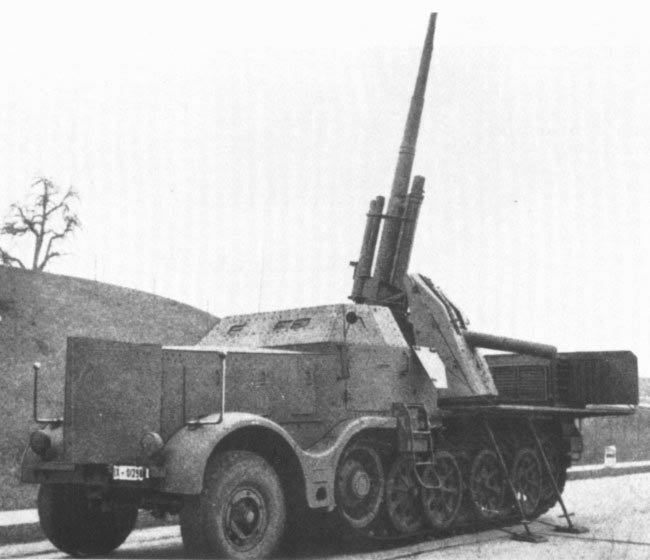
- The 26. Panzerdivision’s substantial AA forces included the only twelve FAMO 88mm, officially known as the 8.8cm Flak 37 Selbstfahrlafette auf 18 ton Zugkraftwagen - rolls right off the tongue, right?This unit is a Flak 88mm bolted on a heavy SdKfz. 9 FAMO half-track, making a uniquely hard-hitting SPAAG.
- Furthermore, thanks to a large amount of mechanization, quite a few of the AA units are self-propelled, including single 20mm and Flakvierling AA guns (but no 37mm).
- The 26. Panzerdivision’s has only half the usual allocation of tanks, with Panzer IV forming the bulk of its armored arsenal. The formation has access to some Panthers, though only in limited numbers.
- The formation’s HQ unit, unusually so, was supplied with the Flammpanzer II, a flamethrower tank built on the chassis of a Panzer III.
- Like many other German divisions in Italy, the 26. Panzerdivision made plenty use of Italian equipment either captured from the disarmed Royal Italian Army or taken from local production lines.
- This includes the ubiquitous Lince, an Italian copy of the Humber Scout Car.
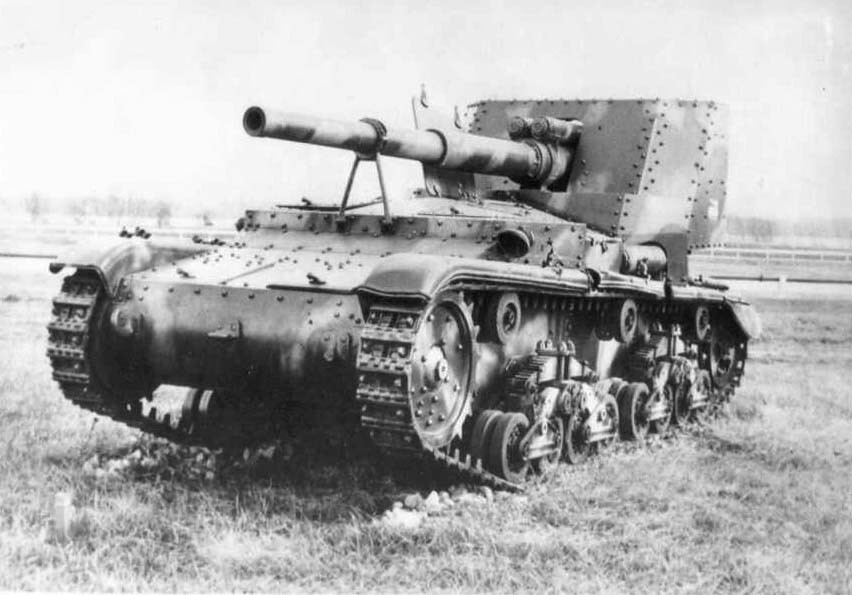
- The Semovente line of self-propelled guns was a common sight on the Italian battlefield, with the 26. Panzerdivision counting on the StuG M42 75/34(i) (Italian Semovente 75/34) and StuG M43 105/25(i) (Italian Semovente 105/25). In-game, the former will be classified as a Tank unit (the same as a StuG III G, but lighter) while the latter as a Support unit (due to its limited supply of AP, with the rest being HEAT rounds).
- Another Semovente variant will be the StuG M41(i) Füh. (Semovente M41 Commando) - a commander’s StuG, with its main gun replaced by an 8mm HMG.
- Lastly, the formation will have access to the rare StuG M43 90/53(i) (Semovente 90/53), several of which were lost during the Battle for Rome. The sole surviving example soldiered on, with the excellent Italian 90mm AA gun in a somewhat fragile open-top vehicle proving its worth as a powerful tank destroyer.
6th South African Armoured Division
We are more than excited to present to you the 6th South African Armoured Division (or 6th SAAD for short). Originally formed as the 1st South African Infantry Division in 1940, elements took part in the Eastern Africa campaign, and then as a whole, in North Africa during Operation Crusader in 1941, Gazala and the 1st and 2nd Battle of El Alamein in 1942.
Retrained as an armored division in Egypt after 1943, it landed in Italy in April 1944 as part of the British Eight Army. Fully involved in the pursuit of Axis forces after the Battle for Rome in June 1944, the 6th SAAD clashed with the Hermann Göring Panzerdivision before this German formation was pulled off the line and rushed to Warsaw (as depicted in our History Expansion Steel Division 2: Death on the Vistula). Next up, during the liberation of Florence, the South Africans engaged in heavy combat with the 4. Fallschirm-Division, a formation we’ll come back to on a later date. Continuing the fight during the Apennines offensive, the South Africans made their way north, as far as Treviso, before the conclusion of the war.
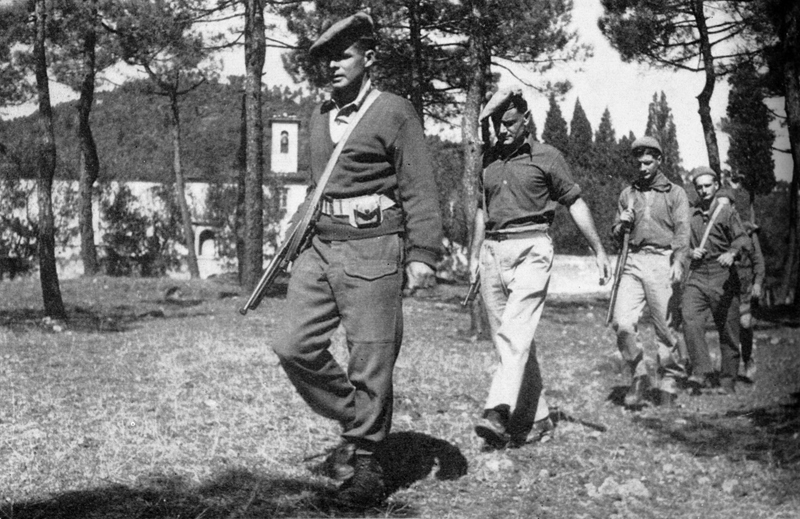
Interestingly, the 6th South African Armoured Division turned out to be the sole active armored division of South Africa during World War II. There was supposed to be an additional armored formation (the 1st), but this never materialized due to manpower shortages. Consolidating all available units, as well as putting volunteers into one formation destined for European combat, ensured that the 6th SAAD morphed into a supersized armored division. You can consider the 6th South African Armoured Division an Allied equivalent of the German Grossdeutschland - larger than a division, but not yet the size of a corps.
The 6th SAAD included the whole of the 1st South African Infantry Division, remnants of the destroyed 2nd South African Infantry Division, the 7th SA Motorized Brigade, as well as elements from the 3rd South African Division, a training formation. However, when landing in Italy, there was still a lack of soldiers, which meant that the British 24th Guards Brigade was attached to bolster the South African troops for most of the war.
6th South African Armoured Division’s main features
What can you expect from the 6th South African Armoured Division in Steel Division 2?
- As mentioned, one-third of the division’s infantry (and support units, including Vickers MG, 6-pdr, mortars, etc.) is actually British.
- While a Commonwealth division, the 6th South African Armoured Division fields an unusual mix of British and American armor. You will encounter not only the usual Staghound, Sherman V and Stuart tanks (all of them jalopied) but also Sherman Ib (American M4 105mmm), Sherman IIa (American M4A1 76mm), Priest, and Greyhound. These latter units are normally only found in US or US-equipped foreign divisions.
- While Fireflys rarely deployed in Italy, at least until October 1944, a handful Firefly Vc found their way into the country. They were designated training vehicles, which the division “conveniently forgot” to leave behind in Egypt. Older Firefly Ic replaced these at a later date. In-game, both Firefly variants will be phase locked.
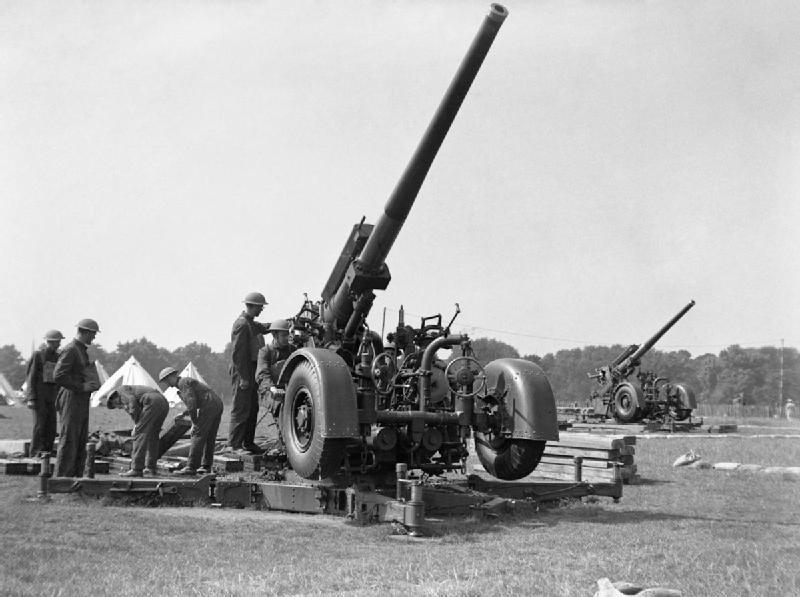
- Scrouging together more units than necessary, the 6th SAAD gets its own heavy artillery - normally found at corps level - including BL 4,5-inch (114mm) and BL 5,5-inch (140mm) howitzers. What’s more, the QF 3.7-inch (94mm) AA/AT gun, a British equivalent to the German dual-purpose 88mm (although less efficient), will also be deployable.
- Several M10 can be fielded but more often used in an indirect fire role than as tank destroyers. As such, they were fitted with special indirect calculation devices. In-game, they will lose the .50 HMG but gain the indirect fire trait, much like the Soviet SU-76M.
- The division’s recon units, the Natal Mounted Rifle was mostly composed of Rhodesian volunteers, and unusually so, equipped with Sherman V Recce as a reconnaissance tank.
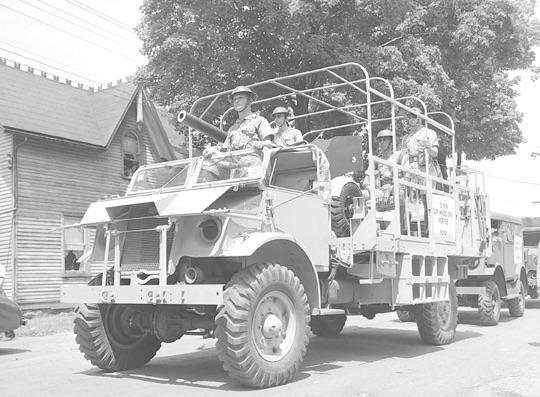
- A new unit is the 6-pdr Portee, which features the ubiquitous 6-pdr gun mounted on the flatbed of a Bedford truck, allowing it to fire above the (cut-off) cabin. Cheap, mobile but fragile - much like the modern-day technical.
- Like many Allied divisions in Italy, the 6th SAAD went through a manpower crisis, lacking sufficient replacements. With troops in Normandy a priority, most of the formation “recycled” underused units in the field, in this case, anti-aircraft detachments. This is represented in-game with the battlegroup only having a limited amount of Infantry slots. The Disheartened Converted Gunner squads, made up of 11 riflemen and one SMG, can also be deployed.
Coming up next
That’s all for this week. We’ll be back in two weeks, with more details in our next Tribute to Italy Versus post.
Let us know what you think through our Steam forums and Eugen forums, or check our (Facebook and Twitter). Looking for an online game? Visit the kick-ass Discord server or Reddit page.
See you on the battlefield, commander!