
Many of you have asked us about the current state of the game and why there were no updates for several months. So we decided to give you a little insight into the development process.
We are still rewriting many of the game's base systems, a decision that we knew, would allow the final game to be bigger and better, but also stop us from doing regular updates for a longer time.
Most of the game code (buildings, combat, work, resources, controls, VR framework) has been updated to the new system. We have also added localization (the game now supports different languages) and are currently working on the UI, the save game system and the tutorial/quest system, with music and animations still untouched. Most of this progress is “invisible”, so unfortunately we don’t have anything new to show there.
But we have also been working on the level creation tools. The first island was entirely built by one artist, without any ways to reuse parts easily. As we want to create many more and also bigger islands, we knew we had to add tools the level designers can use to directly realize their ideas.
Before building tools, it is a good idea to write down what you want to achieve with them and set boundaries.
These are the things we want from our tools:
- Easy to prototype and test new maps
- Easy texturing without external tools
- Not just a heightmap terrain but overhanging parts, bridges, caves and a bottom
- Good performance (limited materials and polygons)
Things the tools won't achieve:
- Procedural creation and/or levels with basically infinite size (hard for balancing and performance)
- A level editor we can ship as part of the game (this would take a big amount of extra time and effort)
We will show you a rough idea of how many steps it takes to build a new level for Townsmen VR:
VOXELS
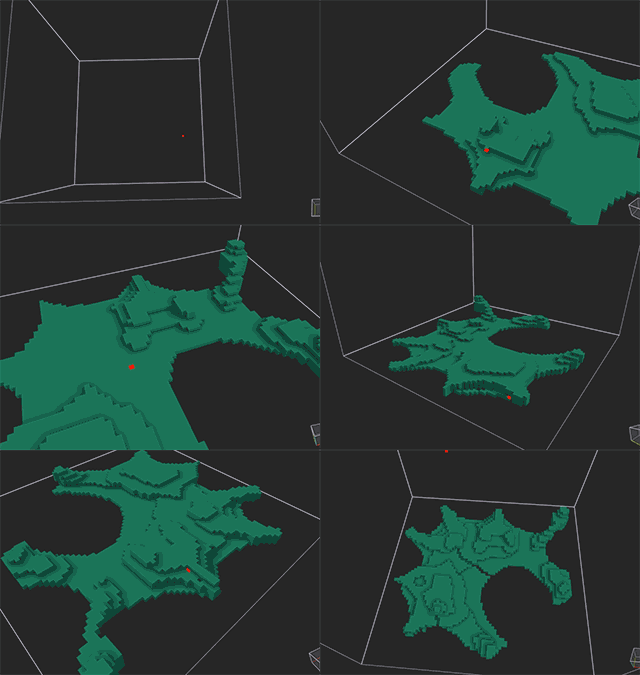
To decide on the basic shape of a level we do a quick voxel sketch. This is very helpful to define the coastline as well as the location of mountains, rivers and lakes.
We can also take a smoothed version of this island to do first gameplay tests, but as soon as we are happy with the voxel sketch, we start production of the full level.
TILES
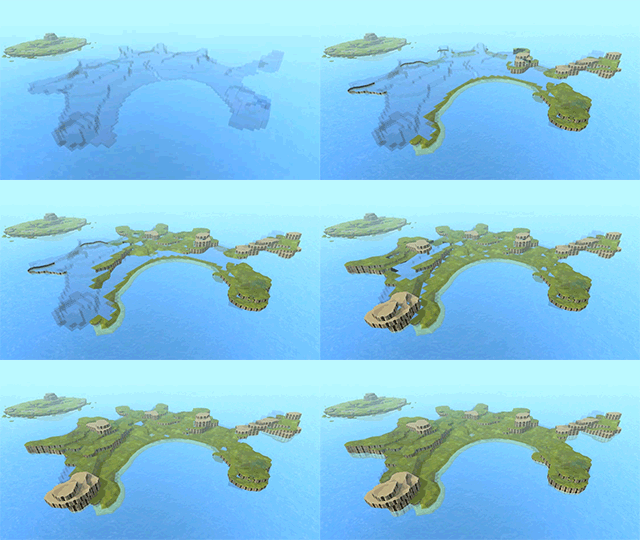
The voxel island is then used as a template to place 3D tiles. We currently have over 100 different tiles and are constantly increasing this number.
This is actually the most time consuming part of level creation. In this highly sped up time-lapse you can also see the old island in the background for comparison.
TEXTURES, SCULPTING AND OBJECTS
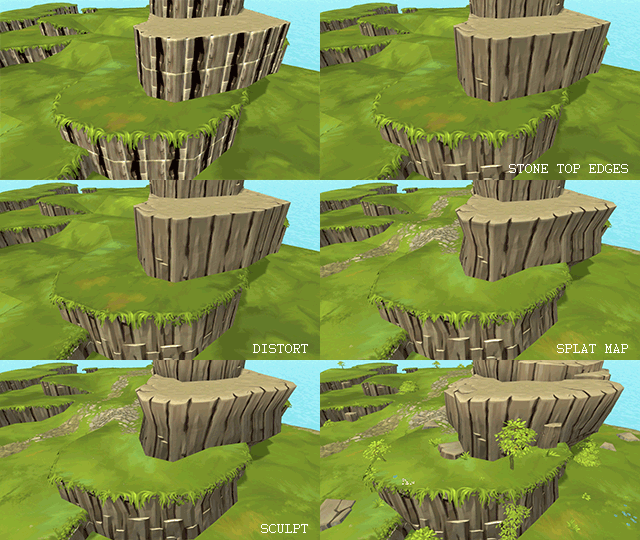
- Textures: Having the textures on the small tiles fit with any tile combination would make the textures very small and repetitive. After building the base geometry the wall textures are automatically redistributed. Then the top and bottom stone edges are recalculated to fit the walls. Finally the grass border textures are redistributed randomly to not show the same variation over and over.
- Distort: The whole island can be distorted based on a 3d noise function to break up the underlying grid. The stone walls are also being modified so they are not just straight but slightly dented to produce overhangs.
- Splat Map: The grass surfaces are merged into one big texture. This “splat map” allows us to directly draw different textures (grass, mud, sand, stones) on the surface with nice transitions between the materials.
- Smooth normals: As tiles can be placed in many different combinations, there might be visible edges where they meet. This is due to the normals pointing into different directions. Most of these edges are unintended, so we smooth them.
- Sculpt: We have tools to modify the height of the ground to make it look more natural. This is especially being used on beach and river tiles as well as to smooth out slopes. The tools can also be used to move geometry in any direction or even move single vertices, making it easy to modify the geometry anywhere.
- Place objects: To decorate the island, we have brushes to draw grass and trees or place single objects like big rocks to further improve the mountains.
WATER
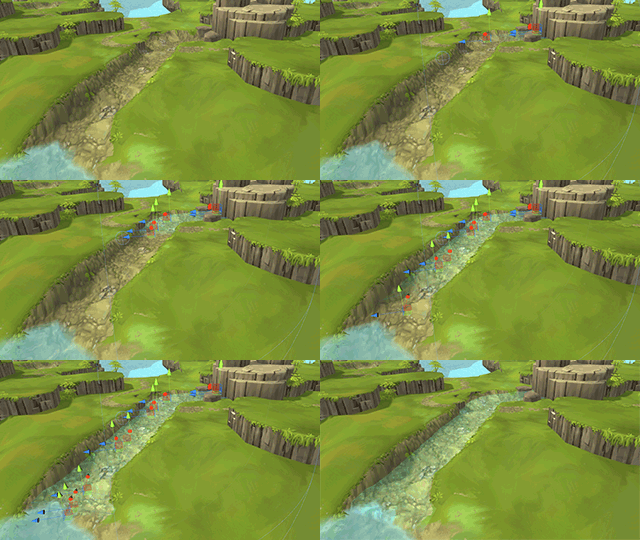
Rivers are filled with water by creating and modifying control points for the water flow mesh.
RESULT
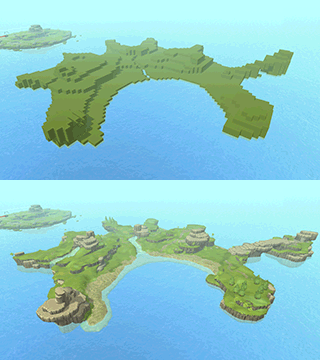
This is the result we can achieve with the current state of our level creation tools. Please note that all the tile models, textures and decoration objects are still not final, but it should give you a good overview how the level creation process works right now.
We hope this has given you some insight into what we are currently working on. Unfortunately we still can't promise a release date for new content, but we are working hard to create the best medieval town simulation/strategy game for VR.