
SkyAid — Devlog #02
Zeroing Out: The Visual Language of the Disaster Chapter
© ApricotGame 2026. All Rights Reserved.
This time, let's talk about the art of the Disaster chapter.
Not the tech, not how many assets we made — just one question: what should this chapter actually look like?
1. The Core Idea
The art of the Disaster chapter revolves around one idea:
The irreconcilable conflict between humanity's endless expansion and technological progress, and the natural environment.
We don't convey this through dialogue or story — it's carried entirely by the visuals. We want players to see this conflict for themselves while flying, rescuing, and dodging. No explanation needed.
In the main levels, two things appear on screen: the creations humanity is proud of, and the natural forces tearing them apart. They're two ends pulled taut within the same frame. The player flies between them, saves people, and moves on.
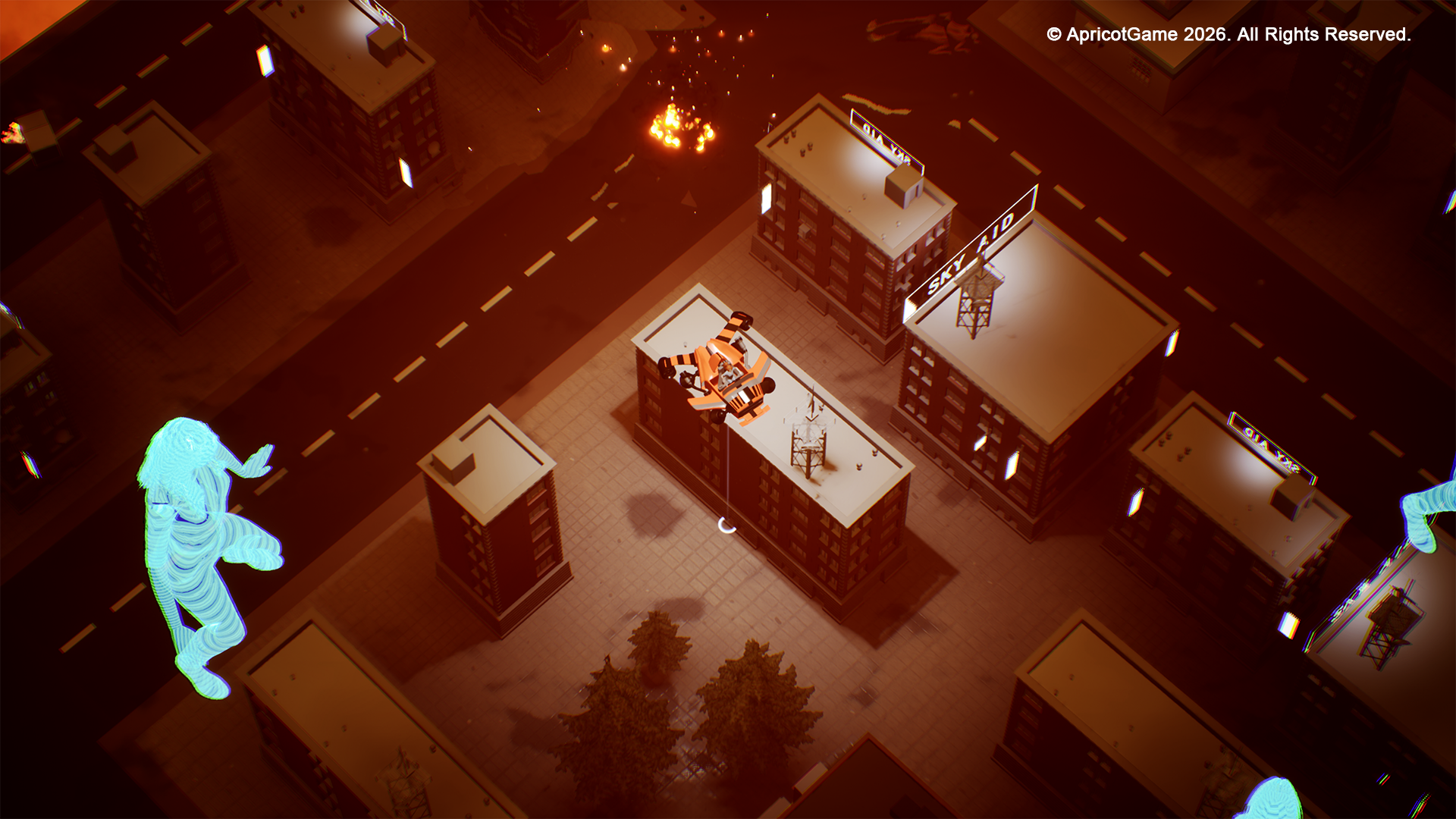
2. How the Visuals Convey This Conflict
Human infrastructure normally represents progress and development. But when disaster strikes, these structures become part of the catastrophe themselves: no longer useful, they turn into new hazards. The more ordered something is, the harder it hits when it collapses.
We use cylinders to drive engines, and the exhaust pollutes the air. We use water to generate power, and the flood topples the transmission towers, snapping the lines and turning electricity into a disaster. We build cyber light shows, and when the meteor hits the ground, the burst of light is blinding. The same creation — proof of civilization one moment, part of the catastrophe the next.
We don't try to make it grim for its own sake. We just want players to watch order come apart with their own eyes. Straight lines become tangles, steady motion becomes out of control, patterns become chaos. The more ordered something is, the more it stings when it breaks — and that gap, from order to disorder, is the rescue itself.
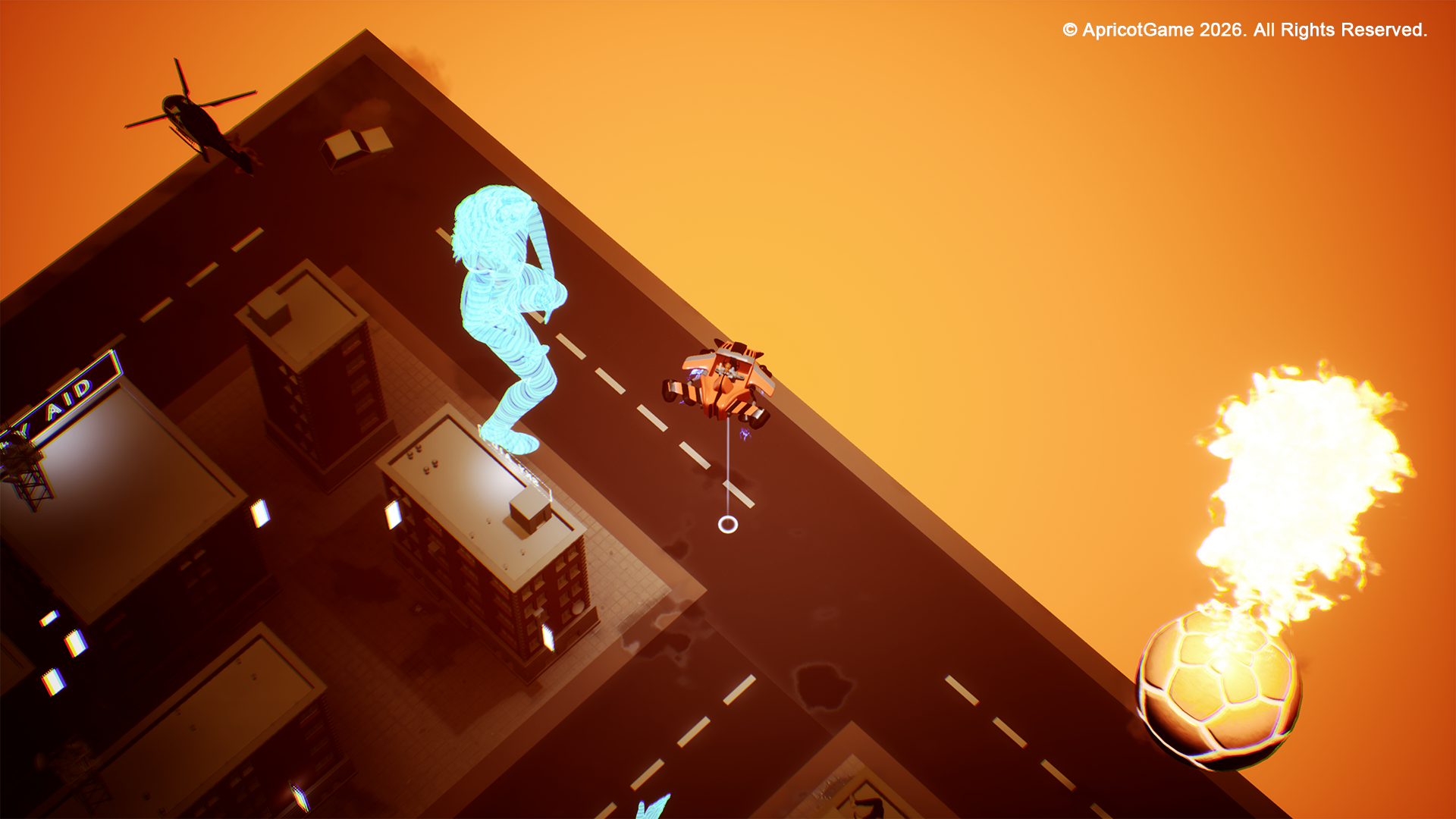
3. Entropy Increase and Zeroing Out
The levels of the Disaster chapter escalate in scale.
Players complete a rescue in each level, save everyone they can, and clear it. But the next level always brings a bigger disaster and stronger visual conflict.
It's a chase. Humanity's technology takes one step forward, and nature's force takes a step with it, always pressing down on you. The higher you build, the harder it strikes. The denser you build, the more thoroughly it destroys. Players slowly realize they're not defeating the disaster — they're racing it. And that race was unwinnable from the very first level.
This escalation accumulates visually. Players may not notice at first, but they'll gradually realize: every person they saved failed to stop the next, bigger disaster. Until the final level — everything returns to zero.
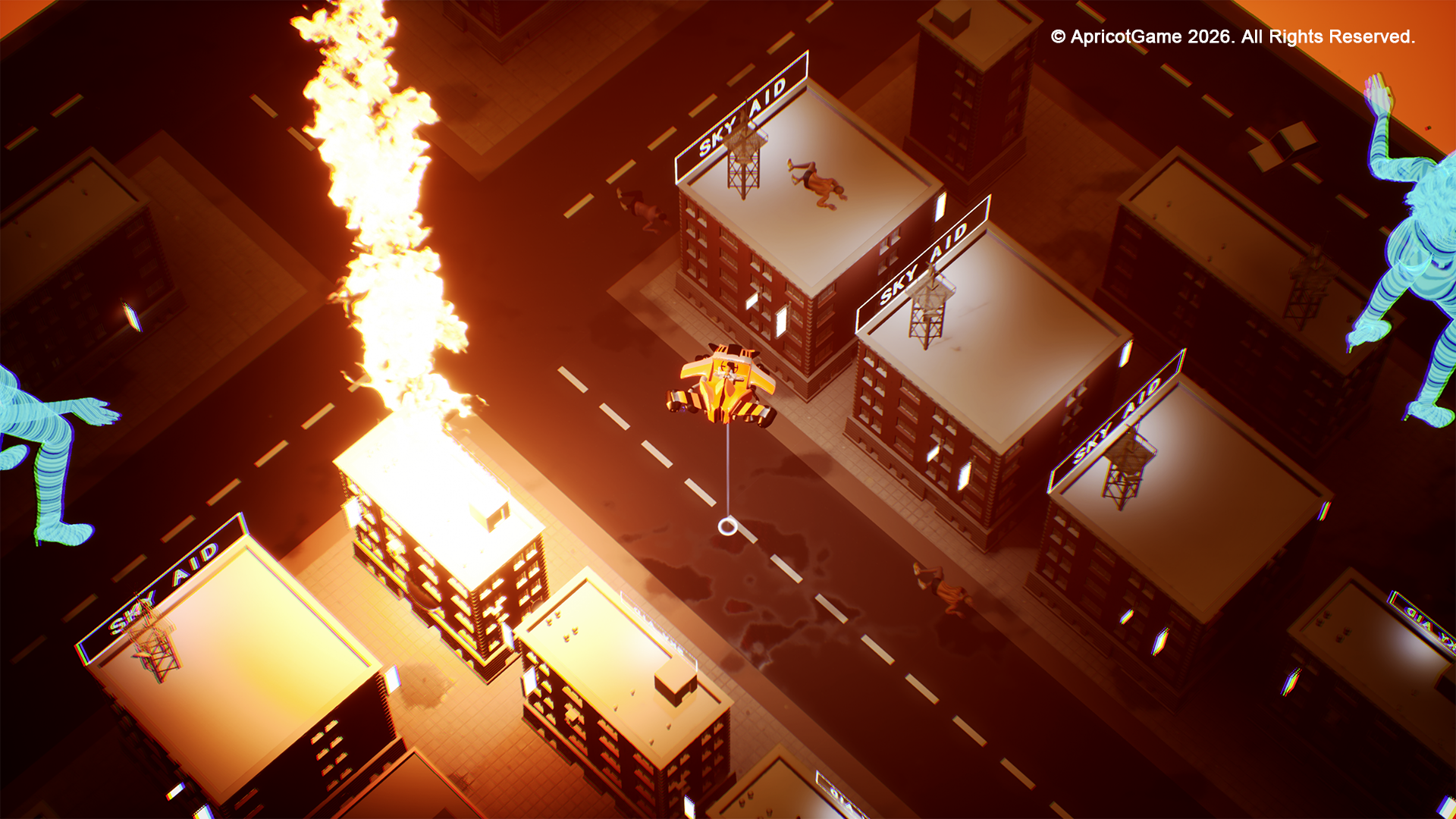
And the player? Do they keep flying, or stop?
4. In Closing
What the Disaster chapter presents is this — every scene in the frame feels like a silent, head-on collision.
When you fly in, we hope you'll feel it without us having to say a word.
Wishlist us on Steam: View game page
© ApricotGame 2026. All Rights Reserved.