
Hi everyone,
Welcome to the first development diary for Until the Fire Dies.
I thought I would begin by talking about the engine I am using to build the game and why I chose it.
Why Unreal Engine 5?

Until the Fire Dies is being developed in Unreal Engine 5, mainly using Blueprints.
The biggest reason I chose Unreal Engine was the graphical quality it provides from the beginning.
Until the Fire Dies relies heavily on atmosphere, lighting, shadows, foliage, fire effects, and the contrast between the warmth of the campfire and the darkness surrounding it.
Unreal gave me a strong visual foundation without requiring a huge amount of additional work before the game started looking close to what I had imagined.
Unity is also capable of producing great-looking games, but achieving the same kind of result would have required more setup and additional work from me. As a solo developer, I would rather spend that time building and improving the gameplay.
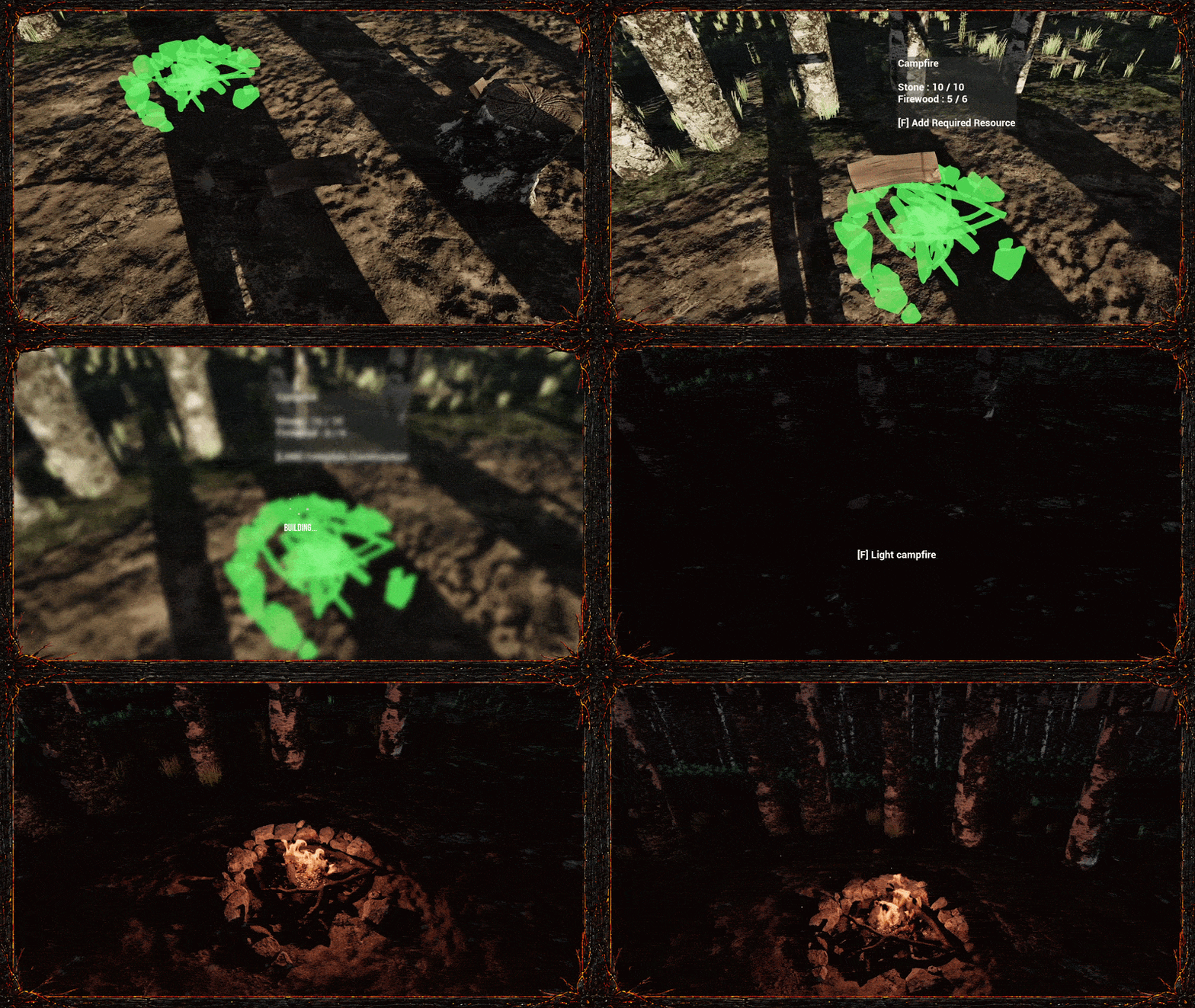
Building the campfire, which sits at the centre of the survival loop.
Working with Blueprints
Most of the game is being built using Unreal Engine’s Blueprint visual scripting system.
Blueprints allow me to build gameplay visually, test ideas quickly, and connect different systems without relying heavily on traditional programming.
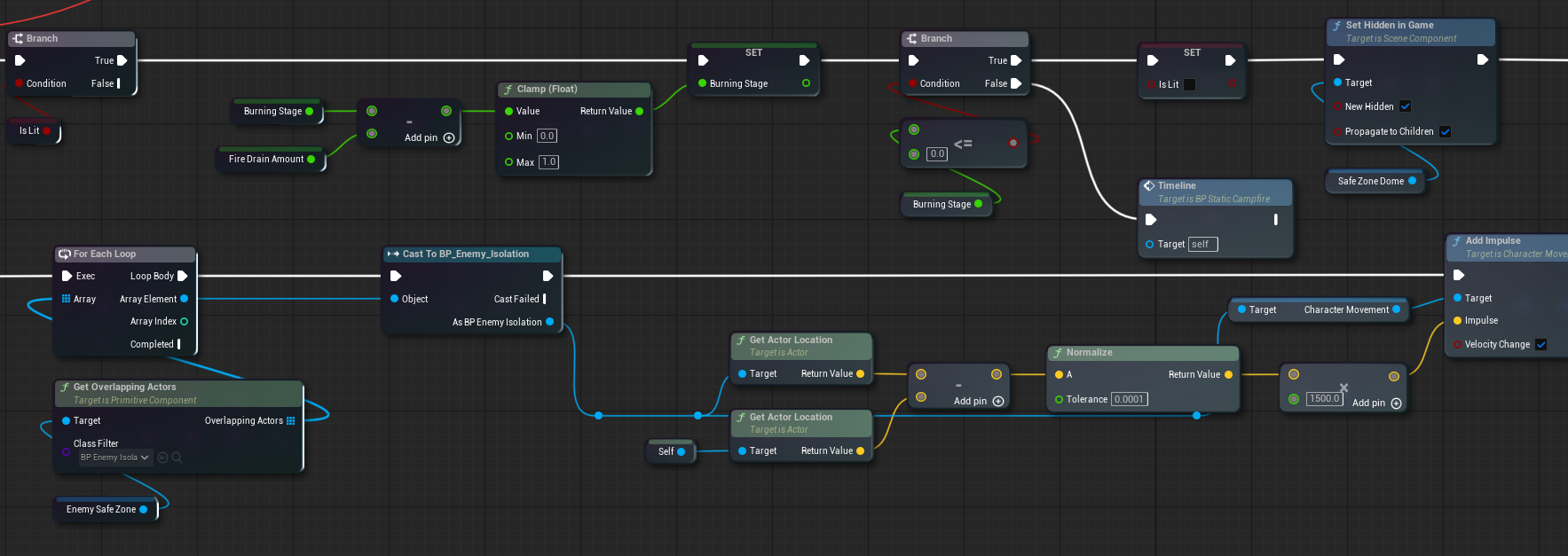 Part of the campfire Blueprint, controlling fuel drain, the protected firelight area, and the force that pushes nearby enemies away.
Unreal Engine is not always easy to work with. Debugging can become difficult when several Blueprints, animations, collisions, timers, and enemy systems are interacting at the same time.
Even with those challenges, I believe Unreal Engine is the right choice for Until the Fire Dies and the experience I am trying to create.
Thank you for following the development.