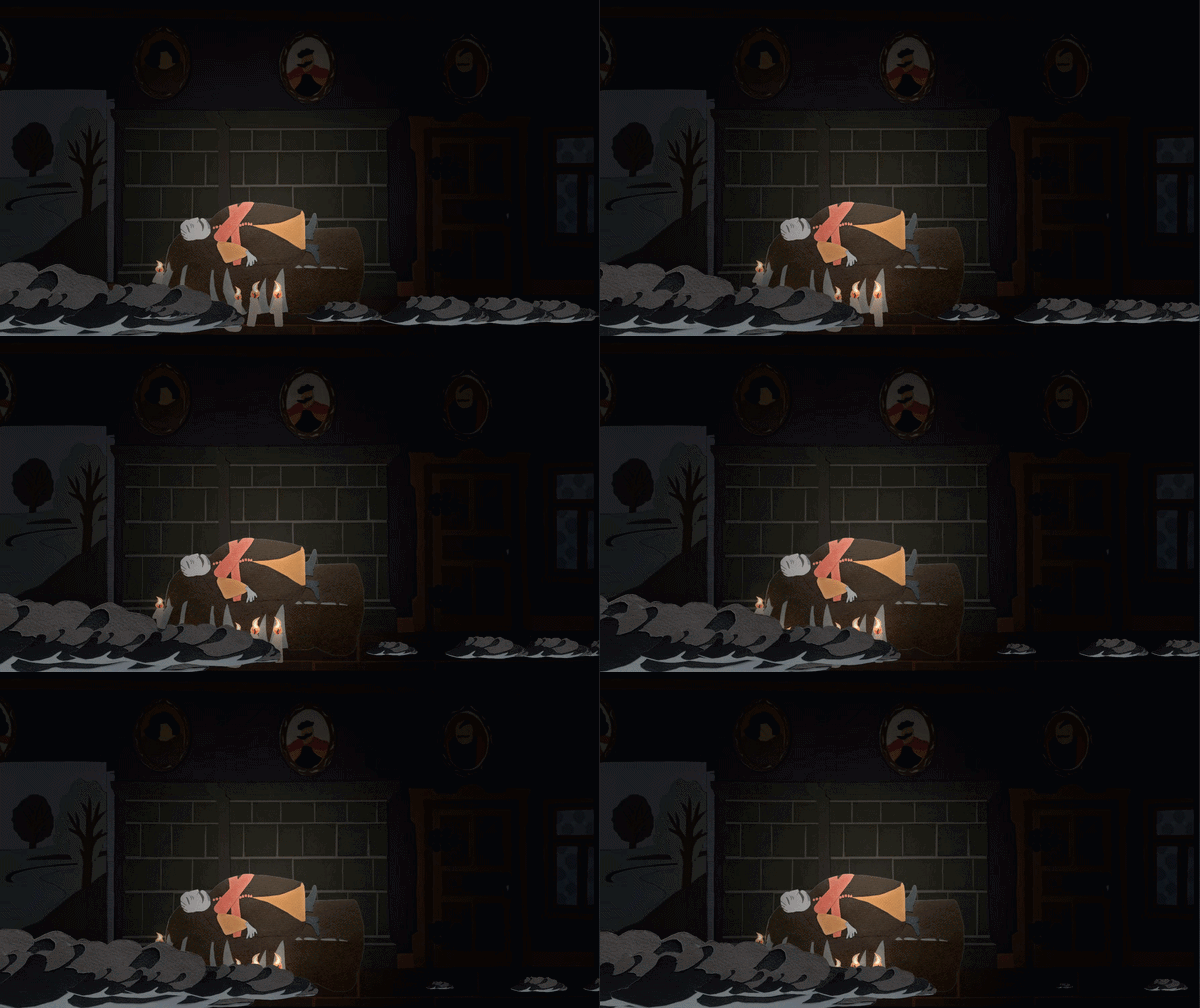
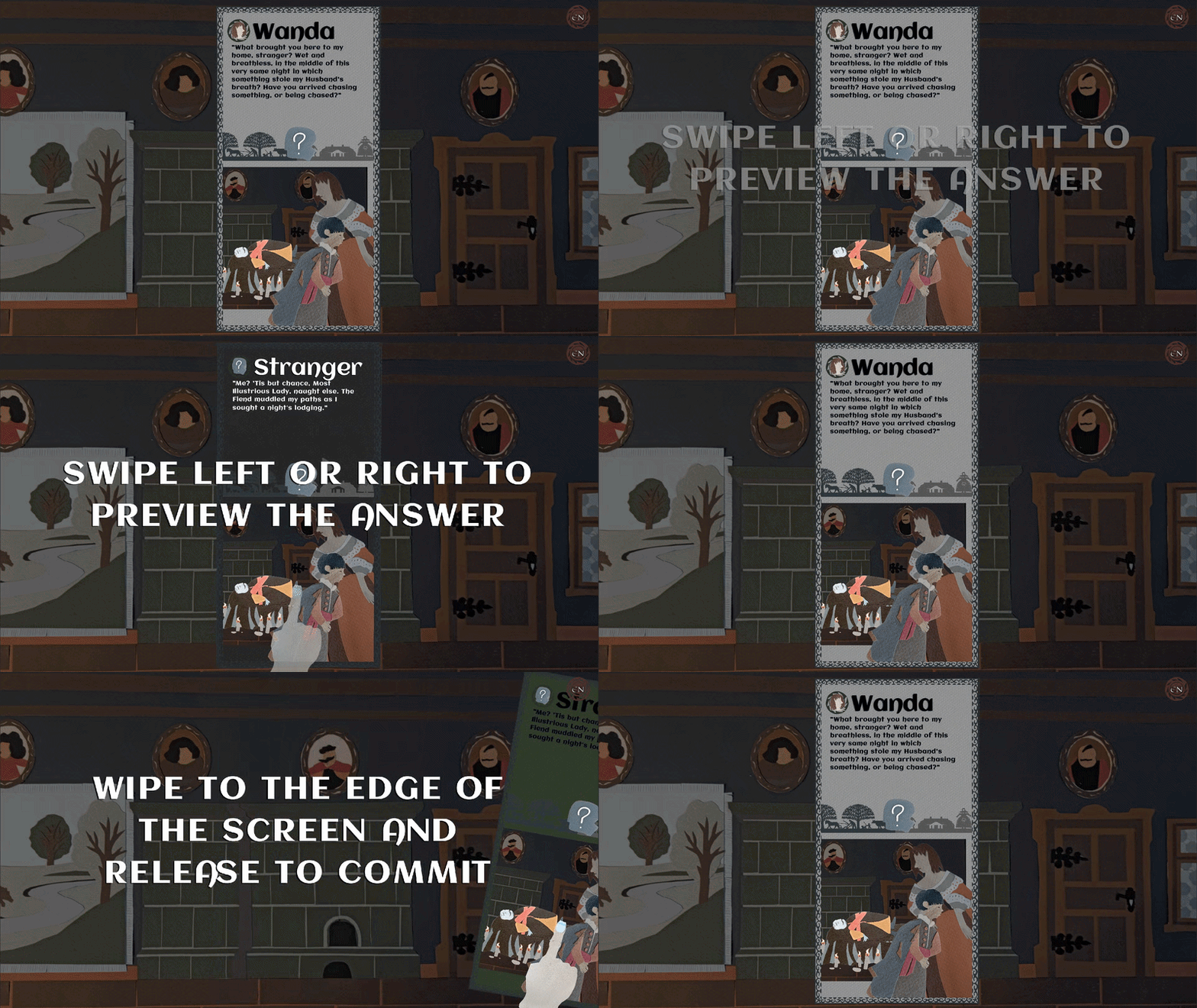
 Mechanic "gossip becomes fact":
dev diary for a witch-trial Reigns-like.
You play my game like Tinder. Two options, left or right. In both, you hear someone's opinion, form your own on top of it, and decide whether and how to answer. Tinder is infamous for making people judge by appearances. That is the entire axis of Until the Thaw.
The design problem I set myself: how do you turn "gossip becomes fact" into a mechanic?
Let's start with the setting, briefly, because everything follows from it.
A village in seventeenth-century Poland. Someone important has died, and accusations of witchcraft start flying around; whoever ends up named the witch will burn. The player is on the defensive from the first card. The game never tells you whether magic is real in this world. It can't. There is no narrator to tell you. Even the illustrations are deliberately vague and dreamlike. You learn the world from word of mouth.
Constraint 1: Everything is an opinion.
Nothing the player reads is the objective truth. It is all just a person, the lady of the manor, her young son, a neighbor, the village as a chorus, telling you what they think has happened.
Your answer is also an opinion, in your own words, addressed to that person. Not to the game, not to a narrator, not to yourself. No correct choice exists.
Choices do something socially: deflecting suspicion from yourself plants it on someone else; calming a scene today hands the young master something to report to his mother at the worst possible moment next week. They are not a way to get to the truth.
In the end, your past choices are judged the way everyone else's actions are. They just sit in the record, open to interpretation, and depending on how the future unfolds, they can resurface as proof of your guilt or as your accusation of someone else.
Constraint 2: Who you are is an outcome of your choices.
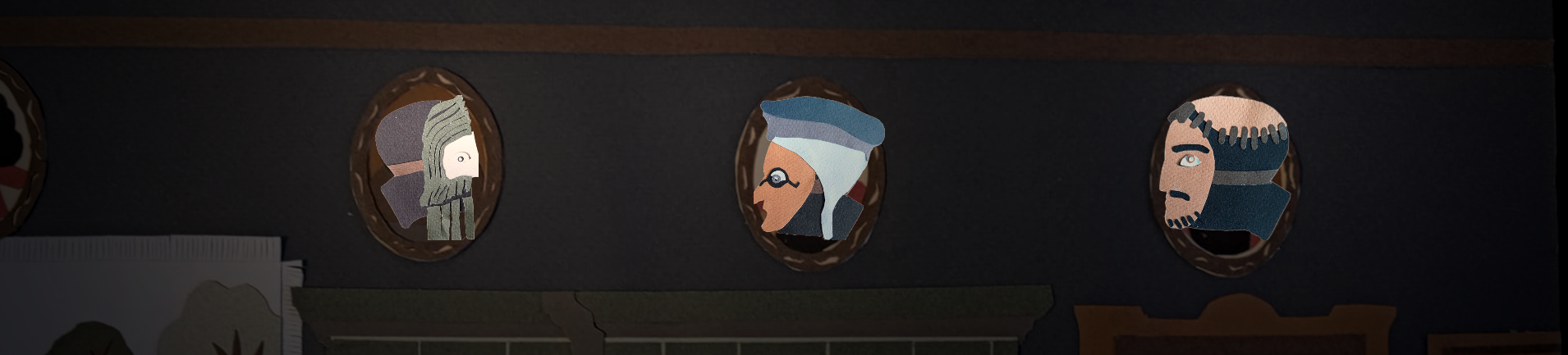
There are three archetypes the player can be.
A learned man, but learned in the pre-Enlightenment sense, the practical reason for period farming manuals, not science.
A pious man of Baroque, folk-Jesuit piety.
A plain man, the voice of the village commons. You never pick one from a menu. You are read into one.
Conviction about who you are accumulates secretly across the village, and then it tips: more or less at once, everyone decides you are someone else. The form of address changes. The weighting of outcomes changes. Options appear and disappear. The same sentence spoken by the "learned" you and the "plain" you is a different move, because the listeners run it through a different man.
Constraint 3: Rumor engine.
Each statement creates a new reality, and it can start circulating.
Each accusation lowers the price of the next because people most easily see the things they have already said. If the young master accuses an old woman by day and something invisible pinches him that night, then obviously it is the witch's revenge; the rumor has begun generating its own confirmations.
If the player tries to stand outside all this, only obstructing, only refusing to help find the guilty, the system does not reward the enlightened skeptic. It makes him ineligible. Illegible people are the margin, and the margin is where accusations start. Refusing to play is a dangerous move in this game.
A worked example. A cow sickens; a woman fumigates it with juniper smoke; the cow recovers.
The learned reading: sound husbandry, as the manuals advise, but how would a village woman know about the manuals…
The pious reading: providence, or the devil's hand dressed as a cure, after all, people are not worthy of miracles, and the devil is very industrious.
The plain reading: technique, done right or done dangerously, by someone who knows things others don't.
The card is the same. What the player says about it becomes a village opinion, and village opinions will bend the future cards.
The escalation pattern is modeled on Tomasz Wiślicz's research into the real trials at Kleczew, a jurisdiction of a few hundred souls that passed at least sixty-five death sentences for witchcraft between 1624 and 1700, where accusations typically grew out of everyday healing practice that failed. The normal could be renamed as supernatural.
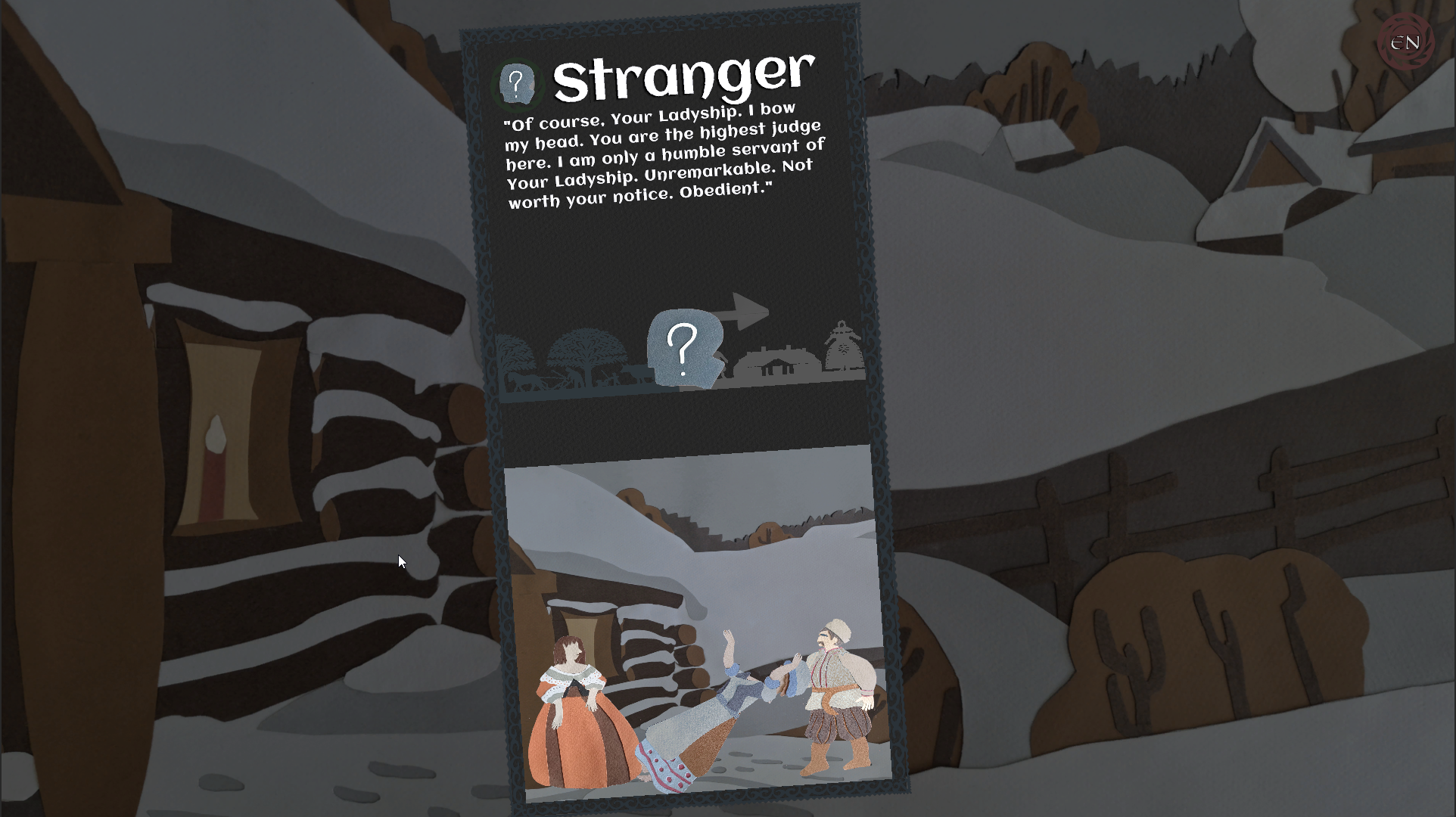
The figures are cut from paper and have no eyes or mouths; the scenes sit halfway between folk tale and old postcard. You never see the world in this game, only somebody's account of it, and the art keeps that promise visually.
Where it stands: built in Unity, mouse and touch, English and Polish.