
Dice System - How Dice Work in Paper Rogue
In Paper Rogue, dice are not an abstract RNG hidden in the background.
They are a physical, systemic tool — the main way the player interacts with the world.
The same die can decide the outcome of a fight, open a door… or completely ruin your run.
Dice as a Universal Tool
Players use dice in almost every core action:
Attack boosts — rolls add points directly to damage
Disarming traps — success or failure is resolved by a roll
Opening doors — sometimes it’s faster to force them than find a key
Opening chests — risk versus reward, every time
Each roll produces a numeric value that directly affects the outcome of the action. No hidden modifiers. No invisible rolls. What you roll is what you get.
The Rule of One - Always Bad
If any roll results in a 1, it almost always means disaster:
attacks start missing
armor stops working
the roll chain is broken
actions trigger negative effects, such as:
traps activating
doors exploding
chests breaking
A roll of 1 is not "low value". It’s a system failure that destabilizes the situation.
Dice Slots - Scaling Risk
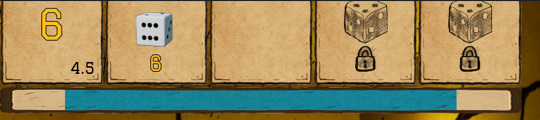
Players can roll multiple dice in sequence if they have unlocked Dice Slots.
Maximum: 4 slots
Slots are unlocked through progression
Each additional die:
increases the total result
refreshes the timer
raises the risk of failure
This turns rolling into risk management: Do you stop now… or push your luck one die further?
Timer and Dice Return
Every roll activates a timer.
While the timer is active, the player can continue the roll chain
When the timer expires:
the last rolled die returns to the player’s hand
the chain ends
Successful actions reward the player:
+1 second to the timer (scaled via progression)
This creates a very tangible feeling:
You are literally winning time while playing well.
Why We Designed the System This Way
We wanted:
every roll to be a conscious decision
luck and risk to be visible and understandable
players to create their own problems… and their own solutions
Paper Rogue is not about "good luck / bad luck". It’s about control, greed, and consequences.