
In this article, I want to share how the graphics in Island of Ash have evolved throughout development. This is going to be a personal, behind-the-scenes look.
When I first started development in 2024, I knew absolutely nothing about graphics technology or programming. But time flies, and I've poured countless hours into learning and practicing to create a quality product. Today, using the starting area as an example, I’ll show you how it changed across different stages of development - luckily, I kept all the screenshots.
Winter 2024 - First Attempts
By December 2024, I made my first attempts at level design. My biggest mistake back then was creating what I'd call "cozy boxes"- cramped spaces lacking breathing room and open vistas. My locations felt awkward, the lighting was terrible, and the color palettes of different assets completely clashed with one another.
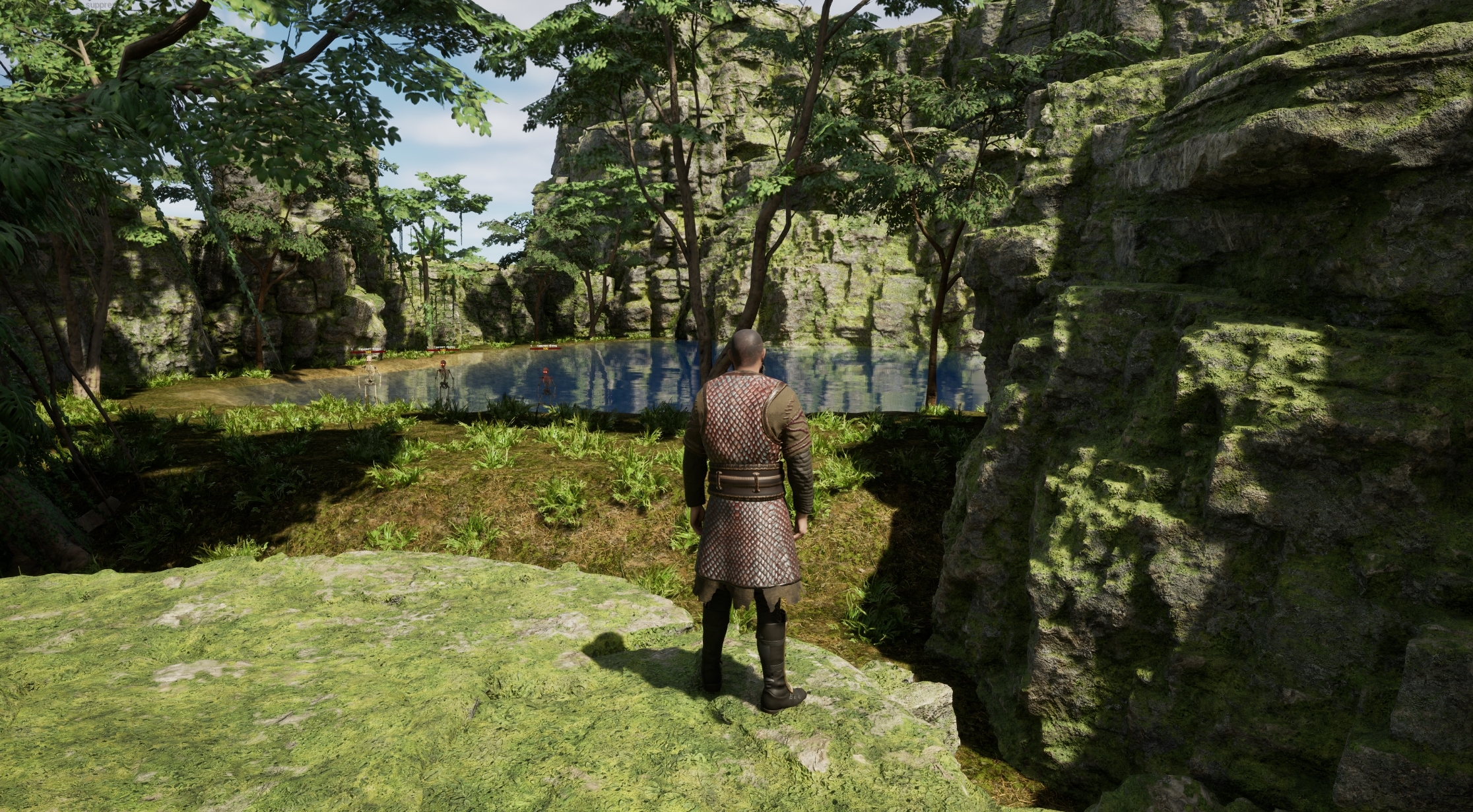
This is what the starting location looked like a year and a half ago. These were my very first tests. The rock geometry looked straight out of a 2008 game, the grass was completely uniform, and the colors felt oversaturated and unnatural. On top of that, the image was flat and uninteresting. Yet, back then, I genuinely thought I had made amazing graphics - I was just so in love with my creation.
Summer 2025 - Things Started Coming Together
About six months later, things started improving. I reworked the first location, integrated some new tech, got a basic grasp of color theory, and learned how shaders work. The screenshot below shows the next iteration.
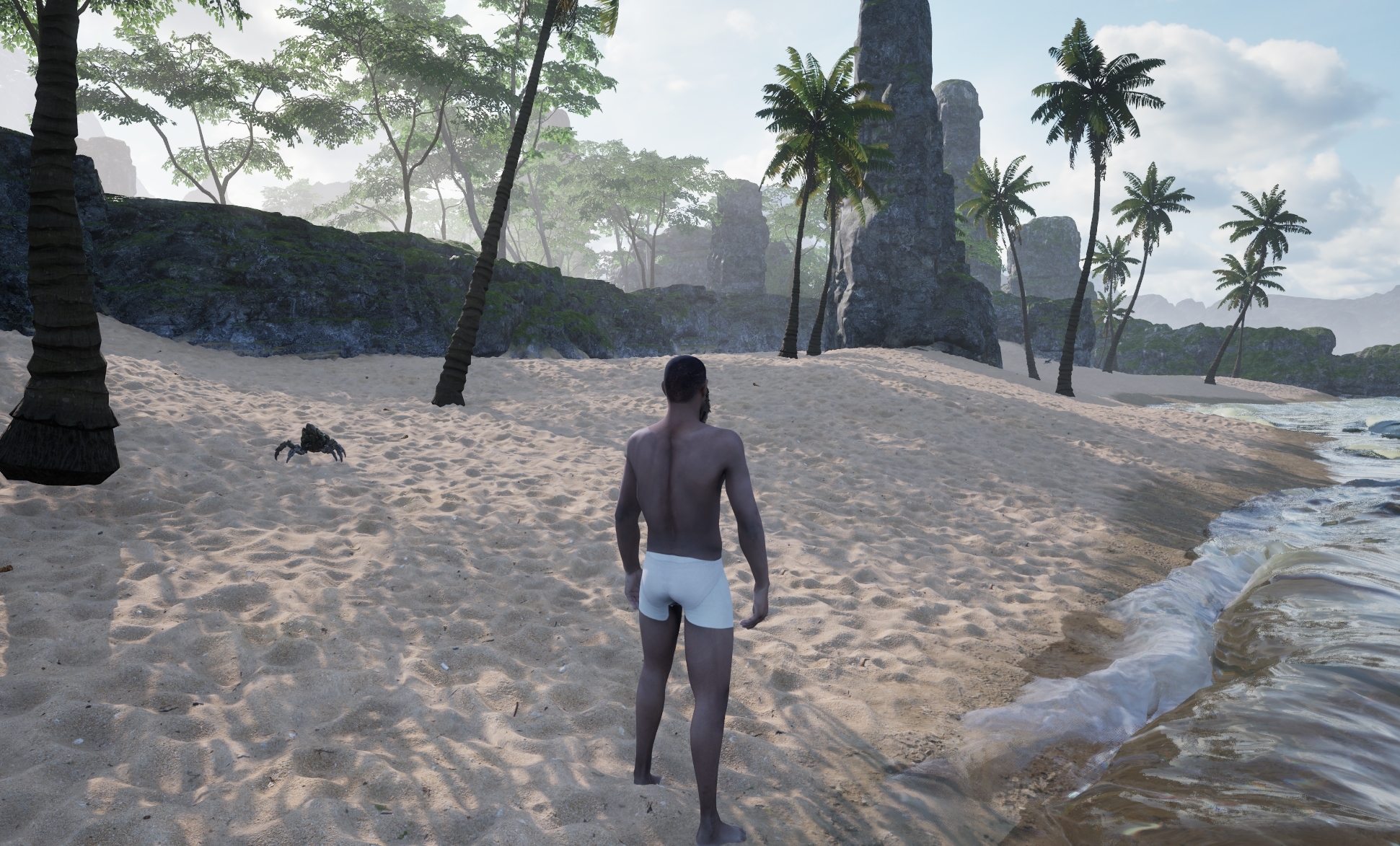
This is still the starting location, just the beach area instead of the forest. What changed? I gave the scene some breathing room by removing most of the rocks. I also color-matched them so they would blend more naturally with other assets.
This was also when I first experimented with Nanite tessellation. It made the landscape look significantly more realistic, but it came with a huge FPS cost. Later, I removed this feature because it ate up too much performance. Eventually, I abandoned Nanite altogether in favor of optimization and transitioned the entire game world to traditional LODs.
However, there were still downsides: I wasn't happy with the lighting, and assets still looked too flat. On top of that, performance was a mess, requiring massive optimization work down the line - more on that in a bit.
Winter 2026 - Looking Playable
Another six months passed, and I made significant strides in visual quality. I gained a solid understanding of shaders, asset and color cohesion, color grading, and geometry. As a result, by the time the game was officially announced, the visuals looked like this:
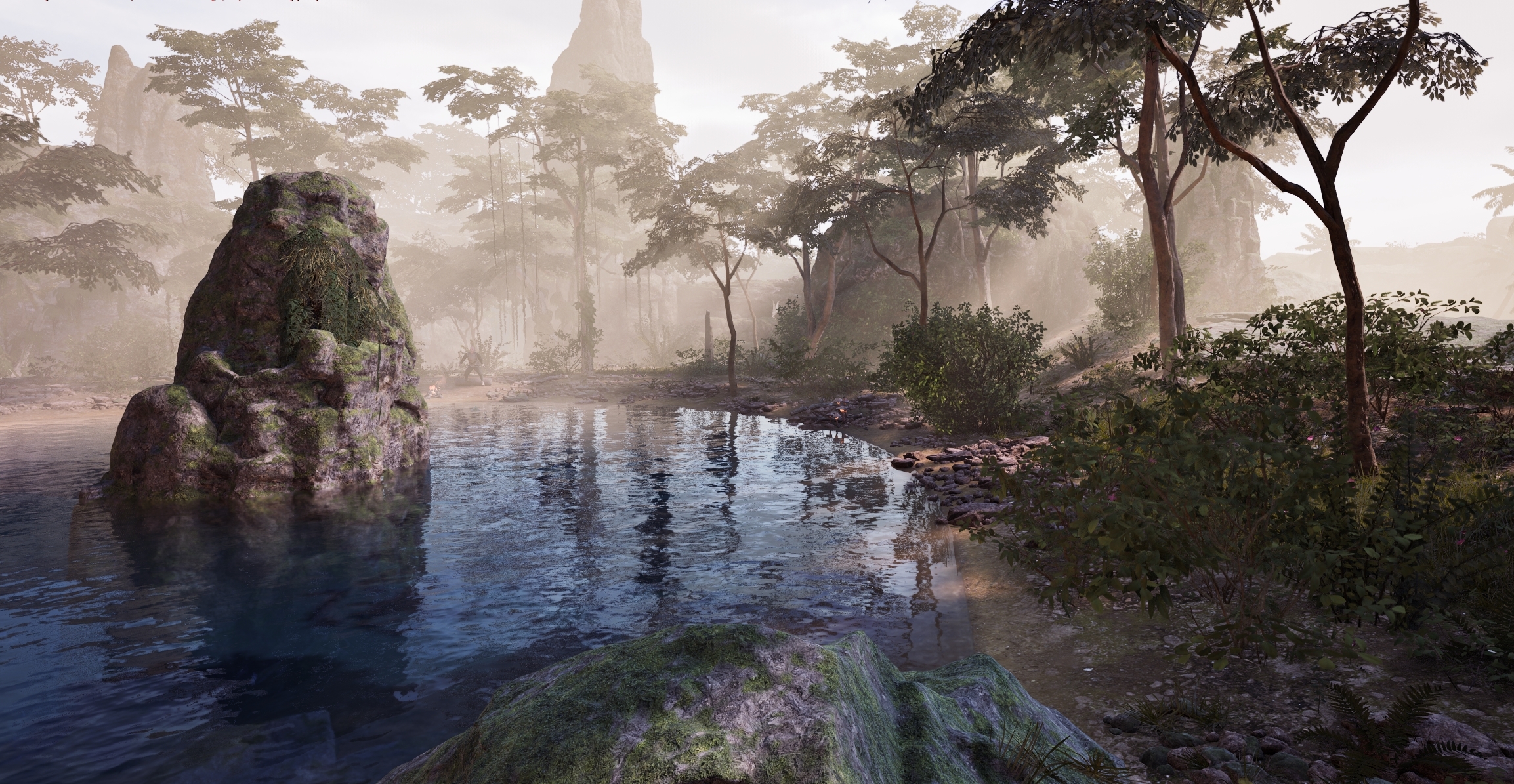
It finally looked playable, but several problem areas remained. I really disliked the lighting and geometry of certain meshes. Moreover, all the foliage blended into a visual "mush." This happened due to poor asset distribution, flat lighting, and mismatched color grading.
At this stage, improving the image was tough because I felt like I had reached my limit. I had to dive deep into the weeds, study how other games handled it, and understand the underlying mechanics. Optimization was mostly under control by then, and the game ran fairly stably, but there were still occasional frame drops and stuttering. As it turned out later, Nanite and improper VRAM allocation were the culprits. Both issues have since been resolved.
Summer 2026 - How the Game Looks Today
To date, I have completely overhauled the lighting, revamped a lot of geometry, and color-balanced all the shaders. Over the past six months, an immense amount of visual work was done, and this is what the game looks like now:
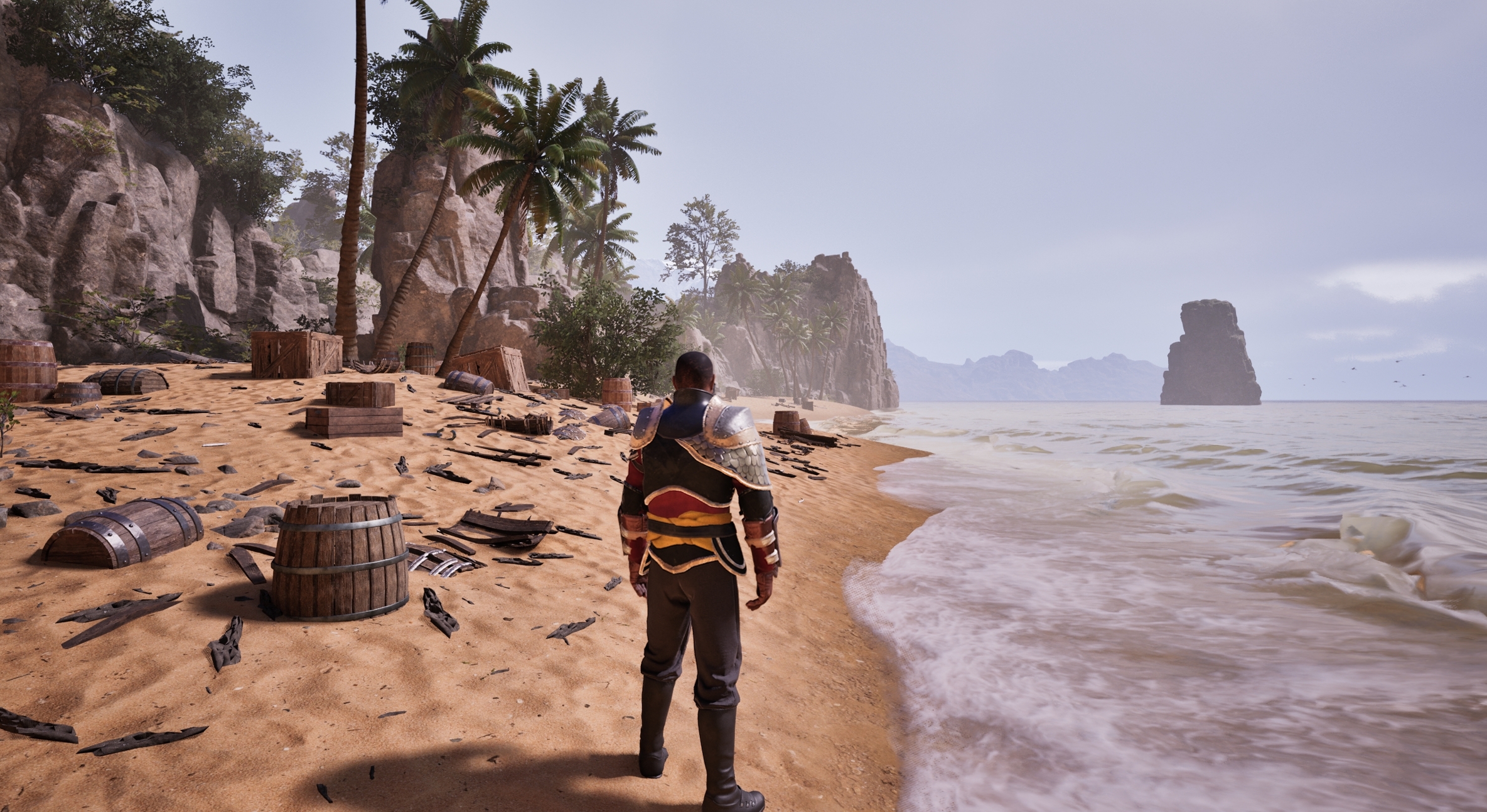
This screenshot shows the exact same beach from the second image. As you can see, I redesigned all the cliff geometry, replanted the palm trees into natural clusters, and added much more detail. The lighting and color grading were completely reworked.
I'm finally satisfied with this level of quality. What's even better: the game actually runs better now than it did in the very first screenshot, thanks to over 600 hours invested purely into optimization.
And in these screenshots, you can see how the forest vegetation looks now. I reduced the foliage density, unified the color palette, and tied the whole scene together with properly tuned lighting.
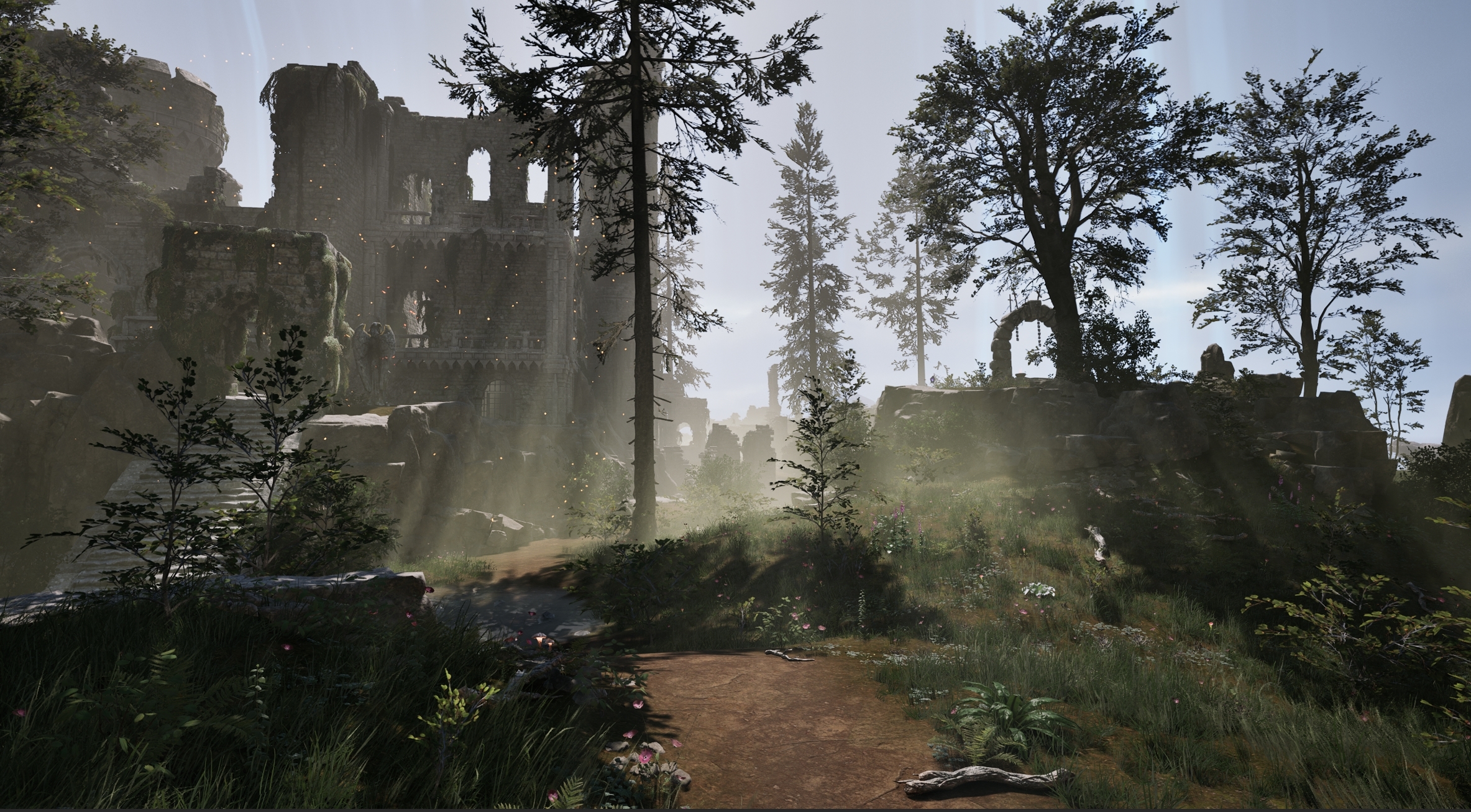
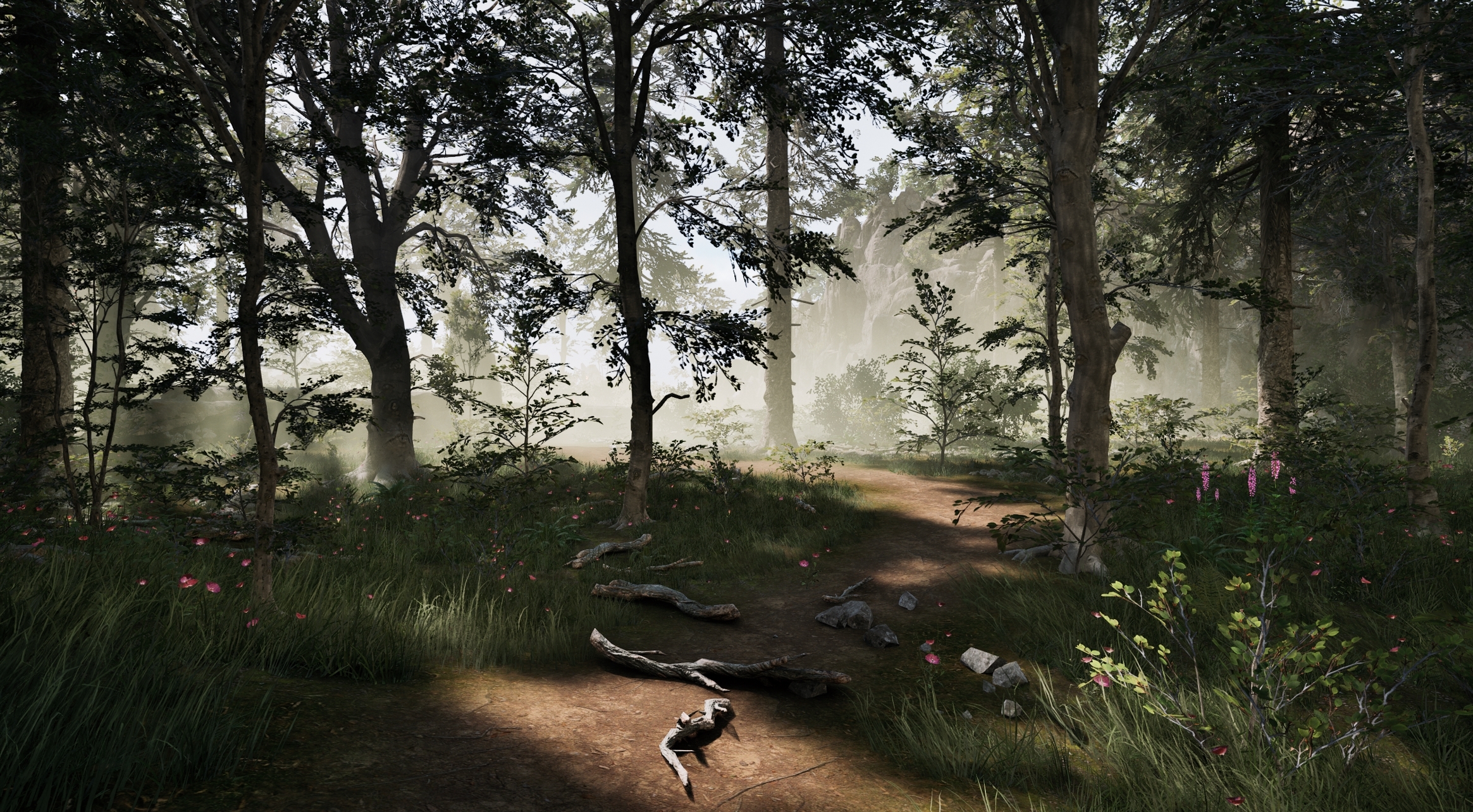
Yes, I had to rebuild everything several times because I wanted to achieve both beautiful and well-optimized visuals - but I don't regret it for a second. The game looks vastly better, and I'm confidently pushing forward, day by day, putting in 50 hours every week.
Thank you to everyone who read this far! Next time, I'll share how I built the winter location. You can already see a screenshot of it on our Steam page.