
A World in Motion
Hello everyone!
One of the comments I kept seeing when I first started showing The Fallen Chronicles online was simple: “The world looks good, but it feels too static.”
And honestly, people were right.
The map already had kingdoms, roads, rivers, mountain passes, armies, ruins, and the beginnings of countless stories. But when nothing moved, it could still feel like an illustration waiting for the game to begin. For a game about watching history unfold, the world itself needed to feel as though time was passing.
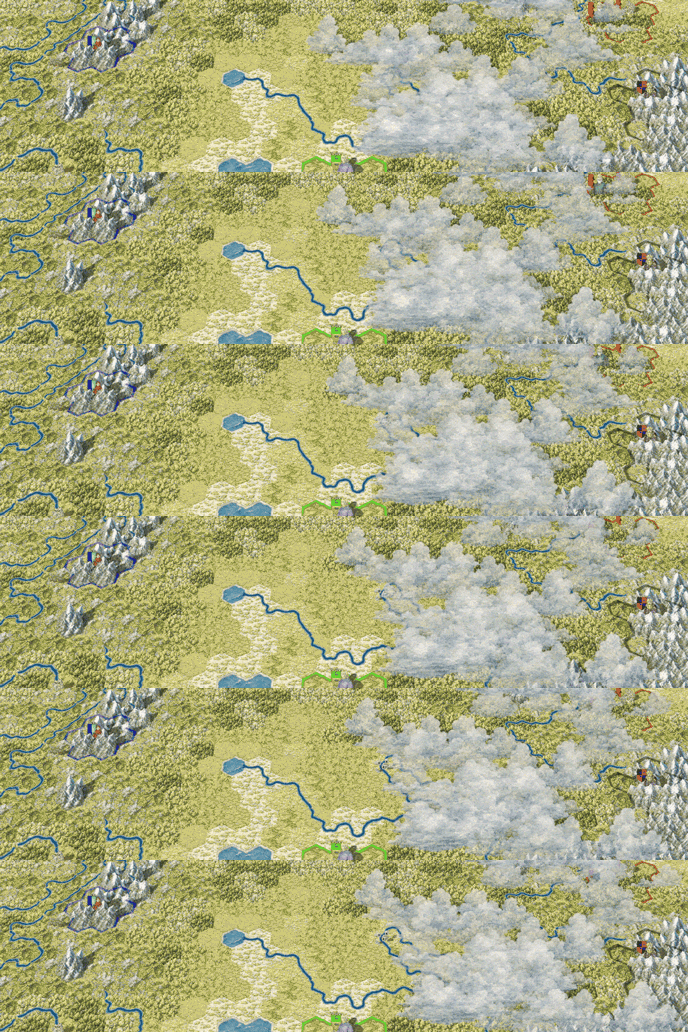
That feedback led me to a complete “world in motion” pass: animated water, wind moving through forests, drifting cloud banks, projected shadows, and flocks of birds crossing the landscape.
 Movement now reaches everything from a quiet lake to the clouds passing overhead.
The goal was never to cover the hand-painted map in flashy effects. I wanted the movement to remain subtle enough for a strategy game—something you feel while playing, even when you are not consciously watching it.
Starting with the Water
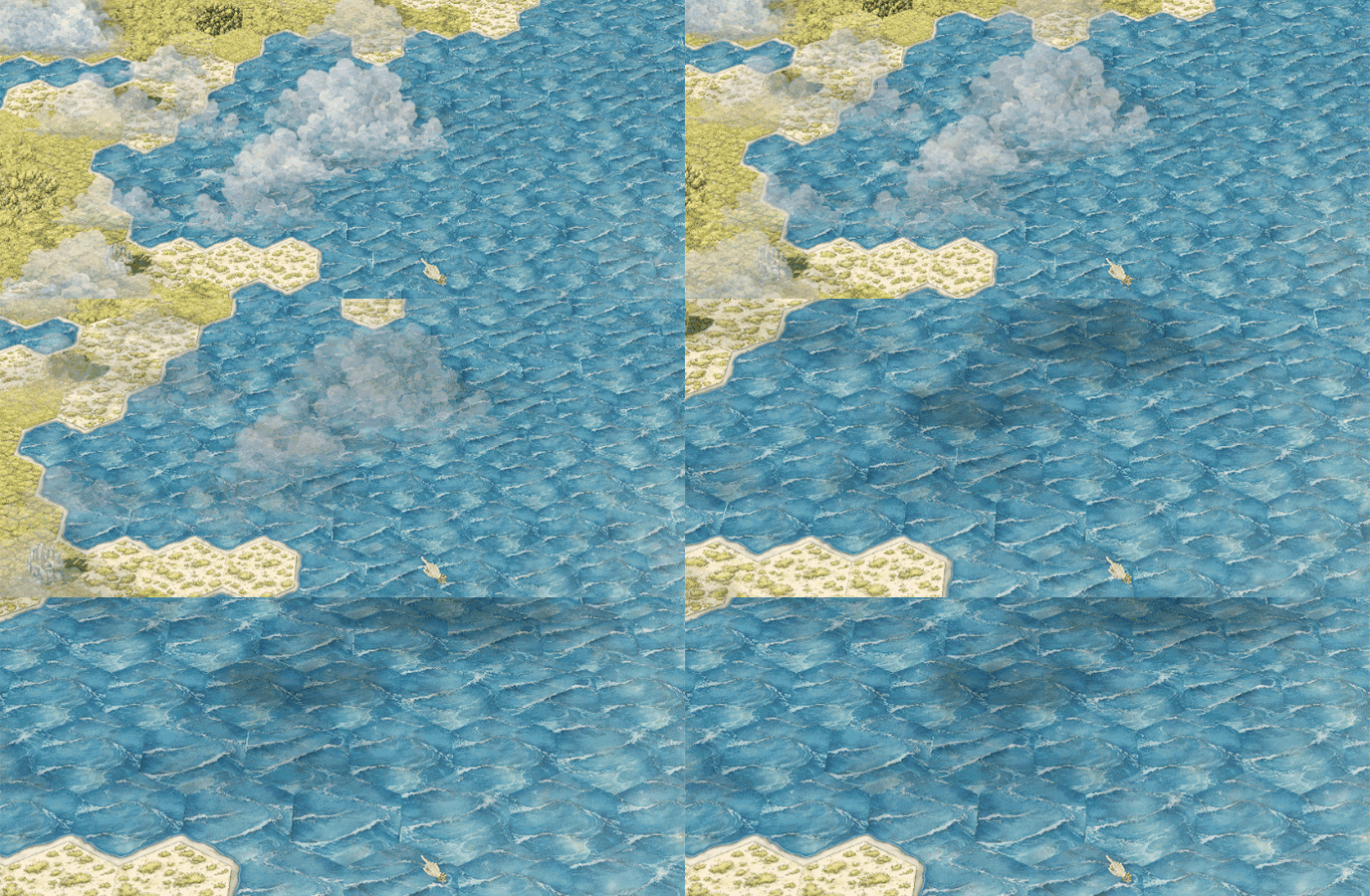
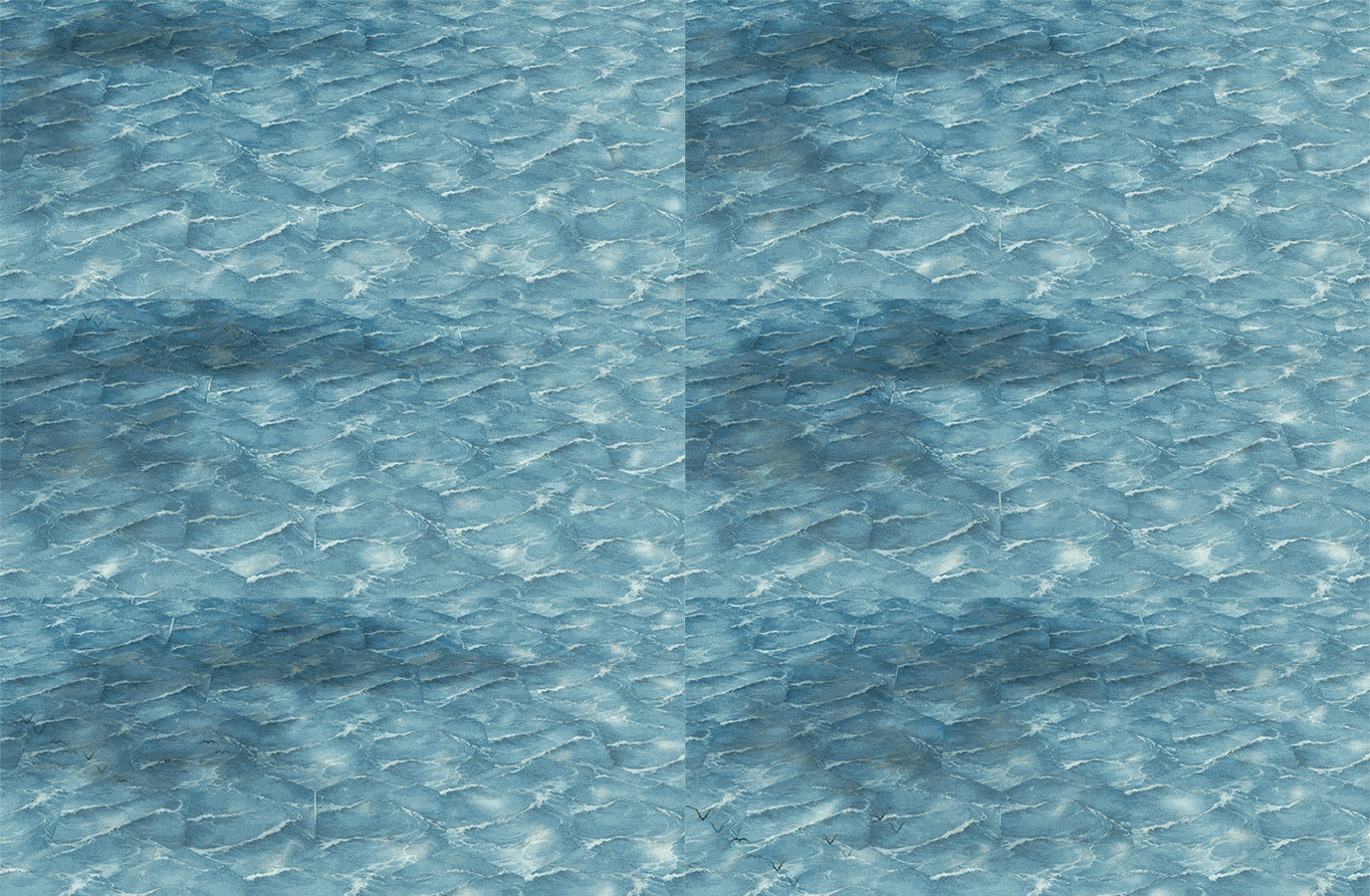 The painted shoreline remains fixed while waves and sunlight move across the water within it.
Water was the obvious place to begin. A completely still lake can make even a detailed coastline feel artificial, so my first solution was simply to move a texture across every water tile.
It worked but it also made the sea look like wallpaper. Every hex repeated the same movement, making the grid more noticeable than ever.
I replaced that approach with a small shader that combines two layers of wave motion and offsets their timing according to world position. Nearby tiles still look like parts of the same lake or sea, but they no longer pulse in perfect unison. The original painted texture stays visible underneath, while a restrained highlight gives the impression of sunlight travelling across the surface.
Even that sunlight caused trouble. When the reflection repeated once per hex, it revealed the grid all over again. It now appears as one broad, camera-relative band crossing the world, so it reads as light moving over a lake rather than an effect stamped onto individual tiles.
The final challenge was keeping the coastlines still. Moving the outer edge of a water sprite created tiny gaps between neighbouring hexes, so the shader now preserves the original transparent silhouette and animates only the painted interior. The effect is deliberately gentle. Water no longer feels printed onto the map, but it never distracts from what the player is doing.
Giving the Forests Some Wind
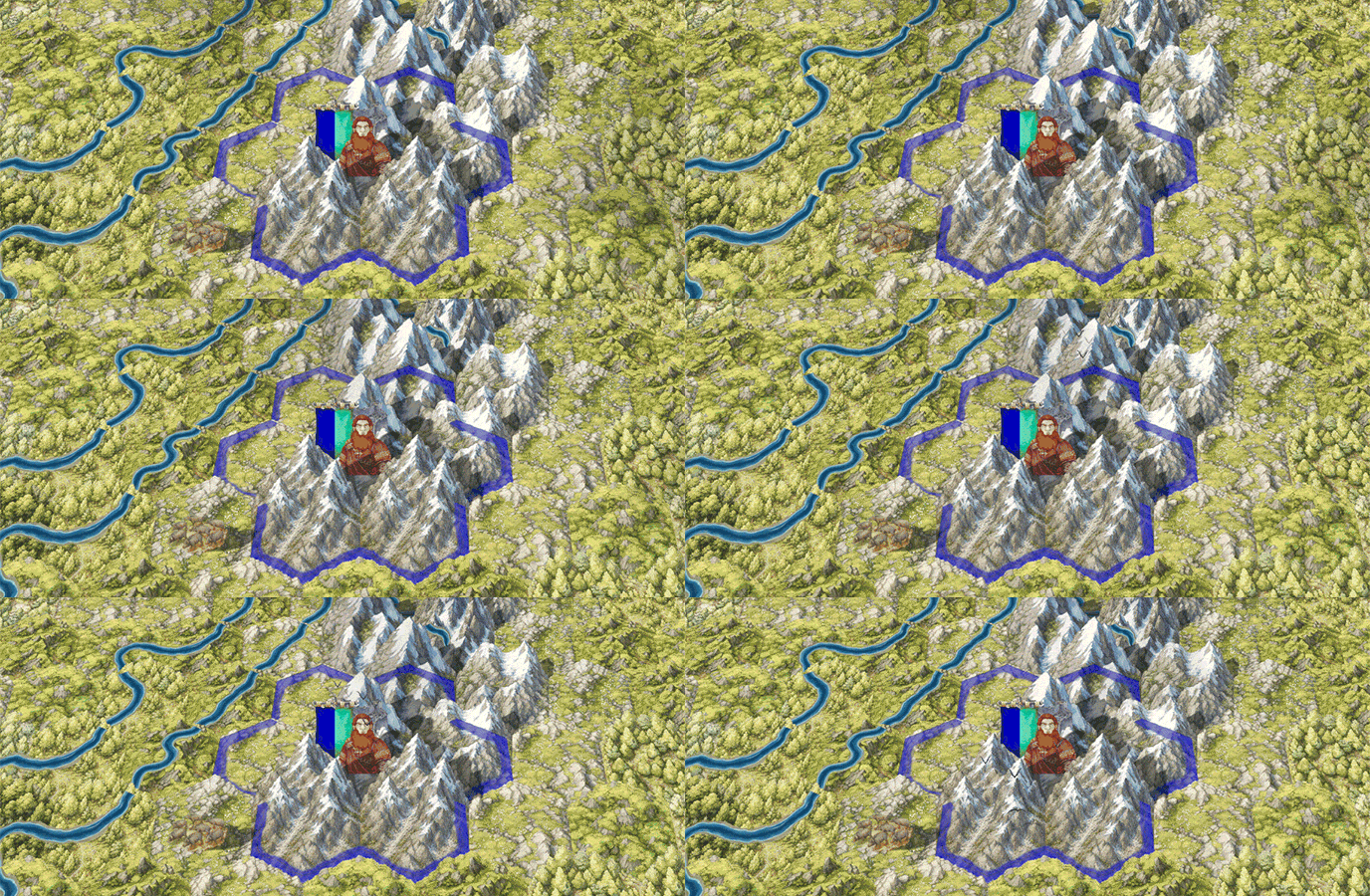
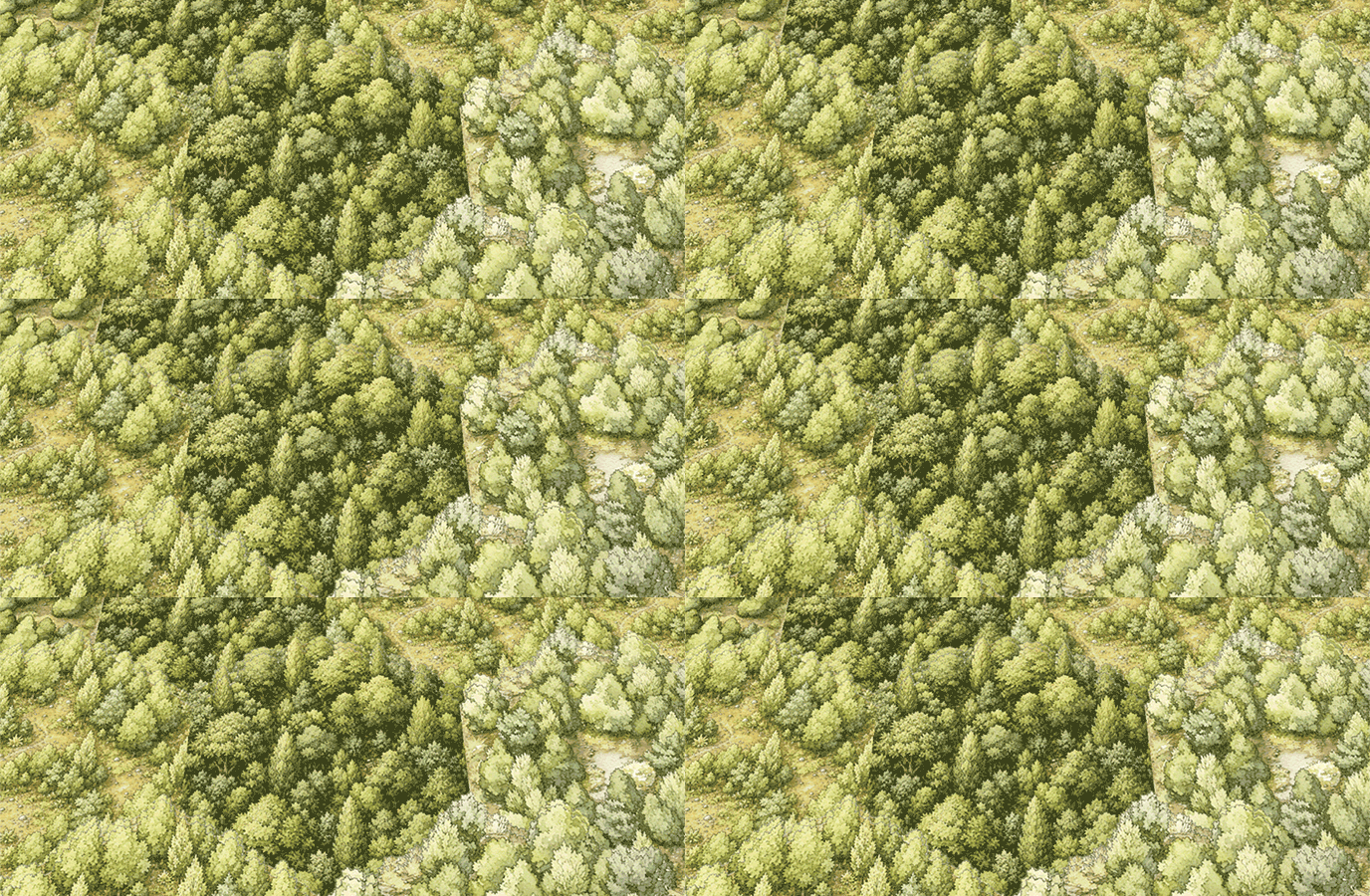 The trunks remain rooted while the upper canopy responds to the wind.
The forest animation grew out of the same shader work, although I quickly discovered that trees cannot move like water.
My first experiments made the entire forest sprite sway from side to side. Technically, the trees were moving. Visually, it looked as though the whole forest had come loose from the ground.
Trees need roots, so the finished effect uses a height mask. Movement is almost nonexistent near the base and becomes stronger toward the canopy. A very slight brightness shift also suggests leaves catching the light without changing the original painted colours.
The timing varies across the world as well. When hundreds of forest tiles lean in the same direction at exactly the same moment, the wind looks more like someone has issued an order to every tree on the map. Now each patch responds at a slightly different point in the cycle, creating the impression of a breeze travelling across the region.
Both water and foliage use shared materials rather than thousands of individual animation scripts. They also run on an unscaled world clock, which means the landscape continues to breathe even when the game is paused for an event—or while the player spends far too long deciding what to do next.
Clouds Were Supposed to Be Easy
 Cloud banks drift across the campaign, gather around mountains, and cast moving shadows over the land. Clouds sounded simple enough: place some sprites above the map and move them across the screen. The first version did exactly that—and exposed almost every way a procedural ambience system can look fake. The clouds bunched up on one side of the world. They formed obvious rows. They crowded the camera when I zoomed in, vanished too sharply when I zoomed out, and drifted over unexplored territory as though fog of war did not exist.
Fixing them meant treating the clouds as part of the world rather than decoration placed on top of it:
Cloud banks begin distributed across the campaign instead of all arriving from one edge.
They travel in loose groups with varied scale, speed, density, drift, and gentle vertical movement.
Mountain regions attract thicker and more frequent formations, allowing geography to influence the weather.
Fog of war controls their visibility, so clouds cannot reveal land the player has not discovered.
Zoom-based fading keeps the strategic view active without letting clouds smother the map at close range.
Cloud visuals are pooled and reused instead of being constantly created and destroyed.
Movement, fading, and shadow setup continue to work correctly during paused events.
They ended up doing more for the map than I expected. A bank of clouds rolling across a mountain chain gives the whole region a mood before the player has read a single name or tooltip.
The Long Battle with Shadows
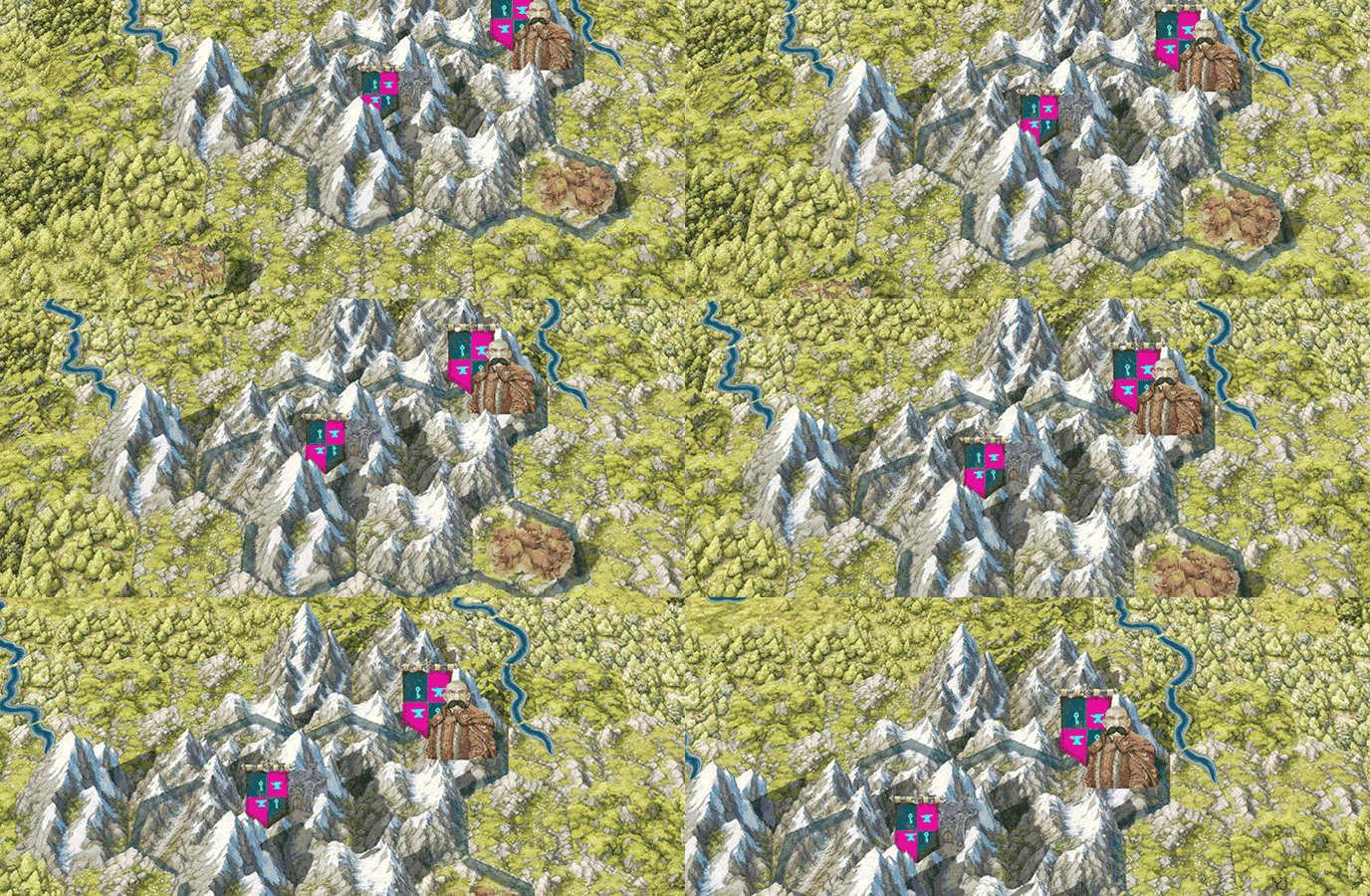
 Shared lighting helps a layered 2D map feel like one world rather than a stack of separate sprites.
Shadows were, without question, the most stubborn part of this entire update.
The Fallen Chronicles is a layered 2D world doing its best impression of a place with real height. Mountains, forests, buildings, resources, characters, borders, fog, and clouds all occupy carefully controlled positions in the rendering order. A conventional shadow system had no idea what to make of those relationships.
I built several versions, tested them, removed them, and started again. Along the way, shadows disappeared behind the tiles that created them, drew over the objects casting them, vanished inside dense mountain ranges, flickered when the camera moved, and occasionally changed their sorting because a neighbouring tile had appeared on screen.
A setup that looked perfect beneath one lonely mountain could fall apart as soon as an entire range became visible.
The final system projects the silhouette of each sprite through a custom shadow shader. Terrain, structures, characters, and aerial objects such as clouds each have their own profile. Ground shadows and cloud shadows behave differently, while category-based rules decide which surfaces can cast or receive them. Water is deliberately excluded; covering lakes in muddy projected shapes never looked right.
There is also a fair amount of invisible work behind each soft grey shape: stable sorting that does not change with the camera, finite projection bounds, tile-anchored terrain shadows, separate rules for buildings and resources, and one central manager handling dynamic updates.
The finished shadows are subtle by design. You may not notice every one of them while playing, but switch them off and the world immediately collapses back into a pile of flat images.
A Few Birds Overhead
The bird flocks are the smallest part of this update, but they may be the clearest expression of what I wanted to achieve.
They do not improve the economy, reveal a province, or win a war. They simply pass overhead because this world is meant to exist beyond the decision currently open on the screen.
Each flock contains between three and eight birds in a loose V, line, column, or clustered formation. Their path carries them from the distant upper landscape toward the lower foreground, with a little sideways drift and gradual scaling to make them appear to approach the camera.
The first flock looked painfully mechanical because every bird shared the same wingbeat and offset. In the finished version, each one has its own size, flap speed, animation phase, and gentle bob. Small variations keep the formation organised without making it look military-perfect, while soft individual shadows connect the birds to the land below.
Their appearances are deliberately uncommon. A passing flock should feel like a small sighting, not an infestation.
The Map Keeps Moving
Taken separately, none of these systems changes the game. Together, they change how the world feels.
Water moves beneath the sunlight. Forest canopies answer the wind. Clouds gather around mountain ranges and send their shadows across the land. Birds cross rivers and disappear beyond the edge of the camera. Even when the game pauses to ask what kind of ruler you will become, the world does not freeze with you.
That matters in The Fallen Chronicles because the map is not just a board. It is the place where people, oaths, wars, victories, and losses slowly become remembered history. If I want players to care about that history, the world carrying it has to feel alive.
This entire update began with blunt but useful community feedback: the world was too static. I think it has become something much stronger because people cared enough to say so.
Thank you for following the development of The Fallen Chronicles. There is much more of this world still to build, and I look forward to showing it to you.