
There's some progress to show for the remake.
It's been a while since the last announcement. The tiles are essentially done for the first region (England and Wales), though the remake isn't playable yet, so nothing has shipped to the live build. And, the foundations of the new shader and planet-rendering pipeline have also been set.
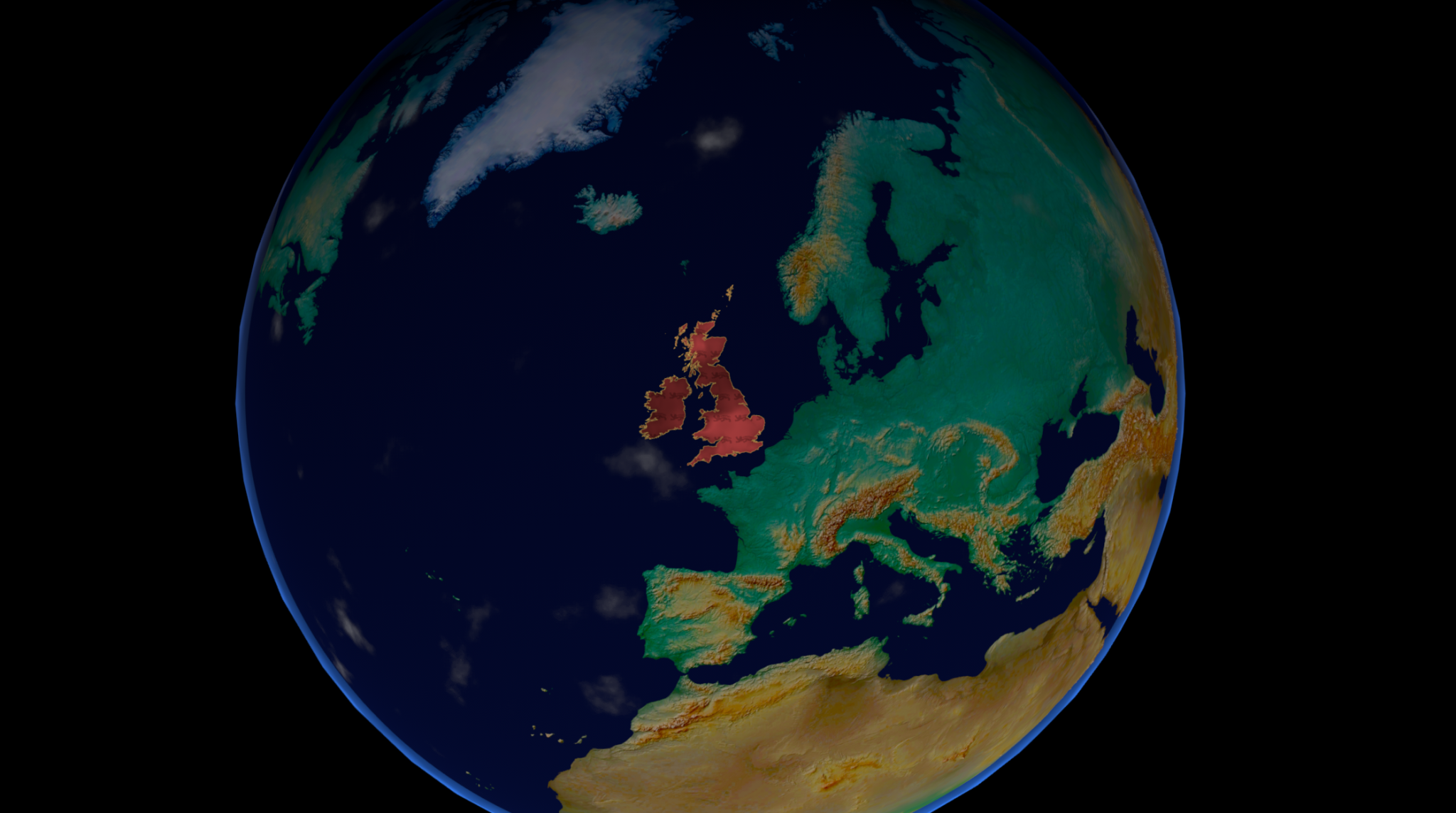 An in-engine screenshot of the new globe (full atmosphere, cloud layer, and dynamic sun lighting) and the new nation-level shader, built from scratch in Godot.
What's done
England & Wales, fully hand-drawn at county and major-city level. Every border is a real triangulated mesh now. The old Unity version was limited to an index-map/texture approach, which meant borders showed visible texel stepping (low resolution borders) at any reasonable zoom. That constraint is gone entirely.
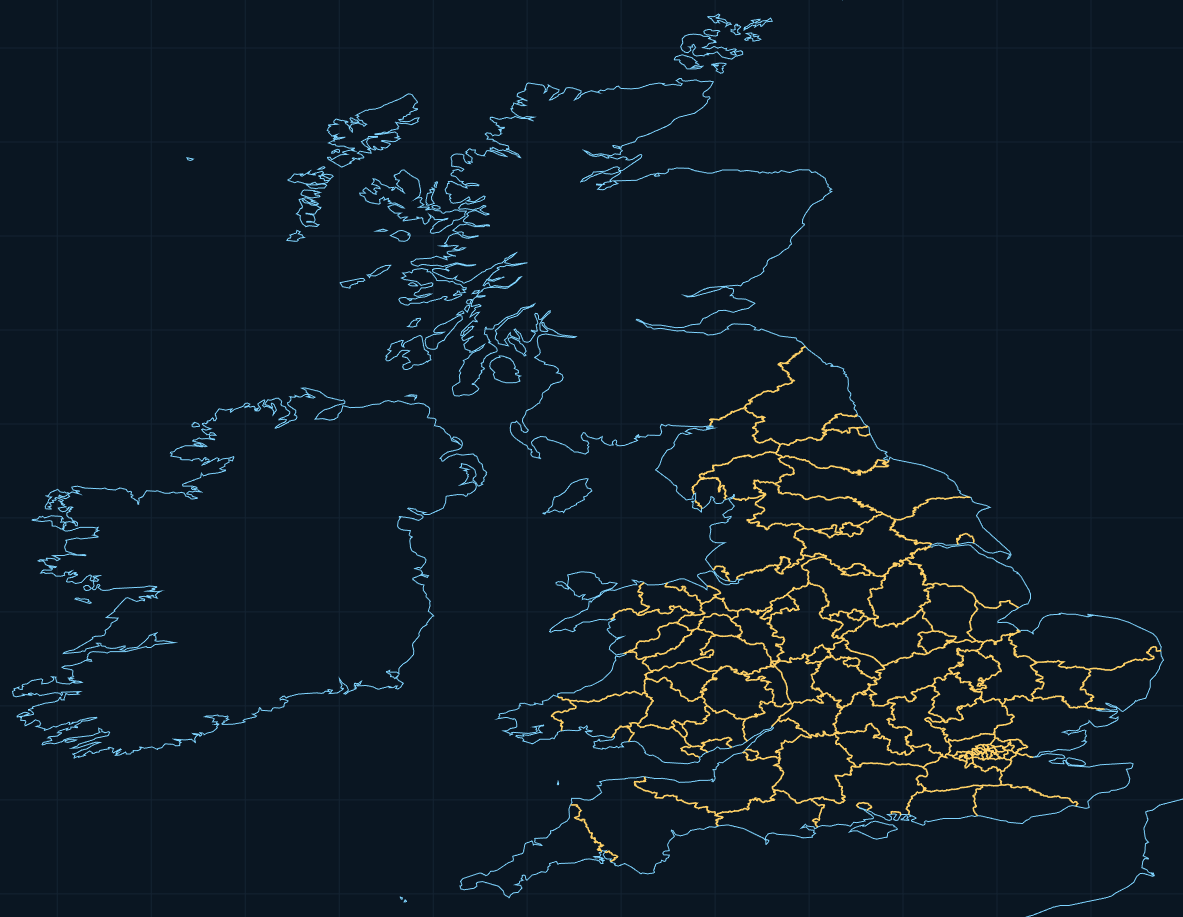
A screenshot from the developer tile-definer application. Not an in-engine or gameplay screenshot.
Major Cities that were strategically or economically significant for the 1910 setting are split out as their own tiles/provinces, separate from the county they sit in. Visually, they can still appear "within" their county (e.g. revealed on click), but mechanically they're independent, meaning an invading force has to take the city province specifically to capture it. That's meant to add complexity to urban warfare instead of strategically important cities just being a stat on a procedurally-generated province tile or a larger county tile. Non-Major Cities not split out as their own tile/province can still show up as objects within the county or province they are located in.
Major Cities defined within Wales and England (shown below) are: Cardiff, Newport, Swansea, Merthyr Tydfil, Birmingham, Sheffield, Manchester, Liverpool, Newcastle, Leeds, Bradford, Hull, Middlesbrough, Sunderland, Barrow-in-Furness, Portsmouth, Southampton, Plymouth, Bristol, Coventry, Derby, and London (subdivided into its boroughs, including but not limited to, Westminster and City of London).
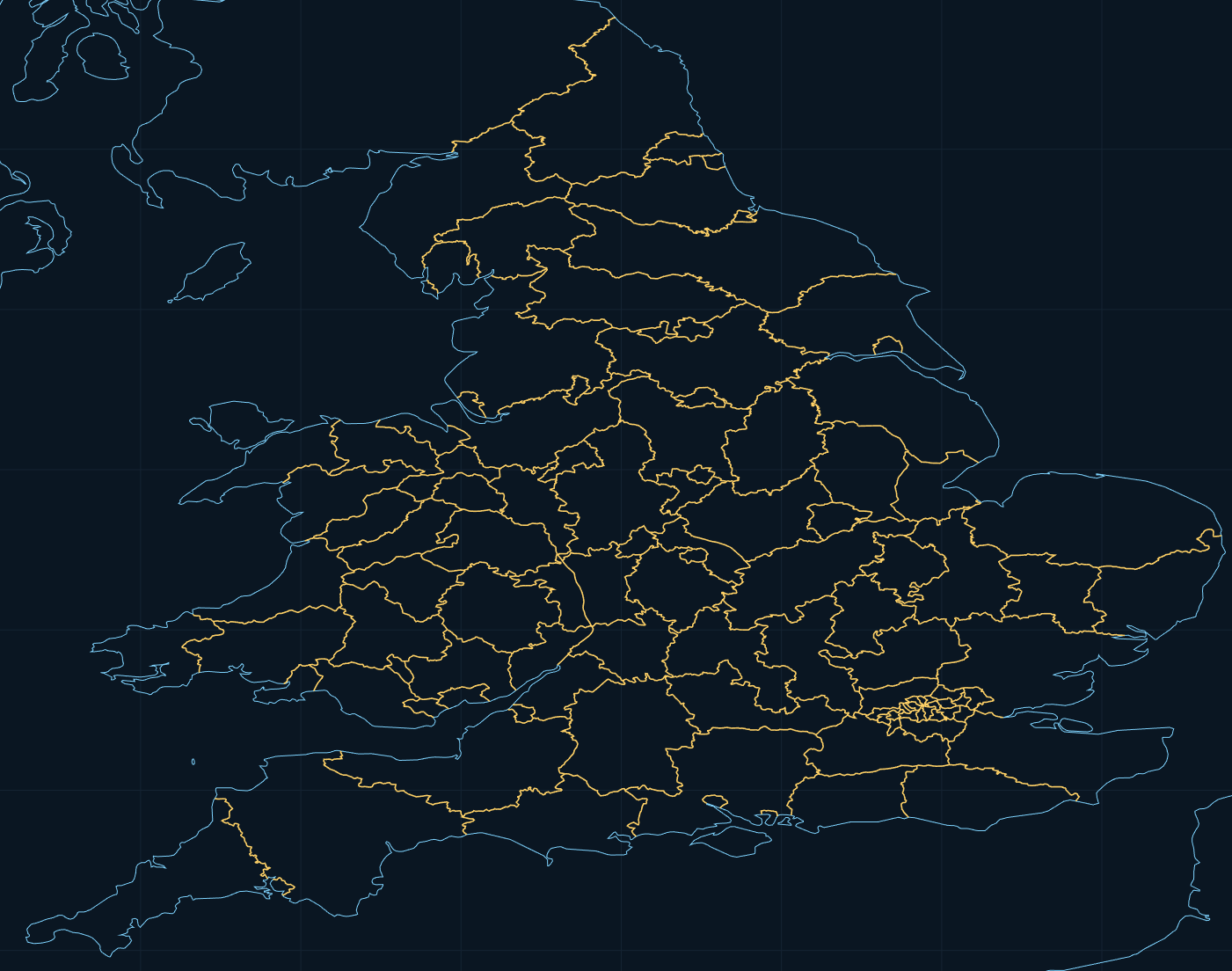 A screenshot from the developer tile-definer application. Not an in-engine or gameplay screenshot.
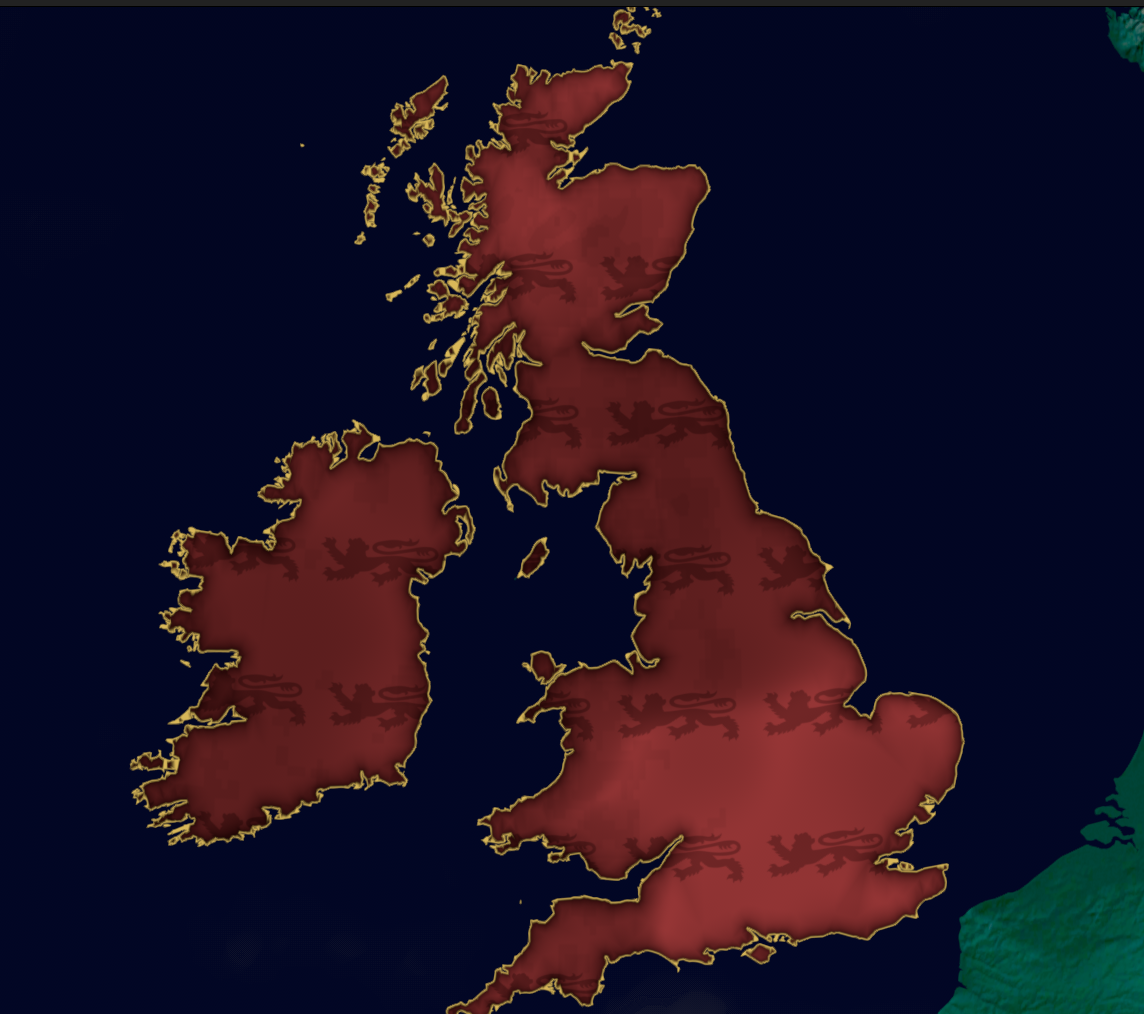
New shader. Big visual upgrade over the old flat shading. I will most likely re-add the Coat-of-Arms to this shader alongside the lines (or chains) that show union and vassal/suzerain relationships between nations.
Capitals aren't just another county or province
One decision I made while designing the hand-drawn tiles for England and Wales: Great Power capitals, starting with London, are now broken down into many individual borough-level tiles, not one county or province blob.
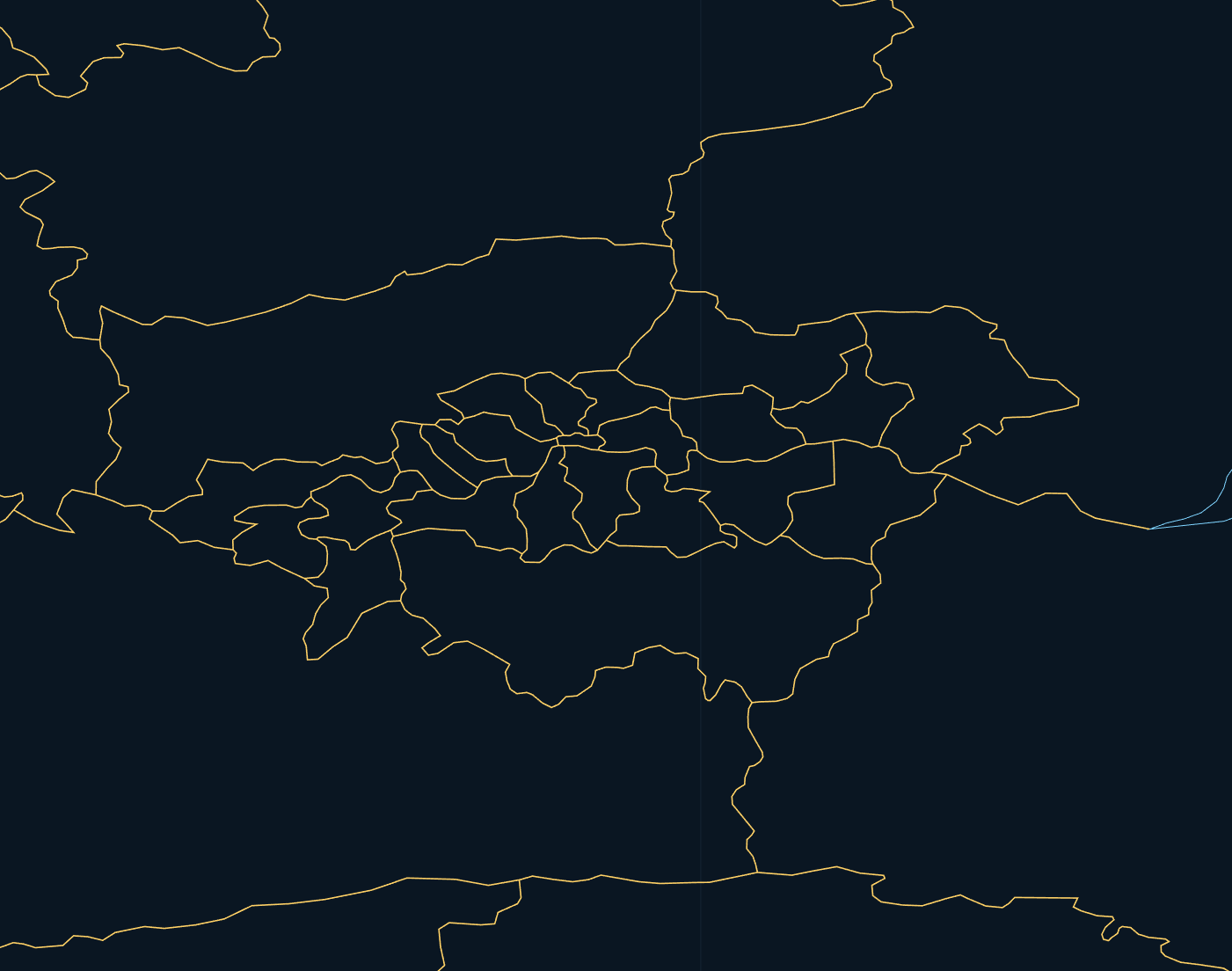 A screenshot from the developer tile-definer application. Not an in-engine or gameplay screenshot.
Practically, this means taking a capital like London isn't "capture one province and you're done." It's closer to conquering a small country within the country: multiple provinces, river crossings (the Thames matters now), and province-to-province combat inside an area that's still the same overall footprint as a single county elsewhere on the map. Great Power capitals get meaningfully harder to actually defend or invade.
Also in progress
Alongside the hand-drawn county and city/district tiles, I'm building a procedural province-generation tool that uses hand-drawn river and terrain guides to auto-generate more evenly-sized gameplay provinces from the county data. Players won't be stuck dealing with wildly irregular, chunky county borders for actual unit movement and combat.
What's left
The slow part (pipeline, tile tooling, globe, shaders) is done. That unlocks two tracks running in parallel from here: England and Wales alone is enough to start building and testing the actual systems (armies, navies, economy, politics) using debug nations like Wessex, Wales, and Northumbria, while the rest of Europe's counties and cities get hand-drawn alongside it. Naval tiles for the England/Wales region are next. They don't need to be accurate, just functional, so they're quick to lay down and test the navy system against.
Systems work and the rest of Europe's tiles should finish around the same time. By then, I'll ship a free update (the remake) to the public default branch and keep the latest Unity version available as a legacy branch.