
The year is 1981. Your trusty human fighter swings an axe at the goblin…aaaand it’s time to break out the attack matrix to find out if you hit. A lot of people keep asking why we’re not using something like the combat charts below, or THAC0 in The Secret of Weepstone, and let me tell you exactly why we’re keeping it simple.
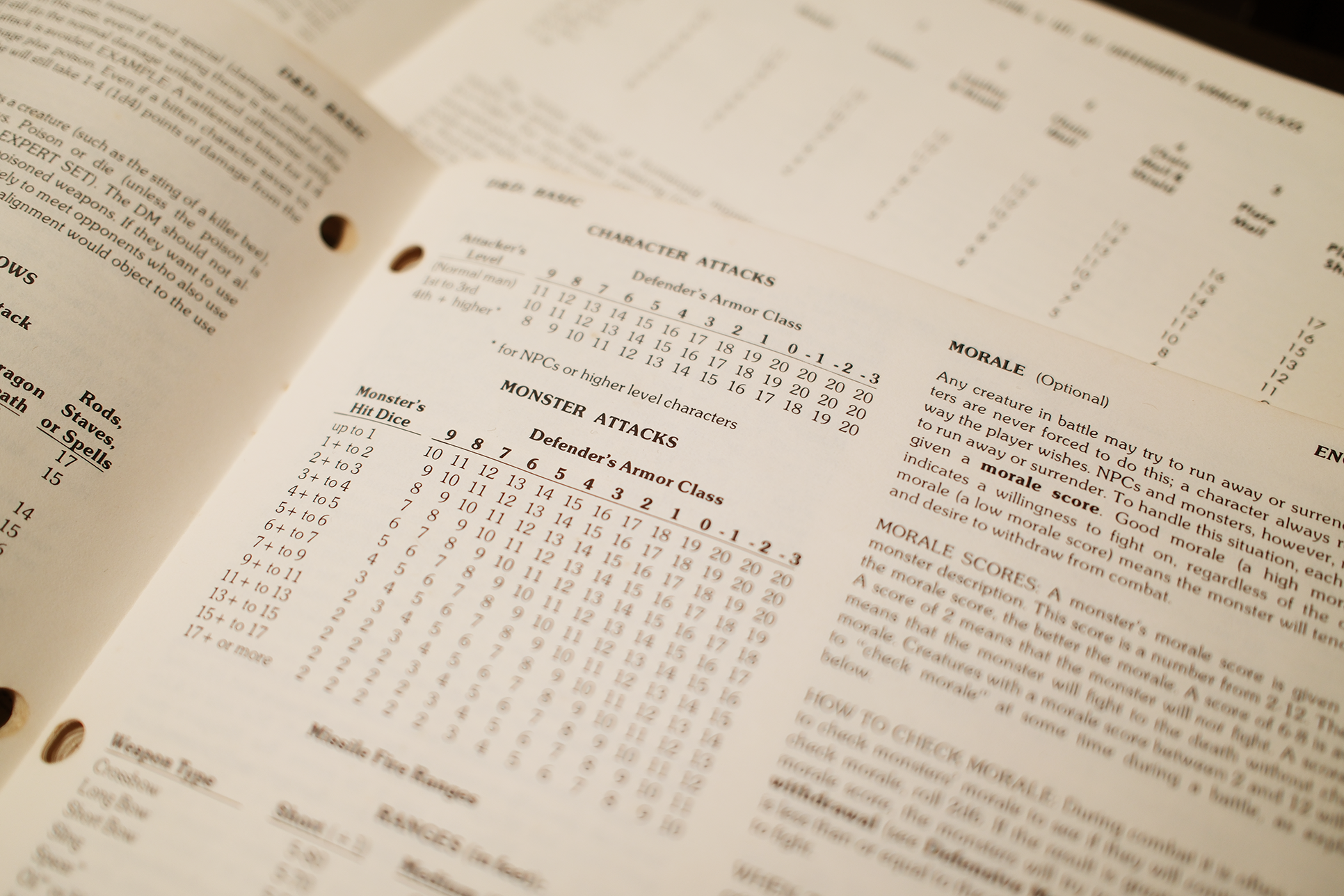
In reality, after a while of playing any roleplaying system, whatever arcane methodology the designers use to determine something like success in combat usually does become easier to do on the fly. That said, there’s been many, many more ways to calculate combat in Dungeons & Dragons in addition to the charts above, so there’s no one “true” answer or solution to it, or for a game paying homage to it.
So… let’s talk about the one that seems to be the most beloved and hated in equal measure, THAC0.
If you’re somehow this deep into a blog dedicated to retro RPG combat resolution mechanics and don't know what THAC0 stands for, hats off to you, but it stands for ‘To Hit Armor Class 0’.
What’s the deal with THAC0?
Like the examples above, many methods over the years were used to figure out how to represent the difficulty of a given monster or character succeeding in an attack against a foe. Different accounts are given of how they landed on THAC0 specifically, who called it that first, and the very first time it was officially used as the method. What’s certain is that the mechanic appeared in an un-named form in AD&D 1st Edition (1977), only to become the official method for AD&D 2nd edition (1989).
Another notable place that people became aware of THAC0 was the original Baldur's Gate game series from Black Isle. As it was made in the 90’s, it used the current ruleset, which was 2nd Edition AD&D, in all its THAC0-laden glory. That being said, with a computer doing all the calculations, the player didn't need to follow what was happening under the hood. The differences are more obvious when playing at the table in person. 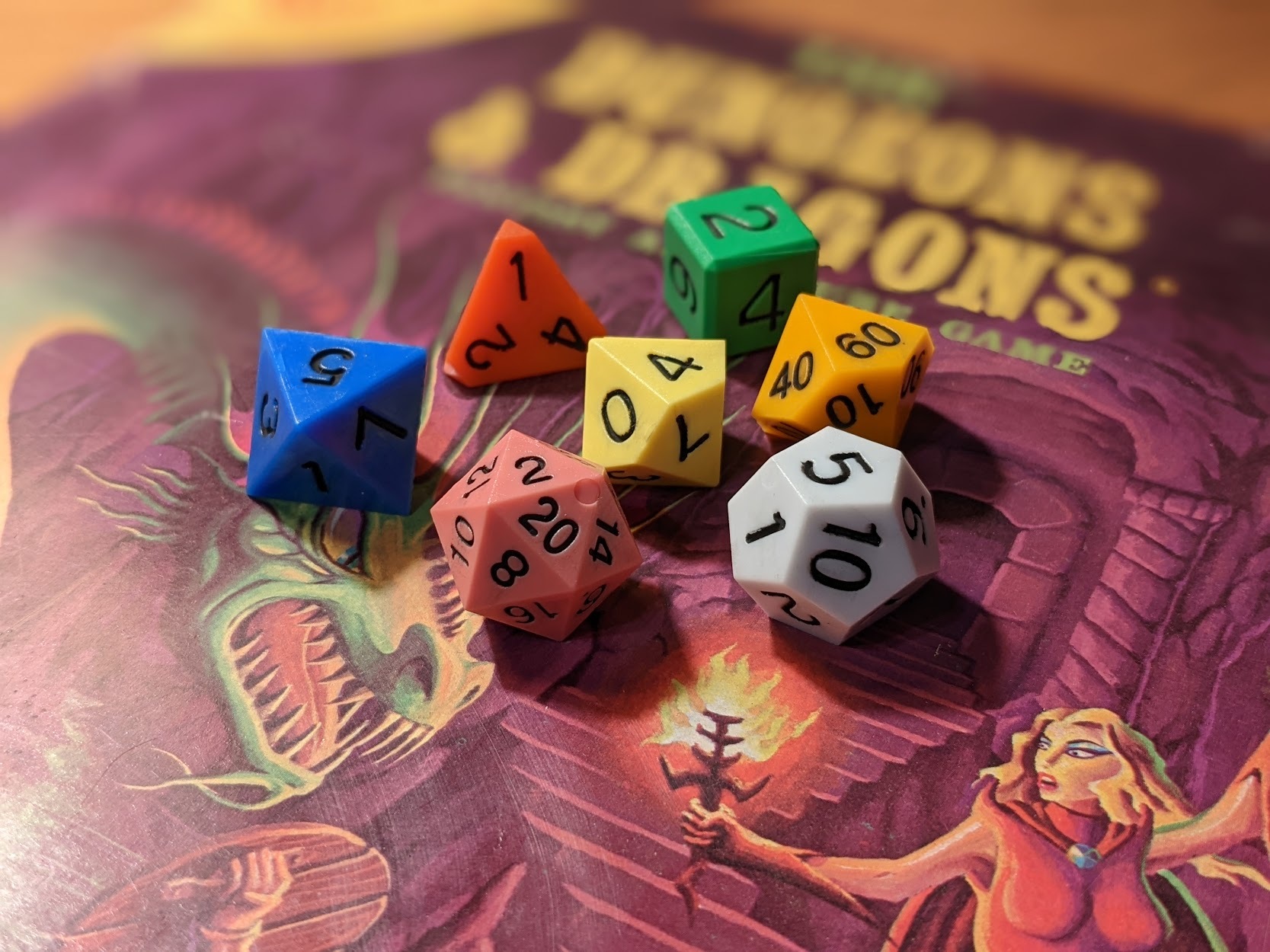 Ascending Armor Class is what modern (players since the release of D&D 3rd edition in 1999) would recognize, where you’re adding armor and any other modifiers together to find a target you’re attempting to roll equal to or above. Higher Armor Class is always good, thus it’s called Ascending, whereas in THAC0, adding armor lowers your Armor Class as you get more protected, leading to it being known as Descending armor class.
One of the common jokes among players of older editions is to explain THAC0 to someone familiar with the more modern armor classes. The feature that always stands out as the strangest is that it is possible to lower your armor class below zero. You might be asking, "Then why use THAC0, a system that, in theory, stops at zero?" Well, it doesn't, but how that works is pretty funny. You always subtract a target’s armor class from your THAC0 to determine the target to hit (Example: A character with THAC0 of 18 targeting a foe with AC 8 only needs to roll a 10 to hit.) but if your target has a negative Armor Class, you need to subtract the negative number from your THAC0, which of course means you have to add it.
Where’s the defense?!
I said I was going to defend THAC0, so here we go. It’s wonky, and to modern rules very unintuitive, but at the time with nothing to compare it to, it was actually a step in the right direction from what had come before. The longer you use it, the less you have to think about it, and even subtracting negative numbers just becomes a step you do in your head.
But, that’s kind of the point of it all. THAC0 was just one of the many purpose-built methods over the years to set difficulty. In the end, it’s just the one that had the most recognition on account of the acronym. The Basic rules, whichever version you played (there were three!) were meant to stand as a different experience than Advanced Dungeons & Dragons. The Basic sets used charts instead of calling it THAC0 until Frank Mentzer’s rules that eventually became known as BECMI (1983-1989) (Basic, Expert, Companion, Master, Immortal sets) started to use THAC0 in the Master set in 1985.
What does this mean for Weepstone?
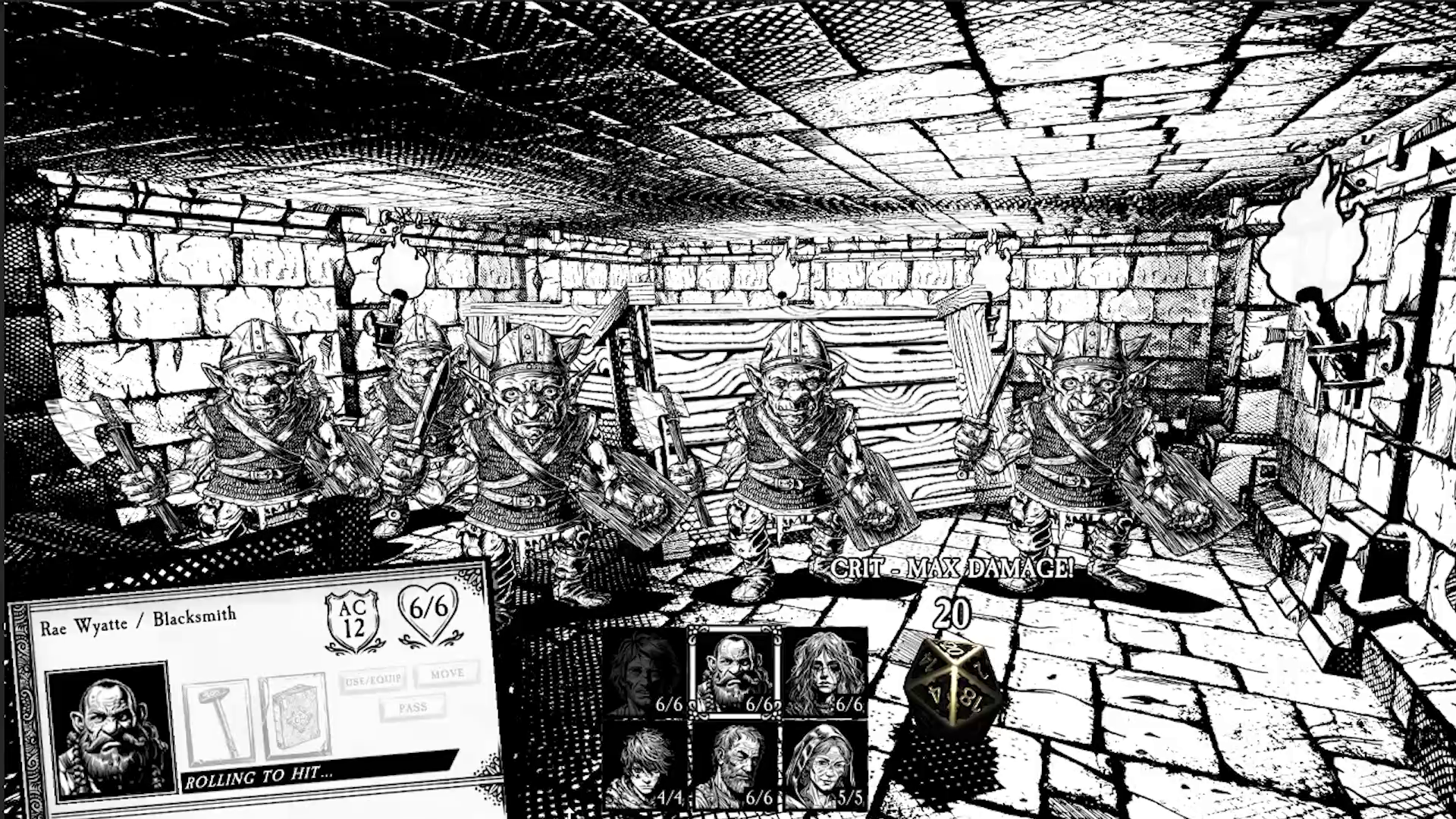
Which brings me to us, and Weepstone. We knew that we wouldn't make it very far before people started asking two things: “Why aren’t you using THAC0?!” and “Are you going to add THAC0?” That meant that I got to write this blog, which is possibly my favorite way to spend a random Friday morning.
The reason we didn’t use THAC0 is that it wasn’t an important part of the experience we were trying to evoke, and to get nitpicky, 2nd Edition falls a bit outside of what we’d probably consider the core inspiration period for Weepstone.
Even more importantly, the reason that we didn’t choose to use THAC0 is that we’re making a loving homage with our game, but we're letting ourselves be free to make choices of what not to include instead of adding things in that don’t truly add to the experience in the name of authenticity. Arguably, D&D started as a series of house rules itself, in the form of Dave Arneson using another person's rules (known as a Braunstein, I promise that’s another blog) to make his Blackmoor campaign while also using the Chainmail (1971) rules for combat. Chainmail is the wargame rules that Jeff Perrin and Gary Gygax made that famously included a section of “fantasy” rules for things like Dragons, arguably being the genesis of D&D entirely.
So anyone who wants to point to the inclusion or exclusion of any given rule from the game will have kind of missed the forest for the trees. We won’t have missed anything, just like a DM choosing which things to make up house rules for at their table, Weepstone is our table, and the game is an expression of our house rules, all in service of a fun authentic-feeling experience that ultimately eschews anything that it doesn't need to achieve that.
With all of that considered, if we find that there’s time one day, we might choose to add something like a THAC0 option, but we wouldn’t do that at the cost of being able to focus on what will really elevate the game for everyone. We’re already spending a lot of time as we go discussing what things we want to add purely because of it feeling right to do it, so THAC0 or not the game will be absolutely steeped with the kinds of things long-time players will love.
Thanks for hanging in there with me on this post. Both Sean and I love talking about this stuff with each other as we work, so consider this blog a little peek behind the curtain about our thought process as we go, and how we decide what to focus on including.
Until next time,
Hunter & Sean