
Hi everyone!
Today’s update is a big one — not just in size, but in importance. In previous updates, I’ve explained how the game delivers a cohesive and immersive story, regardless of how unusual or unique your character choices are. Continuing along that path, I’m excited to announce a brand-new, fully handcrafted art style for the Spirit!
Let me take you behind the scenes a bit.
From the very beginning, I dreamed of Guiding Spirit having handcrafted visuals — something that would give it the feeling of a beautifully illustrated storybook. One of my biggest inspirations was the Sword & Sorcery gamebooks. I remember getting lost in those pages, just staring at the art long after I'd read the text.
When I began working on the Guiding Spirit, I knew the game’s concept. But the visuals? Not so much. For the earliest builds, I used pencil sketches and free asset packs — and honestly, the result wasn’t great. I had little experience with digital art, and no tools to support it.
I considered simplifying trait icons, but many of the Spirit’s traits — like Awkward, Complainer, or Trustworthy — are hard to express through minimalistic symbols. During early playtests, testers struggled to tell them apart. It became clear: I needed something more expressive or I need to scrap the concept of trait icons overall and just use text to list traits for the player.
I also experimented with removing character portraits, but that just added more confusion again. Without a visual identity, testers couldn’t quickly recognize the misfit band they had assembled — which often led to frustration. They’d start a story, read paragraphs of text, only to realize they actually intended to create a different team.
And last but not the least: story illustrations. I’ve always wanted the game to feel like a book — not just through the writing, but visually. I knew I had to be careful, though, since the game relies heavily on imagination, and with the many possible story permutations, the illustrations couldn’t be too specific.
Because of all the above, I began searching for an artist to help bring those key moments to life. I reached out to numerous of them— each responded with kindness and professionalism. However, most were already booked for several months, and based on their feedback, producing the artwork needed for the demo alone would take at least a year. And we are only speaking about the story illustrations, excluding portraits or icons! It is completely understandable, of course—doing art the right way is a full-time commitment, and they had other projects on their plates.
With the game nearing feature-complete, I didn’t want to delay the entire project for another 2–3 years just for visuals. Furthermore, I wanted to announce the game so I could begin networking and establishing social media channels in preparation for the upcoming demo. One could say that I started looking for an artist too late and should have done so earlier, which is technically true. However, part of the reason is that I didn’t settle on the final concept of the Spirit until early last year (the project took many different forms over the last 6 years), and it was only then that I began to understand in what format the game could present it's content to the player.
In a moment of desperation, I began experimenting with AI-generated art to create a trailer and replace most of the old in-game assets. It helped me get the word out and made the game “presentable” — but unfortunately the visuals became a chaotic mix of AI images and mismatched free to use assets.
The feedback I received: while the premise of Guiding Spirit feels unique and interesting, the inconsistent art style brakes immersion. Someone said, “I’d rather play an ugly but consistent game than a shiny mess.” And honestly? I felt the same way. This just didn’t feel right.
Additionally, the AI-generated images often lacked consistency, making it difficult to convey a clear, unique vision. I began to realize that some of the originality was being lost, as I had to make compromises—especially when it came to depicting exotic species or specific items I came up with. I kept running into all sorts of issues and felt like I didn’t have the control I needed. Maybe I was just bad at managing it—but in the end, that doesn’t really matter, and here’s why.
Shortly after the announcement, I was able to get my hands on a drawing tablet and i started to sketch. I began watching digital art tutorials online and experimented with different art styles. Eventually, I came across a particular line art style that was simple enough to handle for everything, yet detailed enough to add depth and multiple layers to the experience.
Eliminating color might not be everyone's favorite choice, but I did it for two key reasons: First, testers frequently mentioned that it breaks immersion when portraits don’t exactly match the colors they picked during character creation—a challenge that also extends to NPCs and location artwork. By switching everything to black and white, I can lean on the player’s imagination and cover a broader range of visual possibilities. Second, as a solo developer, spending time coloring every piece would significantly slow down progress on other crucial aspects of the game.
Working on the in-game assets reminded me once again how incredible the creative process feels. Even though I knew it would be a lot of work, I started to feel optimistic and genuinely enjoyed having full control over my creations. Once I had something halfway decent, I implemented it in the game and I showed it to testers — and the feedback was overwhelmingly positive. The line art, hand-drawn style fits the storybook UI perfectly. It blends naturally with the text, and it’s something I can realistically complete without holding up the development of other game features.
One by one, I replaced every asset: icons, portraits, buttons, filters, story illustrations. And now, I’m thrilled (and honestly, a little relieved) to say: Everything in the game is handcrafted now. I also updated the trailer and promotional materials accordingly. Even the book background and paper tooltips have been replaced.
For full transparency, I drew inspiration from the AI images I already had—much like researching online or reading books—especially when I really liked the characters’ poses or the scene’s composition. I used them as a supplementary tool rather than a definitive solution. Ultimately, I’m now able to take creative liberties in how I portray the characters and present their traits, which is the main purpose of doing this myself.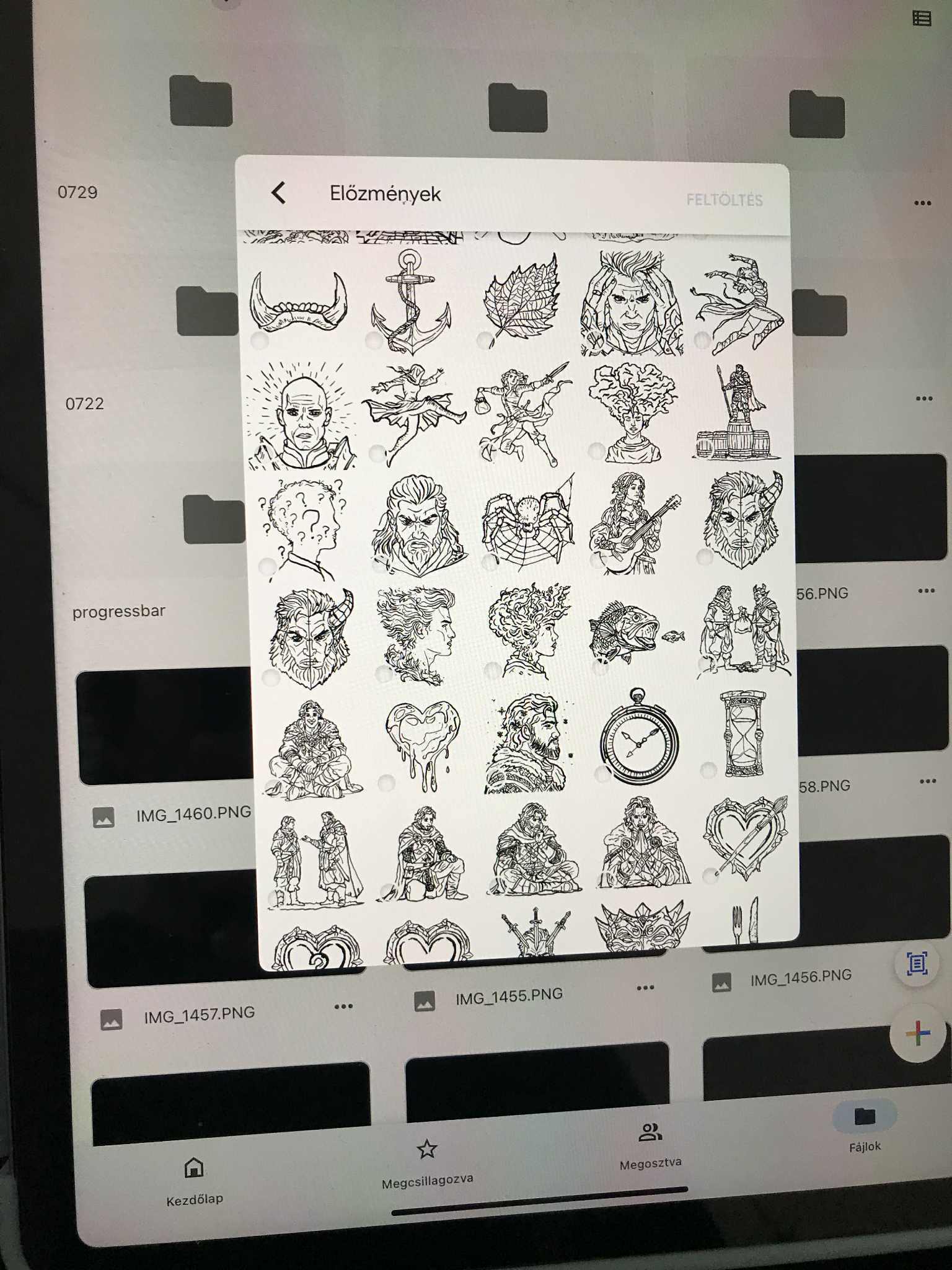
There’s still a lot of work ahead for future chapters, but I’ve found the right approach to handle it. Illustrator Krisztina Boros is also helping me by creating beautiful art for the in-game lorebooks. You’ll be able to browse these books during your adventure like little collectible stories. She’s amazingly gifted — I’m excited to show you some of her work soon!
Also huge thanks to @Alderdoodle for her beautiful borders, title frames and page dividers!
The game now has a consistent visual style that complements the tone and world of Guiding Spirit. I know it may not appeal to everyone, but im pretty satisfied with it (it still needs some polish), i think it blends into the book interface very well. Also it feels mine.
Over the last few months, when I wasn’t drawing, I was writing and coding — and in the next update, I’ll be sharing details about the upcoming free demo!
I also had a fantastic time chatting with the great @remulto4 on his DEV.LIFE show, you can watch the episode here:
Thank you all so much for your support, feedback, and patience. It’s helping shape this project in the best way possible.
Until next time,
Dice Impact