
A math game? Get that out of my sight!
Indeed, a math game is not a Civilization, or a GTA, or a DOOM. And I'm not talking about the million-dollar budget to develop it. In fact, a math game could cost two hundred million dollars. But who would buy it?
Actually, there are people interested in math games and educational games, I know from experience. Not many, but there are people who consider that a math game can complement the learning of this discipline in children, and also adults. It is clear that a game alone will never replace a teacher, that is indisputable. But it can be a support.
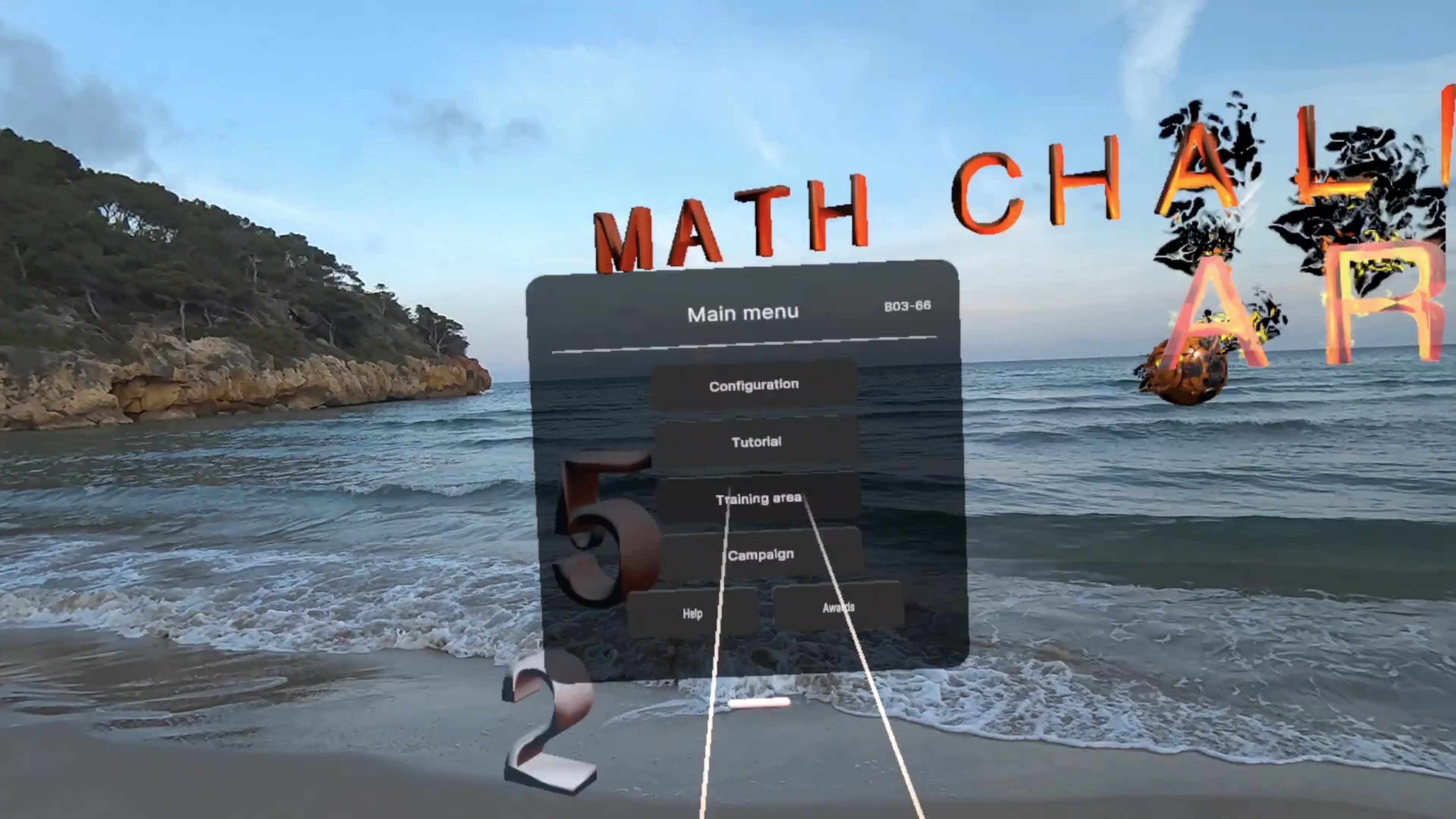
That's why Math Challenge AR is an augmented reality educational game, which aims to go beyond the classic math games. The goal is to turn mathematics into the protagonist of a puzzle-type game, but also of action.
To achieve this, the player has two elements at his disposal: the training area, where he can configure the game to his liking according to the configuration screens, and, of course, the campaign area. There the challenge is to overcome all possible levels, up to... as far as the player wants. There is no limit. Let's say that x tends to infinity, if you allow me this bad joke.
The calculation of progress.
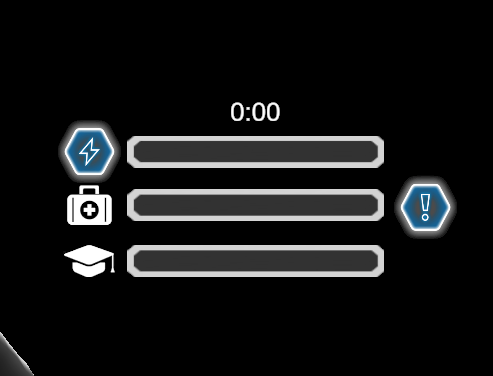
If Math Challenge AR looks like a weird game to you, wait until you see the scoring system. In general, many games have a progress bar, which indicates how close the player is to reaching the next level. In Math Challenge AR the same thing happens; there is a bar (the one below) that indicates when you are going to get the next prize (or award as it's called in the game), within the sixteen possible ones. The more the bar is filled, the closer to the award.
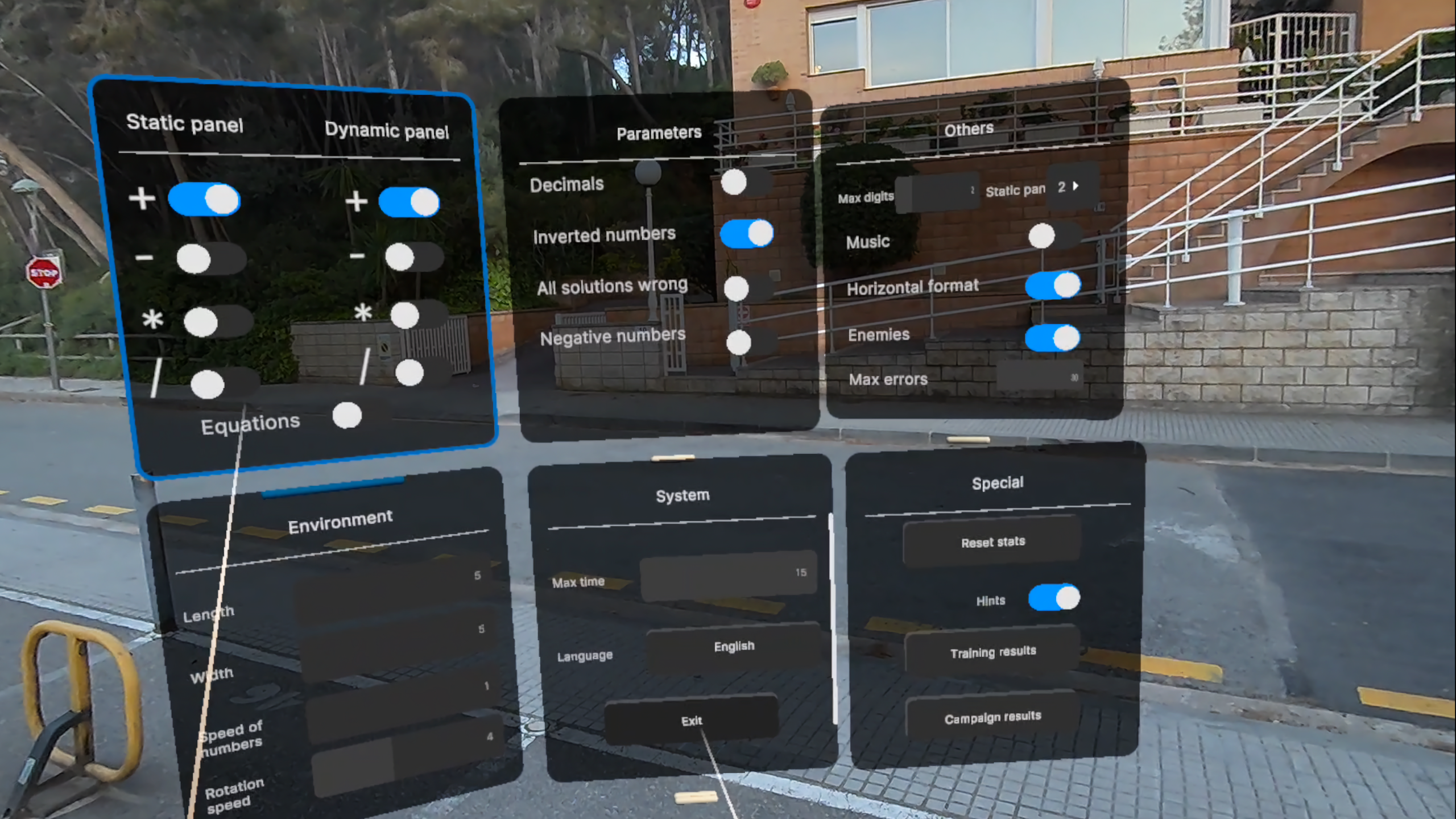
But there is a problem: the bar can go backwards.
That's right. The bar can go backwards. Let's see it with an example: imagine you are playing at level 5 of the campaign. In level 4 you reached 400 points. You are not going to lose those points. But in this game you have 50 points. Well: if you start making mistakes, the game will not only not give you new points; it will take away the ones you already have.
What twisted mind can design something like that? Mine, of course. If I was made to suffer with math when I was a kid, my goal now is to make others suffer with math.
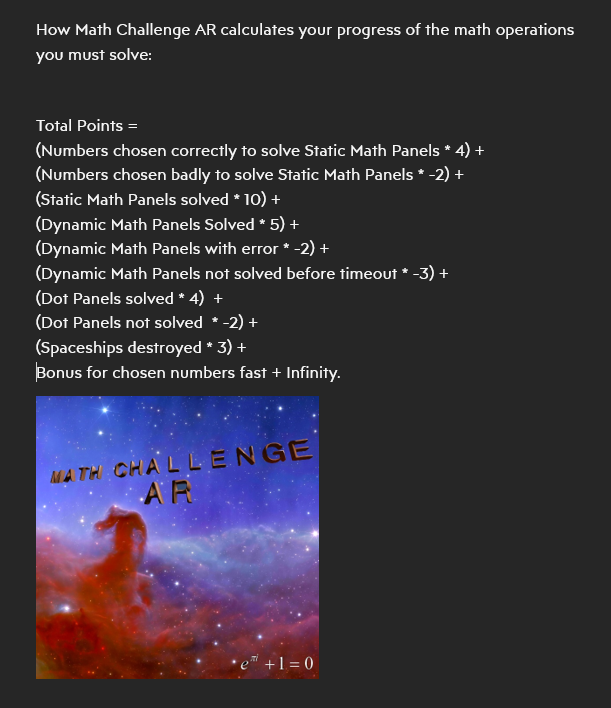
The formula you can see in this image indicates how the score is calculated. This score is dynamic, it is constantly recalculated according to your actions, your successes, and your failures. Basically, the static panels are solved by shooting the correct numbers that move around the stage. For example, if you have a 13+5, you should shoot an 8, and then a 1. If you shoot other numbers that will subtract points. I have been benevolent and there will be no negative scores. But I could have chosen that.
That will end the static panel, moving on to the next one. When you've finished all the static panels, you've finished the level.
The dynamic panels show three solutions, and they appear randomly. You must choose the correct option before the panel disappears. If it disappears, it will be counted as a “not executed”. If you shoot wrong, it will be counted as “wrong”.
With the point panels you must also shoot at the correct option, or it will take away points.
And the spaceships, well, the spaceships will be shooting at you and taking lives. You must destroy them if you want to survive. Bonus adds points by shooting fast to numbers, and infinity when this symbol appears in vertical.
Another thing: remember that you can manually generate dynamic panels, point panels, and enemy spaceships, as shown in the image you can see here:
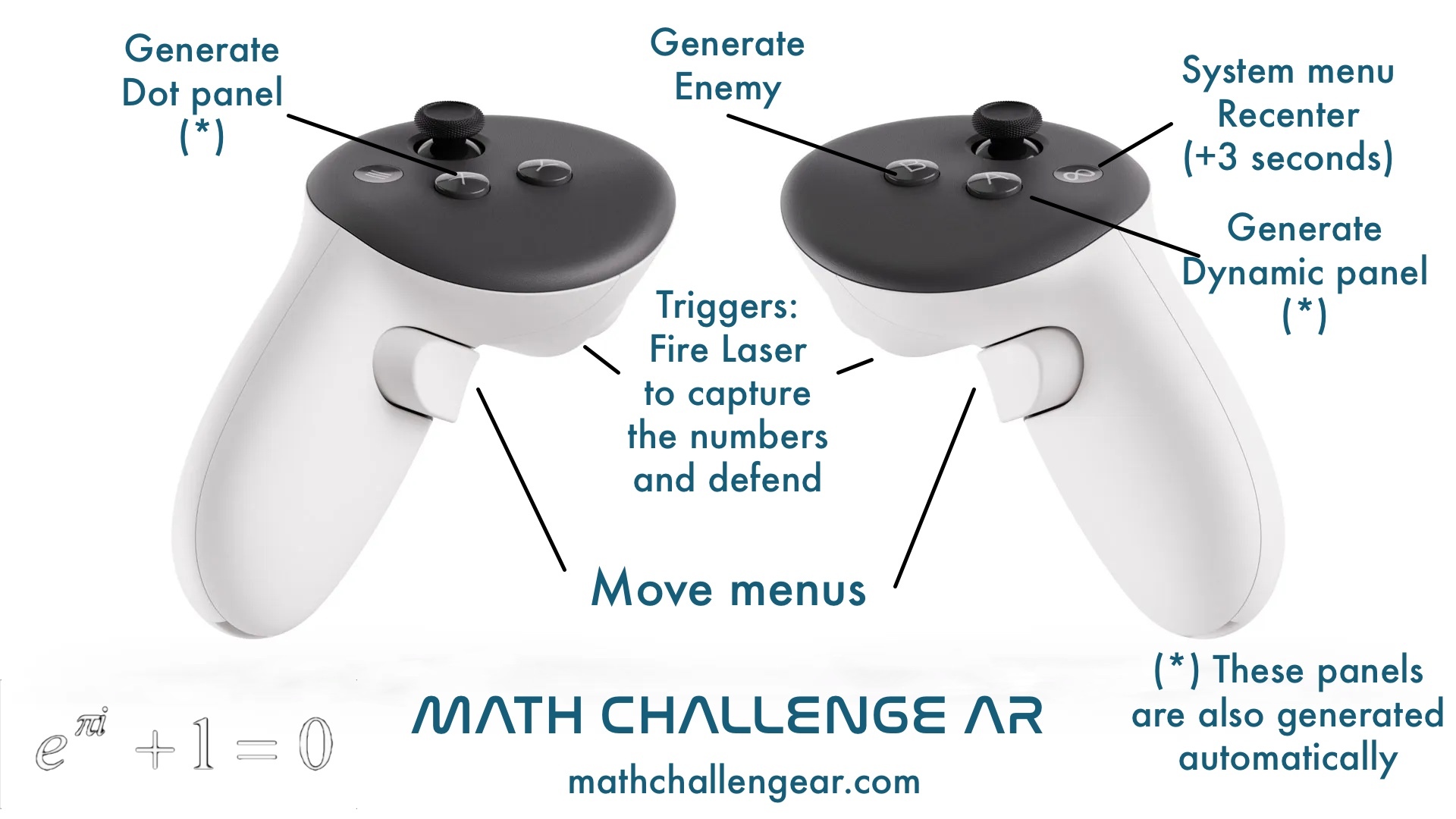
That is, if you are one of those who like to really suffer, you can go pressing the buttons and generating panels and even enemy spaceships (if you have activated the enemy mode) constantly, until your head explodes.
Remember. The static panels, the ones that require the numbers, are the ones that, when you finish them, allow you to finish the level. If you don't finish them, the level doesn't end, until the maximum time of the level runs out. If the time runs out and you have not finished, you lose all the points again.
All this ends up allowing you to calculate the total amount of points. Successes have positive multiplier factors, and mistakes have negative multiplier factors. In the training you always start from zero and there is no possibility to get prizes. In the campaign you accumulate points from the previous level, and it will allow you to unlock awards.
Oh, one last thing: shooting fast at the floating numbers allows a bonus. There is a second counter that changes color. The sooner you shoot the next number, the more points.
Good math hunting!