
Note: If you would be interested in:
Getting info on future play testing opportunities
Chatting with the devs and like-minded people about your favorite games
Taking part in future raffles (You may get to influence easter eggs in the game)
Consider joining our Salmon Snake Games Discord Server! We would be so happy if you joined our small community ^^
I have crawled out of the trailer hole I jumped into last month.
August was spent running against the clock to complete the first trailer for our game by the end of the month. My part in it is now done, and the trailer has made its way to our composer’s desk. Once he completes the audio, I’m finally free to post it everywhere! ^^ I’m quite proud of everything I accomplished to make the trailer showcase the game in the best way possible.
Now that the trailer is complete, it’s back to prioritizing demo development. My list of things I need to implement is steadily decreasing, and I’m still confident we’ll have the demo out by the end of the year.
But onto the topic I actually wanted to discuss today, which is...
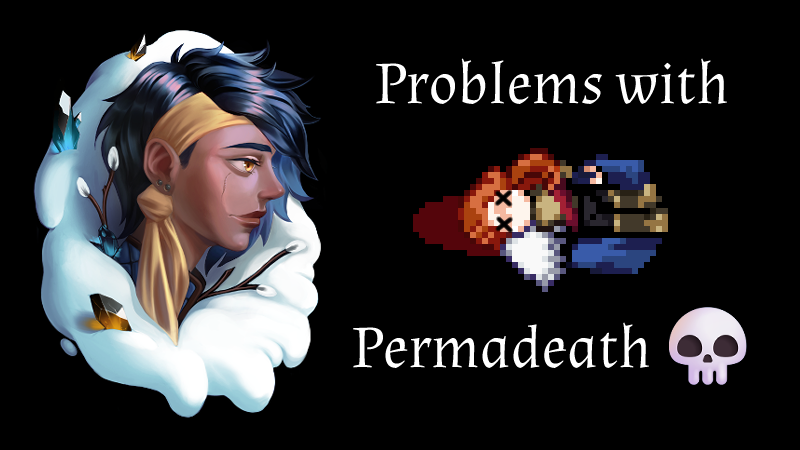
Raise your hand if you’ve encountered the following scenario in an RPG with lots of characters:
A character is introduced in the story. You get to know them and what they fight for. You quite like the character. They have quirks that endear them to you, and you get excited about how they might develop over the course of the story. At the end of their chapter, they join your party and then...
...they never speak again for the rest of the story. :(
The above example is a bit overstated, but it’s not that far from the truth of a lot of games. More often, “Beloved Character A” still has lines, but they aren’t critical to the story and could be cut with minimal impact. Why is this such a common pattern?
It’s because the game has a permadeath mechanic and has to account for the fact that, in any given scene, most characters have a chance of being dead or unrecruited. This means they can’t have anything too important to say, or the game has to provide a replacement character to deliver their lines if they aren’t present.
Ideally, games would have branching scenes that account for dead teammates, with scenes changing significantly depending on who is alive and who isn’t. But then you have to consider that tactics games most often have dozens of characters, and creating such branching scenes would get exponentially cumbersome very quickly.
I don’t even want to do the math on how many different versions of a scene you’d have to write if you have 10 characters and the scene is vastly different depending on which of them are alive.
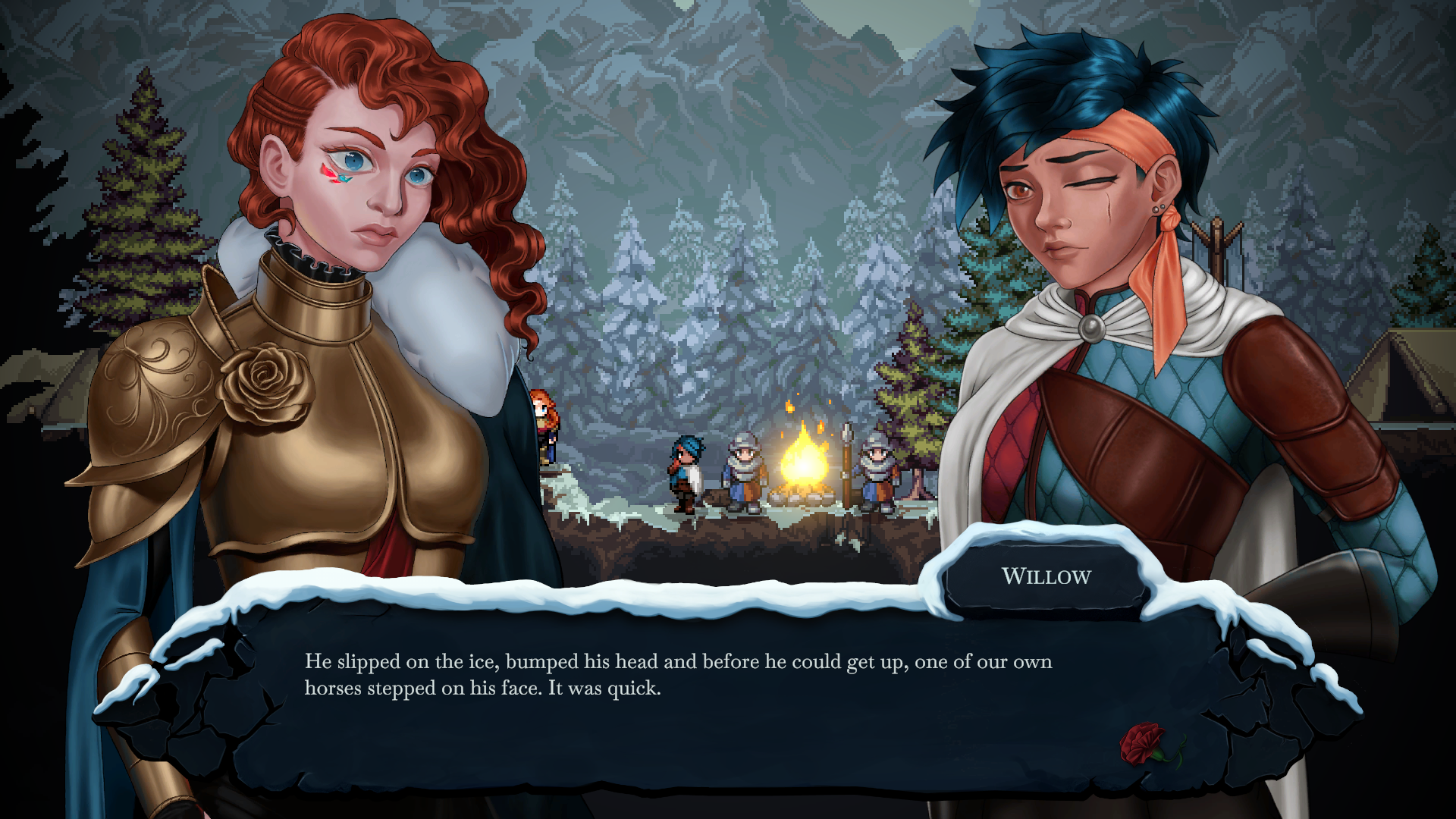
So how do games work around this? The example in the beginning is one option, but it’s a very boring solution in my opinion. Games like Fire Emblem mitigate the issue with some of the following tactics:
They add additional content for side characters through support conversations. These are little extra scenes that show a pair of characters interacting and developing together. These are almost never related to the main plot.
Plot-critical main characters are treated as special cases. If they die in combat, the player gets a game over because the game can’t function without them.
Important characters close to the main characters are often “gravely injured” instead of killed when they are defeated. This way, they can still take part in the plot without being able to fight in battles.
These are all fine solutions and have resulted in good games. However, they don’t remedy the underlying issue: Permadeath can undermine the effectiveness of your story when character losses are determined by player mistakes rather than a writer’s planning.
When we planned this game, we considered this problem and the possible solutions and decided that, for our game, we needed to take the opposite direction: To make our story function as well as possible, we needed to throw out permadeath completely.
This opens up a whole can of new problems. If your units cannot actually die, then are there any stakes left in the game?
I would argue that this problem is much more solvable with proper planning. Here are some of the design choices we made:
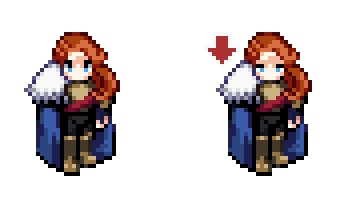
Design Choice 1: Injuries Instead of Permadeath
Instead of dying and being removed from the game, characters receive an injury and have to fight with diminished stats in their next battle. If you lose a leader unit, the entire remaining team becomes demoralized until the end of the battle.
The player is still motivated to keep their team in good health, because losing troops results in longer-term consequences, even if you can’t permanently lose the unit due to a mistake.
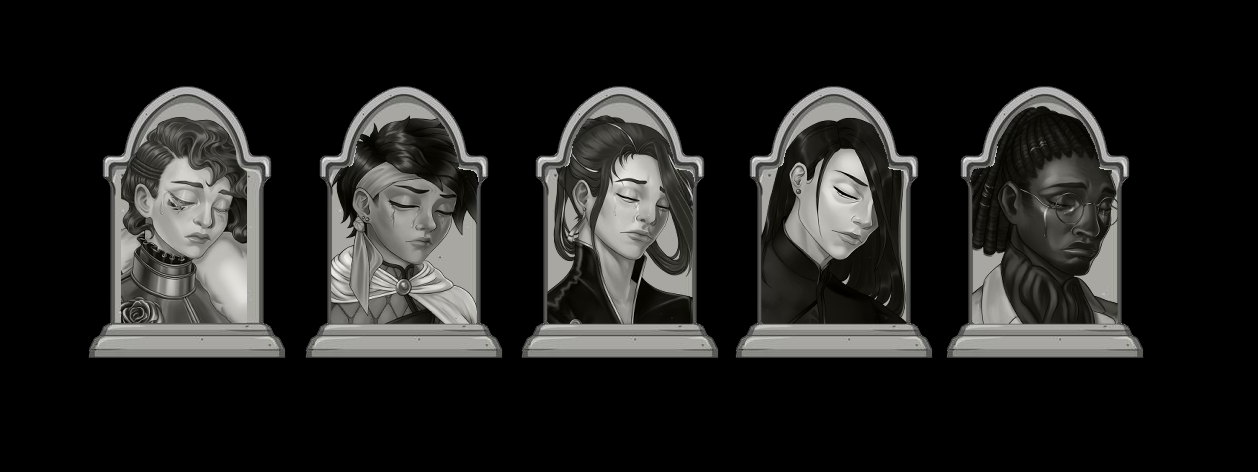
Design Choice 2: No Permadeath Doesn’t Mean No Death
No permadeath does not actually mean your units can’t die. You will not walk away from this story without experiencing loss, but those losses are determined by the choices you make and the values you display over the course of your journey.
In fact, there is exactly one character out of the 26 characters with portraits who cannot die depending on your choices.
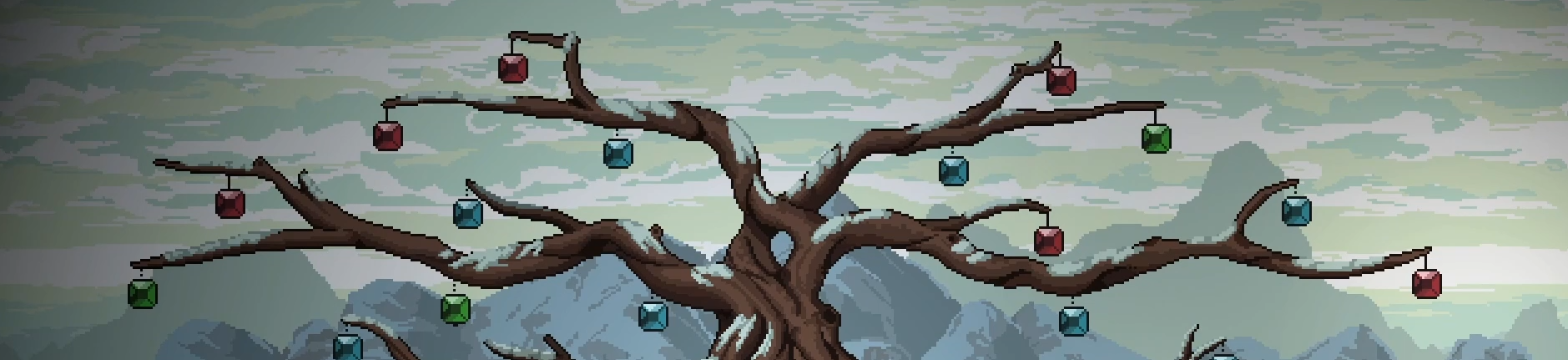
Design Choice 3: We Do the Exponential Branching Thing With Restraint
Agency and consequences are the most important aspects of our game design. This whole project was started because we were disappointed by another game for not giving the player enough agency.
Branching paths were inevitable for this game, but we had to find a way to handle them smartly. This means that the biggest changes in outcome happen toward the very end, but even before that, there are large forks in the game, both at the very beginning and in the middle, with very little repeated text between routes.
For one chapter in particular, Vivi wrote a scene that has 18 different variations depending on your previous choices.
This concludes my musings on permadeath. I hope this has given you some insight into how we think about stories and our design process
Next, I’ll go over what we’ve accomplished with the game over the last month and a half since the last devlog:
---
Marketing:
I made a trailer! I won't show it yet, because it has no sounds, but you bet it will be everywhere as soon as it's ready! I had to learn Spine2d animation software, because I wanted our keyart to move at the end of it. here's how that looks
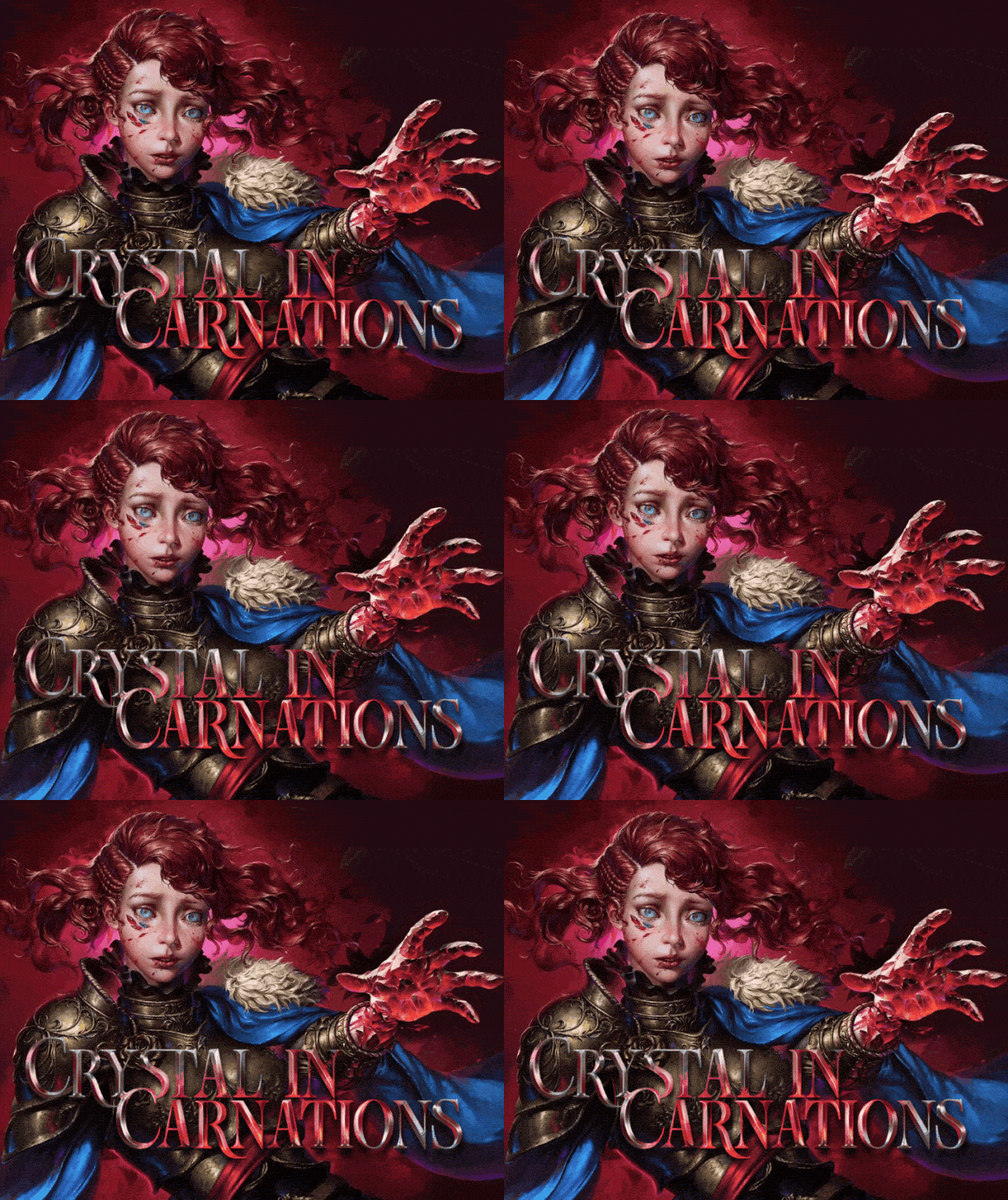
You might also have noticed that I updated the store presence in both Steam and Itch. It finally looks like a game I would buy myself, and I'm quite happy with the store pages.
Art:
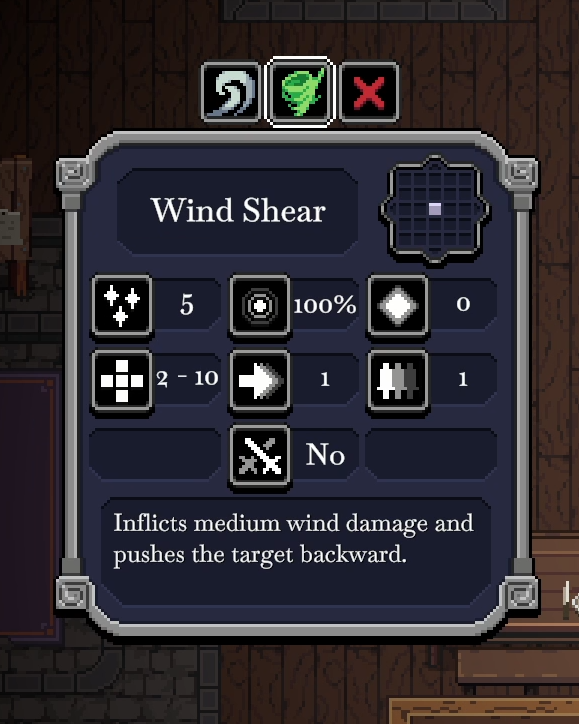
Reworked our skill menu
I drew some more props that are used in the background during dialogue scenes
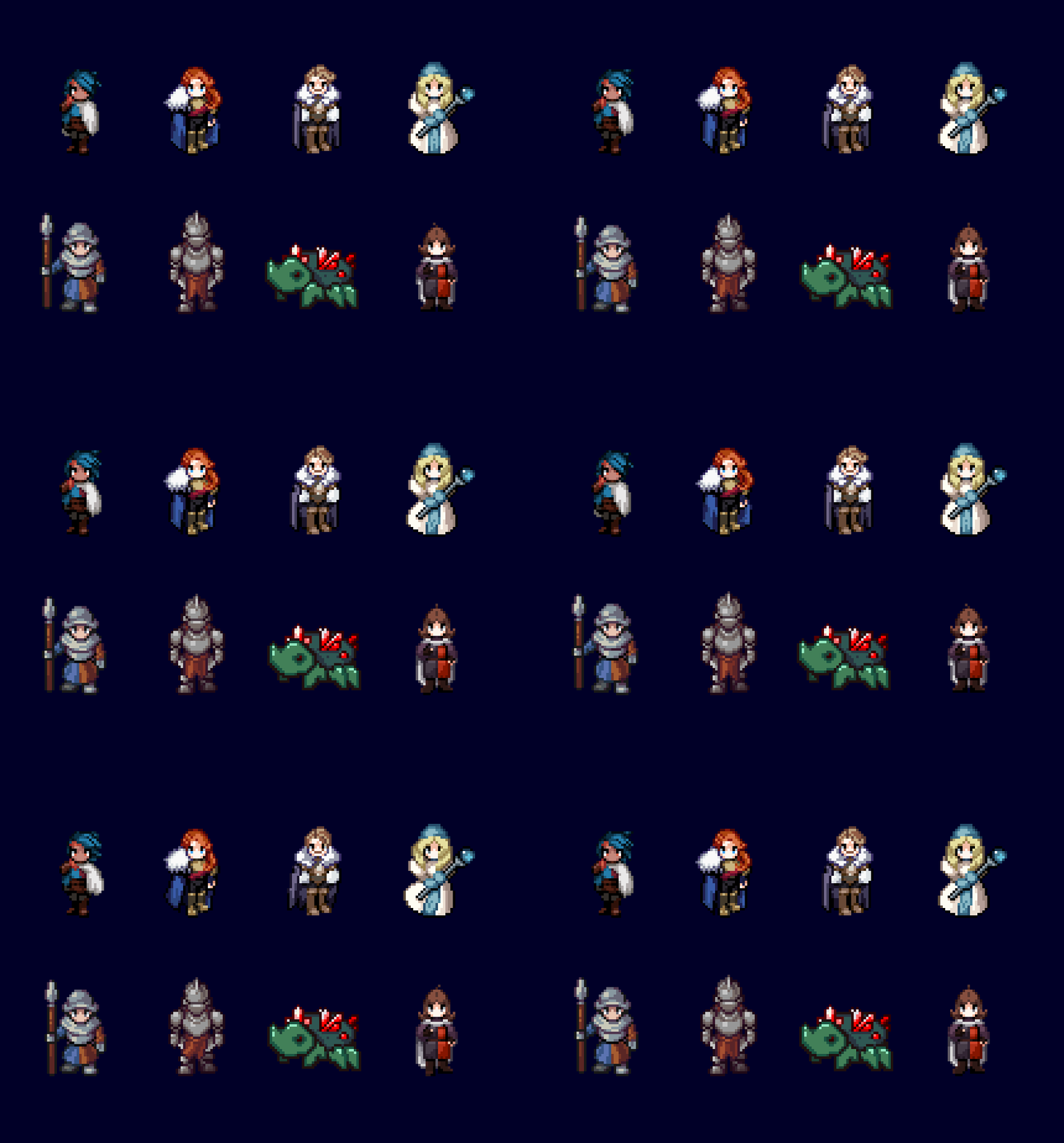
Made many more pixel art characters for the game
Programming:
Camera now follows the primary target of an attack
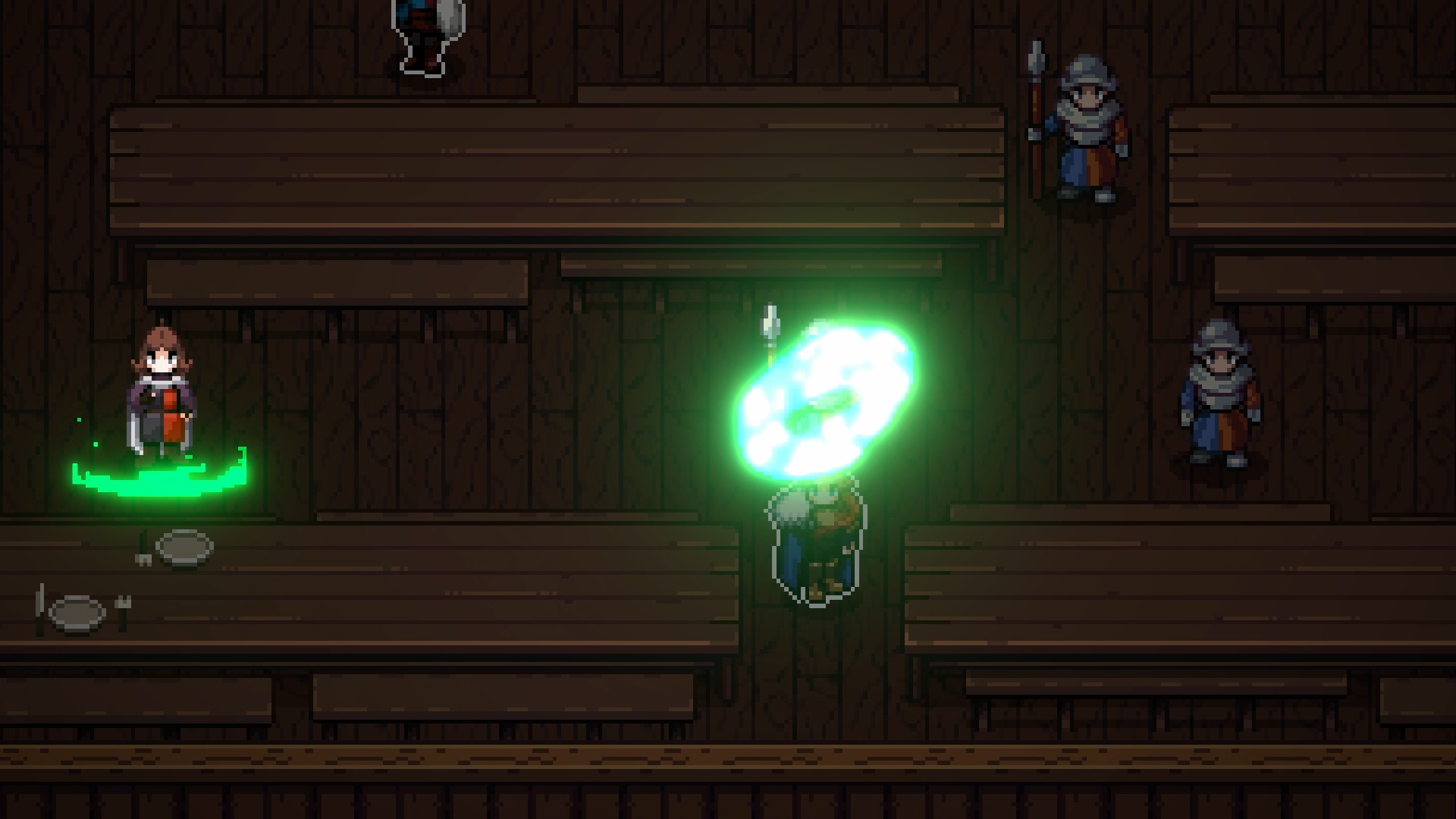
Casters now get a nice magic circle when they cast! Our game is quite magic heavy and great imporance is placed at it by narrative, so I wanted to emphasize it this way
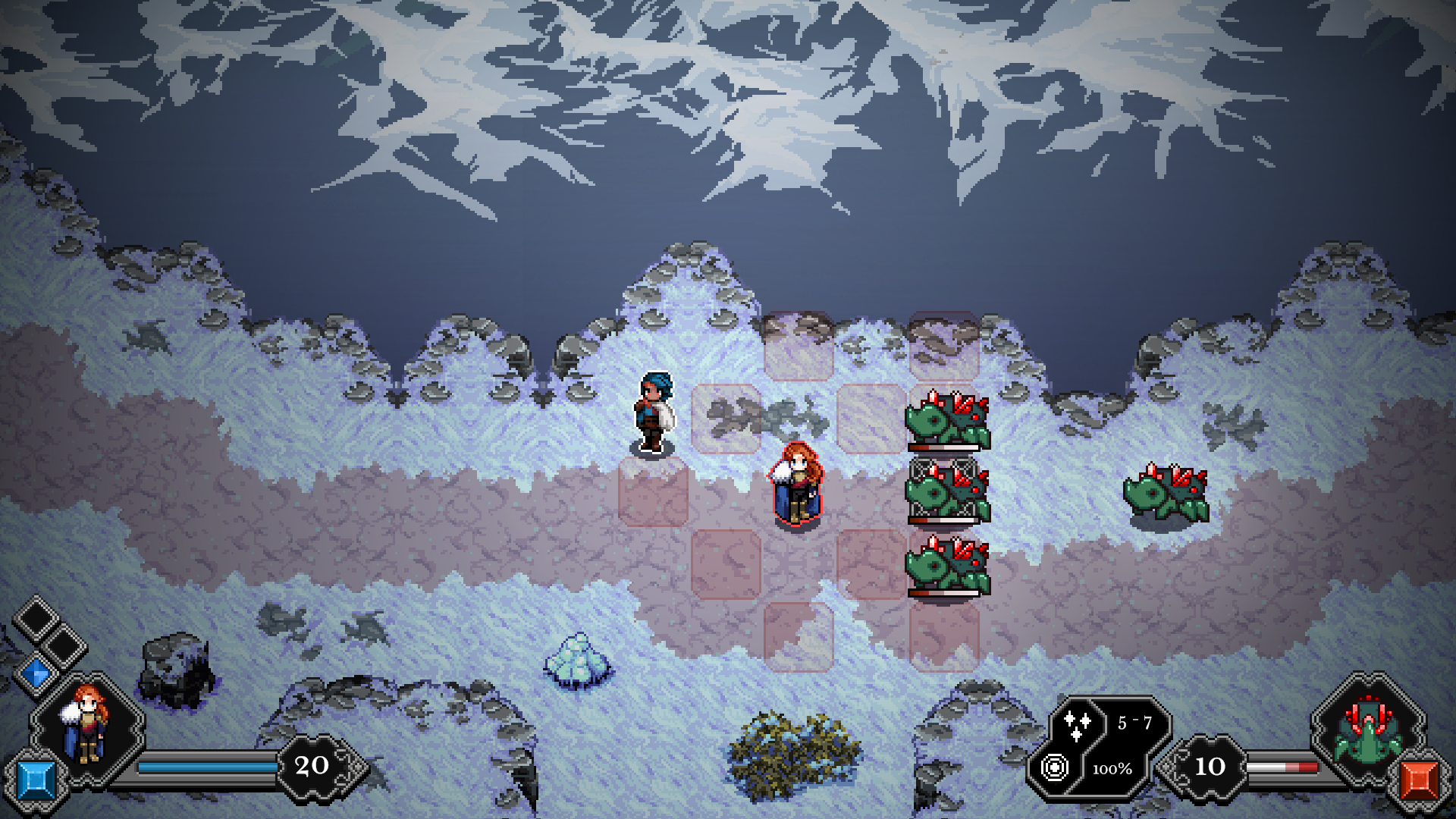
The player can now see what elemental affinities a tile has (for example if it can be set on fire)
I implemented a battle forecast that shows how much damage might be inflicted on the primary target of an attack (and secondary targets if the skill is multi-target
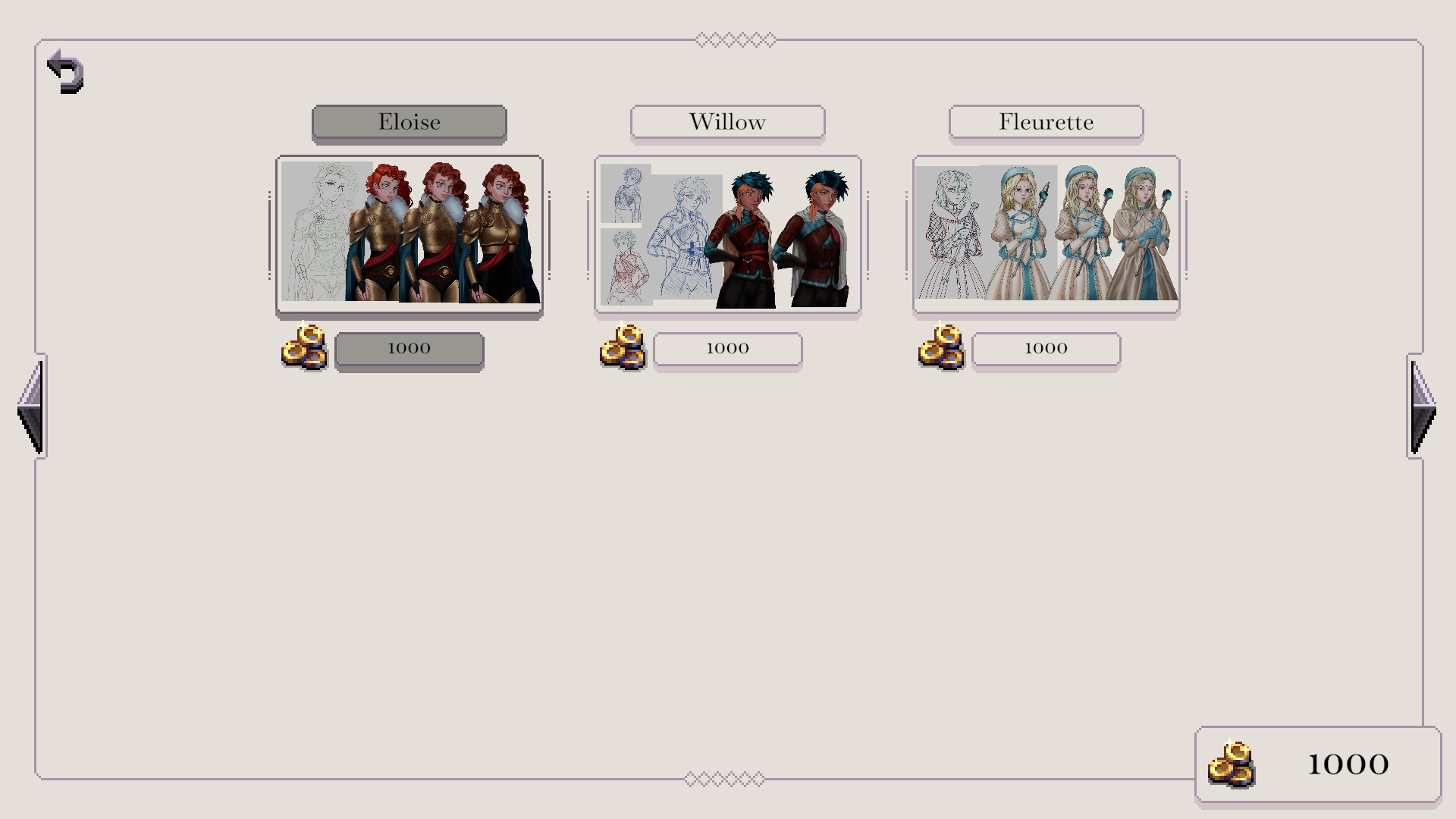
Implemented all the currencies that are used in the game
Implemented a concept art menu where concept art and developer commentary can be bought with currency you find while exploring
Added more features to our parallax background system: animated items in the backgrounds, lights and particle systems
Fixed a bug that closed certain menus with the same input they were opened with
Fixed a broken dialogue skipping prompt
Some menus only worked with a mouse. Now they work with keyboard and controller as well
Fixed a bug that showed a battle forecast witrh wrong characters featured
Made a skill button uninteractable if the player does not fulfill the conditions for executing that skill
Added some more UI sounds
If an unit would spawn to a tile that already contained an unit, that unit will now spawn on the nearest available tile instead
Updated unit pathfinding to exclude tiles occupied by enemy units
That is everything for today ^^ I'm fully focusing on getting the demo out now. My list of things that are needed is at the moment 45 items long and so far this year I've completed 137 items on my list. And for most of the last year I had a full time job, so I was slower.
Thank you for readin this devlog and see you again next time!
-Hanuli from Salmon Snake Games