
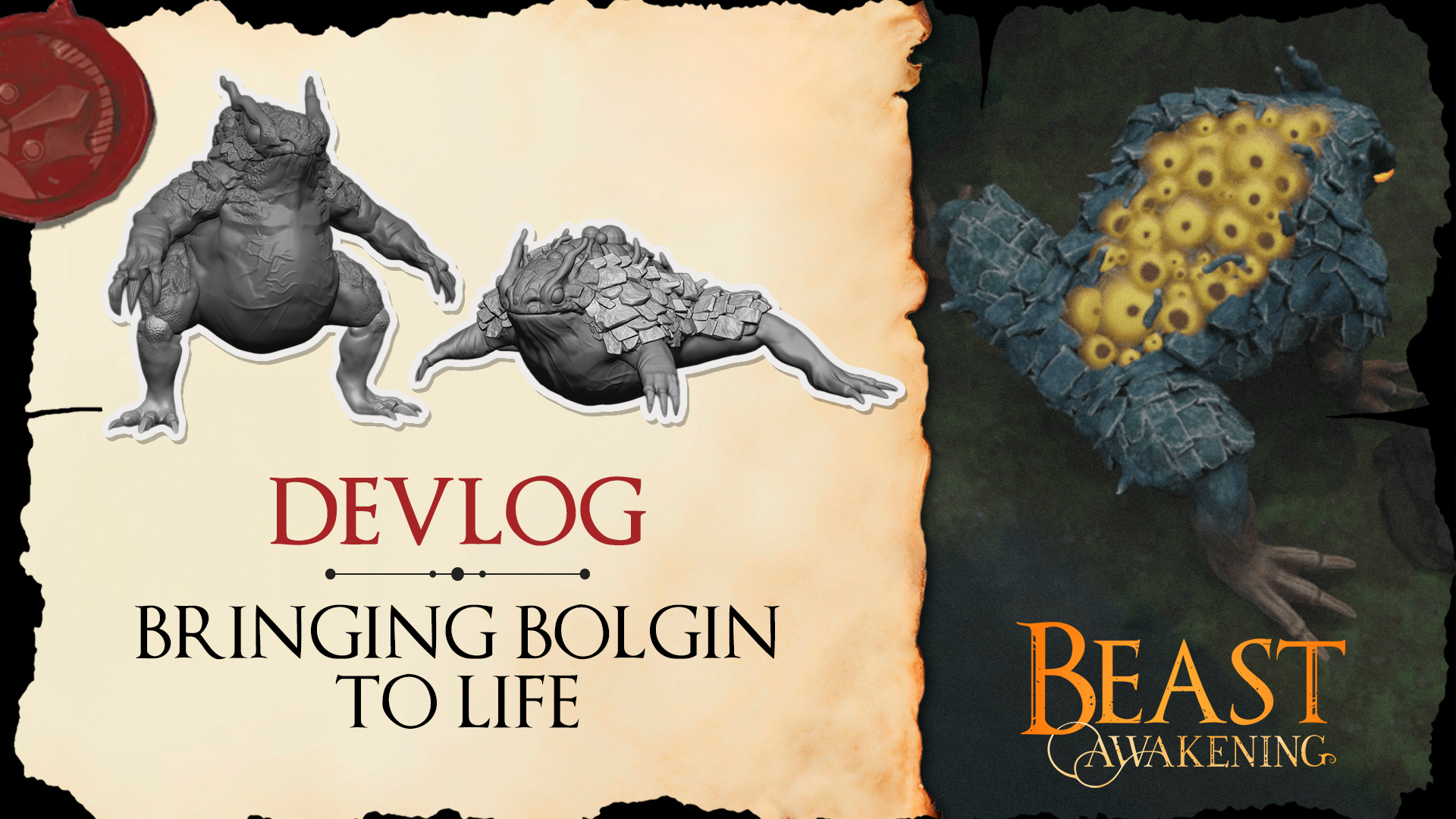
Welcome to the Devlog!
Welcome to the devblog for Beast Awakening, step in with us behind the scenes as we go more in depth on various aspects of the game.
Choosing Our First Beast: Bolgin
The first pick for what Beast to get started with seemed obvious, but we wanted to make sure we weren’t only mesmerized by her irresistible charm but also considered her abilities and toolkit to make sure we could cover as much ground as possible when prototyping. We confirmed that Bolgin was the best choice and went ahead and got started bringing her to life.
From Miniature to Model: Bringing Bolgin to Life
Starting with the Miniature Model
For the boardgame there already existed 3D models for every character for the miniature game pieces. We wanted to find out if there was a good way to convert these to game-ready characters to save on some time and keep the characters as you know and love them.
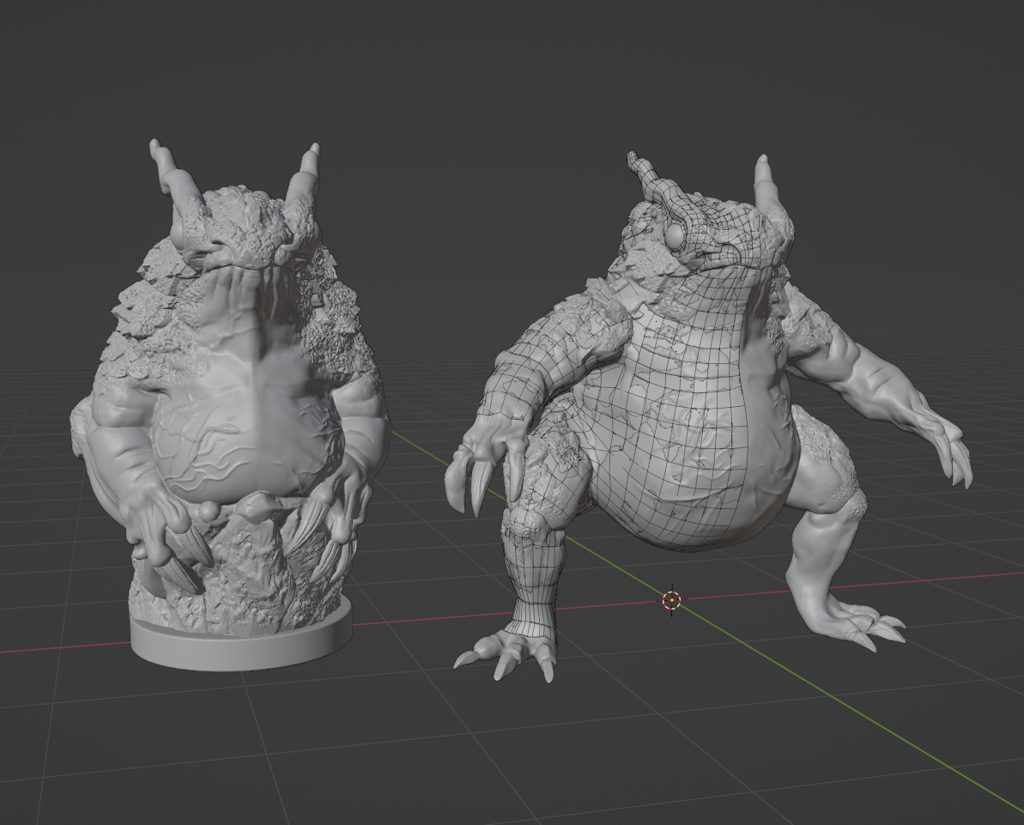
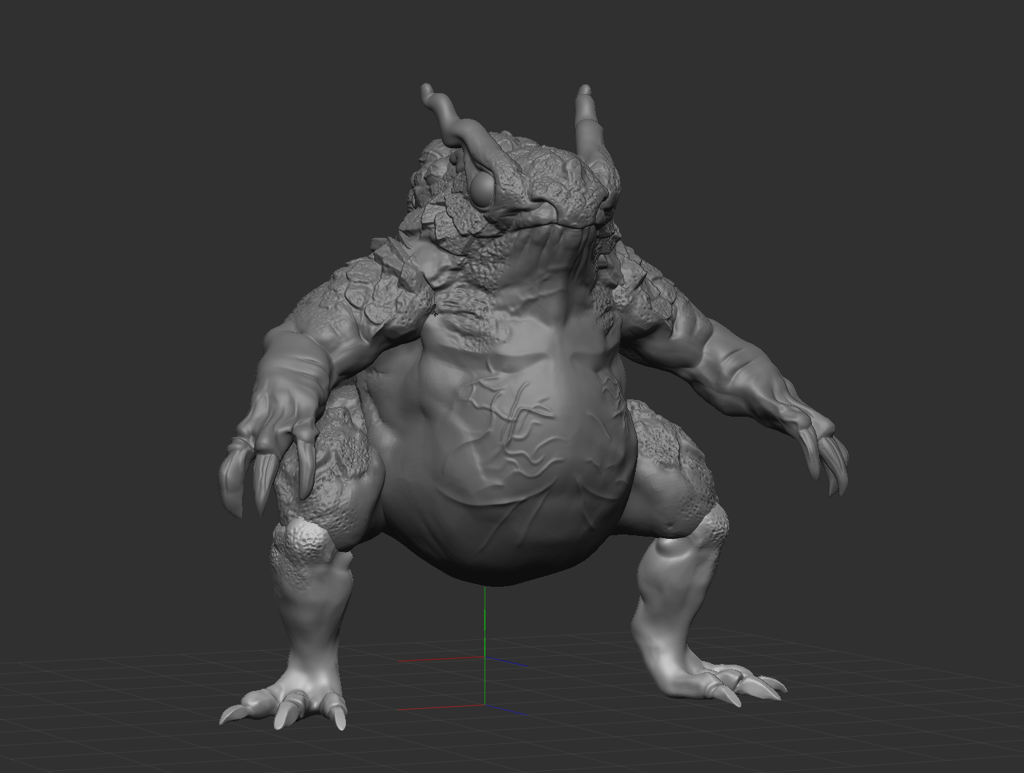
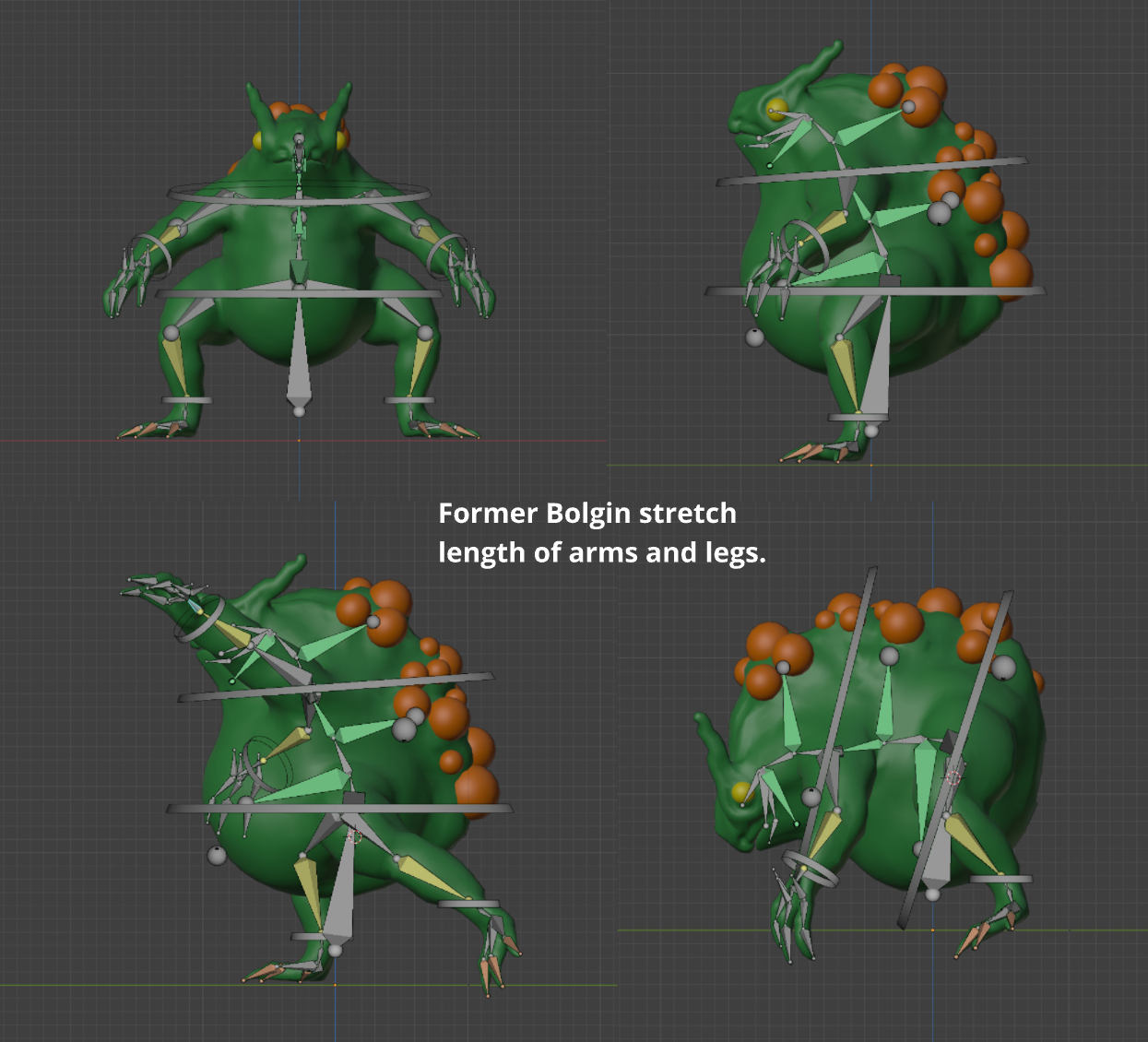
The first step of this process is un-posing her from the rock she was sitting on and detaching her fused limbs to a model that we can manipulate like a puppet on strings.
Adding the Rig
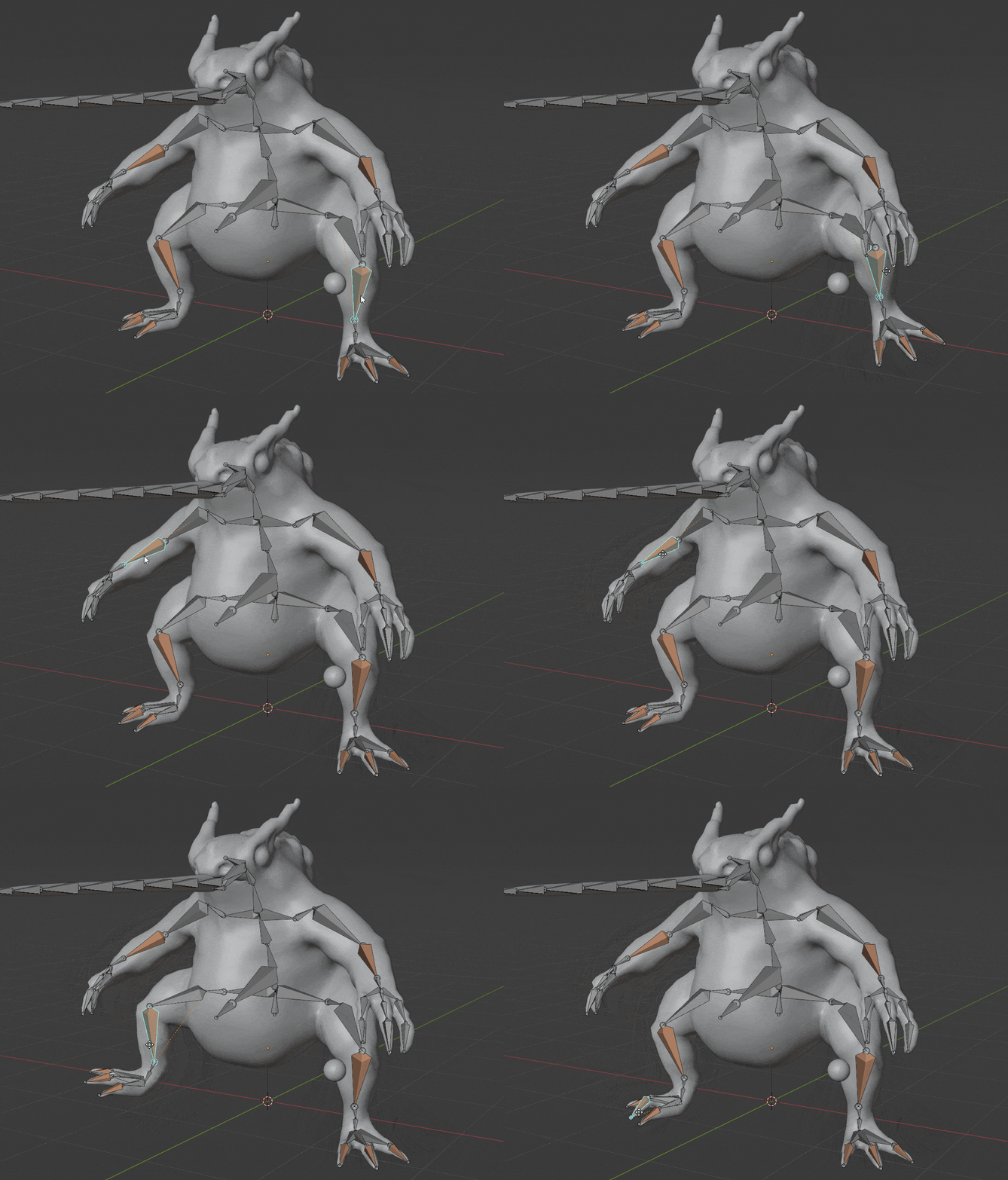
We then give her bones on a lower fidelity version of the model, through these bones we can control her movements. The first essential step is always to make them do a little jiggle dance, naturally.
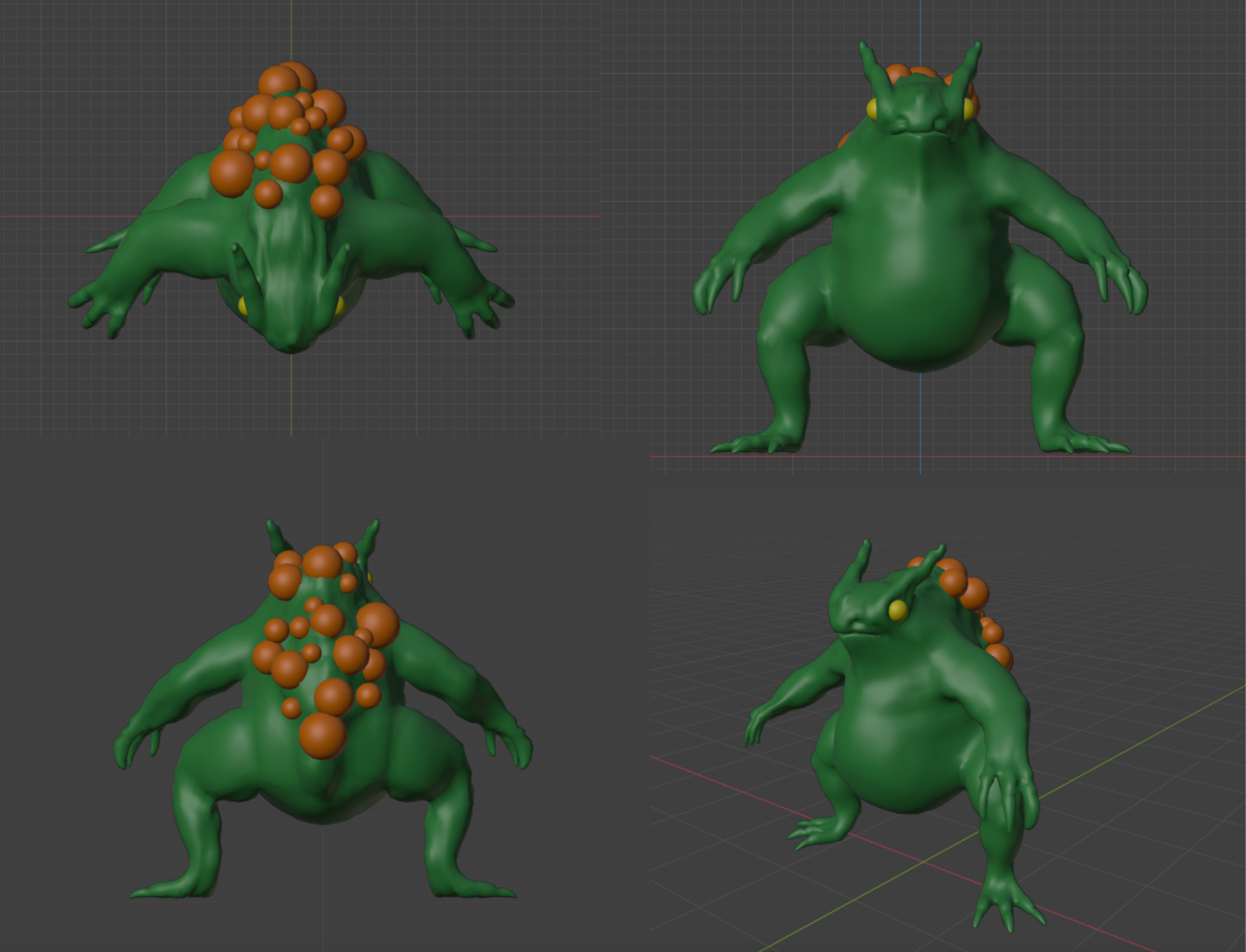
The first iteration of the model had long arms but very short hindlegs along with a short, but thick, neck that can’t bend up properly once we put her on all four legs. Her back was bulging outwards a lot, which is really good shape language for the little figurines when you 3D-print them, but not very toad-like for a movable character in game. In general the old model we started out with was more fit for a big bulky bipedal character who doesn’t have as much mobility, not a big toad who can make big leaps like we all know Bolgin tends to do.
Becoming Herpetologists: Studying Toad Movement
We went back to the drawing board and we all became herpetologists, okay not really, but we did study toad movements in more detail than most. We specifically highlighted and studied the way frogs and toads move and behave, how they extend their legs, and things like that.
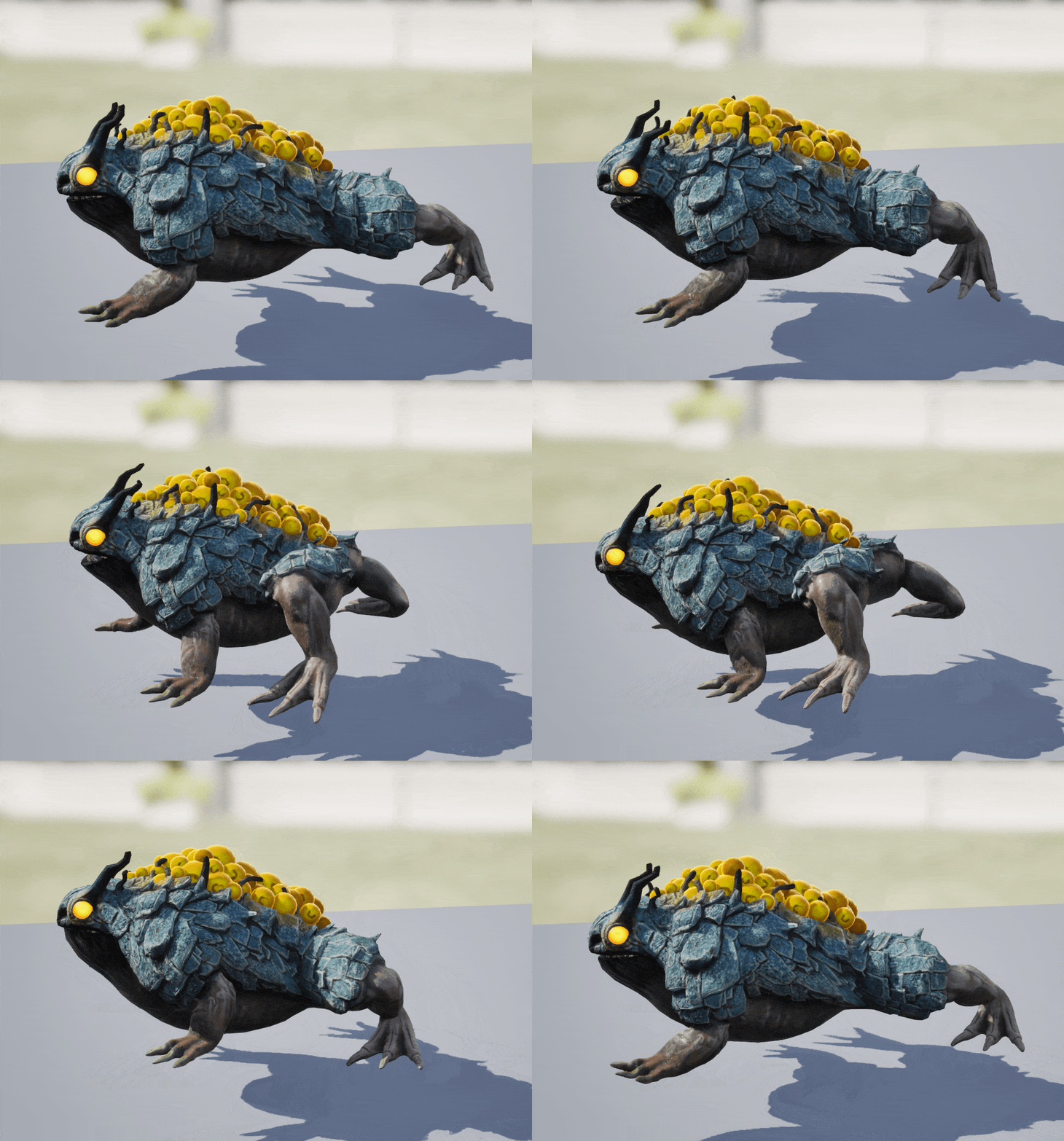
One of these studies is shown here where we broke down a video of a toad jump frame by frame, and then color coding each limb to easier see the shift in movements that the toad does for each frame. Then looking over each color-coded frame to make small notes for what actually happens when a toad makes a jump. How far do their limbs stretch? How much do they bend? How much can each limb rotate?
[Asset to be added]
Refining the Model Based on Study
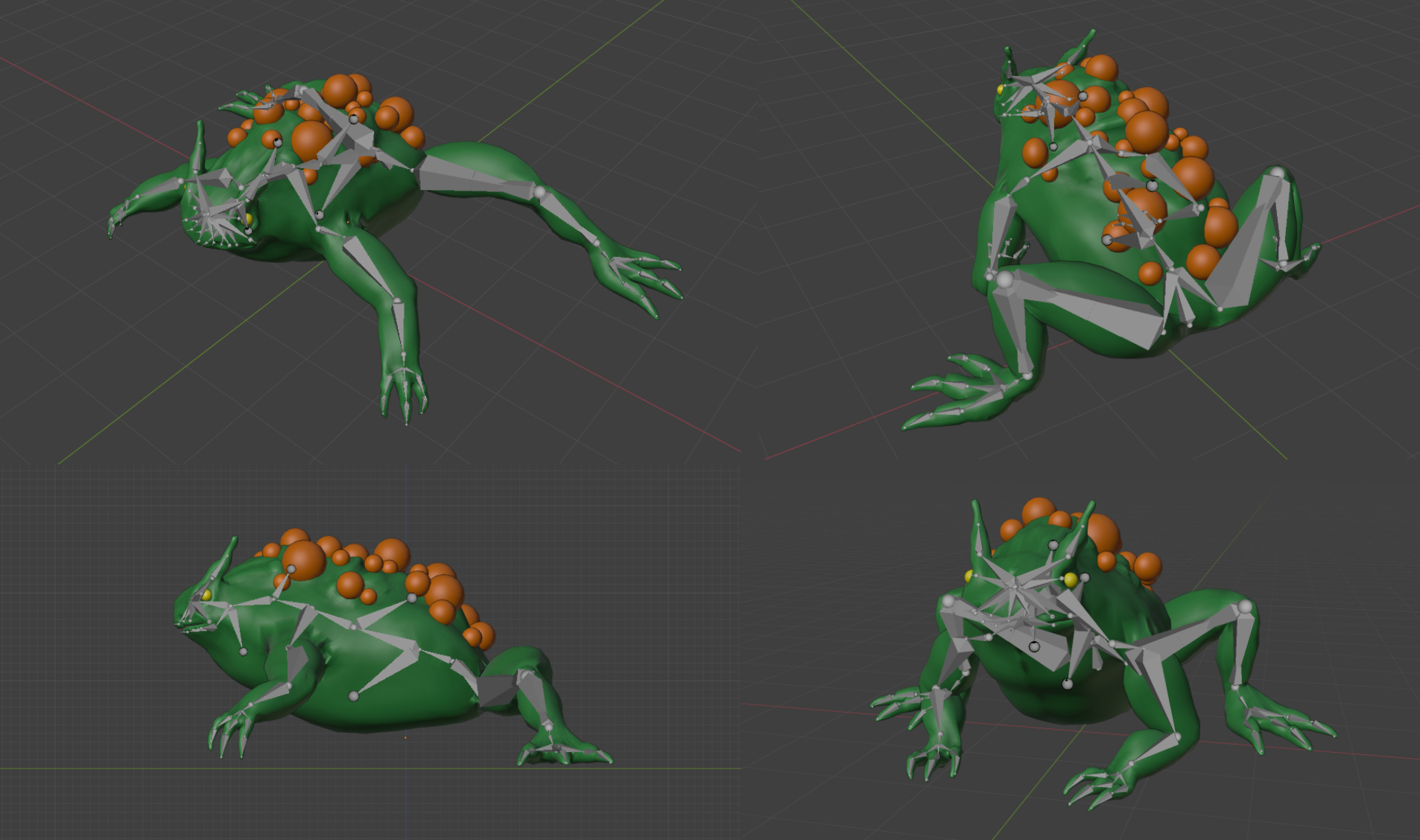
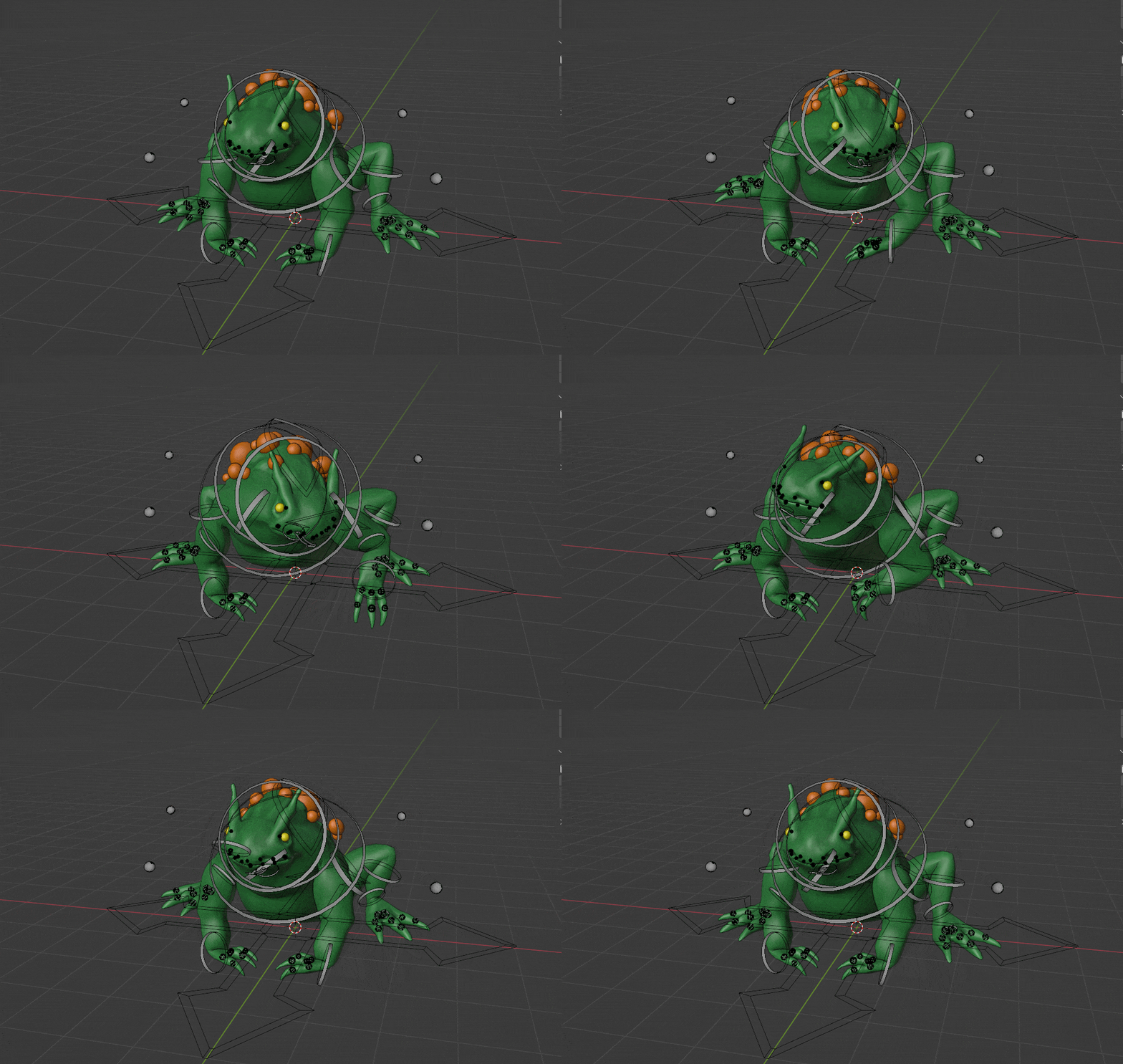
Following this we drastically altered the model of Bolgin to fit this shape where her default posing was more suited for sitting down on all fours, instead of bipedal like she was before. This will help her limbs bend more naturally as we animate her.
Adding Detail and Texture
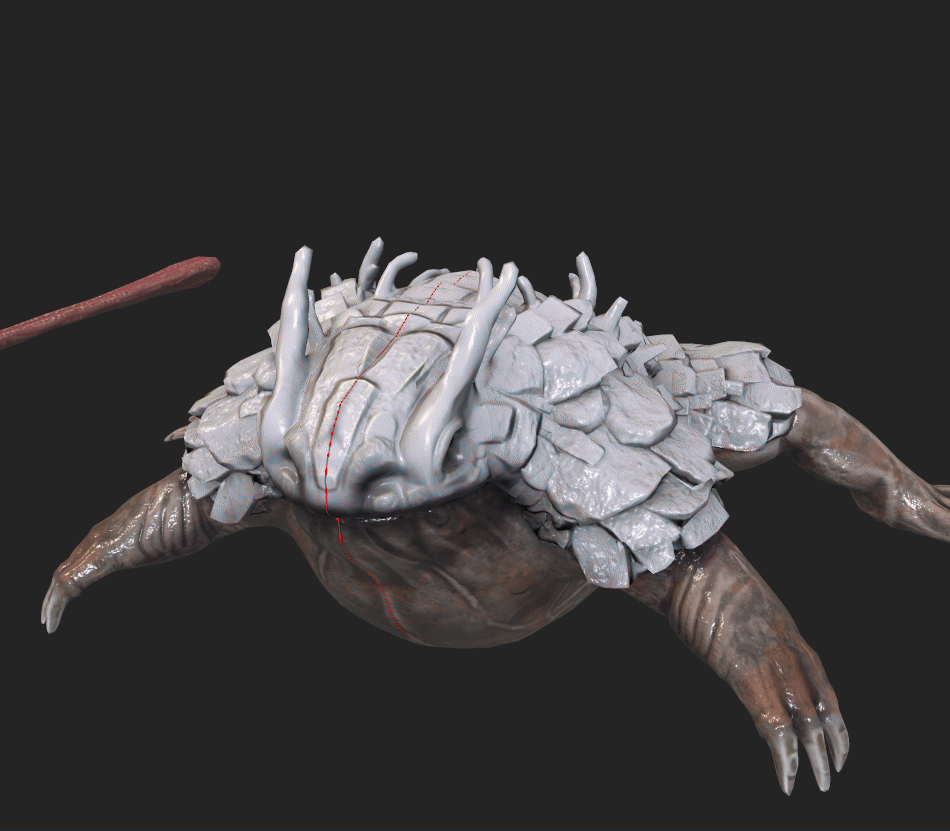
Now that we had a more functional and toad-like base to work from we went onward to make this toad more... Bolgin. This meant more muscle, primordial scales and a protective carapace that was distinctly different from her smoother undersides. This is where we took some extra development time to figure out how to best represent her scales. We created many different variations and every time we got a little bit closer to something that felt right. Small scales, big scales, geometric scales, round scales, layered shingle scales and everything between.
Iterating on Scales
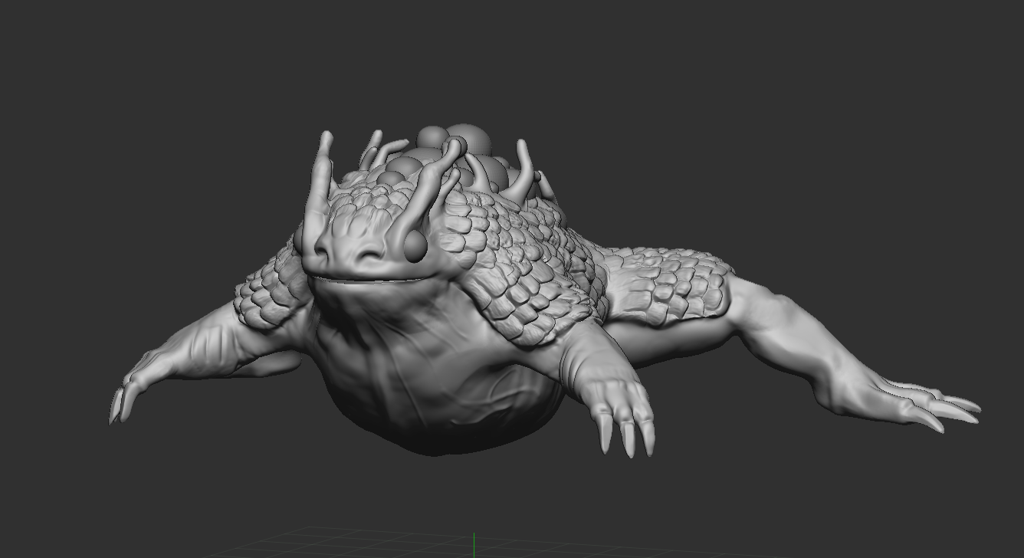
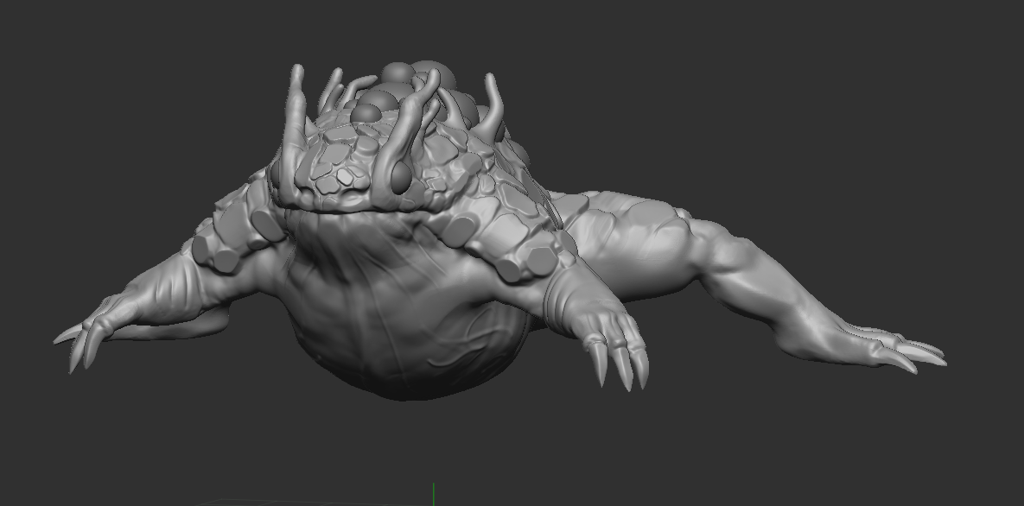
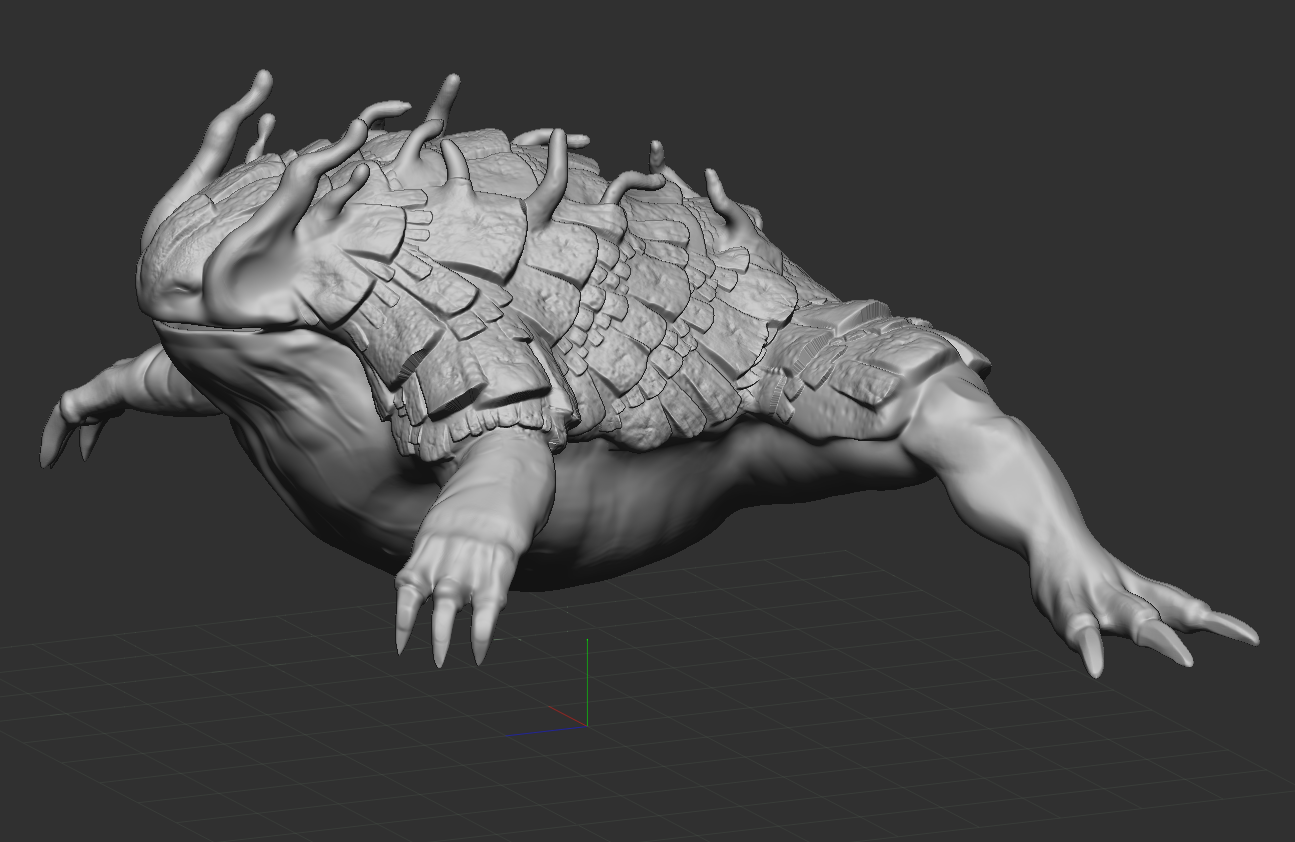
Through these iterations we also kept an eye on how this would look on the model itself with some colors and textures. We noticed that we lost a lot of silhouette and the scales were stretching when we were moving her about. They also didn’t look quite as ancient and overgrown as we wanted them to look.
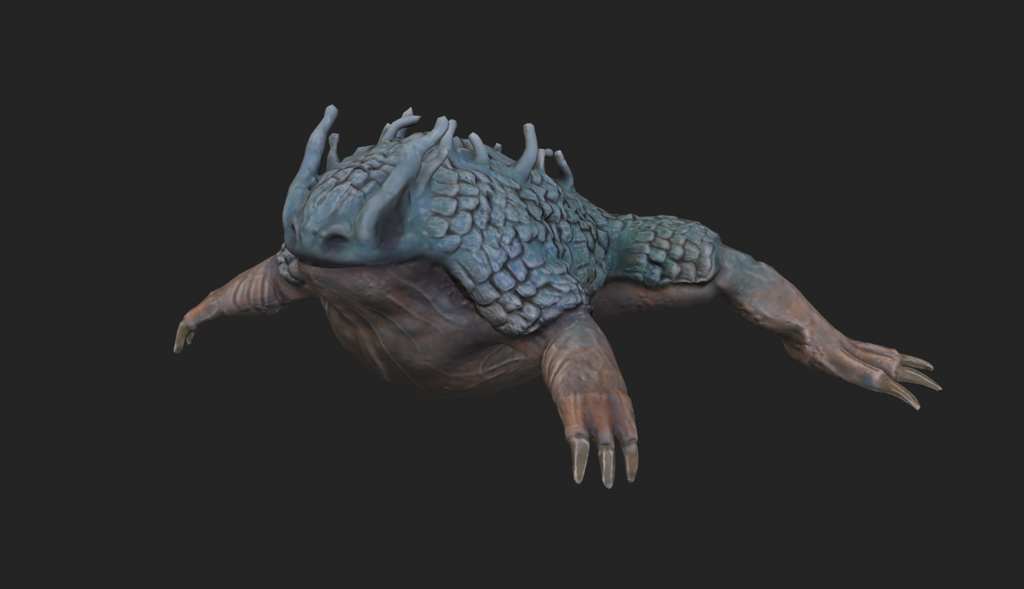
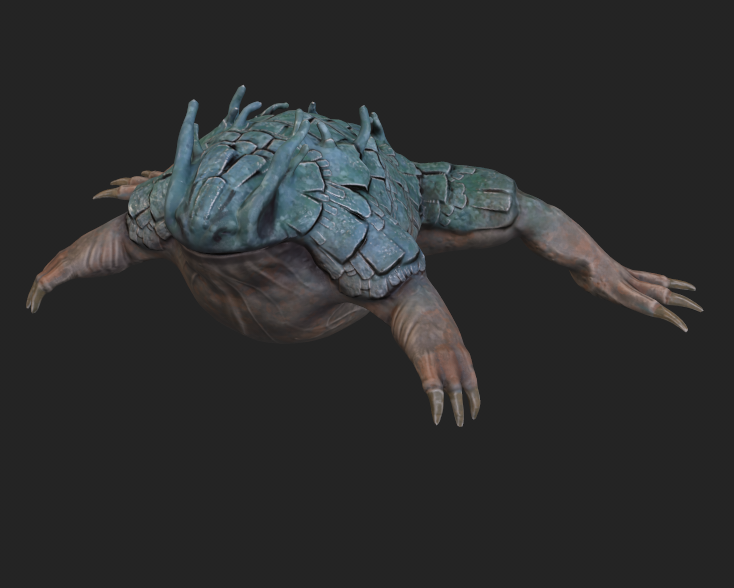
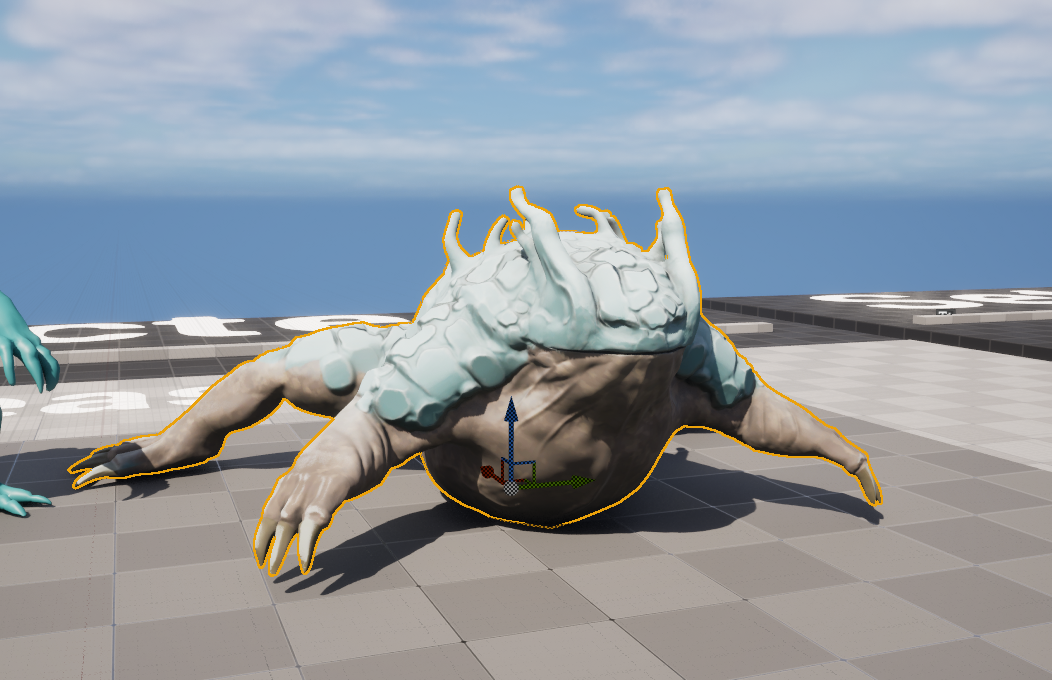
We decided to make them grow over each other and layer on top, varying small and large scales with a more organic and non-uniform look to them. She has lived a long time, ancient and primal. She should look the part! This also helped her silhouette read better at a glance.
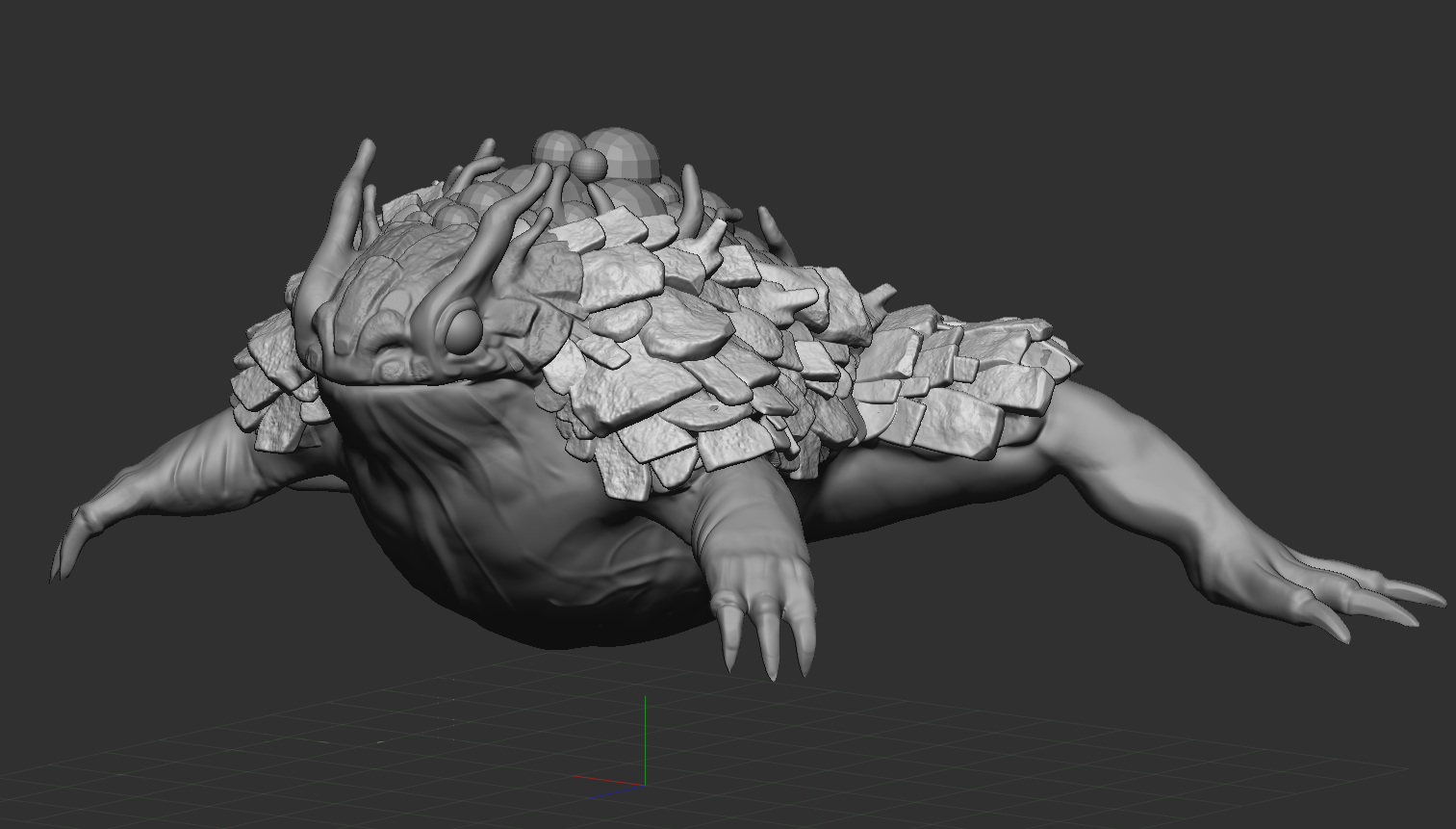
Technical Approach to Scales
By making her lowpoly model follow the scales we were able to keep some of that detail in the scale height variation, for animating her though we still need to keep her topology animatable. While this may look like a lot of lines it is important to let her deform nicely.
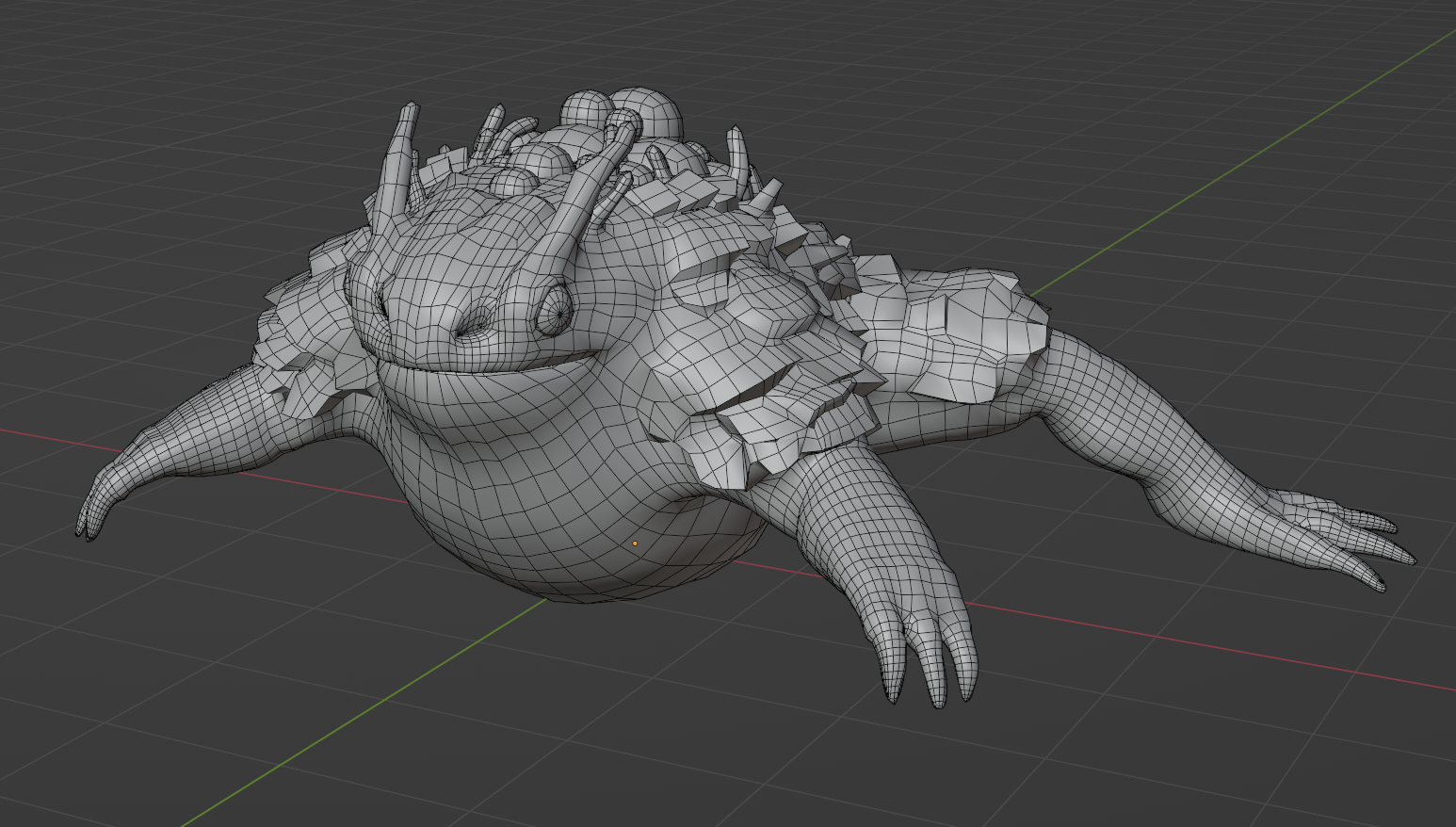
Texturing Bolgin
We used the program Substance Painter for texturing and tried to take it as far as we could with the use of generators, masks and tillable textures, this would let us adjust things easily as we went along. After we set the base of her textures we went in and handpainted the rest. It was very important that we got good color and roughness variation between different sections of Bolgin's body. For example, the skin had to be very wet, and the scales dry to resemble old stone-like armor. This created a nice contrast between the materials. It was also important to have a nice balance between big, medium, and small details, such as the microdetails on the scales and bigger scratches across Bolgin's body.
Developing Bolgin's Eggs
Initial Egg Shader
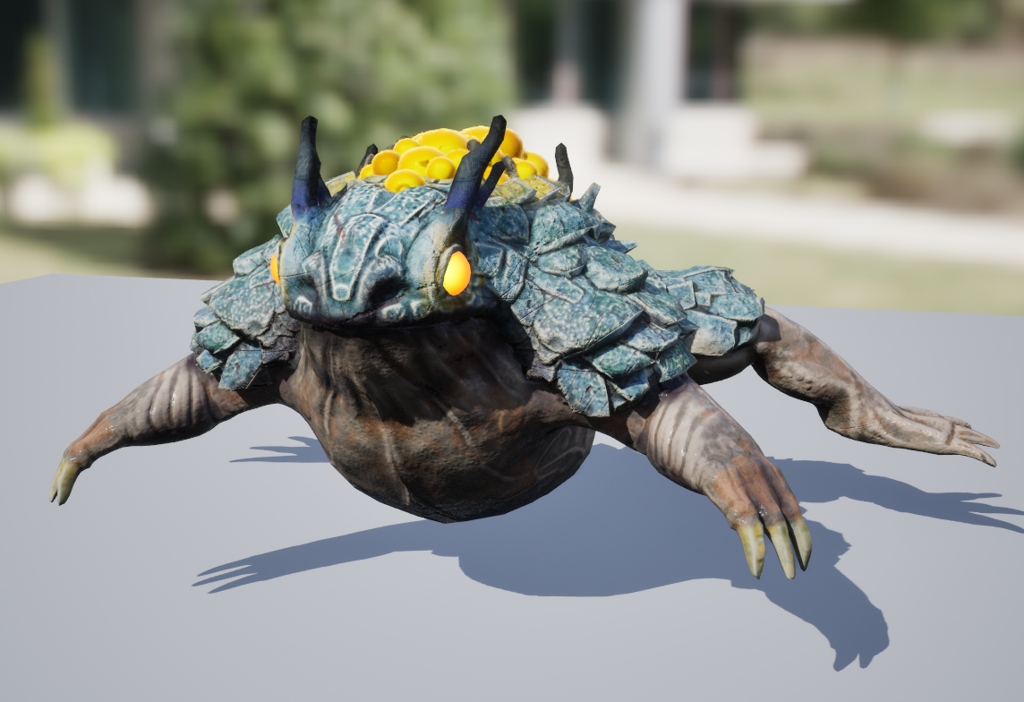
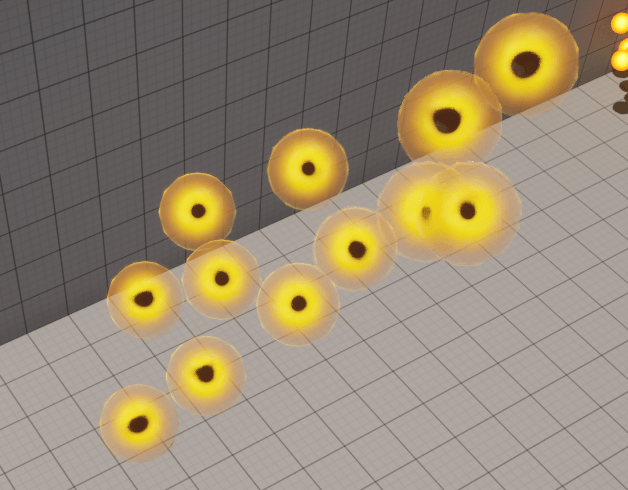
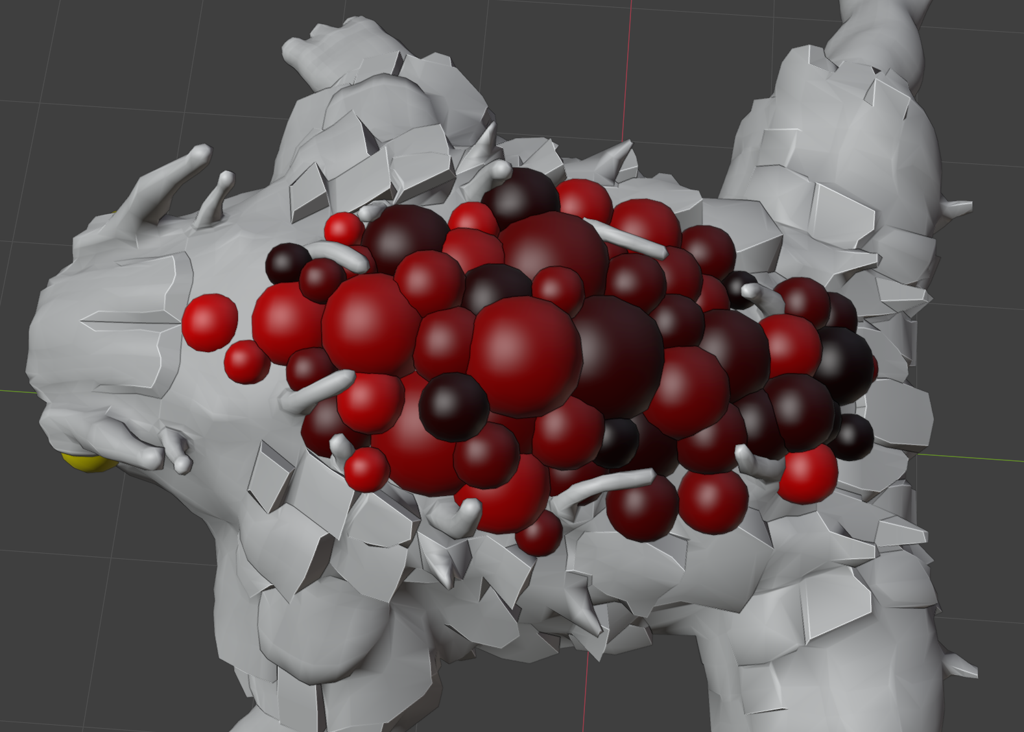
Bolgins eggs were another part that had to be iterated on. Early on we created a shader that could be put on any object without having to unwrap it. We set a way to vary their undulation through manual control and artistic intent. While these eggs looked alright to start with they eventually started looking out of place on her back.
Reworking and Transparency Issues
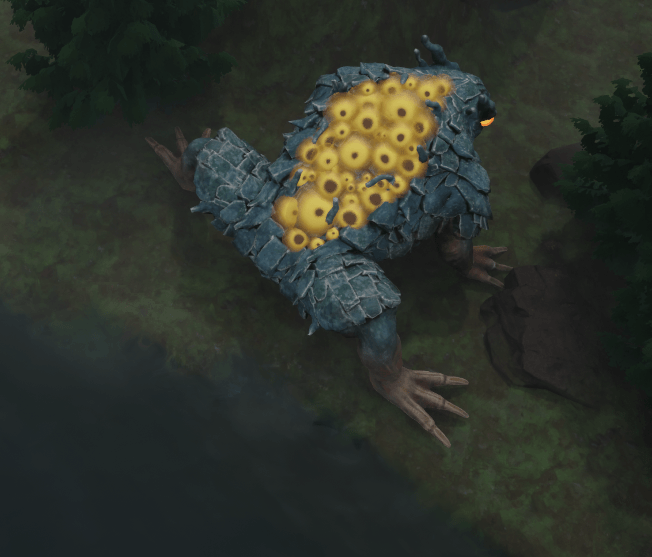
So we reworked the eggs some more! Using transparency on the eggs had also become an issue at this point, when using transparency we had a lot of issues with the material not knowing which egg that should be shown in front of the other eggs, or we could barely see the egg from certain angles when not in front of a opaque material. So we went ahead and changed both the material and the size and amount of eggs, to make them smaller and to have more of them, to make Bolgin look bigger in comparison.
The New Egg Shader
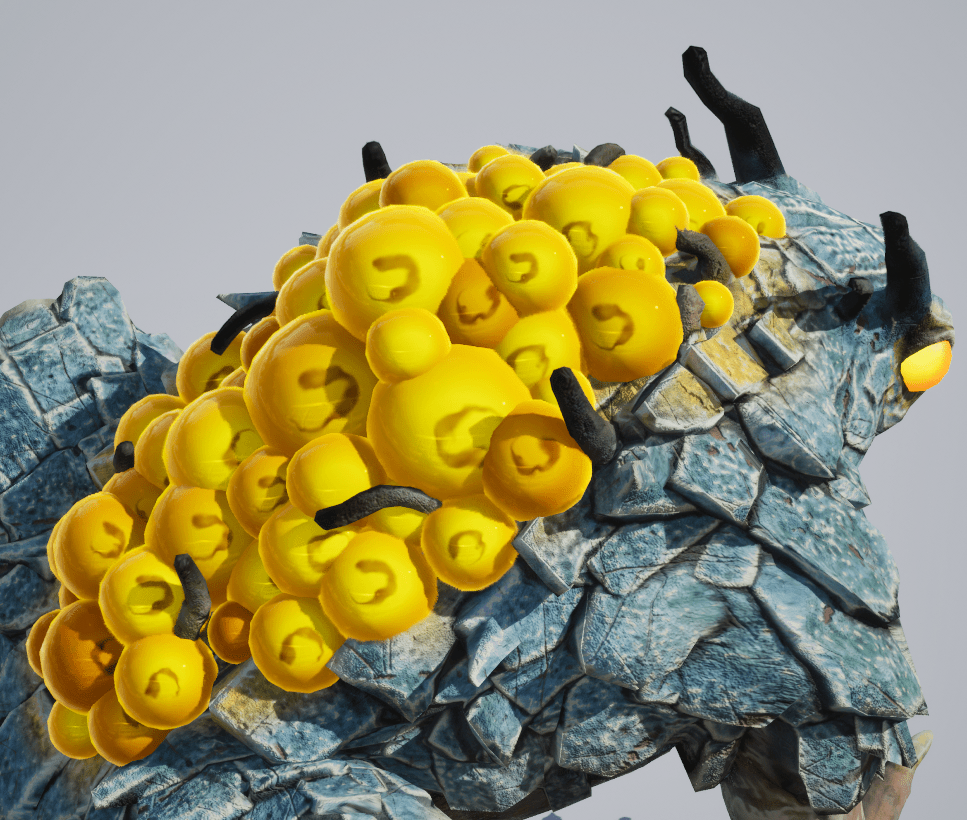
The current shader for Bolgin's eggs uses random vertex values a lot more. These values are assigned per egg, to really break up the movement and visual look of each egg. Thanks to these values all eggs now have different scale movement, unique rotations and speed of the tadpole inside, along with color difference to not have all eggs have the same yellow hue.
Rigging Updates and the Beastly Tongue
Rig Iterations
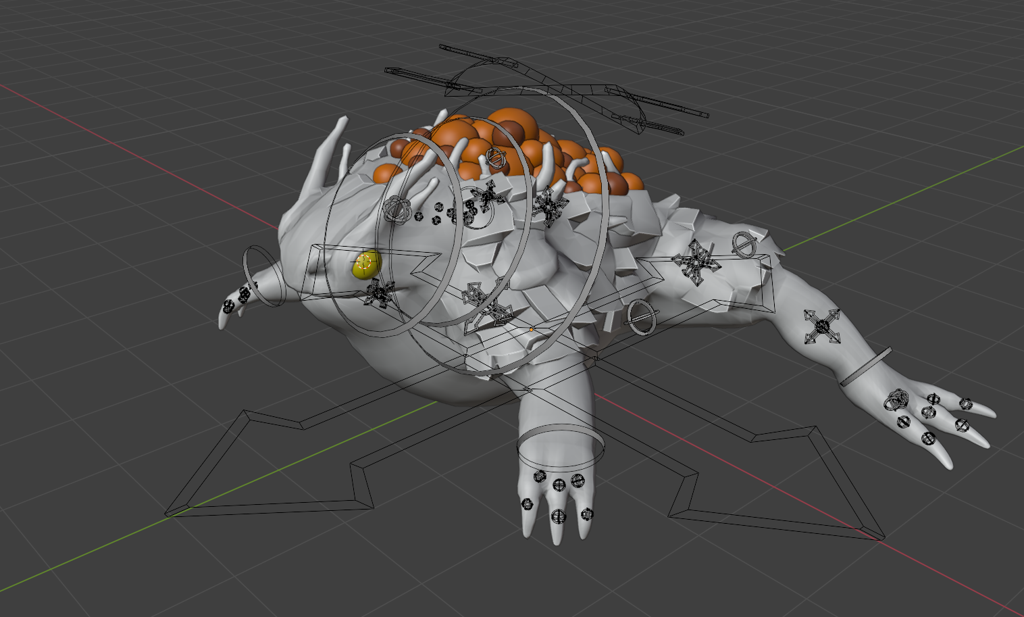
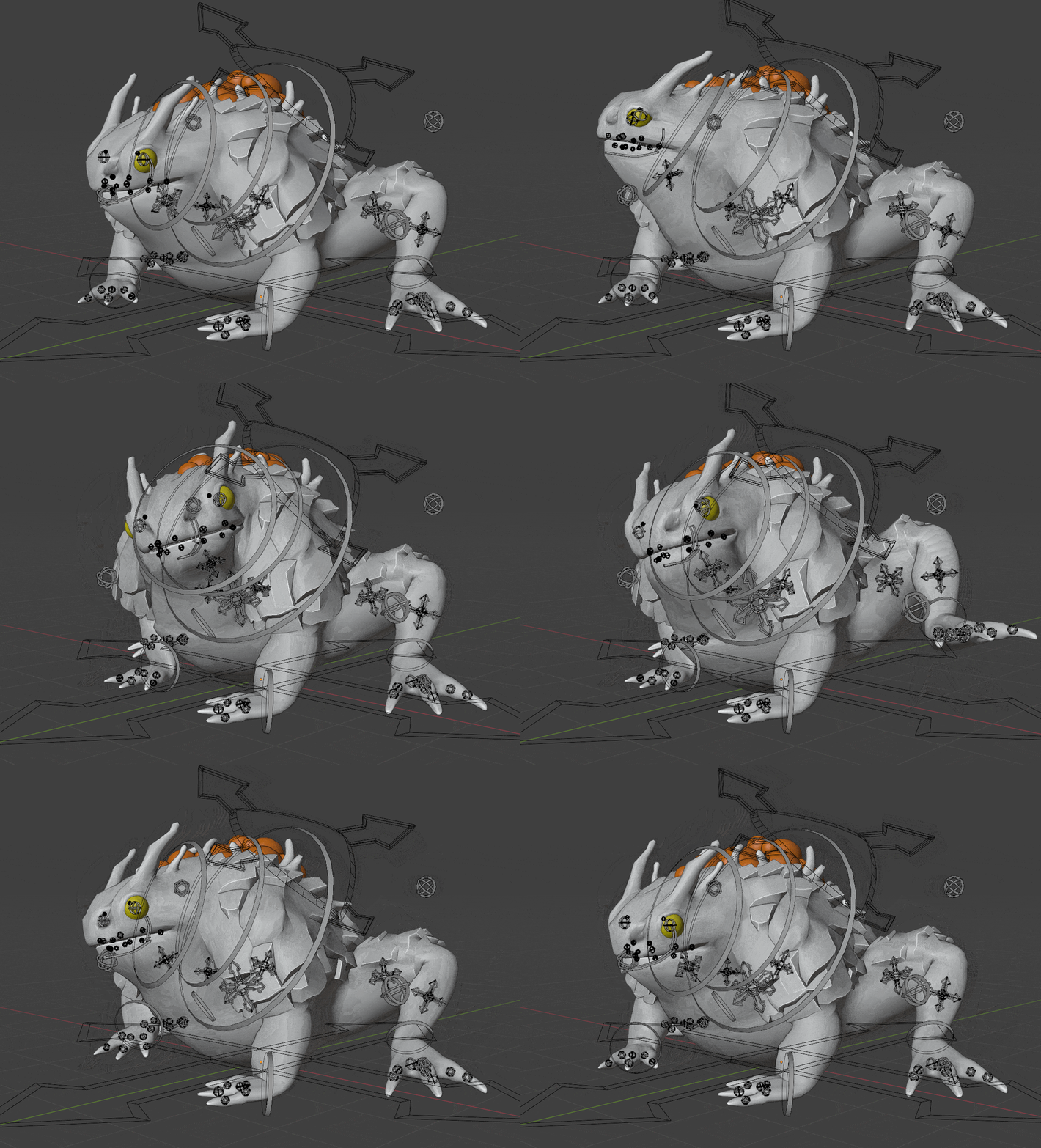
The rig of Bolgin went through a bunch of iterations during development as we changed the model of Bolgin. We had the basics of Inverse Kinematics on all limbs and the rest were Forward Kinematics driven, then added bones for scaling specific bodyparts, jiggle bones, facial rig, and options to toggle off visibility for groups of bones when only focusing on animating specific parts.
The Separate Tongue Rig
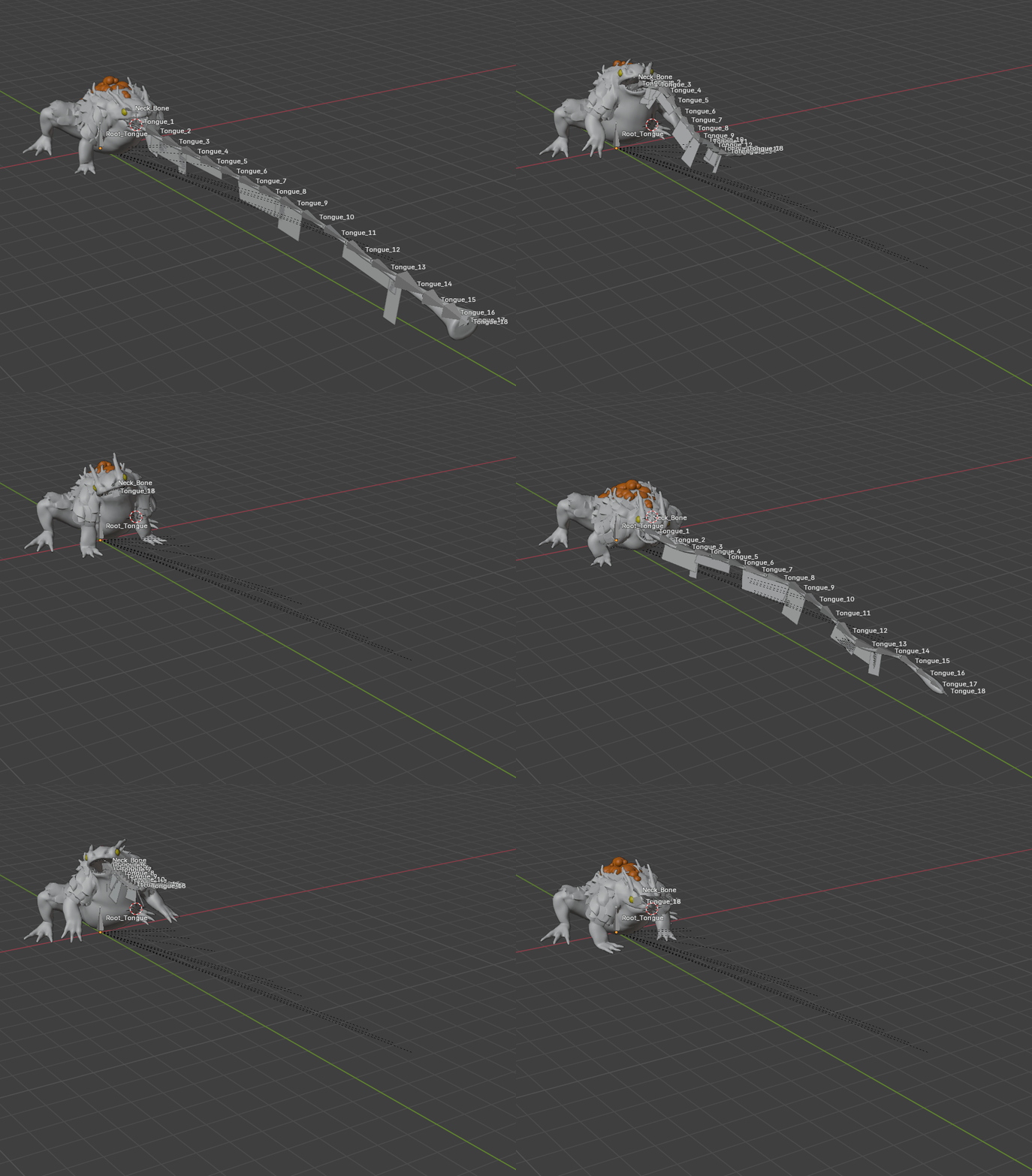
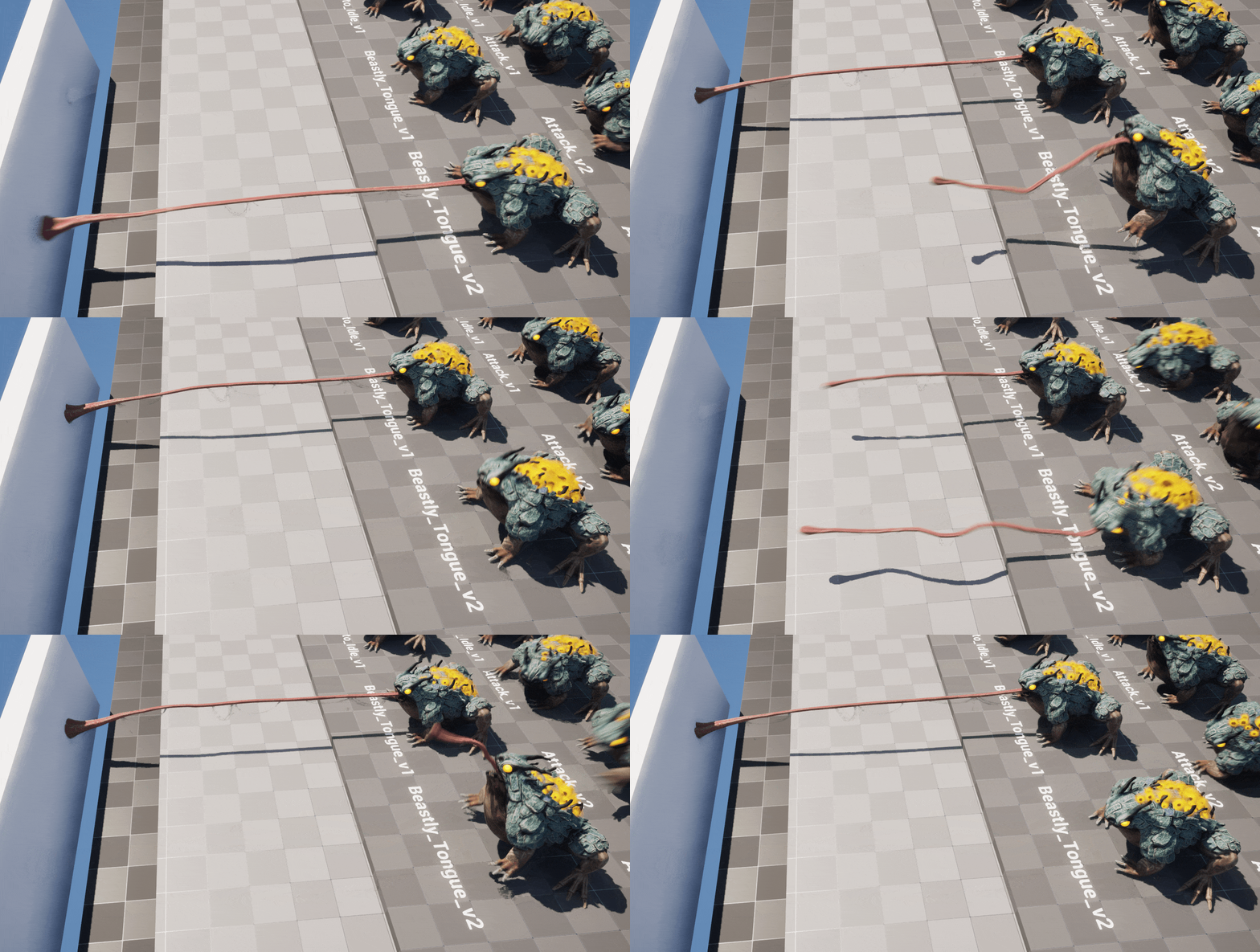
Along with the original Bolgin rig and skeleton, we also had to make one specifically for when she uses her tongue. Then a mesh and skeleton for her tongue will be spawned when she needs it, for example during the Beastly Tongue action card. The tongue later despawns, as there is no need for it to be active all the time. This tongue gave us quite some headache, as everything worked in Blender but the animations glitched out completely in the game engine. Turns out it was the engine not being able to calculate the imported scaling of the bones, so we scaled them afterwards in the engine instead to fix the issue. She’s looking quite cute, isn’t she?
Thank you
Thank you for reading this deep dive into the process of bringing Bolgin to life. Be sure to follow for more!