
Hello everyone! I’m thrilled to share what I’ve been working on over the past month.

RAIDING MECHANICS
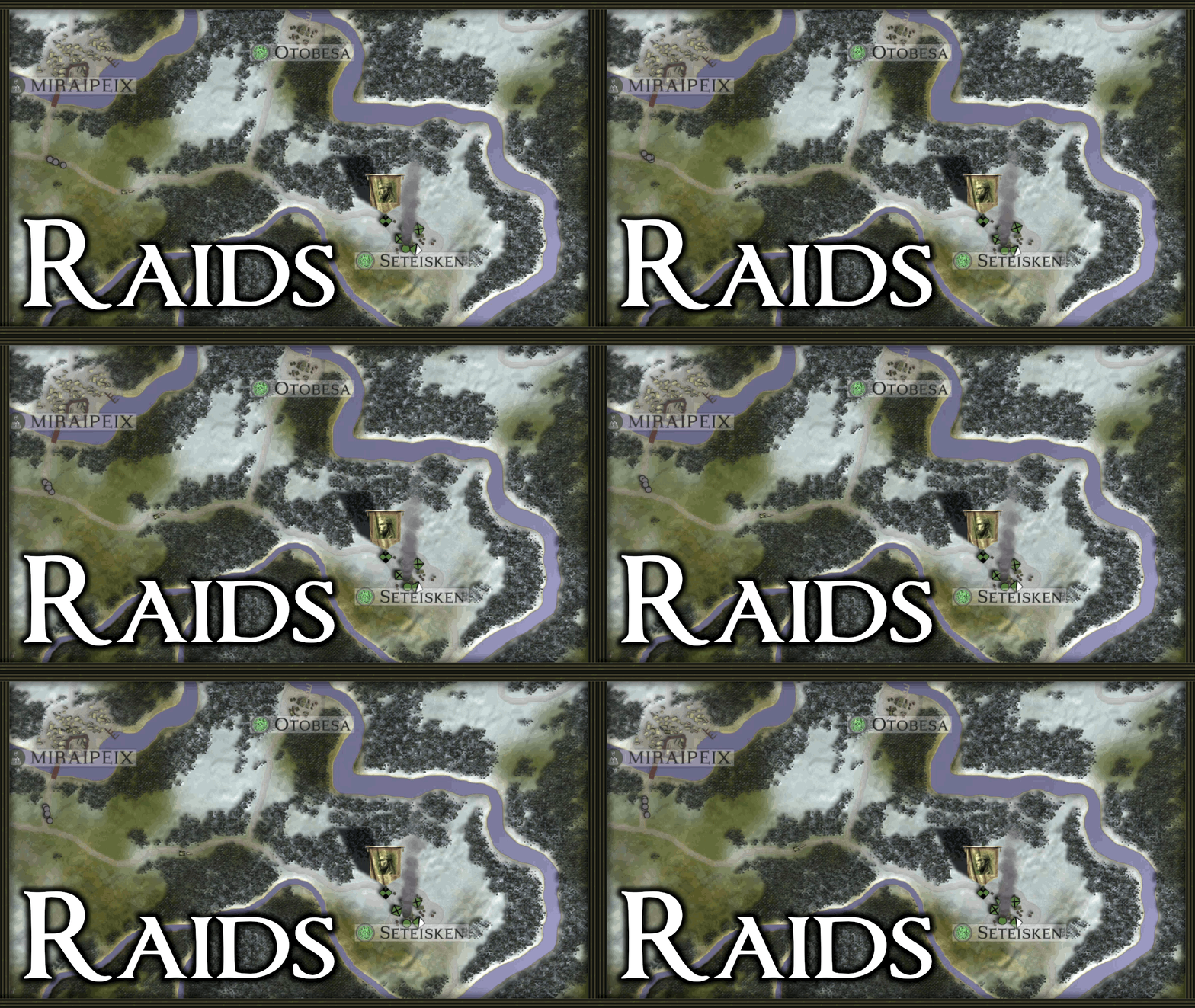
In the game, any army can conduct raids on settlements across the campaign map. When a raid occurs, it’s not instantaneous; it unfolds over time, and the settlement gradually loses its stored resources. Once the raid is complete, the player’s army can loot these resources.
After a successful raid, the player has several options for the loot:
Keep the resources in your army’s storage.
Share with the troops, which means the army receives a portion of the loot, boosting morale and loyalty, but resulting in less wealth for the player.
Share with the state, such as the Senate in Roman factions or the ruling body in other factions, which can influence political relationships and faction stability.
CONQUER MECHANICS
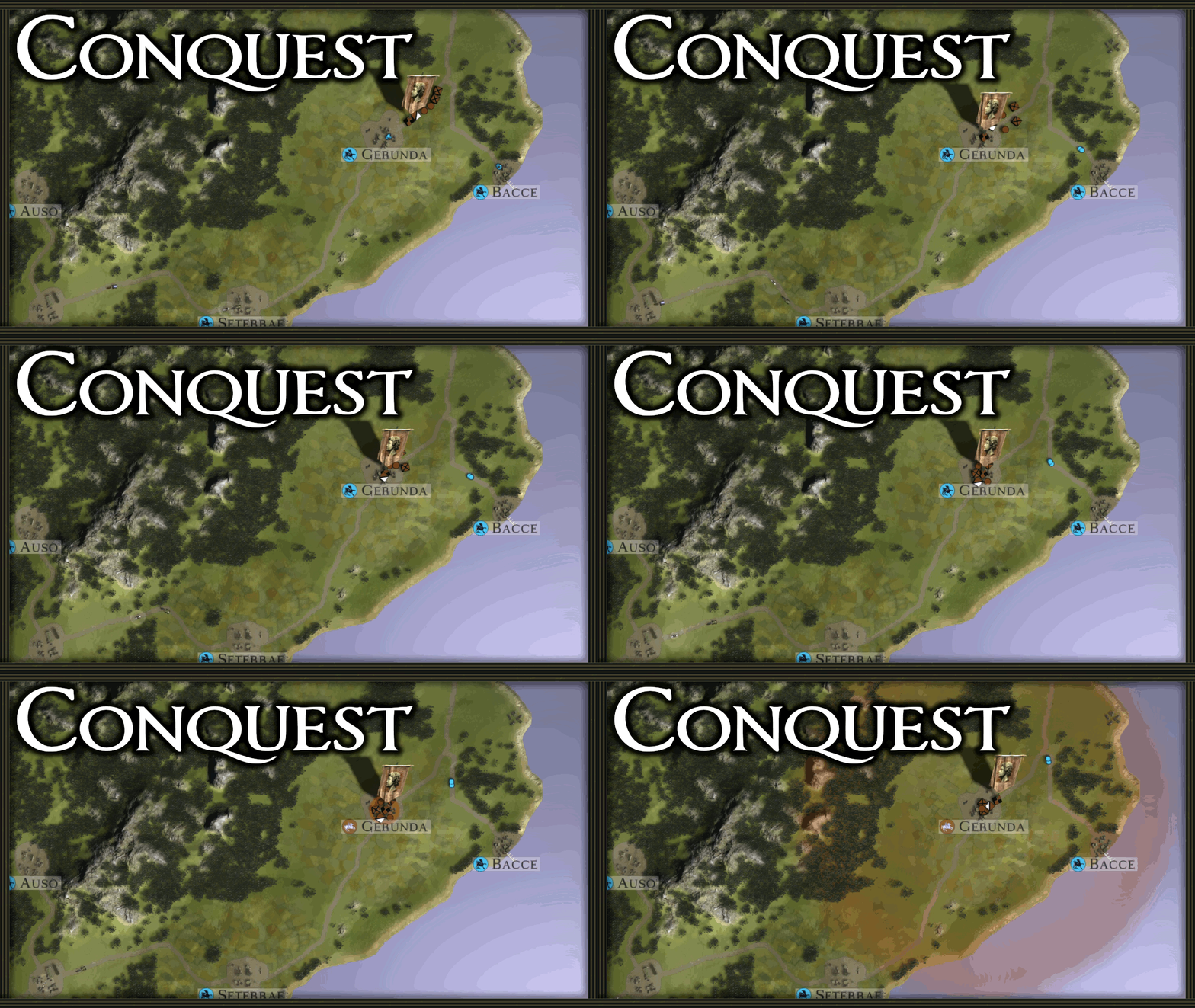
Armies can conquer settlements, and if a settlement is unfortified, the conquest is swift. If it has walls and doesn’t surrender, a siege is required, and the duration depends on settlement size and army strength.
Players can also choose how to approach the conquest.
Conquer the settlement without raiding.
Conquer and allow your troops to raid.
Conquer, raid, and destroy the settlement.
Additionally, the game features different types of settlements: regional capitals and minor settlements. Conquering a regional capital can sometimes lead to the automatic surrender of nearby minor settlements, depending on factors like the personality of the minor settlement’s population, the presence of friendly armies nearby, and whether the minor settlement has walls.
WAR CONSEQUENCES
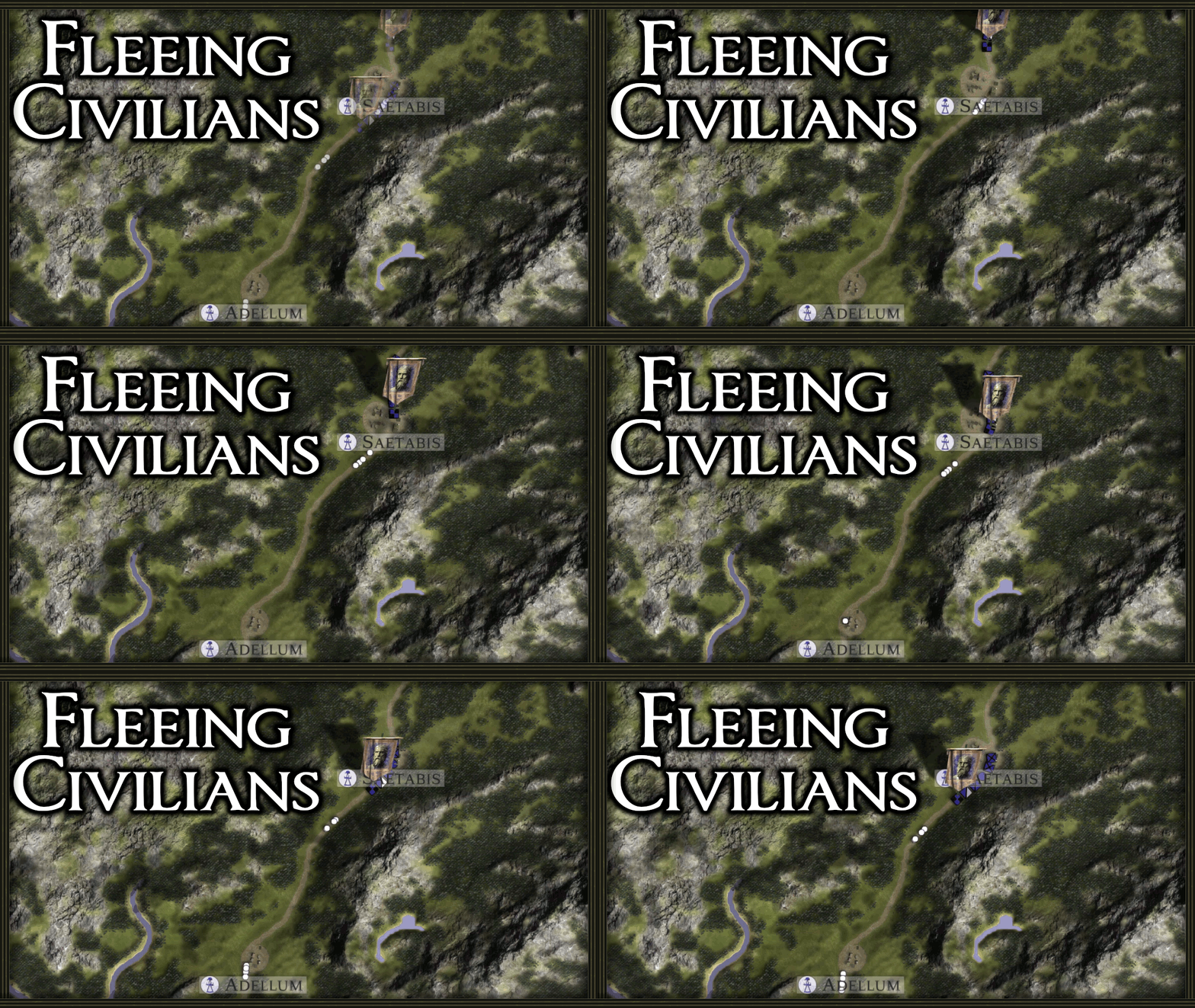
One key consequence of war is the movement of populations. When a settlement detects an approaching enemy army, the response of its population depends on factors like the settlement’s protective measures, the presence of friendly armies nearby, and the population’s disposition. If the settlement is unprotected, civilians will flee, seeking refuge in nearby friendly or fortified settlements. This population movement impacts resource production since fewer people mean less productivity, and more people mean greater demands on food and resources. This dynamic can lead to challenges, such as larger cities struggling to accommodate and feed incoming refugees.
DIPLOMACY
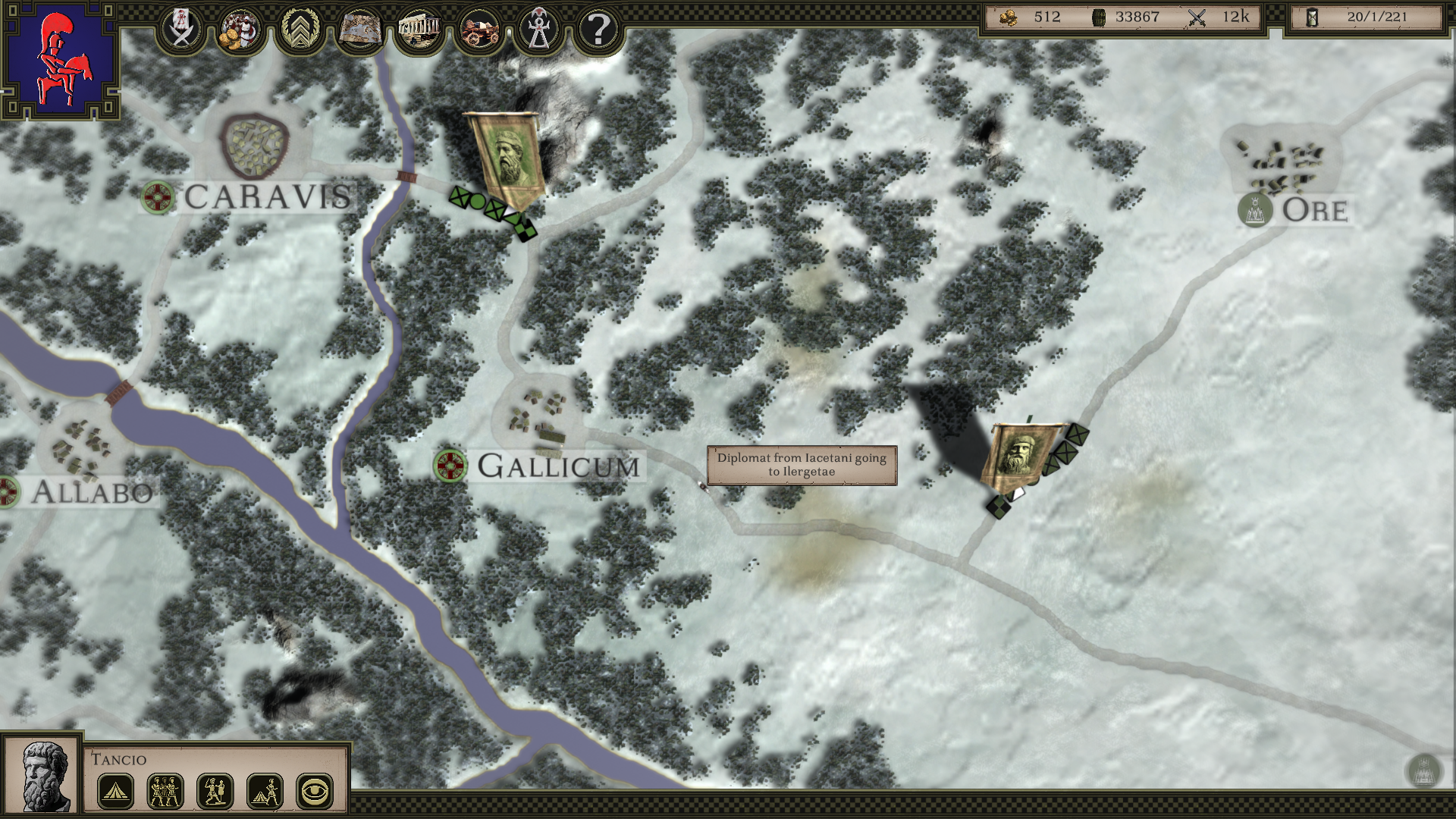
In Carthage: Bellum Punicum, diplomacy is depicted with a realistic approach. Diplomatic messages are sent via diplomats who physically travel on the campaign map from one faction’s capital to another. This means that diplomatic actions, like peace treaties or war declarations, take time to be delivered. This creates a dynamic where, for instance, an enemy might already be attacking a settlement before a war declaration even arrives, or a diplomat could be intercepted and captured, causing the message to fail and forcing the faction to resend it.
In the game, while diplomatic messages do travel from one faction’s capital to another and take time to arrive, the local settlements and armies can react independently. If an army is engaged in hostile actions, such as raiding or conquering, local settlements and troops close to the conflict can quickly become aware of the situation through word of mouth or local messengers. This means that the local forces can respond right away, even before the official diplomatic message reaches the capital.
Thanks for checking out the most recent Dev Log. Let me know in the comments if you have any questions on Campaign Warfare.