
Hey everyone!
Quick dev diary today about one of our favorite parts of Wonderfall: the rooftops of Paris.
You won't spend hours up there. It's one sequence among many in Léon's journey, maybe fifteen or twenty minutes of the game. But we poured a completely unreasonable amount of love into it, because in this Paris the streets aren't always safe, and for a little while the roofs are the way through. So we had to get them right.
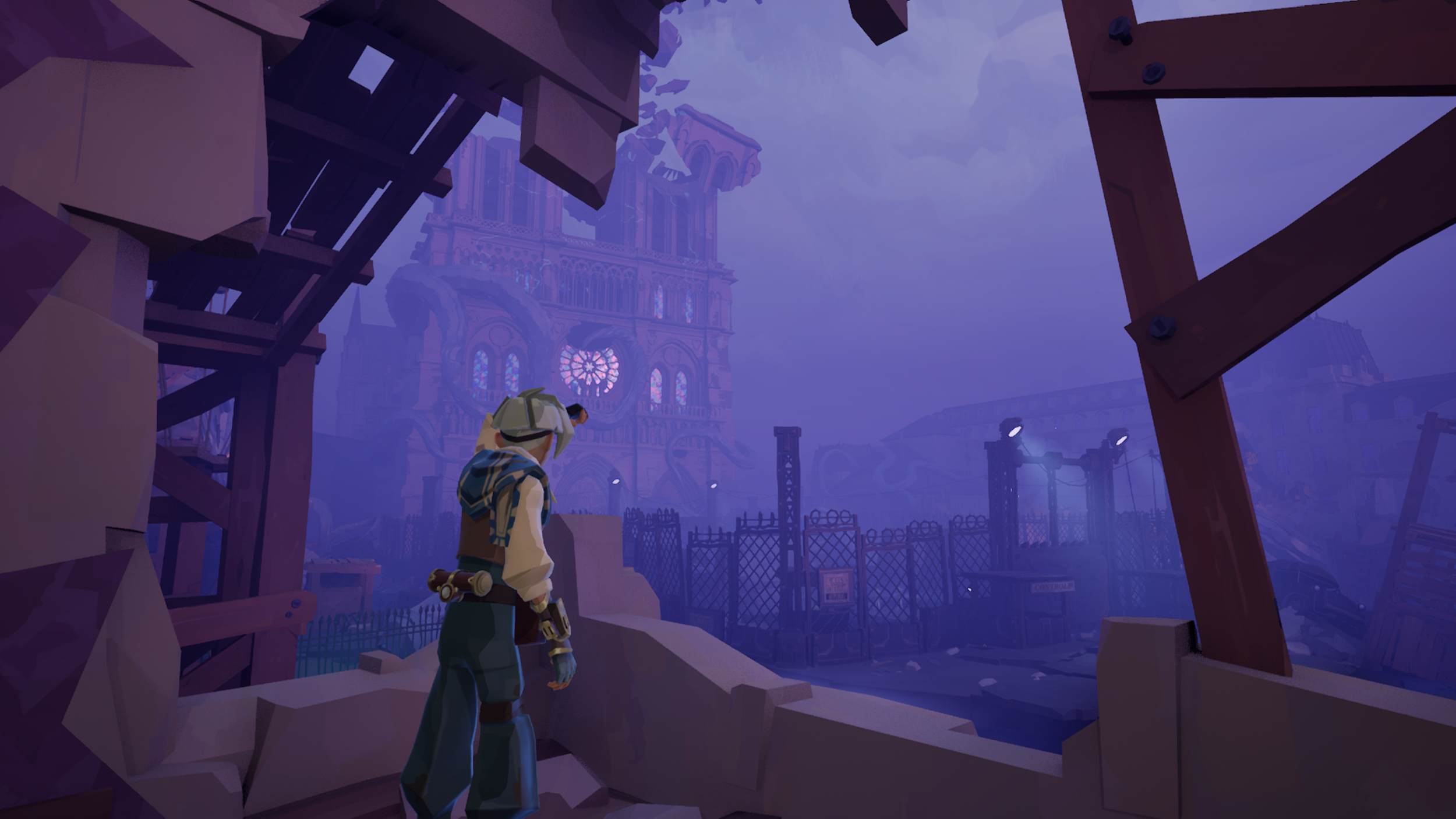
A bit of history first
If you walk through the Paris of Wonderfall, you'll notice the streets are narrow. No grand boulevards, no long straight avenues. Just tangled lanes and crooked facades. And yet, look up and the roofs are grey. That's not us cheating. Zinc arrived on Parisian roofs surprisingly early, around 1815, and it spread across the city through the first half of the 19th century for very unromantic reasons: it cost a lot less than slate, weighed next to nothing, and kept the rain out.
That boring practical choice had a nice side effect, though. Zinc is so light that the roofs needed far less structure to hold them up, which freed the space just under the roofline for attic rooms, the tiny chambres de bonne with the best views in the city.
In reality, Baron Haussmann came along in the 1850s, demolished much of the old city and replaced it with the broad boulevards everyone photographs today. Wonderfall's version of Paris still preserves the maze of medieval streets. History took another path, and the Paris of 1920 is still the old one: narrow streets, crooked facades, buildings leaning into each other. But the zinc was there long before Haussmann, so the roofs of our Paris are grey all the same.
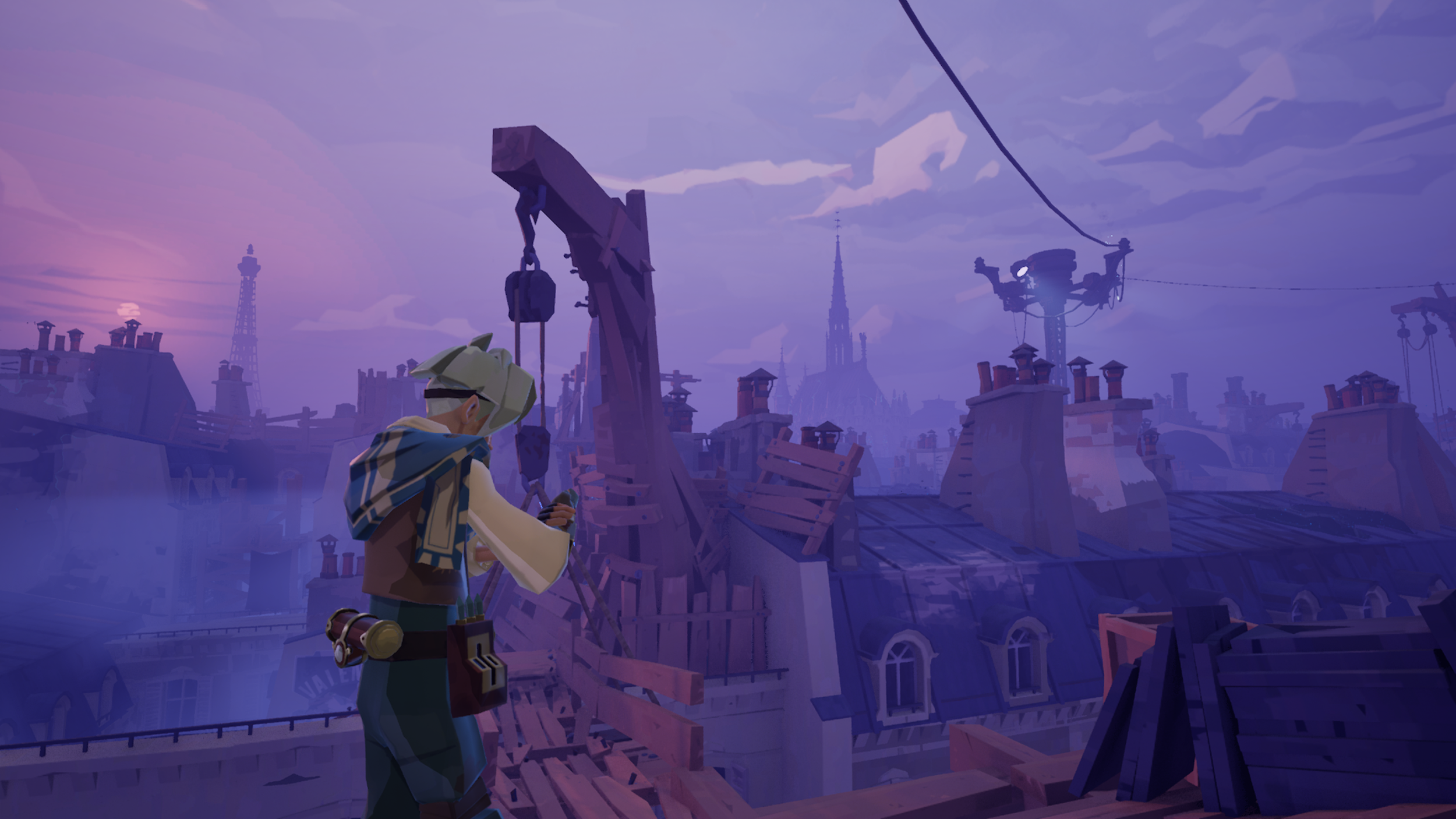
Today about three quarters of Paris is still roofed in zinc. Parisians call it the city's fifth facade, and once you've stared at it as long as we have, you understand why. The color never sits still. Silver on a clear morning, then something close to black when it rains.
And this is the part we find fascinating: none of it was meant to be beautiful. Zinc was an industrial shortcut, the budget option. But the cheapest rooms in Paris were the ones tucked right under it, so for a century the people waking up to the best view of the roofs were penniless students, poets and painters. And they did what poets and painters do. Puccini put his starving bohemians in a garret under those roofs. Caillebotte and Van Gogh painted the zinc from their windows. Sartre wrote that his natural place was a sixth floor in Paris with a view of the rooftops. Bit by bit, a cost-cutting measure became one of the most romantic images in the world. Nobody designed that. It just happened, one attic room at a time.
This isn't dead heritage either. In December 2024, UNESCO added the craft of the Parisian zinc roofers to its Intangible Cultural Heritage list. They're still up there today, working the way their predecessors did 150 years ago.
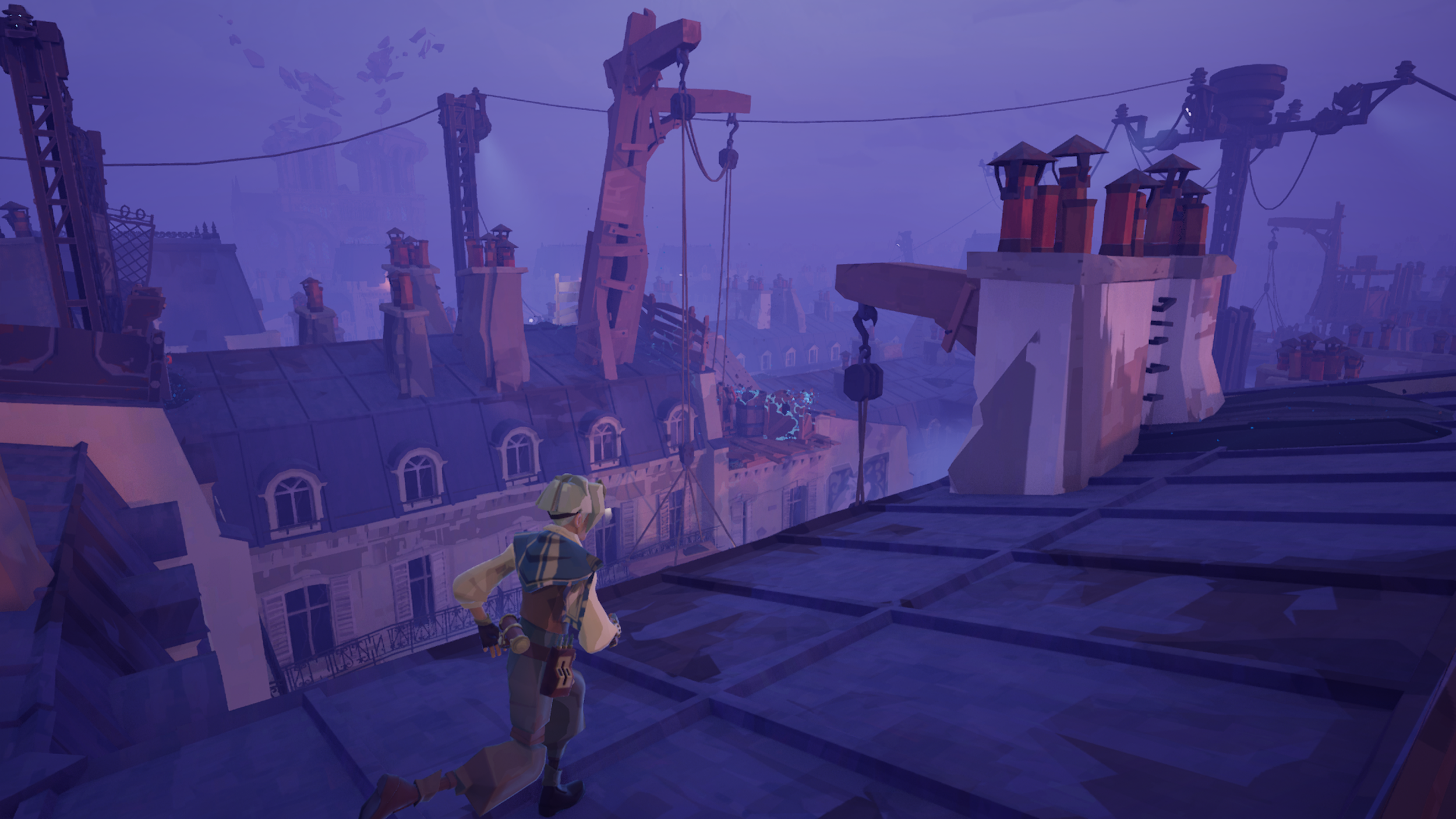
Why the roofs had to be in the game
So that's our Paris in 1920: a medieval maze crowned with a jumbled sea of zinc, a city that had stood over Parisians for centuries and felt like it would always be there.
Then Entropy came. The sand you see everywhere in the game is what it leaves behind. Paris is supposed to be permanent. In Wonderfall it isn't, and there was no better place to make you feel it than up on the roofs.
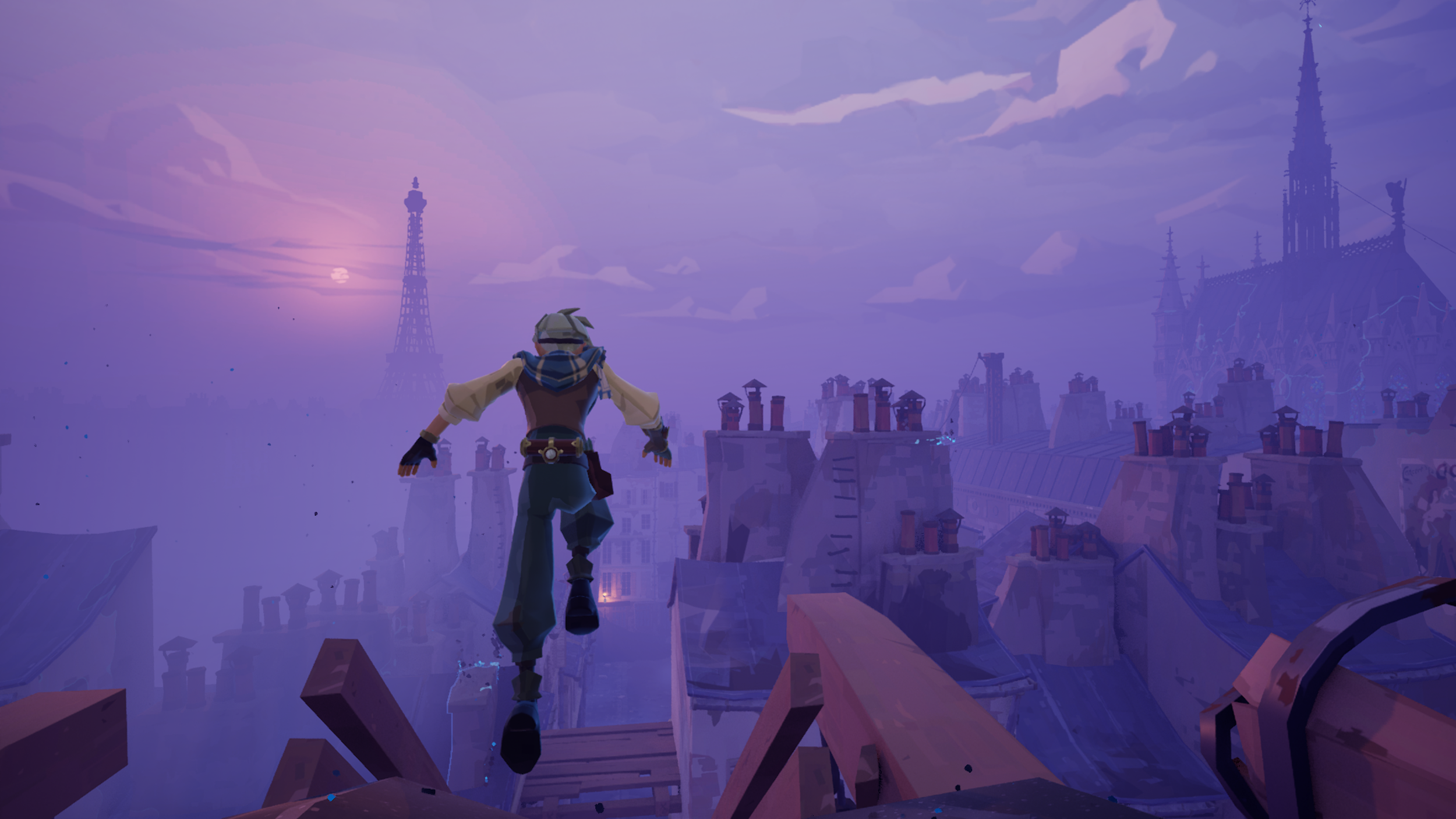
The rooftop sequence itself, where Léon sneaks across the roofs around the Palais de Justice to reach the Sainte-Chapelle, is short, but it's one of our favorites. Mostly because of what you see up there. For a few minutes the whole city lays itself out around you: the Eiffel Tower on the horizon, the Sainte-Chapelle rising ahead of you, Notre-Dame standing over the island. And not a sound in any of it.
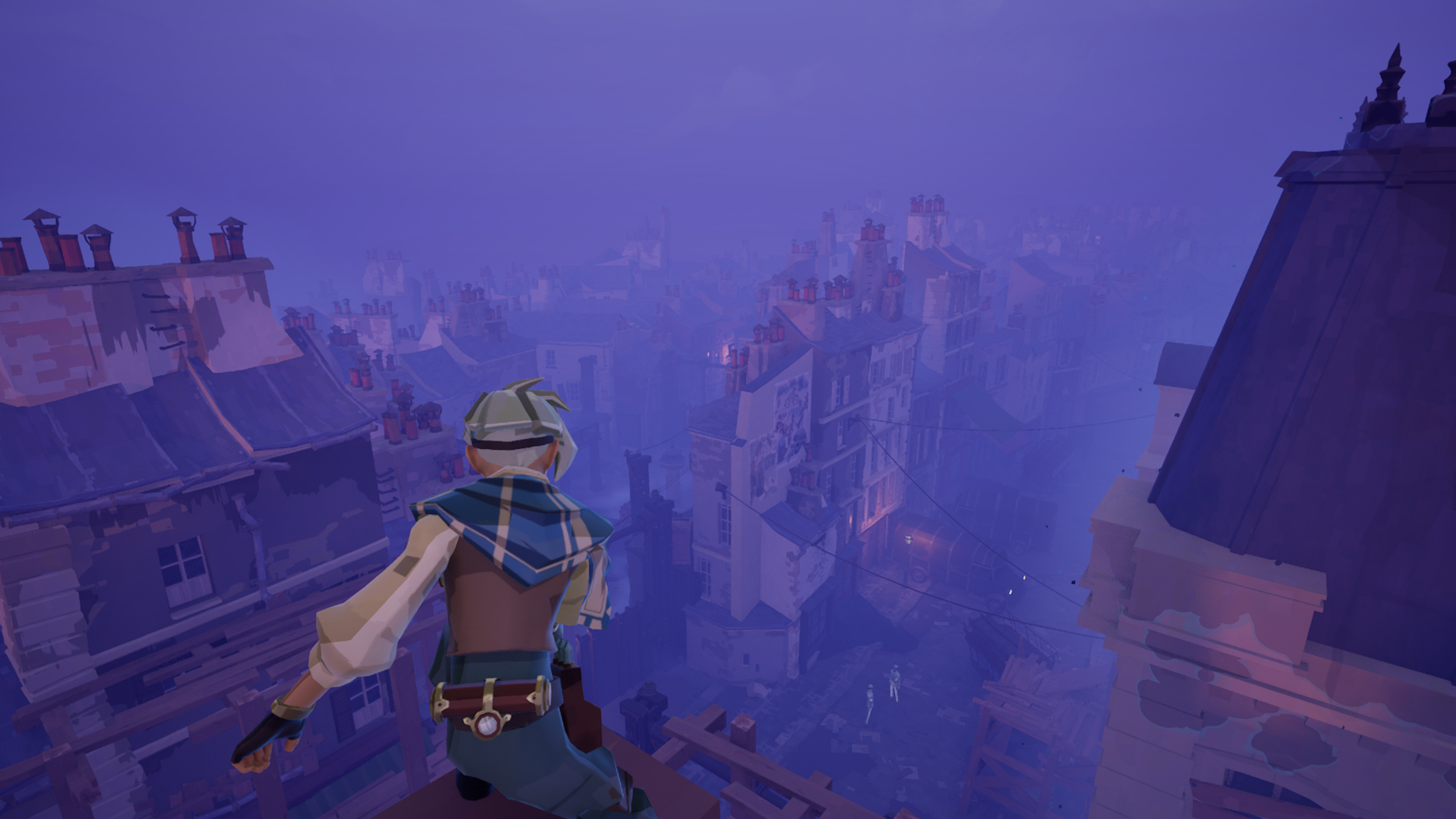
It's a short climb. We hope it stays with you anyway.