
Paris, 1920: A Walk Across The "Île De La Cité"
The "Île de la Cité" is where the city began, a sliver of land in the Seine that has carried its oldest stones for two thousand years. It's where Léon starts his walk toward Notre-Dame, and it's where you'll spend the game. Before you set foot in it, we wanted to show you around.
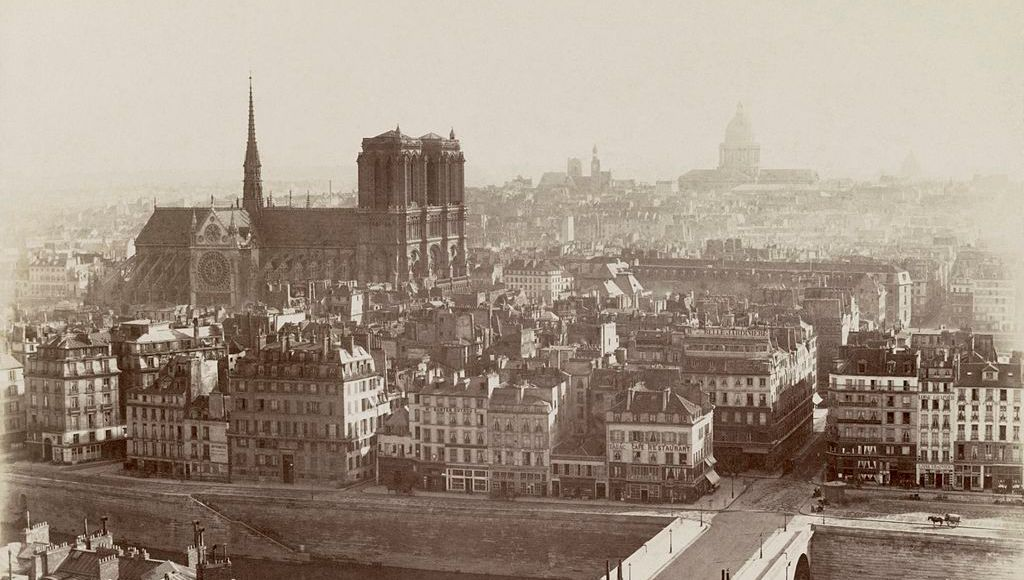
One thing to know before we go. Entropy, the force taking the city apart, doesn't burn or break. It ages. Stone softens, iron tires, and what's left drifts down as a fine dark-blue sand, catching in doorways and along the gutters like a new kind of weather. Every place here has lived with it for decades. By now most of the people who once filled these streets are gone, driven out as the catastrophe spread. What you walk into is a city almost entirely emptied.
SAINTE-CHAPELLE
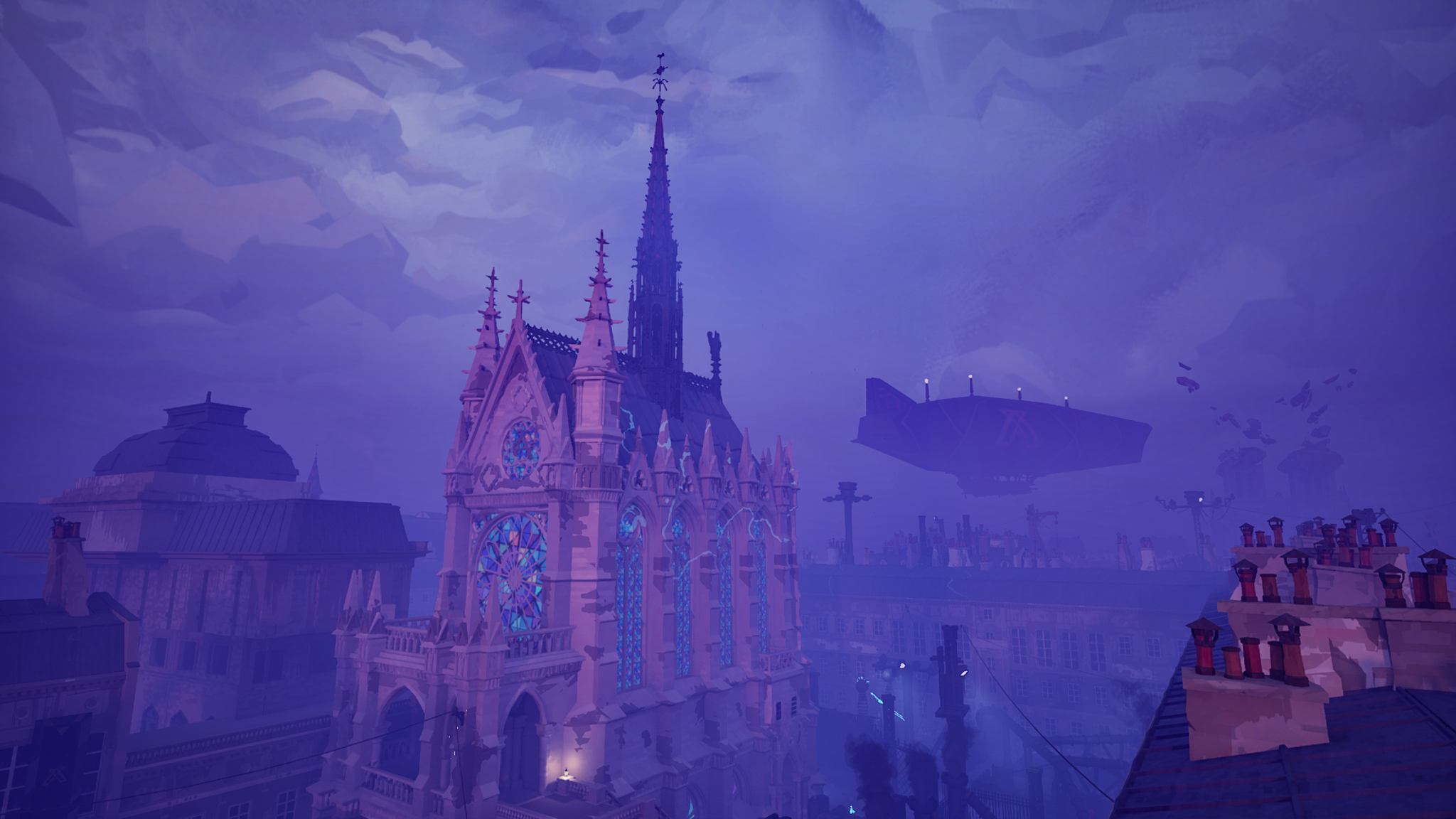
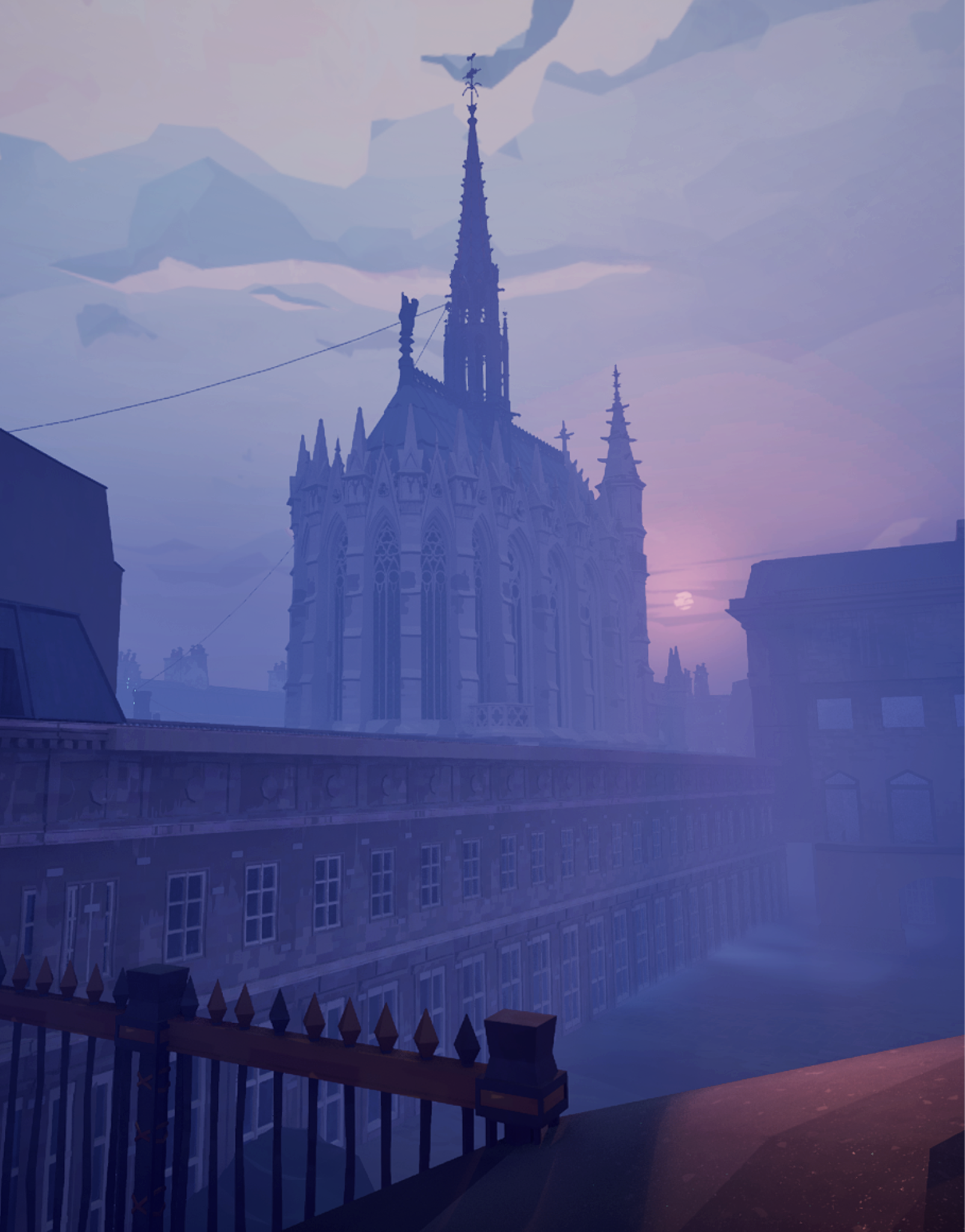
Sainte-Chapelle is all height and fine, upward stone: a slender thing that looks like it shouldn't be able to hold itself up, crowned by one of the sharpest spires on the island. In our Paris it rises out of the haze at the end of the day, still standing, still delicate, the sand already climbing its lower walls.
THE STREETS AND THE PREFECTURE DE POLICE
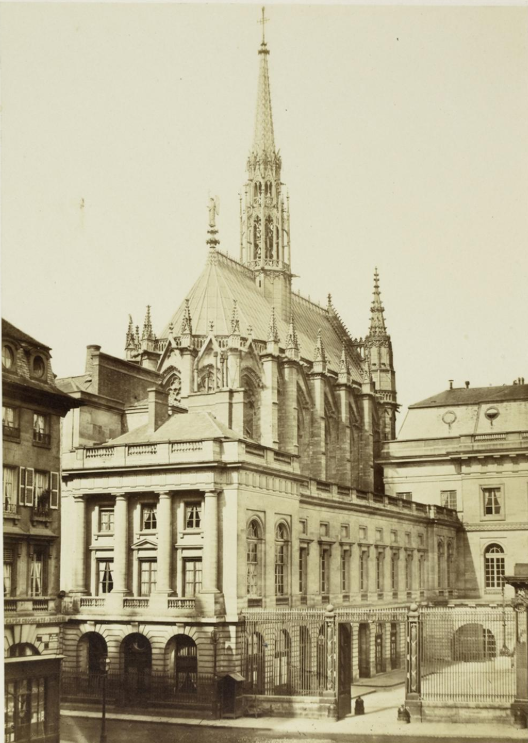
Down at street level, the Cité still looks like a city. Tall pale facades, iron railings, a lamp or two somehow still lit. The Prefecture de Police, sits heavy and quiet at the center of it all. Then you notice the cracks running through the road, the sand banked against the doors, and how few windows have anyone left behind them.
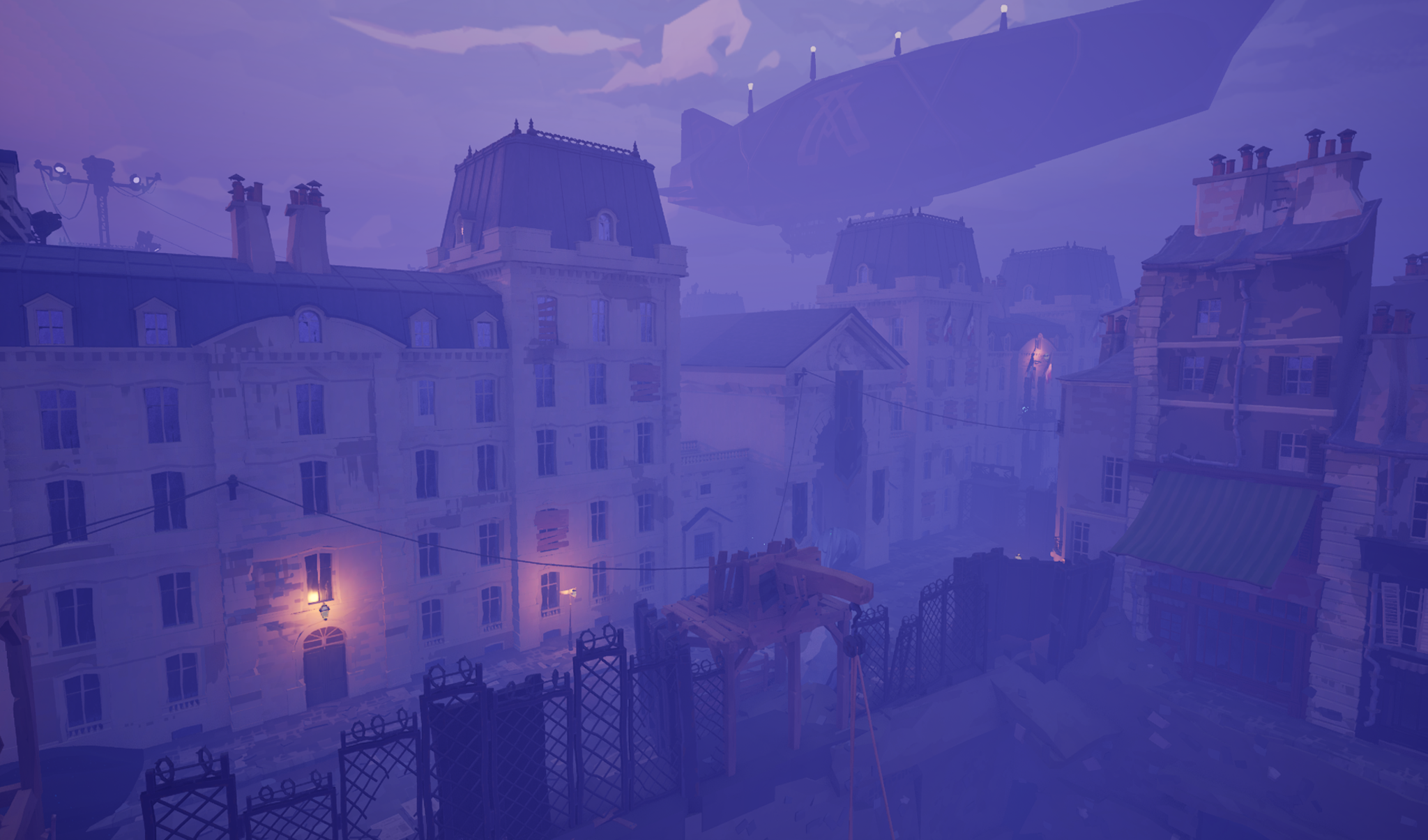
This is the feeling we kept chasing: a place built for a million people, walked by almost no one.
NOTRE-DAME
And then there's Notre-Dame.
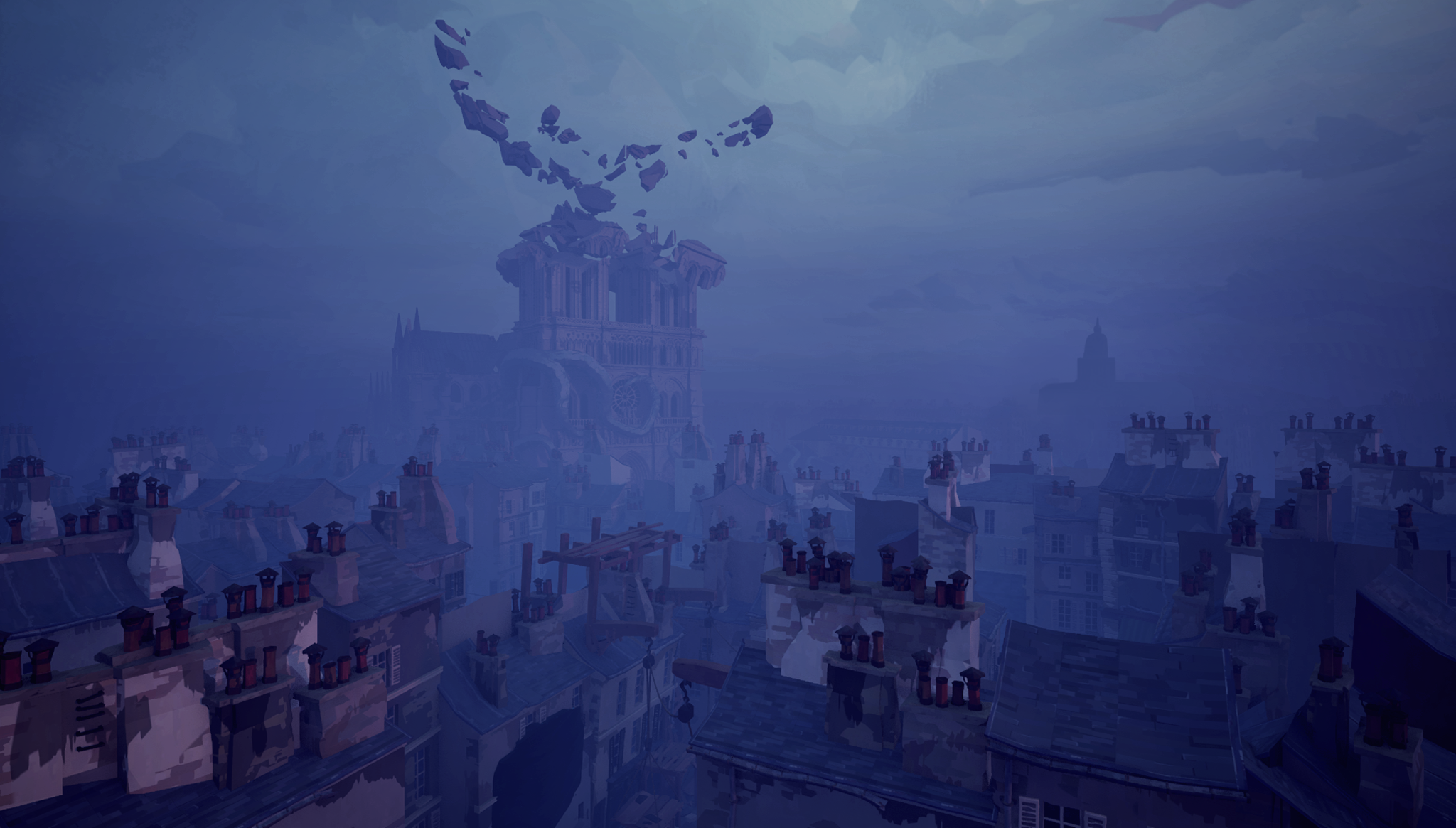
The cathedral has been the heart of Paris for eight centuries, and it's where Léon is headed. But Notre-Dame isn't simply ageing like the rest of the island. Something is growing through it. Roots have found the stone, and the towers have begun to come apart, drifting up into the air above the rooftops in a way that has nothing to do with sand. What it is, and why it began here, is the road the whole game walks. We'll leave it standing on the horizon for now.
AND BELOW
The walk isn't only rooftops and streets. The Cité métro station, the sewers, and the tunnels beneath the island are part of it too, and some of the quietest, strangest rooms in the game are the ones you have to go looking for. The city keeps its story in the places you might have passed by. Exploration is always worth it here.
MOVING THROUGH IT
You cross all of this as Léon, using the sand itself to get through. What buries the streets is also what lets him move: he can shape it into footing, into a way across or stay out of sight. You'll slip past the things Entropy has twisted rather than fight them, and each new landmark hands you another piece of what happened to Paris.
It's a story-rich narrative adventure, eight hours, one island written carefully. The pace is contemplative and deliberate. You're meant to take it in.
WISHLIST WONDERFALL
This is the ground Léon calls home, and soon you'll be able to walk it yourself.
If a disappearing Île de la Cité sounds like somewhere you'd want to spend an evening, add Wonderfall to your wishlist. It's the single most useful thing you can do for a small studio like ours, and it means you'll be there the day the island opens