
A House Without Its Master
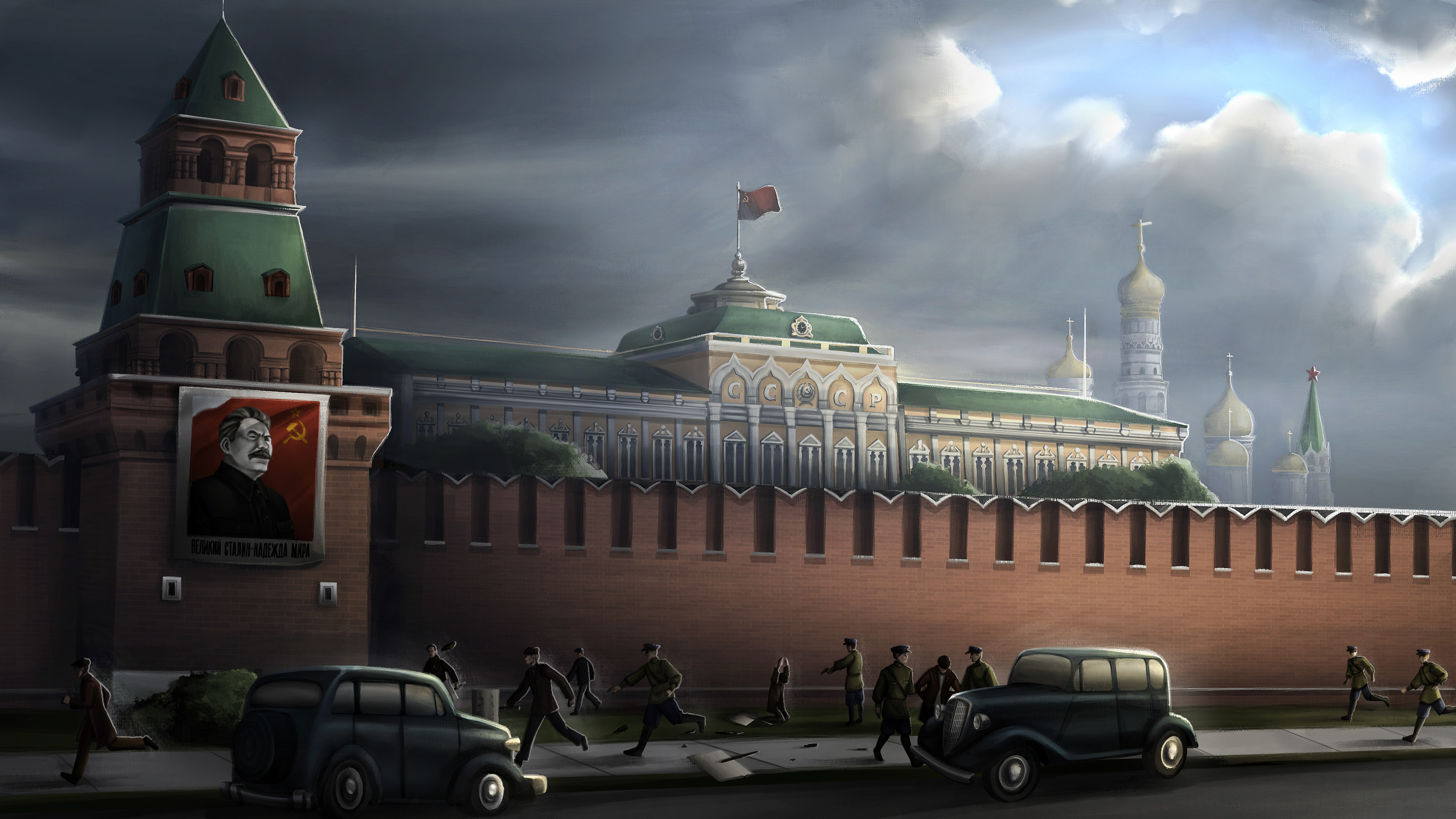
In March 1953, the Soviet Union lost Joseph Stalin. With him went the singular authority that had kept the political elite in line. What followed was not unity, but a fierce struggle between competing visions for the future of the state.
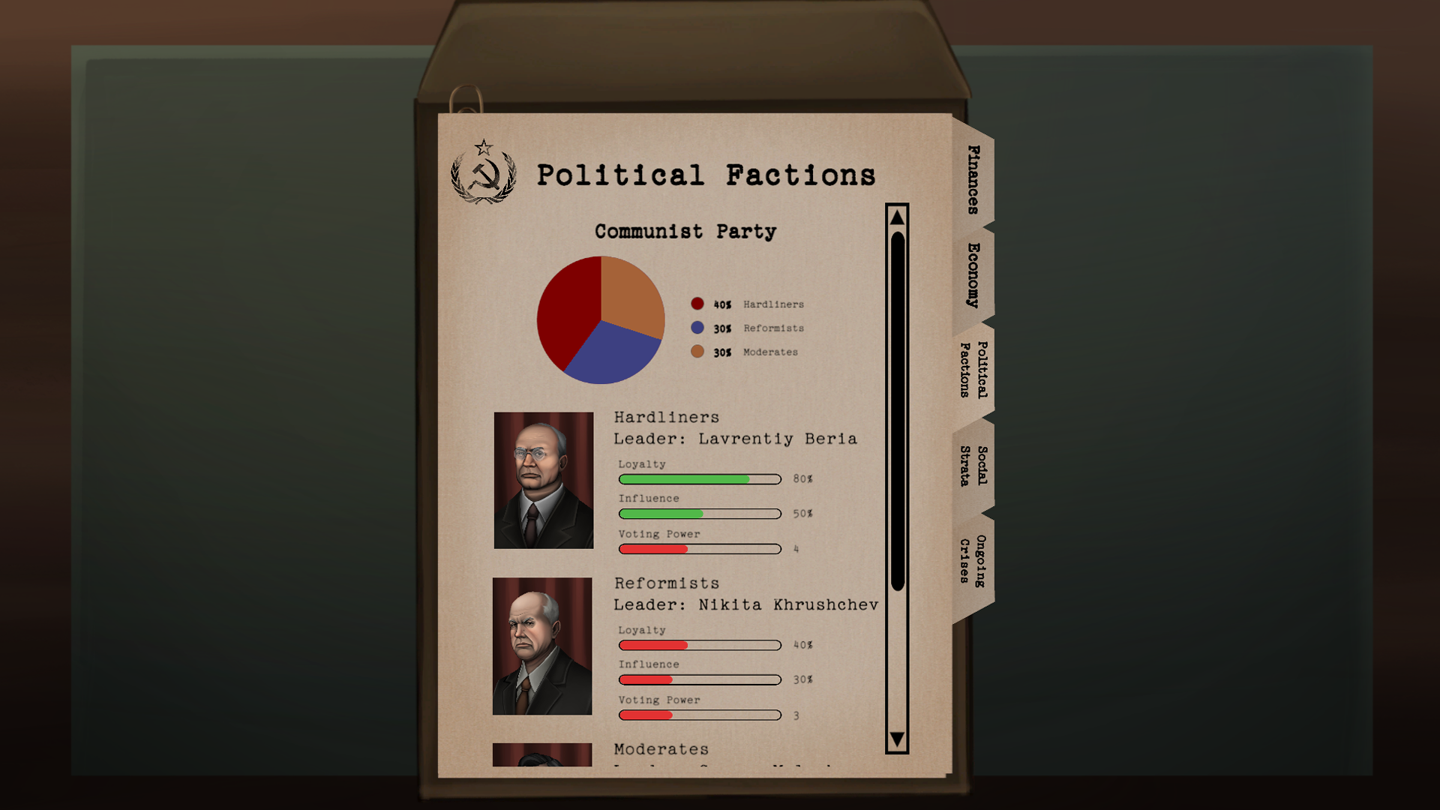
In State of Affairs, this moment is represented through the Faction System, where each bloc inside the USSR has its own leaders, goals, and strategies. Navigating their rivalries and ambitions will be central to your survival as a political leader. Push one too far, and they will work to bring you down.
The Main Players
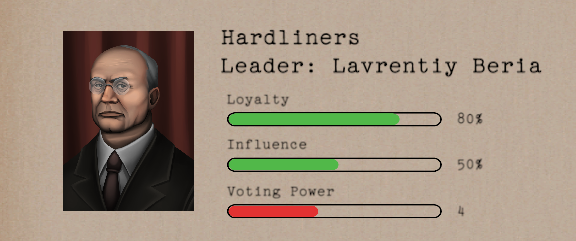
Hardliners
Leader: Lavrentiy Beria,
Ideology: Maintain centralized control, strengthen military power, suppress dissent, and continue Stalinist-style governance.,
Gameplay Role: Resist reforms, support strong security measures, prefer slow and planned economic changes. They are reliable for stability but slow down modernisation.
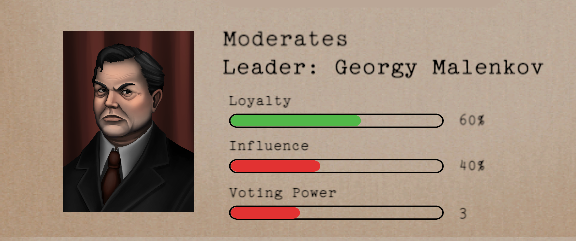
Moderates
Leader: Georgy Malenkov,
Ideology: Maintain political unity, modernise the economy without weakening state control, avoid ideological extremes.,
Gameplay Role: Careful reformers who act as swing votes. Balance factional demands and support measured economic modernisation.
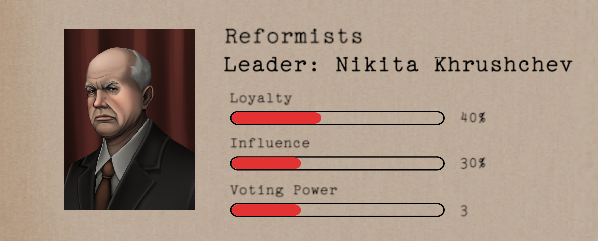
Reformists
Leader: Nikita Khrushchev,
Ideology: Pro-liberalisation, economic diversification, and cautious engagement with the West.,
Gameplay Role: Push for agricultural investment, limited freedoms, and shifting resources toward the civilian economy. They can bring growth but risk undermining traditional power structures.
How They Work in Gameplay
Every policy you propose becomes a battlefield. Factions judge each law through the lens of their ideology, and their reaction will shape your political fortunes. Pass a policy they approve of and their loyalty will grow, giving you firmer ground in future debates. Push through something they despise and expect resistance, from hostile votes to behind-the-scenes plotting.
Loyalty is the currency of trust in this system. When it runs high, factions will stand by you in critical moments. When it runs low, they may scheme against you, undermine you in public, or openly defy your authority.
Influence and voting power decide how much weight each faction throws around. A large bloc with moderate influence can be easier to manage than a smaller, highly influential group that commands key seats in the legislature. Sometimes even a single faction leader with strong influence can tip the balance of an entire vote
Factions are also opportunistic. Their positions can shift when circumstances change. A Hardliner may reluctantly support a reform if it bolsters national security, while a Reformist could turn against a progressive policy if it consolidates power in the wrong hands. In State of Affairs, no alliance is permanent and no enemy is beyond persuasion.
Join the conversation and shape the future of the game!
Hop into our Discord to get early updates, discuss mechanics like these, and help us refine the systems that will define your experience.