
MoteMancer has always been about six overlapping planes of existence. From the very start, I knew this meant one big challenge: how do you make overlapping worlds feel harmonious?
At first, I imagined each plane acting on a shared landmass. Raise the seas here, swap water for lava there. Simple idea… but too samey. It robbed each plane of identity. It was way more fun to let Earth become twisting canyons, Water become wide sweeping beaches, Fire become volcanic wastelands. Unique spaces felt much better.
But then came the next problem: how do you ensure unique lands still intersect cleanly at Planar Portals?
Fibonacci to the Rescue
MoteMancer’s world is infinite, so I needed math that could hold up at scale while still feeling organic. I turned to an old favorite: the Fibonacci spiral lattice.
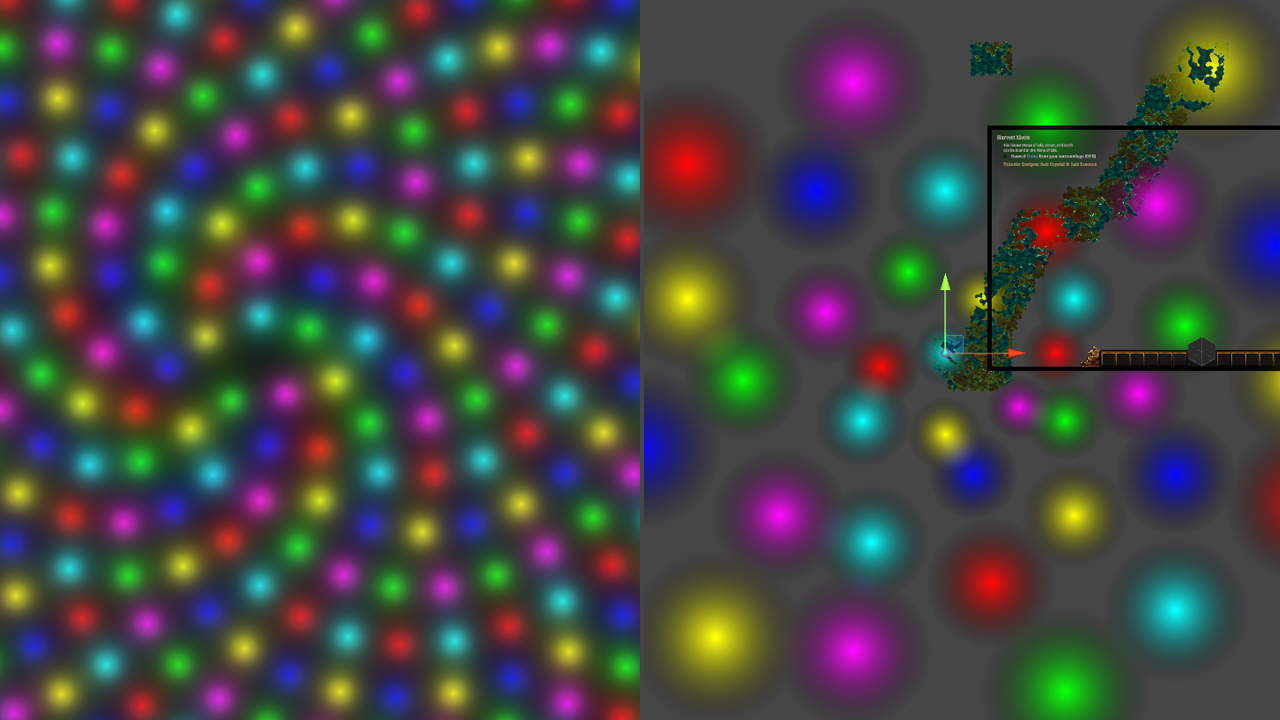
In this image, each dot in the spiral represents a portal combo: Cyan = Life/Water, Magenta = Life/Earth, and so on. It spreads portals evenly without rigid repetition. Because the world was huge, I intuitively added some extra spacing as they drifted further from the center of the world, but more on that later.
From Circles to Coastlines
Early on, portals just carved out round circles of space. It worked, but it looked… artificial. Too neat. So I added UV noise to the boundaries to breathe life into the coastlines, making them jagged and organic.
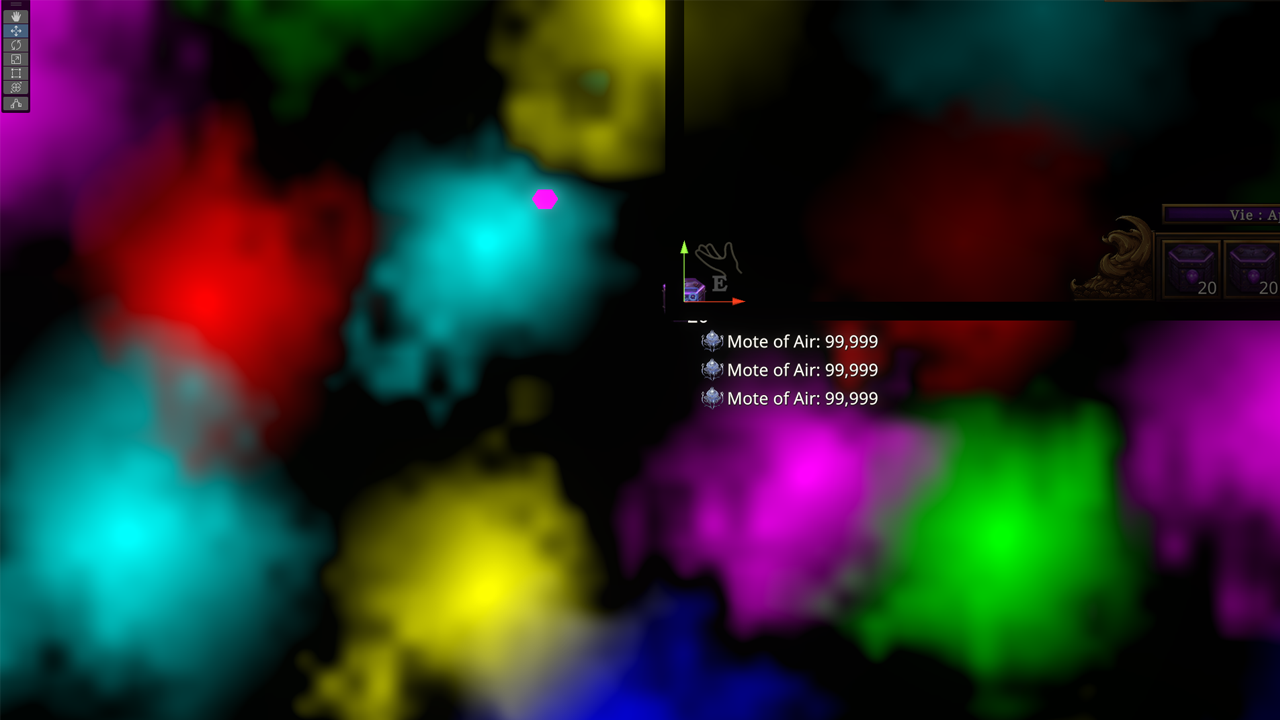
Then I got to leverage some of my favorite math and FX techniques to cast the two relevant portal colors into Red and Green, and leave all the others Blue.
That does three very cool things:
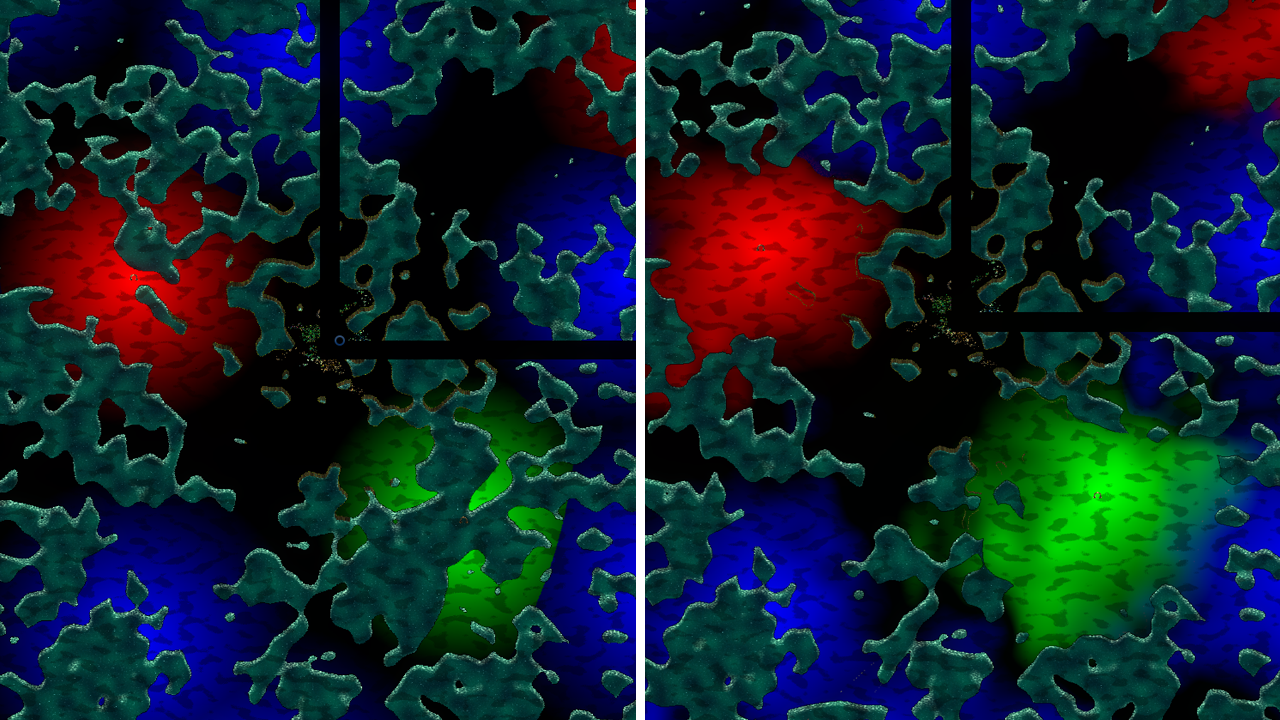
- Shaping coastlines – Red and green areas deform terrain to make room for portals, while blue areas keep the coastline natural.
- Hidden knowledge – Blue marks also quietly reveal where a portal exists in another plane. If you notice it, you feel like you’ve uncovered an easter egg.
- Terrain Texture Masking – This elegantly allows a single terrain material to treat each color as both a heightmap and mask for multiple textures, allowing them to not only blend organically into each other, but also gives a clear space for things like near-portal tiles and biomes.
Seeds, Bugs, and Feedback
The entire game runs on procedural generation, but I locked the seed early for two reasons:
- Player feedback – I originally thought portals should spread further apart the further you go. But in practice, since you only ever see two per plane at once, the distances were already big enough. Feedback convinced me to tighten the spiral back up for better pacing.
- Bug hunting – Cloud saves revealed a wild GPU quirk where different hardware actually generated slightly different coastlines. Same seed, different shapes. Locking the world made it easier to isolate the problem so it can be addressed before the flood gates open.
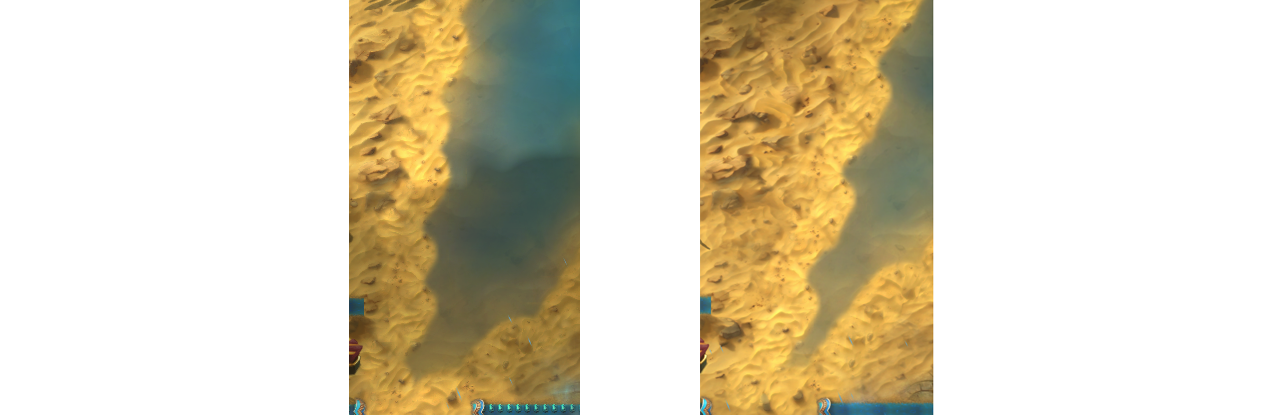
And that’s the real win: the math foundation was solid, but the community made it better.
Big thanks to everyone who explored deep into the infinite terrain and stress-tested this system across hardware. Every bug report and suggestion has helped me sculpt a world that feels strange, magical, and infinite. World seeds are just a hop skip and a jump away. There are a few optimizations to be made alongside moving the algorithm from GPU to CPU, and I want to make sure that saves are backwards compatible. Almost there :)
See you on the planes,
~CyanAvatar