
Sharp-toothed greetings!
I’m Alexander, Technical Artist at WATT Studio. Today I’d like to talk about how we create procedurally generated buildings in GRIMPS.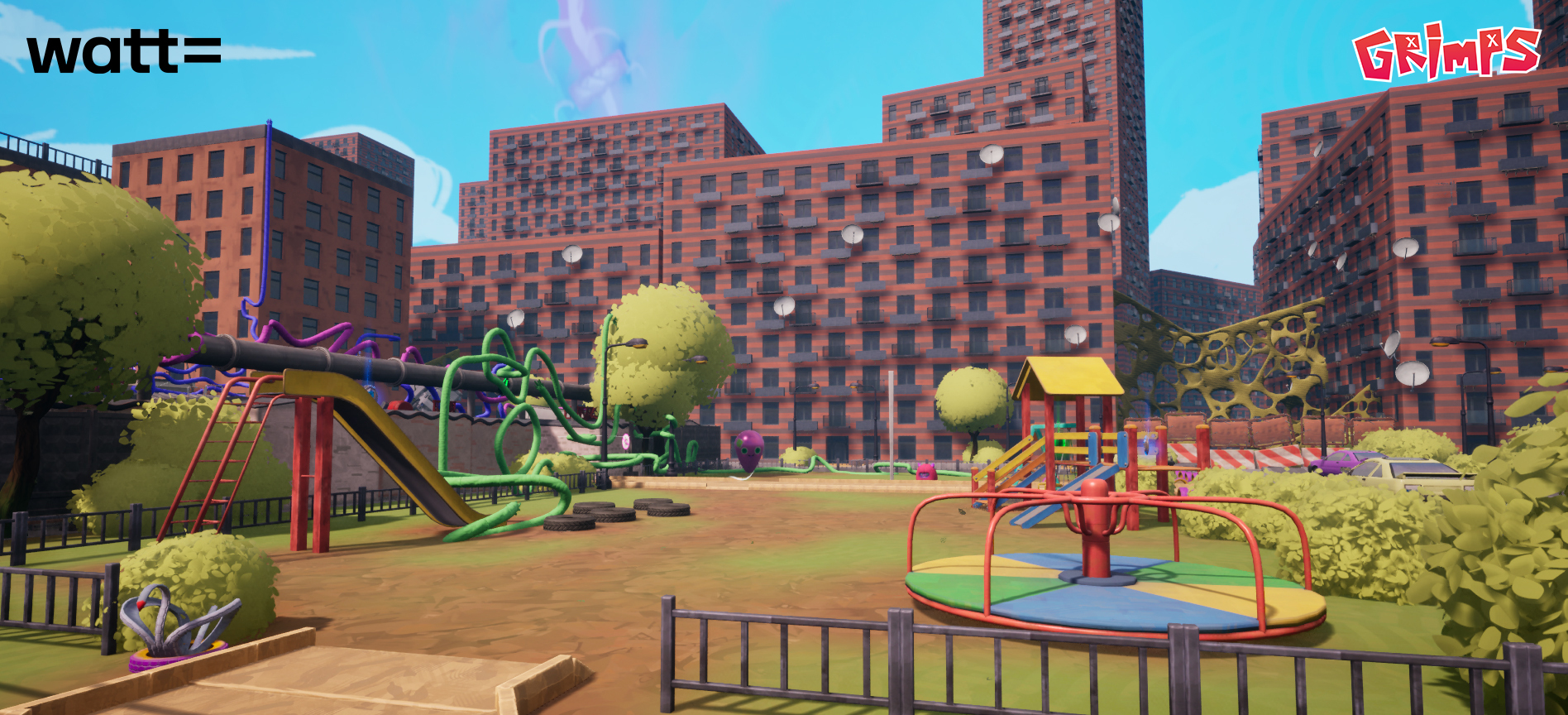
One of the most time-consuming parts of game development is creating the environment. Drawing assets and assembling locations can take a huge amount of production time. To speed up development and reduce the workload on our art team, we decided to actively use procedural generation.
In GRIMPS, we use the PCG (Procedural Content Generation) system in Unreal Engine.
How does it work? Using a node-based system, we build an algorithm that places points in space. Different modules are then attached to these points — walls, windows, doors, and smaller details like air conditioners or drainpipes.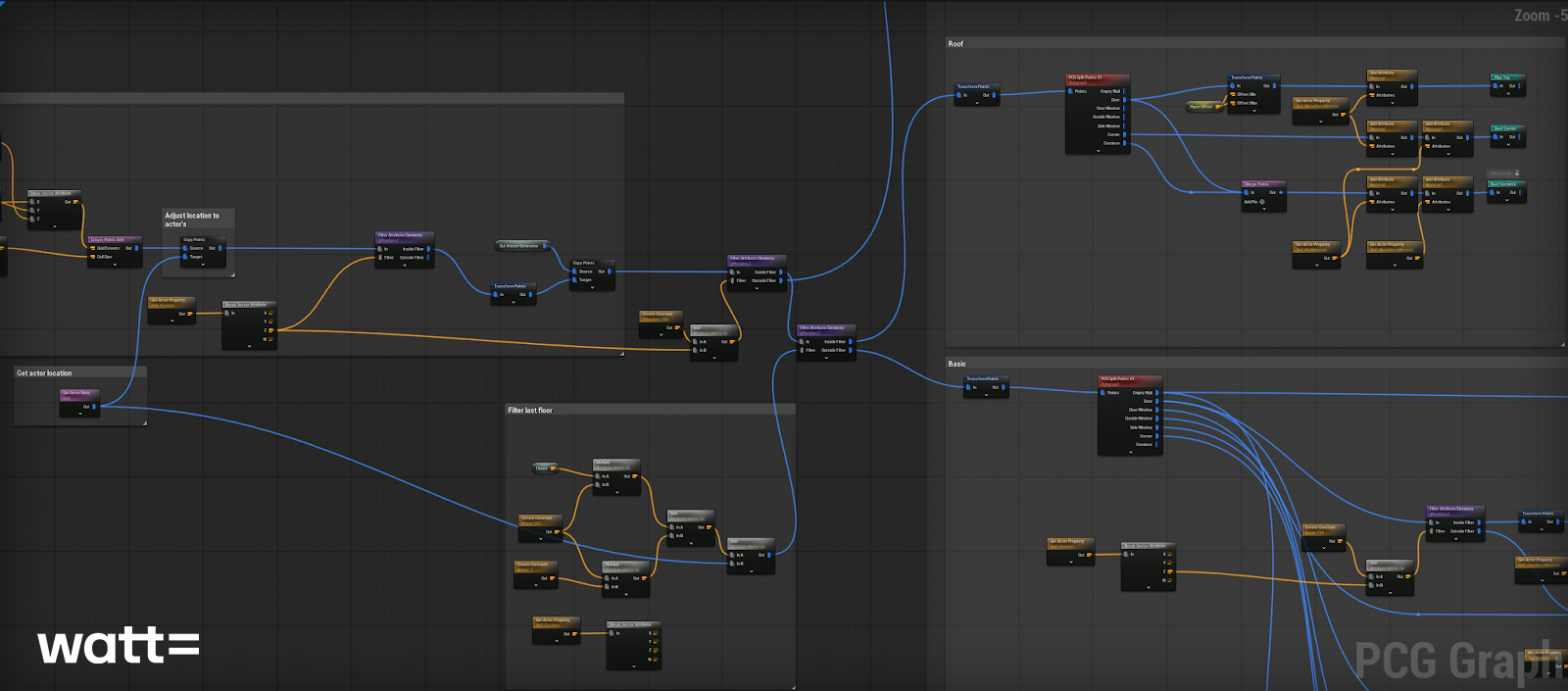
This approach not only allows us to assemble buildings quickly but also helps optimize the scene. The engine groups identical modules and renders them as a single object, which saves memory and resources. As a result, a building that would normally take several days to assemble manually can now be generated in just a few minutes by adjusting parameters such as size, color, decorations, and other settings.
At the same time, each building still looks different. An artist simply places the generator in the scene, tweaks a few parameters, and instantly gets a house with the desired size and style.
A Bit of Technical Insight
At the core of the generator is a grid of points that defines the building’s structure. First, we create a base grid with a set distance between points. Then the algorithm removes all internal points, leaving only the points along the perimeter — these are used to construct the walls.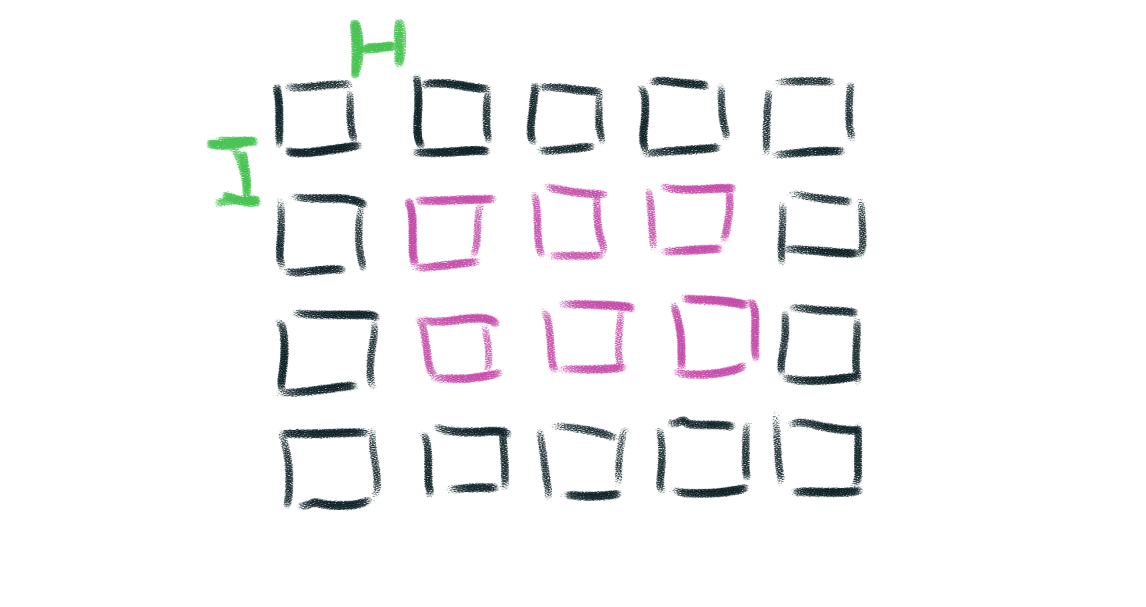
Next comes the point filtering stage:
Corner points are detected and assigned unique meshes
Points are distributed for walls, windows, and doors
Special elements like stairwell windows are added
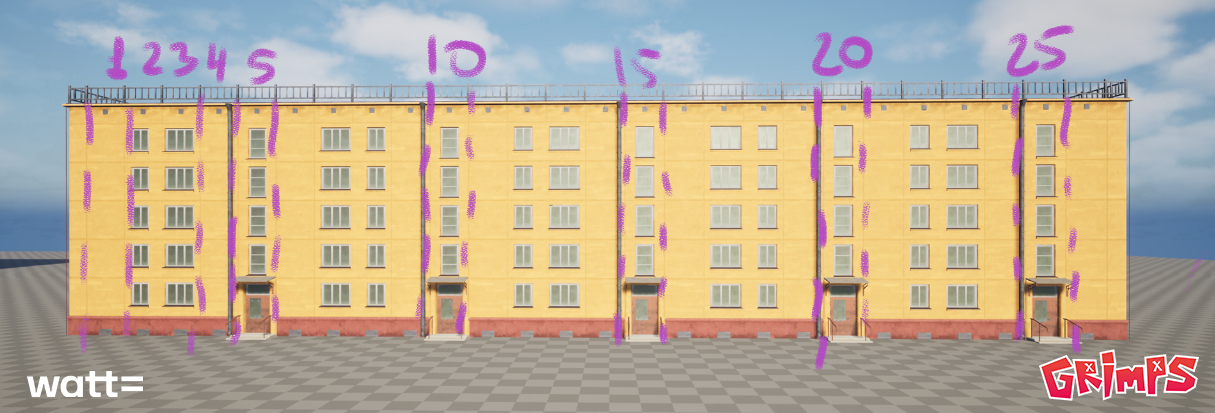
For example, in apartment buildings we use a simple pattern: every fifth module horizontally becomes a door, which helps quickly create a recognizable structure.
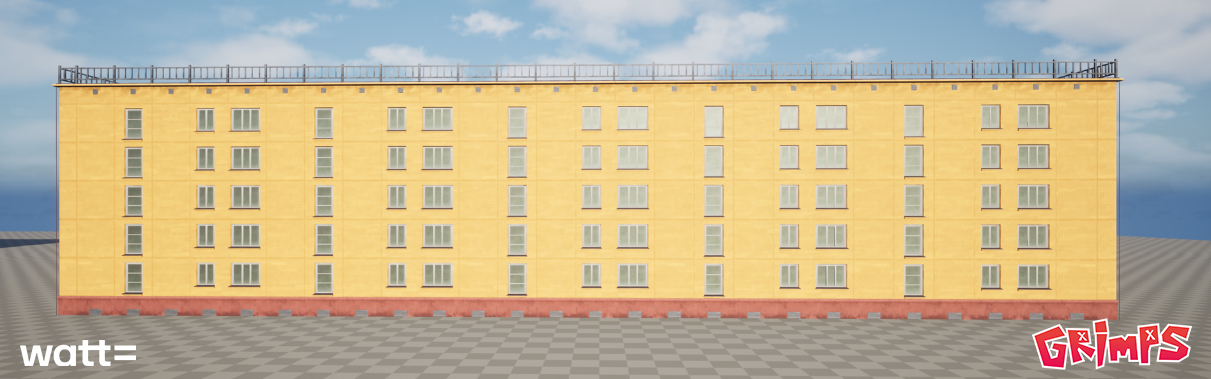
Different sides of the building follow different rules:
Front side
Uses the main pattern with doors
Additional wall modules are placed around the door areas
Back side
No doors are generated
Instead, stairwell windows appear in those positions
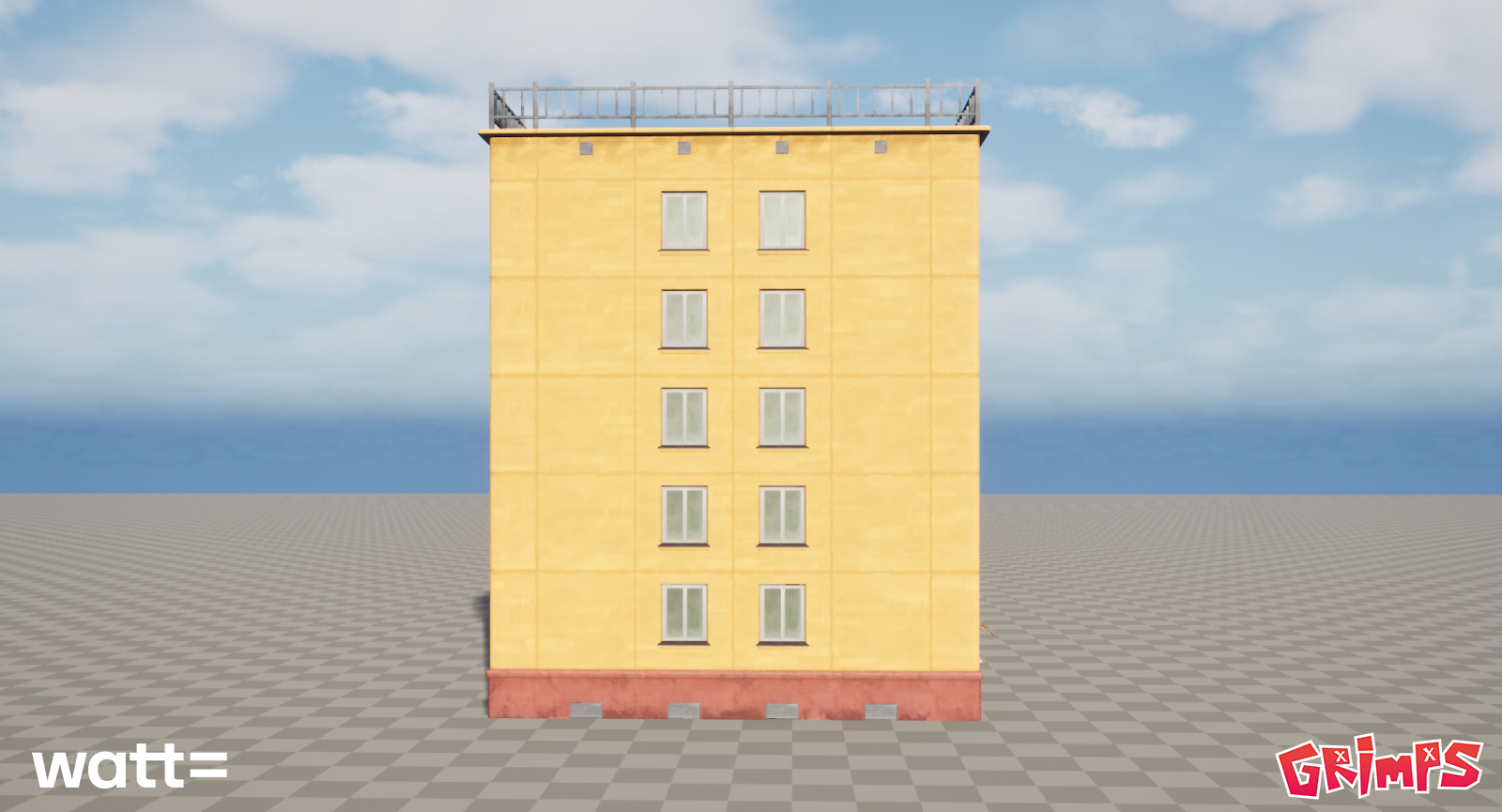
Side walls
Edge points become solid walls
Remaining points are filled with windows
After that, the grid is duplicated vertically to create multiple floors. The algorithm processes each level separately:
the ground floor
the middle floors
the top floor
Based on their attributes, points are then converted into actual geometry — windows, walls, doors, or roof cornices. Additional points are generated for smaller details such as drainpipes, air conditioners, and other props.
Different building types use slightly different algorithms. For example, construction sites include internal walls and additional controls for placing windows and fences.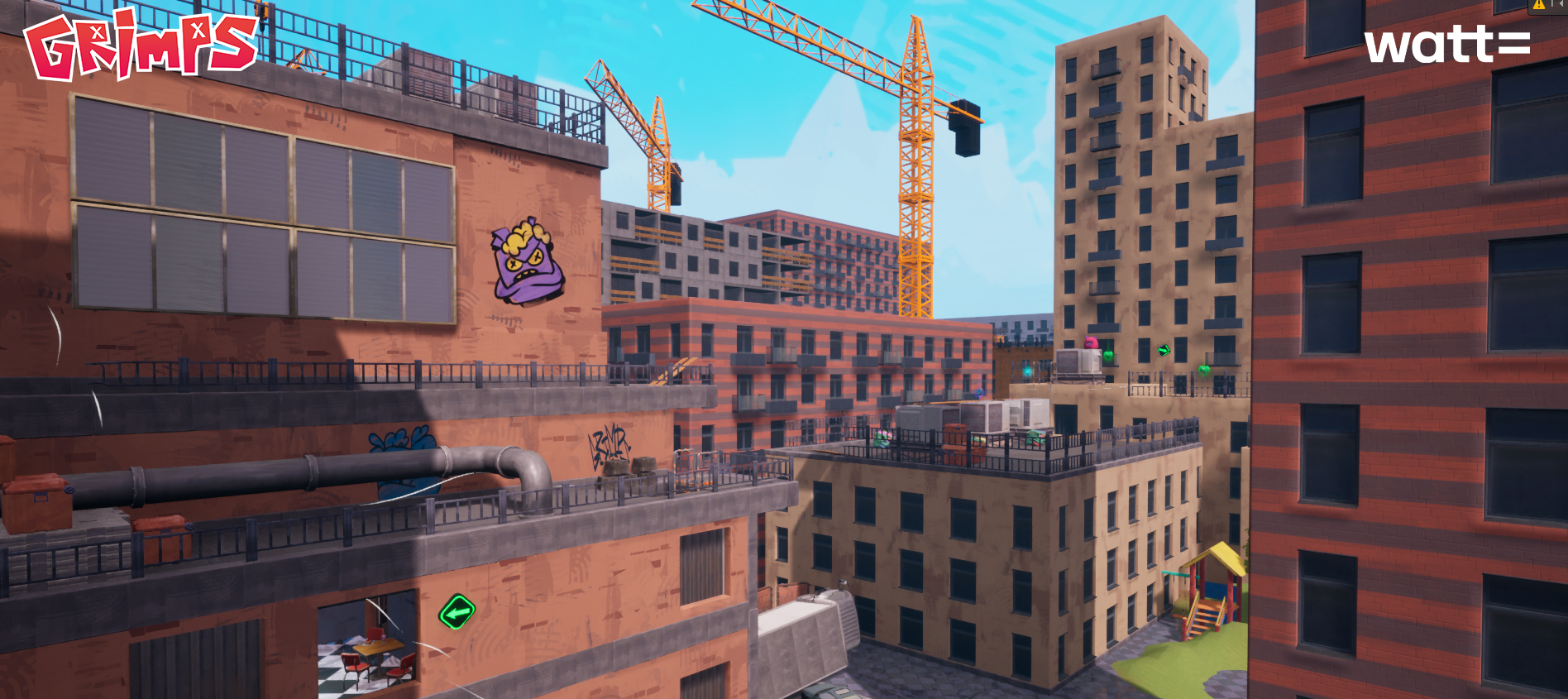
Procedural generation allows us to fill the world of GRIMPS much faster, while giving our artists more time to focus on unique details that make the environment feel alive.
In future devlogs, we’ll share more about how the world of the game is created.
🔥 Wishlist GRIMPS on Steam:
💬 Join our Discord and talk directly with the developers: https://discord.gg/DazDMWa8mm