
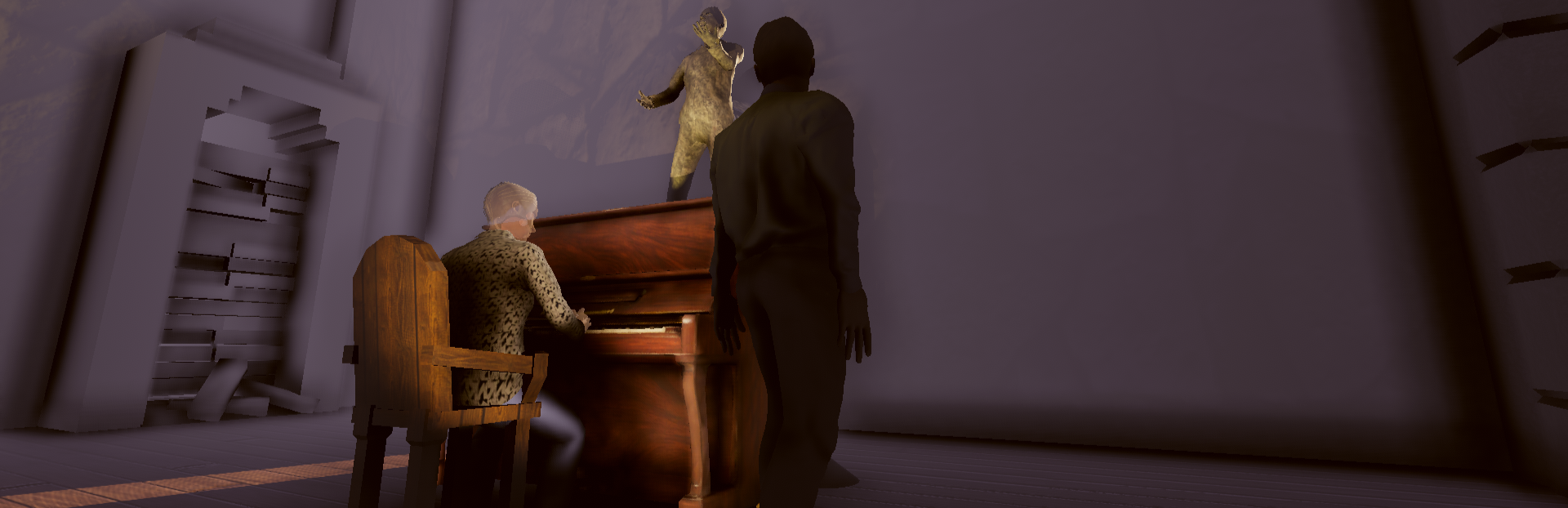
The day was finally here. The negotiations for the purchase of his new castle had taken months, all the while Beckett had sold off his other estates in the countryside. As a map collector and statesman he had come across the story of the castle’s past years ago. It had remained in his mind as he scoured libraries and local collections of books and manuscript to learn more. Then as fortune would have it the previous owner, an association of lawyers, had put it up for sale. Now he was putting his last luggage on the horse carriage, or rather his trusty servant was doing it, before their several days long journey to finally move in.
Now, had Beckett’s servant known what was in store, he might not have been as excited about the idea to be the steward of all housekeeping for a castle dating from the 12th century. But as it were, Beckett had kept the more well, questionable accounts of the castle’s past to himself. Only he knew the reasons why the lawyer assocation had put up the castle for sale at such a low price. Only he knew the events of the night in 1402 which he had learned from manuscripts pilfered from a baron’s library.
The first weeks in the castle passed uneventfully enough. The servant busied himself with organizing the vast, echoing rooms while Beckett arranged his maps and manuscripts in what had once been the great hall. But on the twenty-third night, things changed.
It began with the furniture. The servant woke to the sound of wood scraping against stone, a terrible grinding that echoed through the corridors. When he rushed from his quarters with a candle, he found the heavy oak table in the dining hall had moved itself to the center of the room, chairs arranged around it as if for some phantom feast. His hands trembled as he tried to push the table back, but it wouldn't budge—not until dawn broke, when it slid effortlessly back to its original position.
The light came next. Cold, blue luminescence would pool in doorways and seep down staircases like liquid moonlight. It would gather in corners, pulsing with an almost respiratory rhythm, before suddenly extinguishing and reappearing elsewhere. The servant learned to avoid these lights, for when he passed through them, the temperature would drop so drastically that his breath formed clouds of ice crystals.
Then came the apparitions themselves. The old woman appeared first, always in the west tower, her form translucent and flickering like a candle flame in wind. She wore the simple dress of a medieval peasant, and her mouth moved constantly, as if reciting prayers or warnings that produced no sound. The young woman, barely in her twenties, manifested in the courtyard at dusk. She was more substantial, almost solid, dressed in a burgundy gown from a bygone century. She would pace the same path over and over, occasionally looking toward the keep with an expression of such profound terror that the servant couldn't bear to watch.
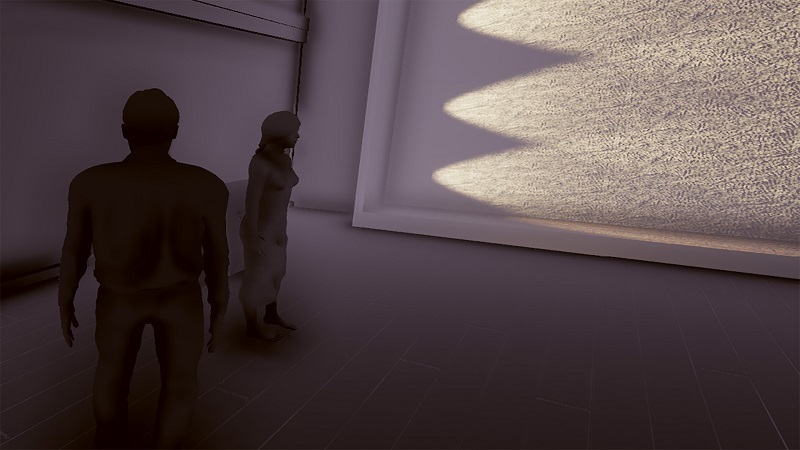 But the knight was the most unsettling. His armor, dented and stained with rust—or perhaps blood—clanked as he walked the battlements. Unlike the women, he seemed aware of the living. His head would turn to follow Beckett and his servant, though the visor of his helmet remained eternally shut.
Beckett, rather than fleeing, grew obsessed. He had discovered something in the castle's foundations—a chamber the manuscripts had hinted at, containing mechanisms of impossible complexity. A time machine, he became convinced, built by some forgotten genius of the Middle Ages. For months he worked in secret, repairing and recalibrating, driven by the belief that he could pierce the veil between past and present.
The servant begged him to stop, especially after the night when all three apparitions appeared simultaneously, converging on the chamber where Beckett worked. But Beckett wouldn't listen. On the anniversary of that terrible night in 1402, he activated the machine. The sound was like reality itself tearing. The blue lights flooded every room at once. The old woman's silent prayers became a deafening chorus. Medieval soldiers poured from the walls, fighting battles long concluded. Time folded in on itself—past, present, and something else bleeding together into a single, horrifying moment.
When the locals finally ventured to investigate the castle days later, they found it empty but for the furniture, which rearranged itself endlessly in the great hall. Sometimes, visitors claim to see two more ghosts among the others: a gentleman in Victorian dress, clutching maps and manuscripts, and his servant, forever trying to pull his master back from a machine that no longer exists in any single moment of time.
They say both are still there, trapped in the temporal bridge Beckett created, reliving that catastrophic night for eternity, alongside the very ghosts he had sought to understand.