
Greetings adventurers!
Welcome to our first public development blog, where we will be diving into our procedural open-world generation system. We will be doing more similar updates on various topics in the future, so feel free to follow along on our journey all the way to release!
Why procedural generation?
Simply put: replayability. Procedurally generated open world provides players a vast array of replayable content, as there is always a sense of discovery on a new player hosted server. We also feel that in today’s ’meta’ gaming environment, players are feeling more and more pressure to play games in an efficient way. This can pressure players to search for certain locations online, in fear of playing the game ’wrong’, therefore losing the sense of discovery and adventure. Since procedural generation creates different world structures for all players, it is more difficult to say beforehand where to find a certain location. We feel that this enables players to enjoy the sense of exploration and adventure at their own pace, without feeling the pressure to facilitate the process by an online search.
Our approach to procedurally generated open world
The open world of Taigania consists of various ’biomes,’ which have their own distinct environments, creatures, and gatherable resources. Biomes consist of two major components:
1. The ’base terrain’ of the open world
2. ’Points of interest’ (POIs), which are placed all over the ’base terrain’
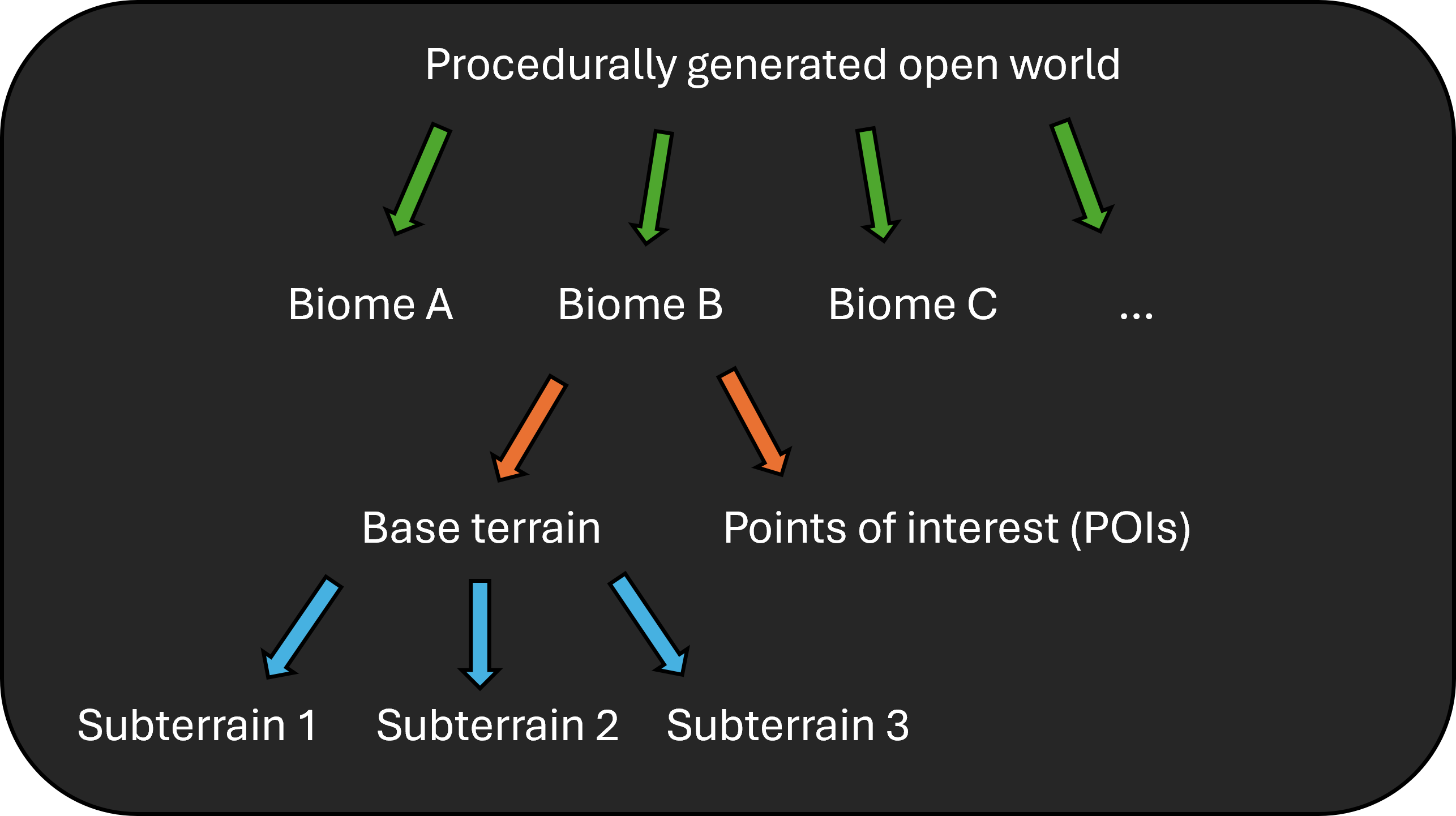
Figure 1. The structure of the procedurally generated open world of Taigania.
The base terrain is formed using mathematical noise functions. This enables the base terrain to have natural texture and level variations, resulting in a more immersive open world. The various textures form ’subterrains,’ each of which has its own spawnable creatures and gatherable resources.
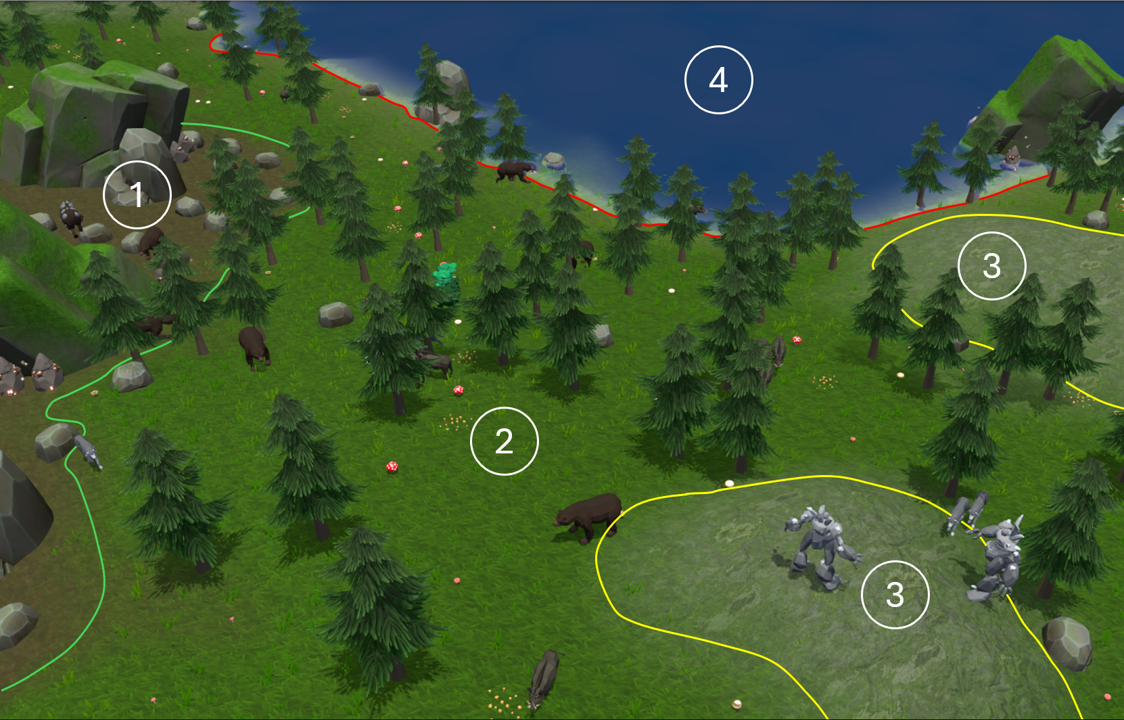
Figure 2. The base terrain is generated using mathematical noise functions. Subterrains (1), (2), and (3) can be distinguished by their terrain textures, spawnable creatures and gatherable resources. The ocean (4) is considered as a separate biome.
’POIs’ are small areas that can be placed almost anywhere within their respective biome by the world generation algorithm. POIs provide variation in the gameplay experience: some POIs have their own environment, creatures, and gatherable resources, while others may be more subtle, offering smaller interactions such as a treasure chest. Certain POIs are permanent parts of the open world, whereas others can only spawn as events displayed on your world map.
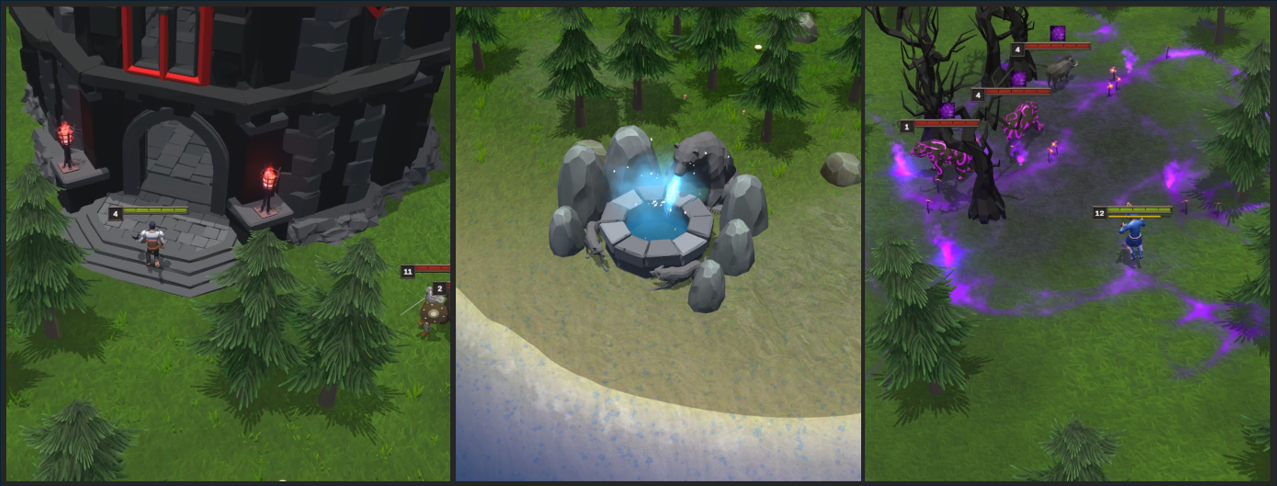
Figure 3. Crimson tower (left), purifying well (center), and corrupted area (right) are some of the points of interest (POIs) that can be generated in their respective biomes. Each POI has a specific gameplay purpose.
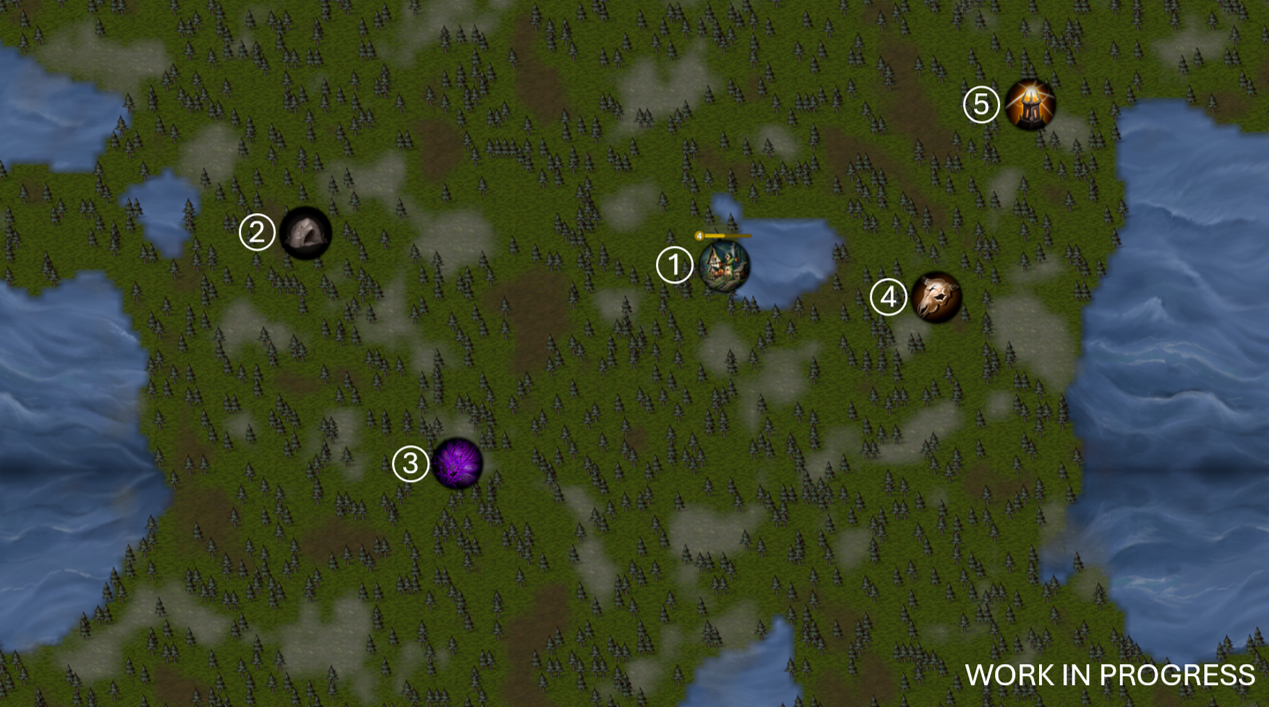
Figure 4. The world map allows players to navigate to various locations, such as villages (1), dungeons (2), corrupted areas (3), world bosses (4), and crimson towers (5).
Thank you for following along on our journey toward the release of Taigania. If you would like to support our development, please don’t hesitate to Wishlist the game—it really helps us a lot!
Until next time, adventurers!