
Hello, this is Team Samoyed! We plan to share steady development updates for Teamfight Manager 2 every 2–3 weeks, so please stay tuned.
Items
In Devlog #7 we briefly mentioned that the rule overhaul would introduce gold and items. In this log we will explain the new item system in more detail.
In Teamfight Manager 2 each champion can purchase up to three items.

The first things you can buy are the six Tier-1 items shown above. Each one boosts a single stat: Attack Damage, Attack Speed, Armor, Magic Resistance, Ability Power, or Health.
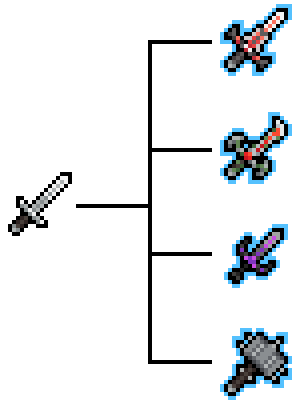
A Tier-1 item can be upgraded to Tier-2 for an additional amount of gold. Doing so keeps the original stat bonus and adds an extra effect.
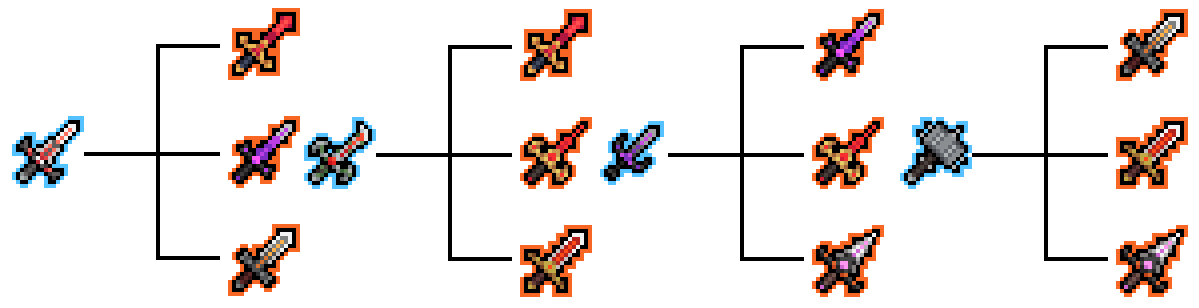
You can then pay more gold to upgrade from Tier-2 to Tier-3. There are no recipes: every Tier-1 branches into four predetermined Tier-2 items, and every Tier-2 branches into three predetermined Tier-3 items. Because the game needs to stay readable—both for players and for the AI—we chose a simple, linear upgrade path.
Every Tier-1 item therefore leads to four Tier-2 items, and each Tier-2 leads to three Tier-3 items. Since the same Tier-3 can be reached from two different Tier-2 paths, each stat line ends up with six unique Tier-3 items. In total there are 66 items: 6 Tier-1, 24 Tier-2, and 36 Tier-3.
Because two different Tier-2 items can upgrade into the same Tier-3, you can tailor your path even if your final destination is identical. For example, upgrading the Tier-1 Iron Blade into Piercing Blade grants armor penetration, whereas upgrading it into Lifeleech Blade grants lifesteal. Both can later be upgraded into Bloodreaver, which combines both effects and adds a unique passive. If you need sustain first, build Lifeleech Blade; if you need armor penetration first, build Piercing Blade—even though you’ll end up with the same Tier-3 item.
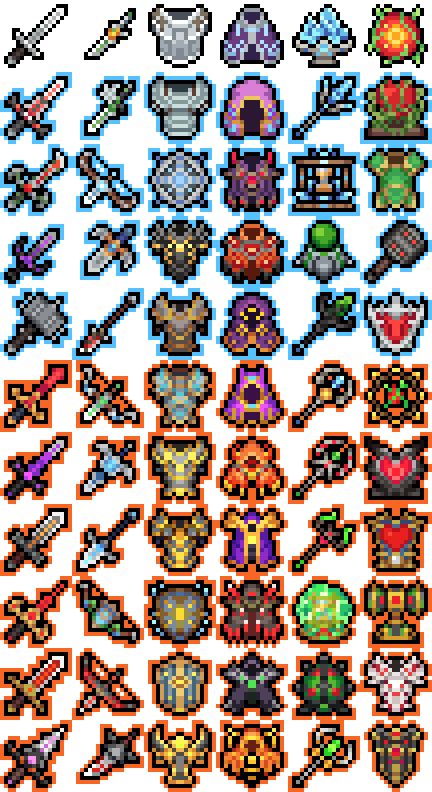
Here are all current item icons: 6 Tier-1, 24 Tier-2, and 36 Tier-3. Not every passive is implemented yet, but the stats and upgrade logic are already in place.
Choosing Item Builds
At the moment champions purchase and upgrade items automatically according to the AI’s judgement. Our intention is to keep that convenience while still letting coaches steer build direction at a high level. If a coach had to hand-pick every single item every game it would be overwhelming, but having zero influence can feel frustrating—so we’re experimenting with lightweight ways to nudge the AI without micromanagement. We’ll share details in a future log.
Adding New Champions
Teamfight Manager 2 will launch in Early Access with 60 champions: the 40 originals plus 20 brand-new ones. Concepts and designs are finalized, and roughly half of the implementations are done.
Below are a few in-game shots of some new champions.
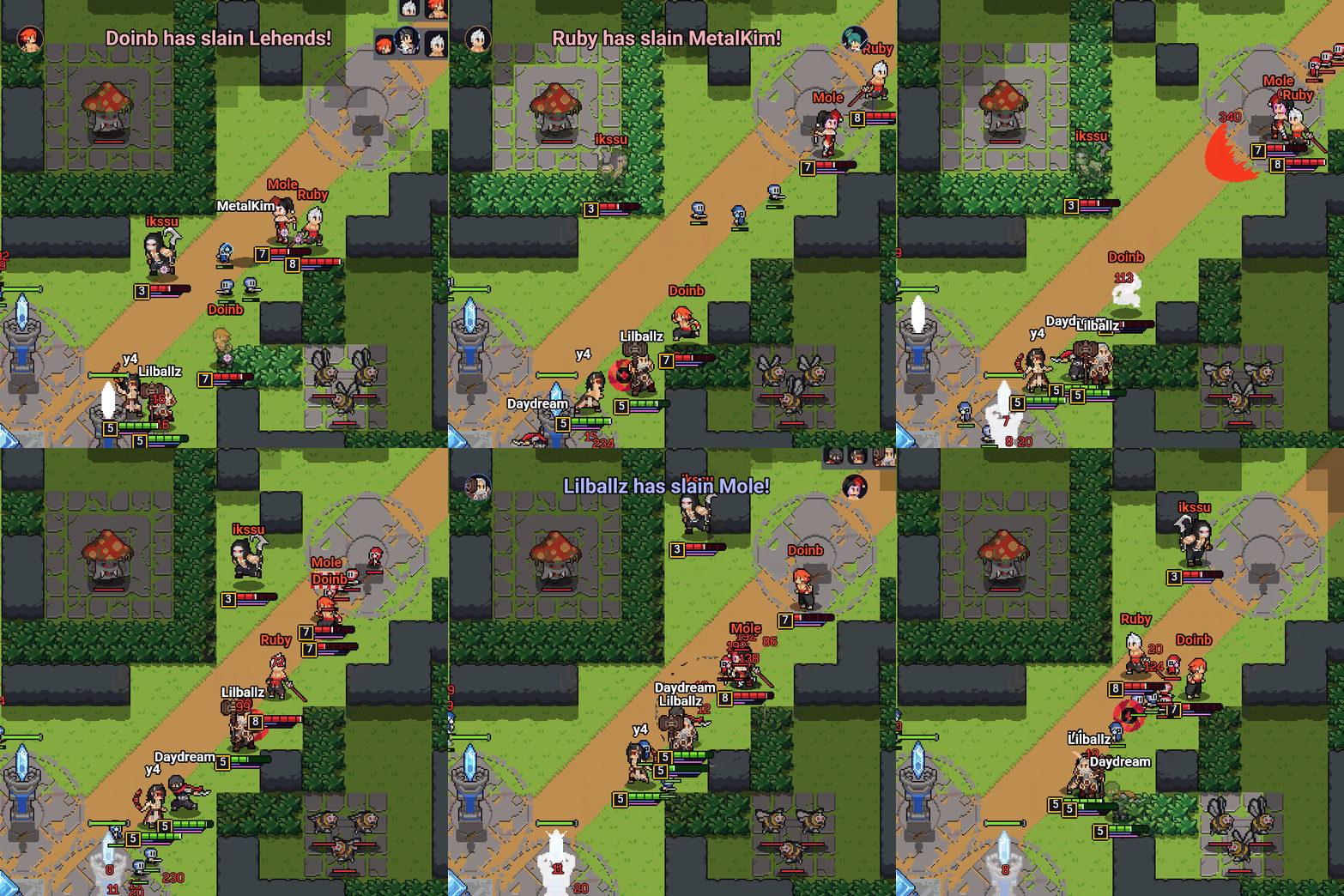
Gameplay footage of the new Hammerman champion.
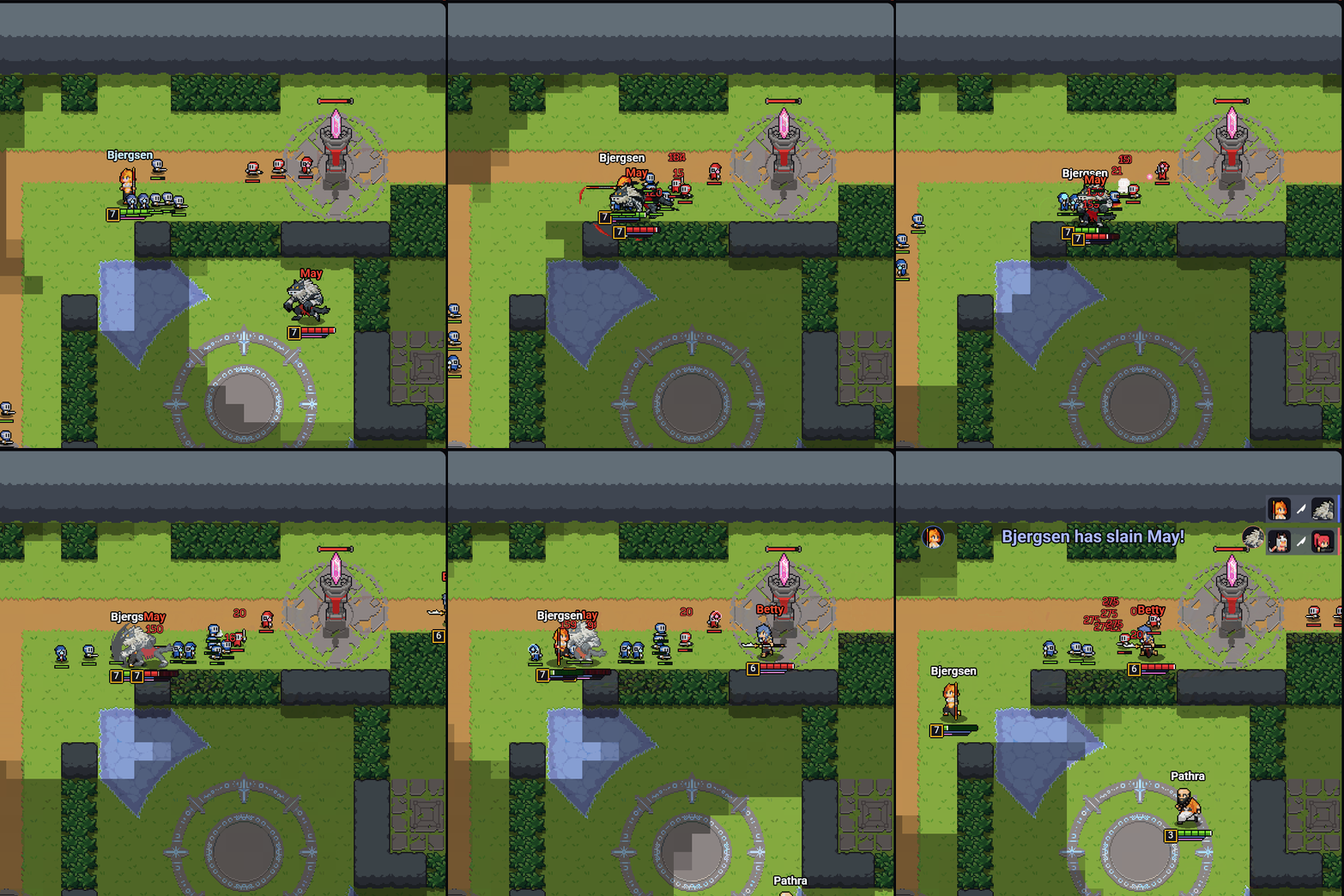
Gameplay footage of the new Staff Master champion.
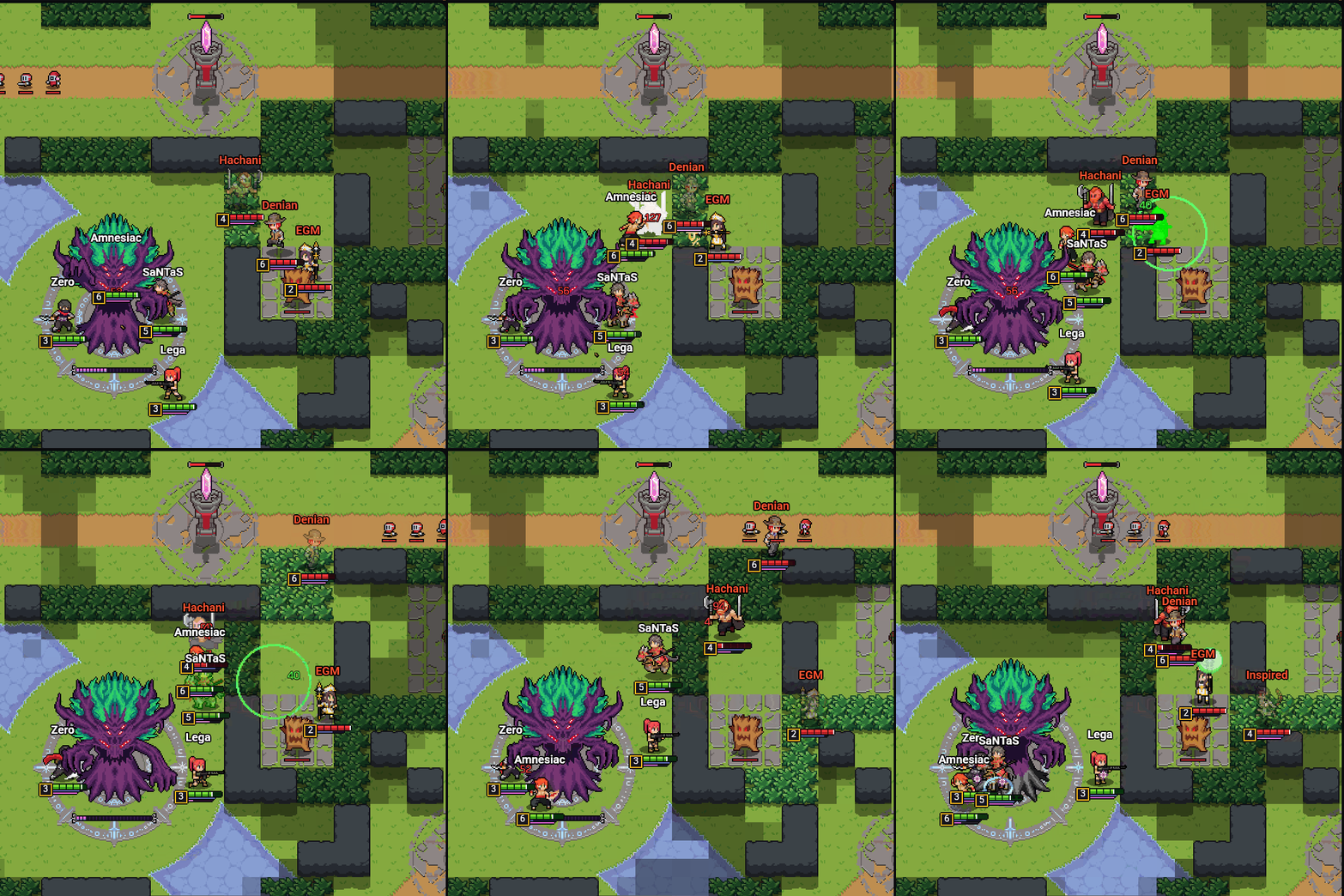
Gameplay footage of the new Cavalryman champion.
AI Improvements
While adding new champions, we’re also re-working the AI so it can make proper use of each champion’s mechanics, and we’re steadily upgrading overall play quality.
A quick explanation of the workflow: simply staring at match replays has its limits—it’s slow and it’s hard to judge whether a tweak truly helped. Instead, as mentioned in earlier devlogs, we rely on data. We have a tool that can run huge batches of simulations and export detailed statistics, so every AI pass starts with this tool.
Because the simulation architecture separates “player AI” from the core game loop, we can load multiple AIs at once. For each test we lock one team to the previous (“old”) AI and let the other team use the new AI. If the new version wins more often, we regard it as smarter than the old one.
We also harvest extra metrics—e.g., average gold difference at the 3-minute mark—to see whether the new AI actually laned better. We check how often the team that secures the first Morguard ends up winning, and so on, to make sure the overall balance still makes sense.
Of course, better numbers don’t automatically mean better spectacle. So after confirming the stats we still watch real matches to verify that the play looks better, not just scores better.
The “baseline” AI we froze during the last devlog handled only the basics of 5-v-5 play. The current WIP version beats that baseline about 66 % of the time and finishes games more than a minute faster (weak AIs tend to stall instead of closing).
Our goal is to iterate like this—each new AI aiming for roughly a 60–70 % win rate over the previous one—until the simulation feels convincingly solid. That said, plenty of silly plays remain, and we still don’t see as much tactical variety as we want. We’ll keep pushing so that the Early-Access build ships with the strongest AI we can manage.
That’s it for this devlog. Thanks for reading this long post!